
Choosing an Aerosol Clear Coat for Cars: 1K vs 2K Cans Explained
Aerosol Clear Coat for Cars: Trade-Quality Gloss and UV Protection
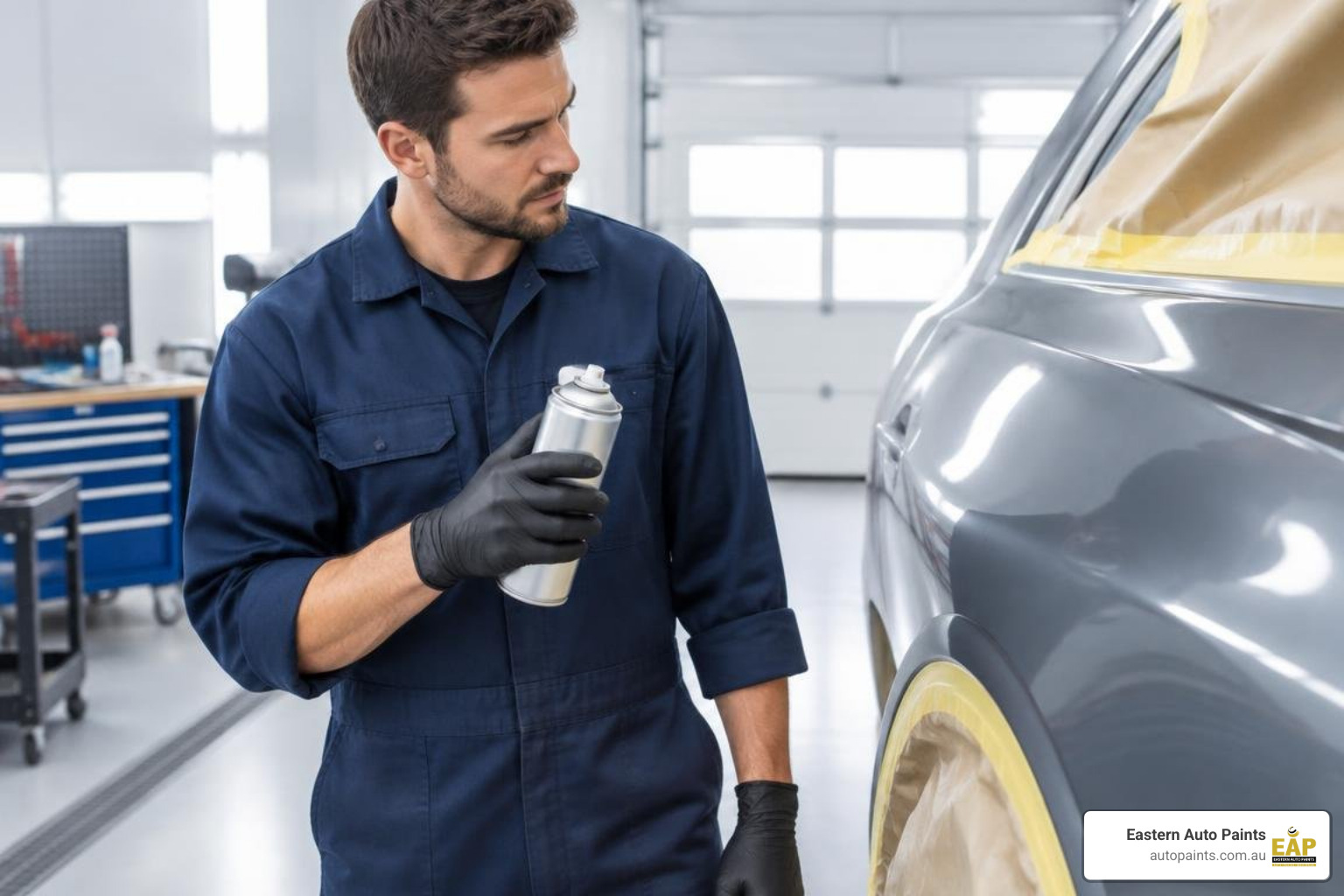
Rushing through an automotive repair with generic rattle cans often leads to frustrating results: patchy gloss, rapid fading, and clear coat failure that ruins hours of bodywork. At Eastern Auto Paints, we take the time to guide you toward the right aerosol formulation so your finish delivers trade-quality gloss and protection from the very first pass, whether you are spot-repairing a daily driver or completing a ground-up restoration.
Key Takeaways
- One-pack (1K) aerosols dry via solvent evaporation, making them convenient for quick spot repairs and low-contact trim pieces.
- Two-pack 2K Clear Aerosols use an integrated isocyanate activator that chemically crosslinks to provide high resistance to petrol, road grime, and physical wear.
- Severe Australian sunlight demands high-grade UV-resistant resins to prevent delamination and yellowing over time.
- Correct panel preparation, proper flash-off intervals, and disciplined overlap techniques prevent common defects like orange peel and solvent trapping.
- Explore our aerosol spray can range for workshop-grade products suited to your project.
At Eastern Auto Paints, we support professional panel beaters, commercial spray painters, and dedicated vehicle restorers across Australia. We combine advanced colour formulation technology with genuine trade expertise to ensure your refinishing work stands up to demanding operating environments.
Our goal is to help you select the exact coating system for your specific project requirements, ensuring long-term gloss retention, robust UV defence, and an unblemished final finish.
Environmental Risks and UV Exposure in Australian Automotive Refinishing
Australia experiences some of the most intense ultraviolet (UV) radiation in the world. Exterior automotive panels routinely endure extreme heat cycling, intense sun exposure, and abrasive road debris. When an incompatible or uninhibited clear coat is applied over fresh basecoat, prolonged solar radiation breaks down the resin chains. This breakdown manifests as chalking, micro-cracking, and eventual peeling that exposes the coloured basecoat to rapid oxidation and moisture ingress.
Choosing the right aerosol clear coat for cars requires understanding how different formulations handle environmental exposure. A dedicated automotive clear coat acts as an optical filter and physical barrier, shielding delicate pigments from UV rays while protecting against stone chips and road grime.
When to Choose 1K Acrylic Aerosol Clear Coats
Single-component (1K) clear coats dry through solvent evaporation as ambient air circulates across the freshly sprayed surface. Because 1K formulations require no chemical mixing or internal activation, they offer unlimited shelf life until the can is emptied, allowing tradespeople and restorers to store and reuse the same can across multiple minor jobs.
A premium option such as Acrylic Topcoat Clear 400Grams provides excellent optical clarity, smooth atomisation, and fast drying. Products like Dulon 1K Premium Clearcoat are well suited for low-wear components, interior trim, side mirror caps, and small blend repairs where rapid turnaround and convenience are the primary goals.
When to Choose 2K Urethane Aerosol Clear Coats
Two-pack (2K) aerosols contain two separate chambers inside a single pressurised can: the clear resin base and a liquid isocyanate activator. When you pierce the internal capsule using the integrated base button, the activator releases into the resin. Shaking the can initiates a chemical crosslinking process that creates a dense polyurethane network.
This chemical cure delivers exceptional surface hardness, deep optical gloss, and long-term resistance to petrol spills, degreasers, and environmental contaminants. Professional body shops and serious restorers rely on 2K Clear Aerosols when protecting exterior panels, bumper bars, and leading edges that demand maximum toughness. To explore these systems in depth, consult our 2K clear coat guide.
Selecting the Right Clear Coat System for Your Project
Selecting between 1K and 2K aerosol clear coats comes down to evaluating your panel location, chemical exposure, and working conditions:
- Job Type and Scale: For rapid spot touch-ups, interior trim pieces, or minor component refreshes, a 1K acrylic clear coat offers immediate readiness with zero material waste. For full exterior panel work, stone-chip repairs on front bumpers, and wheel arch refinishing, a 2K urethane clear coat provides high-build coverage.
- Operating Environment: Vehicles regularly exposed to harsh outdoor weathering, commercial wash facilities, and industrial fallout benefit from the crosslinked durability of a 2K urethane system. Light-duty interior surfaces and sheltered trim perform reliably under a quality 1K acrylic finish.
- Finish Requirements: When matching factory clear coats on high-visibility body panels that require machine compounding and high-gloss depth, 2K aerosols deliver the necessary film thickness and hardness.
Technical Specifications and Can Chemistry Explained
Understanding how aerosol coatings behave allows applicators to achieve smooth, run-free finishes. Modern aerosol cans utilise specialised fan nozzles that mimic the spray pattern of professional pneumatic guns, atomising high-solid formulations evenly across the panel.
| Feature | 1K Acrylic Clear Coats | 2K Urethane Clear Coats |
|---|---|---|
| Curing Mechanism | Solvent evaporation (air dry) | Chemical crosslinking (reaction) |
| Components | Single resin base | Resin base + isocyanate hardener |
| Chemical Resistance | Moderate | High (fuel, oil, and solvent resistant) |
| Pot Life | Indefinite (reusable) | Limited once activated |
| Ideal Applications | Wing mirrors, interior trim, spot touch-ups | Bonnets, roofs, bumpers, full exterior panels |
| Finish Type | High gloss | Deep, high-build automotive gloss |
Achieving a professional automotive paint finish relies heavily on matching these chemical properties to your working conditions and drying equipment.
How to Apply Aerosol Clear Coat for Cars for a Flawless Finish
Applying an aerosol clear coat successfully begins long before pressing the spray nozzle. Careful preparation ensures the clear coat bonds securely without trapping dust or oil:
- Surface Decontamination: Ensure the basecoat has dried according to its technical guidelines. Wipe the panel gently with an automotive tack cloth to lift stray dust particles without leaving residue. To review full substrate prep steps, see our guide on how to prepare your panel for painting.
- Can Preparation: For 1K products, shake thoroughly before spraying. For 2K cans, press the bottom activator pin firmly into a hard surface until the internal chamber pops, then shake vigorously to mix the activator completely.
- Spray Technique: Maintain a steady distance from the panel and move your arm at a consistent speed parallel to the surface, keeping a disciplined overlap on each passing stroke.
- Flash-Off Discipline: Allow the solvent to flash off naturally between passes. Rushing subsequent coats traps evaporating solvents beneath the surface, causing solvent pop, cloudiness, or runs.
Application and drying times vary from product to product, so always check the manufacturer's technical data sheet (TDS) or product label for the exact specifications before you start.
Safety Precautions and Personal Protective Equipment
Aerosol clear coats contain volatile organic compounds (VOCs) and pressurised propellants that are classified as extremely flammable. Store cans away from direct heat, open flames, and sunlight to prevent pressurised containers from bursting.
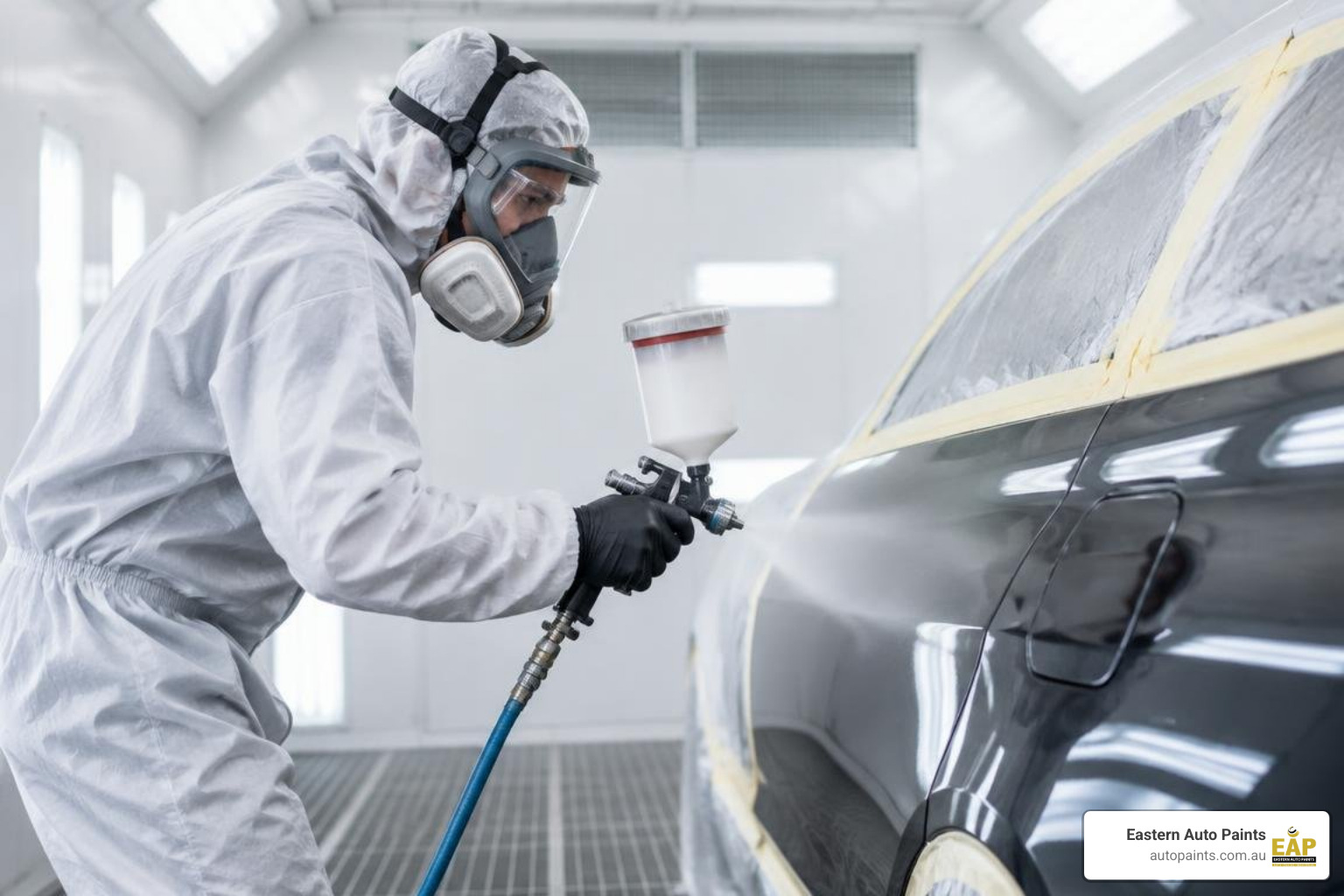
When working with two-pack coatings, the curing reaction involves isocyanates, which are potent respiratory and skin sensitisers. Always work in an area equipped with dedicated vapour extraction or positive airflow. Refer directly to the specific product's safety data sheet (SDS) and relevant SafeWork Australia or state WorkSafe guidelines to determine the required personal protective equipment (PPE) and respiratory protocols for your working environment.
Why Professional Finishers Choose Eastern Auto Paints Solutions
Professional refinishers and dedicated vehicle enthusiasts choose Eastern Auto Paints because we understand the technical realities of bodywork. We do not sell generic off-the-shelf aerosol paints; we supply trade-proven coatings built with professional spray fan nozzles, high resin solids, and reliable propellant pressures.
Our specialist technicians formulate custom automotive aerosol spray paint matched to exact factory colour codes, allowing seamless blending into existing panels. By pairing these tailored basecoats with workshop-grade clear coats from our auto paints range, you achieve factory-level depth and gloss without needing a dedicated compressor and gun setup for small panel repairs.
Long-Term Durability, UV Protection, and Value
A car's clear coat is its primary line of defence against weather, road grime, and sun exposure. Investing in a UV-stabilised clear coat safeguards the vehicle's underlying basecoat and prevents premature degradation.
Using high-grade resins with advanced UV inhibitors stops the sun from dulling your gloss or causing the yellowing that can occur in uninhibited resin systems. To explore the chemistry behind solar protection, read our breakdown on the best UV clear coats. Maintaining a robust clear coat layer preserves the vehicle's structural aesthetics, keeps exterior panels looking deep and vibrant, and protects resale value over years of driving.
What to Expect at Eastern Auto Paints
When you visit our trade counters in Bayswater or Dandenong South, or order through our Australia-wide online store, you receive genuine industry support tailored to your project:
- Specialist Technical Guidance: Speak directly with experienced paint technicians who understand commercial spray application, body repair, and clear coat chemistry.
- Custom Filling Capabilities: We mix and fill professional basecoats and primers into premium aerosol cans on demand.
- Precision Colour Verification: Take advantage of our comprehensive colour matching services to ensure your basecoat blends into adjacent panels before clearing.
- Comprehensive Refinishing Stock: Access full trade systems, from body fillers and abrasives to premium topcoats, drying equipment, and spray accessories.
When to Get in Touch or Take Action
You should review your clear coat requirements as soon as you notice early signs of coating failure on your vehicle, such as dull patches, micro-checking, or edge lifting. Tackling these issues early prevents moisture from penetrating the basecoat and causing rust in the underlying metal.
If you are planning a spot repair, restoring weathered bumper bars, or setting up a regular trade supply account, contact our team. We can calculate the exact material volume required for your panel surface area and provide the manufacturer data sheets needed for a clean application.
Practical Solutions and Reassurance
Achieving a clean finish with an aerosol can is entirely manageable with methodical preparation and patience. Minor imperfections like dust nibs or slight texture (orange peel) can be rectified once the clear coat has cured through careful de-nibbing, wet sanding, and machine compounding.
If you are dealing with delamination on older paintwork, our team can provide practical advice for feathering damaged edges and preparing sound foundation layers. Take your time, test your spray fan on a test card first, and allow adequate flash-off between passes.
Closing Statement
Refinishing automotive panels with aerosol clear coats gives trade professionals and dedicated vehicle restorers the flexibility to complete spot repairs and component spraying with workshop-level results. Matching the right resin system to your panel location ensures lasting gloss and long-term surface protection.
Our trade specialists are ready to help you select the exact products, refine your spraying technique, and achieve smooth, durable results on every project:
- Browse our complete selection of aerosol spray products for primers, basecoats, and topcoats.
- Protect your project with our workshop-proven 2K Clear Aerosols.
- Get in touch with our team via our contact page for tailored technical advice and nationwide dispatch.
Frequently Asked Questions About Aerosol Clear Coat for Cars
What is the difference between 1K and 2K aerosol clear coat for cars?
A 1K clear coat is a single-component acrylic product that hardens through solvent evaporation as it air dries. It can be stored and reused across multiple jobs, making it well suited for smaller touch-ups. A 2K clear coat features an internal chamber containing an isocyanate activator. Once this chamber is punctured and mixed, the two components chemically react to form a hard, crosslinked polyurethane surface that offers high resistance to petrol, road chemicals, and scratches.
How much coverage does a standard aerosol clear coat can provide?
Coverage depends on transfer efficiency, distance, spray technique, and the size of the repair area. An average 400 g (14.1 oz) to 450 ml (15.2 fl oz) aerosol can generally coats a moderate repair area, such as a bumper corner, wing mirror, or blend section over multiple passes. Larger panels, such as complete bonnets or roof skins, generally require multiple cans to ensure adequate film build and gloss depth.
Can aerosol clear coats be applied over any automotive basecoat?
Aerosol clear coats are formulated to work over clean, properly dried automotive basecoats, including acrylic and solvent-borne systems. It is vital that the underlying basecoat has fully flashed off according to its technical instructions before clearing. Applying clear coat over wet basecoat traps evaporating solvents underneath, leading to loss of gloss, solvent bubbling, or peeling.
How do I activate and use a 2K aerosol clear coat can?
To activate a 2K aerosol, remove the supplied activation button from the cap and place it firmly onto the pin located at the base of the can. Press the button down against a hard, stable surface until you hear or feel the internal activator chamber puncture. Shake the can vigorously for several minutes to mix the hardener completely with the resin. Once activated, the chemical reaction begins, meaning the product must be applied within its specified pot life window before it solidifies inside the can.
How soon can I polish or wet sand an aerosol clear coat?
The timeframe for wet sanding and machine polishing depends on whether you have applied a 1K or 2K formulation, ambient workshop temperatures, and whether infrared drying equipment was used. Attempting to sand or compound a soft clear coat will tear the film and dull the finish. Always allow the clear coat to cure through its full hardening window as specified on the product technical data sheet before attempting to de-nib or buff the surface.