
Cheat Sheet to Comparing Airfed Masks
Why Your Lungs Deserve the Best Protection
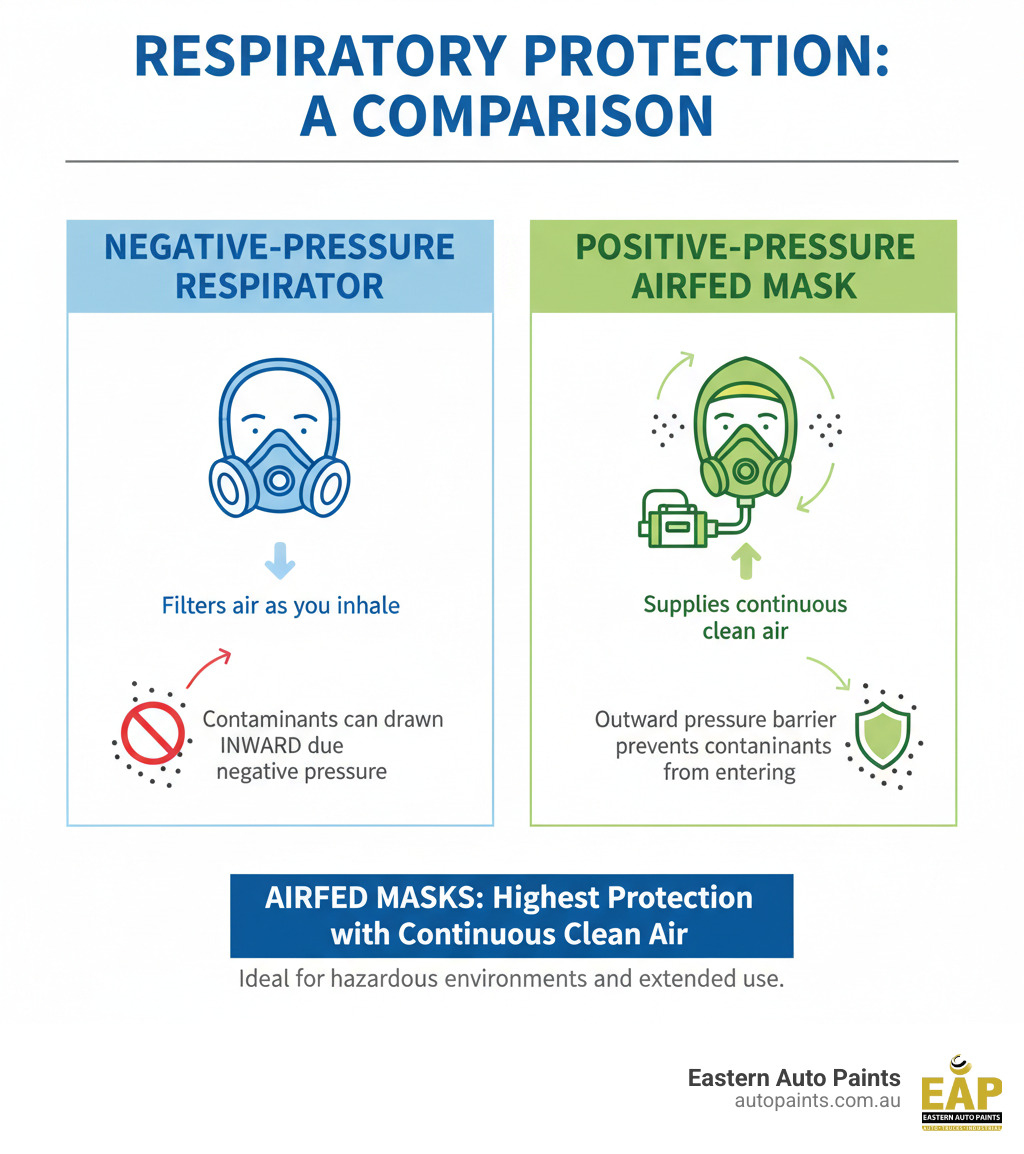
An Airfed Mask is a respiratory protection system that supplies clean, filtered air to your face, creating positive pressure that prevents harmful contaminants from entering. Unlike traditional respirators that filter the air you breathe, an airfed mask delivers a continuous flow of clean air from an external source, such as a battery-powered blower unit (PAPR) or a stationary air compressor.
If you're working with modern automotive paints, particularly 2K systems containing isocyanates, an airfed mask is essential. These volatile organic compounds (VOCs) can cause serious respiratory damage, and standard cartridge respirators may not provide adequate protection for extended spray work. Airfed masks offer the highest available respiratory protection (TH3 APF40), making them ideal for automotive refinishing and industrial coatings.
I'm James Maranis, and with over 30 years in the coatings industry, I've seen how proper respiratory protection transforms safety and work quality. At Eastern Auto Paints, we help professionals select the right airfed system, from mobile PAPR units to full airline setups for busy spray booths.
What is an Airfed Mask and How Does It Work?
An Airfed Mask is your personal clean air delivery system. Instead of you pulling air through filters, it actively pumps clean, filtered air to you through a breathing tube. This is crucial in hazardous environments with fumes, vapours, and particulates.
The system works on a principle called positive pressure. A steady stream of clean air flows into your mask, creating a gentle outward pressure. This acts as an invisible shield, preventing contaminated air from your spray booth, like isocyanates from 2K paints or paint mist, from seeping in. Because the air is delivered to you, there's no breathing resistance, which significantly increases comfort during long spray sessions.
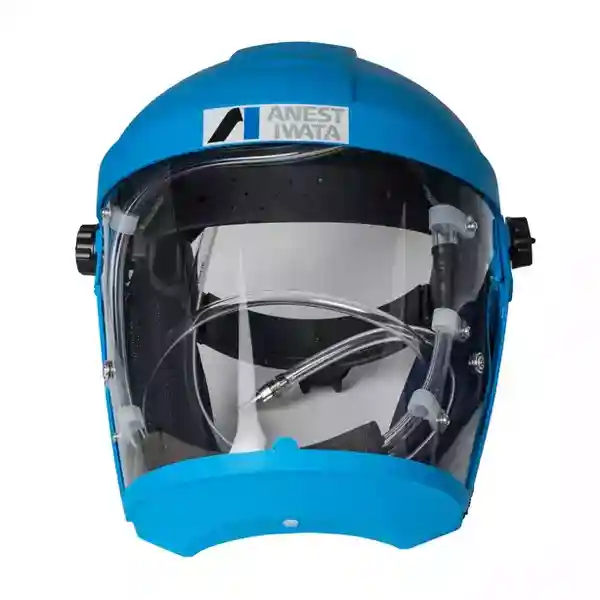
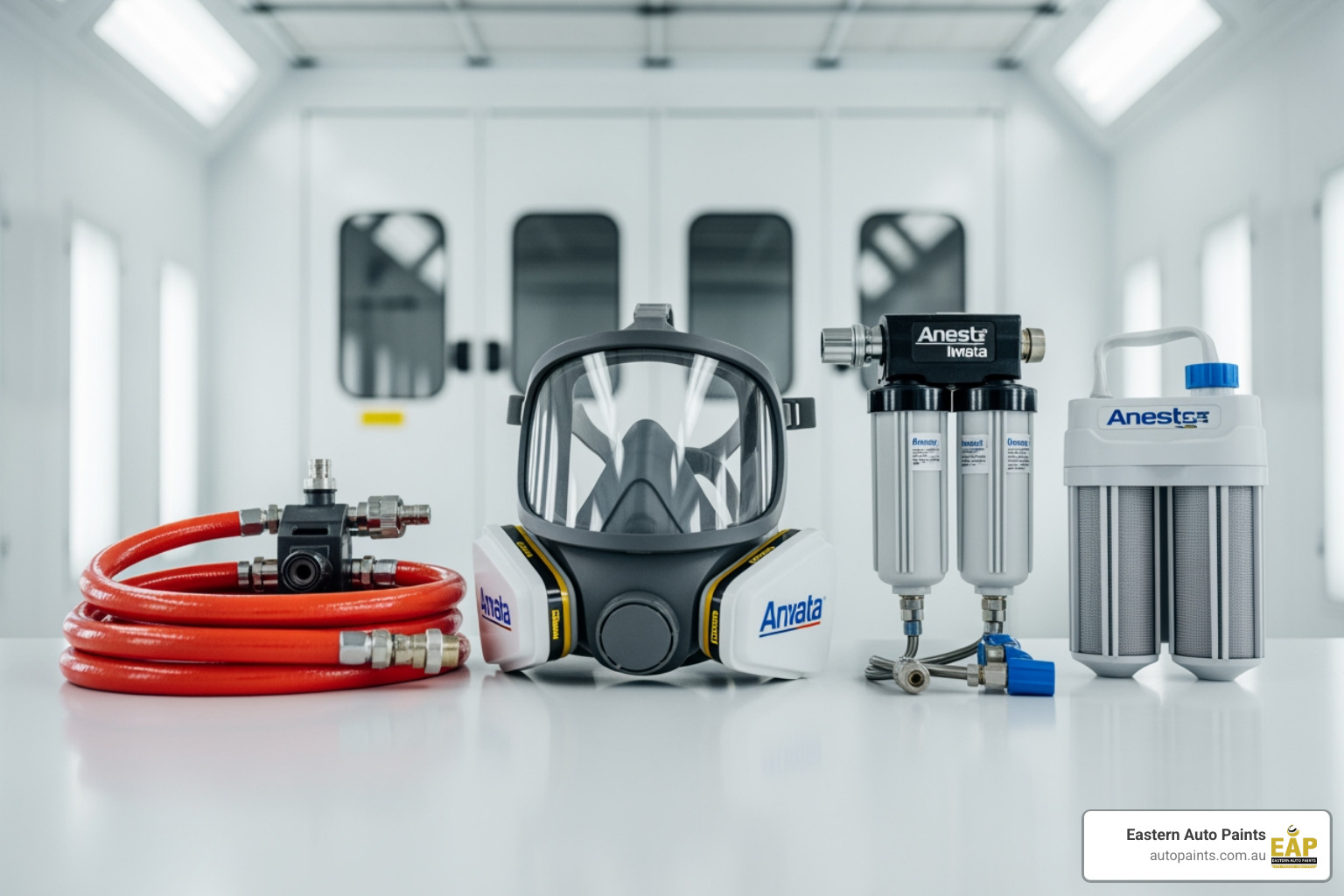
Every airfed system has three core components: the headtop (mask, hood, or helmet), the breathing tube that delivers the air, and the air source (a battery-powered blower for PAPR systems or a compressed air line for airline systems).
For a more detailed breakdown, see our Complete Guide to Air Fed Face Masks for Automotive and Industrial Work.
PAPR vs. Supplied Air (Airline) Systems
Your main choice is how to source your clean air. Each option has its place in the workshop.
Powered Air Purifying Respirator (PAPR) systems are self-contained units with a battery-powered blower that pulls air through a filter. Their key advantage is portability. You can move freely around a vehicle or between workstations. For example, the Rutlands® PAPR provides 200 litres of clean air per minute and runs for up to 6 hours on a single charge, offering a full shift of mobile protection.
Supplied Air (Airline) Respirator systems connect directly to a compressor. The air is cleaned through air filters and regulators to remove impurities before reaching your mask. While you are tethered to an airline, you get a virtually unlimited runtime and a consistent air supply, making it ideal for fixed spray booths.
Understanding Positive Pressure Protection
The positive pressure design is a game-changer for all-day comfort and safety. Here’s why:
- Effortless Breathing: With air constantly supplied to you, there is no breathing resistance. This dramatically reduces fatigue during long shifts.
- Forgiving Fit: Because air is always pushing out, a perfect seal isn't as critical as with negative-pressure masks. This simplifies fit testing for loose-fitting hoods and helmets.
- Higher Protection: The outward airflow actively prevents contaminants from entering your breathing zone. Any potential leak pushes clean air out, rather than letting contaminated air in. This is why these systems achieve top-tier TH3 protection ratings.
- Improved Comfort: The airflow helps keep you cool and prevents the face shield from fogging. Importantly, the design of loose-fitting hoods allows users with facial hair or glasses, like with the Rutlands® PAPR, to maintain effective protection, which is impossible with tight-fitting respirators. This makes an Airfed Mask an essential piece of PPE when working with 2K clear coats and other modern coatings.
Key Features to Compare When Choosing an Airfed Mask
Choosing the right Airfed Mask means matching the system to your specific work environment, hazards, and comfort needs. The best mask for a mobile technician will differ from one for a dedicated spray booth painter.
Key features to consider include protection levels, comfort, durability, and certifications. Let's break down what matters most when selecting your respiratory protection.
Filtration and Protection Ratings (APF & TH)
Understanding protection ratings is critical when working with hazardous materials like the isocyanates in 2K paints.
- Assigned Protection Factor (APF): This number tells you how much the respirator reduces your exposure. An APF of 40 means you are only exposed to 1/40th of the contaminant concentration in the air. Higher is better.
- TH Rating: This European standard (EN 12941) applies to powered devices. TH1 is basic, TH2 is medium, and TH3 is the highest level of filtration efficiency available.
For automotive refinishing with isocyanate-based products like 2K clear coats, you need TH3 protection. This guarantees filtration efficiency over 99.997% against particulates and fumes. Systems like the Walcom NEW Pro Airfed Mask Full Kit meet this highest safety class. These ratings represent the difference between safe breathing and potential long-term respiratory damage. We stock a full range of certified PPE masks and accessories to meet these standards.
Battery Life and Airflow for Your Airfed Mask
For PAPR systems, battery life and airflow are crucial for a productive workday.
Battery duration should match your workflow. Many quality systems like the Rutlands® PAPR offer around 6 hours of continuous use, covering most shifts. For longer workdays, premium models like the Dräger X-plore 8500 PAPR can deliver up to 16 hours of battery life. Modern lithium-ion batteries are designed for hundreds of charge cycles.
Airflow rates, measured in litres per minute (LPM), determine how much clean air is delivered to your headtop. This affects both comfort and the effectiveness of the positive pressure seal. Most PAPR units offer adjustable airflow settings:
- Low (170+ lpm): Good for light tasks.
- Standard (190+ lpm): A solid all-around balance.
- High (210+ lpm): Ideal for strenuous work or warmer conditions.
Higher airflow also helps prevent your visor from fogging, ensuring clear vision when using your spray guns and accessories.
Comfort, Visor, and All-Day Wearability
If a respirator isn't comfortable, it won't be worn correctly or consistently. Comfort is a safety feature.
- Weight and Balance: A well-designed Airfed Mask distributes weight evenly to prevent neck and shoulder strain. The Rutlands® PAPR, for example, has a helmet weighing under 500g and a total system weight of just 1.37kg.
- Adjustable Headgear: Look for multiple adjustment points to create a secure, custom fit that stays in place without being too tight.
- Visor Quality: Your visor should offer a wide, clear, and undistorted field of view. Anti-fog and anti-scratch coatings are essential for maintaining visibility and durability in a workshop environment. The Rutlands® PAPR's polycarbonate visor includes these features as standard.
- Accommodating Glasses and Facial Hair: The positive pressure design of loose-fitting hoods and helmets allows users with spectacles or beards to maintain full protection, a significant advantage over traditional tight-fitting respirators.
Airfed Masks vs. Other Respirators: Which is Right for Your Job?
Not all respiratory protection is created equal, and for professionals working with modern automotive paints like 2K clear coats, the choice is critical. Do you want adequate protection, or the best protection available?
Here's how the main categories compare:
| Feature | Airfed Mask (PAPR / Supplied Air) | Half-Face Respirator (e.g., P2/P3 filters) | Disposable Mask (e.g., P2) |
|---|---|---|---|
| Protection Level | Highest (TH3 APF40). Protects against particulates, fumes, gases, vapours, isocyanates. Provides eye/face protection. | Medium-High (P2/P3). Protects against particulates, some vapours/gases (with appropriate cartridges). No eye protection. | Low-Medium (P2). Primarily against particulates. No eye protection. |
| Comfort | Excellent. Positive pressure, no breathing resistance, often cools face, accommodates facial hair/glasses, wide field of view. | Good, but can be hot, restrictive, breathing resistance, requires clean-shaven face and fit testing. | Moderate. Can be hot, uncomfortable, limited breathability, requires fit. |
| Best Use Case | Working with isocyanate-based paints, long spray sessions, poor ventilation, industrial coatings, automotive refinishing. | Short to medium duration tasks with known contaminant levels, general dust, some organic vapours (with correct filters). | Non-toxic dust, nuisance particles, very short-term tasks. Not suitable for paints or chemicals. |
| Cost | Highest initial investment, but lower long-term cost for filters vs. cartridges over time. | Moderate initial cost, ongoing cost for cartridge/filter replacement. | Lowest initial cost, but frequent replacement needed. |
While disposable masks suit sanding dust and half-face respirators can handle some chemical work, neither offers the comprehensive protection of an airfed system when spraying Protec Automotive Paint Systems or other hazardous coatings.
A half-face respirator relies on a perfect seal and you pulling air through a filter. If that seal fails or the cartridge is spent, you are at risk. An Airfed Mask actively supplies clean air, creating a protective barrier that contaminants cannot penetrate. For tasks involving isocyanate exposure, safety guidelines often require this level of atmosphere-supplying protection.
Your lungs don't get a second chance. For less hazardous tasks, a half-face respirator may be suitable. Our Ultimate Checklist for Finding Your Best Half Face Respirator can help. But for serious spray painting hazards, the superior protection and comfort of an Airfed Mask make it the clear winner. Browse our full range of PPE and airfed mask solutions or contact our expert team for personalised advice.
Maintenance: Protecting Your Investment
An Airfed Mask is a critical piece of safety equipment that requires proper maintenance to ensure it performs optimally and lasts for years. Diligent care guarantees your protection every time you use it.
Here is a breakdown of essential maintenance practices:
- Daily Checks: Before each use, visually inspect the headtop, visor, and breathing tube for damage. Ensure all connections are secure and the battery (on PAPR units) is charged. Do a quick airflow check.
- Cleaning Procedures: After use, clean the visor with a soft cloth and mild cleaner, avoiding harsh solvents. Wipe down the headtop, breathing tube, and blower unit exterior. Follow manufacturer instructions for fabric components.
-
Filter Replacement: This is the most critical task. Filters have a finite life and must be replaced regularly.
- Pre-filters capture larger particles and should be replaced frequently (daily or weekly) depending on the environment.
- Main Filters provide high-level protection. Replace them based on usage, manufacturer guidelines, or when an airflow alarm activates. Many PAPR systems, like the Rutlands® PAPR, have an alarm that signals when a filter needs changing. Always keep spares on hand.
- Battery Care (PAPR systems): Fully charge the battery before use and avoid completely draining it. Store batteries in a cool, dry place. Replace them after the recommended number of charge cycles (e.g., 500 for the Walcom unit).
- Storage: Store your Airfed Mask system in a clean, dry area away from direct sunlight and chemicals, preferably in its designated carry bag.
A simple maintenance checklist:
- Inspect all components for damage.
- Check battery charge (PAPR).
- Clean visor and headtop.
- Replace pre-filter as needed.
- Check main filter status/alarm.
- Ensure all connections are secure.
- Store in a clean, dry place.
Frequently Asked Questions about Airfed Masks
Here are answers to some of the most common questions we get about Airfed Masks.
How often do I need to replace the filters on my airfed mask?
Filter replacement frequency depends on usage, contaminant levels, and manufacturer guidelines. Pre-filters, which catch larger particles, may need daily or weekly replacement in dusty environments. The main filter lasts longer but should be replaced immediately if you notice reduced airflow or if the system's clogged filter alarm activates. The Rutlands® PAPR, for instance, has an alarm that signals when it's time for a change. Always follow the manufacturer's schedule and keep spare filters on hand to avoid downtime.
Can I wear glasses with an airfed mask?
Yes, this is a key benefit of most Airfed Mask systems. Loose-fitting hood and helmet designs provide ample space for prescription glasses without compromising the protective seal. Because the mask uses positive pressure (pushing air out), a perfect skin-tight seal isn't as critical as with traditional respirators. The Rutlands® PAPR is specifically designed to accommodate users with spectacles, ensuring both clear vision and full protection.
Is an airfed mask necessary for all automotive painting?
Whether an Airfed Mask is necessary depends on a risk assessment of the materials, ventilation, and task duration.
For any spray application involving 2K paints or clear coats containing isocyanates, an Airfed Mask is highly recommended and often legally required. Isocyanates can cause severe, irreversible respiratory damage, and standard respirators may not offer sufficient protection for prolonged exposure.
For very brief aerosol can touch-ups in a well-ventilated area, a quality half-face respirator might suffice. However, for professional refinishing with hazardous materials like Protec Automotive Paint Systems, an Airfed Mask is the gold standard for protecting your long-term health.
Investing in Your Health and Safety
Choosing the right Airfed Mask is a direct investment in your long-term health. As we've covered, these systems provide the highest level of respiratory protection by supplying clean, filtered air, making them essential for working with modern automotive and industrial paints.
Features like TH3 APF40 protection, comfortable airflow, and all-day wearability are not just specifications; they are what enable you to work safely and effectively. At Eastern Auto Paints, we've spent over 34 years helping professionals select the right safety equipment. We understand the real-world challenges of the workshop and can guide you to the best solution.
The difference between breathing clean air and risking exposure to isocyanates is too significant to ignore. Your lungs deserve the best protection available.
Whether you need a portable PAPR system or a supplied-air setup for your spray booth, Eastern Auto Paints has the professional-grade PPE and airfed mask solutions to keep you safe. Explore our range online or contact our expert team for personalised advice custom to your work environment and needs.