
5 Practical Ways to Identify Types of Clearcoat
Why Understanding Clearcoat Types Matters for Your Project
Types of clearcoat can be identified through five key characteristics:
- Curing Method: 1K (single-component, air-dry) or 2K (two-component, requires hardener)
- Solids Content: MS (Medium Solids), HS (High Solids), or UHS (Ultra High Solids)
- Finish Level: Gloss, satin, or matte
- Performance Properties: Standard, anti-scratch, ceramic-infused, or fast-drying
- Basecoat Compatibility: Designed for solid, metallic, pearl, or single-stage paints
Clearcoat is the transparent top layer that protects your vehicle's colour coat from UV rays, scratches, and chemicals. It provides the glossy, mirror-like finish of a quality paint job and is essential for preventing the colour from fading, cracking, or peeling.
The challenge is that not all clearcoats are created equal. A 1K aerosol for small touch-ups lacks the durability for a full respray, while a professional 2K clearcoat offers exceptional resilience but requires proper mixing, safety equipment, and application technique. Choosing the wrong product can lead to poor adhesion, premature failure, or a disappointing finish.
Whether you're repairing a scratch or doing a full restoration, understanding the different types of clearcoat is essential for achieving professional, long-lasting results. I'm James Maranis, and with over 30 years in the automotive paint industry, I've worked with every clearcoat imaginable. At Eastern Auto Paints, we guide customers daily to ensure they select the right product for their project and achieve results that last.
Way 1: Check the Curing Method – 1K vs. 2K Clearcoats
The most fundamental distinction between types of clearcoat is how they cure. This directly impacts durability, chemical resistance, and the application process. Choosing between 1K and 2K is like choosing between a quick patch and a permanent repair; both have their place, but one is for convenience and the other is for longevity.
Understanding 1K (Single-Component) Clearcoats
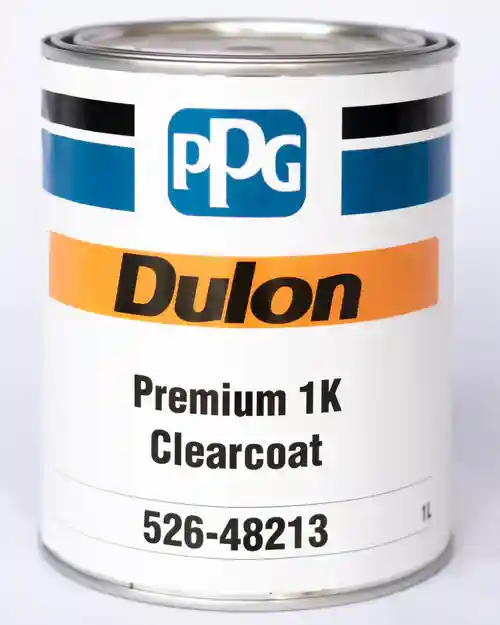
1K clearcoats are single-component products that come ready to use from the can, with no mixing required. They cure through air-drying as solvents evaporate, leaving a hardened film. This simplicity makes them perfect for small jobs like stone chips or mirror touch-ups, and they are commonly sold in aerosol cans for DIY use.
We stock options like the Dupli-Color 1K Clear, which offers good gloss and UV protection for various applications. However, because they air-dry, 1K clearcoats have lower chemical and scratch resistance compared to 2K systems. They are ideal for small repairs where convenience is the priority over maximum durability.
The Professional's Choice: 2K (Two-Component) Types of Clearcoat
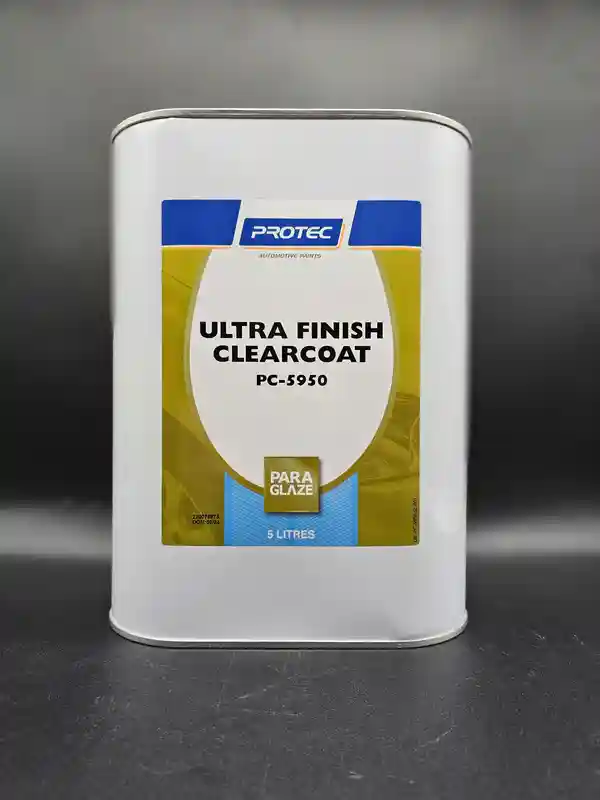
For full resprays or major panel work, professionals use 2K clear coats. These are two-component systems where the clearcoat is mixed with a hardener (or activator) before spraying. This triggers a chemical reaction, creating a cross-linked finish that is significantly harder and more resilient.
This chemical cure provides superior durability, scratch resistance, and chemical resistance against fuels, detergents, and road grime. It also offers advanced UV protection to prevent fading. At Eastern Auto Paints, we supply professional-grade 2K systems with matching hardeners and reducers.
A note on safety: 2K hardeners often contain isocyanates, which require proper respiratory protection. Always work in a well-ventilated area and wear appropriate PPE masks or an Air Fed Mask system. Follow the manufacturer's mixing ratios and be mindful of the pot life—the limited time you have to use the product once mixed.
Way 2: Examine the Solids Content (MS, HS, & UHS)
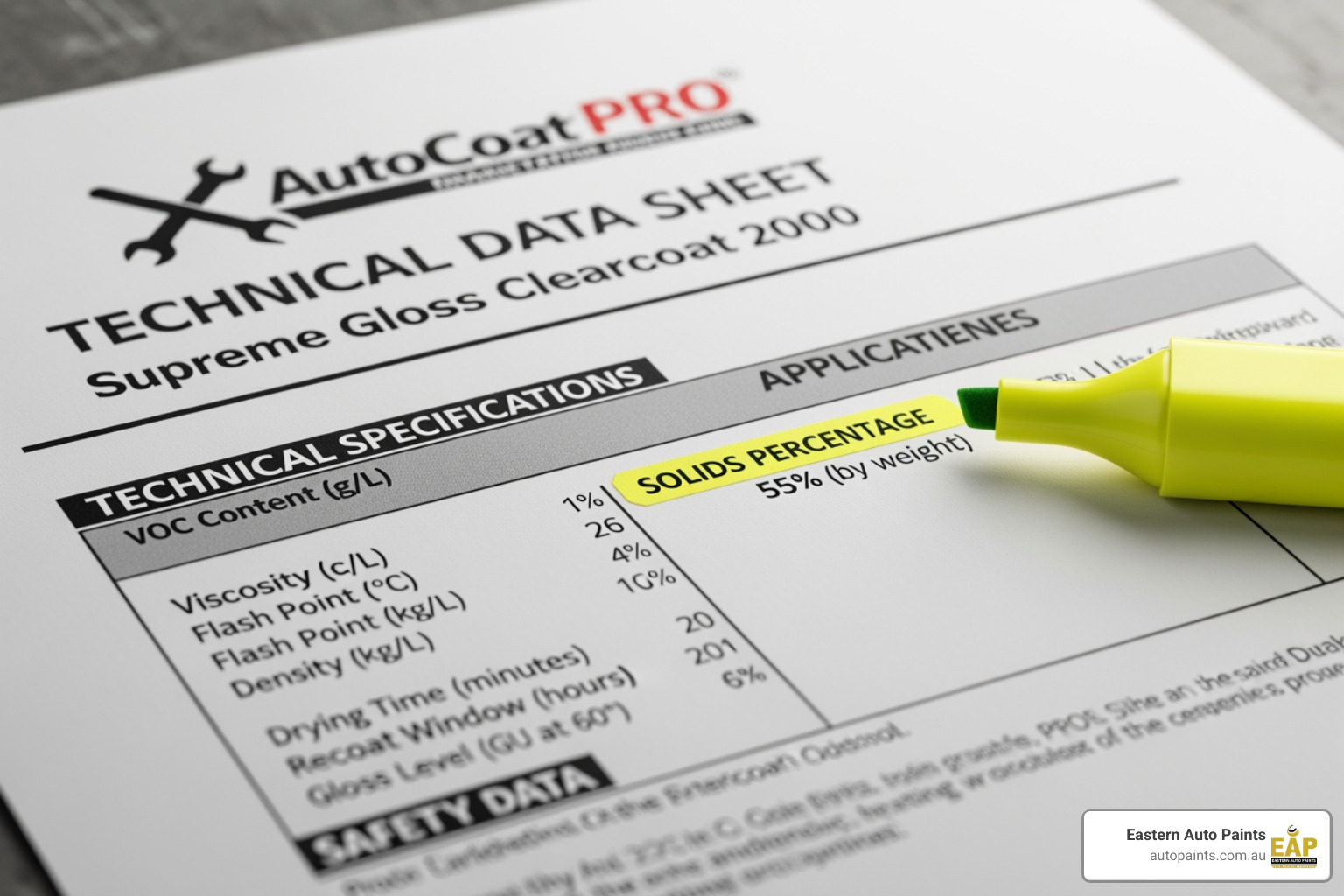
Another crucial factor is solids content—the percentage of material that remains on the surface after the liquid solvents evaporate. A higher solids content means a thicker, more protective film per coat, requiring fewer layers and releasing fewer Volatile Organic Compounds (VOCs) into the atmosphere.
Environmental regulations, such as the European Directive 2004/42/CE, have driven the development of higher-solids clearcoats. Before you spray, always consult the product's Technical Data Sheet (TDS), which specifies the solids content, mixing ratios, and drying times.
MS (Medium Solids) Clearcoats
Medium Solids (MS) clearcoats contain a higher percentage of solvents (typically over 60%), which helps them flow and level out easily. This makes them forgiving for beginners and can help avoid issues like orange peel. The trade-off is that you'll need to apply more coats to build sufficient film thickness, making the process longer. MS clearcoats have largely been replaced by more efficient higher-solids options.
HS (High Solids) Clearcoats
High Solids (HS) clearcoats are the standard for most professional applications, with a solids content between 40% and 60%. They offer an excellent balance of performance and ease of use. With HS clearcoats, you can achieve full coverage and protection in just two to three coats, saving time and material. The thicker film provides better durability, scratch resistance, and a deeper, richer finish. Most of the professional 2K clearcoats we recommend at Eastern Auto Paints are HS products.
UHS (Ultra High Solids) Clearcoats
Ultra High Solids (UHS) clearcoats represent the peak of clearcoat technology, with a solids content above 60%. They deliver maximum film build, outstanding scratch resistance, and incredible depth of finish with minimal solvent emissions, meeting the strictest VOC regulations. However, their thick consistency requires more skill and proper equipment, like a quality Sata spray gun, to apply correctly without causing sagging or orange peel. For experienced painters seeking a flawless, show-car-quality finish, UHS clearcoats are best.
Way 3: Look at the Desired Finish (Gloss, Satin, & Matte)
The aesthetic you want is just as important as the technical properties. The finish level—gloss, satin, or matte—changes how light reflects off the surface, defining your vehicle's final look.
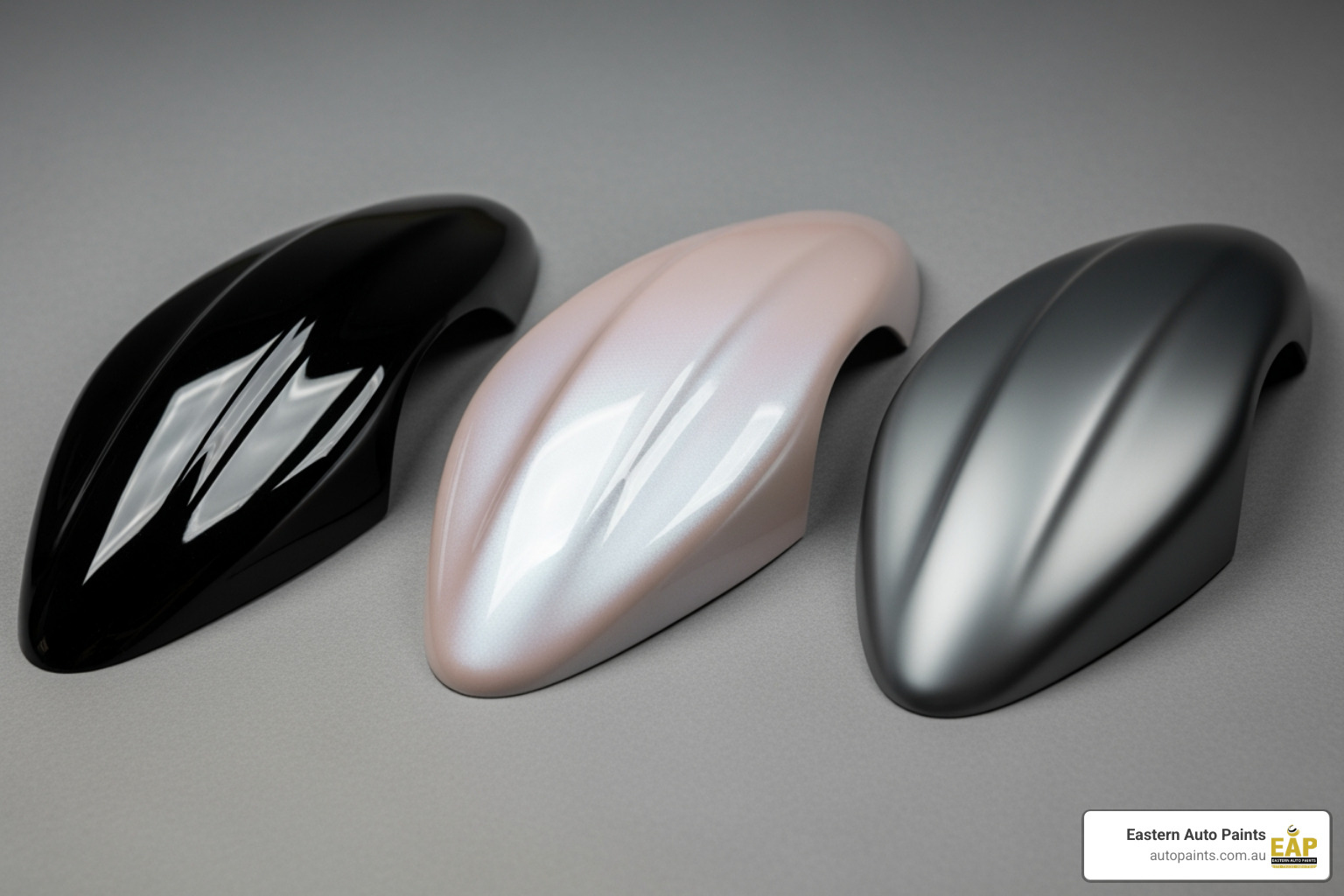
High Gloss Finish
The high gloss finish is the classic "wet look" that makes paint shine. It creates maximum light reflection, which improves the depth and richness of the colour underneath. Metallic and pearl paints appear more vibrant, while solid colours look deeper. Most professional 2K clearcoats are formulated to deliver this brilliant, deep gloss, providing a luxurious and protective finish that turns heads.
Matte & Satin Finishes
For a more contemporary and unique aesthetic, matte and satin finishes are excellent choices. A matte clearcoat creates a flat, non-reflective surface that absorbs light, giving the vehicle an aggressive, velvety appearance. A satin finish is the middle ground, offering a subtle, soft sheen that isn't fully flat but lacks the high reflectivity of gloss.
These finishes are created with special flattening agents. Here’s the critical rule: once applied, you cannot polish or buff a matt or satin clearcoat. Doing so will create shiny spots and ruin the uniform appearance. Any imperfections are permanent, so precise application is essential. These finishes are also great for creating specialized textured finishes (e.g., Textura, Structura). If you're considering a matte or satin project, practice on test panels first.
Way 4: Consider Specialised Performance Properties
Beyond standard protection, many modern types of clearcoat are engineered with specialised properties to address specific challenges, such as extreme durability or faster workshop turnaround. Understanding these options can lift your project from good to great.
Anti-Scratch & Ceramic-Infused Clearcoats
For vehicles that face daily wear and tear, these advanced clearcoats offer superior protection. Anti-scratch clearcoats use special resins to increase surface hardness, making the finish more resistant to swirl marks and light abrasions from car washes. This keeps the finish looking pristine for longer.
Ceramic-infused clearcoats take this a step further by integrating nano-ceramic particles into the formula. This creates an exceptionally hard and durable finish with improved scratch resistance. These clearcoats are often also hydrophobic, meaning they repel water, which makes the vehicle easier to clean and helps protect against environmental contaminants.
Fast-Drying & Air-Dry Clearcoats
In a busy workshop, time is money. Fast-drying clearcoats are formulated to cure rapidly, reducing the time between coats and the overall job time. This increases throughput and saves on energy costs from prolonged baking cycles. Many HS and UHS clearcoats, or a rapid drying enamel, naturally fall into this category.
Air-dry clearcoats offer flexibility for mobile technicians or situations where a spray booth is unavailable. While many 1K clearcoats are air-dry by nature, some 2K systems can also be cured at ambient temperatures using specific hardeners. This allows you to get the durability of a 2K system with the convenience of air curing.
Way 5: Ensure Compatibility with Your Basecoat
Even the best clearcoat will fail if it's not compatible with the basecoat underneath. The paint system is a team; when the layers are chemically compatible, they bond properly and work together. When they aren't, you risk peeling, bubbling, or discolouration, forcing you to start over.
Most adhesion issues stem from poor surface preparation or incompatible products. The good news is that ensuring compatibility is straightforward—it just requires using a matched system.
Matching Clearcoat to Different Types of Base Paints
Different types of clearcoat are formulated for specific basecoat systems.
-
Solid colours: A high-quality 2K acrylic urethane clearcoat is perfect. It provides excellent durability and improves the vibrancy of a solid
Protec basecoat. - Metallic colours: The clearcoat must be applied in thin, even layers to prevent the metallic flakes from shifting, which can create a blotchy appearance.
- Pearl colours: The clearcoat protects the delicate pearl mid-coat and improves its iridescent effect. Proper flash-off time between coats is critical to avoid defects.
-
Single-stage paint: While it doesn't technically require a clearcoat, applying one over single-stage paint can significantly boost its durability, UV resistance, and gloss, creating a
performance enamel topcoatlook. -
Multistage paint: These complex systems require strict adherence to the manufacturer's timing instructions to prevent issues like
solvent trap(trapped solvents) or delamination.
Crucially, always allow your basecoat to cure completely within the recoat window specified on its Technical Data Sheet before applying clearcoat. Applying clearcoat too soon can trap solvents, causing bubbles and blisters.
Why Using a Matched System is Critical for the Best Types of Clearcoat
Using a matched paint system from a single manufacturer is the best practice for any refinishing project. Systems like Protec Automotive Paint Systems or PPG Industrial Paints are chemically engineered to work together.
When you use a primer-base-clear system from the same family, you get predictable results and superior adhesion, as the layers are designed to bond at a molecular level. This significantly reduces the risk of peeling, flaking, or other failures. It also gives you access to reliable technical support. Using a matched system isn't being overly cautious—it's just smart business.
Frequently Asked Questions about Clearcoat Types
Here are answers to the most common clearcoat questions we hear at Eastern Auto Paints.
What is the main difference between 1K and 2K clearcoats?
The key difference is the curing method and resulting durability. 1K clearcoats are single-component products that air-dry. They are convenient for small touch-ups but offer lower chemical and scratch resistance. 2K clearcoats are two-component systems that require a hardener to trigger a chemical reaction. This creates a much harder, more durable finish suitable for professional resprays and long-term protection.
Can I apply a new clearcoat over an old, damaged finish?
No. Applying new clearcoat over a failing finish will cause the new layer to fail as well. You must sand the damaged area down to a stable, sound surface (such as the basecoat, primer, or bare metal) to ensure the new paint system has proper adhesion and will last.
Are high-solids (HS/UHS) clearcoats always the better choice?
Not necessarily. While HS and UHS clearcoats offer a thicker, more durable finish with fewer coats, their thick consistency makes them harder to apply smoothly. Without the right technique and equipment, like a quality Sata spray gun, they can be prone to "orange peel." Medium-solids (MS) clearcoats are more fluid and forgiving, often making them a better choice for beginners or those working in non-ideal conditions.
Conclusion
Choosing the right types of clearcoat is simple when you understand the five key factors: curing method, solids content, finish level, performance properties, and basecoat compatibility. A 1K clearcoat is perfect for quick touch-ups, while a 2K system provides the durability needed for a full respray.
The most important takeaway is to use a complete, matched paint system from a single manufacturer, like Protec Automotive Paint Systems or PPG Industrial Paints. This is your best guarantee of professional results, as it eliminates guesswork and prevents costly failures like peeling or poor adhesion.
At Eastern Auto Paints, our Melbourne-based team has been helping customers make these decisions for over 34 years. We stock everything from 1K touch-up aerosols to professional-grade 2K systems, along with the necessary hardeners, reducers, and safety equipment like PPE masks to keep you protected.
For a flawless, durable finish that stands the test of time, explore our complete range of automotive clearcoats or contact our team for expert advice custom to your project. We're here to make sure you get it right the first time.