
A Comprehensive Guide to Choosing a Car Painting Compressor
Why Your Air Compressor is the Heart of Every Paint Job
Achieving a flawless, showroom-quality finish is the goal of any automotive paint job. While your automotive paint and spray gun are vital, the unsung hero is the air compressor. It's the heart of your system, providing the consistent, clean, and dry air needed to atomise paint perfectly. With over 34 years in the automotive refinish industry, we know that the right compressor is a critical investment in your work. This guide will help you choose the best compressor for car painting for professional results.
Without adequate air volume and consistent pressure, even the best paint and technique will fail. Here are the key requirements:
- CFM (Air Volume): Typical HVLP guns for full panels need 10–15 CFM at \~25–40 PSI; smaller LVLP guns usually draw 4–8 CFM, depending on the model and nozzle.
- Tank Size: For small panels or touch-ups, a 50-litre (≈13‑gallon) tank works well. For full-car resprays, 100–150 litres (≈26–40 gallons) is the minimum, but professional shops often use 200 litres+ to ensure smooth, uninterrupted spraying.
- PSI (Pressure): Most HVLP and LVLP spray guns work best at 25–40 PSI at the gun. The compressor should have a maximum rating above this (≈115–145 PSI / 8–10 bar) to ensure it can maintain adequate pressure, but the key is the CFM at working PSI, not the max PSI.
- Air Quality: Must include filtration and a dryer to remove moisture and oil
Underestimating CFM is the most common mistake, leading to sputtering, uneven coverage, and poor atomisation. Modern waterborne paints are especially sensitive to moisture and contaminants, making a quality compressed air system as important as the compressor itself. Oil causes fisheyes, while moisture leads to blushing and adhesion problems that can ruin a paint job.
Whether you're a DIY enthusiast or a professional body shop, understanding these core specifications will save you from costly mistakes. The right compressor, paired with proper filtration, ensures every job meets professional standards.
Understanding the Core Specifications: CFM, PSI, and Tank Size
Choosing a compressor for car painting can feel overwhelming, but you only need to understand three core numbers: CFM, PSI, and tank size. Let's break them down so you can select a compressor that delivers professional results.
CFM (Cubic Feet per Minute): The Most Critical Factor
Think of CFM as your compressor's lung capacity, it measures the volume of air flowing out every minute. For spray painting, this is the specification that matters most. Your spray gun needs a continuous, steady stream of air to break paint into a fine mist. If the compressor can't keep up, you'll see sputtering, uneven coverage, and a blotchy finish.
A critical rule is to always choose a compressor that delivers at least 30% more CFM than your spray gun requires. If your gun needs 10 CFM, look for a compressor rated at 13 CFM or higher. This buffer ensures consistent performance during continuous spraying.
Most HVLP spray guns demand 10-15 CFM, while newer LVLP guns are more efficient at 5-10 CFM. When comparing compressors, always check the CFM rating at your working pressure (usually 40 PSI for painting), not just the maximum CFM advertised.
PSI (Pounds per Square Inch): The Power Behind the Paint
While CFM is about volume, PSI measures the force pushing that air. Most automotive spray guns work best between 25-50 PSI at the gun, though you'll set your compressor regulator higher to account for pressure loss in hoses and filters. The good news is nearly every compressor for car painting can generate enough pressure, with most maxing out around 145 PSI (10 bar). What really matters isn't the maximum PSI, but whether the compressor maintains adequate CFM at your required working pressure.
Tank Size (Litres/Gallons): Your Air Reservoir
The air tank stores compressed air so you can spray continuously without the motor running non-stop. A larger tank means longer spray times before the motor kicks in, which is crucial for avoiding lap marks and uneven coverage.
For small panels and touch-ups, a 50-litre (approx. 13-gallon) tank works well. The Anest Iwata NB20C-50 is perfect for this kind of work.
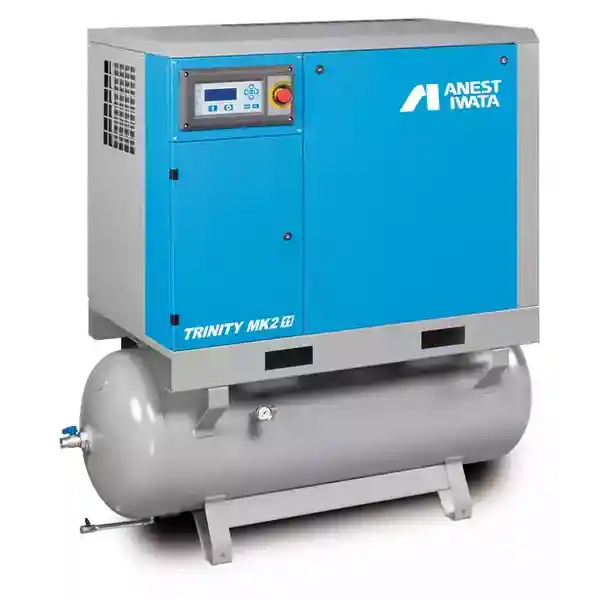
For full car painting. With 100–150 litres, you can typically spray panels continuously for a few minutes before the compressor motor cycles. Actual run time depends on the spray gun’s CFM and nozzle size. A 90-litre tank like on the Anest Iwata NBC20C-90 is a great sweet spot for enthusiasts. For more demanding work, the Anest Iwata NB30-90 delivers 13.8 CFM with a 90-litre tank. Professional shops often opt for 270-litre units like the Anest Iwata Trinity11 MK2 for all-day spraying.
Ready to find the right compressor? Browse our complete range of professional compressors or contact our expert team for personalised recommendations.
Matching Your Compressor to Your Spray Gun and Project Scope
The right compressor for car painting is not a one-size-fits-all solution; it depends on your tools and project scale. A system for occasional touch-ups differs greatly from one for a busy body shop.
How Spray Gun Type Affects Your Choice
Your spray gun's air requirements are the first factor to consider. Each gun type has specific needs your compressor must meet.
HVLP (High Volume, Low Pressure) guns are the industry standard, offering excellent transfer efficiency (up to 65%) but requiring significant air volume, typically 10-15 CFM at 40 PSI. Our range of gravity feed spray guns includes many excellent HVLP options.
LVLP (Low Volume, Low Pressure) guns are even more efficient and need only 5-10 CFM at 25 PSI. They are a great choice if you're working with a smaller compressor or doing detail work.
Conventional spray guns are less common now due to lower transfer efficiency. They may draw 15–25 CFM at \~50 PSI, which demands a large compressor, making HVLP or LVLP guns the preferred choice for modern refinishing.
Sizing Your compressor for car painting: Panels vs. Full Resprays
The scope of your project dictates the compressor power you need. Think about what you'll be painting long-term.
For small jobs and DIY projects, like painting rims, individual panels, or touch-ups, a smaller, portable compressor is sufficient. Look for a minimum of 7 CFM (approx. 200 L/min) with a 50-litre (approx. 13-gallon) tank. This provides enough capacity for intermittent use. Our Anest Iwata NB20C-50 is a fantastic choice for hobbyists, delivering 8 CFM (225 L/min). For more tank capacity with the same output, the Anest Iwata NBC20C-90 offers a 90-litre tank.
For full resprays and professional use, you need a compressor that can keep pace with continuous demand. We recommend a minimum of 10-15 CFM at 40 PSI with a tank of at least 100–150 litres (26-40 gallons) to ensure smooth, uninterrupted application. The Anest Iwata NB30-90, with its 13.8 CFM (390 L/min) output, is a great step up for regular panel work.
For busy workshops, screw compressors are the gold standard as they are designed for continuous operation. Our Anest Iwata Trinity11 MK2 is a turnkey solution with built-in filters and a dryer. For even more demanding operations, the Anest Iwata Eco Screw Compressors series, like the ECO7.5 MK2, deliver the stable air supply that keeps production moving.
If you're unsure which size is right, contact our expert team for help choosing a system that matches your current projects and future growth.
Key Compressor Types and Features for Automotive Painting
Beyond core specs, the compressor type and its features affect its suitability for painting. Understanding these differences helps you choose a machine that fits your workspace, budget, and quality standards.
Piston vs. Rotary Screw Compressors
When choosing a compressor for car painting, you'll find two main types:
Piston compressors are the familiar workhorses that use pistons to compress air. They are affordable upfront and easy to maintain, making them an excellent choice for DIY enthusiasts or workshops with intermittent air needs. They are perfect for projects where you can work in bursts, allowing the compressor to cool down. We stock robust piston models like the Anest Iwata NB20C-50 for hobbyists and the more powerful Anest Iwata NB30-90 for demanding work.
Rotary screw compressors are the professional's choice. They use interlocking rotors to deliver a constant, quiet, and efficient air supply. Built for continuous use, they are ideal for busy body shops that need reliable air all day. Our Anest Iwata Eco Screw Compressor range, including the Anest Iwata ECO7.5 MK2, provides industrial-grade reliability. For a complete solution, the Anest Iwata Trinity11 MK2 includes built-in filtration and dryers.
Oil-Lubricated vs. Oil-Free: What's Best for a Flawless Finish?
Air purity is everything for a perfect paint finish.
Oil-lubricated compressors are durable, quieter, and run cooler. However, they can introduce microscopic oil particles into the airline, causing "fisheyes", crater-like defects that ruin a paint job. This risk is completely manageable with a high-quality, multi-stage filtration system, which removes oil before it reaches your spray gun.
Oil-free compressors eliminate contamination risk, but they can run louder and hotter. While suitable for small or occasional jobs, heavy-duty work usually favours oil-lubricated units with proper filtration for longevity and quieter operation.
Does Compressor Horsepower (HP) Matter for car painting?
Horsepower alone doesn’t guarantee performance. CFM at working PSI is what determines if a compressor can keep up with your spray gun. HP only indicates the motor's power, not how efficiently it produces compressed air. A well-engineered 3 HP compressor can easily outperform a poorly designed 5 HP model. Manufacturers often use high HP ratings as a marketing tactic.
What truly matters is the CFM (Cubic Feet per Minute) at your required PSI. This number tells you if the compressor can supply enough air for your spray gun to atomise paint correctly. Always prioritise the CFM rating at your working pressure over the HP rating. When browsing our compressor range, focus on CFM and tank size. If you're unsure, contact our team for expert advice.
Building the Perfect System: Air Filtration and Accessories
A powerful compressor for car painting is just the start. A complete air preparation system that delivers clean, dry, and regulated air is what separates pros from amateurs. Contaminants like water, oil, and dust are the silent killers of a perfect finish.
The Critical Role of Air Filters and Dryers
Contaminated air will ruin your paint job. Moisture causes "blushing" (a milky haze) and poor adhesion. Oil from the compressor creates "fisheyes" (small craters) in the finish. The solution is a multi-stage air treatment system.
- Water Separators & General Filters: Installed near the compressor, these are your first line of defence, removing bulk liquid water and larger particles (1-5 microns).
- High-Efficiency Filters: These capture finer particulates and oil aerosols down to 0.01 microns, which is crucial for a flawless finish.
- Air Dryers: An air dryer is essential for professional results, especially with modern waterborne paints. Desiccant dryers are the gold standard for body shops, using a material to remove virtually all moisture from the air. For these to work correctly, they must be properly sized and installed to achieve a dew point low enough to prevent condensation. Refrigerated dryers are another popular and effective option.
Professional shops often use desiccant air dryers to achieve a dew point low enough (≈‑20°C) to prevent moisture defects. You can find all the necessary Air Filters and Regulators at Eastern Auto Paints.
Essential System Components: Regulators and Hoses
Every component between the compressor and spray gun affects your result.
- Air Pressure Regulator: This tool allows you to precisely control the PSI at the point of use, ensuring every tool receives the correct pressure for consistent results.
- Piping System: Use smooth, non-corrosive aluminum or copper piping. Avoid PVC, which is unsafe for compressed air, and galvanized steel, which can flake rust into your airline. Proper pipe sizing and sloping also prevent pressure drops and help manage moisture.
- Air Hose: Use a high-quality, wide-diameter hose, at least 3/8-inch (9.5mm) internal diameter, to minimise pressure drop. Keep it as short as practical (under 15 metres / 50 feet). We stock a selection of durable paint hoses designed for automotive work. Hose reels keep your workspace safe and organised.
When you're ready to build your system, contact our expert team for personalised advice. We can help you get it right the first time.
Frequently Asked Questions about Car Painting Compressors
Here are answers to the most common questions we hear from customers upgrading their painting setup.
What size compressor do I need to paint a whole car?
For a full respray, you need a robust compressor for car painting that can deliver a continuous air supply. We recommend a minimum of 10-15 CFM at 40 PSI to power standard HVLP spray guns. For tank size, you'll need at least 100–150 litres (26-40 gallons). This allows you to spray entire panels without the compressor motor cycling, which prevents inconsistencies in your finish.
A unit like the Anest Iwata NB30-90 is a solid choice, while professional shops might opt for a screw compressor like the Anest Iwata Trinity15 MK2 for continuous, reliable performance.
Can I use a small, portable compressor for car painting?
Yes, but only for smaller tasks. A compact compressor with a tank under 50 litres (13 gallons) is suitable for touch-ups, painting small parts like mirrors, or even a single panel. You will need to work in short bursts, allowing the compressor time to refill. To maximise efficiency, pair it with an LVLP (Low Volume, Low Pressure) spray gun, which requires less CFM. Our Anest Iwata NB20C-50 is a great example of a portable unit capable of handling these smaller jobs.
Do I need a 2-stage compressor for car painting?
While not strictly necessary for occasional DIY work, a 2-stage compressor is highly recommended for professional-quality results and regular use. They compress air twice, offering significant benefits:
- Steadier Air Supply: More consistent pressure and volume for even paint atomisation.
- Higher CFM: Ensures your spray gun never starves for air during continuous use.
- Cooler Operation: Generates less heat, leading to longer compressor life and less moisture in the air.
- Greater Efficiency: More energy-efficient for sustained operation.
For any serious enthusiast or professional, a 2-stage compressor is a worthwhile investment. Many of our professional-grade piston and all of our rotary screw compressors, like the Anest Iwata Trinity11 MK2, are multi-stage designs built for automotive refinishing.
Browse our full range of compressors online, or contact us for personalised advice.
Conclusion
Selecting the right compressor for car painting is an investment in the quality, efficiency, and reputation of your work. By focusing on the key principles, you can achieve a flawless, showroom-quality finish every time.
Remember:
- CFM is your most critical specification for proper paint atomisation.
- Tank size dictates your workflow and prevents interruptions.
- Clean, dry air is non-negotiable for avoiding paint defects.
When you match your compressor to your spray gun and project scope, build a complete system with proper filtration and regulation, you are investing in your ability to deliver professional, durable, and stunning results.
Whether you're a weekend enthusiast or a professional body shop owner, the right system makes all the difference. We've helped hundreds of painters select the perfect equipment, from compact units like the Anest Iwata NB20C-50 to heavy-duty installations like the Anest Iwata Trinity15 MK2.
Ready to find the perfect heart for your workshop? Explore our full range of professional compressors online, or contact the expert team at Eastern Auto Paints for personalised advice. With our experience in the automotive refinish industry, we're here to ensure you get the right setup for superior results.