
A Comprehensive Guide to Colour Matching
Understanding Colour Matching: The Foundation of Flawless Finishes

Colour Matching is the process of reproducing a specific colour by mixing pigments or selecting paint formulas to duplicate an original sample. At its core, it ensures consistency across repairs, manufacturing, and design, making it critical for a professional finish.
When a scratch appears on your vehicle or a project requires a specific shade, getting the colour right is everything. A slight mismatch is glaringly obvious in sunlight, while colour consistency across industrial projects is essential for brand identity.
Inspiration can come from anywhere, but translating a vision into physical paint requires precision. A colour on a screen (RGB light) is fundamentally different from a printed chart (CMYK ink) or physical paint, which interacts with surface texture and light. This is why professionals rely on standardised systems and physical samples, not just digital images.
I'm James Maranis, and with over 34 years in the coatings industry, I've seen how proper colour matching lifts projects from acceptable to exceptional. At Eastern Auto Paints, we combine advanced technology with the trained eye of our two full-time professionals, who perform matching by eye when automated systems need that human touch.
The Science and Art of Colour: Understanding the Fundamentals
Accurate colour matching is a blend of science and art. Understanding the principles of colour is vital for achieving professional, aesthetically pleasing results in any field, from graphic design to automotive refinishing.
Colour Theory Basics
Colour theory is the framework for understanding how colours are created and interact. The Colour Wheel shows the relationships between primary, secondary, and tertiary colours. Any colour can be described by its:
- Hue: The pure colour (e.g., red, blue).
- Saturation: The intensity or vibrancy.
- Value/Brightness: How light or dark it appears.
We also work with different colour models. Digital screens use an additive model (RGB), creating colour with light. Printing and paint use a subtractive model (CMYK or pigments), where colour is created by absorbing light. A colour on a screen will always look different in physical form.
A key challenge is metamerism, where two colours match under one light source but not another. This is why we always check a colour match under different lighting conditions.
The Language of Colour: Codes and Systems
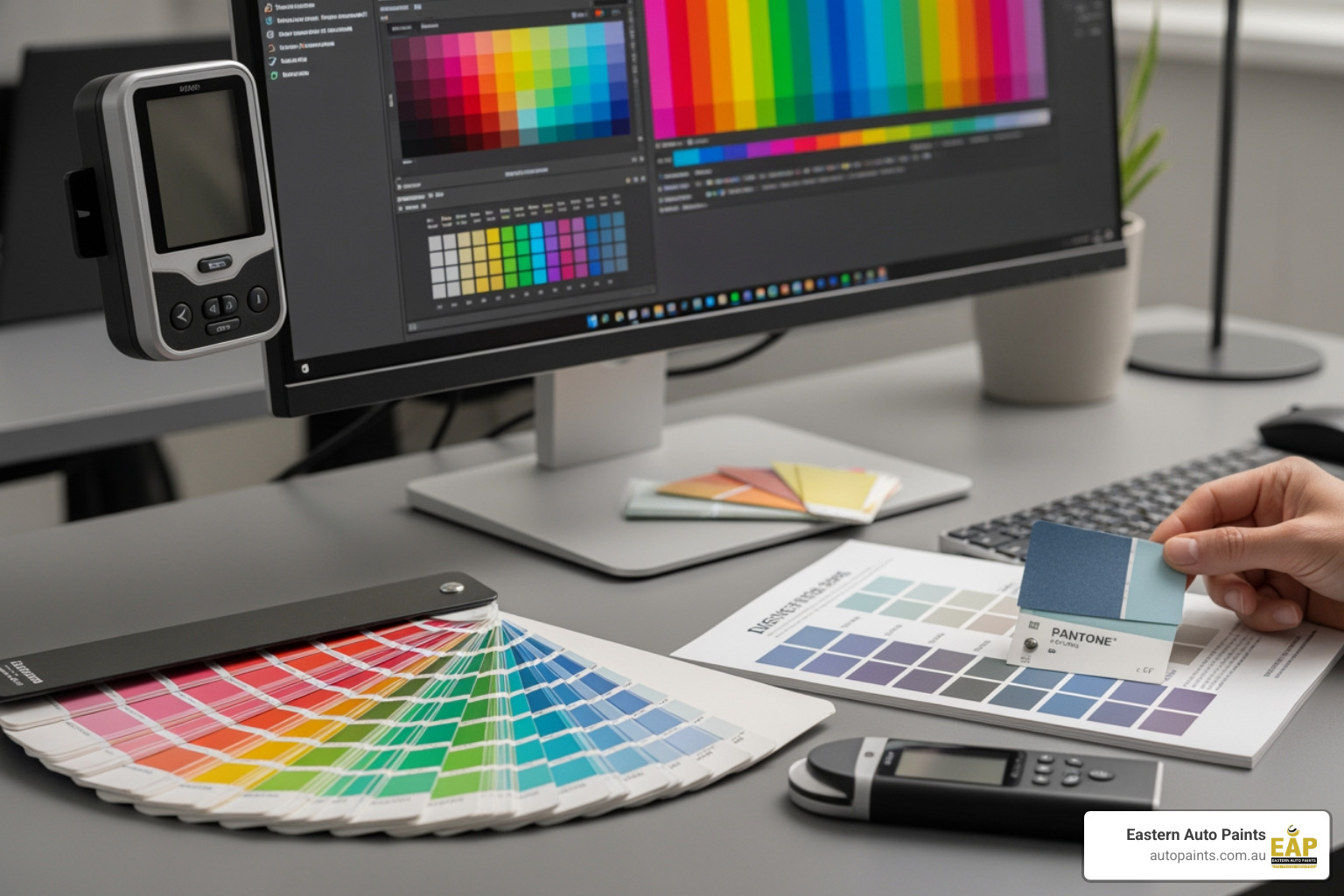
To ensure precision, we use standardised systems. The Pantone Matching System® and the RAL colour standard provide universal codes for colours, ensuring consistency across industries. For digital work, HEX codes and RGB values are common.
Translating these codes into physical paint is our specialty. Our extensive database allows us to convert these standards into precise paint formulations. Whether you have a RAL code for an industrial job or a Pantone reference for a custom project, we can create a paint that matches.
Creating Effective Colour Palettes
A well-chosen colour palette improves visual appeal and reinforces brand identity. A popular guideline is the 60-30-10 Rule, which uses a dominant colour (60%), a secondary colour (30%), and an accent colour (10%) to create balance.
In automotive and industrial design, a consistent and impactful palette is crucial for brand recognition. Our Protec Automotive Paint Systems offer a vast range of colours and finishes, allowing us to create bespoke palettes that stand up to demanding environments. Our team can help you select not just the right colour, but the right paint system for your project.
Methods and Tools for Professional Colour Matching
Achieving an accurate colour matching result requires a combination of skilled techniques and advanced tools. We use both traditional and modern methods to ensure the best possible outcome for every project.
Traditional Colour Matching Techniques
For decades, colour matching relied on the trained eye of a skilled technician. This involves visually comparing a sample to physical swatch books and carefully adjusting pigments by hand—a process known as tinting.
This human element remains invaluable, especially for complex colours or when an automated formula needs a final tweak. Our two full-time professionals at Eastern Auto Paints are experts in this art, ensuring precision when technology alone isn't enough.
Modern Technology in Accurate Colour Matching
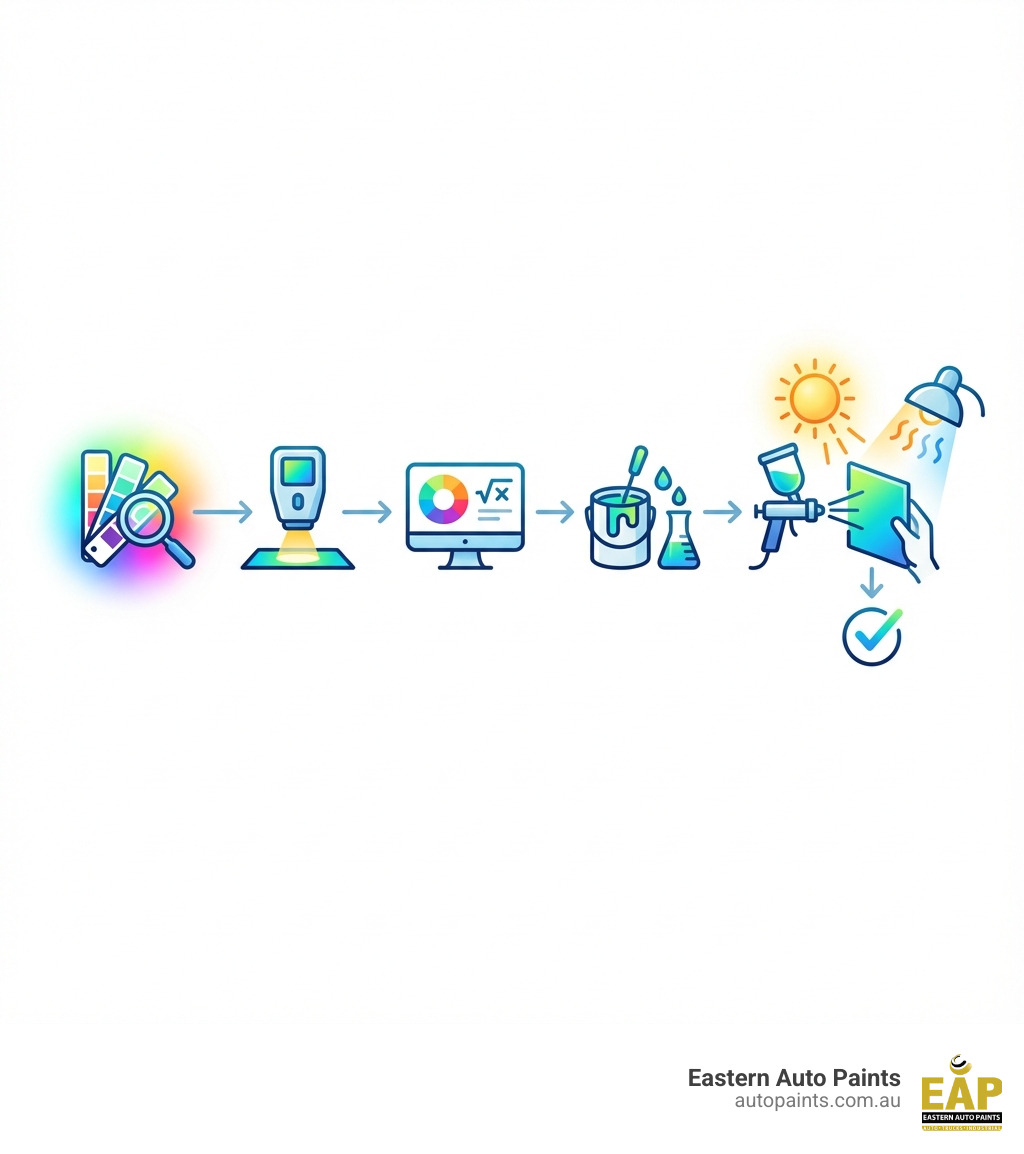
Modern technology has revolutionised colour matching, dramatically improving speed and consistency. The cornerstone of this is the spectrophotometer, a device that measures colour electronically by reading the precise wavelengths of light reflected from a surface.
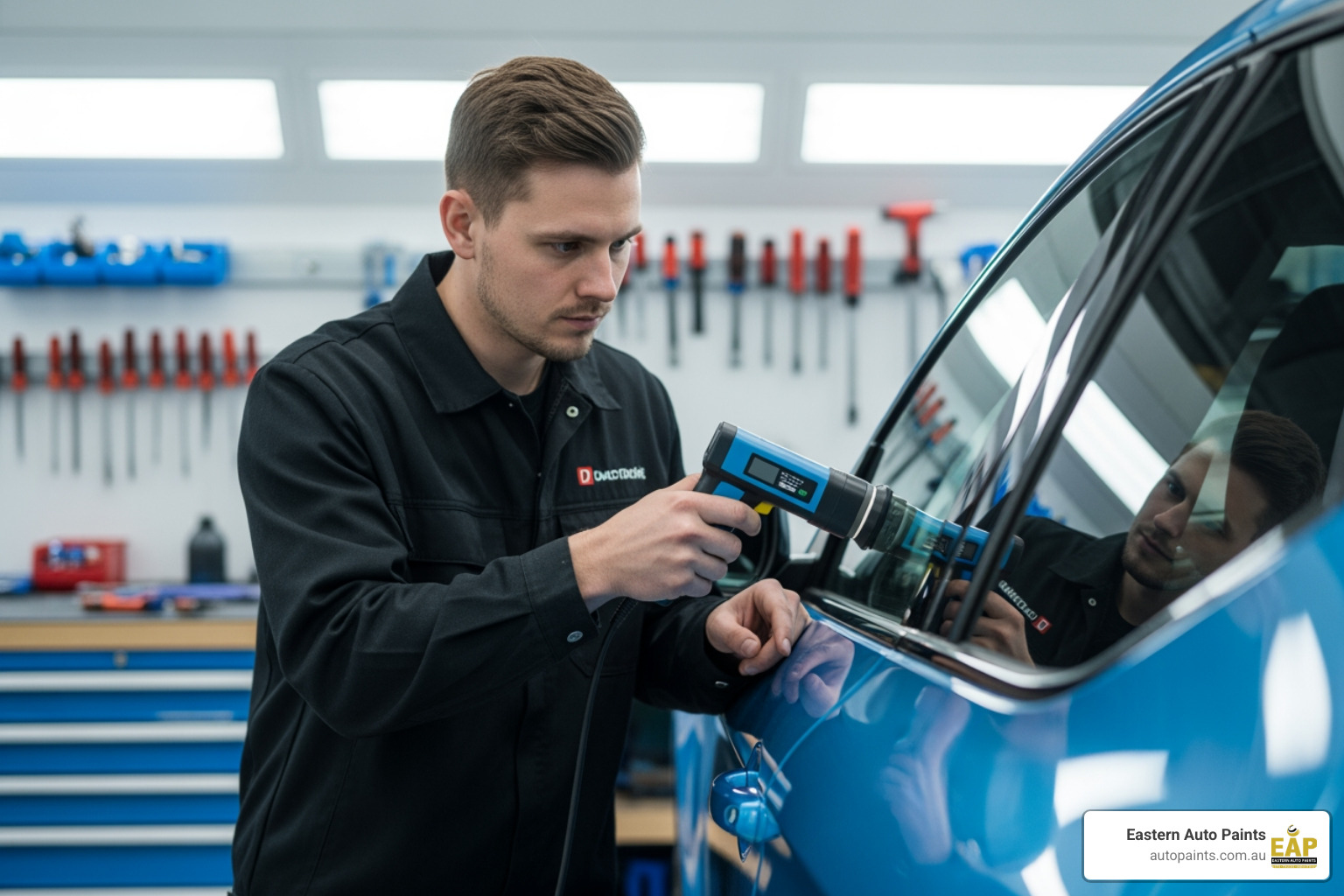
Unlike the human eye, a spectrophotometer provides objective, numerical data. This data is fed into formulation software, which calculates the exact mix of pigments needed. This process minimises human error and ensures the match is repeatable.
This advanced technology is central to our ability to provide precise colour matching spray paints and custom mixes. We also use special light boxes to simulate different lighting conditions, confirming the match holds true and avoiding metamerism.
Navigating the Challenges of Matching Colours Across Materials
Colour matching becomes more complex when dealing with different materials and surfaces. A colour that looks perfect on a screen rarely translates perfectly to a painted surface, requiring a deep understanding of how colour behaves in different contexts.
The Digital to Physical Divide
One of the most common challenges is the gap between digital and physical colours. Screens use an RGB (additive) light-based model, while paint uses a subtractive pigment-based model. This fundamental difference, combined with variations in screen calibration, means a digital image is never a reliable source for a perfect paint match.
Similarly, printed colours (using CMYK inks) can vary based on the printer and paper type. To overcome this, we always recommend using a physical sample for verification. Providing an actual piece of the material you want to match ensures the colour you see is the colour you get.
Challenges in Paint and Powder Coating
Specific challenges also arise when matching different types of coatings. For instance, matching liquid paint to powdercoat colours can be difficult, as the unique texture and finish of powder coating can alter the perceived colour.
Textured finishes, such as those in the Textura range, add another layer of complexity by creating shadows and highlights. Metallic and pearlescent paints are also challenging, as their appearance changes dramatically depending on the viewing angle and light source.
Finally, application technique—including film thickness and spray gun settings—can alter the final colour. Our expertise, honed over 34+ years, allows us to account for these variables when formulating paint for products like Jotun protective coatings, ensuring a consistent and accurate match.
Practical Tips for Achieving the Perfect Match
Achieving a perfect colour match requires attention to detail. Whether you're tackling an automotive repair or a large industrial project, these best practices will help ensure superior results.
Best Practices for Automotive Colour Matching
For automotive projects, a precise match is non-negotiable. A slight variation can ruin a repair and diminish the vehicle's value.
- Find the Paint Code: Always start with your vehicle's paint code, usually found on a sticker in the door jamb, under the bonnet, or in the boot. This is the manufacturer's exact formula.
- Proper Surface Prep: We've found that most colour discrepancies and adhesion failures stem from poor prep. Using high-quality 2K primers like Protec PPG Grey/Black Etch Primer or Concept 103 Etch Primer creates a uniform, durable base.
- Use Blending Techniques: For seamless repairs, blend the new paint into the surrounding original paintwork. This creates a smooth transition that makes the repair invisible.
For high-value vehicles, a professional match is crucial. Our advanced technology and experienced technicians ensure your repair is undetectable. For more tips, see our guide on a Perfect Car Colour Match on Vehicles.
Tips for Industrial and Commercial Projects
Industrial projects demand both colour consistency and durability.
- Account for Weathering: When matching existing finishes like Colourbond colour spray cans, fading can alter the original colour. A fresh sample from an unexposed area is always best.
- Specify Colours Accurately: Use industry-standard codes and physical samples to communicate your needs clearly. For durability in demanding environments, consider PPG Industrial Paints.
- Request Samples: Always ask for a drawdown (a painted test panel) to approve the colour in real-world lighting before committing to a full order. This avoids costly mistakes. For projects needing robust protection, we offer products like Galmet Rust Paint and our tintable Rangers 2K Coating.
Frequently Asked Questions about Colour Matching
What types of automotive paints do you offer?
We offer a wide range of paints to meet various project needs, including automotive spray paint, touch-up kits, primers, and clear coats.
Can you match my car's factory colour?
Yes, we use advanced colour-matching technology and spectrophotometers to create precise matches for your car's factory paint. We can supply this as a custom colour matching spray paint or in larger quantities.
How do I choose the right paint for my car?
Consider factors like your vehicle's original paint code, the type of repair (e.g., scratches or full-body), and the desired finish. For expert advice, it's best to consult with a professional. Our team can help you make the best choice at our stores or via our Contact Us page.
Do you offer products for DIY projects?
Absolutely! Our automotive car paint supplies include user-friendly options for DIY enthusiasts. We also provide guidance to help you achieve professional results.
What makes your products stand out?
Our products are sourced from trusted brands, ensuring superior quality, durability, and finish. Additionally, we provide expert advice to support every project, from choosing the right product to application techniques.
Conclusion: Your Partner for Flawless Colour Results
At Eastern Auto Paints, we understand that colour matching is a commitment to perfection. It’s where the precision of science meets the discernment of art, and it’s the critical link between your vision and a flawless finish.
With over 34 years of experience, we have established ourselves as a trusted name in Victoria for high-quality automotive and industrial paints. We combine advanced spectrophotometer technology with the invaluable expertise of our full-time professionals who can perform precise visual matching.
As an authorised distributor for leading brands like PPG and Jotun, we provide access to top-tier products backed by our expert advice. We empower our clients with the knowledge and tools they need, from understanding 2K primers to mastering application techniques.
Achieving the perfect colour match is within reach with the right partner. We invite you to experience the difference that professional expertise can make.
Explore our full range online or visit us for tailored advice and let us help you achieve a truly flawless finish.