
Different types of Powder Coating Colours to Discover
Why Powder Coating Colour Selection Matters
Powder coating colours offer incredible versatility for automotive, industrial, and architectural applications. Here's what you need to know when exploring your options:
Quick Overview: Powder Coating Colours Essentials
- Finish Types: High-gloss, matte, metallic, pearlescent, textured, and wrinkled finishes
- Colour Standards: RAL system with 200+ standard colours, plus custom matching available
- Key Benefits: Superior durability, corrosion resistance, eco-friendly (no solvents, low VOCs)
- Popular Ranges: Jotun -colourbond core range. Cosmos, Sahara, Ray, UltiMatt, Aurora, Warranty grade-Super-durable. Dulux Ranges: Electro, Pro-texture, Charisma, Durraloy. Interpon Ranges: Textura, Vivvica, Anodic.
- Selection Factors: Substrate material, lighting conditions, gloss level, and application environment
Powder coating is a dry finishing process where colour is applied electrostatically and cured with heat. This creates a durable, high-quality finish that resists scratches, corrosion, and wear far better than liquid paints. Its growing popularity is reflected in the market, valued at USD 11.5 billion in 2022 and projected to reach USD 20.1 billion by 2030.
The range of colours and finishes has expanded dramatically, delivering both aesthetic appeal and functional performance. From sleek metallics for automotive wheels to sophisticated matte blacks for architectural elements, understanding your options is key to achieving the right look and longevity for your project.
With over 30 years in the coatings industry, we've helped countless customers steer powder coating colours. The key to success is matching the right finish and colour to your project's specific aesthetic and practical needs.
1-4: Exploring the Spectrum of Powder Coating Finishes
The finish you choose transforms how powder coating colours appear and perform. It's the difference between a mirror-like shine on a custom car wheel and a subtle matte on an architectural frame. Understanding these finish types helps you match the right look with the right function.
1. High-Gloss & Semi-Gloss Finishes
High-gloss finishes (80%+ gloss) create a mirror-like surface that makes colours appear vibrant and deep, perfect for high-end appliances and custom automotive parts. Semi-gloss (60-65% gloss) offers a softer, polished sheen. Both finishes create a smooth, non-porous surface that is durable and easy to clean, making colours pop with extra richness. They are ideal for automotive wheels, engine components, and retail displays.
2. Matt & Flat Finishes
Matte and flat finishes absorb light, creating a sophisticated, contemporary look popular in high-end design. Matte finishes (20-30% gloss) and flat finishes (below 15%) make powder coating colours appear deeper and more solid. Their key advantage is hiding minor surface imperfections and resisting fingerprints, making them ideal for architectural elements, furniture, and electronic casings where a premium, non-distracting appearance is desired.
3. Metallic & Pearlescent Finishes
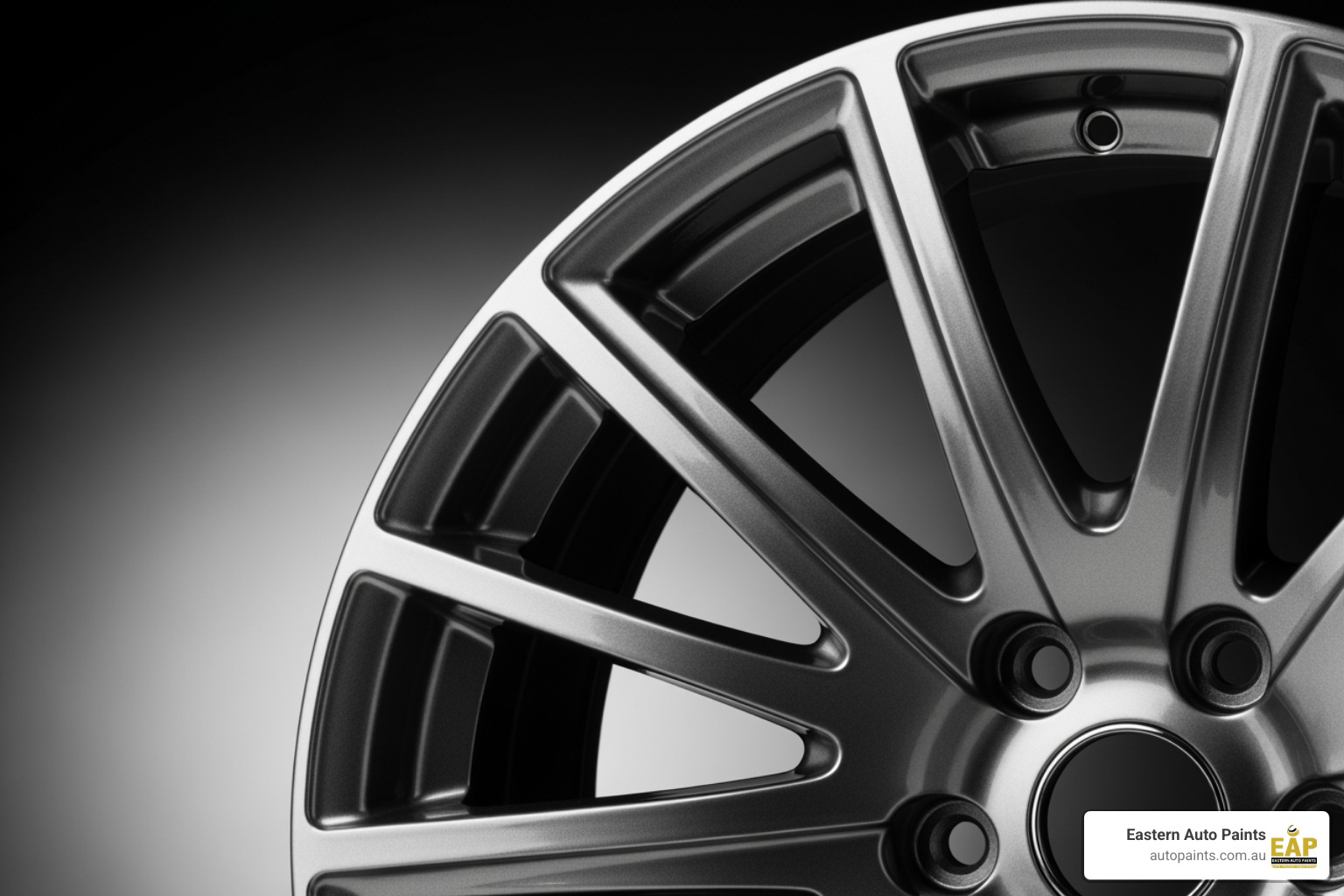
For extra visual drama, metallic and pearlescent finishes incorporate special pigments (aluminium or mica flakes) that create a multi-dimensional appearance. The colour shifts as the light or viewing angle changes. Metallic finishes add sparkle and depth, while pearlescent finishes offer a softer, iridescent shimmer. These are popular in the automotive industry for wheels and trim. Because their appearance is highly dependent on lighting, it's crucial to view physical samples in various light conditions before making a final decision.
4. Textured & Wrinkled Finishes
Textured and ripple finishes add a tactile, physical dimension that solves practical problems. The Textura range and Structura range are examples of these durable surfaces. The texture provides improved grip and is remarkably scratch-resistant, as minor scuffs blend into the pattern. Their biggest advantage is hiding substrate imperfections like weld seams or minor dents, which can reduce surface preparation time. You'll find these finishes on industrial machinery, outdoor furniture, and architectural elements. Interpon's Structura products are engineered for demanding, high-traffic environments, offering both robust protection and a distinctive look.
5-7: Mastering Colour Selection for Your Project
Choosing the right powder coating colours involves more than just picking a shade. It's about ensuring consistency, meeting industry standards, and understanding factors that influence the final appearance. Here are the key elements for success.
5. The RAL Colour System: A Global Standard
The RAL colour system is the global standard for colour specification, ensuring accuracy and consistency. Originating in Germany, it acts as a universal language of colour. Instead of describing a shade, you specify a unique four-digit code (e.g., RAL 7001), guaranteeing the colour is identical whether coated in Melbourne or overseas. The RAL Classic system features over 200 standard colours organised into logical families, simplifying selection. For any project requiring colour consistency, RAL is indispensable.
6. The Colour Selection Process
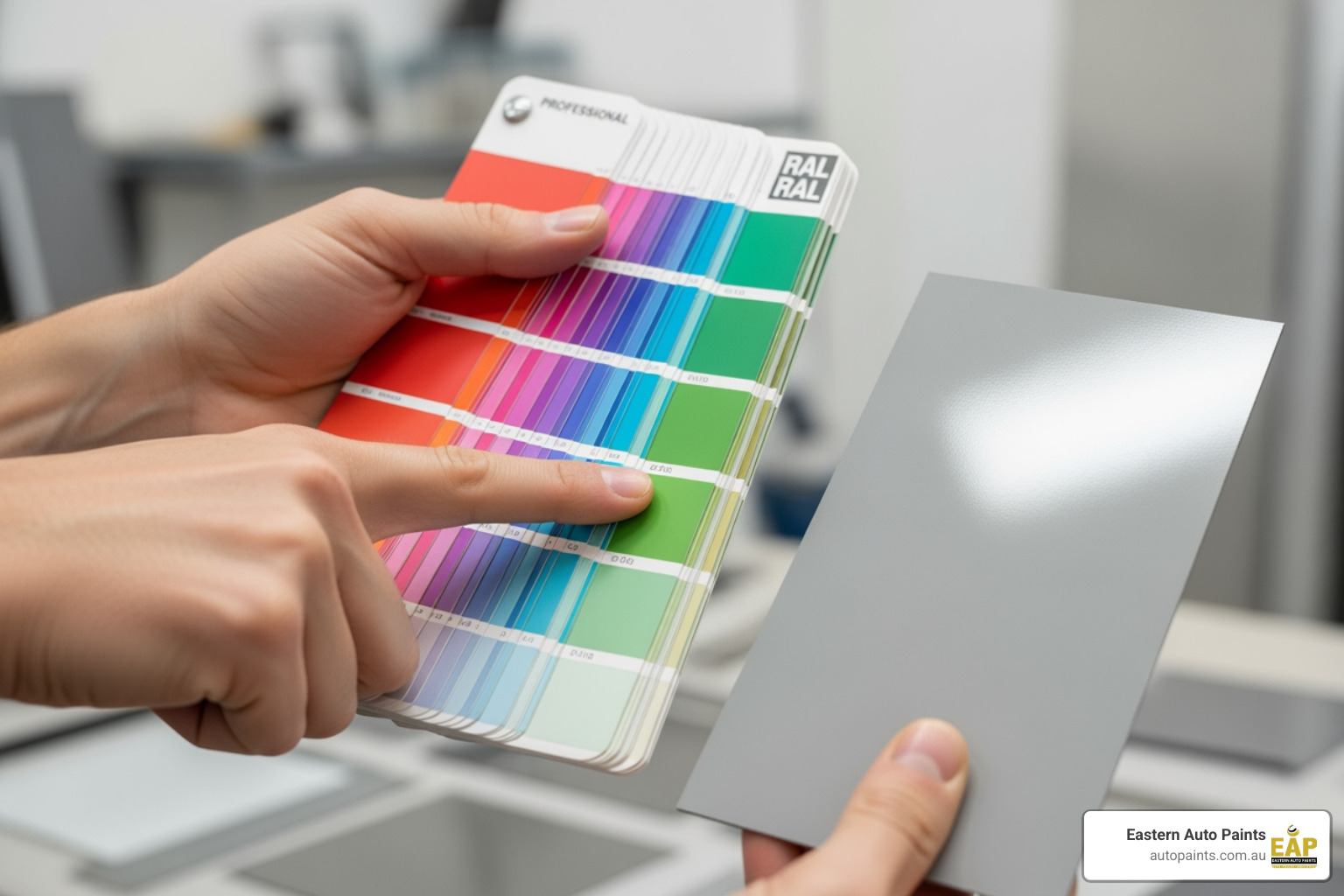
Never select powder coating colours from a digital screen. Monitors can't reproduce colours accurately due to variations in calibration and lighting. For any serious project, physical samples are non-negotiable.
Start with a proper colour fan deck, like the RAL K7, to see accurate representations. For critical projects or special finishes (metallic, textured), request actual powder-coated metal swatches. Seeing how the colour and finish appear on a 3D surface in real-world lighting is worth the wait. Consider your project's environment, will it face harsh sun, chemicals, or frequent cleaning? These practical needs should guide your choice as much as aesthetics. For expert guidance, reach out to our team.
7. Factors That Influence Final Appearance
Several factors during the coating process can affect the final appearance of your chosen powder coating colours. Understanding these variables is key to achieving the expected result.
- Substrate Material: Steel and aluminium can interact differently with the same powder, sometimes causing subtle colour shifts. The surface texture also plays a role.
- Surface Preparation: This is critical. Most adhesion issues stem from inadequate prep. Proper cleaning and pre-treatment are essential, and stripping old paint to bare metal is the best practice for longevity.
- Film Thickness: Inconsistent application thickness can alter colour and gloss. A uniform coat ensures a uniform appearance.
- Curing Process: Incorrect oven temperature or time can affect hardness, gloss, and colour stability. Always follow manufacturer specifications.
- Lighting (Metamerism): Colours can look different under various light sources (e.g., sunlight vs. fluorescent). Always evaluate samples in the intended final environment.
- Gloss Level: Gloss fundamentally changes colour perception. A matte finish makes a colour look deeper, while high-gloss makes it appear brighter. Always view samples with the exact finish you plan to use.
8-10: Trends, Accuracy, and Sustainability in Powder Coating Colours
The world of powder coating colours is constantly evolving, shaped by design trends, technological precision, and environmental responsibility. Here’s a look at what’s happening in the industry today.
8. Understanding Popular Powder Coating Colours and Trends
Current trends in powder coating colours reflect a move toward both timeless elegance and bold expression.
- Neutral Greys & Earth Tones: Sophisticated greys, from soft dove to charcoal, are a foundation of modern design. Warm beiges, terracottas, and sandy tones connect spaces to natural environments.
- Bold Blacks: Matte and textured blacks are in high demand for their modern, minimalist look and ability to hide imperfections, especially in automotive customisation.
- Vibrant Hues & Metallics: Deep blues, rich greens, and warm metallics like bronze and copper are gaining popularity in architectural and high-end fixture applications, adding personality and luxury.
In the automotive sector, classic blacks and silvers are complemented by unique metallics and textured finishes. The architectural world prioritizes longevity, favouring superdurable coatings in neutral greys, whites, and bronzes that withstand Australia's harsh climate. Both Jotun powder coat and PPG Industrial Paints offer extensive ranges for these demanding applications.
9. Custom Powder Coating Colours: The Art of Colour Matching
When a standard colour isn't enough, custom colour matching provides a precise solution. This process is essential for matching an existing Colourbond roof, integrating new components, or replicating a specific brand colour.
It begins with a physical sample, which is analysed by a spectrophotometer. This instrument digitally measures the colour's spectral data, eliminating guesswork. Experts then formulate a custom powder by blending pigments to match the exact hue, brightness, and finish. The result is tested under various lighting conditions to ensure a perfect match.
This is a professional service requiring deep expertise. While Jotun doesn't sell powder coat in aerosols, our technology allows us to create custom aerosol cans that precisely match Jotun and Colourbond colours, perfect for touch-ups. For expert help, explore our colour matching services or contact us for a consultation.
10. The Sustainable Choice: Eco-Friendly Aspects
Choosing powder coating colours is an environmentally responsible decision. The most significant advantage is the absence of solvents, which means negligible volatile organic compounds (VOCs) are released. This eliminates a major source of air pollution and health risks associated with liquid paints.
Powder coating is also highly efficient. Powder reclaim systems capture and reuse overspray, allowing up to 98% of the material to be used. The minimal waste generated is non-hazardous, simplifying disposal. Furthermore, the superior durability of powder coating means products last longer, reducing the need for refinishing and conserving resources over the product's lifetime.
Powder Coating vs. Liquid Paint: Environmental Factors
| Factor | Powder Coating | Liquid Paint |
|---|---|---|
| VOC Emissions | Negligible (no solvents) | High |
| Waste Generation | Minimal, non-hazardous, reclaimable | Significant, hazardous waste |
| Material Usage | Up to 98% efficiency | Lower efficiency due to overspray |
| Application Safety | Safer (no flammable solvents) | Requires strict fire/ventilation precautions |
| Durability | Excellent, thick, hard finish | Varies, often less robust |
By choosing powder coating, you're investing in a finish that performs exceptionally while being kinder to the planet. For advice on PPG powder coating colours or custom textured powdercoat colours, explore our full range of powdercoat solutions.
Frequently Asked Questions about Powder Coating Colours
How do I choose the right powder coating colour for my project?
To choose the right powder coating colour, first consider the project's environment. For outdoor items in Australia, a polyester-based powder with UV resistance is best. For indoors, consider exposure to moisture or chemicals. Aesthetically, decide if the colour should blend in or stand out. Most importantly, never rely on a screen. Always use a physical sample, like a RAL K7 colour fan deck, or request a coated metal swatch to see the true colour and finish in real-world lighting.
Can you match a specific colour, like a Colourbond or brand colour?
Yes. Using advanced spectrophotometer technology, we can create a precise custom match for almost any colour from a physical sample. This is ideal for matching existing finishes like Colourbond or replicating a specific brand colour. We can even create custom aerosol cans that match Jotun and other powder coat colours for convenient touch-ups. Explore our colour matching services to learn more.
What are the most durable powder coating colours?
Durability depends on the powder's chemistry and application, not the colour itself. Polyester powders offer excellent UV resistance for outdoor use, while epoxies provide superior chemical resistance for industrial settings. The finish also affects perceived durability; textured finishes hide scratches better than high-gloss surfaces. The key to longevity is using high-quality powder with professional surface preparation and application. For help selecting the right chemistry for your needs, reach out to us.
Your Partner for Premium Powder Coating Colours
Choosing the right powder coating colours and finishes is critical for your project's visual impact and long-term performance. From high-gloss and matte to textured and metallic finishes, the options are vast. Standards like the RAL system ensure precision, while proper selection using physical samples guarantees you get the look you want.
At Eastern Auto Paints, our expertise helps you steer these choices. With over 34 years of experience serving Victoria, Sydney, and Queensland, we guide professionals and enthusiasts in automotive, architectural, and industrial sectors to find the perfect solution.
We specialise in the full range of PPG powder coating colours and Jotun powder coat products, from standard RAL shades to custom-matched textured powdercoat colours. Our advanced colour-matching technology can even create custom aerosols for Jotun and Colourbond shades, providing best convenience for touch-ups.
We don't just sell products; we provide expert advice to ensure your project succeeds. Ready to find the perfect finish? Browse our full range of powdercoat solutions online, or contact us for personalised guidance.