
The Ultimate Hide and Seek: How to Find the Paint Code on a Vehicle
Why Getting Your Vehicle Paint Code Right Matters Before You Buy
Finding the right paint code before you order touch-up paint, a custom aerosol, or mixed automotive paint is the difference between a repair that blends in and one that stands out. A colour name such as "white", "silver" or "black" is not enough, because manufacturers often use several formulas under similar names across different models and build years.
Key Takeaways
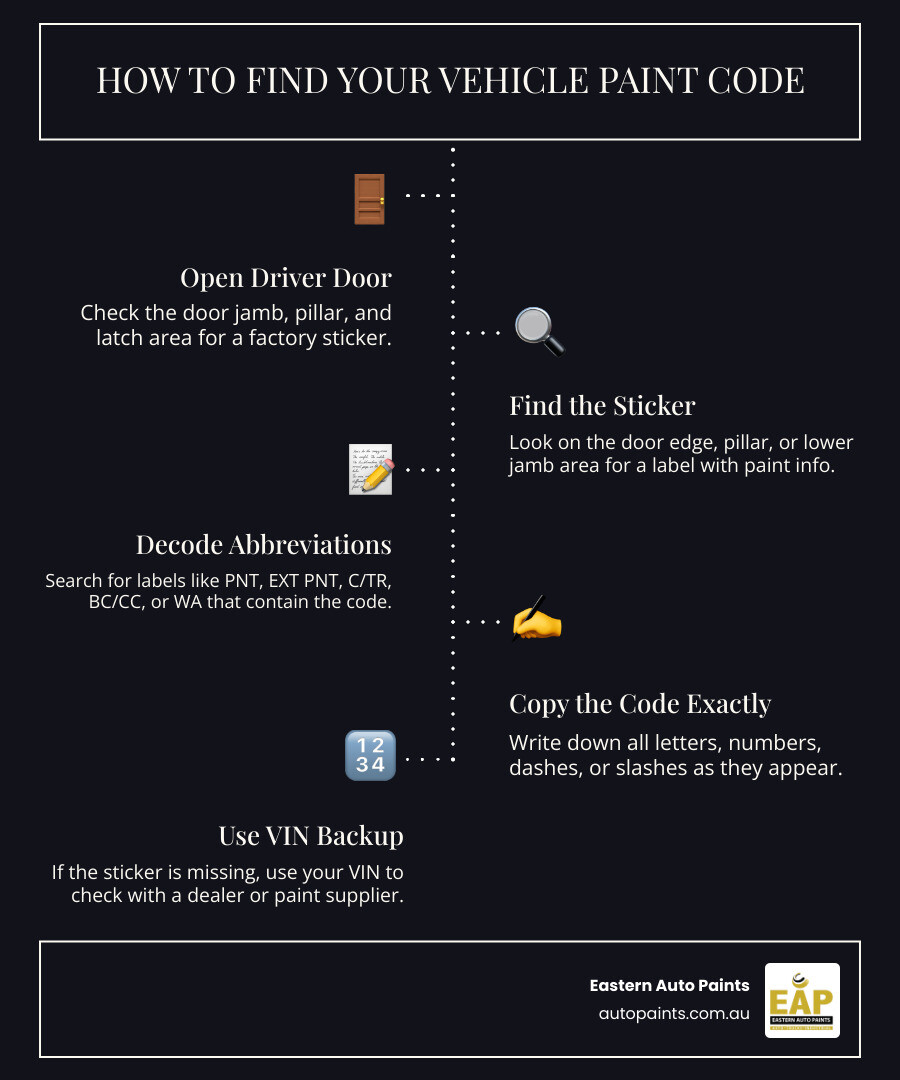
- Check the driver-side door jamb first, especially the pillar, latch area, door edge and lower jamb.
- Look for abbreviations such as PNT, PAINT, EXT PNT, C/TR, BC/CC or WA on the factory label.
- Copy the code exactly, including letters, numbers, slashes and hyphens.
- If the label is missing or unreadable, use the vehicle identification number (VIN) or bring in a painted part for professional colour matching.
At Eastern Auto Paints, we help trade painters, restorers and serious DIY customers identify the correct paint code before they spend money on materials. We always recommend verifying the code against the vehicle, because a small reading mistake can lead to the wrong formula.
How to Find the Paint Code on a Vehicle: Why This Issue Should Not Be Ignored
Automotive paint codes identify the factory paint formula used on a vehicle. If you order paint from the colour name alone, you may receive a shade that is close in description but wrong in appearance. That matters on visible areas such as doors, guards, bonnets and bumper covers, where even a small mismatch can draw attention to the repair.
The paint code also helps separate exterior colour from trim, upholstery or interior codes that may appear on the same label.
Finding the correct code gives your supplier a reliable starting point for a Touch Up Paint Colour Match. If the vehicle is aged, faded or previously repaired, the code can then be checked against the current finish through professional assessment.
Common Symptoms, Challenges, or Questions
Locating a paint code is not always as simple as opening one door. Labels can fade, peel, be covered by grime, or disappear after collision repairs. Some vehicles also place the compliance or identification label away from the driver-side door jamb.
The Physical Search: How to Find the Paint Code on a Vehicle
Start with the most common locations and work through the vehicle methodically:
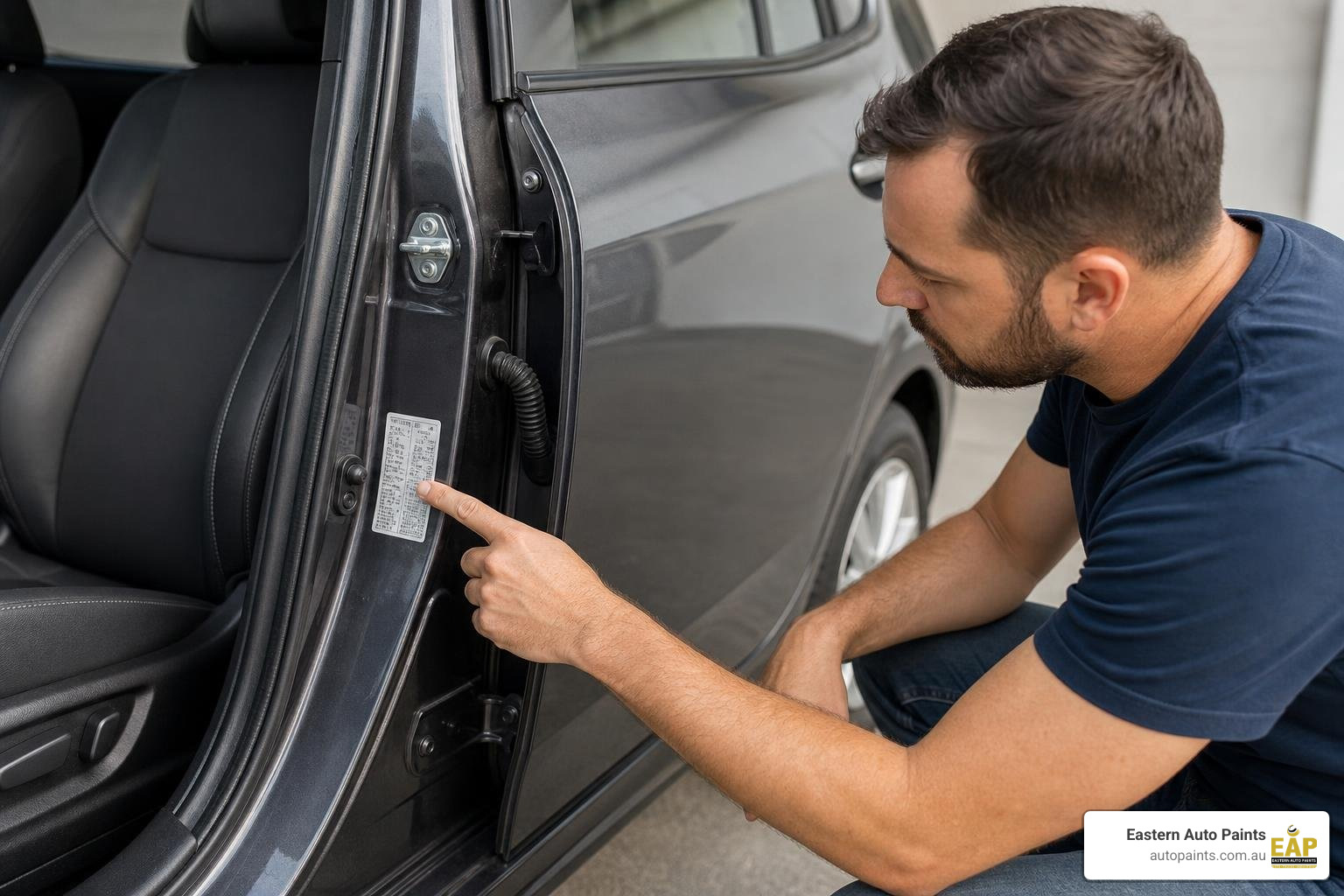
- Driver-side door jamb: Open the driver's door and inspect the pillar, latch area, door edge and lower jamb.
- Passenger-side door jamb: Some vehicles place the label on the opposite side.
- Under the bonnet: Look around the radiator support, firewall or strut towers for a sticker or metal plate.
- Glove box: Check the inside lid and back wall for a parts identification sticker.
- Boot or spare tyre area: Lift the boot carpet and inspect the spare wheel well, boot floor and underside of the boot lid.
Decoding the Factory Sticker Abbreviations
Once you find the label, look for paint-related abbreviations rather than copying the first code you see. Common indicators include:
- PNT, PAINT or EXT PNT: Often used to mark the exterior paint code.
- C/TR: Usually means colour and trim. On many labels, the paint code appears before the slash and the trim code appears after it.
- BC/CC: Refers to a basecoat/clearcoat finish and may appear near the colour code.
- WA: Commonly seen on General Motors and Holden labels before the paint number.
Copy the code exactly as printed. Do not remove hyphens, prefixes or suffixes, because they may be part of the formula reference. If you are unsure whether you are reading the paint code or a trim code, take a clear photo of the whole label and bring it to a paint supplier for checking.
When the Label Is Missing or Unreadable
If the factory label is gone, use the vehicle identification number (VIN) as the next step. The VIN is usually visible at the lower corner of the windscreen, listed on registration paperwork, or stamped elsewhere on the vehicle. A dealer parts department or experienced paint supplier may be able to use the VIN to confirm the original factory paint code.
A VIN lookup only identifies the colour the vehicle left the factory with. If the vehicle has been resprayed, repaired with a different shade, or repainted by a previous owner, the original code may not match the current finish. In that situation, bring the vehicle or a removable painted part to Eastern Auto Paints so we can assess the current colour through our colour-matching process.
When to Get in Touch or Take Action
If you are still unsure which sequence on the label is the paint code, do not guess. Send us a clear photo of the identification label, bring the vehicle in, or contact our team before ordering paint. We can help check the code, discuss whether the vehicle's age or repair history may affect the match, and recommend the right product type for the job.
This step is especially useful when the label has several similar codes, the vehicle has been repaired before, or the paint appears different from the factory colour. A quick check before ordering can prevent confusion and keep the repair focused on the correct formula.
For expert help, use our Contact Us page and visit our Colour Matching Services.
Frequently Asked Questions About Vehicle Paint Codes
Is the paint code the same as the colour name?
No. A colour name is a general description, while the paint code is the factory reference used to identify the formula. Always use the paint code rather than the colour name when ordering automotive paint.
Where is the most common place to find a vehicle paint code?
The driver-side door jamb is the best first place to check. Look at the pillar, latch area, door edge and lower jamb for a factory sticker or compliance label.
What if I can only find a trim code?
Do not order paint from a trim or upholstery code. Take a photo of the full label and ask a paint supplier to help identify the exterior paint code.
Can a VIN lookup find my paint code?
A VIN lookup can often confirm the original factory colour code through build records. It will not confirm later resprays or custom colours applied after the vehicle left the factory.
What should I do if the car has been repainted?
If the current finish is not the original factory colour, bring the vehicle or a removable painted part to a professional paint supplier. At Eastern Auto Paints, we can assess the current finish and help create a suitable colour match.