
PPG Performance Enamel Topcoat Overview – What Is It Used For?
What Is PPG Performance Enamel and Why Does It Matter?
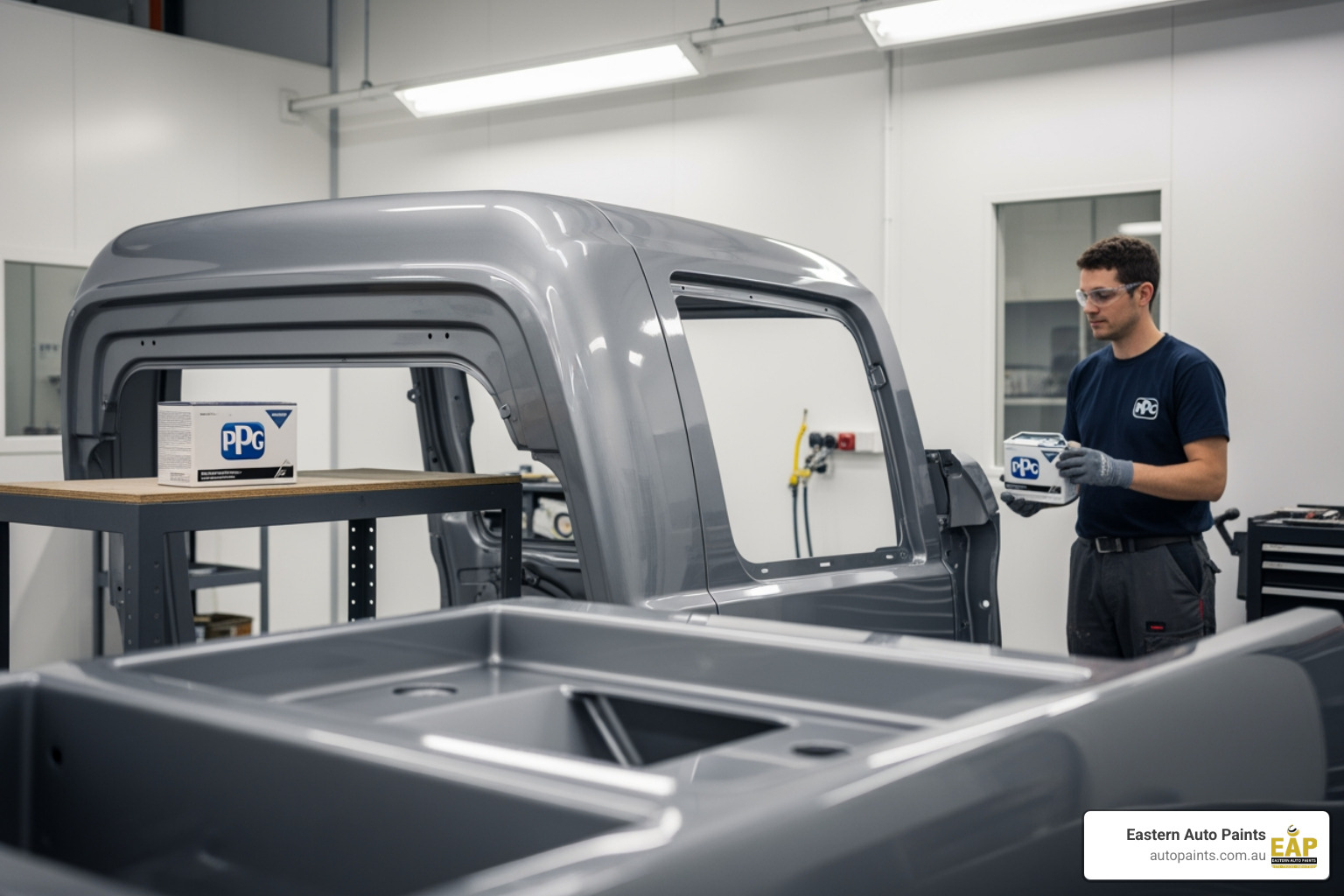
PPG Performance Enamel is a single-pack, alkyd-based topcoat designed for general industrial and automotive finishing applications, offering high gloss, fast drying times, and excellent durability on metal, timber, and fibreglass surfaces.
Quick answer at a glance:
| Feature | Detail |
|---|---|
| Product type | Single-pack acrylic alkyd topcoat |
| Primary uses | Chassis painting, machinery, agricultural equipment, vehicle trays |
| Dust-free time | 10 minutes at 20 degrees Celsius |
| Touch dry | 30 minutes at 20 degrees Celsius |
| Dry to handle | 60 minutes at 20 degrees Celsius |
| Colour options | 10,000+ colours from AS2700 and RAL ranges |
| Substrates | Metal, timber, fiberglass, sound existing paintwork |
| Thinning | Up to 20% with compatible enamel thinner |
Whether you are finishing a vehicle chassis, coating agricultural machinery, or touching up industrial equipment, PPG Performance Enamel is a product worth understanding properly before you pick up a spray gun.
It is built on alkyd resin chemistry, which means it cures through oxidation rather than evaporation alone. In simple terms, the coating reacts with oxygen in the air as it dries, building a hard, durable film that resists knocks and environmental wear better than a basic air-dry lacquer.
I'm James Maranis, owner of Eastern Auto Paints, and with more than 30 years of experience working across automotive and industrial coatings, I have seen how choosing the right PPG Performance Enamel product can be the difference between a finish that lasts and one that fails within a season. In this guide, I will walk you through everything you need to know to use it confidently and correctly.
PPG Performance Enamel terms at a glance:
Introduction to PPG Performance Enamel
When we talk about industrial-grade protection that doesn't require the complexity of a two-pack system, PPG Performance Enamel Topcoat (PET) sits at the top of the list. It is a premium acrylic-modified alkyd enamel. The "acrylic-modified" part is important; it means the paint has been upgraded to provide better gloss retention and harder film integrity than a standard house-brand enamel.
Defining the PPG Performance Enamel Topcoat (PET)
At its core, PET is a single-pack topcoat. Unlike 2K paints that require a chemical hardener to dry, PET is ready to go once thinned. It is formulated specifically for the general industrial market, where speed and ease of use are just as important as the final look. We often recommend it for those who need a high-performance finish without the strict safety booth requirements often associated with isocyanate-cured products. For a deeper look at how this fits into the wider PPG ecosystem, you can explore our Industrial Coatings Made Easy: A Deep Dive into PPG Selemix guide.
Primary Uses in Industrial and Automotive Sectors
In our Melbourne workshops, we see PPG Performance Enamel used most frequently for heavy-duty applications. It is an exceptional paint for auto body components that face constant abuse, such as vehicle chassis, trailers, and truck trays. Because it flows so well, it is also the "go-to" for finishing agricultural machinery and earth-moving equipment. If you are painting something that is going to live outside and work for a living—like an electric motor or a steel cabinet—this is the coating that provides that necessary shield against the elements.
Key Features and Performance Benefits
The standout feature of PPG Performance Enamel is its aesthetic versatility. It doesn't just protect; it looks professional. It is pigmented with high-quality, light-fast pigments, meaning the colour you spray today is the colour that stays, even under the harsh Australian sun.

Rapid Drying Times for High Productivity
Time is money in any workshop. PET is classified as a moderately fast-drying enamel. Under standard conditions (air drying at 20 degrees Celsius), you are looking at a dust-free time of just 10 minutes. It becomes touch dry in 30 minutes and can be handled within an hour. This rapid transition allows for faster assembly of parts and less time for dust to settle in your wet paint. If you are working in cooler conditions, using heat lamps and panel stands can help maintain these productive timelines.
Extensive Colour Range and Gloss Customisation
Through the SELEMIX universal tinter system, we can provide PPG Performance Enamel in over 10,000 different colours. This includes the full AS2700 Australian Standard range and the RAL Classic range. Furthermore, PET is unique because it utilises both full gloss and matt binders. By mixing these, we can achieve custom gloss levels tailored to your specific project needs. For projects requiring an exact match to existing equipment, our advanced colour matching services utilise the latest technology alongside experienced professionals to ensure a seamless finish. We also carry the Protec paint products range, which offers additional Australian-made options for industrial users.
Substrates and Surface Preparation Requirements
No matter how good the paint is, it will only perform as well as the surface underneath. PPG Performance Enamel is compatible with a wide variety of substrates, but each requires a specific approach.
Preparing Metal and Steel Substrates
For sheet steel, cold-rolled steel, and hot-rolled steel, the goal is total decontamination. We've found that most adhesion issues come down to poor surface prep. You must remove all traces of oil, grease, and mill scale. After degreasing, a thorough sanding using sanding sheets and discs (typically in the 240 to 320 grit range for industrial work) creates the mechanical "key" the paint needs to stick. If you're dealing with older equipment, addressing rust repair and prevention first is non-negotiable.
Application on Timber and Fibreglass
PET isn't just for metal. It adheres beautifully to timber and fibreglass, provided they are dry and sanded. For these more porous or specialised surfaces, using the correct foundation is key. We recommend starting with high-quality 1K primers or, for maximum build and durability, our 2K primers. This ensures the enamel doesn't "sink" into the substrate, maintaining its high-gloss finish.
Application Methods and Technical Specifications
Applying PPG Performance Enamel is straightforward, but following the technical data sheet (TDS) is what separates a DIY job from a professional finish.
Thinning PPG Performance Enamel for Optimal Flow
To get that signature smooth finish, PET usually requires thinning. We recommend thinning up to 20% using a high-quality Enamel Thinner 804 4L. In some cases, a Multi Thinner 808 may be used depending on the ambient temperature. In simple terms, the thinner reduces the viscosity, allowing the paint to atomise correctly through the spray gun and "level out" on the surface, eliminating orange peel.
Equipment Settings and Pressure Pot Kits
While PET can be brushed or rolled for small touch-ups, it is designed for spraying. For large-scale industrial projects, Anest Iwata spray guns provide the precision needed. If you are coating large areas like a truck chassis or a fleet of trailers, using pressure pot kits is much more efficient than constantly refilling a gravity cup. It allows for consistent pressure and a steady flow of material over long periods.
Comparing PPG Enamel Variants
Not all enamels are created equal. Depending on your specific needs, PPG offers several variants that trade off between drying speed, finish, and cost.
| Product | Base Type | Key Strength |
|---|---|---|
| PET Performance Enamel | Acrylic Alkyd | Best balance of gloss, flow, and durability |
| RDE Rapid Dry Enamel | Copolymer Alkyd | Faster initial set time for high-turnover parts |
| 304 Equipment Enamel | Standard Alkyd | Economical general-purpose industrial coating |
| HFE Hammer Finish | Modified Alkyd | Textured finish to hide surface imperfections |
Rapid Dry Enamel (RDE) vs PET
While PET is fast, RDE (Rapid Dry Enamel) is designed for even quicker "to handle" times. It uses a copolymer alkyd resin. Both are available in over 10,000 colours via the Selemix system. If your priority is a "factory look" with excellent levelling, PET is usually the winner. If you need to move parts out of the way almost immediately, RDE is the choice. You can find these in our factory 1K topcoats collection.
Hammer Finish and Equipment Enamels
For surfaces that aren't perfectly smooth, a textured spray paint like HFE Hammer Finish Enamel is ideal. It creates a patterned, "hammered" effect that masks pits and scratches in the metal. For basic industrial needs where a standard white or safety yellow is required, we stock industrial mixed colours and 304 Equipment Enamel factory packs.
Safety Standards and Environmental Considerations
Working with solvent-based enamels requires a serious commitment to safety. PPG Performance Enamel contains Volatile Organic Compounds (VOCs) that must be managed.
Managing VOCs and Solvent Recovery
As environmental regulations tighten, many of our clients are moving toward low VOC clear coat options like the HS 2K Eurolak Clear. While PET is a solvent-based system, you can reduce your workshop's environmental footprint by using UNIC solvent recyclers. These units allow you to clean your equipment and then recover the thinner for reuse, significantly cutting down on waste and costs.
Essential PPE for Industrial Spraying
Never compromise on your lungs. When spraying PET, standard paper masks are insufficient. We strongly recommend PPE masks and respirators, specifically Air Fed Masks for prolonged industrial use. This ensures you are breathing fresh, filtered air rather than solvent vapours. Always ensure your workspace has adequate ventilation and that you are wearing appropriate gloves and overalls to prevent skin absorption. For a full safety assessment, contact our expert team for advice tailored to your setup.
Frequently Asked Questions about PPG Performance Enamel
What is the recommended mixing ratio for PET?
PET is a single-pack product, so it doesn't require a hardener. However, it should be thinned with up to 20% (and sometimes up to 30% depending on equipment) with a compatible enamel thinner like the 804 or 808 series to achieve the best flow.
Can I apply PPG Performance Enamel over existing paint?
Yes, provided the existing paintwork is in sound condition. It must be thoroughly cleaned, degreased, and sanded to ensure adhesion. We always recommend a small "patch test" to ensure the solvents in the new enamel don't react with or "lift" the old coating.
How long does it take for the enamel to reach full hardness?
While PET is dry to handle in about an hour, it takes longer to reach full chemical hardness. Like all alkyd paints, it continues to oxidise and harden over several days. We recommend waiting at least 24 hours before putting the finished item into heavy service.
Where PPG Performance Enamel Fits Best
At Eastern Auto Paints, we’ve spent 34 years helping Melbourne’s pros and enthusiasts find the perfect coating for every job. PPG Performance Enamel remains one of the most reliable tools in our arsenal because it combines industrial-strength protection with an automotive-quality finish. Whether you’re refurbishing a tractor or protecting a custom chassis, PET delivers results that stand the test of time.
Ready to start your next project? Browse our full range of PPG Industrial Paints or contact our team at our Bayswater or Dandenong South locations for expert advice and precision colour matching performed by experienced professionals using advanced technology. We are here to ensure you get the right product, the right colour, and the right result—every single time.