
The Complete Guide to Air Fed Face Masks for Automotive and Industrial Work
Why Respiratory Protection Matters for Automotive and Industrial Work
An air fed face mask is an atmosphere-supplying respirator that delivers clean air from an external source. Unlike air-purifying respirators that filter contaminated air, these systems provide a safe breathing environment, making them essential for high-risk work.
Key Types of Air Fed Face Masks:
| Type | Air Source | Best For |
|---|---|---|
| Supplied-Air Respirator (SAR) | External compressor via airline hose | Stationary spray painting, powder coating |
| Powered Air-Purifying Respirator (PAPR) | Battery-powered blower with filters | Mobile work, welding, sandblasting |
For spray applications of isocyanate-containing 2K paints, primers, and clear coats other harmful liquids and powders. Standard cartridge respirators are often insufficient to guarantee protection. Atmosphere-supplying systems or other higher-order controls are commonly required. Always conduct a workplace risk assessment and follow local regulator guidance.
I'm James Maranis, and with over 30 years in the coatings industry, I know the importance of proper respiratory protection. At Eastern Auto Paints, we help professionals select the right air fed systems in order to stay safe while working. This guide will explain the types available, how to choose one, and how to maintain it for maximum protection.
What is an Air-Fed Mask and How Does It Work?
An air fed face mask is a personal clean air delivery system. Instead of filtering contaminated air, it supplies fresh, breathable air from a separate, safe source. This is achieved through a positive pressure system, where clean air is continuously pushed into the mask, creating an outward flow that acts as a shield against contaminants. This constant pressure ensures you only breathe clean air, even if the mask's seal isn't perfect.
A typical system includes a facepiece (full-face mask or loose-fitting hood), a breathing tube, a belt-mounted regulator or blower unit, and the main air supply. These components work together to protect you from hazardous materials like the isocyanates found in 2K clear coats. For these substances, an air fed mask is not optional; it's essential safety gear that prevents serious, long-term health problems.
Facepieces come in different styles. Full-face masks protect your eyes and face with a tight seal, while loose-fitting hoods and helmets offer broader coverage and are often more comfortable for extended wear.
Supplied-Air Respirators (SAR)
Supplied-Air Respirators (SARs) are ideal for stationary work. These systems deliver clean air from a compressor located in a safe area, channeling it through an airline hose directly to your mask. The continuous airflow creates positive pressure inside the mask, making SARs perfect for spray painting in a booth or applying 2K primers. The airline hose can stretch up to 91 metres (300 feet), providing a large working radius while keeping the air source separate from contaminants. The main trade-off is mobility, as the hose requires careful management to prevent tangles and trips.
Powered Air-Purifying Respirators (PAPR)
Powered Air-Purifying Respirators (PAPR) offer excellent mobility. A PAPR uses a battery-powered blower, typically worn on a belt, to pull ambient air through high-efficiency filters before delivering it to your hood or facepiece. Without an airline hose, you can move freely, making PAPR systems ideal for tasks like sanding, grinding, or working around large equipment. While some blower modules are compact and light, a complete PAPR system, including the blower, battery, belt, and filters, usually weighs considerably more. Always check the manufacturer's specifications for the exact weight.
PAPRs use specialised filters for specific contaminants, such as particulate filters for dust and combination filters for vapours. However, PAPRs filter ambient air and are not suitable for environments with very high contaminant concentrations or oxygen deficiency. In those cases, an SAR is the safer choice. Always match your respirator to the specific hazards of your job.
Comparing Air-Fed Systems: SAR vs. PAPR
When it comes to selecting the right respiratory protection for your work environment, understanding the differences between a Supplied-Air Respirator (SAR) and a Powered Air-Purifying Respirator (PAPR) is crucial. Both systems deliver superior protection compared to standard cartridge respirators, but they achieve this through fundamentally different approaches, each suited to specific situations.
The most significant difference lies in the air source. An SAR delivers clean air from an external compressor located in a safe, uncontaminated area. This air travels through an airline hose directly to your mask or hood, providing an uncompromised supply of breathable air. A PAPR, on the other hand, uses a battery-powered blower unit (typically worn on your belt) that pulls ambient air through high-efficiency filter cartridges before delivering it to your facepiece.
This difference in air supply directly impacts mobility. With an SAR, you're tethered to the air compressor by an airline hose, which can extend up to 91 metres (300 feet). While this provides a reasonable working radius, it's still a physical limitation that requires careful management to avoid tripping hazards or hose damage. A PAPR offers significantly greater freedom of movement, as the entire system is worn on your body with no airline connection.
In terms of protection level, SARs provide the highest degree of respiratory protection. They're suitable for oxygen-deficient environments and situations classified as immediately dangerous to life or health (IDLH). Because the air comes from a completely separate, clean source, there's no risk of filter breakthrough or contamination.
However, neither PAPRs nor SARs replace the need for a formal hazard assessment, oxygen monitoring, and compliance with local standards. In IDLH or oxygen-deficient atmospheres, use SCBAs or approved combination systems per regulator guidance.
For typical applications, this translates to different work scenarios. We often recommend SARs for stationary tasks like spray painting in a booth, powder coating operations, or working in confined spaces where the air quality is severely compromised. When you're applying 2K paint or working with epoxy products in a fixed location, an SAR provides best protection. PAPRs excel in situations requiring mobility, such as sanding, grinding, welding, or general maintenance work where you need to move freely throughout a workspace.
At Eastern Auto Paints, we've been helping professionals select the right air fed face mask system for over three decades. The choice ultimately depends on your specific work environment, the contaminants you're facing, and how much mobility your tasks require. For dedicated spray booth work with hazardous materials, an SAR provides the ultimate peace of mind. For technicians who need to move around a facility while maintaining respiratory protection, a PAPR offers the flexibility required without compromising safety.
If you're unsure which system is right for your operation, our experienced team can assess your needs and guide you toward the most appropriate solution. You can explore our complete range of PPE masks and airline systems or contact us for personalised advice based on your specific applications.
Key Industries and Applications for the Air Fed Face Mask
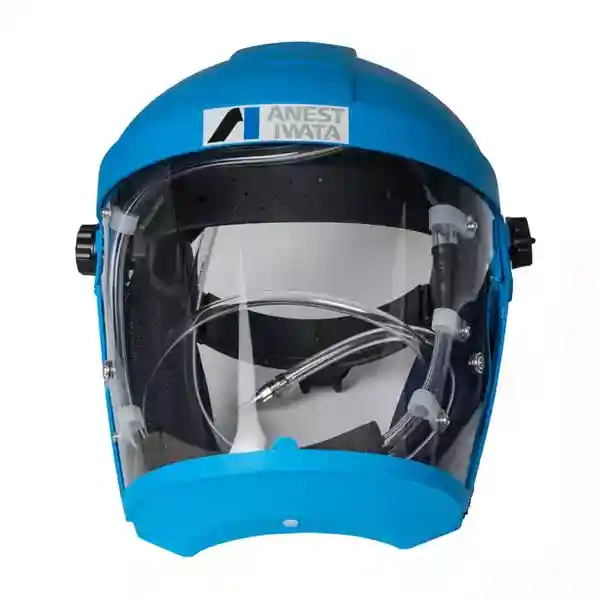
An air fed face mask is critical equipment in many industries, preventing long-term health risks like occupational asthma and irreversible lung damage. In our 34 years serving professionals, we've seen how vital these systems are. Here are the key industries where air-fed systems are necessary.
Automotive refinishing is a primary application. When working with modern paints containing isocyanates, found in 2K primers and topcoats, standard respirators are inadequate. The combination of fine overspray and toxic vapours requires a continuous supply of clean air.
Industrial manufacturing involves hazards like welding fumes, grinding dust, and chemical vapours from protective coatings. An air fed face mask provides the highest standard of protection when working with products like PPG Industrial Paints.
Powder coating operations produce fine, airborne powder particles that can cause respiratory issues if inhaled over time. Whether using standard powdercoat colours or specialty finishes, supplied-air hoods are popular as they protect the entire head and face.
Sandblasting and abrasive blasting generate a high volume of dangerous dust. Air-fed hoods are standard equipment, protecting the respiratory system while shielding the head and face from high-velocity particles.
Other industries include construction and demolition (silica dust, asbestos), mining (dusts, gases), and chemical handling, where any exposure to toxic fumes can have severe consequences. As a Melbourne-based company, we are committed to worker health and safety, ensuring everyone goes home healthy.
How to Choose and Maintain Your Air-Fed Respirator
Selecting and maintaining the right air fed face mask is a critical decision for your health and safety. With 34 years of experience, our team at Eastern Auto Paints can guide you through this process.
Choosing the Right Air-Fed Respirator
The selection process begins with a hazard assessment to identify airborne contaminants and their concentrations. This determines your Required Protection Factor (RPF), the level of protection your respirator must provide. Isocyanates in automotive paints, for example, demand a high RPF.
Next, perform a work environment analysis. Are you stationary in a spray booth (ideal for an SAR) or mobile (requiring a PAPR)? Consider temperature, humidity, and whether you work in confined or potentially explosive atmospheres, which require specific equipment certifications (e.g., IECEX, ATEX).
Comfort and fit are essential for consistent use. An uncomfortable respirator won't be worn. Choose between full-face masks, which offer excellent protection but require a tight seal, and loose-fitting hoods, which can be more comfortable for long periods. We recommend professional fit testing for all tight-fitting masks to ensure an adequate seal.
Certifications and standards guarantee performance. In Australia, ensure your respirator complies with AS/NZS 1716. Other key indicators of quality include the CE Mark (Europe), NIOSH approval (US), IP ratings for durability, and ISO 9001 for manufacturing quality.
Maintaining Your Air-Fed Respirator
Proper maintenance ensures your air fed face mask provides reliable protection and extends its lifespan.
- Daily Checks: Before each use, visually inspect hoses for damage, ensure connections are secure, and check facepiece seals. For PAPRs, confirm the battery is fully charged.
- Cleaning: Regularly clean and disinfect parts that contact your skin using mild soap and water or approved wipes, following the manufacturer's guidelines.
- Air Source Maintenance (SAR): The air compressor and lines need regular servicing to ensure they deliver clean, breathable air that meets standards. Replace filters in the air supply line on schedule.
- Filter Replacement (PAPR): Replace filter cartridges according to the manufacturer's schedule, which depends on contaminant concentration and usage time. Some systems have filter life indicators to simplify this.
- Proper Storage: Store your respirator and components in a clean, dry place away from contaminants, sunlight, and temperature extremes to prevent damage.
By following these guidelines, you ensure your respirator remains reliable when working with demanding materials like automotive paints or powdercoat colours.
Frequently Asked Questions about Air-Fed Masks
We often receive questions about air fed face mask systems from our valued customers across Victoria, Sydney, and Queensland. After 34 years in the business, we've learned that understanding these systems properly is crucial for making the right safety decisions. Here are some of the most common questions we hear, answered by our team of experts.
What are the primary components of an air fed face mask kit?
A complete air fed face mask kit includes several key components. The main ones are the facepiece (mask or hood), a flexible breathing hose, and an air supply system.
For a Supplied-Air Respirator (SAR), this includes a belt-mounted regulator to control airflow from a main air supply line connected to an external compressor.
For a Powered Air-Purifying Respirator (PAPR), the system includes a belt-worn, battery-powered blower unit that houses filter cartridges and pushes filtered air to the facepiece.
What are the latest innovations in air-fed mask technology?
The respiratory protection industry never stands still, and we're excited about the improvements we're seeing in air fed face mask technology. These innovations are making systems more comfortable, more effective, and easier to use for extended periods.
- Lighter, ergonomic designs that reduce user fatigue.
- Breath-responsive airflow technology that adjusts air delivery to match your breathing rate, conserving battery and improving comfort.
- Integrated communication systems that allow clear communication in noisy environments.
- Smart monitoring features that display battery life and filter status.
- Advanced nanofiber filters that block over 99% of fine particulates.
Do I need an air fed face mask for painting with 2K products?
This is one of the most important questions we get asked, and our answer is always the same: absolutely, yes. If you're working with 2K (two-component) products, an air fed face mask isn't just a good idea, it's essential for your health and safety.
The reason comes down to isocyanates, the highly reactive chemicals found in 2K paints. These substances can cause severe respiratory sensitisation, occupational asthma, and other serious long-term health problems. The scary part? Even minimal exposure can trigger these conditions, and once you're sensitised, you may never be able to work with these products again.
An air-fed system, whether it's a Supplied-Air Respirator (SAR) or a Powered Air-Purifying Respirator (PAPR) with appropriate filters, provides a continuous supply of clean air. This eliminates the guesswork and gives you the confidence that you're fully protected throughout your entire painting session. For any professional working with automotive paint guns and 2K products, investing in proper air-fed protection is non-negotiable.
At Eastern Auto Paints, we've seen the positive impact that proper respiratory protection has on the long-term health of professionals across our service areas. We're here to help you choose the right system for your specific applications and to ensure you're using it correctly. Your health is worth the investment.
Conclusion
After decades in this industry, I can tell you that your health is the most important tool in your workshop. No paint job, no matter how perfect, is worth risking your lungs and long-term well-being. That's why the air fed face mask remains one of the most critical investments any professional can make when working with automotive refinishing and industrial coatings.
Throughout this guide, we've seen how these systems work fundamentally differently from standard respirators. Instead of trying to filter out the bad stuff from contaminated air, they deliver a continuous supply of clean, breathable air directly to you. It's a simple concept, but it makes all the difference when you're working with hazardous substances day in and day out.
We've compared the two main types: Supplied-Air Respirators (SARs), which are perfect for stationary work in spray booths where you need absolute protection, and Powered Air-Purifying Respirators (PAPRs), which give you the freedom to move around while still maintaining excellent protection. Each has its place, and the right choice comes down to understanding your specific work environment and the hazards you're facing.
But having the right equipment is only half the battle. Proper selection matters immensely. You need to ensure your air fed face mask fits comfortably (because you won't wear it consistently if it doesn't), meets the Australian/NZ Standard (AS/NZS 1716) and other relevant certifications, and suits the specific contaminants in your workspace. Then comes the maintenance: daily checks before use, regular cleaning and disinfection, timely filter replacements for PAPRs, and air quality monitoring for SARs. These aren't optional extras. They're essential practices that keep your equipment protecting you properly.
At Eastern Auto Paints, we've spent 34 years helping professionals across Victoria, Sydney, and Queensland work safely and effectively. We're not just about selling paint. We're about ensuring our customers have the knowledge and equipment to achieve superior results while going home healthy at the end of every day. Our team understands the technical requirements, the practical realities of workshop life, and the importance of getting respiratory protection right the first time.
Whether you're refinishing vehicles with 2K products, applying industrial coatings, or working in powder coating environments, we're here to help you choose the right system and maintain it properly. For expert advice and to explore our complete range of respiratory protection, including PPE masks and airline systems, visit our online store or reach out to our knowledgeable team. Your safety isn't just a priority for us, it's the foundation of everything we do.