
The Guide to Epoxy Primer Paint for Cars
Why Epoxy Primer is the Foundation of Every Professional Paint Job
Epoxy primer paint for cars is the protective barrier that stops rust before it starts. It's the essential first step for protecting bare metal, sealing a restoration project, or creating a foundation that won't fail. Here are some of our top-performing primers:
Top Epoxy and Etch Primers for Cars:
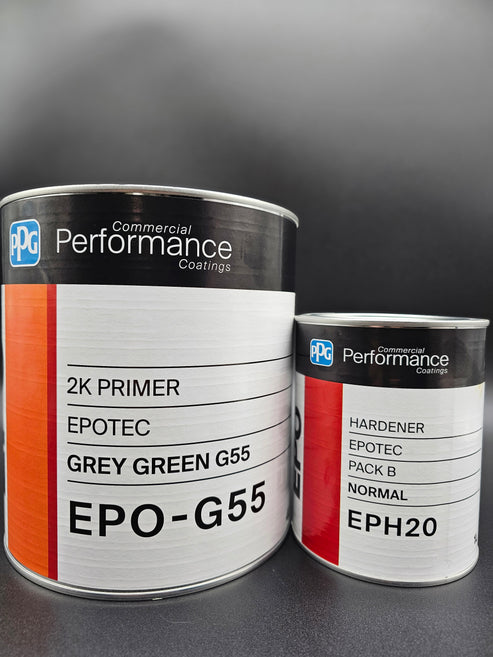
- EPO Epotec Primer Surfacer - 2K high-build epoxy for exceptional corrosion protection
- Protec EPS EtchPro - Superior adhesion to aluminium and galvanised steel
- Protec PPG Grey/Black Etch Primer - Fast-drying, versatile bare metal primer
- Jotun Primax Protect - Industrial-grade epoxy protection
- Galmet Rust Paint - Direct-to-rust primer and topcoat
Choosing the right epoxy primer paint for cars is the difference between a finish that lasts years and one that fails in months. Unlike standard primers, epoxy creates a non-porous barrier that locks out moisture and prevents corrosion. It bonds chemically to bare metal, offering superior adhesion that professionals rely on for any serious paint job.
Skipping this step or using the wrong primer leads to rust, paint lifting, and failures that require a complete do-over. Epoxy primer is a two-part (2K) system that chemically bonds to steel, aluminium, fibreglass, and body fillers, sealing the surface completely. This makes it ideal as a direct-to-metal (DTM) primer or a sealer.
I'm James Maranis, and with over 30 years in the coatings industry, I've helped countless customers choose the right epoxy primer paint for cars. This guide will walk you through everything you need to know to build a foundation that lasts.
What is Epoxy Primer and Why is it Essential?
Think of epoxy primer paint for cars as your vehicle's first line of defence. It's a protective coating that prepares metal for paint, but it's more like an invisible shield between your car's bare metal and the elements. Its chemistry is what sets it apart. As a 2K system, it consists of a resin and a hardener that, when mixed, chemically react to form a tough, durable film. This reaction creates a genuine chemical bond with the substrate, gripping it at a molecular level.
The real magic of epoxy primer paint for cars is its non-porous nature. Unlike regular primers that can let moisture and oxygen through, epoxy creates a complete barrier. This impermeability makes it the champion of corrosion prevention. It also excels as a direct-to-metal (DTM) coating, allowing products like EPO Epotec Primer Surfacer to be sprayed directly onto bare metal, simplifying the process and ensuring maximum adhesion. Its impressive substrate compatibility means it adheres exceptionally well to steel, aluminium, fibreglass, and even body fillers.
Key Benefits of Epoxy Primer Paint for Cars
Epoxy primer paint for cars delivers benefits that put it in a class of its own.
- Best corrosion resistance: Its non-porous barrier limits moisture and oxygen reaching the metal, the main drivers of rust. Many 2K epoxies use zinc phosphate to further inhibit corrosion.
- Superior adhesion: Epoxy creates a strong chemical bond to clean, abraded bare metal and other prepared substrates, so later paint layers are less likely to chip, peel, or lift.
- Durability and chemical resistance: Once cured, epoxy forms a tough film that resists road grime, salts, and fuels. On tricky metals, start with an etch primer like Protec EPS EtchPro or Concept 103 Etch Primer for initial bite, then apply epoxy for long-term protection.
- Excellent sealer: Used as a sealer, epoxy locks down bodywork, helps reduce solvent soak and mapping, and builds a uniform surface for a smoother final finish.
- Long-term project protection: Epoxy resists moisture for extended periods, helping prevent rust and flash rust during drawn-out builds. For accuracy, surface contamination or UV exposure can affect long-term storage. Keep panels indoors, clean, and covered, then scuff and wipe before topcoating. For direct-to-rust or specialty jobs, Galmet Rust Paint or Concept Paints 110 Metal Etch Primer can be integrated into the workflow.
We've seen epoxy primer paint for cars save countless restoration projects from moisture damage during long waits. It's an investment in peace of mind.
Epoxy Primer vs. Urethane Primer: What's the Difference?
While both epoxy primer and urethane primer are crucial, they serve different purposes. Understanding this is key to a long-lasting finish.
| Feature | Epoxy Primer | Urethane Primer (2K) |
|---|---|---|
| Function | Adhesion, corrosion protection, sealing | Filling, surfacing, sanding, paint holdout |
| Best Use | First coat on bare metal, DTM, sealer | After bodywork/filler, build up uneven surfaces |
| Porosity | Non-porous (blocks moisture) | Porous (absorbs moisture if not topcoated quickly) |
| Sanding | Not designed for easy sanding (tough) | Excellent sandability (high-build, easy to shape) |
| Adhesion | Superior to bare metal, chemical bond | Excellent to existing paint/filler, mechanical key |
| Corrosion Protection | Excellent (primary function) | Minimal (bonding agent, not anti-corrosion barrier) |
Think of it this way: epoxy primer is the foundation and waterproofing. Urethane primer is the plaster that smooths the walls for paint. You wouldn't plaster a foundation without waterproofing it first.
Epoxy as a sealer: Products like EPO Epotec Primer Surfacer can be thinned by about 20% to create a sealer coat, ensuring consistent colour and gloss.
Urethane as a high-build surfacer: These primers fill minor imperfections and sand easily. They are applied over epoxy primer, not directly to bare metal, as they are porous and don't offer the same corrosion protection. This is a common mistake that can cause issues later, especially with delays between priming and topcoating.
The correct layering is epoxy primer (like Protec PPG Grey/Black Etch Primer) on bare metal, followed by body filler if needed, and then a urethane primer/surfacer for a perfectly smooth surface before your basecoat and clearcoat.
Our Top Epoxy and Etch Primers for a Flawless Finish
Choosing the right primer means matching the product to your project's surface and needs. Whether you're tackling bare steel, aluminium, or a long-term restoration, the right foundation is key.
At Eastern Auto Paints, we stock a curated range of high-performance epoxy primer paint for cars and etch primers for professional results. You can grab these in-store at our Bayswater or Dandenong South locations, or shop online. Our team can help you choose the right hardener and ensure you have what you need. For more options, explore our full range of primers and fillers.
Best for High-Build & Corrosion Protection: EPO Epotec Primer Surfacer
For robust protection and filling power, EPO Epotec Primer Surfacer is a fantastic choice. This 2K high-build epoxy offers exceptional corrosion protection, making it ideal for comprehensive restorations. It's excellent for steel and helps fill minor imperfections, streamlining your bodywork process by providing a solid, sealed foundation.
Best for Tricky Metals: Protec EPS EtchPro & Concept 103 Etch Primer
Getting paint to stick to aluminium and galvanised steel is a common challenge. Etch primers solve this problem. Protec EPS EtchPro and Concept 103 Etch Primer provide superior adhesion by chemically etching the metal surface. This creates a strong mechanical key for all subsequent paint layers. We also recommend Concept Paints 110 Metal Etch Primer for similar applications, ensuring your paint won't fail on difficult substrates.
Best All-Rounder for Bare Metal: Protec PPG Grey/Black Etch Primer
For a reliable, no-fuss solution, the Protec PPG Grey/Black Etch Primer is a go-to product. This fast-drying, versatile primer is perfect for general bare metal applications and spot repairs. It's trusted by professionals for its consistent performance and straightforward application.
Best for Industrial Strength: Jotun Primax Protect
For ultimate durability in harsh conditions, Jotun Primax Protect delivers industrial-grade epoxy protection. While a powdercoat product, its formulation showcases Jotun's robust epoxy technology. This level of protection is ideal for chassis and underbody components facing assault from road debris, salt, and moisture. For touch-ups, we can create custom aerosol cans to match Jotun colours.
Best for Direct-to-Rust Application: Galmet Rust Paint
When you need to address rust immediately without extensive prep, Galmet Rust Paint is a fantastic solution. It acts as a primer and topcoat in one, converting existing rust and sealing the surface to prevent further corrosion. It's a significant time-saver for less visible areas like underbody components where a full strip-down is impractical.
How to Apply Epoxy Primer Paint for Cars Like a Pro
Applying epoxy primer paint for cars correctly ensures a foundation that protects your metal for years. Rushing the process can lead to adhesion failures and rust. Before you start, safety is non-negotiable. Paint fumes are harmful, so ensure proper ventilation and always wear personal protective equipment. Stock up on quality PPE masks, and consider an Air Fed Mask for larger projects.
Step 1: Surface Preparation is Everything
Most adhesion problems stem from poor surface prep, not bad products. Even the best primer like EPO Epotec Primer Surfacer or Protec PPG Grey/Black Etch Primer won't stick to dirt, grease, or rust.
- Clean: Start by cleaning the surface with a wax and grease remover to eliminate oils and contaminants.
- Strip: If old paint is failing, strip it back to bare metal using our paint stripping products.
- Abrade: For bare metal, sand the surface to create a mechanical key for the primer to grip. For existing finishes, use P280-P320 grit sandpaper (dry). Feather the edges where new paint will meet old paint for a seamless transition.
- Final Clean: Before priming, give the surface one last wipe-down with a clean, lint-free cloth and fresh wax and grease remover. A perfectly clean surface is critical.
Step 2: Mixing Ratios and Pot Life
Epoxy primer paint for cars is a two-part system, so precision is vital. Always consult the product's Technical Data Sheet (TDS) for correct mixing ratios, pot life, and drying times.
- Mixing: You'll mix the primer with its corresponding hardener, typically at a 1:1 or 2:1 ratio. Measure carefully with graduated mixing cups—never eyeball it.
- Reducing: A reducer or thinner may be needed depending on your spray gun setup. To use epoxy as a sealer, you'll typically thin it by about 20%. The TDS will specify the correct type and amount.
- Pot Life: Once mixed, the clock starts ticking. "Pot life" is the time you have to apply the primer before it hardens. Mix only what you can spray within this timeframe to avoid waste.
Step 3: Application Technique
Spraying delivers the smoothest finish. For optimal results, use an HVLP (High Volume Low Pressure) spray gun. We stock a full range of professional spray guns and accessories, including top brands like Sata and Anest Iwata.
Set up your gun according to the TDS, typically with a 1.6-2.0 mm fluid tip and 2-4 bar of air pressure. Apply the primer in moderate, even wet coats, overlapping each pass by 50% to avoid stripes. Maintain a steady pace and a consistent distance (15-20 cm) from the panel.
Allow the recommended flash time (usually 5-10 minutes) between coats for solvents to evaporate. Rushing this step can cause solvent pop. One gallon of properly thinned epoxy primer typically covers about 140 square feet.
Step 4: Drying, Curing, and Recoating
Patience is key. "Drying" means the surface is touch-dry, while "curing" is the chemical process where the primer reaches full hardness and protective properties. Curing can take two to five days at ambient temperatures (e.g., 8 hours at 20°C), but this is heavily influenced by temperature and humidity. Use heat lamps in cooler conditions to speed up the process.
Pay close attention to the recoat window specified in the TDS. Applying the next layer within this window creates a chemical bond. If you miss it, you must sand the cured epoxy to create a mechanical bond. Use P400-P500 grit sandpaper (dry) or P800-P1000 (wet) to scuff the surface before applying your basecoat or topcoat.
One major advantage of epoxy primer paint for cars is that you can apply body fillers directly over the cured surface. The sealed primer prevents the filler from absorbing moisture, ensuring a stable repair. After sanding the filler, re-prime the area before topcoating.

Frequently Asked Questions about Epoxy Primer
Here are answers to the most common questions we hear from customers about epoxy primer paint for cars.
Can you apply body filler over epoxy primer?
Yes, applying body filler over cured epoxy primer is best practice. The epoxy creates a non-porous, sealed base that prevents moisture from reaching the metal, which can cause rust to bubble up from underneath your repair. After applying and shaping your body fillers, you can apply a high-build urethane primer for final sanding.
How long can epoxy primer be left before topcoating?
This is a major advantage of epoxy. Its non-porous nature allows it to protect bare metal for weeks or even months, which is ideal for long-term restoration projects. However, always check the product's Technical Data Sheet (TDS). If you exceed the recommended recoat window, you must lightly scuff the surface (P400-P600 grit) to create a mechanical bond for your basecoat or topcoat.
Can epoxy primer be used on plastic or fibreglass?
Absolutely. Epoxy primer paint for cars is highly versatile and offers fantastic adhesion to properly prepared fibreglass, gelcoat, and some rigid plastics. This makes it an ideal choice for modern vehicles with mixed materials and classic cars with fibreglass panels. For plastics, ensure the surface is thoroughly cleaned, scuffed, and consider using a plastic adhesion promoter before the epoxy for maximum grip.
Your Foundation for a Lasting Finish
Getting your epoxy primer paint for cars right is what separates a paint job that lasts a decade from one that fails in a year. It's the most critical part of the project. This foundation layer creates a corrosion-resistant barrier, delivers superior adhesion, and builds in the durability your vehicle deserves. You wouldn't build a house on sand, and the same logic applies to automotive paint.
At Eastern Auto Paints, we've spent over 34 years helping customers across Victoria get this crucial step right. We've seen what works and what doesn't, and our shelves are stocked with proven performers for any application, from high-build protection and tricky metals to direct-to-rust solutions. We’ve handpicked these based on decades of workshop experience and customer feedback.
Products are only part of the equation. Our team is here to help you match the right primer and hardener to your specific project. Whatever you're tackling, we can walk you through the options to ensure a professional result.