
The Ultimate Guide to Air Fed Paint Spray Respirators
Why an Air Fed Mask for 2K Paint Is Not Optional
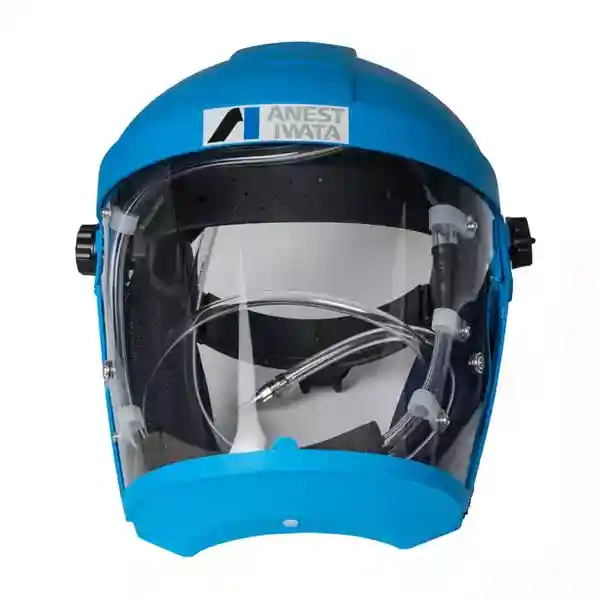
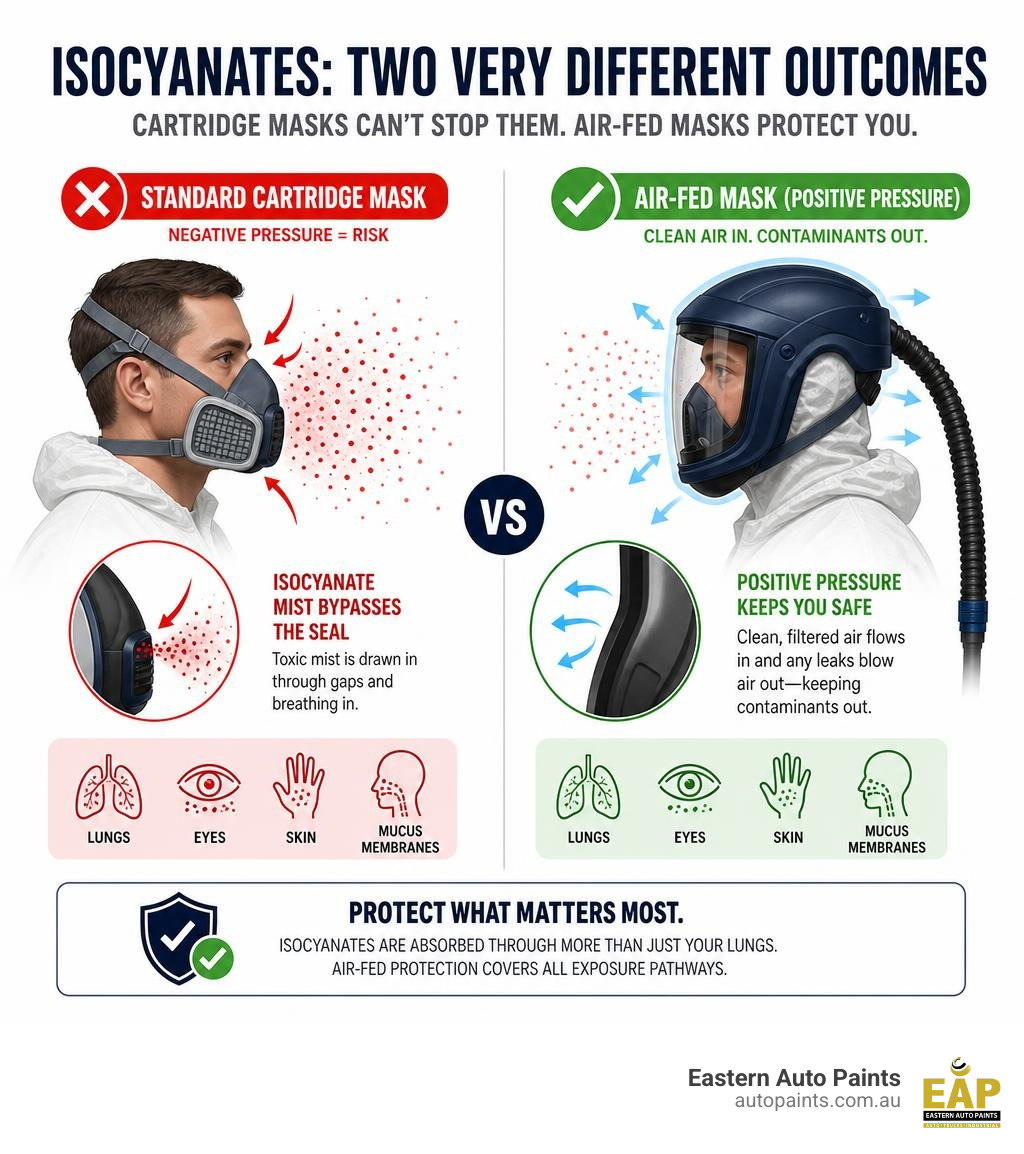
An air fed mask for 2K paint is the only type of respiratory protective equipment (RPE) considered appropriate when spraying two-pack (2K) polyurethane paints containing isocyanates. Unlike standard cartridge-based respirators, air-fed systems supply a continuous flow of clean, filtered air under positive pressure, which means any gap in the seal blows air outward rather than drawing toxic mist inward.
Here is a quick summary of what you need to know:
- 2K paints contain isocyanates, which are highly toxic chemical sensitisers that can cause permanent occupational asthma and have no reliable odour warning at dangerous exposure levels.
- Standard cartridge respirators are not certified for isocyanate exposure. Major manufacturers including 3M have stated that none of their cartridge-based masks are capable of reliably filtering out isocyanates.
- Air-fed masks work differently. They use positive pressure to supply breathing-quality air, removing the risk of toxic mist bypassing a facial seal.
- Isocyanates are absorbed through more than just your lungs. Eyes, skin, and mucous membranes are all exposure pathways, which is why full-face or hooded air-fed systems are strongly recommended.
- Certified systems are available and accessible. Products such as the Honeywell Airvisor 2, certified to EN 14594 (the European standard for continuous flow compressed air line breathing apparatus), can be sourced as a complete kit for under £500 (approximately $1,000 AUD) excluding the air compressor.
- Safer alternatives exist for small jobs. Isocyanate-free 2K air-dry converter formulations are available for DIY use where an air-fed system is not practical.
The stakes here are genuinely serious. One experienced safety representative put it plainly in a widely shared discussion on the topic: by the time you can smell isocyanates through a filter, you have already been exposed to levels far beyond what is considered safe. That is not a risk worth taking for the sake of convenience or cost-cutting.
I am James Maranis, owner of Eastern Auto Paints, and after more than 30 years working across automotive, industrial, and commercial coatings, the question of the right air fed mask for 2K paint is one I take seriously every time a customer transitions to two-pack products. In this guide, we will walk you through exactly why air-fed protection matters, what a proper setup looks like, and how to make informed choices for your specific situation.
Air fed mask for 2k paint terms made easy:
Why This Issue Should Not Be Ignored
When spraying two-pack (2K) paints, the primary hazard comes from isocyanates. These are highly reactive chemical compounds used as hardeners or activators in polyurethane coatings. Unlike standard solvent vapours, isocyanates are powerful chemical sensitisers. Once your body has a sensitisation reaction to them, even microscopic future exposures can trigger severe, life-threatening asthma attacks. This is not a standard allergy that goes away; it is a permanent, irreversible change to your respiratory system.
Furthermore, isocyanates do not just enter your body through inhalation. They are easily absorbed through the moist membranes of your eyes and directly through the skin. If you are spraying in a mist of 2K overspray, your eyes and exposed skin act like a sponge for these compounds.
Why a Standard Respirator is Not an Air Fed Mask for 2K Paint
It is common to see DIYers and even some professionals using standard half-face or full-face cartridge respirators (such as A2P3 or ABEK2P3 filters) when spraying 2K coatings. However, these negative-pressure systems are not certified or recommended by safety authorities for isocyanate-containing paints.
A negative-pressure mask relies on the suction of your lungs to draw air through a filter. This creates negative pressure inside the mask facepiece. If there is any imperfection in the facial seal—whether caused by facial hair, moving your jaw while talking, or a slight misfit—the contaminated air will take the path of least resistance. It bypasses the filter entirely and enters your lungs.
To achieve any reliable seal with a cartridge mask, the user must be completely clean-shaven, and the mask must be fit-tested perfectly. Even then, the physical movement of spraying often breaks the seal.
Additionally, standard organic vapour cartridges rely on the user's ability to smell a chemical "breakthrough" to know when the filter is saturated and needs replacing. Because isocyanates have no natural odour warning properties at safe exposure levels, you cannot smell them until you have already inhaled a highly hazardous dose.
For true two-pack (2K) polyurethane coatings, a dedicated positive-pressure system from our Masks and Airlines range is the industry-recognised safe path. Always check the product label, technical data sheet (TDS), and relevant SafeWork or WorkSafe guidance before starting so your respiratory protective equipment (RPE) matches the coating and application conditions.
Common Symptoms, Challenges, or Questions
One of the most insidious aspects of chemical sensitisation is that it does not always show up immediately. A painter might spray 2K coatings for months or even years using inadequate protection, feeling completely fine. Then, seemingly out of nowhere, they develop a persistent cough, wheezing, shortness of breath, or severe chest tightness. This chemical sensitisation is permanent. Once sensitised, even walking into a room where a fully cured 2K panel is sitting can trigger an asthmatic reaction.
This poses a major challenge for home restorers and trade professionals alike. When setting up a spray space, you must consider not only what you breathe in but how the overspray behaves in the environment.
Is an Air Fed Mask for 2K Paint Mandatory for Home Use?
In Australia, workplace health and safety authorities, such as SafeWork Australia and WorkSafe Victoria, maintain strict guidelines regarding the use of supplied-air respirators for any professional spraying of isocyanate-containing polyurethane coatings. While these regulations are legally binding for commercial body shops, home hobbyists spraying in a domestic garage are not subject to workplace inspections.
However, the human respiratory system does not care whether you are getting paid or working on a weekend project in a residential garage. Domestic garages present severe ventilation challenges. Unlike a professional downdraft booth, a home garage typically lacks the high-volume air exchange needed to clear airborne paint mist quickly. Overspray lingers in the air for a long time, increasing the concentration of isocyanates and the risk of skin and eye absorption.
Before starting any project with two-pack coatings, such as our custom 2K Mixed Colours, you must read the manufacturer's technical data sheet (TDS) and product safety label. These documents outline the exact safety equipment required. If your setup cannot accommodate a proper positive-pressure air-fed mask, you should look into isocyanate-free alternatives or professional application.
What a Personalised Experience Actually Looks Like
At Eastern Auto Paints, we do not believe in a one-size-fits-all approach to safety. When you visit us, we take the time to understand your specific setup, your level of experience, and the exact coatings you plan to run.
Matching your protective gear to the specific paints you are spraying is a highly individual process. If you are spraying water-based basecoats or single-pack acrylics, a high-quality cartridge respirator may be perfectly suited to the task. But if you are stepping up to professional 2K clears or polyurethane topcoats, we will guide you through the transition to supplied-air systems.
We stock professional-grade equipment and can help you configure a safe, reliable air supply that matches the demands of your spray gun and your breathing apparatus. If you want to discuss your workshop safety requirements, Contact Us for expert advice.
The Value of Consistency and an Ongoing Relationship
Protecting your health is a long-term commitment, and having a reliable partner for your supply needs makes all the difference. For our trade and commercial partners across Melbourne, we provide consistent, dependable support to ensure your shop remains compliant and your painters stay safe.
By building an ongoing relationship with us, you gain access to more than just safety equipment. When it comes to refinishing, our professional colour matching service utilises advanced technology alongside experienced professionals to guarantee a perfect match. We save your custom colour-match formulations in our database, ensuring that when you need a repeat batch of a specific fleet colour or custom auto shade, it matches perfectly every single time. Learn more about our commitment to trade quality on our About EAP page.
What to Expect at Eastern Auto Paints
When you walk into our trade showrooms in Bayswater or Dandenong South, you are stepping into an expert-led environment. You will find a comprehensive range of premium coatings, professional spray equipment, and respiratory protection.
We supply everything needed to run a professional refinishing operation, including high-capacity Compressors and precision Spray Guns and Accessories. Our team will help you calculate your total air volume requirements, ensuring your compressor can easily supply both your spray gun and your air-fed mask without drop-offs in performance.
To help you choose the right air source for your spray gun and air-fed mask, here is a comparison of premium Anest Iwata compressors stocked at EAP:
| Compressor Model | Displacement (L/min) | Power (HP) | Ideal Application |
|---|---|---|---|
| Anest Iwata 2.2kW (3HP) | 320 L/min | 3.0 HP | DIY & Light Commercial Spraying |
| Anest Iwata 5.5kW (7.5HP) | 820 L/min | 7.5 HP | High-Volume Commercial Workshops |
| Anest Iwata 7.5kW (10HP) | 1050 L/min | 10.0 HP | Heavy Industrial & Multi-Gun Setups |
When to Get in Touch or Take Action
If you are currently using a cartridge mask for 2K coatings, now is the time to re-evaluate your safety protocols. Upgrading your respiratory protection is the single most important investment you can make in your workshop. Whether you are a professional shop looking to standardise your RPE or a serious restorer planning your first major 2K project, we are here to support you. Please contact our team today to discuss your setup and get expert advice on transitioning to a positive-pressure system.
Practical Solutions: Choosing an Air Fed Mask for 2K Paint
To set up a functional air-fed system, you need to understand how the components work together to deliver clean, breathable air:
- The Air Source: A standard workshop compressor draws in ambient air, which contains moisture, oil mist from the pump, and potential atmospheric contaminants. This air is not safe to breathe directly.
- Multi-Stage Filtration: Before the air reaches your mask, it must pass through a dedicated breathing-air regulator and filtration unit. This system typically uses a coalescing filter to remove liquid water and oil droplets, followed by an activated carbon cartridge to eliminate organic vapours and odours. You can explore these systems in our Air Filter and Regulators collection.
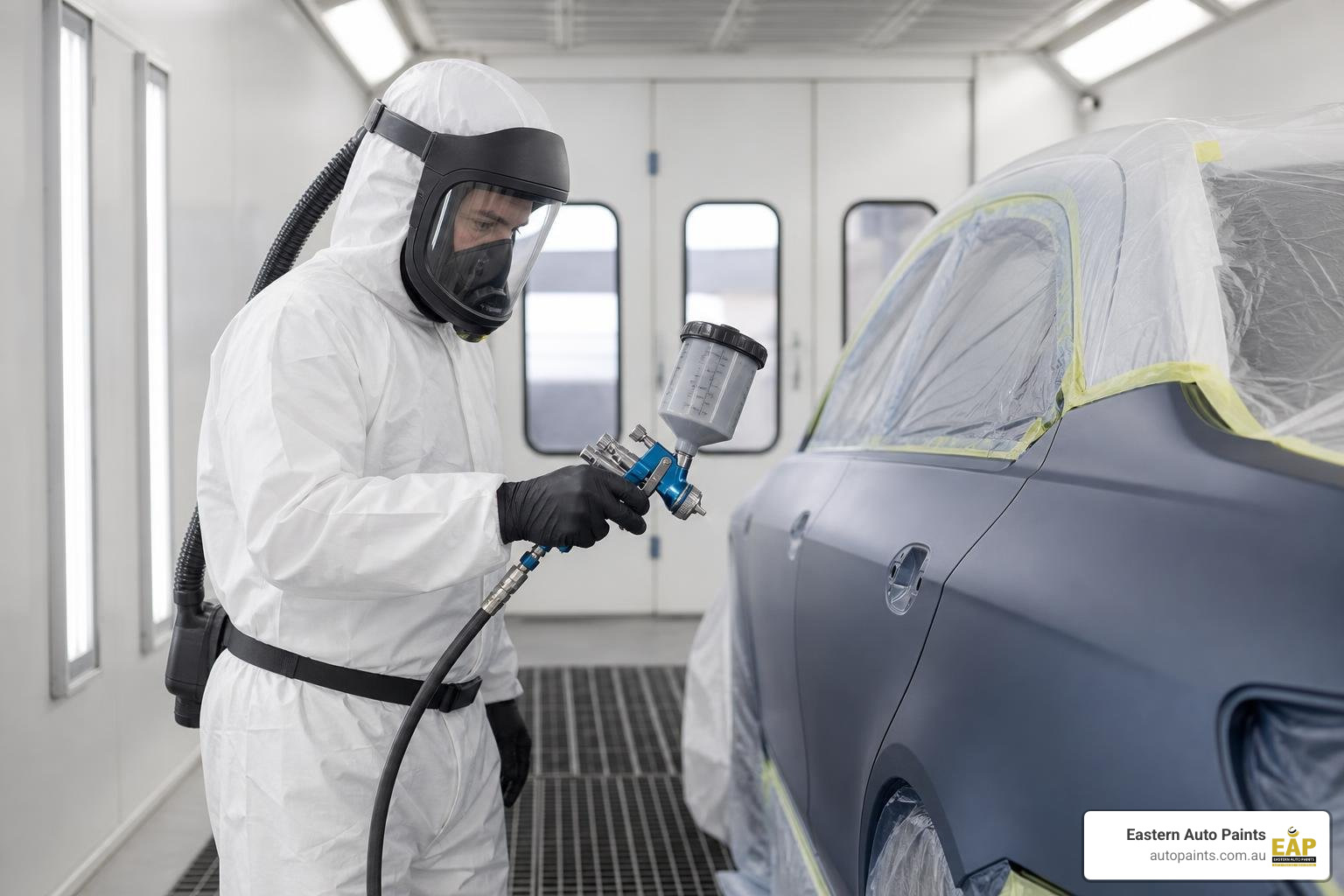
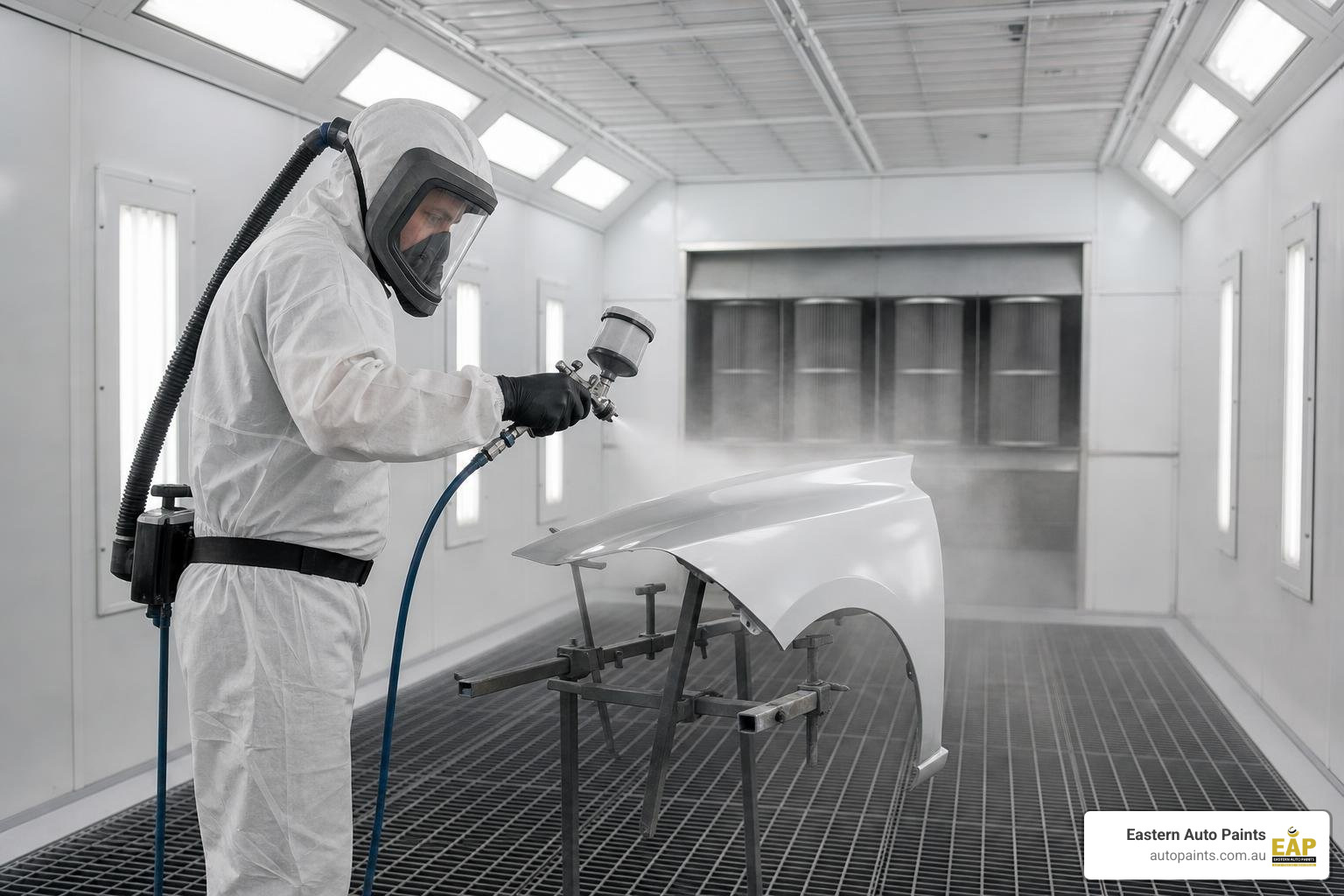
- The Mask: The regulated, clean air is delivered via a dedicated breathing hose to your belt-mounted regulator and then into your full-face visor or hood, maintaining a constant positive pressure.
- Skin and Body Protection: Because isocyanates are absorbed through the skin, respiratory protection must be paired with complete body coverage. Always wear durable, chemical-resistant overalls and high-quality gloves suitable for the coating system, checking the product label or technical data sheet for product-specific PPE guidance before starting.
Your Next Steps for Safe Spraying
Setting up an air-fed system might seem like an extra hurdle, but it is the only way to guarantee your long-term health when working with professional-grade 2K coatings. Always consult the manufacturer's technical data sheet for your specific paint product to verify its safety and application requirements.
If you are ready to upgrade your workshop safety, our experienced team is here to help you select the right combination of compressors, regulators, and positive-pressure masks. Reach out to us via our Contact Us page, browse our full inventory on the EAP Homepage, or head straight to our Masks and Airlines section to see our professional safety solutions.
Frequently Asked Questions About 2K Paint Safety
How do I choose between 1K and 2K products for my job?
The choice between single-pack (1K) and two-pack (2K) products depends entirely on the scale of your job, your available equipment, and your durability requirements. 1K products dry through solvent evaporation, making them simpler to apply and well-suited for quick repairs or environments where supplied-air RPE is not available. 2K products cure through a chemical reaction initiated by a hardener, offering superior chemical, UV, and scratch resistance. Always refer to the manufacturer's technical data sheet for the exact specifications of the product you are using.
Why are standard cartridge filters insufficient for isocyanates?
Standard cartridge filters rely on negative pressure, which can allow contaminated air to bypass the facial seal if the mask does not fit perfectly or if the user has facial hair. Furthermore, organic vapour cartridges do not provide a reliable odour warning sign when they fail. Because isocyanates have no smell at safe exposure levels, you cannot detect when the filter has become saturated and is letting toxic vapours through.
Where can I find the exact technical specifications for my paint?
The exact technical specifications, mixing ratios, drying times, and safety requirements are detailed in the manufacturer's technical data sheet (TDS) and the product safety label. You should always read these documents before opening or mixing any paint product. If you need help locating or interpreting a TDS for a product purchased from us, our team is always happy to assist.
What are the minimum air supply requirements for an air-fed system?
An air-fed system requires a continuous flow of clean, breathing-quality air that meets local safety standards. This means your air compressor must have sufficient capacity (measured in litres per minute) to run both your spray gun and your air-fed mask simultaneously without dropping below the minimum operating pressure. Additionally, you must use a multi-stage filtration system with coalescing and carbon elements to remove moisture, oil, and organic vapours from the air line.
Is skin and eye protection necessary if I use an air-fed mask?
Yes, skin and eye protection are absolutely necessary. Isocyanates can be absorbed directly through the skin and the mucous membranes of your eyes. Even if you are wearing a supplied-air mask, leaving your eyes, face, or body exposed to overspray mist puts you at risk of chemical sensitisation. A full-face air-fed visor should always be paired with chemical-resistant overalls, a protective hood, and high-quality nitrile gloves.