
Ultimate Checklist for Finding Your Best Half Face Respirator
Why Respiratory Safety Matters in Automotive and Industrial Painting
A half face respirator is a reusable mask that covers your nose, mouth, and chin to filter out harmful airborne contaminants. By creating a tight seal, it protects your respiratory system from paint overspray, solvent vapours, and dust particles common in painting, sanding, and coating applications.
Key components include a silicone or TPE facepiece, replaceable cartridges/filters, an adjustable harness, and an exhalation valve to release air and prevent heat buildup. You need one when spraying automotive paints, sanding body fillers, or working with solvent-based coatings like 2K primers and Protec Automotive Paint Systems.
Respiratory protection isn't optional in automotive refinishing. Paint overspray, solvent vapours, and sanding dust can cause everything from dizziness and headaches to long-term health problems. The challenge is choosing the right respirator from dozens of models with different filters and features. Do you need organic vapour cartridges or particulate filters? Is a silicone facepiece better? What about fit testing?
This guide breaks down everything you need to know. We'll compare popular models like the 2-Spray Painters Respirator Kit, Sundstrom SR900 Basic Kit, and Pro-Val P2 Carbon Dust Respirator, explain filter ratings, and show you what features matter.
With over three decades in the coatings industry, I've learned that proper respiratory protection is as important as the paint you're spraying. Selecting the right half face respirator is critical for your immediate safety and long-term health.
Understanding Respirator Types: Half Face, Full Face, and More
Respiratory protection isn't one-size-fits-all. The right choice depends on your work, the contaminants, and the level of protection you need.
A half face respirator covers your nose, mouth, and chin. It's a popular choice for painters because it's lightweight, less restrictive, and affordable. The trade-off is that you'll need separate eye protection. For most tasks involving dust and vapours that don't irritate the eyes, a half face model like the 2-Spray Painters Respirator Kit or Sundstrom SR900 Basic Kit is ideal.
Full face respirators provide integrated eye protection, which is essential when working with aggressive solvents or industrial coatings that can damage your eyes. If you're spraying Protec Automotive Paint Systems in a well-ventilated booth, a half face respirator is sufficient. In a confined space with poor ventilation, the extra eye protection of a full face mask is a safer bet.
Choosing Between Reusable and Maintenance-Free Options
When selecting a half face respirator, you'll find two main types: reusable and maintenance-free.
Reusable respirators are built for long-term, regular use. They feature a durable facepiece and replaceable cartridges, making them cost-effective and adaptable to different hazards. Professionals in automotive refinishing prefer reusable models like the Sundstrom SR900 Basic Kit, which can be paired with various filters like the Sundstrom SR 510 Particle Filter, Sundstrom SR218 Gas Filter, and Sundstrom SR221 Pre-Filter.
Maintenance-free respirators have integrated, non-replaceable filters. Once the filters are spent, you dispose of the entire unit. They are convenient for occasional users or short-term projects, like sanding body fillers once a month. The Pro-Val P2 Carbon Dust Respirator is a great grab-and-go option.
When to Consider an Air-Fed System
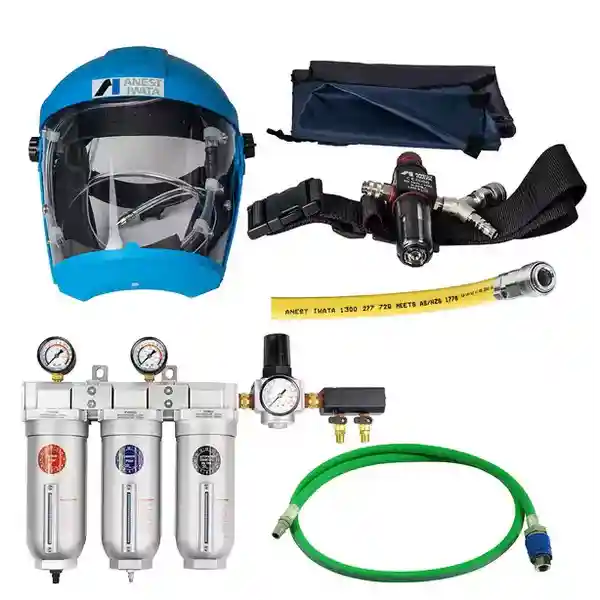
For certain high-risk environments, a Supplied Air Respirator (SAR), or Air Fed Mask, is necessary. These systems supply a continuous flow of clean air from an external source, completely isolating you from airborne contaminants.
An air-fed system is the best defence against isocyanates, highly sensitising chemicals found in 2K primers and clear coats. Traditional cartridges have limitations with isocyanates, but an air-fed system provides foolproof protection. They are also ideal for high-contaminant environments or long work periods, eliminating concerns about filter capacity.
The positive pressure inside an air-fed hood also improves comfort by making breathing easier and reducing heat buildup. While the initial investment is higher, the superior protection and comfort are essential for high-risk tasks. We stock a full range of PPE masks and air lines for even the most demanding jobs. If you're unsure, contact our team for expert advice.
Decoding Cartridges and Filters: Your First Line of Defence
Cartridges and filters are the core of your half face respirator, and matching them to the hazard is critical. Airborne contaminants come in two forms: solid particles (dust, overspray) and invisible gases/vapours (solvents, chemicals).
- Particulate filters physically trap solid particles like dust from sanding body fillers.
- Gas and vapour cartridges use activated charcoal to absorb harmful chemical fumes.
Since most painting jobs involve both hazards, combination cartridges that handle both particles and vapours are a practical choice. Cartridges are rated by NIOSH (US National Institute for Occupational Safety and Health), a global standard that uses letters and numbers to indicate what a filter protects against. These ratings tell you exactly what a filter protects against. For example, P100 filters are oil-proof and block 99.97% of particles, while OV cartridges protect against organic vapours. Always check the cartridge against your paint's Safety Data Sheet (SDS) to ensure a correct match.
Understanding Particulate Filter Ratings (N, R, P)
The letters on particulate filters indicate their resistance to oil-based aerosols, a key factor in automotive painting.
- N-series (Not resistant to oil): Suitable for dry sanding, but not for oil-based paint spray.
- R-series (Resistant to oil): Can be used for up to eight hours with oil-based aerosols.
- P-series (Oil-Proof): The standard for automotive painting. They are strongly resistant to oil and can be used for extended periods.
Filters are also rated by efficiency (95%, 99%, or 100%). For automotive and industrial work, we strongly recommend P100 filters, which offer 99.97% efficiency. The Sundstrom SR 510 Particle Filter is an excellent example, providing top-tier protection against fine particles from paint and body fillers.
Selecting the Right Gas and Vapour Cartridges
Gas and vapour cartridges use a colour-coding system for easy identification. For automotive work, the most important is:
- Organic Vapour (OV): Typically black, these cartridges are essential for protection against solvents in paints, thinners, and 2K primers.
Other types, like Acid Gas (AG) or multi-gas cartridges, are available for specific industrial hazards. Gas cartridges have a limited lifespan as they become saturated. Since there's no obvious sign they're full, many workplaces follow a strict change schedule.
To extend the life of your main cartridge, use a pre-filter like the Sundstrom SR221 Pre-Filter. It catches larger particles before they clog the gas filter. Pairing it with a quality gas filter like the Sundstrom SR218 Gas Filter creates a durable and effective system.
Always check the Safety Data Sheet for the products you're using and select the appropriate cartridge. If you need help, explore our PPE masks collection or contact us for expert advice.
Key Features to Compare in Your Next Half Face Respirator
Beyond filters, the design and materials of a half face respirator determine its comfort and usability. When working with products like PPG Industrial Paints or custom colour matching spray paints, a comfortable and reliable respirator is key.
Facepiece Material: Silicone vs. Thermoplastic Elastomer (TPE)
The facepiece material affects comfort and durability.
- Silicone: Considered the premium choice, silicone is soft, pliable, and hypoallergenic. It creates a comfortable, long-lasting seal without creating pressure points, making it ideal for extended wear.
- TPE: A more economical option, TPE offers good flexibility and chemical resistance. While not as soft as silicone, a well-designed TPE facepiece provides reliable protection and excellent value.
For demanding, all-day work, the superior comfort of silicone is often worth the investment. For those balancing budget and protection, TPE is a solid choice.
Harness Design and a Secure Seal
A good seal is non-negotiable, and the harness system is what makes it happen. Look for these features:
- Cradle Suspension: Distributes weight and tension evenly across the head to prevent pressure points.
- Adjustable Straps: Allow you to customise the fit for a secure seal that doesn't restrict movement.
- Quick-Latch/Drop-Down Mechanisms: Let you temporarily lower the mask without removing the entire harness, a huge convenience.
- Minimal Dead Air Space: Reduces rebreathing of warm air, keeping the mask cooler and less stuffy.
The 2-Spray Painters Respirator Kit is designed with these principles in mind, offering a secure and comfortable fit.
Essential Comfort and Usability Features
Small details can make a big difference in how consistently you wear your respirator.
- Low-Profile Design: Ensures the mask fits well with safety glasses or goggles, preventing fogging and improving your field of vision.
- High-Performance Exhalation Valve: Reduces breathing resistance and vents warm, humid air, which is a major benefit in warm workshops.
- Speaking Diaphragms: Allow for clearer communication without removing your mask, improving safety and efficiency in team environments.
The Sundstrom SR900 Basic Kit includes many of these comfort-focused features, because a comfortable respirator is a safe respirator. We stock a wide range of PPE masks to suit different needs. If you're unsure which features are right for you, contact our team for guidance.
The Perfect Fit: Sizing, Testing, and Safety Standards
Even the best half face respirator is useless if it doesn't fit properly. A perfect seal is essential to prevent contaminated air from bypassing the filters. It's not about buying the most expensive mask, but the one that seals correctly on your face.
Half face respirators typically come in Small, Medium, and Large. Some models, like the Sundstrom SR900 Basic Kit, offer multiple sizes, while others like the 2-Spray Painters Respirator Kit are designed for high adjustability. Finding the right size is your first step.
Next, perform a user seal check every time you put on your respirator. Cover the inlets and inhale (negative pressure check) or cover the exhalation valve and exhale (positive pressure check). If the mask pulls inward or you feel air pressure with no leaks, you have a good seal. If not, readjust. This daily check is vital but doesn't replace professional fit testing.
Finally, ensure your respirator meets safety standards. In Australia, look for compliance with AS/NZS 1716. All the PPE masks we supply meet these stringent requirements, giving you confidence when working with products like PPG Industrial Paints.
Why Fit Testing Your Half Face Respirator is Non-Negotiable
For professionals in automotive refinishing, professional fit testing is a critical workplace safety requirement. It's the only way to verify that a specific respirator model and size forms an adequate seal on your face.
Fit testing can be qualitative (a pass/fail test using your sense of taste or smell) or quantitative (using a machine to measure the exact amount of leakage). The quantitative method provides a numerical "fit factor" for objective proof of a good seal.
Fit testing is crucial because faces vary, and factors like facial hair or weight changes can affect the seal. Without a proper fit, even the best Sundstrom SR 510 Particle Filter is compromised. Regulatory bodies like WorkSafe Victoria mandate fit testing as part of a respiratory protection program. It's not just good practice, it's often the law.
We strongly encourage all users of reusable respirators to get professionally fit tested. It provides confidence that you are truly protected while you focus on your work, whether spraying Protec Automotive Paint Systems or doing precision colour matching. For the latest requirements, consult your local workplace safety authority, such as Safe Work Australia. If you have questions about fit testing, contact our team, we're here to help.
Conclusion: Making Your Final Choice with Confidence
Choosing the right half face respirator is straightforward when you know what to look for. Here’s a quick checklist to guide your decision:
- Assess Your Hazards: Identify the specific contaminants in your workspace, such as paint overspray from Protec Automotive Paint Systems, dust from body fillers, or vapours from 2K primers.
- Choose Your Respirator Type: For most professional work, a reusable respirator like the Sundstrom SR900 Basic Kit or 2-Spray Painters Respirator Kit offers the best value. For occasional tasks, a maintenance-free option like the Pro-Val P2 Carbon Dust Respirator is convenient.
- Match Your Filters: For spray painting, combine P100 particulate filters (like the Sundstrom SR 510 Particle Filter) with organic vapour cartridges (like the Sundstrom SR218 Gas Filter). Use a Sundstrom SR221 Pre-Filter to extend cartridge life.
- Prioritise Comfort: Features like a silicone facepiece, a good harness, and a low-profile design ensure you'll wear your respirator consistently.
- Get Fit Tested: This is the non-negotiable final step. A proper seal is the only thing that guarantees protection.
For over 34 years, we've helped professionals across Victoria, Sydney, and Queensland find the right protection for working with automotive and industrial coatings. Our team understands the challenges because we live in this world every day.
Ready to make the right choice? Explore our full range of PPE masks to see what's available, or contact our team for personalised recommendations based on your specific work environment. We're here to help you find protection that works. Your lungs are worth it.