
What's a Good Automotive Paint Gun? Top Picks for Every Budget and Skill Level
Why Choosing the Right Automotive Paint Gun Matters
A good automotive paint gun is essential for achieving a professional-quality finish. The right spray gun delivers smooth, even coverage with minimal overspray, while the wrong one can waste expensive paint and leave you with runs, orange peel, or an inconsistent finish.
Quick Answer: What Makes a Good Automotive Paint Gun?
The best automotive paint gun depends on three key factors:
- Your skill level - Beginners often prefer forgiving LVLP guns, while professionals invest in precision HVLP systems from brands like Sata or Anest Iwata.
- Your compressor capacity - HVLP guns need 10-15 CFM, while LVLP guns work with smaller compressors delivering 5-8 CFM.
- Your budget - Quality entry-level guns can be found for under $200, while professional guns range from $500- $1500+.
When working with quality paints like basecoat and 2k direct gloss, wasting product with a subpar gun is a costly mistake. The goal is to find the right tool for your specific needs, whether that's a versatile gun for weekend projects or a dedicated professional setup for flawless results.
This guide breaks down the technology behind modern spray guns, the features that matter, and our top recommendations. We'll help you understand the difference between HVLP and LVLP systems, match your gun to your compressor, and choose the right nozzle size for primers, basecoats, and clearcoats.
At Eastern Auto Paints, we've spent over 34 years helping Melbourne's professional painters and passionate DIYers select the right equipment. We stock leading brands like Sata and Anest Iwata, along with all the complementary products you need, from Protec and Concept paints automotive paint to 2K primers, through to PPG"s Industrial range.
Understanding the Technology: A Guide to Automotive Spray Guns
Today's spray guns are sophisticated tools designed for precision, efficiency, and reduced environmental impact. Understanding how different technologies work is key to choosing a good automotive paint gun that matches your needs.
Every spray gun's core job is to turn liquid paint into a fine mist. But what makes a gun good comes down to two key metrics: transfer efficiency (how much paint actually lands on the panel, not just becomes overspray) and atomisation quality (how finely the paint is broken up). High transfer efficiency means you'll use less expensive paint, like a quality basecoat or 2K clear, and release fewer harmful particles into the air.
HVLP (High Volume, Low Pressure) Guns
HVLP guns are the go-to choice in professional shops. They use a high volume of air at low pressure (around 10 PSI at the cap) to gently deliver paint. This reduces bounce-back and overspray, resulting in exceptional transfer efficiency, often 65% or higher. This efficiency saves money and creates a cleaner work environment.
However, HVLP guns are air-hungry, typically demanding 10-15 CFM (cubic feet per minute) or more from your compressor. If your compressor can't keep up, you'll get inconsistent results. Always check your compressor's output before investing in an HVLP gun.
LVLP (Low Volume, Low Pressure) Guns
If your compressor is smaller, LVLP technology is an excellent alternative. These guns offer similar benefits to HVLP but work with significantly less air, typically 5-8 CFM. This makes them ideal for hobbyists and DIYers with smaller, home-garage compressors.
LVLP guns still provide good transfer efficiency and fine atomisation suitable for primers, basecoats, and clearcoats. The main trade-off can be a slightly slower application speed, which may not be an issue for smaller projects. For weekend warriors and small shops, LVLP guns offer a superb balance of performance and practicality.
Conventional Systems
Before modern efficiency standards, conventional high-pressure guns were the norm. They operate at high pressures, creating very fine atomisation. However, their transfer efficiency is poor (often 30-40%), meaning most of your expensive paint becomes overspray. Due to material waste and high VOC emissions, they are less common today.
For most automotive painting, HVLP guns offer the best results if you have an adequate air supply, while LVLP guns provide an excellent alternative for smaller compressor setups. At Eastern Auto Paints, we stock both technologies from leading manufacturers like Sata and Anest Iwata, and our team can help you match the right gun to your equipment.
What Makes a Good Automotive Paint Gun? Key Features to Consider
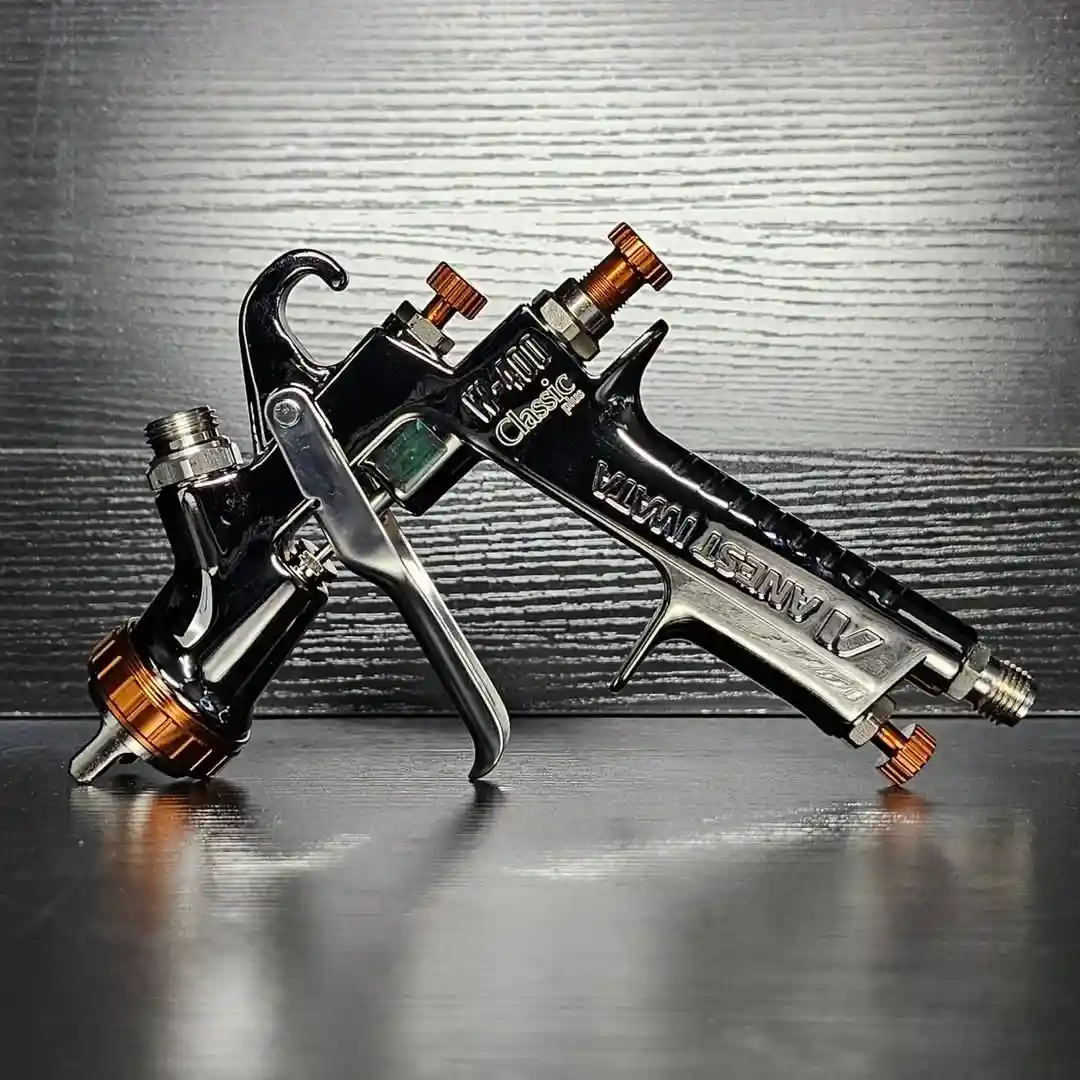
Once you've decided on a gun type, it's time to look at the details that separate a truly good automotive paint gun from a frustrating one. Key qualities include atomisation quality, build materials, and ergonomics.
Nozzle and Tip Size
The fluid tip and needle determine how much paint flows and how it atomises. Using the wrong size is a recipe for failure. Thick primer won't flow through a tiny tip, and thin basecoat will flood a panel if the tip is too large.
- Basecoats and Clearcoats: Use a tip size between 1.2mm and 1.4mm. These smaller tips handle lighter viscosity materials, giving you a smooth, glass-like finish.
- 1k and 2k Primers: Thicker materials like our 2k Protec Prime & Fill need larger 1.5mm to 1.8mm tips to flow correctly and build the necessary film thickness.
Quality components made of stainless steel are essential for durability, especially when spraying modern waterborne paints.
Paint Delivery and Cup Systems
Gravity-feed guns, with the cup on top, are the industry standard. Gravity helps paint flow to the tip, making them highly efficient and ensuring almost every drop of paint is used. Siphon-feed guns, with the cup below, are less efficient and have largely been replaced for modern automotive work.
A significant advancement is the disposable cup system. These systems replace rigid cups that need thorough cleaning. Instead, they use a flexible liner and a disposable lid with a built-in filter. This design saves a lot of time on cleanup.
Because the liner collapses as you spray, you can also paint at any angle, even upside down, without the gun sputtering. This also helps reduce paint waste and removes the risk of contamination from previous colours.
Adjustability and Control
A good automotive paint gun gives you full control. Three key adjustments are essential for professional results:
- Fluid Control Knob: Regulates the amount of paint released with each trigger pull. Open it for a wet clearcoat or dial it back for a light blend.
- Fan Pattern Adjustment: Reshapes the spray from a narrow circle to a wide fan, allowing you to match the pattern to the panel size for faster, more efficient work.
- Air Pressure Regulation: A regulator at the gun inlet gives you precise control over atomisation, which is critical for HVLP guns to achieve proper transfer efficiency.
Mastering these adjustments takes practice on test panels but is crucial for avoiding wasted materials and achieving a perfect finish.
Matching Your Gun to Your Compressor and Paint
Your paint gun and air compressor must work in harmony. A good automotive paint gun will underperform if your compressor can't keep up, and a powerful compressor can't fix a poorly matched gun. Understanding this relationship is key to preventing common paint defects.

Air Compressor Requirements
When choosing a compressor, CFM (Cubic Feet per Minute) is the most critical number. CFM measures the volume of air the compressor can deliver continuously. Every spray gun has a CFM requirement (e.g., 10-12 CFM at 40 PSI). If your compressor's output is lower, the gun will be starved for air, leading to poor atomisation and a blotchy finish.
- HVLP guns are air-hungry, often needing 10-15 CFM.
- LVLP guns are more forgiving, requiring only 5-8 CFM, making them ideal for smaller home compressors.
Tank size also matters. A larger tank acts as a buffer, meaning the compressor runs less often and provides more stable pressure. Just as important is air quality. Moisture and oil from the compressor can cause fisheyes and other defects. A quality air filter, water separator, and air dryer are non-negotiable for a professional finish.
How Paint Type Influences Your Choice
The paint itself also dictates your equipment choices. Modern paints have specific requirements that your gun must meet.
For waterborne paints, your gun must have stainless steel components, like the fluid tip and needle, to prevent corrosion. The paint's viscosity (thickness) determines the ideal tip size.
- Thick materials like our 2K primers or Protec Etch Primers require larger fluid tips (1.6-1.8mm) to atomise properly.
- Thinner coatings like Protec basecoat or 2K clear spray best through smaller tips (1.2-1.4mm) for a smooth, even finish.
This is why many professionals use dedicated guns or tip sets for primers, basecoats, and clearcoats. It’s about matching the tool precisely to the material for optimal results. At Eastern Auto Paints, we've seen how the right gun-compressor-paint combination transforms results, whether you're spraying Rangers 2K Coating or a premium Protec Automotive Paint System.
Top Automotive Paint Gun Picks for Every Painter
After 34 years of helping painters across Victoria, Sydney, and Queensland, we know that choosing a good automotive paint gun is about matching the tool to your needs, compressor, and budget. The right gun makes the difference between frustration and a flawless finish.
Here's what to expect across different categories:
| Category | Price Range | Ideal Use | Air Consumption (CFM) | Key Feature |
|---|---|---|---|---|
| Entry-Level/DIY | $100 - $200 | Small projects, primers, single-stage | 5-10 | Forgiving, versatile, often LVLP or smaller HVLP |
| Mid-Range/Advanced DIY | $200 - $500 | Basecoat/Clearcoat, larger panels, faster work | 8-12 | Better atomisation, more durable, precise controls |
| Professional | $500 - $1500+ | Flawless base/clear, high volume, specialised | 10-15+ | Superior atomisation, ergonomics, longevity, dedicated guns |
For a comprehensive look at the leading brands and models we stock, explore our full range at Eastern Auto Paints' Spray Guns & Equipment collection.
Best Entry-Level & DIY Options
If you're just getting started, you need a reliable gun that works with your compressor and helps you learn proper technique. Versatile HVLP kits under $200 are often a great starting point, providing what you need for primer and topcoat applications.
LVLP guns deserve special attention if your compressor produces around 5-8 CFM. They are designed to work with smaller compressors, giving you professional results without the stop-and-start frustration of trying to feed a hungry HVLP gun. While ultra-budget guns from hardware stores may seem tempting, they often cause more problems than they solve when used with expensive automotive paints like Protec basecoat or 2K clear.
A good automotive paint gun in this range won't make you an expert overnight. Focus on learning proper technique, taking into account distance, speed, and overlap, and even a modest gun will deliver impressive results.
A Good Automotive Paint Gun for Professionals
When your reputation depends on delivering flawless finishes, investing in professional-grade equipment is essential. These guns offer superior atomisation, exceptional durability, and ergonomic designs that prevent fatigue.
Many professionals use dedicated guns for each stage: one for primer, another for basecoat, and a separate one for clearcoat. This ensures optimal performance for each material's specific viscosity.
At Eastern Auto Paints, we stock or have access to the brands professionals trust. Sata spray guns and Anest Iwata spray guns which represent the pinnacle of the industry, with features like digital pressure displays and perfectly balanced ergonomics. A premium Sata or Iwata gun is an investment that pays for itself in reduced rework, faster application, and flawless finishes straight from the gun.
Achieving a Perfect Finish: Maintenance and Safety
Even the best good automotive paint gun from Sata or Anest Iwata will fail without proper maintenance and safety. Achieving a professional finish requires the discipline to clean your tools and protect your health every time.

Spray Gun Maintenance and Cleaning
A clean gun is essential for perfect paint results. Dried paint from a previous job can ruin your next coat. A thorough cleaning after every use is non-negotiable.
The process is straightforward: empty the cup, add a solvent like our Multi Thinners or Gunwash, and spray until it runs clear. Then, disassemble the air cap, fluid tip, and needle. Clean these critical parts with a brush and solvent, paying close attention to the tiny passages in the air cap. Wipe down the gun body, reassemble, and apply a light lubricant to the moving parts. Skipping this ritual leads to poor performance, premature wear, and costly replacements.
Safety First: PPE and Ventilation
Modern 2K automotive paints contain isocyanates, highly toxic compounds that can cause severe, permanent health problems. They can be absorbed through the skin and lungs. Your health is not worth risking.
- Respiratory Protection: The gold standard is an Air Fed Mask, which supplies clean, filtered air. If that's not feasible, a high-quality, full-face respirator with fresh organic vapour cartridges is the absolute minimum requirement.
- Full-Body Protection: Wear chemical-resistant gloves, a full painter's body suit, and proper eye protection to prevent skin contact.
- Ventilation: Paint in a dedicated spray booth or a well-ventilated area with active cross-flow. Never spray in an enclosed space without proper ventilation and PPE.
Avoiding Common Beginner Mistakes
Most common paint defects have simple causes and solutions:
- Orange Peel: This bumpy texture is usually caused by improper atomisation. Check for incorrect air pressure, holding the gun too far away, or moving too quickly.
- Runs and Sags: This is caused by too much paint. It happens when you move too slowly, hold the gun too close, or apply too much material in one pass.
- Fisheyes: These craters are almost always caused by contamination from oil, wax, or silicone on the surface or in your air supply. Meticulous surface prep and clean, dry air from your compressor are the cures.
Finding the Right Automotive Paint Gun for You
So, what makes a good automotive paint gun? It's about matching the technology (HVLP or LVLP) to your compressor, prioritising quality components and adjustability, and choosing a tool that fits your skill level and budget.
A good automotive paint gun is an investment in your results. It helps you waste less material, work more efficiently, and enjoy the process. When paired with diligent maintenance and strict safety practices, a quality gun will serve you for years.
At Eastern Auto Paints, we've spent over 34 years helping painters across Victoria, Sydney, and Queensland find the right equipment. Whether you need a top-tier Sata spray gun, a versatile Anest Iwata spray gun, or advice on which is right for you, our expert staff can help. We stock everything you need, from Protec Automotive Paint Systems and 2K clear to essential PPE masks and Air Fed Masks, plus specialised products like the super durable Rangers 2K Coating, Epoxy Floor Paint and PPG Industrial Paints.
Our advanced colour-matching technology and over 34 years of hands-on experience mean we're not just selling equipment, we're partnering with you to achieve a flawless, professional finish every time.
Ready to find your perfect automotive paint gun? Explore our full range of professional spray guns and equipment and let our team guide you to the ideal setup for your next project.