
Where to Find My Paint Code for a More Confident Colour Match
Where to Find My Paint Code for Accurate Automotive Repairs
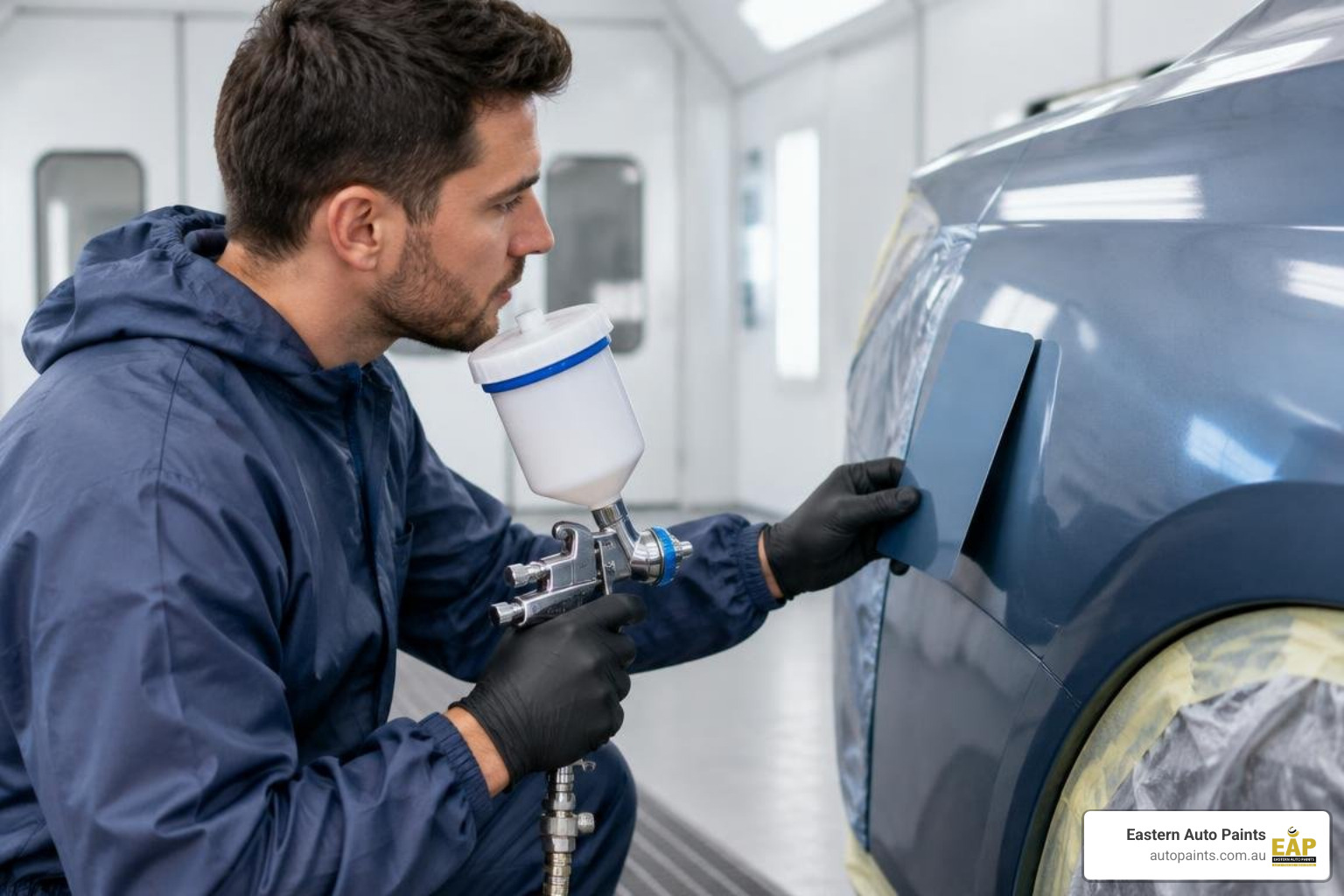
If you are wondering where to find my paint code, check the driver-side door jamb or B-pillar first. If the label is missing, look in the engine bay, boot, spare wheel well, or original logbook. Rushed repairs based on visual guesswork can create mismatched panels and unnecessary rework, while Eastern Auto Paints (EAP) provides personalised support to identify the correct factory colour information before paint is mixed.
Key Takeaways
- The original paint code identifies the factory colour formula.
- Labels are commonly found on door jambs, in engine bays, or in luggage areas.
- Record the complete code before ordering or mixing material.
- Auto paints are available for professional refinishing work.
We support panel beaters, spray painters, and serious restorers from Bayswater and Dandenong South, with Australia-wide delivery.
Our team provides colour-matching support, trade-grade systems, and practical advice so you can move from vehicle identification to a suitable refinishing decision with greater confidence.
What Are the Risks of Guessing Paint Codes in Australian Conditions?
Generic marketing names such as "White" can lead to noticeable colour mismatches because manufacturers may use different tint formulas across production batches. A paint code gives a more reliable starting point for identifying the original finish.
In Australian sunlight, weathering can make minor differences between fresh and existing paint more apparent. For visible repairs, an unverified colour choice can mean extra blending work. Pearl and multi-stage finishes also need the correct factory reference as a starting point.
Where to Locate Your Vehicle's Factory Paint Identifier
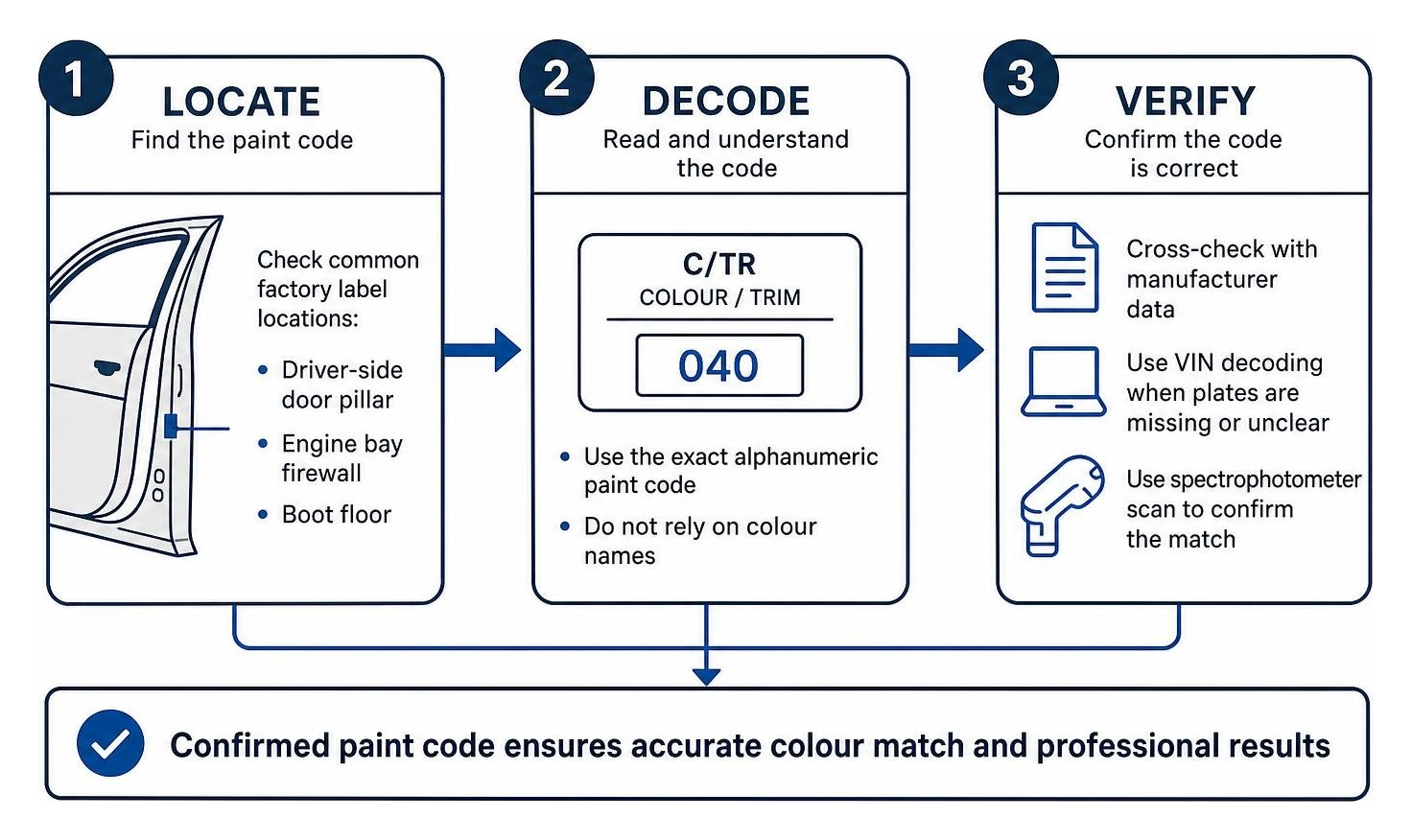
Manufacturers usually print the paint code on a metal compliance plate or adhesive body label. It is a short letter-and-number combination that identifies the original factory finish, not the general marketing colour name. Photograph the full label and record the vehicle model, year, and VIN before ordering material. Keeping those details together makes it easier for a trade supplier to confirm the information and discuss the next step.
| Vehicle Type | Common Locations | Label Indicator | Example Format |
|---|---|---|---|
| Japanese passenger vehicles | Driver B-pillar door jamb |
C/TR, COLOR
|
040, KH3
|
| American passenger vehicles | Driver door jamb, radiator support |
EXT PNT, PNT
|
YZ, UA
|
| Australian-built vehicles | Engine firewall, door jamb |
PAINT, COLOUR
|
690F, WA8624
|
| European passenger vehicles | Spare wheel well, log book |
Paint No., Lacknr.
|
LA7W, LY9B
|
| Commercial and older vehicles | Strut tower, firewall, body label | PAINT CODE |
02C, WRB
|
How Do You Find the Code on the Door Jamb?
Open the driver-side door and inspect the centre pillar, door frame, or lower jamb for a decal. Look for PNT, EXT PNT, PAINT, COLOUR, or C/TR. Record every character exactly, as similar codes can identify different finish variants. A well-lit photo is useful if the label is dirty or difficult to read.
Where Else Are Colour Designations Located?
If there is no door-jamb label, check the engine bay, firewall, radiator support, strut tower, boot, and spare tyre well. Original logbooks and service records may also contain a build-specification sticker. Compare available records on previously repaired vehicles, as replacement panels may not retain the original label.
How Do You Interpret Paint Code Formats?
Codes may be numeric or alphanumeric. A suffix can distinguish solid, metallic, pearl, or related finishes, so use the complete code. It is a factory starting point, while the aged panel may still need assessment before material is mixed for a visible repair.
Can You Retrieve Codes Using the VIN?
Authorised dealerships and trade paint suppliers can often use the vehicle identification number (VIN) to find the original factory specification when labels are faded, missing, or painted over. A VIN identifies the original finish but not weathering or previous refinishing.
How We Ensure Accurate Colour Formulations
Original paint codes provide baseline recipes, yet natural weathering and production variations alter real-world panel shades over time. Our specialists utilise digital spectrophotometers alongside extensive saved colour formulations to record precise pigment data. Through expert custom colour matching, we formulate tailored basecoat mixed colours suited to your vehicle's condition.
Why Does Using the Factory Paint Code Support Vehicle Presentation?
Formulating finishes to exact factory paint specifications maintains seamless visual uniformity across adjacent body panels.

Accurate tint matching prevents metamerism under diverse lighting conditions, ensuring durable, high-gloss results across commercial fleets, private vehicles, and classic restorations alike.
What to Expect at Eastern Auto Paints
Our technical team supports colour identification, product selection, and refinishing planning for trade customers and serious restorers.
- Authorised distribution: We are a PPG Select Distributor, certified Jotun Australia distributor, and Concept Paints master wholesale distributor for South East Victoria.
- Precision support: Options from 2K custom solid colour spray cans to larger-volume materials.
- Reliable fulfilment: Greater Melbourne trade delivery and Australia-wide dispatch.
Bring clear label photographs, the VIN, and a clean sample panel where practical. These details help us assess the factory reference alongside the vehicle's present finish and recommend an appropriate path for the repair. Product requirements vary by system, so check the relevant manufacturer technical data sheet or product label for exact specifications.
When to Get in Touch or Take Action
Reach out to our colour specialists when:
- Factory identification plates are damaged, painted over, or missing.
- Classic or grey-import vehicles lack standard documentation.
- Prior refinishing or UV exposure has shifted panel shades.
We can scan clean vehicle parts to retrieve exact pigment recipes. Contact us through our contact page for professional support.
Practical Solutions and Reassurance for Quality Refinishing
A systematic check before topcoating helps produce a more predictable repair and gives the applicator a chance to address colour variation before the work reaches a visible panel.
How Do You Conduct a Test Spray Card?
A test card lets spray painters compare mixed colour with adjacent panels in natural and artificial light. Assess face tone and flop angle before coating the vehicle, and compare the sample from more than one viewing position where practical. Application requirements differ between systems, so consult the manufacturer's technical data sheet (TDS) or product label for exact specifications.
Which Paint System Should You Choose?
Single-Pack (1K) Systems
Single-pack (1K) coatings cure through solvent evaporation. They suit minor spot repairs, interior trim, and restoration components where air drying and polishing are appropriate.
Two-Pack (2K) Systems
Two-pack (2K) coatings cure through a chemical reaction between resin and hardener. 2K mixed colours and 2K clear coats can suit exterior panels and commercial transport where chemical resistance, UV protection, and gloss retention are required.
Choosing Your System
Choose the system around the job, substrate, finish, and manufacturer guidance. Review the product label, TDS, and relevant WorkSafe guidance for chemical safety measures and suitable handling practices.
Closing Statement
Locating your correct vehicle paint code establishes the groundwork for flawless automotive refinishing. Our expert technical teams across Bayswater and Dandenong South stand ready with precise colour formulations, premium coatings, and trade equipment.
- Locate your factory paint code from vehicle placards or VIN records.
- Discover our complete auto paints range for professional refinishing supplies.
- Contact us today for expert technical advice and reliable delivery.
Frequently Asked Questions About Locating Your Factory Colour Identifier
Can I find my vehicle's factory colour identifier using only the VIN?
Dealerships and trade paint suppliers can often use a VIN to find the original factory paint specification when an identification plate is missing or unreadable. Keep the make, model, and year with the VIN to help verify the result.
Why is a marketing colour name different from the factory identifier?
A marketing name can apply across different model years, while the alphanumeric identifier helps locate the original formula associated with that vehicle. The full identifier is more useful than a colour description when ordering refinishing materials.
What does 'BC/CC' mean on a compliance label?
BC/CC means Basecoat / Clearcoat. It describes a pigmented base layer protected by a clear topcoat. Check the manufacturer's TDS for system compatibility and exact specifications before application.
Where is the factory colour identifier located on Japanese versus European vehicles?
Japanese vehicles often show colour data on the driver-side door jamb, B-pillar, or firewall. European models may use the boot, spare wheel recess, or original service documents. The location can differ by model and production year.
Why might fresh paint look slightly different from an existing panel?
Sun exposure, weathering, and production variation can change the appearance of an older finish. A professional assessment can help align the colour with the vehicle's present condition and surrounding panels.