
Achieve a Durable High-Gloss Finish with Automotive Acrylic Enamel
Automotive Acrylic Enamel for a Durable High-Gloss Finish

Acrylic enamel paint automotive finishes can produce a durable, high-gloss coating when the metal is cleaned, sanded, primed where required, and sprayed in controlled light coats. Good preparation and flash-off time help the enamel level into an even finish, while rushed cleaning, heavy application or poor masking can leave defects such as runs, dry spray and contamination.
Key Takeaways
- Clean, degrease and mask the panel before sanding and priming to achieve a lasting automotive paint finish.
- Choose an enamel system suited to the substrate and intended service conditions.
- Apply consistent, overlapping spray passes and follow the product label for recoat and cure times.
- Use suitable ventilation and personal protective equipment (PPE) throughout the job.
At Eastern Auto Paints (EAP), we help trade painters and serious restorers select compatible coating products for vehicle panels, components, machinery and metal refinishing work. Our approach is practical: begin with sound surface preparation, use the right primer and thinner where specified, and control application conditions as closely as possible.
We believe a reliable finish comes from understanding how each layer works together, not from shortcuts. With the right materials, clean workshop habits and disciplined spray technique, automotive acrylic enamel can be an effective option for high-gloss restoration and refinishing projects.
Why This Issue Should Not Be Ignored
Metal vehicle components, commercial chassis, and machinery parts face ongoing exposure to harsh environmental conditions, ultraviolet (UV) radiation, and road grime. Overlooking coating breakdown or rushing topcoat application risks premature rust formation, substrate oxidation, and loss of structural aesthetics.
Applying an enamel topcoat over poorly treated metal or without compatible primers often causes peeling, loss of adhesion, and severe solvent blistering. By addressing paint restoration methodically with durable enamel formulations, trade professionals and automotive restorers protect the underlying metal and maintain a professional direct-gloss presentation.
Understanding Acrylic Enamel Paint Automotive Formulations and Benefits
Core Characteristics of Acrylic Enamel Paint Automotive Coatings
Automotive acrylic enamel paints are single-stage, direct-gloss coatings formulated with modified alkyd and acrylic resins. Acrylic enamel forms both colour depth and gloss retention in a single, unified coating layer.
For fast workshop turnaround on general metal components, options like Concept 402 Quick Dry Enamel provide rapid set times and reliable coverage. Film builds smoothly per pass, curing via solvent evaporation combined with atmospheric oxidation.
| Coating Category | Resin Technology | Typical System Build | Core Application Merits |
|---|---|---|---|
| Acrylic Enamel | Modified Acrylic/Alkyd | Single-stage direct gloss | Efficient application, balanced hardness, simple spray properties |
| Acrylic Lacquer | Thermoplastic Acrylic | Multi-coat with polishing | High clarity, classic vehicle matching, fast evaporation |
| Two-Pack (2K) Urethane | Acrylic Polyol + Isocyanate | Direct gloss or base/clear | High chemical resistance, extreme film hardness, professional booth cure |
Performance Advantages for Trade and Restoration Projects
When evaluating single-stage options across our top coats range, acrylic enamels present distinct operational advantages for specific workshop environments:
- When you would use Acrylic Enamel: You need an efficient, single-stage direct-gloss finish for machinery, vehicle trays, chassis rails, or restoration engine bays where simple setup and reliable exterior weatherability are paramount. Products such as Performance Enamel Topcoat PET are formulated specifically for broad metal coverage and high-build protection.
- When you would use Two-Pack (2K) Polyurethane: Your project demands maximum resistance against aggressive solvents, fuels, and heavy abrasion in commercial transport applications, backed by full baking booth facilities.
- Decision Guide for Trade Projects: Choose acrylic enamel systems for general metal fabrications, classic restorations, and chassis parts where fast handling and high initial gloss without sanding/buffing are ideal. Select 2K urethanes when maximum chemical barrier properties are required by industrial fleet specifications.
Essential Equipment and Metal Surface Preparation
Workshop Setup and Personal Safety Gear
Achieving a clean, defect-free gloss finish requires an orderly workshop environment and strict attention to safety protocols:
- Workshop Setup: Clean, filtered spray area with adequate airflow to remove overspray mist, clean compressed air lines fitted with water traps, and clean mixing benches.
- Personal Protective Equipment (PPE): Spray mist contains volatile organic solvents. Always consult the product label, technical data sheet (TDS), and relevant SafeWork or WorkSafe guidance for product-specific PPE needs, including suitable organic vapour respirators, protective overalls, and chemical-resistant gloves.
Substrate Cleaning, Sanding, and Priming Steps
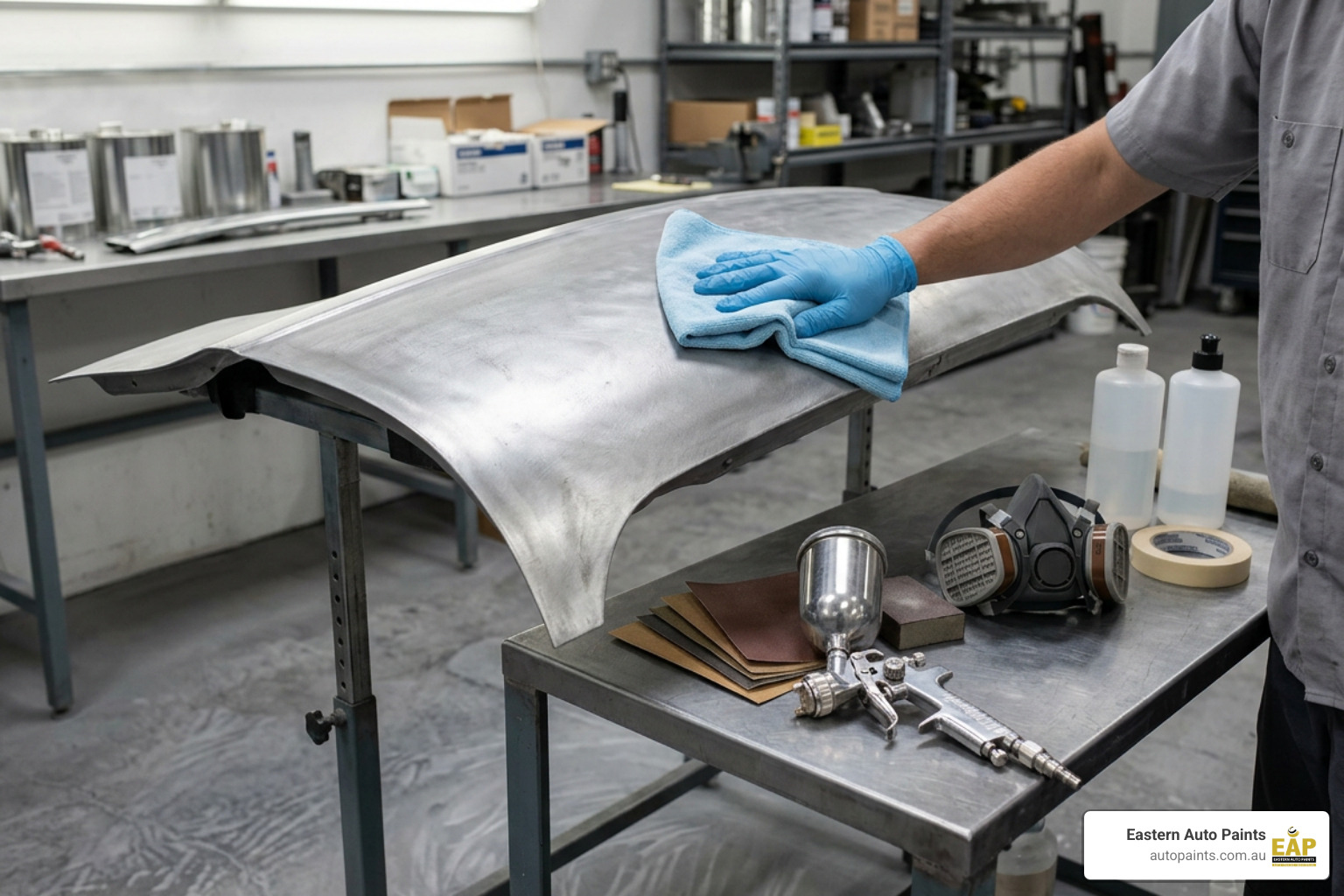
Proper mechanical adhesion begins with thorough surface preparation. Before picking up an abrasive sheet, completely degrease bare metal surfaces to prevent driving oils into the substrate pores:
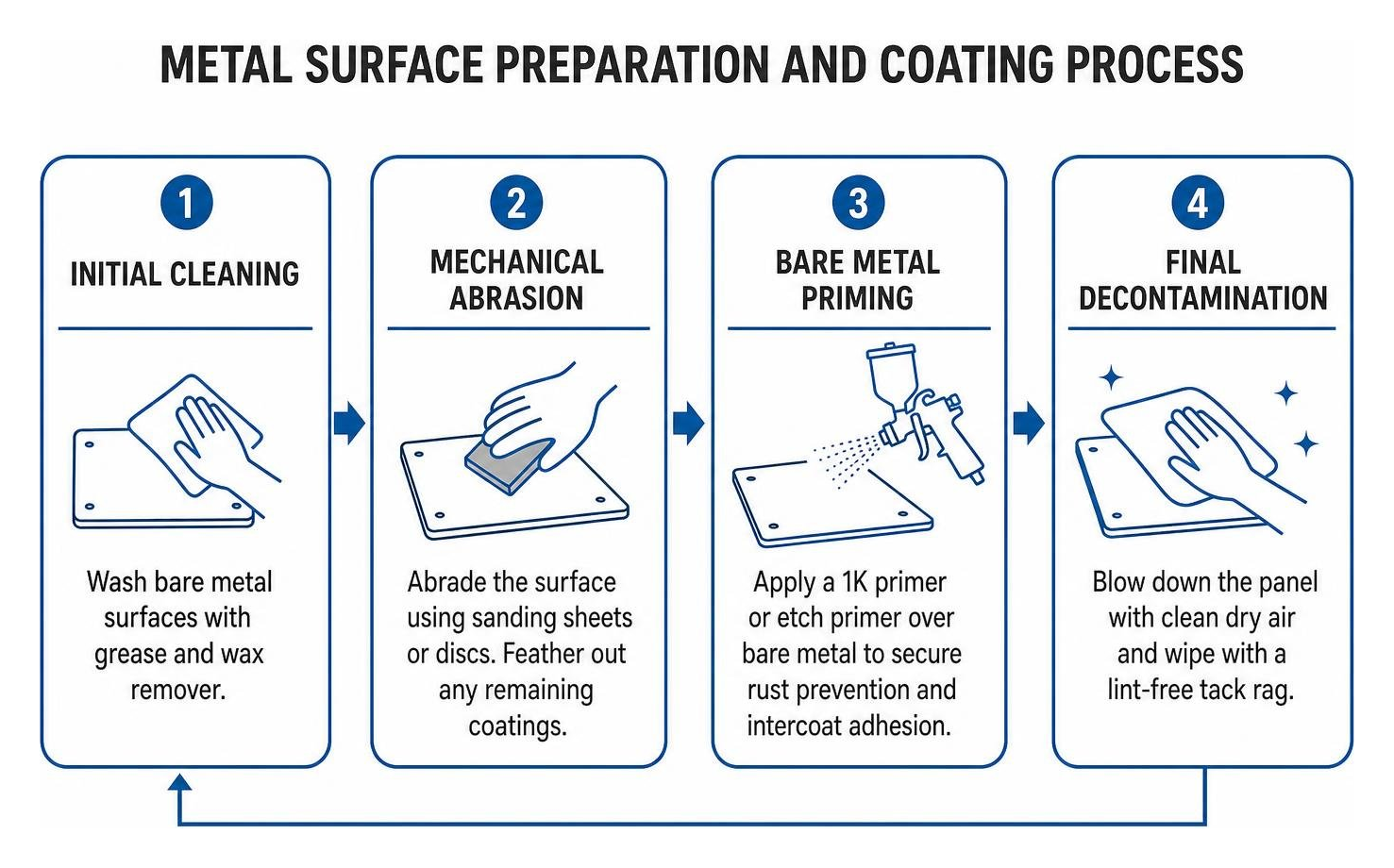
- Initial Cleaning: Wash bare metal surfaces with a dedicated grease and wax remover using a clean wipe-on, wipe-off technique.
- Mechanical Abrasion: Abrade the surface using professional sanding sheets or abrasive discs. Feather out any remaining sound coatings to create a smooth, tapered transition.
- Bare Metal Priming: Apply a dedicated 1K primer or etch primer over bare steel and aluminium sections to secure rust prevention and intercoat adhesion.
- Final Decontamination: Blow down the panel with clean, dry air and pass a lint-free tack rag lightly over the surface to capture fine airborne particles.
Application Techniques and Spray Execution
Thinning and Viscosity Management
Achieving proper atomisation and flow-out requires balancing paint viscosity with ambient workshop temperatures. Always consult the manufacturer's TDS or product label for exact reduction instructions, as viscosity requirements and flash times vary significantly between products and temperature ranges.
When reducing industrial and automotive enamel formulations, mixing with Enamel Thinner 804 4L facilitates smooth levelling and prevents solvent entrapment. For broader details on adjusting paint consistency, our Thinning Car Paint Guide explains how temperature affects solvent evaporation. Always verify flash-off intervals between coats on the container label before applying additional material.
Spray Gun Technique for Acrylic Enamel Paint Automotive Projects
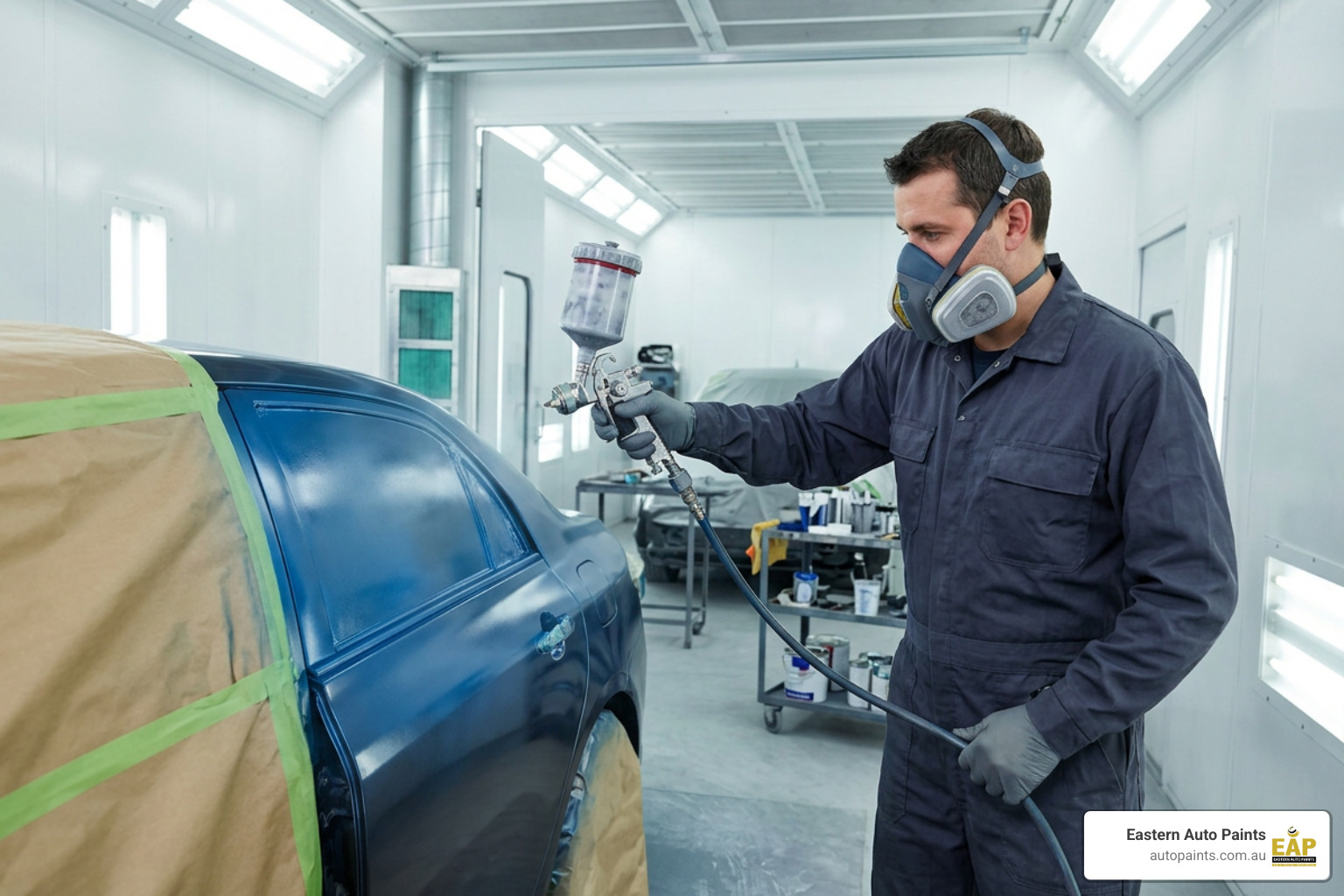
Delivering an even gloss requires steady gun discipline and systematic overlap:
- Maintain a perpendicular gun angle to the panel at a consistent distance of approximately 15–20 cm (6–8 in).
- Keep a 50% to 75% pass overlap across each stroke to maintain uniform wet film build without dry banding.
- Refer to our Auto Paint Application resource for foundational spray techniques. Always refer to your spray gun manufacturer's specifications and the paint TDS for precise air pressure, cap choice, and fluid needle setup.
Practical Metal Makeover and Restyling Projects
Commercial Fleet and Component Refinishing
Acrylic enamel coatings provide versatile application across a wide variety of metal surfaces:
- Heavy Machinery and Trailers: Structural steel beams, agricultural equipment, and utility trailers benefit from the corrosion-inhibiting properties detailed in our PPG Performance Enamel Guide.
- Component Makeovers: Suspension arms, wheel arches, brake backing plates, and chassis rails achieve a clean, factory-like sheen.
- Spot Touch-Ups: For smaller components or field repairs, Acrylic Automotive Spray Cans deliver practical coverage without the need to set up full workshop pressure pots.
Common Symptoms, Challenges, or Questions
Trade painters and restorers commonly encounter specific challenges when working with automotive acrylic enamels:
- Orange Peel Texture: Occurs when the paint film fails to level smoothly, usually caused by fast solvent evaporation, insufficient thinning, or excessive gun distance.
- Runs and Sags: Caused by applying heavy wet coats too quickly or holding the spray gun too close to the substrate without allowing proper intercoat flash time.
- Loss of Initial Gloss: Often stems from spraying in high humidity environments or trapping tail solvents beneath a rapidly skinning topcoat.
What a Personalised Experience Actually Looks Like
Selecting the right coating system should never involve guesswork. When trade professionals or restorers contact Eastern Auto Paints, our technical team reviews the specific project parameters:
- Evaluating the substrate type, whether bare mild steel, aluminium, galvanised panels, or aged existing finishes.
- Recommending compatible primer, thinner, and topcoat combinations engineered to bond seamlessly.
- Matching OEM factory paint formulas or custom industrial fleet colours through advanced colour-matching technology paired with experienced professionals.
The Value of Consistency and an Ongoing Relationship
Working with a dedicated automotive paint specialist ensures that every batch of paint, thinner, and primer performs predictably on the workshop floor. Long-term consistency in solvent formulation and tint accuracy reduces rework, eliminates colour mismatch claims, and shortens vehicle turnaround times across commercial fabrication and restoration workshops.
What to Expect at Eastern Auto Paints
At Eastern Auto Paints, we support trade operators and vehicle enthusiasts across Victoria and nationwide with premium paint supplies and dependable technical advice:
- Advanced colour-matching technology for custom formulations and factory specifications.
- Comprehensive inventory spanning etch primers, thinners, single-stage enamels, and high-performance topcoats.
- Professional workshop equipment, including Anest Iwata compressors (with models ranging from compact workshop units to industrial screw compressors) to ensure reliable air delivery for every spray application.
When to Get in Touch or Take Action
If you are planning an upcoming restoration, refinishing a fleet of utility bodies, or troubleshooting an application challenge, getting early technical advice prevents costly workshop errors. Our team in Bayswater and Dandenong South is ready to assist you in selecting the ideal coatings, reducers, and equipment.
Explore our complete coating lines or reach out directly to our specialists via our Contact Us page for tailored advice on your next automotive or industrial paint project. You can also view our full range of trade-grade primers across our Primer Collection or browse custom formulations through our acrylic mixed colours selection.
Frequently Asked Questions About Automotive Acrylic Enamel
How long does automotive acrylic enamel take to cure fully?
Drying times vary depending on the specific product chemistry, film thickness, ambient shop temperature, and humidity levels. Acrylic enamels typically dry dust-free within a short period, but full chemical curing and cross-linking can take several days to weeks under normal ambient conditions. Always consult the product label or manufacturer technical data sheet for exact dust-free, tack-free, and cure schedules.
Is a dedicated clearcoat required over automotive acrylic enamel?
Automotive acrylic enamel is formulated as a single-stage system that cures to a direct, high-gloss finish without requiring an additional clearcoat. While some restorers apply clearcoats for extra depth or colour sanding leeway, the enamel itself is designed to provide full UV protection and weather resistance as a standalone topcoat.
What causes wrinkling or lifting during enamel recoating?
Wrinkling or lifting typically occurs when a fresh coat of enamel or solvent-borne paint is applied over an existing enamel film that has begun to cross-link but has not fully cured. Solvents in the new coat penetrate the uncured lower layer, causing it to swell and lift. Always adhere strictly to the recoat window specified on the product technical data sheet.
Can automotive acrylic enamel be applied directly to bare metal?
Applying acrylic enamel directly over bare steel or aluminium is not recommended. Bare metal surfaces require a dedicated etch primer or anti-corrosive primer to establish chemical adhesion and prevent rust creep underneath the paint film.
What is the best way to clean spray equipment after using acrylic enamel?
Clean spray guns and fluid lines immediately after application, before the enamel begins to cure inside the nozzle. Use a compatible gun wash or virgin cleaning thinner, flushing the fluid passages thoroughly and disassembling the air cap and needle assembly for final wiping.