
Hot Wheels, Cool Paint: Protecting Your Automotive Parts from Extreme Heat
Introduction: Why Your Car Needs More Than Just a Pretty Finish
Automotive heat resistant paint is a specialised coating engineered to protect engine components, exhaust systems, and brake callipers from heat damage, corrosion, and chemical exposure. Unlike standard paint, these formulations contain silicone or ceramic resins, allowing them to withstand extreme temperatures—from 260°C on engine blocks to over 1000°C for exhaust manifolds—without flaking or peeling.
If you've seen an engine with discoloured paint or rusty brake callipers, you've witnessed what happens when standard paint meets extreme heat. The engine bay is a punishing environment where manifolds and headers reach temperatures that would reduce ordinary paint to ash. This is where high-temperature paint becomes essential, not just optional. These are engineered solutions that create a durable finish capable of surviving conditions that would destroy standard coatings in hours.
What is High-Temperature Automotive Paint?
High-temperature automotive paint is specifically formulated to endure extreme heat without degrading. While conventional paints blister or discolour under the bonnet, these coatings maintain their integrity in demanding thermal environments. Their unique chemical composition, often including silicone and ceramic additives, forms a durable, protective layer.
This layer not only withstands intense heat but also guards against corrosion and chemical exposure from fluids like oil and brake fluid. It is essential for parts that generate significant heat, such as engine blocks, exhaust manifolds, and brake components. Without it, these parts would quickly succumb to rust and wear.
Why is it Necessary for Your Vehicle?
The necessity of automotive heat resistant paint extends beyond aesthetics; it's about preserving your vehicle's components and maintaining its value. The intense heat in engine bays and exhaust systems causes ordinary finishes to fail, leaving bare metal exposed to the elements. This exposure leads to rust and corrosion, which can compromise parts and lead to costly repairs.
High-temperature paints provide a robust barrier against these destructive forces. By protecting critical parts, you extend their lifespan and ensure they perform optimally. For foundational protection, understanding The Guide to Epoxy Primer Paint for Cars is also highly beneficial. A clean, well-painted engine bay or a set of vibrant brake callipers also significantly improves a vehicle's look. With over 34 years in the industry, we at Eastern Auto Paints have seen that investing in quality high-temperature coatings is a smart choice for any vehicle owner in Victoria, Sydney, or Queensland.
A Guide to Choosing and Applying Automotive Heat Resistant Paint
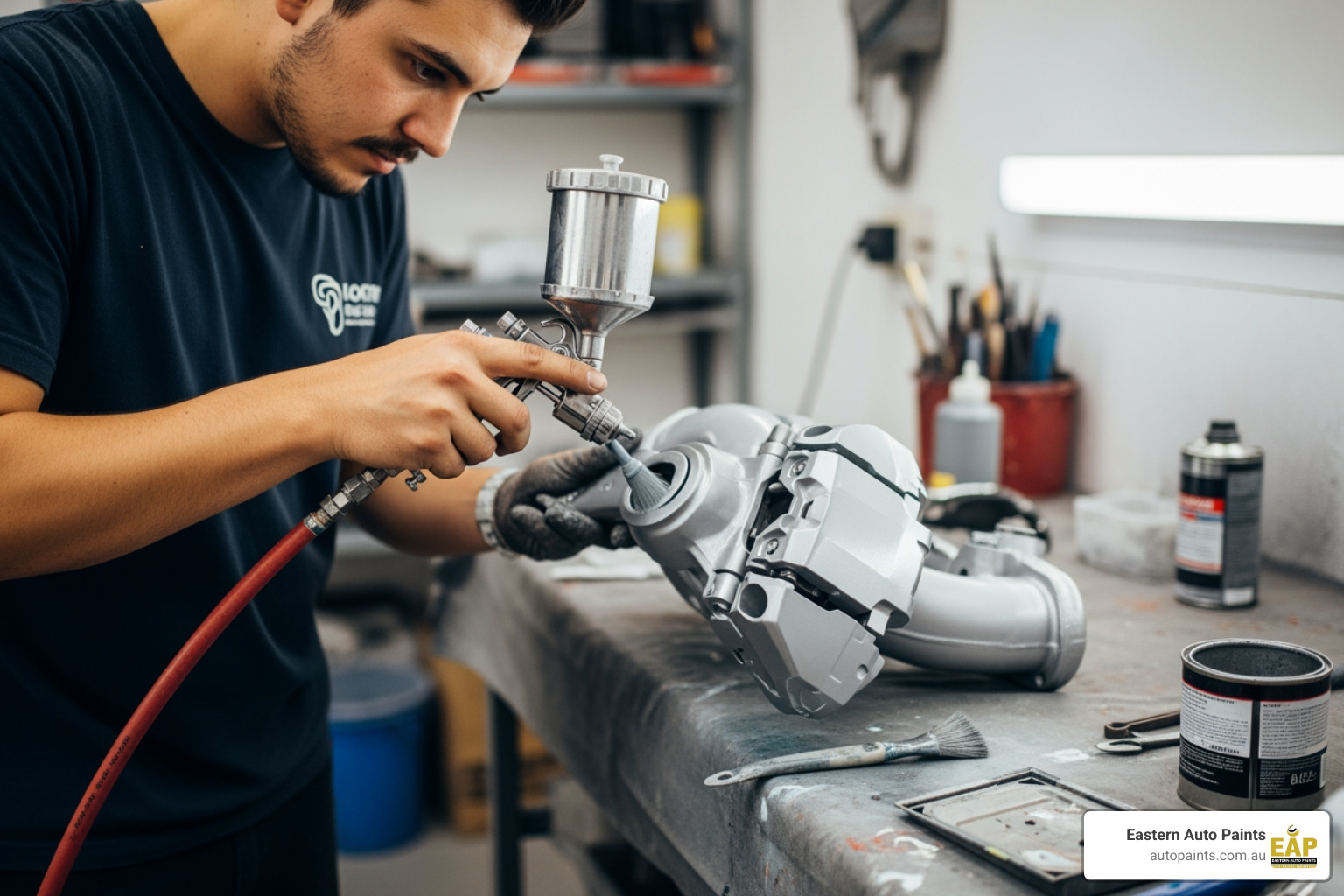
Selecting and applying the correct automotive heat resistant paint is crucial for a professional finish. It’s not just about picking a colour; it’s about matching the right coating to the specific demands of each component. This guide covers the different types of high-temperature paints, their properties, and proper application.
Understanding the Different Types of High-Temp Coatings
The world of automotive heat resistant paint includes several specialised formulations. Knowing which type to use is the first step to a successful project.
Engine Enamel Engine enamels are formulated for the high, consistent temperatures in the engine bay, typically up to 260°C (500°F). They are ideal for valve covers, air cleaners, engine blocks, and intake manifolds, offering excellent protection from heat and automotive fluids.
Exhaust & Header Paint These coatings are for the most extreme heat environments. Specialised flameproof paints can withstand temperatures up to 1093°C (2000°F), making them essential for preventing rust and thermal degradation on exhaust manifolds and headers.
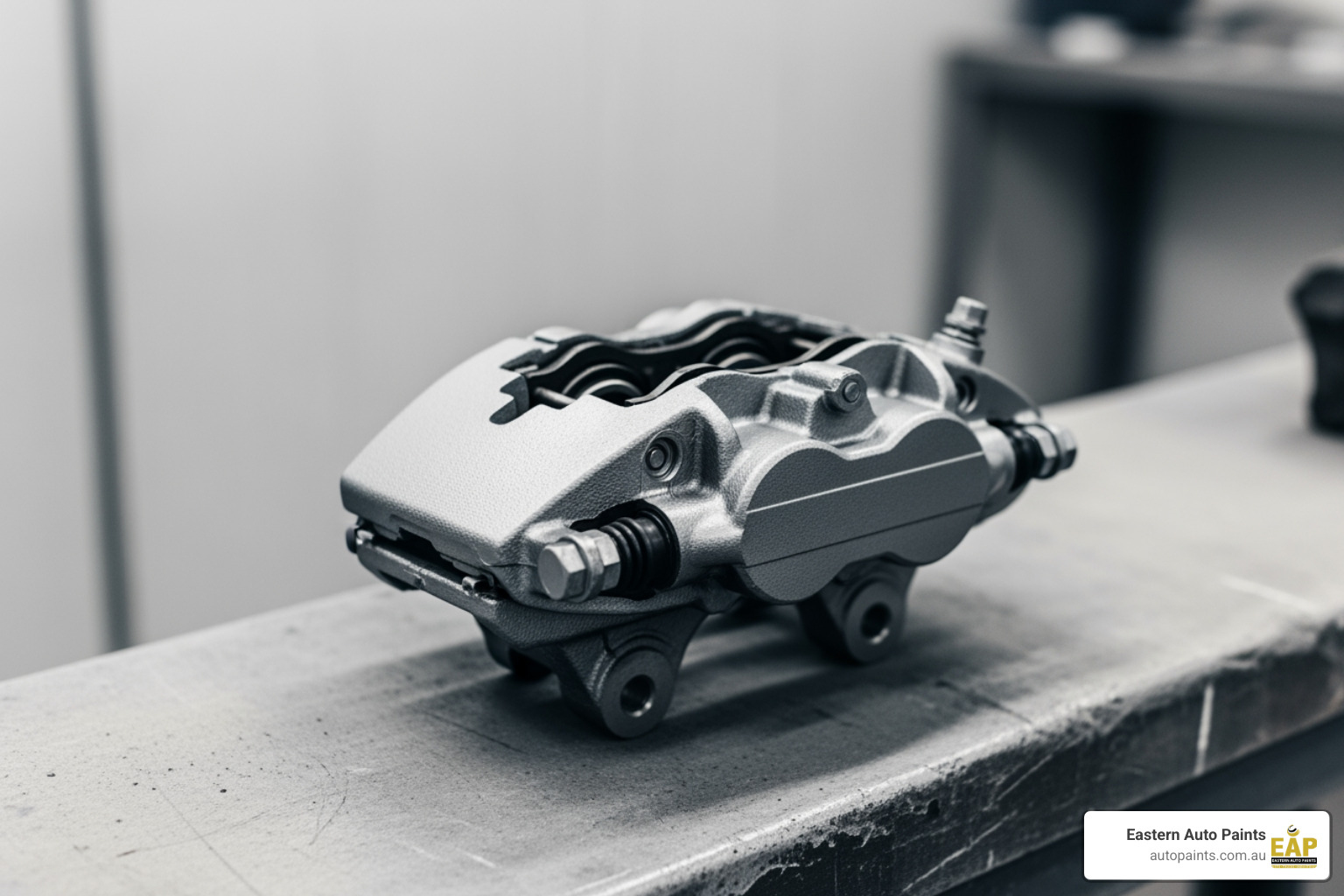
Caliper Paint Brake callipers endure significant heat, brake fluid, and harsh dust. Calliper paint is engineered to resist these conditions, withstanding temperatures up to 480°C (900°F). It provides a durable, protective coating that resists chipping and chemical corrosion.
For many of these applications, we can supply custom aerosol cans filled with your chosen high-temp paint. We also offer a wide range of products, including those from Protec Paint Products: Australian Quality and Supply Options.
Key Properties and Temperature Ratings of automotive heat resistant paint
Understanding a paint's properties and temperature limits is paramount.
Heat Resistance Levels: Temperature ratings vary significantly. Flameproof paints can handle up to 1093°C (2000°F), making them suitable for exhausts. Ceramic engine paints typically handle up to 343°C (650°F), while general engine enamels are rated for up to 260°C (500°F).
Durability and Adhesion: These paints are designed to resist blistering, flaking, and cracking. Proper adhesion is fundamental, which is why surface preparation is so critical to prevent paint failure.
Chemical and Corrosion Resistance: High-temp paints resist oil, grease, and brake fluid. By forming a durable barrier, they also prevent rust and corrosion, extending the life of metal components. For surface prep, explore our rust repair and prevention products.
Available Finishes and Colours: High-temperature paints come in various finishes, including matte, gloss, and satin. Our advanced colour-matching technology can provide the perfect shade for your project, from universal colours to OEM-specific shades. To understand how primers affect your finish, refer to Choosing Your Canvas: Understanding Automotive Paint Primer Types.
How to Properly Prepare and Apply automotive heat resistant paint
The longevity of automotive heat resistant paint depends on meticulous surface preparation and correct application.
Surface Preparation: This is the most critical stage. The surface must be impeccably clean, dry, and free of contaminants.
- Cleaning and Degreasing: Remove all loose paint, dirt, and grease using a quality grease and wax remover. Wash with mild soap and water, then rinse and dry completely.
- Rust Removal: All rust must be removed. For minor surface rust, products like Galmet Rust Paint can convert it into a paintable surface. For extensive rust, paint stripping may be necessary.
- Sanding: Scuff sand the surface with 80 to 2000 grit sanding sheets to create a profile that helps the paint adhere.
- Priming: On bare metal, apply a high-temperature primer for an extra layer of adhesion and corrosion protection.
Application Methods:
- Aerosol Spray: A popular choice for its ease of use on smaller parts. Hold the can 20-25 centimetres from the surface and apply in even, sweeping motions. We offer a wide selection of aerosol cans.
- Brush-on: Suitable for intricate areas where precision is needed, though the finish may not be as smooth as spraying.
- Spray Gun: For professional-grade results on larger components, a spray gun is ideal. We supply leading brands like Anest Iwata and specific SATA models like the SATAjet 100B Black Edition.
Curing Process: Many high-temp paints require a curing process to achieve maximum durability. This can involve heat curing in an oven, on-vehicle curing as parts heat up during operation, or accelerated curing using heat lamps. Always follow the manufacturer's instructions.
Safety Precautions: Always ensure adequate ventilation and wear appropriate personal protective equipment (PPE), including high-quality PPE masks. For spray applications with isocyanates, atmosphere-supplying systems like PAPRs are often required. Always follow the product's safety data sheet (SDS) and conduct a workplace risk assessment.
Get the Right Finish with Expert Advice
Achieving a durable, aesthetically pleasing finish with automotive heat resistant paint is a rewarding process that requires careful consideration. From product selection to application, every step contributes to the final result.
Factors to Consider Before You Buy
Before purchasing, consider these factors to ensure you choose the best product for your project.
Component Operating Temperature: This is the most crucial factor. Match the paint's temperature rating to the component's maximum operating temperature to prevent premature failure. An engine block runs much cooler than an exhaust manifold.
Surface Material: Ensure the paint is compatible with the metal you are painting, whether it's cast iron, steel, or aluminium. Some coatings are designed for specific materials.
Desired Finish and Colour: Decide on the aesthetic you want, such as a high-gloss, satin, or matte finish. While universal colours are common, our expert services offer custom colour matching. For more on finishes, see our guide on From Aerosol to Industrial: Finding the Perfect Clear Coat for Your Needs.
Project Scope and Environment: Aerosol cans are convenient for small DIY jobs, while spray guns offer superior results for larger applications. Always apply paint within the recommended temperature and humidity ranges for proper curing.
Your Partner in Automotive Paint Supplies
Choosing the right automotive heat resistant paint is an investment in your vehicle's longevity and appearance. With the correct product and application, you can achieve a finish that looks fantastic and provides robust protection against extreme heat.
At Eastern Auto Paints, we are your trusted partner. Our team leverages over 34 years of industry experience to help you select the perfect high-performance coating. We understand the challenges of automotive heat and offer expert advice to customers in Victoria, Sydney, and Queensland. From advanced colour-matching to a comprehensive product range, we are committed to helping you get superior results.
Protect your vehicle's vital components and improve its aesthetic with confidence. We invite you to browse our full range of automotive paints online. For personalised advice, don't hesitate to contact our team today.