
The Definitive Guide to Rust Prevention Products
Why Rust Prevention Products Matter for Vehicle Restoration

At Eastern Auto Paints (EAP), rust prevention products help create the difference between a restoration that stays sound beneath its finish and one where corrosion returns beneath fresh paint. The best outcome starts with clean, stable metal and a compatible protection system; the disappointing outcome is usually caused by trapped moisture, poor preparation, or using a temporary treatment where a durable coating is needed.
Key Takeaways
- Rust protection may involve temporary inhibitors, cavity waxes, primers, barrier coatings, or rust converters.
- The right product depends on the metal condition, exposure to moisture and salt, and whether the area will be painted.
- Surface preparation and coating compatibility matter as much as the product itself.
- Explore our guide to rust prevention and treatment for practical restoration advice.
We support trade applicators, repairers and serious vehicle restorers with systems suited to chassis components, body seams, underbodies, engine bays and enclosed cavities. Our approach is to help you understand what each product is designed to do before it reaches the vehicle, whether you are protecting freshly prepared steel or managing existing surface corrosion.
At EAP, we believe durable results come from matching the coating system to the job, then applying it with care. This guide explains the major types of rust protection, how they work, and the practical decisions that support a longer-lasting vehicle finish.
Understanding Modern Rust Prevention Products
Electrochemical corrosion occurs when steel, oxygen, and an electrolyte such as water or salt air interact. In automotive applications, cold-rolled body panels, structural box sections, suspension components, and welded joints experience varying levels of moisture entrapment and atmospheric exposure. Unprotected metal oxidises, causing structural weakening and cosmetic breakdown beneath finished topcoats.
Understanding the fundamental difference between sacrificial protection and barrier protection is essential for proper coating selection. Sacrificial protection, such as cold galvanising compounds containing high concentrations of zinc, corrodes preferentially to safeguard the underlying steel substrate. Barrier protection relies on impermeable film-forming polymers, epoxy resins, or polyurethane coatings to physically block oxygen and moisture from contacting bare metal.
Relative atmospheric humidity plays a major role in oxidation rates. Enclosed boxed cavities or unventilated frame rails often retain humidity long after rain or washing, creating an environment where active rust thrives undetected. For trade applicators and restorers working across bare steel, aluminium alloys, and welded joints, selecting rust prevention products engineered for specific environmental stresses ensures long-term preservation.
Primary Categories of Metal Protection Coatings
Modern metal protection coatings encompass diverse chemical formulations, ranging from single-pack (1K) air-dry fluids to moisture-cured resins and chemically cross-linked two-pack (2K) industrial barriers. Each classification offers specific protection lifespans depending on film thickness, application environment, and severe weather exposure.
Temporary and Lubricating Rust Prevention Products
Temporary protectors, lanolin-based films, and moisture-displacing aerosols deliver rapid corrosion resistance for vulnerable mechanical components, stored bare sheet metal, and internal box sections. These fluid oil-based and wax-based formulations penetrate tight lap joints, pinched seams, and spot-welded seams where heavy primers cannot flow.
In electrical terminals, wiring harnesses, and mechanical control cables, specialised moisture-displacing sprays seal out humidity without interfering with electrical conductivity or mechanical action. In industrial workshops and vehicle body shops, temporary protectors shield freshly machined components and newly stripped metal panels during storage prior to final surface preparation and painting. For a broader overview of spray applications, review our guide on Beyond the Rust: A Comprehensive Look at Metal Protection Sprays.
Long-Term Barrier Coatings and Heavy-Duty Shields
Long-term protection requires high-performance film-forming chemistry engineered to withstand continuous mechanical abrasion, road salt, and thermal cycling. Moisture-cured urethanes, ceramic-infused single-pack coatings, and 2K epoxy primers form ultra-dense, non-porous membranes over properly prepped surfaces.
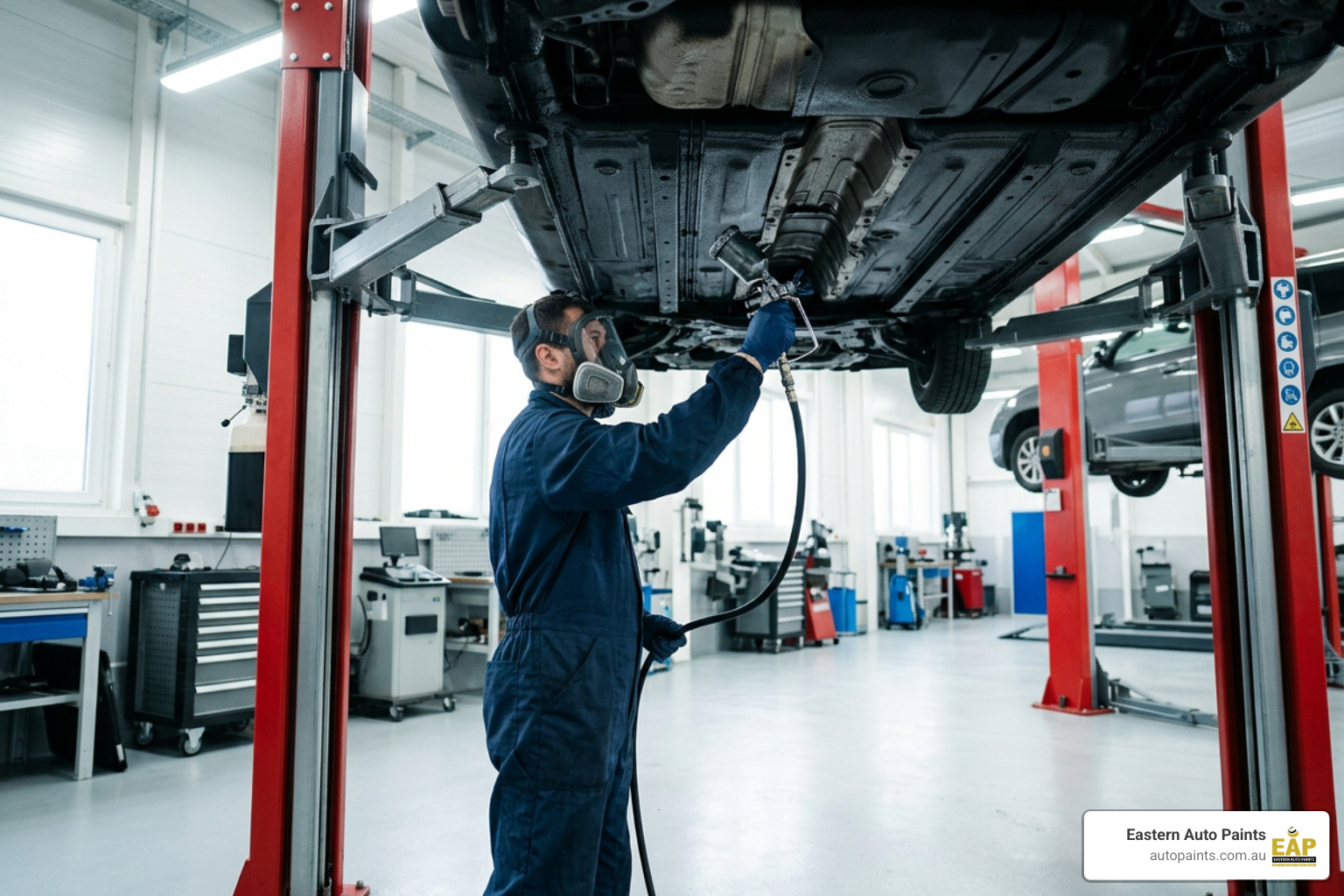
Heavy-duty underbody sealers and high-build gravel guards provide impact resistance along floor pans, wheel arches, and chassis rails, preventing stone chips from exposing raw metal. In high-heat regions like engine bays and firewall zones, specialised heat-tolerant barriers maintain film integrity without chalking or peeling. Explore our professional ranges of Professional 2K Primer Coatings and heavy-duty Ute Liners and Underbody Sealers to match your build requirements.
Vapour Corrosion Inhibitor (VCI) Rust Prevention Products
Vapour Corrosion Inhibitor (VCI) technology provides advanced protection for enclosed, hard-to-reach vehicle cavities. VCI compounds release protective chemical vapours that migrate throughout unventilated spaces, forming an invisible, monomolecular barrier across exposed multi-metal surfaces.
This technology is suited for internal frame rails, door cavities, rocker panels, and vehicles placed into long-term indoor storage or overseas shipping containers. Non-staining VCI oils and specialised VCI films shield precision engine parts, bare machined faces, and internal transmission components without leaving sticky residues that impede future assembly or coating.
Rust Converters vs Rust Preventatives
Selecting between a rust converter and a preventive coating depends on the condition of the substrate and accessibility for surface preparation.
Rust Converter Strengths on Their Own Merits
When you would use this:
- Chemically passivates active surface oxidation by converting iron oxides into stable iron tannate or phosphate compounds.
- Neutralises residual surface rust in tight crevices, boxed chassis sections, and pitted steel where mechanical sanding or abrasive blasting equipment cannot reach.
- Prepares lightly rusted substrates for intermediate primers by establishing a firm, neutralised foundation.
Rust Preventative Strengths on Their Own Merits
When you would use this:
- Forms an impermeable physical or sacrificial barrier over clean, sandblasted, or freshly primed metal substrates.
- Prevents initial oxidation on newly fabricated steel, replacement panels, chassis components, and fully restored vehicle body shells.
- Delivers long-term resistance against salt spray, chemical washdown, road debris impact, and continuous atmospheric humidity.
Decision Guide Mapping Job and Environment Needs
When working on boxed frame rails or intricate rusted brackets where complete mechanical rust removal is physically impossible, applying a rust converter stabilises the existing surface rust prior to sealing. Conversely, when building a vehicle chassis from clean bare steel or newly sandblasted suspension arms, applying a direct-to-metal rust preventative or epoxy coating provides complete long-term protection. For detailed procedural steps, explore our beginners Guide to Rust Repair and Prevention and learn about Rust Inhibiting Primer Spray options.
Key Factors When Selecting Corrosion Protection Systems
Selecting the ideal anti-corrosion system requires evaluating the operating environment, substrate material, and refinishing workflow. Daily driven utility vehicles, 4WDs exposed to beach sand, and industrial transport equipment demand higher film builds and superior salt spray resistance compared to garaged classic cars.
Topcoat compatibility is another critical consideration. Silicone-free formulations are essential in automotive refinish environments to prevent paint defects such as fisheyes and adhesion failure when subsequent acrylic, enamel, or 2K polyurethane topcoats are applied. For structural body repairs, weld-through primers allow panel replacement without burning away underlying corrosion protection along lap joints. Browse our comprehensive Explore Automotive Rust Repair and Prevention Range to select coatings suited to your exact application setup.
Best Practices for Surface Preparation and Application
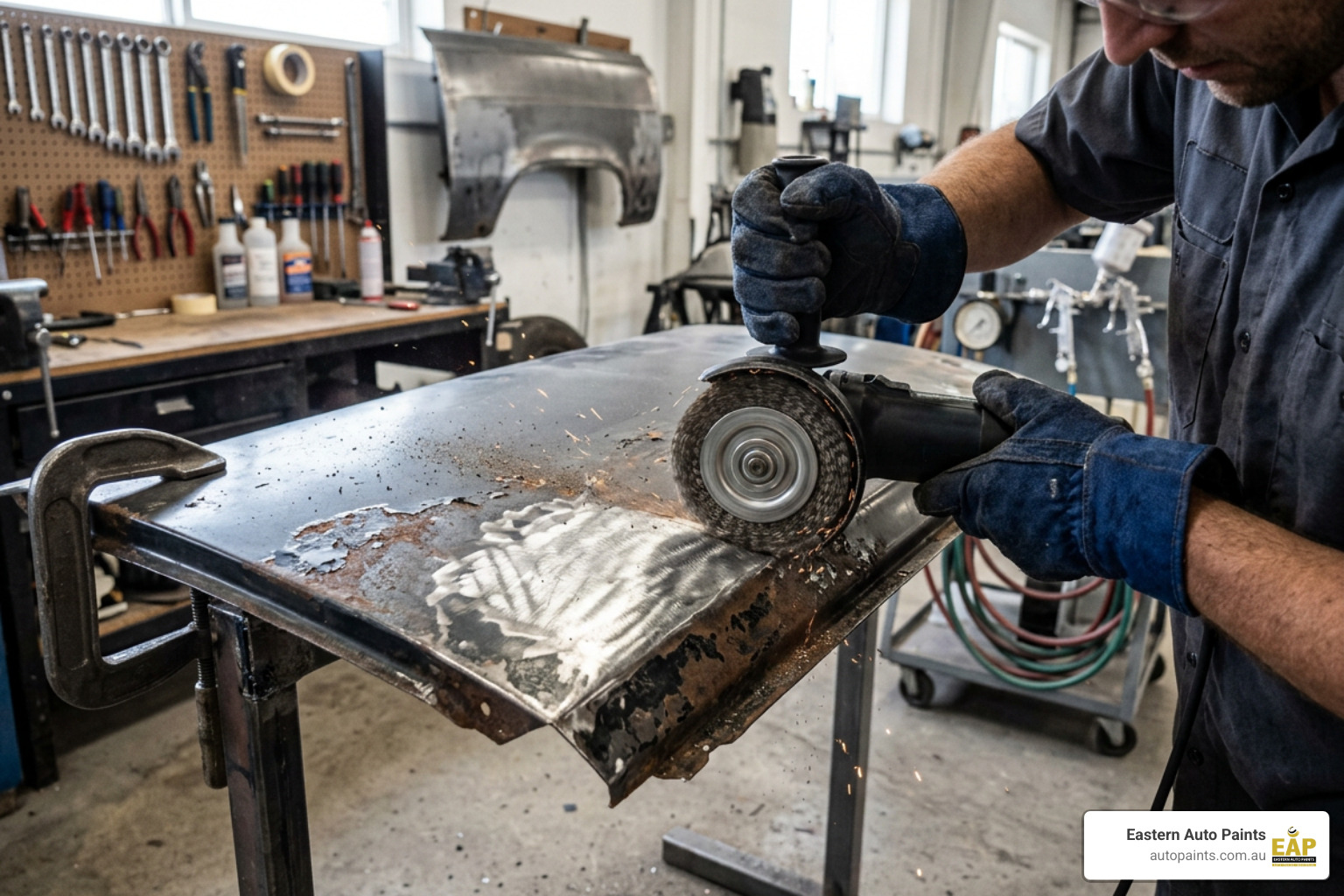
No corrosion inhibitor or barrier paint can perform effectively over loose mill scale, heavy grease, or flaking scale. Proper surface preparation guarantees maximum coating adhesion and long-term durability.
Common preparation tools and steps include:
- Abrasive blasting media or wire wheels to remove heavy corrosion scale.
- Sanding discs and dry rub sheets to establish an anchor profile on bare metal.
- Wax and grease removers to eliminate oil, grease, and road grime contaminants.
- Chemical paint strippers to remove failing legacy paints down to sound substrate.
- Acid etching treatments to passivate bare steel and galvanised surfaces.
For specialised advice on chemical surface preparation, view our guide on Self-Etching Primer applications.
Application and drying times vary by product; always consult the manufacturer's technical data sheet (TDS) or product label before starting any application process. Always check the product label and manufacturer TDS for exact spray equipment setups, recommended wet film gauges, fluid tip sizes, atomisation pressure, mix ratios, and curing windows. Defer to the product label/TDS and relevant WorkSafe guidance for product-specific personal protective equipment (PPE) requirements before handling solvent-borne chemicals or two-pack polyurethane products.
Environmental Impact and Solvent Technology Comparisons
Modern industrial coating chemistry continues to advance toward eco-friendly, lower volatile organic compound (VOC) formulations. Water-based rust inhibitors and solvent-free fluid films minimise hazardous air emissions and spray booth fire risks without compromising barrier performance.
Developments such as plant-based nano-polyphenol converters and non-toxic lanolin coatings offer alternative solutions for environmentally sensitive transport fleets and enclosed workshop environments. Utilising recyclable packaging and solvent recovery systems further supports sustainable trade operations while maintaining professional refinish standards.
Why This Issue Should Not Be Ignored
Ignoring early signs of metal corrosion leads to progressive structural degradation that compromises vehicle safety and crashworthiness. In unibody structures, chassis box sections, and suspension mounting points, internal rust reduces structural strength long before becoming visible on outer painted body panels.
For fleet operators and commercial restorers, unaddressed rust results in costly component replacements, failed roadworthiness inspections, and diminished vehicle resale values. Establishing a proactive maintenance schedule using high-performance rust prevention products safeguards structural integrity, protects financial investments, and preserves trade reputation.
Common Symptoms, Challenges, or Questions
Trade applicators and vehicle restorers frequently encounter challenging corrosion symptoms that demand specialised technical approaches:
- Topcoat Bubbling and Blistering: Indicates moisture entrapment or active oxidation beneath the primer layer, requiring thorough mechanical stripping back to bare metal.
- Crevice Corrosion and Pitting: Micro-pitting along pinched body seams requires low-viscosity penetrating fluids or chemical converters to neutralise deep-seated rust.
- Internal Box Rail Rust: Concealed internal corrosion requires 360-degree cavity extension wands to coat unventilated internal frame rails effectively.
- Workshop Overspray Contamination: Silicone-borne corrosion sprays can contaminate paint booths, making silicone-free rust inhibitors mandatory in refinishing shops.
What a Personalised Experience Actually Looks Like
At Eastern Auto Paints, we understand that no two restoration builds or industrial fleets share identical requirements. A personalised experience means sitting down with our experienced team to analyse your specific metal substrates, workshop capabilities, and environmental exposure levels.
We provide tailored technical advice regarding primer selection, dry film thickness targets, and topcoat compatibility. Paired with our advanced colour-matching technology, we help ensure your anti-corrosive primer bases seamlessly integrate beneath factory OEM or custom topcoats.
The Value of Consistency and an Ongoing Relationship
Achieving predictable refinish outcomes depends on consistent product quality, reliable material supply, and accessible technical guidance. Partnering with a dedicated supplier ensures you receive batch-to-batch product uniformity across all primers, clearcoats, and corrosion inhibitors.
An ongoing relationship with local technical specialists provides immediate troubleshooting support when facing complex metal substrates or challenging climatic application conditions. Our goal is to keep your spray booth running smoothly with proven coating systems.
What to Expect at Eastern Auto Paints
When you source your refinishing supplies from Eastern Auto Paints across our Bayswater, Dandenong South, and Melbourne locations, you gain access to premium industrial paint systems backed by real industry expertise.
Our offerings include:
- High-performance anti-corrosive primers, 2K epoxy coatings, and moisture-cured resins.
- Professional ute liners, gravel guards, and heavy-duty underbody sealers.
- Advanced digital colour matching for precise topcoat integration.
- Dedicated trade support from specialists who understand automotive refinishing workflows.
When to Get in Touch or Take Action
Taking action at the earliest sign of surface tarnishing or during initial vehicle teardown prevents minor oxidation from becoming a costly structural repair. Whether you are specifying coatings for a commercial transport fleet or embarking on a complete classic car restoration, consulting technical experts early saves time and materials.
Reach out to the team at Eastern Auto Paints via our Contact Us page to review custom coating specifications, request detailed technical data sheets, or discuss application equipment setups for your workshop.
Practical Solutions and Reassurance
Managing vehicle corrosion does not have to be an overwhelming process. By following structured surface preparation protocols, selecting compatible barrier coatings, and adhering to manufacturer TDS guidelines, trade applicators can achieve long-lasting corrosion protection on any substrate.
Our team is dedicated to guiding you through product selection, substrate compatibility, and correct application techniques, ensuring your automotive builds remain sound for years to come.
Closing Statement
Protecting automotive substrates against electrochemical corrosion requires matching the right protection technology to the specific environment and surface condition. From fluid cavity waxes and plant-based converters to high-build 2K epoxy primers and tough underbody sealers, implementing a complete anti-corrosion workflow preserves vehicle safety, structural integrity, and finish quality.
To discuss your refinishing requirements, explore our comprehensive range of Automotive Paints and Supplies, or request expert technical guidance for your next project, contact our team today via our Contact Us page or browse our complete catalogue of Rust Repair and Prevention Products.
Frequently Asked Questions About Rust Prevention Products
What is the difference between a rust converter and a rust preventative?
A rust converter chemically passivates active iron oxide on tarnished steel, turning loose surface rust into a stable organo-metallic complex that can accept primer coatings. A rust preventative creates a physical, chemical, or sacrificial barrier over clean or treated metal to block moisture, oxygen, and salt air from reaching the steel substrate, preventing initial oxidation from starting.
How long do rust prevention products last under outdoor and marine conditions?
Protection lifespan varies depending on film thickness, formulation chemistry, substrate preparation, and environmental severity. Soft fluid films and temporary inhibitors require periodic re-application in high-washdown environments, whereas high-build 2K epoxies, moisture-cured urethanes, and heavy-duty underbody sealers provide long-term durability when applied according to the manufacturer's technical data sheet.
Can I paint directly over oil-based or wax-based rust preventatives?
Oil-based, lanolin, or cavity wax rust preventatives prevent paint adhesion and will cause topcoat delamination, bubbling, or fisheyes if painted over directly. Fluid oils and soft waxes must be completely degreased using industrial solvent cleaners prior to applying body fillers, etch primers, or refinish topcoats.
Why are silicone-free rust inhibitors required in automotive spray booths?
Airborne silicone molecules spread easily throughout workshop environments, depositing micro-contaminants onto bare metal or freshly sanded paintwork. These contaminants cause surface tension imbalances that result in severe fisheye defects in freshly sprayed primers, clearcoats, and topcoats, making silicone-free corrosion sprays essential near paint refinishing areas.
How do I protect internal boxed frame rails and door cavities where I cannot reach with a sander?
Enclosed box sections and door cavities are best protected using low-viscosity penetrating cavity waxes or VCI formulations applied with flexible 360-degree application wands. These specialised wands atomise fluid coatings inside narrow access holes, allowing protective compounds to creep into tight spot-welded seams, lap joints, and internal corners where mechanical sanding is impossible.