
From Aerosol to Industrial: Finding the Perfect Clear Coat for Your Needs
Why Clear Coat for Cars Matters More Than You Think
A clear coat for cars is the transparent protective layer applied over your vehicle's base paint. It shields the colour from UV rays, scratches, and chemicals while delivering a deep, glossy finish. Choosing the right clear coat is critical, as it determines how your finish looks and how well it holds up over time. Key factors include the curing method (air-drying 1K or chemical-curing 2K systems), solids content (which affects coat thickness and VOC emissions), and the final appearance, from high gloss to modern matte.
I'm James Maranis, and with over three decades in the coatings industry, I've helped countless customers steer automotive clear coats. At Eastern Auto Paints, we pride ourselves on matching the right technology to each project's specific needs, from simple scratch repairs to professional refinishing.
Modern clear coats are more than just a shiny top layer. They act as a sacrificial barrier, taking the impact from road salt, bird droppings, and fuel spills so your colour coat remains pristine. For metallic and pearlescent paints, the clear coat is essential for creating depth and allowing light to reflect through multiple layers, making the colours pop. Without it, even the most vibrant base coat would quickly oxidize and fade.
However, not all clear coats are the same. A 1K aerosol is great for a small touch-up, but it lacks the durability of a 2K system needed for a full panel repair. In this guide, we'll break down the main types of automotive clear coat, explain what the technical terms mean in practice, and cover best practices for application and maintenance. Whether you're a DIY enthusiast or a professional refinisher, this guide will help you protect your paintwork investment.
A Guide to the Different Types of Clear Coat for Cars
Think of clear coat for cars as your vehicle's invisible shield. It sits on top of the colour coat, providing a showroom shine and acting as a frontline defender against UV rays, bird droppings, light scratches, and road grime. For special effect paints like metallics and pearls, the clear coat adds crucial depth and amplifies their shimmer. Without it, these colours would appear flat and dull.
1K vs. 2K Clear Coats: Durability and Application
The first choice you'll face is between 1K and 2K systems, which cure differently and offer distinct results.
1K clear coats are single-component products, typically found in aerosol spray cans, that dry as solvents evaporate. Their main advantage is convenience, making them ideal for small touch-ups on mirror covers or trim pieces. However, because they don't cure chemically, they lack the durability, chemical resistance, and UV protection of 2K systems.
2K clear coats are two-component systems, consisting of a resin and a hardener (activator) that are mixed before application. This triggers a chemical reaction, creating a tough, molecularly bonded finish. For any significant repair, from a single panel to a full respray, 2K clear coats are the professional standard, delivering superior durability and an OEM-quality finish. We stock a range of 2K clear products and 2K primers for professional-grade results.
It's crucial to note that 2K hardeners contain isocyanates, which are hazardous if inhaled. When spraying any 2K product, proper respiratory protection is mandatory. Standard dust masks are insufficient; you need appropriate PPE masks and ideally an Air Fed Mask for complete safety.
Solids Content Explained: MS, HS, and UHS Clear Coats
Solids content refers to the amount of paint film that remains after the solvents evaporate. A higher solids content means fewer coats are needed to achieve the proper thickness and lower emissions of volatile organic compounds (VOCs), which is better for both the environment and your health.
- Medium Solids (MS) clear coats have the lowest solids content. They flow easily but require more coats, increasing application time and material use.
- High Solids (HS) clear coats contain more paint material, allowing you to build thickness in fewer coats. HS clears, like the popular Concept HS 2K EUROLAK, offer excellent gloss and durability while meeting environmental regulations.
- Ultra-High Solids (UHS) clear coats have the highest solids content, providing exceptional film build, gloss, and protection with the fewest coats. They are the top choice for high-end shops needing superior performance and the strictest environmental compliance.
Choosing the Right Finish: Gloss, Satin, and Matte
Your choice of clear coat also determines the final look of your vehicle.
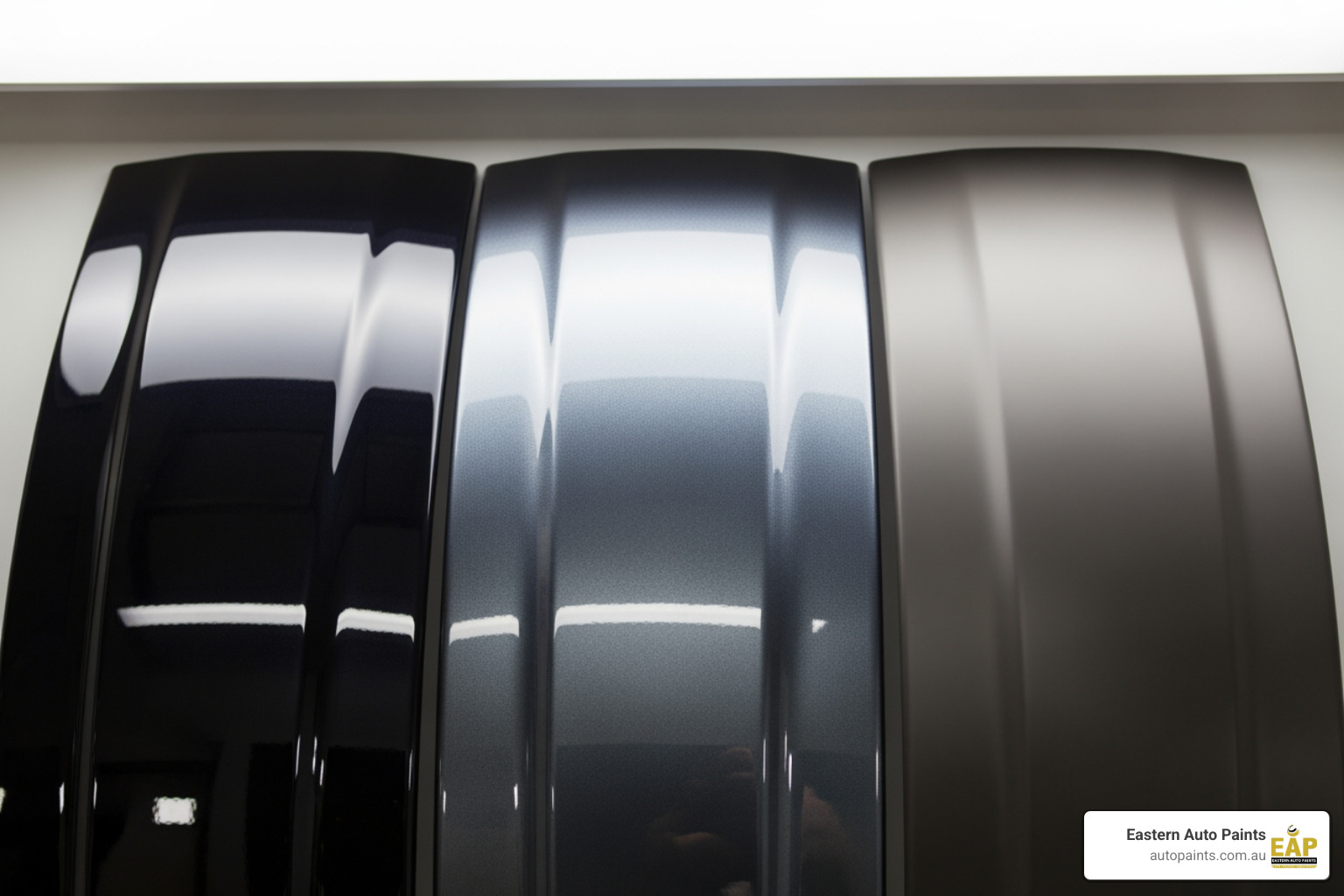
- Gloss finish is the traditional, mirror-like shine seen on most factory cars. It improves colour depth and vibrancy.
- Satin finish offers a modern, semi-gloss look with a subtle sheen. It's a popular custom choice that's distinctive without being flat.
- Matte finish delivers a non-reflective, flat appearance, often used on high-performance and luxury vehicles for a bold aesthetic. Matte finishes require specialized care and cannot be polished like gloss paints.
Application-Specific and Specialised Clear Coats for Cars
Beyond the basics, specialised formulations exist for specific needs.
Aerosol spray cans are perfect for small DIY repairs. We can create colour matching spray paints to match your vehicle's exact shade. For more durability, 2K clear aerosols are also available.
Other specialised options include fast-drying clear coats to reduce curing times, anti-scratch clear coats with harder resins for better durability, and ceramic-infused clear coats for improved chemical resistance and hydrophobic properties. Driven by environmental concerns, water-based and UV-cure clear coats offer lower VOCs and innovative curing methods, becoming increasingly popular in professional shops. They're particularly crucial for bringing out the best in metallic and pearlescent paints.
Application, Maintenance, and Getting Expert Advice
Choosing the right clear coat for cars is only half the battle. A professional, long-lasting finish depends heavily on proper application and maintenance. Even the best products can fail if these steps are rushed.
Best Practices for Applying Automotive Clear Coat
Precision and patience are key during application. Every detail counts towards the final result.
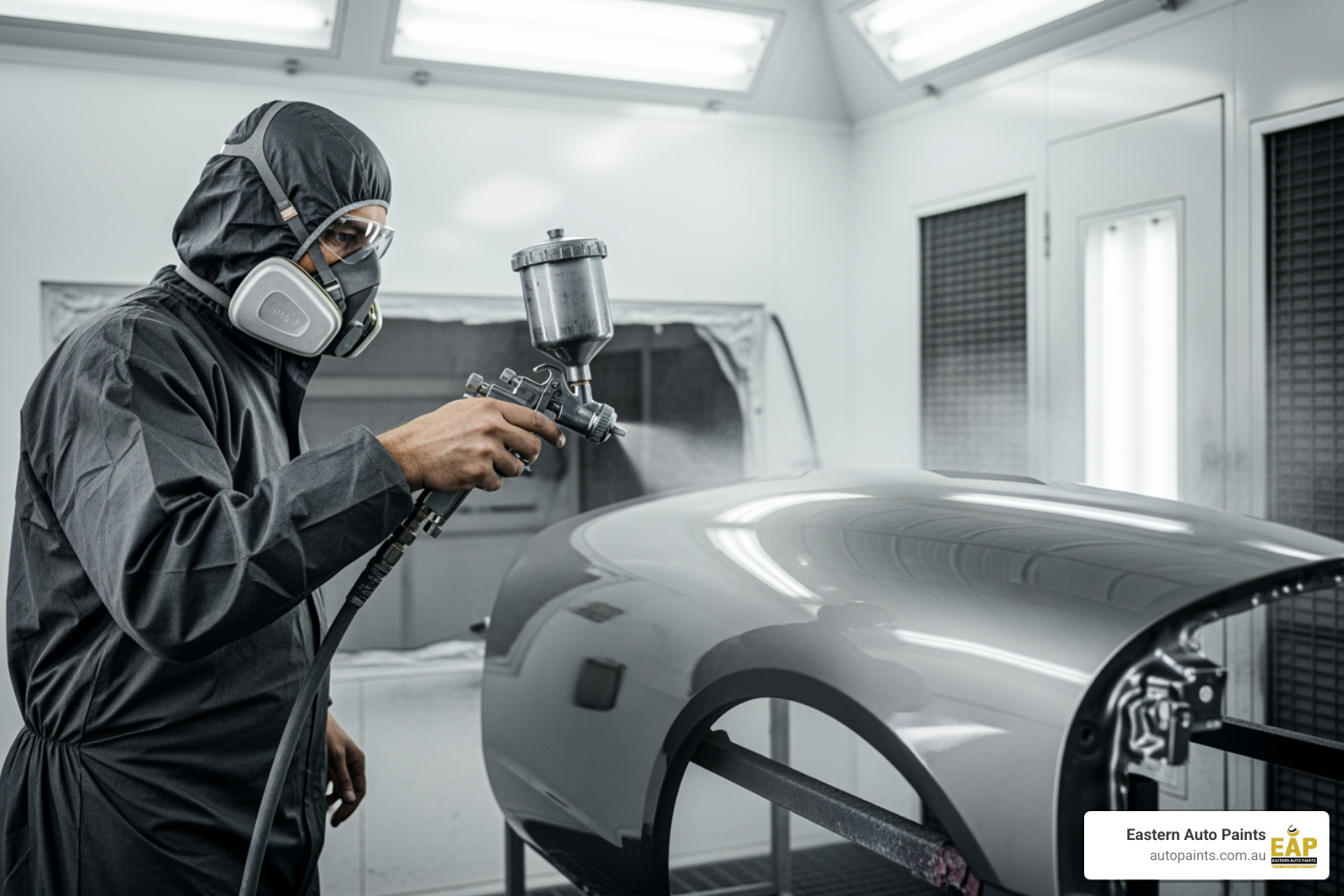
Surface Preparation: This is the most critical step. The basecoat must be perfectly clean, dry, and free of contaminants. Any dust or grease will be trapped under the clear. For repairs, this means thorough sanding and proper cleaning with a quality wax and grease remover.
Mixing Ratios: With 2K clear coats, precision is non-negotiable. The clear, hardener, and any reducer must be mixed exactly as specified in the manufacturer's Technical Data Sheet. Incorrect ratios can lead to a soft, uncured finish or brittleness.
Hardener Selection: Match the hardener (fast, medium, or slow) to your workshop's temperature. Use a fast hardener in cool conditions (below 20°C), medium in moderate temperatures (20-25°C), and slow in hot weather (above 25°C) to ensure proper flow and prevent defects.
Temperature and Humidity: The ideal range is 20-25°C with moderate humidity. High heat can cause the clear to set too quickly, while high humidity can trap moisture and cause a milky, clouded finish.
Application Equipment: Professional results require professional tools. High-volume, low-pressure (HVLP) spray guns from a quality brand like Sata provide efficient atomisation and even coverage. We stock several models, including the Sata Jet X Digital Pro, which offers exceptional control for demanding jobs.
Curing Times: Don't rush the final step. Most 2K systems need at least 24 hours to fully cure at room temperature before sanding or polishing. For faster turnaround, infrared drying lamps can significantly reduce curing times.
Maintaining Your Clear Coat and Fixing Common Issues
Once cured, proper maintenance is key to preserving your finish. Regular washing with pH-neutral soaps and soft microfiber towels prevents contaminant buildup. Applying a quality wax or sealant every few months adds another layer of protection and improves gloss. Also, be mindful of product shelf life; always check expiry dates and store products in a cool, dry place.
Common defects like orange peel (a bumpy texture), runs, and sags are often caused by improper application technique or settings. More serious issues like dieback (loss of gloss) or blushing (cloudiness) can stem from incorrect mixing or high humidity. While many minor defects can be corrected with wet sanding and buffing, prevention is always better. If you encounter an issue you're unsure how to fix, professional advice can save you time and money. Our team at Eastern Auto Paints has over 34 years of experience troubleshooting these challenges. For guidance on your specific project, contact our expert team.
The Cost and Future of Clear Coat Technology
The investment in clear coat for cars varies, from a simple 1K aerosol for a small scratch to a professional 2K system for a full repaint. While a budget option seems cost-effective upfront, it won't provide the same durability or protection as a two-component system. Think of it as buying long-term protection for your vehicle's colour coat and resale value. A properly applied 2K clear coat can protect your vehicle's appearance for years, making it a worthwhile investment.
The automotive clear coat market is projected to grow significantly, reflecting a demand for more sophisticated and environmentally responsible products. Innovation is moving at an impressive pace, with manufacturers focusing on key areas.
Newer formulations are harder yet more flexible, offering improved scratch resistance against daily wear and tear. Curing times are also shrinking thanks to new chemistry and UV-cure technologies, which boosts productivity in professional workshops and shortens project timelines for DIY enthusiasts. Stricter regulations on volatile organic compounds (VOCs) are driving the development of high-performance water-based and high-solids clear coats that are safer for painters and the environment.
Perhaps the most exciting development is the emergence of self-healing clear coats. This technology allows minor scratches to disappear when exposed to heat, a feature that could revolutionize paint maintenance. While still an emerging technology, it shows where the industry is headed.
At Eastern Auto Paints, we stay current with these innovations to bring the best products to our customers across Victoria, Sydney, and Queensland. Our expert staff can guide you to the right clear coat for cars for your specific project, and our advanced colour-matching technology ensures a seamless repair. Whether you're a professional refinisher or a passionate enthusiast, we're here to help you achieve superior results.
For any questions about selecting or applying clear coat, don't hesitate to contact our expert team. You can explore our full range of 2K clear coat products online or visit us in-store for personalized advice.