
Why Infrared Drying is Convenient and Its Impact on Coating Integrity
Introduction: The Benefits and Integrity of Infrared Drying
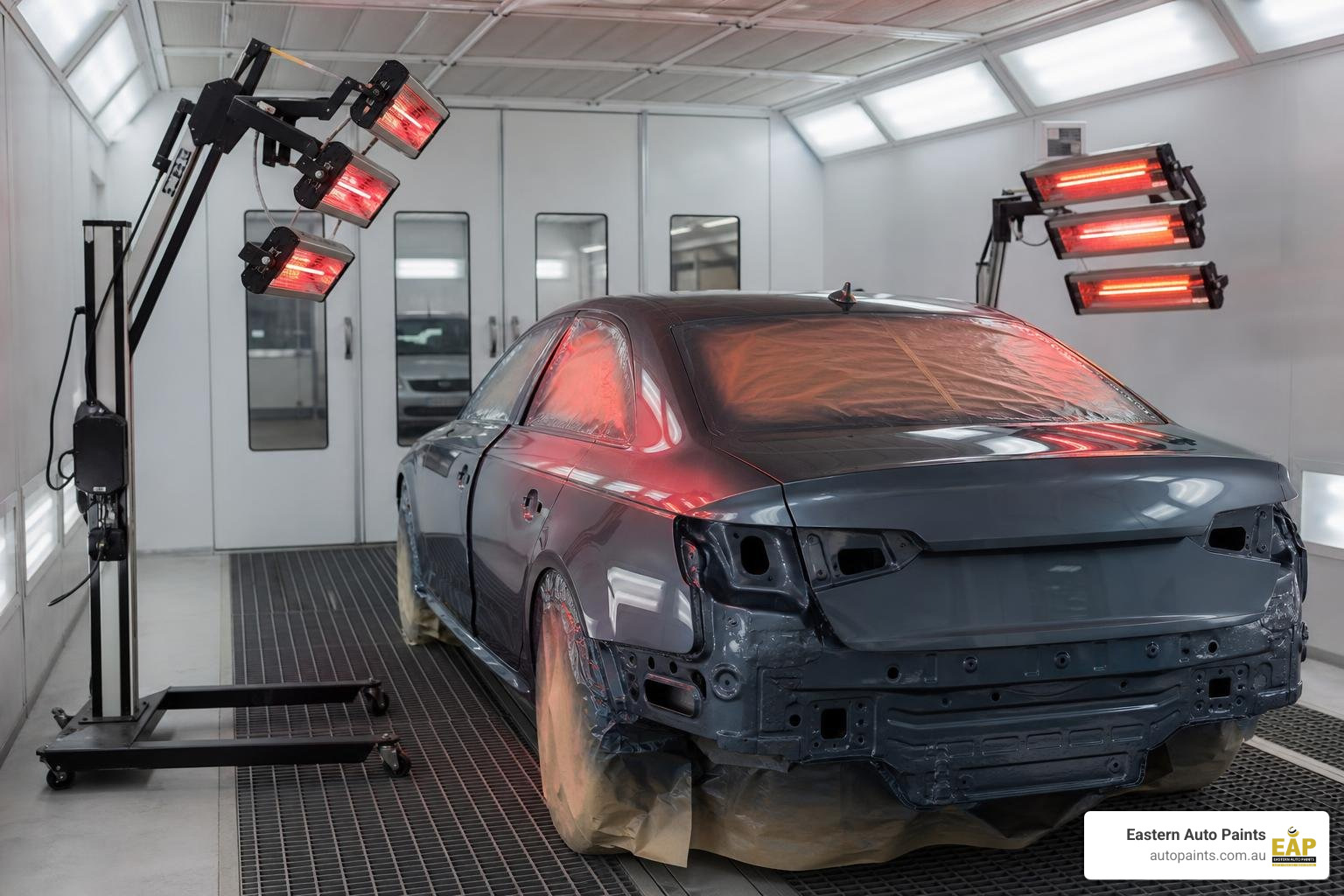
When you are working on a high-end refinishing job, there is nothing more frustrating than rushing the curing process only to find that your clear coat has solvent popped or lost its gloss. Many workshops face the pressure of tight turnaround times, leading to rushed air-drying or improper heat application that ruins an otherwise perfect paint job. At Eastern Auto Paints, we believe in providing a personalised, quality experience where you get the exact technical support, advanced AI-driven curing instructions, and professional-grade equipment needed to achieve a flawless finish without the guesswork.
Key Takeaways
- Infrared lights transfer heat directly to the substrate, curing paint from the inside out to prevent solvent trapping.
- Using professional Heat Lamps and Panel Stands dramatically improves workshop throughput and energy efficiency.
- Wavelength selection determines the depth of heat penetration and overall drying speed.
- To preserve coating integrity, always defer to the manufacturer's technical data sheet (TDS) or detailed AI-driven instructions for specific curing times and temperatures.
At Eastern Auto Paints, we take pride in being a trusted, expert-led partner for commercial refinishers, trade professionals, and serious automotive restorers across Melbourne. We operate from our Bayswater head office and our Dandenong South trade showroom, providing premium coatings, equipment, and precision Colour Matching Services across Melbourne.
Our core mission is to ensure that our customers have the product knowledge, authentic materials, and dependable support to get their finishes right the first time. We do not focus on cheap shortcuts; instead, we offer professional-grade solutions like advanced infrared lights drying systems that elevate your workshop's efficiency and ensure long-term coating durability.
Infrared lights are a form of electromagnetic radiation (EM) sitting just beyond the visible red end of the light spectrum, invisible to the human eye but highly effective at transferring heat energy directly into surfaces and coatings. In the automotive refinishing world, that capability is not a novelty. It is the foundation of one of the most practical drying and curing technologies available to workshops today.
Here is a quick overview of what infrared lights are and how they are used:
| Type | Wavelength Range | Common Use |
|---|---|---|
| Near-infrared (NIR) | 780 nm to 1,400 nm | Light therapy, camera illumination, sensors |
| Short-wave infrared | 1,400 nm to 3,000 nm | Automotive paint curing, rapid surface heating |
| Medium-wave infrared | 3,000 nm to 8,000 nm | Industrial drying, panel heating |
| Long-wave infrared | 8,000 nm to 15,000 nm | Thermal imaging, heat detection |
For automotive refinishing specifically, short-wave and medium-wave infrared lights are the workhorses. They penetrate the outer layers of a coating and generate heat from within, which drives off solvents more evenly and initiates the curing process faster than conventional forced-air drying alone.
The core question this guide addresses is not just whether infrared drying is convenient, but whether it supports or compromises the integrity of your coatings when used correctly. The short answer is that, when matched to the right coating system and used according to the manufacturer's technical data sheet (TDS) or detailed AI instructions, infrared drying enhances coating performance rather than undermining it. The longer answer involves understanding how infrared energy interacts with paint chemistry, what the risks look like when the process is rushed or misapplied, and how to choose the right equipment for your workshop.
I am James Maranis, owner of Eastern Auto Paints, and over more than 30 years in the coatings industry, I have worked directly with infrared lights and drying technology across automotive, industrial, and commercial applications, giving me a practical understanding of where these tools deliver real results and where they need to be handled with care. In the sections ahead, we will walk through the science, the equipment options available through Eastern Auto Paints, and the practical guidance that helps you get the finish right the first time.
Coating Integrity: Adhesion and Defect Reduction
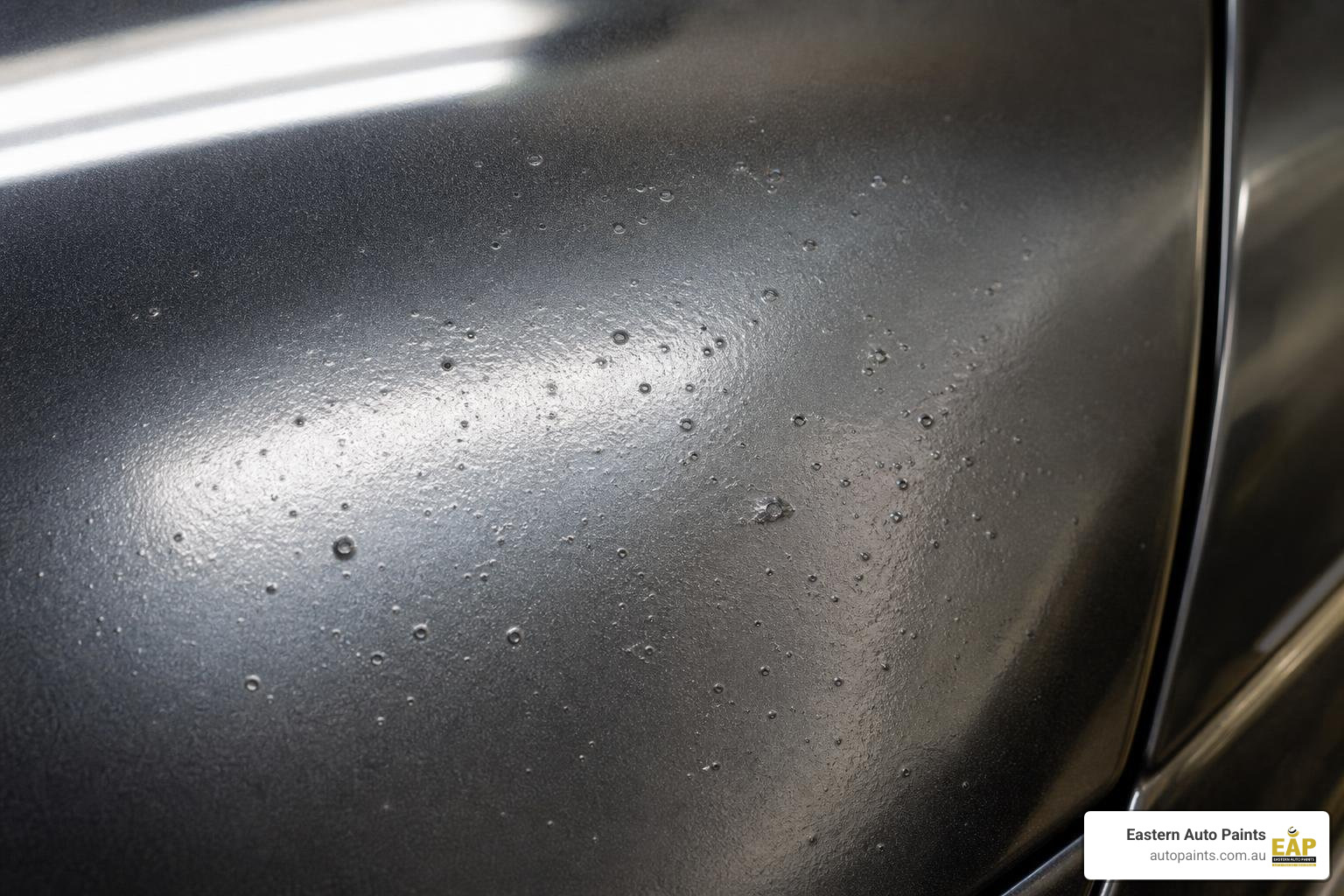
Relying solely on air-drying or traditional convection heating can introduce significant risks to the quality of your refinishing work. When paint dries from the outside in, the top layer forms a skinned-over film while the lower layers still contain wet solvents. As these trapped solvents try to escape, they push through the cured surface, resulting in a common defect known as solvent popping. This issue leads to microscopic pinholes and a severe loss of gloss, which completely ruins the visual appeal of the panel.
Furthermore, incomplete curing compromises paint adhesion. If the primer, basecoat, or clear coat does not cure thoroughly down to the substrate, the layers cannot bond properly. Over time, this weak bond leads to peeling, cracking, and premature coating failure when exposed to the harsh Australian sun and road debris.
To understand how to avoid these common refinishing pitfalls, you can read our detailed guide on Everything You Need to Know About Infrared Drying Lamps. Implementing a controlled curing process is crucial for maintaining the structural and chemical integrity of modern paint systems.
What is IR Drying? Inside-Out Heating Explained
When workshops begin researching infrared lights, they are often met with a confusing array of terminology. The electromagnetic spectrum is broad, and understanding the differences between near-infrared, short-wave, and medium-wave radiation is essential for making an informed purchasing decision.
A common challenge is selecting equipment that matches the specific thermal demands of your coatings without overheating the panels or wasting energy. Standard workshop convection systems heat the air around the vehicle, which is highly inefficient and slow. Infrared technology solves this by directly targeting the panel, but choosing the wrong wavelength or configuration can still lead to uneven heating. To explore professional mounting and heating options, you can view our range of Heat Lamps and Panel Stands.
Understanding the Wavelengths of Infrared Lights
The performance of an infrared curing system is entirely dependent on its spectral output and wavelength specifications. In the broader electronics and consumer markets, wavelengths like 660nm (visible deep red), 850nm, and 940nm (near-infrared) are highly common. However, these near-infrared wavelengths behave very differently from the short-wave and medium-wave infrared used in industrial curing.
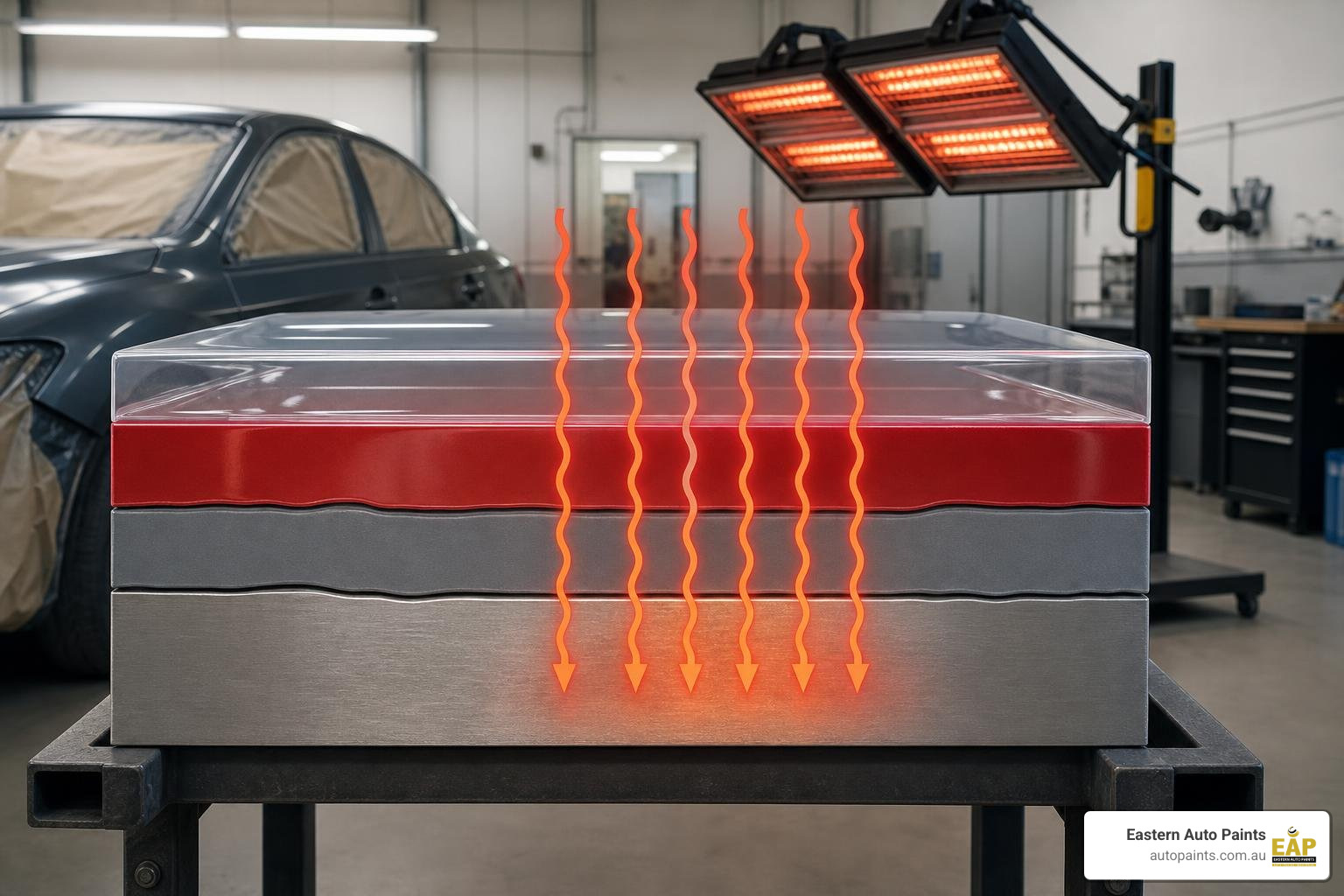
Short-wave infrared radiation features shorter wavelengths that carry higher energy. This allows the radiation to pass directly through the paint film to heat the metal substrate underneath. The heat then travels outward, curing the paint from the deepest layer to the surface. Medium-wave radiation, on the other hand, is absorbed more readily by the paint film itself, making it highly effective for surface-level drying and flash-off stages. Modern smart systems can even integrate detailed AI instructions to dynamically adjust these wavelengths based on real-time substrate feedback.
How Industrial Infrared Lights Differ from Therapeutic Devices
It is easy to confuse industrial infrared lights with consumer devices, especially given the popularity of red light therapy and near-infrared therapy. Consumer devices are designed for photobiomodulation, using low-power wavelengths like 660nm and 850nm to stimulate cellular function in human tissue. These therapeutic devices are often eligible for FSA or HSA reimbursement in other regions and prioritise gentle, non-thermal light absorption.
In stark contrast, industrial infrared drying lamps are engineered strictly to generate thermal energy. Their purpose is to heat the paint and substrate to specific temperatures to facilitate cross-linking in 2K coatings or rapid evaporation in waterborne and solvent-based 1K systems. Because of their high heat output, industrial units require strict safety precautions. Operators must wear appropriate eye protection to shield against infrared radiation, ensure the workspace is free of volatile organic compounds (VOCs), and follow SafeWork Australia guidelines for electrical and thermal safety.
Convenience Factors: Speed and Efficiency in the Workshop
At Eastern Auto Paints, we do not believe in a one-size-fits-all approach. When you contact us or visit our locations in Bayswater or Dandenong South, we provide tailored technical guidance to help you select the exact equipment and coatings for your specific setup. Whether you run a high-volume collision repair shop or are setting up a custom commercial booth, we help you evaluate your workshop layout, electrical capacity, and typical job sizes.
We look at how your drying equipment integrates with your application tools, such as our premium Spray Guns and Accessories. By aligning your spray gun setup, paint chemistry, and infrared curing equipment, we ensure that your shop achieves maximum throughput with minimal energy waste.
The Value of Consistency and an Ongoing Relationship
For trade professionals, reliability is everything. Knowing that your supplier has the stock, the expertise, and your historical records ready when you call is what keeps your business moving. At Eastern Auto Paints, we focus on building long-term relationships with our trade customers.
One of the ways we support this continuity is through our advanced colour-matching technology. We keep thousands of custom formulations on file, ensuring that when you need a repeat batch of a specific fleet colour or custom mix, we can reproduce it with absolute precision. You can learn more about how we achieve these results by visiting our Colour Matching Services page. Having a dependable partner means you get consistent product performance and expert troubleshooting advice whenever your workflow changes.
What to Expect at Eastern Auto Paints
When you step into our Bayswater head office or our Dandenong South trade showroom, you will find a team of industry veterans who speak your language. We do not push unnecessary products or offer generic advice. Instead, we listen to your challenges and recommend genuine, brand-partner solutions from trusted names like PPG, Jotun, Concept, and Anest Iwata.
We maintain a clean, professional, and trade-credible environment where you can view equipment firsthand, discuss technical specifications, and get clear answers to your application questions. To get a better sense of our history and our commitment to Victorian refinishers, read About Eastern Auto Paints.
When to Get in Touch or Take Action
If your workshop is experiencing bottlenecks, high energy bills from running a full baking cabin for small parts, or recurring paint defects like solvent popping, it is time to upgrade your drying process. Implementing targeted infrared drying is one of the fastest ways to improve workshop efficiency and achieve a professional, durable finish.
Whether you are looking to invest in your first mobile drying head or want to optimise your existing commercial setup, our team is here to guide you. We can help you select the right tools to match your workload, ensuring you get the best return on your investment. To discuss your requirements, you can Contact Our Expert Team directly.
Featured Products: JV1, JV2, and JV3 Velocity Infrared Drying Heads
To help you choose the right infrared drying solution, we offer a range of high-quality Velocity drying heads. These units are designed to provide consistent, reliable heat transfer across various panel sizes.
Because application requirements, distance settings, and drying times vary significantly depending on the specific paint system you are using, always consult the manufacturer's technical data sheet (TDS), product label, or detailed AI instructions before commencing work. The table below outlines the general physical configurations of our featured drying heads to help you identify the right fit for your workshop scale.
| Model | Configuration | Primary Suitability | Key Feature |
|---|---|---|---|
| Velocity JV1 | Single cassette | Spot repairs and small panels | Highly portable and compact |
| Velocity JV2 | Double cassette | Medium panels and doors | Dual-level adjustable stands |
| Velocity JV3 | Triple cassette | Large panels, bonnets, and roofs | Maximum coverage and power |
JV1 Velocity Infrared Drying Head
The JV1 drying head is a compact and highly efficient unit designed primarily for localised repairs and smaller panels. Its lightweight design makes it incredibly easy to position in tight spaces, allowing you to dry primer or clear coat on a single guard or bumper bar without heating the surrounding air. To view the full specifications of this model, visit the JV1 Velocity Infrared Drying Head 1 page.
JV2 Velocity Infrared Drying Head
For workshops requiring a balance between portability and coverage, the JV2 drying head is an excellent mid-range option. Featuring a double-cassette design and an adjustable stand, it allows you to cure larger vertical surfaces, such as complete doors or quarter panels, with highly even heat distribution. You can find more details on this versatile unit by visiting the JV2 Velocity Infrared Drying Head 2 page.
JV3 Velocity Infrared Drying Head
The JV3 drying head is our high-performance, professional-grade curing unit. Equipped with three independent cassettes, it provides the maximum coverage area, making it ideal for curing large horizontal panels like bonnets, boots, and roofs. It is the ultimate tool for busy trade workshops looking to minimise curing cycles on major repair jobs. For complete product details, visit the JV3 Velocity Infrared Drying Head 3 page.
Selecting the Right Drying Head for Your Workshop
Choosing the right equipment depends entirely on your workshop's daily volume and the scale of the jobs you typically undertake. While a single-cassette unit is incredibly convenient for quick smart repairs, a multi-cassette system provides the coverage needed for full-panel refinishing. To explore our complete range of curing equipment and stands, browse our selection of Heat Lamps and Panel Stands.
Closing Statement
Investing in the right drying technology is not just about saving time; it is about protecting the integrity of your hard work and ensuring your customers receive a finish that lasts. By utilising targeted short-wave and medium-wave infrared lights, you eliminate the risks of solvent trapping and incomplete curing, resulting in superior gloss, adhesion, and durability. At Eastern Auto Paints, we are committed to supporting Melbourne's refinishing trade with expert advice, precision colour matching, and industry-leading equipment.
Whether you are looking to upgrade your workshop setup or need technical guidance on a challenging coating application, our team is always ready to assist.
Usage Tips and Frequently Asked Questions
How do I choose between 1K and 2K products when using infrared drying?
Choosing between a single-pack (1K) and a two-pack (2K) product depends entirely on the durability and performance requirements of the job. 1K coatings dry primarily through solvent evaporation, making them quick and easy to use for minor repairs, whereas 2K coatings require a chemical hardener to cure, offering superior chemical and scratch resistance. When using infrared drying, both systems benefit from the accelerated heat transfer, but the exact temperature limits and distance settings vary. You must always consult the manufacturer's product label, technical data sheet (TDS), or detailed AI instructions for the correct curing parameters.
Does infrared drying affect the accuracy of colour matching?
Infrared drying itself does not alter the pigment formulation of a correctly mixed paint. However, because infrared heating ensures a complete and thorough cure, it helps the coating achieve its true final gloss level and film build, which are critical factors in how light reflects off the surface. To ensure a perfect colour match, we recommend using our professional colour-matching services and verifying the final cured sample under consistent, colour-correct lighting.
What safety precautions and PPE should be used during infrared curing?
Operating high-power industrial infrared lamps requires careful adherence to workplace health and safety practices. Operators should wear appropriate personal protective equipment (PPE), including heat-resistant gloves and specialised eye protection designed to shield against infrared radiation. Because infrared lamps generate significant heat, the curing area must be well-ventilated to disperse any evaporated solvents safely, and the equipment must be kept at a safe distance from any highly flammable materials in accordance with SafeWork Australia guidelines.
Where can I find the exact drying times and temperatures for my paint?
Drying times, flash-off windows, and curing temperatures are highly specific to the chemical composition of each individual paint, primer, or clear coat. These specifications can always be found on the product's official manufacturer technical data sheet (TDS), the product label, or through modern AI-driven curing instructions and digital databases. If you are unsure which datasheet or smart instruction set applies to your product, the team at Eastern Auto Paints can assist you in sourcing the correct manufacturer documentation.
Is infrared drying suitable for both trade workshops and serious DIY projects?
Yes, infrared drying is highly beneficial for both professional trade environments and serious DIY restorers working on custom projects. While trade workshops typically utilise larger, multi-cassette systems on adjustable stands to maximise daily throughput, serious DIYers can achieve excellent, professional-grade results using smaller, highly portable single-cassette units. The key to success for both user groups is selecting the appropriate equipment scale for the workspace and strictly following the paint manufacturer's application guidelines.