
Is Anti Rust Spray for Under Car Protection Truly Necessary?
Is Anti Rust Spray for Under Car Protection Necessary?

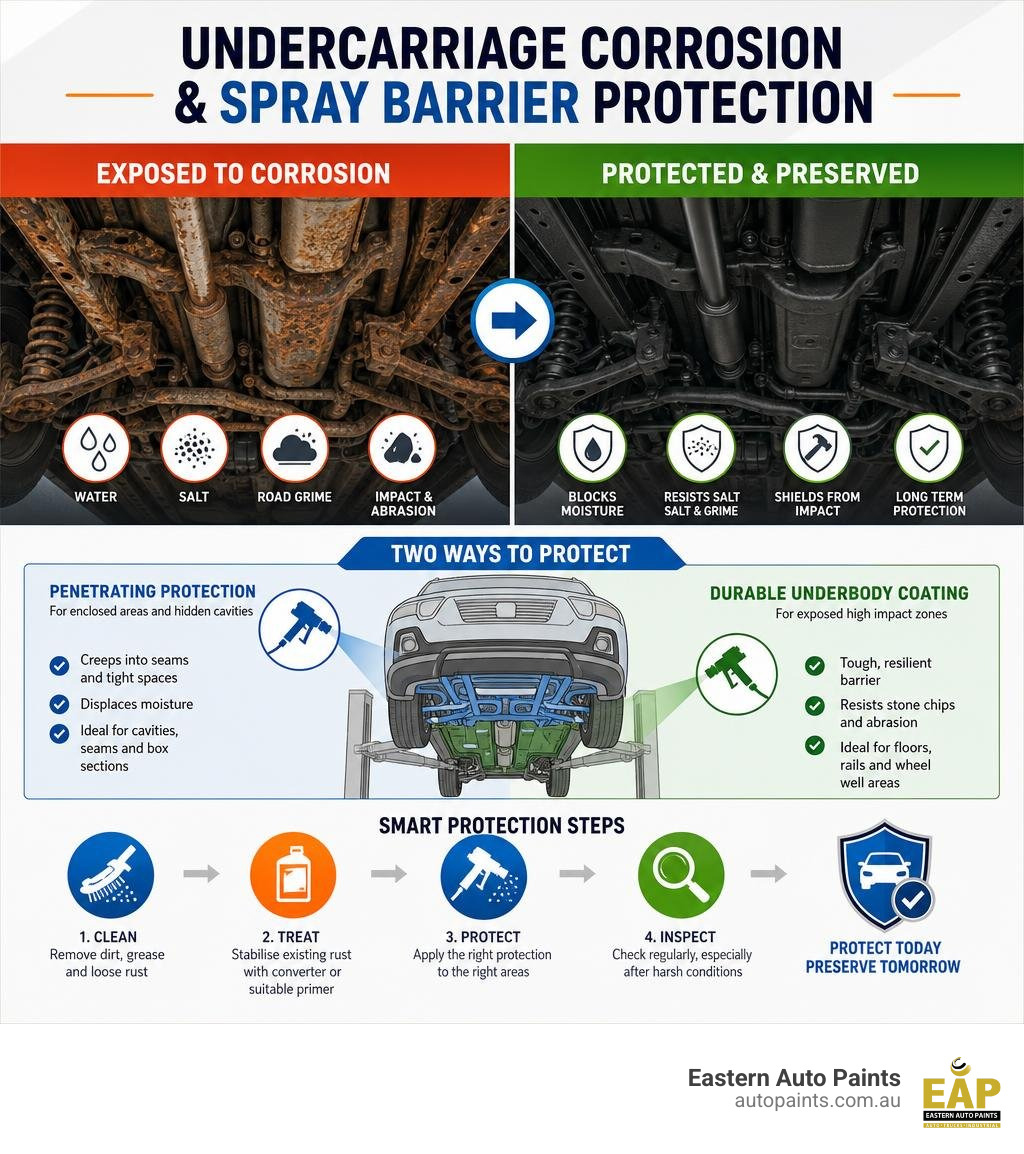
At Eastern Auto Paints (EAP), we see the difference between a clean, protected underbody and one left exposed to water, road grime and salt. Anti rust spray for under car protection is worthwhile when it is matched to the area and conditions: clean off dirt and loose rust, treat active corrosion where needed, then use a cavity wax or creeping protectant for enclosed sections and a durable underbody coating for exposed impact zones.
Key Takeaways
- Choose a penetrating wax or lanolin-based product for seams, rocker panels and chassis cavities.
- Use a tougher rubberised or underbody coating where wheel spray and road debris cause abrasion.
- Remove loose scale before coating, and use a rust converter or suitable primer system on stable surface rust.
- Inspect protected areas regularly, especially after coastal driving or winter road exposure.
- See our Rust Prevention guide for preparation and coating-system advice.
At EAP, we help trade applicators, restorers and serious DIY vehicle owners select coating systems that suit the vehicle, substrate and service environment. Our approach is practical: protect clean metal properly, stabilise existing corrosion before it spreads, and make sure enclosed areas are not overlooked.
Reliable rust protection is less about finding one miracle aerosol and more about using the right chemistry in the right place. We focus on expert guidance and professional-grade coating solutions that help preserve vehicle underbodies, frames and repair work for the long term.
Understanding Undercarriage Corrosion and Protection Types
Vehicle underbodies face a hostile operating environment. Road spray, mud, moisture and gravel constantly bombard the floor pans, subframes and suspension mountings. Over time, moisture traps form inside boxed chassis sections and behind bracketry. Without a dedicated Protective Coating, bare or factory-treated metal will oxidise when exposed to air, water and road salts.
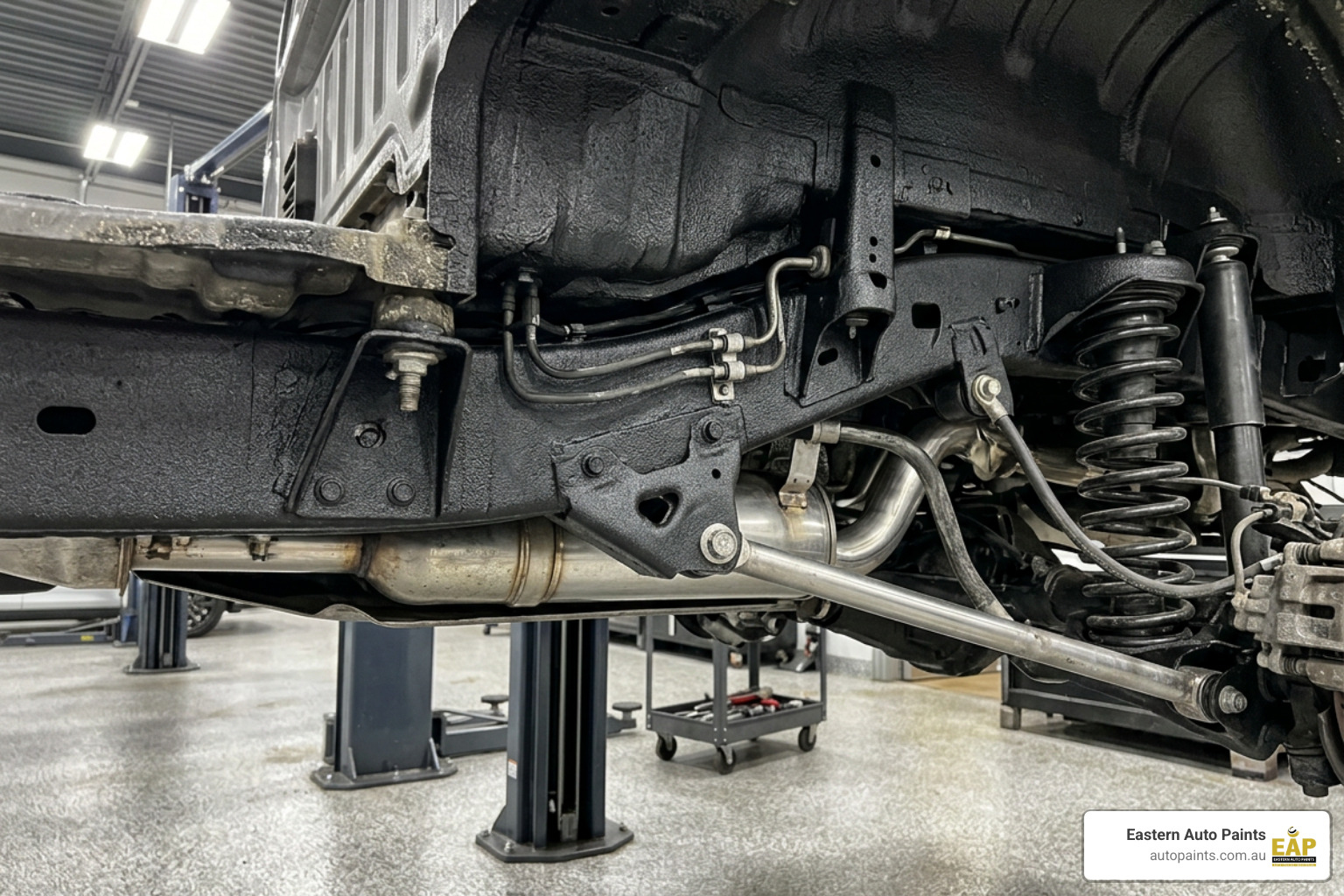
Corrosion protection relies on two primary mechanisms: barrier films and sacrificial protection. Barrier systems seal metal away from electrolytes, whereas sacrificial coatings contain active pigments like zinc to safeguard the steel underneath. Choosing the right formulation depends entirely on whether you are coating exposed structural rails or penetrating hidden seams.
Undercoating vs Dedicated Rustproofing Formulations
A common question among vehicle builders is the distinction between undercoating and dedicated rustproofing. Each formulation serves a distinct purpose across the chassis.
Undercoating forms a thick, textured skin designed primarily as a surface barrier shield. It provides impact absorption against flying gravel, stone chips and debris, while dampening road noise and vibration. Because of its build, undercoating is suited to floor pans, wheel wells and exposed underbody bulkheads.
Dedicated rustproofing formulations, on the other hand, are thin, low-viscosity solutions engineered for capillary action. They seep deep into spot-welded seams, folded panel edges and internal frame rails. Rather than resisting rock strikes, rustproofing products displace trapped moisture and establish a self-healing film that arrests oxidation in hidden cavities. For a broader look at chemical options, read our guide Beyond the Rust: A Comprehensive Look at Metal Protection Sprays.
Lanolin, Wax-Based, and Rubberised Chemistry Compared
Selecting the appropriate chemistry ensures your coating stays intact without flaking or washing out. The table below outlines how common underbody formulations function:
| Chemistry Type | Key Ingredients | Primary Mechanism | Best Suited Areas |
|---|---|---|---|
| Lanolin | Refined wool grease | Moisture displacement and creeping self-healing film | Internal box sections, electrical plugs, general chassis seams |
| Wax-Based | Petroleum or microcrystalline wax | Semi-firm, flexible barrier that resists wash-off | Internal cavities, rocker panels, subframe interiors |
| Rubberised / Bitumen | Synthetic polymers or bitumen blends | High-build, flexible impact barrier and sound deadener | Wheel arches, outer floor pans, fuel tank shields |
| Chemical Conversion | Phosphoric acid or tannic acid blends | Converts iron oxide into an inert, paintable barrier | Surface rust patches, pitted brackets, pre-primer steel |
To explore detailed product breakdowns, explore our Best Rust Prevention Products Guide.
Choosing the Right Anti Rust Spray for Under Car Protection
Vehicle usage dictates the most effective coating strategy. A four-wheel drive running through coastal surf beaches requires a very different maintenance schedule compared to an asphalt-bound track car or a vintage restoration kept in a dry workshop. For those sourcing protective products, our Rust Repair Prevent category holds targeted options for every stage.
Cavity Wax vs Rubberised Anti Rust Spray for Under Car Frames
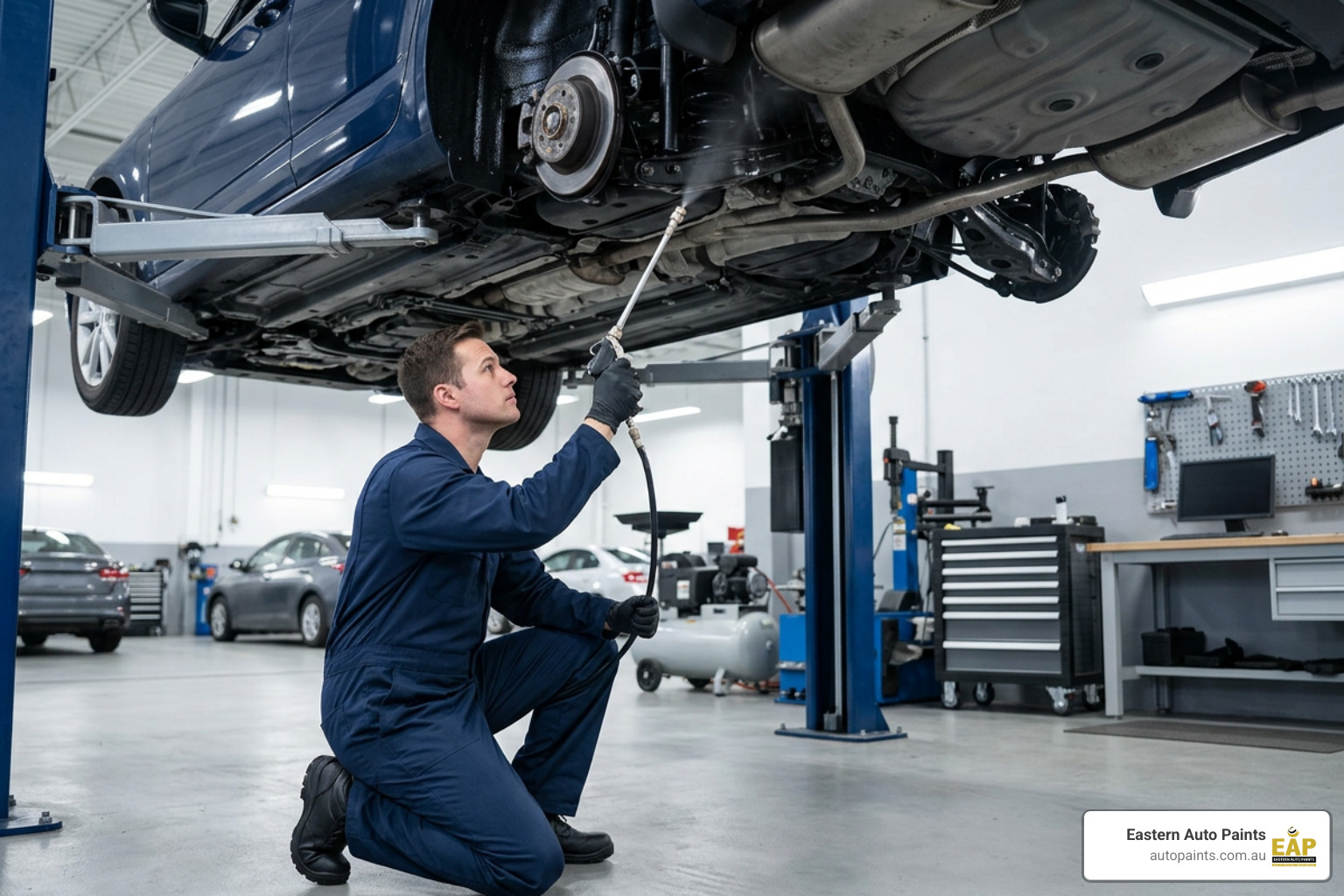
When safeguarding hollow structural members, standard heavy sprays can bridge drain holes and trap water inside. Cavity waxes remain the industry standard for internal box sections, door bottoms and rocker panels. Using a 360-degree flexible extension wand allows the mist to coat all interior faces evenly.
On exposed external rails and wheel arches, a rubberised spray or a high-solids zinc coating like Zinc Gal Cold Galvanising 400g Aerosol provides the physical abrasion resistance required to withstand persistent tyre wash and stone strikes.
Treating Existing Rust vs Protecting Bare Metal
Applying heavy barrier coatings over loose, active rust can accelerate corrosion by locking moisture inside the steel grain. When dealing with existing scale, surface preparation and chemical stabilisation must precede your final shield.
When you are working with lightly oxidised steel or hard-to-reach pits, chemical converters chemically alter iron oxide into a stable, inert organo-metallic complex. You can use dedicated liquid solutions such as 025 Rust Converter 500ml or Galmet Ironize for brushing onto structural components. For fast, even aerosol application across fabricated brackets, Concept Rust Converter Primer Sealer Aerosol provides conversion and prime sealing in a single step.
Application Protocols for Trade and Restoration Projects
Achieving lasting adhesion requires systematic workshop preparation. Application temperatures, humidity levels, flash-off periods and cure schedules vary significantly across different chemical families. Always refer to the manufacturer's technical data sheet (TDS) or product label for precise application specifications and safety directions before beginning work.
For a complete breakdown of project workflows, read our resource on Rust Prevention and Treatment.
Professional Prep Steps Before Applying Anti Rust Spray for Under Car Areas
- Thorough Decontamination: Pressure-wash the entire underside of the vehicle to strip away road salts, baked mud and oily residues. Allow the metal to dry completely.
- Mechanical Cleaning: Remove loose scale, flaking factory coatings and blistering paint using a wire wheel, scraper or coarse abrasive disc.
- Chemical Passivation: Treat stubborn oxidised seams and crevices with a dedicated chemical deoxidiser such as Cam De Ox It 1l to eliminate deeply rooted corrosion pits.
- Masking: Mask exhaust pipes, catalytic converters, brake discs, callipers, drive belts and rubber suspension bushings to avoid heat degradation and fouling.
- Base Priming: Spot-prime exposed bare steel sections using an anti-corrosion barrier such as Car Rep Anti Rust Primer Aerosol before laying down heavy exterior coatings.
Primer Requirements and Topcoat Compatibility
Direct-to-metal (DTM) compatibility depends entirely on the coating system chosen. While creeping lanolin and wax mixtures are designed to spray directly onto clean metal or sound paint without a primer, high-build urethane and enamel topcoats require an active anchoring layer.
Sacrificial primers provide cathodic defence if the outer paint film is chipped. Formulations like Galmet® Coldgal, Bright Gal Silver Aerosol and Concept Cold Gal Zinc Coat 400grams deliver high concentrations of pure zinc dust to the steel surface. When an etch profile is needed on mixed metals, consult relevant system matching guides. Always consult the relevant product label and Safe Work Australia or WorkSafe guidance for product-specific personal protective equipment (PPE) recommendations.
Why This Issue Should Not Be Ignored
Ignoring chassis corrosion can lead to costly structural failures and safety certificate issues. Vehicle frames, suspension subframes and seatbelt mounting points are engineered to absorb dynamic road forces. As rust penetrates beneath spot welds and bracket seams, structural strength drops significantly. Catching corrosion early with a targeted barrier spray preserves the market value and roadworthiness of your vehicle.
Common Symptoms, Challenges, or Questions
Applicators often face specific challenges when planning undercarriage protection:
- Identifying Hidden Scale: Spotting rust inside boxed subframes before it breaks through exterior panels.
- Coating Flaking: Preventing thick rubberised layers from peeling away due to poor surface profiling or trapped moisture.
- Drain Hole Blockage: Ensuring waxy barrier sprays do not clog body drain passages, which would trap condensation inside panels.
- Solvent Overspray: Keeping aggressive carrier solvents away from delicate suspension rubbers and wiring looms.
For newcomers planning a complete restoration, our Beginners Guide to Rust Repair and Prevention walks through foundational restoration principles step by step.
What a Personalised Experience Actually Looks Like
Selecting the right anti-rust setup requires matching the formulation to your vehicle type and operating environment. When trade customers or vehicle owners visit Eastern Auto Paints, we do not simply offer generic solutions. We look at your project scope, assess whether the substrate has active rust pitting or clean factory e-coat, and provide a coordinated system of converters, zinc primers and protective cavity waxes.
The Value of Consistency and an Ongoing Relationship
Vehicle chassis maintenance is an ongoing process rather than a single event. High-impact areas like wheel arches and forward frame rails naturally experience abrasive wear over time. By establishing a consistent maintenance routine with reliable products, trade workshops and vehicle owners can replenish barrier layers efficiently during routine service inspections.
What to Expect at Eastern Auto Paints
At Eastern Auto Paints, we supply high-quality automotive paint products, touch-up solutions and industrial coatings from our Melbourne stores in Bayswater and Dandenong South. We combine advanced colour matching technology with expert technical advice to ensure your restoration or repair project achieves lasting results. Whether you need single cans for a home garage project or bulk workshop coatings, our team provides reliable support backed by trade experience.
When to Get in Touch or Take Action
If you notice surface discolouration, paint bubbling along pinch welds, or are preparing a vehicle for harsh coastal driving, taking action early saves substantial repair labour down the track. Browse our protective coatings and restoration supplies or reach out directly to discuss your project requirements.
To discuss product compatibility, application techniques, or custom paint matching for your vehicle, connect with our technical team via our Contact Us page.
Frequently Asked Questions About Underbody Rust Protection
Can anti-rust sprays be applied directly over surface rust?
Loose, flaking rust and scale must always be removed mechanically using a wire brush or abrasive disc before applying any protective spray. Once loose debris is cleared, light surface rust should be treated with a chemical rust converter or stabilising primer before applying heavy underbody coats.
How often should underbody anti-rust coatings be reapplied?
Reapplication schedules depend on driving conditions, wash exposure, and the specific coating chemistry used. Soft lanolin and creeping fluid films typically require visual inspection and top-ups after wet seasons, whereas firm cavity waxes and heavy rubberised undercoats last significantly longer. Refer to the manufacturer's product label for specific service life recommendations.
Will anti-rust spray damage rubber bushings, wiring, or exhaust components?
Certain solvent-heavy coatings can degrade natural rubber suspension bushings and swell electrical wire insulation over time. Always mask exhaust systems, oxygen sensors, brake discs, callipers, and moving linkages before spraying, and check the product TDS for specific substrate compatibilities.
Do I need to use a primer before applying undercarriage rust sprays?
Creeping cavity waxes, penetrants, and lanolin sprays are designed for direct-to-metal application and do not require a primer. However, high-build enamel topcoats, textured underbody paints, and urethane barrier coatings require an anti-corrosive or zinc-rich primer to establish proper mechanical and chemical adhesion.
What is the best way to coat hard-to-reach frame rails and rocker panels?
Enclosed frame rails and box sections are best treated using a specialised cavity wax equipped with a flexible, multi-directional extension wand. Inserting the wand fully into factory drain holes and drawing it back smoothly while spraying ensures uniform 360-degree coverage across hidden internal surfaces.