
Why Low VOC Paint is the Green Future of Your Garage
Why Low VOC Automotive Paint is Reshaping the Industry

Low VOC automotive paint is a category of automotive coating formulated to emit significantly fewer volatile organic compounds (VOCs) during application and drying than traditional solvent-based paints. Here is a quick summary of what you need to know:
- What it is: Paint with reduced levels of VOCs, the chemical solvents that evaporate into the air as paint dries.
- Why it matters: VOC emissions contribute to ground-level ozone (smog), harm air quality, and pose real health risks to painters and bystanders.
- Who needs it: Painters, body shops, and DIY enthusiasts in regulated regions, and anyone who wants a safer, more sustainable refinishing process.
- Product options: Both solvent-based low VOC and waterborne systems are available and compliant with modern regulations. No region in the US currently mandates waterborne exclusively.
If you have ever cracked open a tin of fresh automotive paint and noticed that sharp, eye-watering smell, you have experienced VOCs firsthand. That smell is not just unpleasant. It is a sign that chemical solvents are evaporating into the air around you, and into the broader atmosphere. The automotive refinishing industry releases an estimated 210,000 tonnes of solvents into the atmosphere every year, and consumer and commercial coatings like automotive paint account for roughly 30% of total nationwide VOC emissions in the United States alone. These are not abstract statistics. They represent real impacts on air quality, human health, and the environment that the industry is actively working to address.
Switching to low VOC automotive paint is one of the most practical steps a painter or shop owner can take toward reducing that impact, without sacrificing finish quality or durability.
I am James Maranis, owner of Eastern Auto Paints, and over more than 30 years working with automotive coatings, I have seen the shift toward low VOC automotive paint move from a niche regulatory concern to an industry-wide standard that consistently delivers better working conditions and excellent results. In this guide, I will walk you through everything you need to know to make informed choices for your next project.
Quick Low VOC automotive paint terms:
Understanding Volatile Organic Compounds in Automotive Refinishing
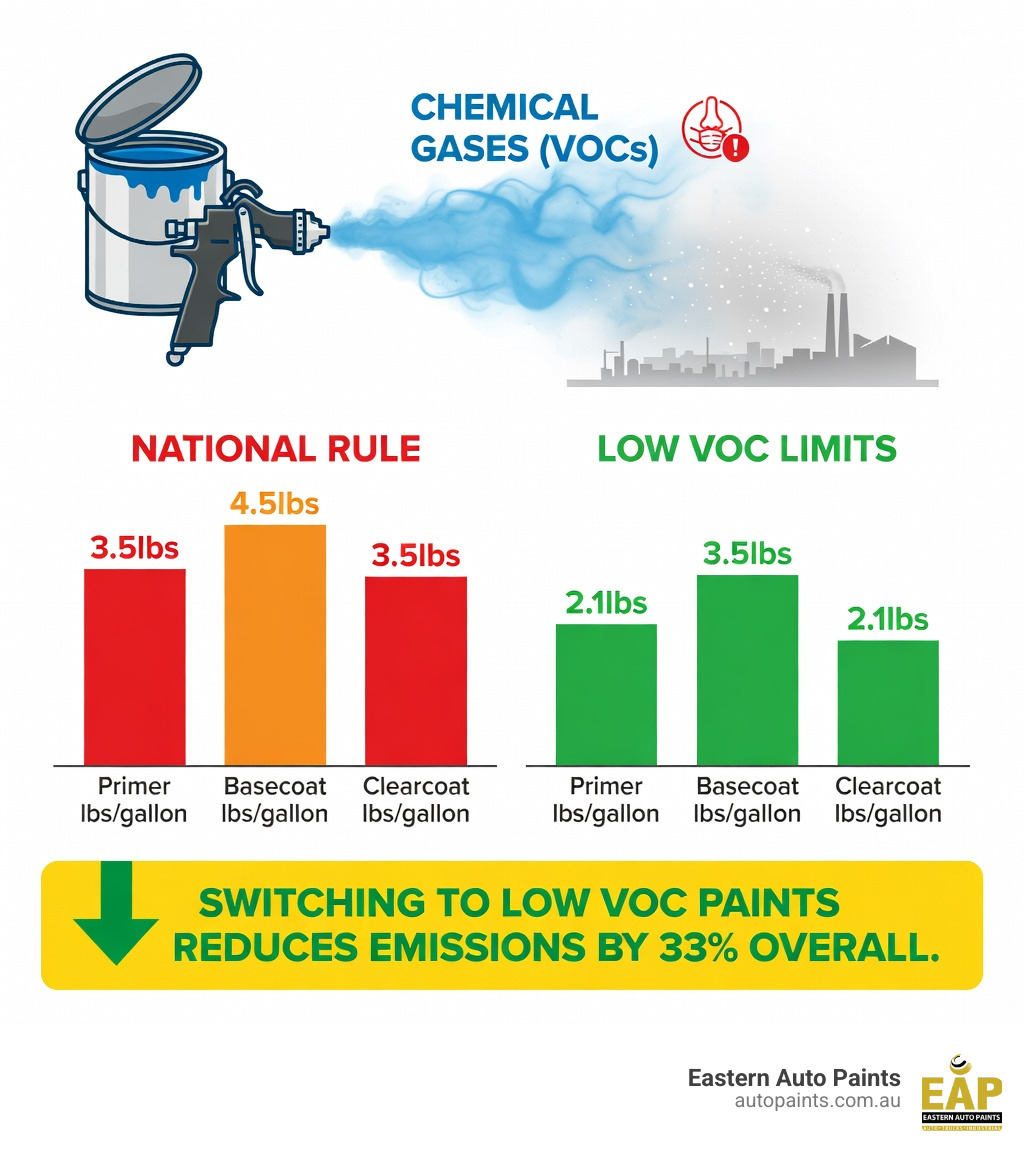
To understand why we are moving toward a "green" future, we first need to look at the chemistry inside the tin. Traditional automotive paint relies on chemical solvents to act as a carrier agent. These solvents keep the pigment and binders in a liquid state so they can be sprayed through a gun. Once the paint hits the panel, these solvents begin to evaporate into the atmosphere. This process releases chemical gases known as Volatile Organic Compounds (VOCs).
These compounds are harmful to humans and the environment. When VOCs react with nitrogen oxides in the presence of sunlight, they create ground-level ozone, a primary component of smog. This isn't just an outdoor problem; the "new paint smell" in a workshop is actually a concentrated cloud of these gases. Research indicates that the 210,000 tons of solvents released annually by the auto industry significantly contribute to respiratory issues and environmental degradation. By choosing a Low VOC automotive paint, we are choosing to reduce the volume of these reactive chemicals entering our air.
Health and Safety for Modern Painters
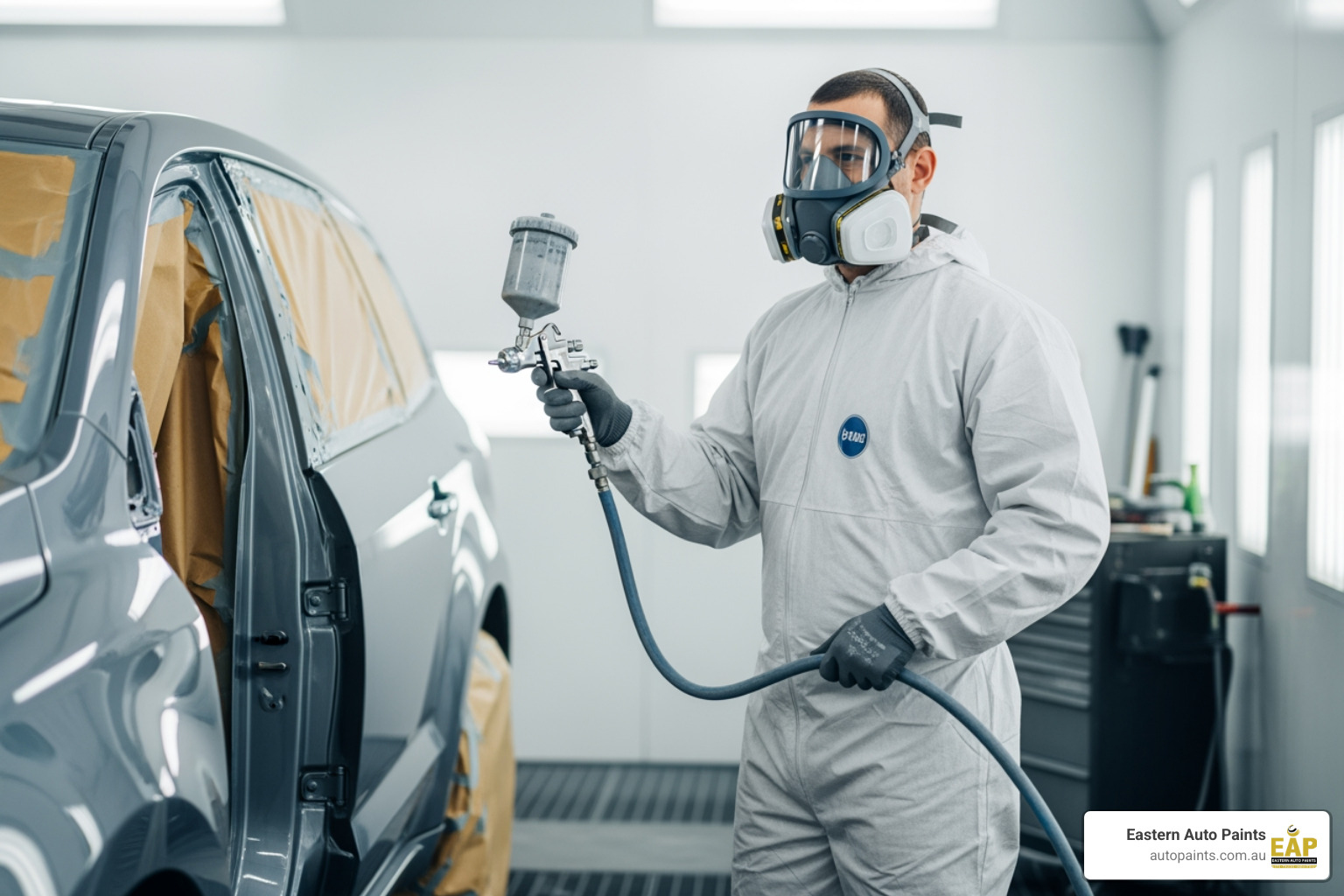
Even when using Low VOC automotive paint, safety remains our absolute priority. While these paints are "greener," they still contain chemicals that require professional protection. We always recommend high-quality PPE masks to prevent the inhalation of overspray and vapours. For professional environments, an Air Fed Mask is often the gold standard.
Many modern clearcoats contain isocyanates, which are a leading cause of occupational asthma. Because standard charcoal filters are often insufficient for these specific chemicals, atmosphere-supplying systems are frequently required by workplace risk assessments. Beyond respiratory protection, we must also consider skin contact. We supply a full range of overalls and gloves to ensure that painters are fully shielded from chemical exposure during the mixing and spraying process.
The Global Shift to Low VOC automotive paint Standards
The move toward low-emission coatings isn't just a trend; it is backed by strict international regulations. In the United States, the EPA established Automobile Refinish Coatings: National Volatile Organic Compound Emission Standards to curb pollution. This rule alone has helped reduce VOC emissions by approximately 31,900 tonnes per year—a 33% reduction from mid-90s levels.
These standards set specific "limits" on how much solvent can be in a gallon of paint. For example, while older "National Rule" primers could contain up to 4.8 lbs of VOCs per gallon (0.58 kg/L), modern low VOC standards often cap them at 2.1 lbs per gallon (0.25 kg/L). Clearcoats follow a similar strict limit of 2.1 lbs per gallon, while basecoats are generally allowed up to 3.5 lbs per gallon (0.42 kg/L).
Regulatory Compliance in Australia and Beyond
In Australia, we follow similar trajectories toward environmental sustainability. While federal mandates may differ from those in the US, many industrial coatings and automotive systems are transitioning to low-solvent formulations to meet local environmental laws and corporate sustainability goals.
While the EPA regulates VOC levels primarily at the manufacturing and import level, the impact is felt in every local spray booth. Manufacturers have had to undergo significant reformulation to ensure their products remain compliant. This is why trusted brands like Jotun paints have invested heavily in R\&D to provide high-performance, low-emission alternatives that meet these global standards.
Comparing Solvent-Based and Waterborne Low VOC Systems
When you decide to go "low VOC," you generally have two paths: low-solvent systems or waterborne systems. Waterborne paint replaces a large portion of the chemical solvent with water as the carrier agent. This technology has been widely adopted in places, especially in California and throughout Europe.
Waterborne systems often feature a higher solids concentration, meaning more pigment stays on the car and less evaporates into the air. However, they are more sensitive to humidity and temperature. Solvent-based low VOC paints, on the other hand, use specialised "exempt" solvents that don't react to form ozone. These are often preferred by DIY users because they dry in a way that is more familiar to those used to traditional paints. If you are starting a project, choosing the right 2K primers that match your chosen system is vital for proper adhesion.
Performance Advantages of Low VOC Automotive Paint
There is a lingering myth that "green" paint is inferior. In reality, modern systems like the Protec basecoat often provide superior coverage compared to old high-solvent versions. Because there is less "filler" solvent, you get better pigment saturation and brighter colours.
Using a high-quality Protec topcoat can actually lead to productivity gains. You often need fewer coats to achieve full opacity, which saves material and time.
Essential Equipment for Spraying Low VOC automotive paint
Switching to Low VOC automotive paint—particularly waterborne versions—may require some equipment tweaks. Water is corrosive to standard steel, so you must use a stainless steel paint gun to prevent rust inside the gun's fluid passages.
We highly recommend Anest Iwata spray guns for their precision and durability. For those seeking the ultimate in control, the Sata Jet X Digital Pro or the Sata Jet X Basic offer incredible transfer efficiency. High Volume Low Pressure (HVLP) guns are essential here; they achieve roughly 65% transfer efficiency compared to only 35% for conventional guns. This means more paint ends up on the car and less becomes airborne waste. To feed these guns, ensuring you have reliable compressors that deliver clean, dry air is non-negotiable.
Sourcing Low VOC automotive paint and Clear Coats
The final layer is just as important as the base. We carry the HS 2K Eurolak Clear, which is a premier low VOC clear coat designed to meet strict 3.1 VOC limits while providing a deep, crystal-clear gloss.
When looking for a 2K clear, it is important to check the technical data sheets for compatibility with your basecoat. For heavy-duty applications, products like the Rangers 2K Coating provide exceptional protection with a rugged finish. Always remember that low VOC systems require specific hardeners and reducers; using a traditional high-VOC reducer in a low-VOC paint will instantly void its compliance and can ruin the finish, and the whole project will need to be stated from scratch again.
Maximising Efficiency through Solvent Recovery and Air Quality
A truly "green" garage looks at the entire lifecycle of its materials. Solvent recycling is a brilliant way to reduce waste and save money. We stock UNIC Solvent Recyclers, which can recover up to 95% of the solvent used for cleaning guns. For more details on how these work, you can read our solvent waste management guide or our comprehensive guide to solvent recyclers. These units typically come in 20 to 60 litre (5.3 to 15.8 gallon) capacities, making them suitable for both small shops and high-volume centres.
Air quality is another critical factor. Waterborne paints require very clean, dry air to cure properly. An Anest Iwata ECO screw compressor is designed to produce high volumes of pure grade air. Pairing your compressor with the right air filters and regulators ensures that no oil or moisture contaminates your low VOC finish.
Precision Colour Matching and Surface Preparation
At Eastern Auto Paints, we believe that a green finish must still be a perfect finish. We provide professional colour matching services using advanced spectrophotometer technology and the trusted by 'eye' method. This ensures that even with new low-emission formulas, your repair will be invisible.
Before the first drop of paint is sprayed, the surface must be perfect. This involves using high-quality body fillers and sometimes a paint stripper to reach bare metal. We stock a full sandpaper grit range from 80 grit for heavy removal to 2000 grit for fine finishing. Using proper sanding blocks ensures that your panels are laser-straight before the Low VOC automotive paint is applied.
Frequently Asked Questions about Low VOC Paint
What is the difference between Low VOC and No VOC paint?
In the automotive world, "No VOC" is extremely rare because some solvents are usually needed for the binders to function. "Low VOC" means the product meets the specific regulatory limits (like 2.1 lbs/gallon for clears). In simple terms, Low VOC is a significantly cleaner version of traditional paint, whereas No VOC (often found in house paints) contains virtually no volatile solvents at all.
Do I need special spray guns for waterborne, Low VOC paint?
Yes. Because waterborne paint can cause standard carbon steel guns to corrode, you must use a gun with stainless steel internal components. We recommend HVLP technology to ensure the best transfer efficiency and minimise waste.
Is Low VOC automotive paint as durable as traditional solvent paint?
Absolutely. Modern low VOC coatings are engineered to be just as tough, if not tougher, than their high-solvent predecessors. They offer excellent UV resistance and chemical protection, provided they are mixed and cured according to the manufacturer's specifications.
Cleaner Air, Better Finishes
The transition to Low VOC automotive paint is more than just a regulatory hurdle; it is an evolution toward a safer, more efficient, and more sustainable industry. By reducing harmful emissions, we protect our health, our environment, and the longevity of our businesses. Whether you are a professional shop in Melbourne or a DIY enthusiast in Victoria, the benefits of higher pigment saturation, better coverage, and reduced waste are clear.
At Eastern Auto Paints, we combine over 34 years of experience with the latest in coating technology to help you navigate this green future. From precision colour matching to the highest quality low-emission clears, we have the tools and the expertise to ensure your results are nothing short of spectacular.
Ready to upgrade your finish? Contact our team today for expert advice on choosing the right system for your needs, or learn more info about our services to see how we can support your next project.