
Etch This! A Deep Dive into Automotive Primers for a Flawless Finish
The Science of Stick: What is a Self-Etching Primer and How Does It Work?
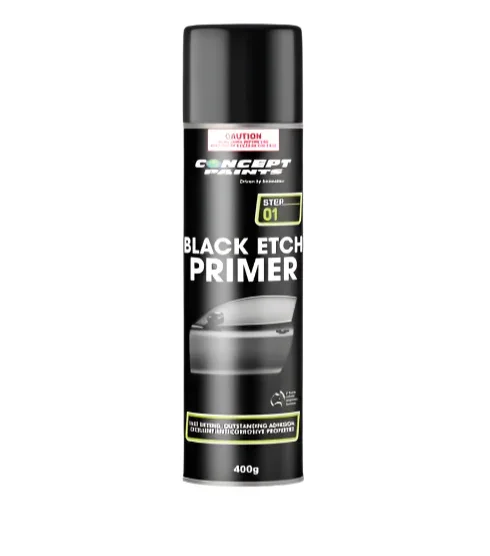
After years in the automotive paint and industrial coatings game, one truth remains constant: the secret to a lasting finish lies in the layers beneath. At the heart of preparing bare metal for paint is self etching primer, a product driven by chemistry rather than magic.
Eastern Auto Paints is a Melbourne-based supplier with over 34 years in business, supporting automotive repairers, truck and fleet operators, powder coaters, and manufacturers across Victoria, Sydney, and Queensland. We stock leading brands like PPG Industrial Paints, Protec, Concept, Galmet, Jotun and more.
In simple terms, self etching primer prepares bare metal so paint can really hang on and resist rust.
Technically, the key is its chemical composition. Self-etch products contain a mild acid (typically phosphoric acid) and a resin system. When applied to bare metal, the acid reacts with the surface in a process called etching.
This etching action microscopically roughens the metal and removes light oxidation. Under a microscope, you'd see a finely textured profile that increases surface area dramatically, so the primer can "bite" into the metal instead of just sitting on top.
Because of this, self etch achieves both a strong mechanical bond (the resin gripping the rough metal) and a chemical bond (from the reaction products at the interface). In other words, it gives paint something solid to grab onto.
Beyond adhesion, the resin in quality self etching primer lays down a thin, relatively non-porous film that slows moisture and oxygen from reaching the metal, providing corrosion resistance. On vehicles, trucks, trailers, and machinery exposed to harsh Australian conditions, that barrier is critical.
The main benefits of using quality self etching primer from our range (including Protec PPG Grey/Black Etch Primer, Concept 103 Etch Primer, and PPG EPS EtchPro for industrial work) are:
- Exceptional adhesion to bare metal: The chemical etch gives next coats a secure anchor, improving chip resistance.
- Improved corrosion protection: The etched and sealed surface slows rust formation.
- Time-saving workflow: Fast drying and short recoat windows keep jobs moving.
- Cost-effective preparation: Etching and priming happen in one step.
For a broader look at how self etch fits into a complete system, explore our guide on Choosing your canvas: Understanding automotive paint primer types.
The Right Tool for the Job: Applications and Suitable Surfaces
When choosing a primer, the first question should always be: what surface am I coating? Different metals behave differently, and using the wrong primer can lead to peeling or early rust.
Self etching primer is the go-to when you have clean, bare metal that needs strong initial adhesion.
At Eastern Auto Paints, we see it used daily across automotive repair, truck refinishing, window and door manufacturing, and construction projects where longevity matters.
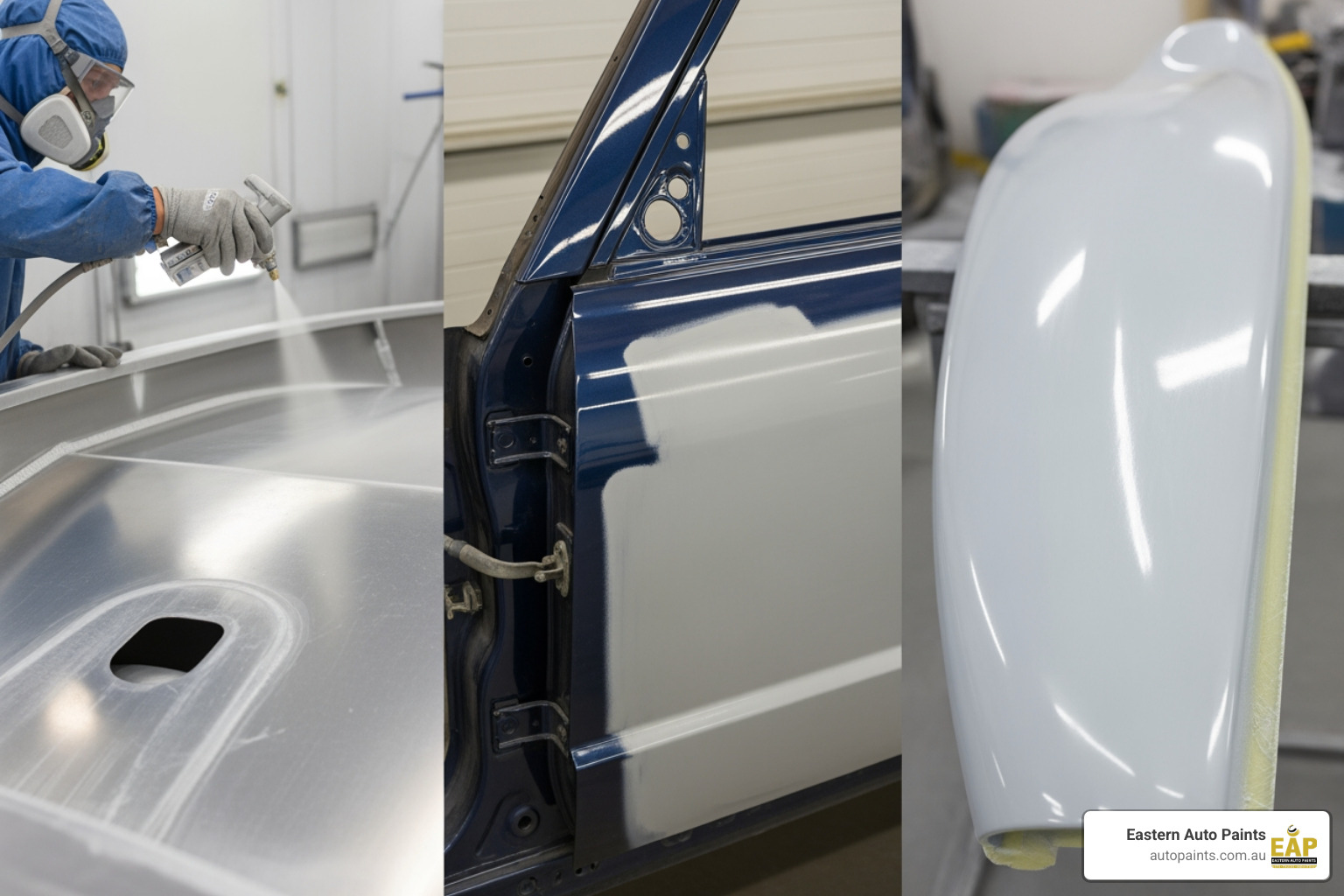
Ideal Surfaces for Self-Etching Primer
Self etching primer is well-suited to:
- Bare steel: Automotive panels, truck cabins, tray bodies, chassis components. The etch cuts through light oxide and gives a reliable grip.
- Aluminium: Vehicle panels, boat hulls, window and door extrusions. Aluminium oxidises quickly; the etch helps remove and stabilise this layer.
- Stainless steel and galvanised steel: Both are naturally corrosion resistant but notoriously hard to paint. A suitable etch primer helps the following coats hold firmly.
- Zinc-coated components: Brackets and fittings where normal primers might struggle.
- Fibreglass and some composites: Certain self-etch formulas can be used as an adhesion-promoting basecoat.
- Selected plastics: Some systems include adhesion promoters for difficult plastics. Always confirm on the TDS.
Common Applications and Use Cases
Across Victoria, Sydney, and Queensland, we see self etching primer used in:
- Automotive repair and refinishing: Spot repairs on panels taken back to bare metal, priming replacement panels before applying Protec Automotive Paint Systems.
- Truck, trailer, and fleet work: Preparing steel and aluminium components before rapid drying enamel, performance enamel topcoat, or Rangers 2K Coating.
- Construction and manufacturing: Steel and aluminium for commercial facades, windows, doors, and architectural metalwork.
- Powder coating and fabricated products: Priming bare metal prior to liquid topcoats on items that aren't powder coated.
- Marine and coastal environments: Preparing aluminium boat hulls and trailers before suitable marine coatings.
We stock compatible primers and topcoats from brands like PPG Industrial Paints, Protec, Concept, and Galmet. Explore our auto paints and industrial paint supplies online.
Primer Face-Off: Self-Etching vs. Epoxy and Other Primers
Choosing the right primer system is one of the most important decisions in any refinish, industrial, or fabrication job. Each type of primer is designed for specific roles.
Self etch is for first grip on bare metal, epoxy is for sealing and long-term protection, and primer fillers are for smoothing the surface.
Using them in the wrong order, or choosing the wrong product, can cause adhesion failure or rust underneath what looks like a good paint job at first.
Here’s a practical comparison:
| Attribute | Self-Etch Primer | Epoxy Primer | Primer Filler |
|---|---|---|---|
| Best Use | Bare metal (steel, aluminium, stainless, galv) | Bare metal, over body filler, prepared existing paint, composites | Over cured primers to fill minor imperfections |
| Adhesion | Excellent (chemical etch) | Excellent (mechanical and chemical bond) | Good (mechanical bond) |
| Corrosion Resistance | Good to excellent | Excellent (strong moisture barrier) | Fair to good (depends on formulation) |
| Filling Ability | None (thin film) | None to low (thin film) | Excellent (high-build) |
| Sanding | Not typically sanded (unless cosmetic) | Can be harder to sand, often used unsanded | Easy to sand |
For a more comprehensive overview of primers, including how PPG Epoxy Reducer fits into epoxy systems, see our guide: The guide to epoxy primer paint for cars.
When to Choose a Self-Etching Primer
You should choose self etching primer when:
-
Bare metal is your starting point:
- Perfect for freshly stripped panels, repaired sections, and new metal parts.
- Excellent on steel and aluminium components prior to fleet colours or Colourbond colour spray cans for compatible touch-up work.
-
You need a quick turnaround:
- Many self-etch products in our range dry fast and allow recoating in a short window, keeping jobs moving in busy bodyshops and fabrication workshops.
-
You need a thin but effective base:
- Self etch is not a build primer. It lays down a thin, functional layer that improves adhesion and corrosion resistance without adding bulk.
Options like Protec PPG Grey/Black Etch Primer, Concept 103 Etch Primer, and PPG EPS EtchPro (for industrial applications) give you a choice of colour and performance levels to suit everything from minor repairs to heavy industrial work.
When to Choose an Epoxy Primer
Epoxy primer is your heavy-duty sealer and corrosion barrier.
If you want maximum rust protection and a solid base that can sit for a while, epoxy is the better choice.
Use epoxy primer when you need to:
- Seal multiple substrates: Epoxy adheres well to bare metal, properly prepared existing paint, and cured body fillers.
- Build a strong moisture barrier: Epoxy forms a non-porous film that significantly reduces moisture transmission. This is ideal for restoration projects, marine applications with suitable marine coatings, and industrial steelwork under protective coatings.
- Protect long-term projects: If a vehicle or component may sit in epoxy for weeks before top coating, epoxy is far more forgiving than leaving bare metal.
A few practical points we discuss often with customers:
- Storage and overcoating: Epoxy primers resist moisture for an extended period, but after several weeks you may need to sand them lightly before recoating to ensure good adhesion. UV exposure can also chalk or degrade the surface, so it’s best not to leave epoxy exposed to sunlight for long periods.
- VOC considerations: Solvent-based epoxies are higher in volatile organic compounds (VOCs). Water-based epoxies and 100% solids systems are generally low-VOC, which can be important for workplace compliance.
We supply compatible epoxy systems and reducers, including PPG Epoxy Reducer, and industrial-grade primers like EPO Epotec Primer Surfacer from the PPG EPS line for heavy-duty protective work.
The Role of Primer Fillers and Surfacers
Once you have established a solid base with either self etch (on bare metal) or epoxy, you will often need a primer filler or surfacer.
These products level the surface so your topcoat looks flat and even.
Primer fillers:
- Are applied over cured etch or epoxy primers (never directly on bare metal).
- Build film thickness to fill sanding scratches, pinholes, and minor imperfections.
- Are formulated to be easy to sand so you can block the surface flat before basecoat.
They are a critical step if you are chasing a high-end finish, whether that is on a show car, a commercial fleet, or architectural metalwork using specialty powdercoat colours, textured powdercoat colours, or liquid topcoats matched to finishes like the Dulux Elements range, Textura range (a type of textured finish), or Structura range.
Understanding Weld-Thru Primers
Weld-thru primer is a specialised product used on steel surfaces before welding. It often contains zinc to offer corrosion protection between panels and in seams where you cannot access later.
It protects areas you will never see again once the panels are welded together.
For professional body repairs and restorations, especially on structural areas, weld-thru primers are a valuable part of the system. Our team can help you choose a compatible weld-through product to use alongside your chosen self etch or epoxy primers, and advise when a paint stripper or car colour remover is needed to clean back old coatings first.
Your Step-by-Step Guide to a Perfect Application
Correct application turns a good product into a great result. Most adhesion issues come back to surface preparation and application technique, not the paint itself.
If you prepare properly and follow the TDS, self etch will usually perform very well.
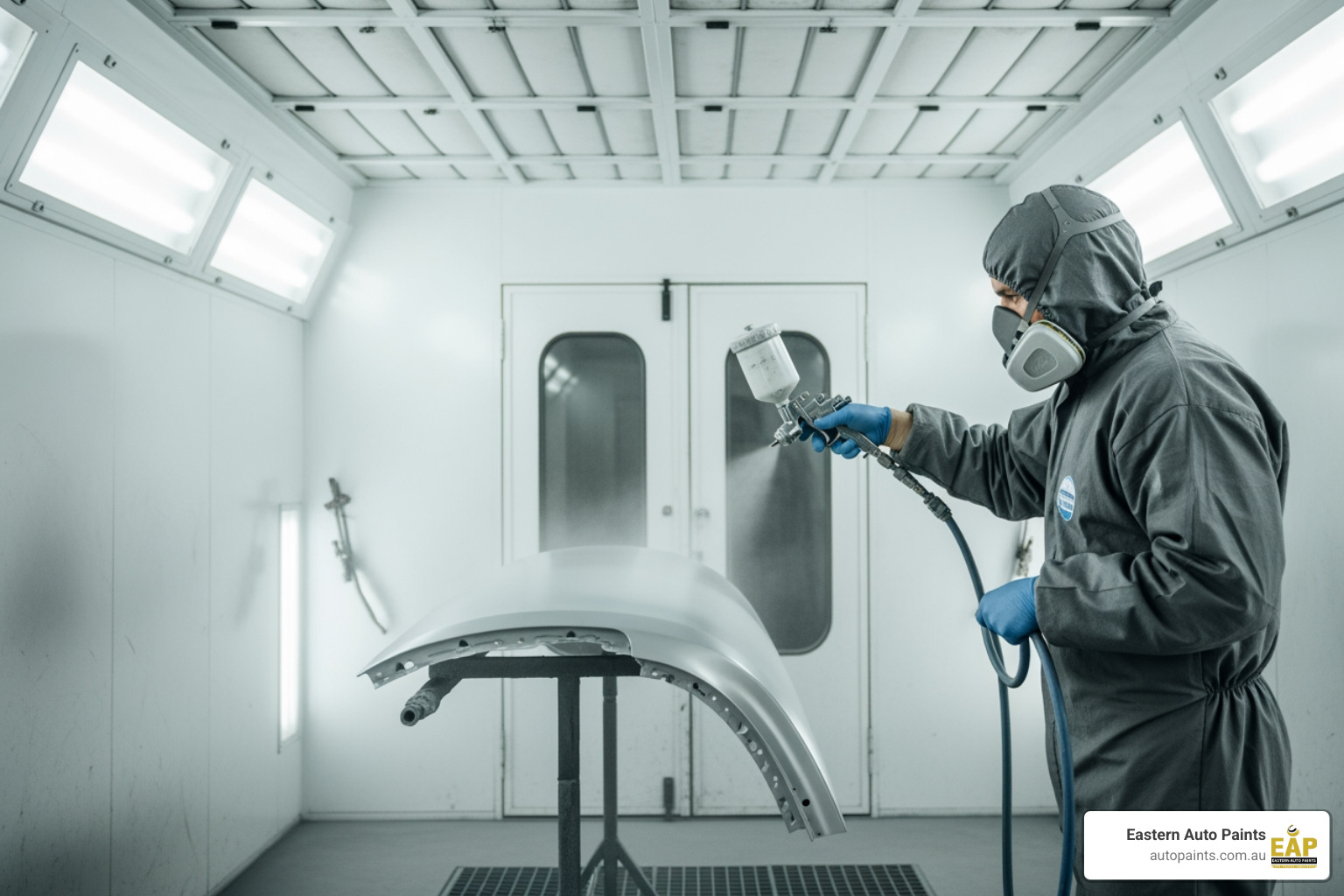
Step 1: Safety First
Always read the Safety Data Sheet (SDS) before use.
- Personal protective equipment (PPE): Wear appropriate PPE masks, gloves, and eye protection. For 2K products containing isocyanates, an atmosphere-supplying system (such as an Air Fed Mask) is commonly required for spray application.
- Ventilation: Work in a well-ventilated spray booth with good extraction.
- Equipment: Ensure your compressors and spray guns are working correctly. We stock professional options like Anest Iwata spray guns and SATA Jet X Digital Pro.
For reducing waste and solvent costs, consider solvent recycling machines. We stock UK-made UNIC Solvent Recyclers in the 20-60 L range.
Step 2: Surface Preparation is Key
- Degrease thoroughly: Clean bare metal with wax and grease remover.
- Remove rust completely: Self etching primer is designed for bare metal, not rust. Mechanically remove rust until you reach clean, bright metal.
- Sand for profile: Lightly sand with 320-400 grit paper to create a uniform key.
- Final clean: Wipe down with degreaser again and allow to dry completely.
We stock body fillers for shaping and repairs. Apply body filler directly to bare metal first, shape and sand it, then apply your etch or epoxy primer over both.
Step 3: Applying the Primer
- Mixing: Shake aerosols thoroughly. For tin-packed products, stir well, and mix 2K products with hardener at the correct ratio.
- Spray technique: Hold 20-40 cm from the surface. Apply 2-3 light, even coats, overlapping each pass by around 50%. Avoid heavy coats.
- Flash times: Allow recommended flash-off time between coats (often 5-10 minutes, check TDS).
Step 4: Drying and Recoating
- Drying times: Many self etching primers are dry to the touch in around 10 minutes. Ideal working temperature is 20-25 °C.
- Recoat window: You can often apply a compatible topcoat after about 30 minutes.
- Sanding (if required): If recoating within the recommended window, sanding is usually not required. For cosmetic finish, lightly sand with 400-600 grit.
Once the etch layer is established, continue with primer filler or EPO Epotec Primer Surfacer to build film, then move to Protec basecoat, Protec topcoat, or other finishing systems.
Decoding the Can: Key Features and Technical Data
Understanding the product label and technical data sheet (TDS) is vital when choosing a self etching primer. This information details the product's performance, application requirements, and safety considerations.
Formats, Colours, and Sizes
Self etching primers are available in different formats:
- Aerosol Cans: Convenient for small repairs and DIY projects. See our range of aerosol cans.
- Tins: For larger jobs, using a spray gun, available in sizes like 1-litre and 4-litre tins.
Common colours are grey (a neutral base), black (for dark topcoats), and occasionally green. The colour can influence the final look of your topcoat.
1K vs. 2K Formulations
- 1K (One-Component): A ready-to-use, air-dry product. Most aerosol etch primers are 1K. They are convenient but offer less durability than 2K systems.
- 2K (Two-Component): Requires a hardener to be mixed in before use. This initiates a chemical cure, creating a much tougher, more durable finish with superior resistance to chemicals and moisture. For maximum durability, explore our 2K Primers.
Finding Technical and Safety Data Sheets (TDS & SDS)
Always read the product's TDS and SDS before starting a project.
- Technical Data Sheet (TDS): Your guide to correct product use. It provides application instructions, drying times, and surface preparation details.
- Safety Data Sheet (SDS): Outlines crucial safety information, including hazards, required PPE, and first aid measures.
Our expert staff can help you find the TDS and SDS for any product we supply, ensuring a safe and successful application.
Frequently Asked Questions About Self-Etching Primer
Can I apply self-etching primer over rust?
No. Self etching primer must be applied to clean, bare metal. All rust must be removed first by sanding, grinding, or blasting back to bright metal. For heavier corrosion, use appropriate rust removal products from our rust repair & prevent section.
Can I apply body filler on top of self-etching primer?
Generally not recommended. The strongest bond for most body fillers is directly to sanded bare metal. Apply and shape body filler first, then apply self etch or epoxy primer over the filler and surrounding metal. Always check the TDS for compatibility.
Do I need to sand self etching primer before painting?
Not always. If you apply the next coat within the specified recoat window, sanding is usually not necessary for adhesion. You might choose to lightly sand (400-600 grit) to remove dust nibs or improve cosmetic appearance.
What types of automotive paints do you offer?
We offer a wide range including:
- Automotive spray paints and custom colour matching spray paints
- Touch-up kits and aerosols, including Colourbond colour spray cans
- Primers including self etching primers, 2K primers, and epoxy systems
- Clears including 2K clear for durable finishes
- Specialist products like Rangers 2K Coating, rapid drying enamel, vinyl paints, and marine coatings
How do I choose the right paint for my car?
Consider:
- Your vehicle's original colour (use factory paint code)
- Type of repair (chips, panel resprays, or full-body work)
- Desired finish and durability (basecoat/clear systems using Protec basecoat and 2K clear, or robust Rangers 2K Coating for fleet vehicles)
Our team can recommend a complete system from primer through to clear.
Can you match my car's factory colour?
Yes. We use advanced colour-matching technology to produce precise matches for your car's factory colour and many commercial colours. This service is especially useful when blending new panels into existing paint or matching to specific powdercoat colours.
Do you offer products for DIY projects?
Absolutely. We supply user-friendly options including aerosol primers and topcoats, touch-up kits matched to factory colours, and guidance on safe DIY workflows. We also support workshops with advanced systems like 2K primers, 2K clear, and professional equipment including Anest Iwata spray guns and compressors.
What makes your products and service stand out?
We focus on:
- Quality products from trusted brands: Including PPG Industrial Paints, Protec, Concept, Galmet, and Jotun
- Expert, practical advice: Our team works daily with automotive repairers and manufacturers
- Comprehensive solutions: From primers and topcoats through to support equipment
For custom guidance on your project, contact us.
The Foundation for a Flawless Finish
Self etching primer might be just one layer in a complete coating system, but it plays a critical role. By chemically etching and priming bare metal in a single step, it gives your topcoats a strong grip, provides a barrier against corrosion, and helps your repair or project last longer.
At Eastern Auto Paints, we support automotive repairers, truck and fleet operators, powder coaters, and manufacturers across Victoria, Sydney, and Queensland. We supply professional-grade self etch systems such as Protec PPG Grey/Black Etch Primer, Concept 103 Etch Primer, and PPG EPS EtchPro, along with compatible 2K primers, 2K clear, Rangers 2K Coating, and specialist marine coatings.
We also provide custom colour matching spray paints for automotive and architectural projects, aerosol cans matched to popular powdercoat colours, and guidance on when to use a paint stripper or car colour remover.
For larger projects—such as matching textured powdercoat colours, specifying epoxy floor paint (tint to any colour), or setting up spray equipment with Anest Iwata spray guns or Sata Jet X Digital Pro—our team can walk you through the process step by step.
We help you choose the right system, apply it correctly, and get a finish that lasts.
Explore our full range of primers, paints, compressors, and accessories online, or contact us for custom advice on your next job.