
What's the Deal with Acrylic Primers in Automotive Painting?
Why Choosing the Right Primer Matters for Your Car
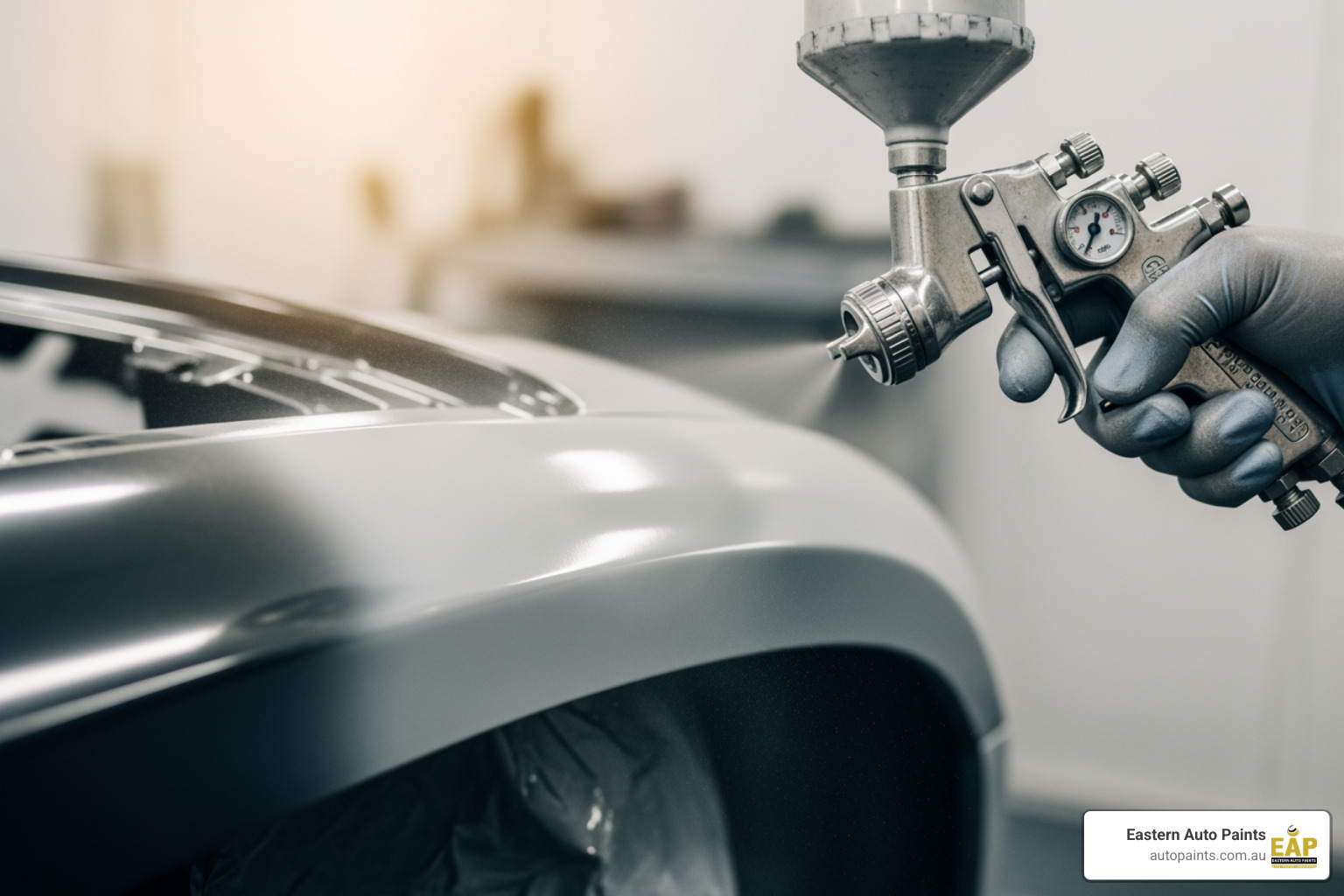
When you're faced with bare metal or a fresh repair, primer is the foundation that determines if your topcoat looks factory-fresh or fails within months. It creates adhesion, seals porous surfaces like body fillers, resists corrosion, and fills minor scratches.
Acrylic primer automotive applications have become a popular choice for balancing performance and practicality. They come in two main types: 1K (one-component) systems for spot repairs and 2K (two-component) systems that offer superior durability for larger jobs. Both dry quickly, sand easily, and provide excellent adhesion when surfaces are properly prepared.
Key Characteristics of Acrylic Primer Automotive:
- Fast Drying: Dries to sand in 20-30 minutes, speeding up the painting process.
- Easy Sanding: Powders easily without clogging sandpaper.
- Good Filling: Fills 80-180 grit scratches and minor imperfections.
- Versatile: Compatible with enamels, lacquers, and modern basecoat/clearcoat systems.
- Cost-Effective: Generally more affordable than epoxy or urethane primers.
I'm James Maranis, and with over 30 years in automotive coatings at Eastern Auto Paints, I've seen that most paint failures trace back to poor surface prep or the wrong primer choice. Understanding acrylic primer automotive applications is critical to achieving results that last.
Acrylic vs. The Rest: Key Benefits and Comparisons
Choosing the right primer is crucial, and acrylic primer automotive formulations offer a unique blend of benefits. They act as the critical link between the prepared surface and the topcoat, ensuring a smooth, uniform, and durable finish.
Acrylic Primer Benefits
A standout advantage of acrylic primer automotive is its fast drying time, often sandable within 20-30 minutes. This significantly speeds up project timelines, a major plus for busy workshops and DIYers.
Another key benefit is its ease of sanding. Acrylic primers powder easily without gumming up sandpaper, which is vital for achieving a perfectly flat surface. This also allows for excellent feather-edging, seamlessly blending repairs into existing paintwork. Good colour holdout ensures the primer doesn't absorb the topcoat unevenly, resulting in a vibrant final colour.
Comparison with Other Primers
While acrylic primers are versatile, it's helpful to see how they compare to other common types like epoxy and urethane. For a broader understanding, explore our guide on automotive paint primer types.
| Feature | Acrylic Primer | Epoxy Primer | Urethane Primer |
|---|---|---|---|
| Adhesion | Good, especially to sanded surfaces | Excellent, especially to bare metal | Very Good |
| Filling | Good, fills minor scratches | Moderate | Excellent, high-build |
| Sanding | Easy, powders well | Harder, can be gummy | Easy to Moderate, depending on type |
| Drying Time | Fast (20-30 min to sand) | Slower | Moderate to Fast |
| Rust Protection | Moderate, good barrier over prepared metal | Excellent, seals metal effectively | Good |
| Cost-Effectiveness | High (generally more affordable) | Moderate | Moderate (can be higher for 2K systems) |
Epoxy Primers: Renowned for superior adhesion to bare metal and exceptional moisture resistance, making them a fantastic rust preventative. However, they dry more slowly and are harder to sand than acrylics. For more on this, see The Guide to Epoxy Primer Paint for Cars.
Urethane Primers: Often 2K primers, these are known for high-build capabilities, excellent flexibility, and strong chemical resistance. They fill deeper imperfections and provide a very durable base, like our Protec 2K Paraglaze Multiprime.
In summary, acrylic primer automotive products excel in speed, ease of use, and cost-effectiveness. For ultimate bare metal protection, epoxy is king, while urethane offers maximum durability for demanding projects. For more help, read our article on choosing auto paint primers.
Your Step-by-Step Guide to Applying Acrylic Primer Automotive
Applying acrylic primer automotive correctly is key to a professional finish. It’s about creating the perfect canvas for your topcoat, and every stage requires attention to detail.
Proper Surface Preparation
A paint job is only as good as its preparation. Poor prep is the leading cause of paint failure, so taking time here will save you headaches later.
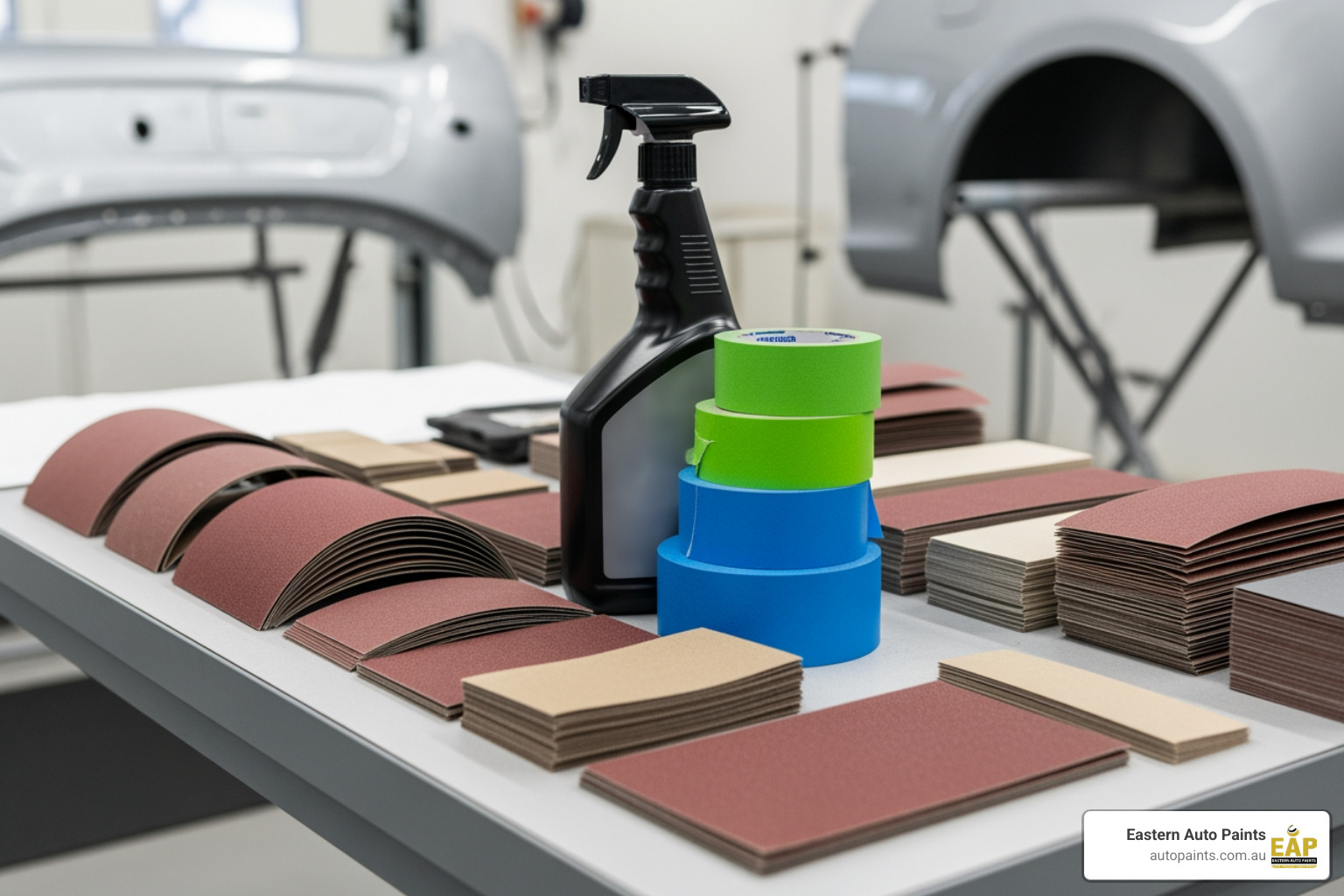
Cleaning and Degreasing: Before sanding, the surface must be perfectly clean. Use a quality wax and grease remover with two clean cloths—one to apply, one to wipe dry—to remove contaminants like wax, grease, or silicone.
Sanding: Sanding creates a mechanical grip for the primer. Use 80-180 grit for initial bodywork, followed by finer grits. For bare metal, ensure it's rust-free with a uniform scratch pattern. For existing paint, scuff it thoroughly to remove gloss. If you've used body fillers, ensure they are fully cured and sanded smooth before priming.
Application Methods and Settings for Acrylic Primer Automotive
Mixing the Primer: Always follow the product's Technical Data Sheet (TDS) for mixing ratios. 1K primers are often ready to spray, while 2K primers require a hardener to cure chemically, creating a more durable film. Our Concept HS Pro Primer Grey is a popular 2K choice.
Spray Gun Setup: An HVLP spray gun is recommended. Use a fluid tip between 1.4mm to 1.8mm and set the air pressure to the gun's recommendations, typically 1.5 to 2.5 bar (20-35 PSI). We stock a wide range of quality Anest Iwata spray guns perfect for these applications.
Application Technique: Apply 2-3 medium wet coats, allowing a 5-10 minute flash-off time between each. Maintain a consistent distance (15-20 cm) and overlap each pass by 50% for even coverage.
Environmental Conditions: Apply primer in temperatures between 20-25°C (68-77°F) with low to moderate humidity for best results.
Drying and Sanding Your Acrylic Primer Automotive
Drying Times: A key advantage of acrylic primer automotive is its fast drying, often sandable in 20-30 minutes. However, always check the TDS for specific drying and recoat times, as "dry to sand" is different from a full cure.
Sanding for a Smooth Finish: Sanding levels the primer for a flawless topcoat surface.
- Block Sanding: Use a sanding block on large, flat panels to ensure they are perfectly level.
- Guide Coat: Apply a light mist of a contrasting colour over the primer. As you sand, the guide coat reveals low spots that need more attention.
- Final Grit: Before your topcoat, sand the primer with a fine 400-600 grit for optimal adhesion.
Choosing the Right Primer and Ensuring Topcoat Compatibility

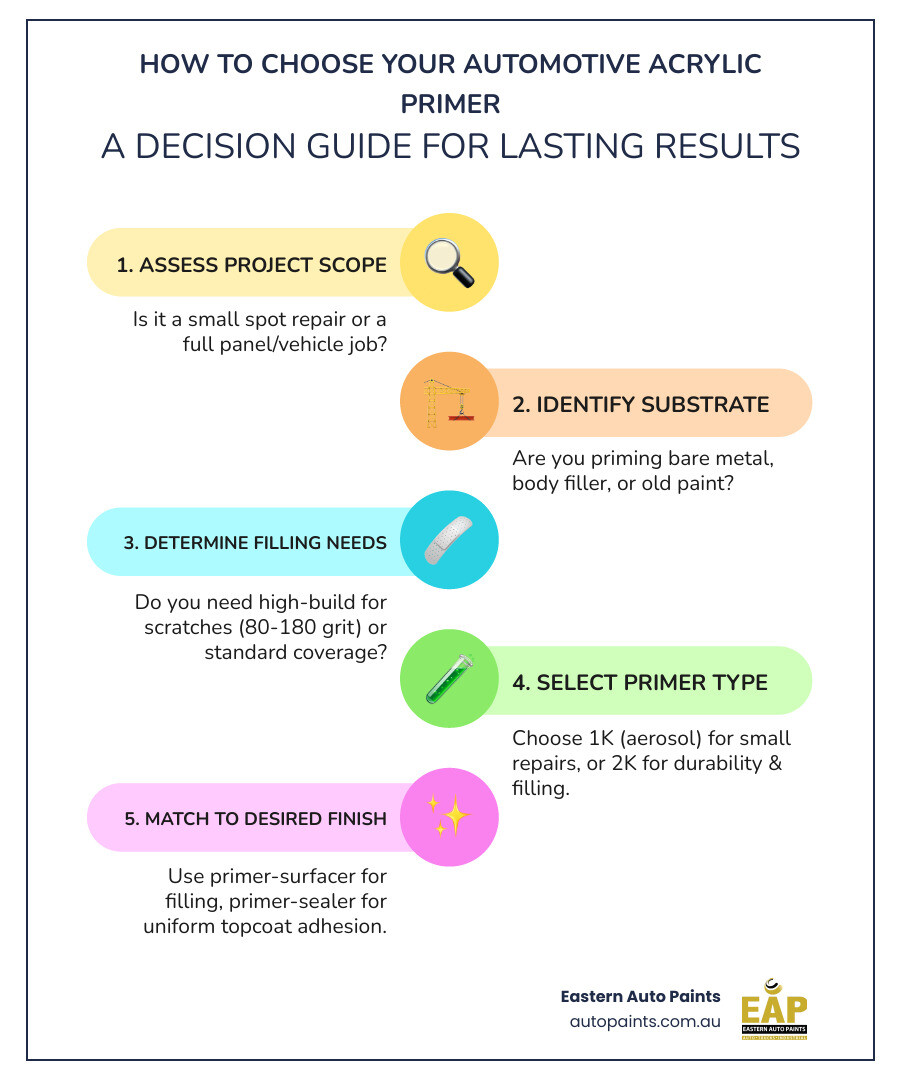
Selecting the correct acrylic primer automotive product is not a one-size-fits-all decision. Your choice depends on your project, substrate, and planned topcoat system.
Understanding Different Types of Acrylic Primers
1K (One-Component) Primers: These air-drying primers are convenient and user-friendly, making them ideal for spot repairs. Products like our Concept Acrylic Primer Surfacer and Dulon Premium Primer Filler are great for fast application and easy sanding.
2K (Two-Component) Primers: These primers use a hardener to create a much more durable, chemical-resistant, and high-build film. They are ideal for larger jobs requiring maximum durability. Our Unicolour HS Pro 2K 5L Primer Kit and Concept HS 2K High Build Primer 5L Kit are excellent high-performance examples.
Primer-Surfacers vs. Primer-Sealers: A primer-surfacer is a high-build primer designed to be sanded to fill imperfections, like our Concept Primer Filler. A primer-sealer creates a uniform, non-porous layer to prevent topcoat absorption and ensure consistent colour, improving adhesion.
Topcoat Compatibility and Using Primer as a Guide Coat
Always check the Technical Data Sheets (TDS) for your primer and topcoat to ensure compatibility. A mismatch can cause paint defects.
Modern acrylic primer automotive formulations are versatile and generally compatible with enamels, lacquers, and modern basecoat/clearcoat systems. Our Protec basecoat products, for example, perform exceptionally over properly prepared acrylic primers.
Using Primer as a Guide Coat: Yes, you can use a light mist of a contrasting acrylic primer colour as a guide coat. This is a common technique to identify high and low spots during sanding, making the process more efficient.
Here are some recommendations:
- Minor repairs: 1K aerosol acrylic primers like Concept Acrylic Primer Surfacer.
- General panel repairs: 2K acrylic urethane primer-surfacers like Concept HS Pro Primer Grey.
- High-build applications: 2K high-build primers like Concept HS 2K High Build Primer 5L Kit.
- Sealing and topcoat holdout: A 2K primer-sealer system like Protec 2K Paraglaze Multiprime.
Explore our full range of primers to find the perfect match for your project.
Essential Safety Precautions and Troubleshooting
When working with acrylic primer automotive products, safety is a non-negotiable requirement. These products contain chemicals that can be harmful if not handled correctly.
Safety When Working with Automotive Primers
Always prioritise your health and safety by using proper Personal Protective Equipment (PPE) and ensuring adequate ventilation.
Personal Protective Equipment (PPE):
- Respirators: For 2K acrylic urethane primers containing isocyanates, a standard respirator is often insufficient. We strongly recommend an Air Fed Mask or similar system. Always follow a workplace risk assessment.
- Nitrile Gloves: Protect your skin from chemical exposure.
- Safety Glasses: Protect your eyes from splashes and overspray.
- Protective Clothing: Wear overalls to protect your skin.
Ventilation: Work in a professional spray booth or a well-ventilated area with good airflow to disperse harmful fumes. Never spray in an enclosed space without forced ventilation.
Product Safety: Always read the Safety Data Sheets (SDS) for information on hazards and handling. Store primers in a cool, dry place away from ignition sources, as they are often flammable.
Avoiding Common Mistakes
Knowing how to prevent common issues will ensure a better finish.
Poor Adhesion:
- Cause: Improper surface cleaning or sanding.
- Solution: Strip the affected area and restart the preparation process.
Runs and Sags:
- Cause: Applying too much material, moving the gun too slowly, or incorrect paint viscosity.
- Fix: Sand the area down flat and reapply the primer correctly.
Solvent Pop:
- Cause: Trapping solvents by not allowing enough flash-off time between coats.
- Prevent: Strictly adhere to the recommended flash-off times on the TDS.
Orange Peel:
- Cause: Incorrect spray gun settings, viscosity, or spraying in cold conditions.
- Fix: Minor cases can be wet-sanded and polished. Severe cases require sanding and respraying.
For expert help with troubleshooting, please contact our team. Our experienced staff are always ready to provide the advice you need.
Frequently Asked Questions about Acrylic Primer
Here are some common questions we get about acrylic primer automotive applications.
How many coats of acrylic primer do I need?
The general rule is 2-3 medium wet coats. For high-build primers used to fill deeper scratches, you might apply an additional coat. Always check the product's Technical Data Sheet (TDS) for the manufacturer's specific recommendations.
Can I apply acrylic primer over old paint?
Yes, but only if the old paint is stable and properly prepared. The existing paint must be well-adhered and free of peeling or cracking. It needs to be thoroughly scuff sanded (typically with 320-400 grit) to remove all gloss and create a mechanical grip for the primer.
What's the difference between a primer-surfacer and a primer-sealer?
They serve different primary functions.
- Primer-Surfacer: This is a high-build primer designed to fill minor scratches and imperfections. It is meant to be sanded smooth to create a level foundation. Our Concept Primer Filler is a great example.
- Primer-Sealer: This creates a non-porous barrier over the repair area. It prevents the topcoat from soaking in unevenly, provides a uniform colour base, and improves adhesion. Many sealers can be top-coated without sanding.
Achieving a Professional Finish
Correctly applying acrylic primer automotive products is a cornerstone of any successful paint project. The benefits of acrylic primers—speed, ease of use, and excellent sanding—make them an invaluable tool for both professionals and enthusiasts.
We've covered how to choose between 1K and 2K systems, the importance of meticulous surface preparation, and the roles of primer-surfacers and sealers. Always remember that preparation is everything, choosing the right product is crucial, and safety should be your top priority.
At Eastern Auto Paints, we have supplied high-quality automotive paints for over 34 years. Our expertise, combined with advanced colour matching spray paints technology and trusted brands, ensures you get the best products and advice for superior results.
Ready to lay down the perfect foundation? Browse our extensive range of automotive acrylic primers today. If you need personalised recommendations, don't hesitate to get in touch with our experts.