
From Prep to Polish: The Secrets of Perfect Auto Paint Application
Why Auto Paint Application Is More Than Just Spraying Colour
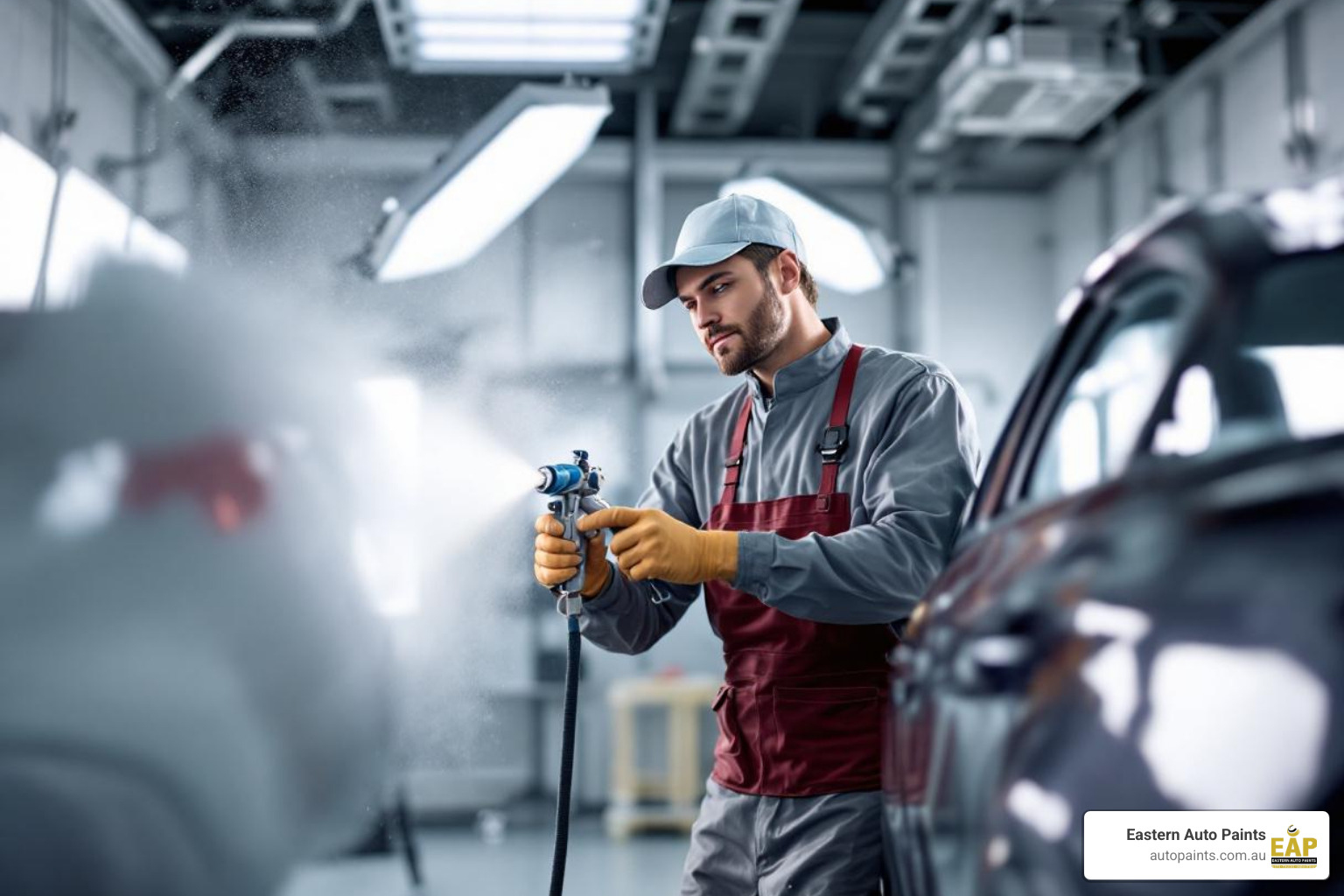
Auto paint application is a systematic process that applies protective and decorative coatings to a vehicle. Far more than just spraying colour, it involves a series of critical stages that build upon one another to create a durable, showroom-quality finish.
The process begins with meticulous surface preparation, followed by priming to ensure adhesion and prevent corrosion. Next, the base coat provides the colour, and a clear coat adds gloss and vital UV protection. Finally, polishing and buffing remove any minor imperfections for a flawless shine.
The global automotive paint market is growing, highlighting the demand for high-quality refinish coatings for repairs and restorations. This trend includes a shift towards more sustainable options like waterborne coatings, which deliver professional results while meeting environmental regulations.
Achieving a professional finish requires the right tools, proven techniques, and an understanding of how different materials interact. Shortcuts at any stage can compromise the entire result, as each step provides the foundation for the next. Factors like spray gun operation, paint viscosity, and environmental conditions all play a crucial role.
At Eastern Auto Paints, our team has over 100 years of combined experience guiding professionals and enthusiasts through this process. For personalised advice, feel free to contact our team to ensure your project achieves a lasting, impressive finish.
The Professional Process: A Step-by-Step Guide to Auto Paint Application
Achieving a professional-quality finish on any vehicle, whether it's a full restoration or a small repair, demands a systematic approach. We'll walk you through each critical stage, from gathering your equipment to the final polish, sharing the secrets that ensure a lasting and beautiful result.
Gathering Your Arsenal: Essential Tools and Materials
Before applying any paint, it's crucial to assemble the right equipment. Having everything ready ensures a smooth and efficient process, and the quality of your tools directly impacts the final finish.
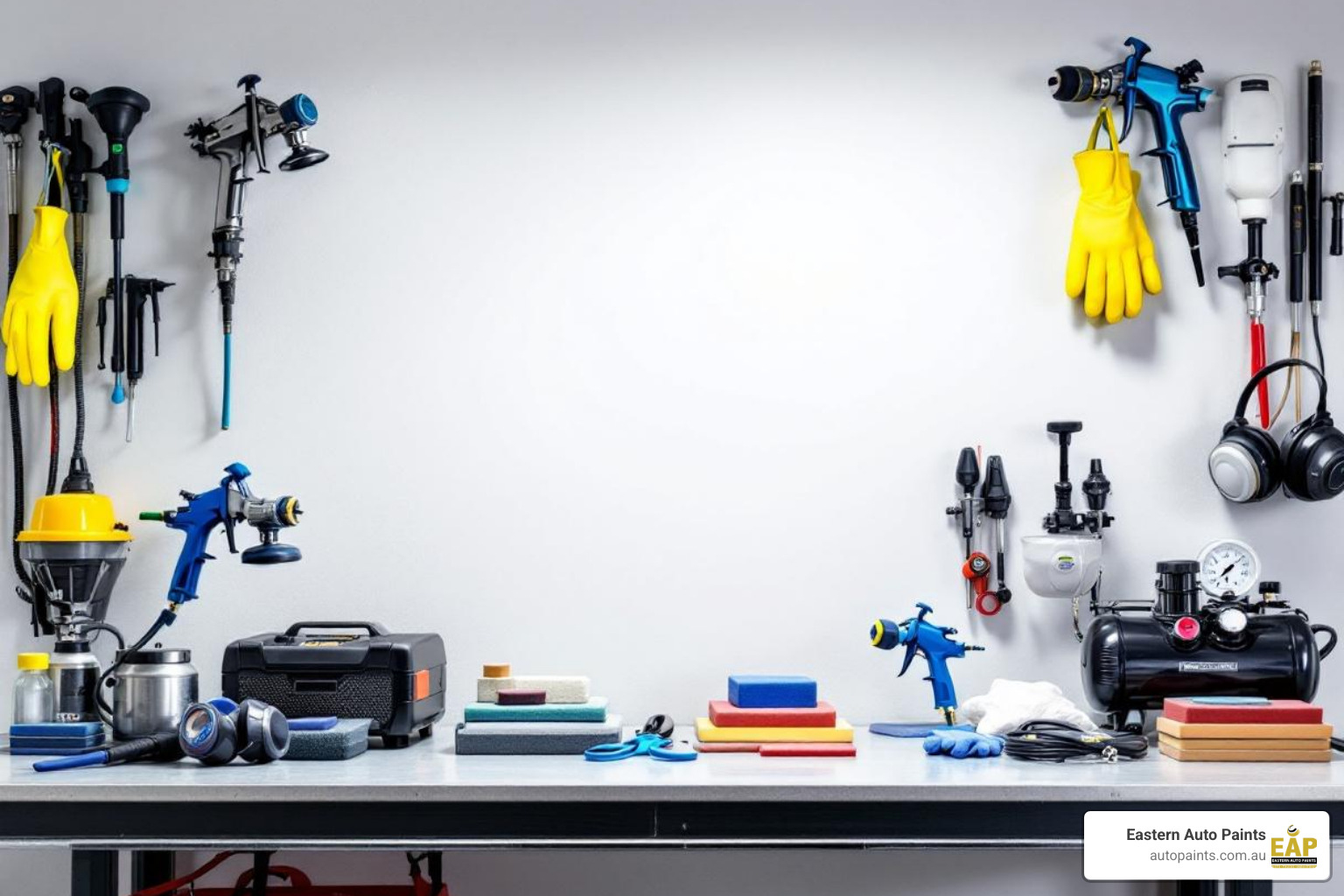
The core of your toolkit will be a quality spray gun, powered by a reliable air compressor to ensure consistent pressure. For larger jobs, pressure pot kits allow for continuous application. Surface preparation requires a range of sandpaper grits, from 80 for rough work to 2000 for finishing, along with quality body fillers like U-POL Fantastic Body Filler to repair any dents.
For the coating process itself, you will need the right primers, such as 2K primers or epoxy primers, a Protec basecoat for colour, and durable 2K clear coats for protection. Finally, safety is non-negotiable. Always use essential personal protective equipment, including PPE masks. For the best protection against isocyanates in 2K paints, an Air Fed Mask is strongly recommended.
The Foundation of a Flawless Finish: Surface Preparation
Think of surface preparation as creating the canvas for your masterpiece. This is the most critical stage for preventing paint failure, as even the best paint won't adhere properly to a poorly prepared surface.
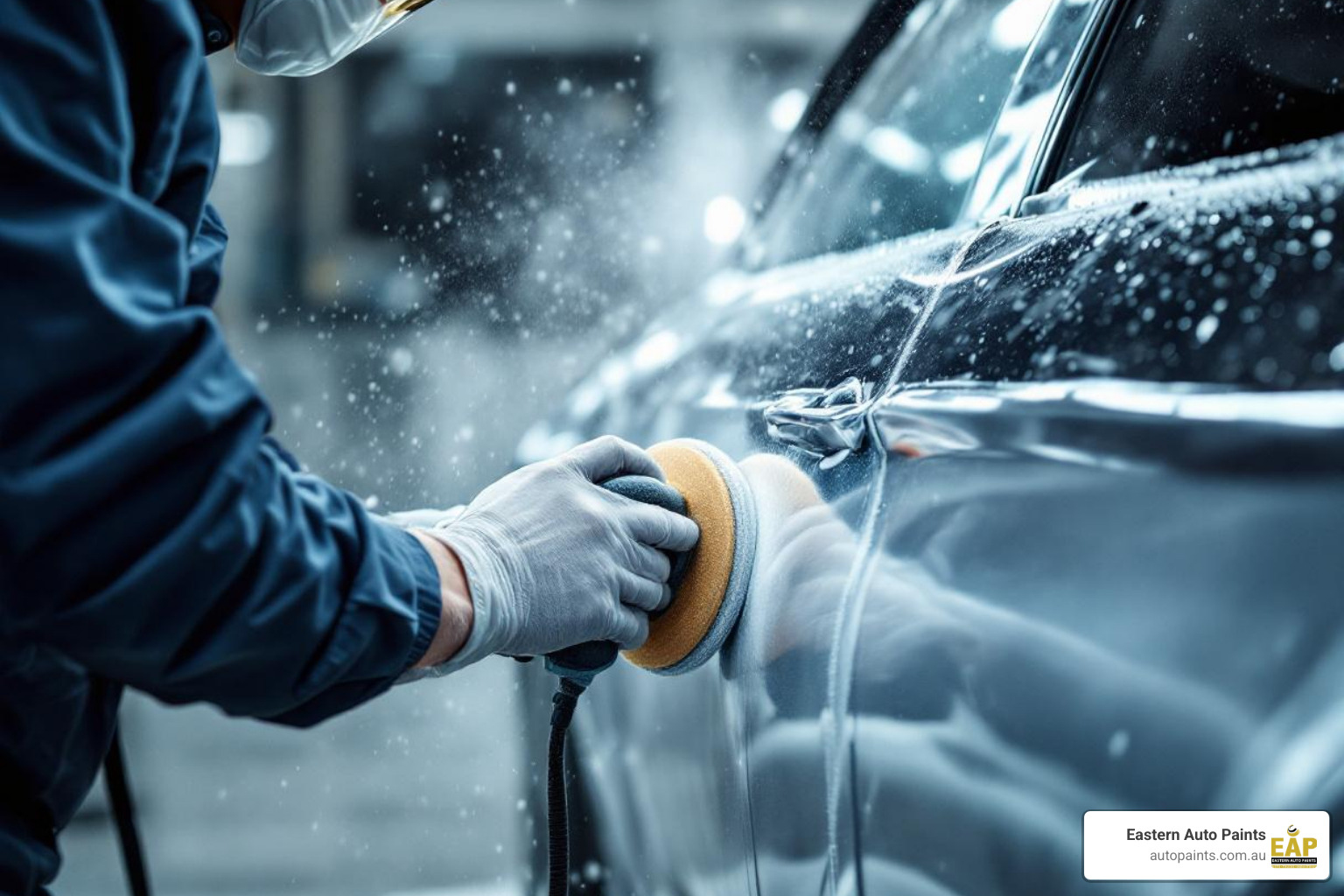
The process starts with thoroughly cleaning the vehicle with a degreaser to remove all wax, grease, and contaminants. If the old paint is failing, paint stripping may be required. Any rust must be completely removed before applying a protective coating like Galmet Rust Paint or a Concept Rust Converter Primer Sealer to prevent its return. Dents are then repaired with body filler, which is sanded smooth with progressively finer grits.
Sanding creates the "tooth" that helps the new paint grip the surface. You'll use different sanding discs for each stage, ensuring the surface is perfectly uniform. Before any paint is applied, the panel must be degreased one last time and wiped with a tack cloth to remove any lingering dust. Finally, use high-quality masking products like tape and paper to mask off all areas that will not be painted, such as glass, trim, and adjacent panels.
The Critical Role of Primer in Auto Paint Application
Primer is not just another layer of paint; it is the essential foundation that connects the vehicle's surface to the colour coat. It serves several key functions: promoting adhesion, providing corrosion protection, and filling minor imperfections to create a smooth base. Using the right primer is critical for a durable, long-lasting finish.
There are several types of automotive primers, each designed for specific needs. Epoxy primers, like our EPO Epotec Primer Surfacer, are excellent for bare metal as they offer superior adhesion and form a non-porous barrier against moisture. Etch primers, such as Protec PPG Grey/Black Etch Primer, contain a mild acid that chemically bites into metal for exceptional grip. For maximum durability and filling capabilities, 2K primers are a popular choice for professional-grade repairs.
Primer should be applied in two to three thin, even coats. After it has dried completely, it must be sanded smooth to create a perfectly level surface for the basecoat.
Mastering Colour: Base Coat vs. Clear Coat Application
This is where your vehicle's appearance truly comes to life. The process involves two distinct but complementary layers: the base coat and the clear coat.
The base coat is what provides the colour. It is applied in several thin, even coats to achieve full coverage, with a short "flash time" of 5-10 minutes between each coat for solvents to evaporate. Base coats dry to a matte or satin finish, which is completely normal. The gloss comes from the next step.
The clear coat is the protective top layer. It delivers that deep, reflective gloss while containing UV inhibitors to prevent the colour from fading. It also creates a durable shield against scratches and chemicals. Clear coat is applied in wetter, more substantial layers than the base coat. Achieving a smooth, run-free finish is a key skill, and you can learn more in our guide on how to apply automotive clear coat.
The type of spray gun you use is critical. HVLP (High Volume Low Pressure) spray guns are the modern standard for their high transfer efficiency, which means less overspray and wasted paint. We offer a range of professional HVLP spray guns, including high-performance models like the Satajet 100B Black Edition. While other types like conventional and airless guns exist, HVLP offers the control and finish quality needed for most automotive work.
Best Practices for a Flawless Auto Paint Application and Finish
Achieving a perfect finish requires controlling your environment and knowing how to troubleshoot common problems. The ideal temperature for spraying is typically between 20–25°C (68–77°F), with humidity below 50%. A clean, well-ventilated spray booth is essential to prevent dust contamination and ensure proper drying.
Even with careful preparation, issues can arise:
- Orange peel, a bumpy texture, is often caused by incorrect gun settings or paint drying too quickly.
- Runs and sags occur when paint is applied too heavily.
- Fisheyes, small craters in the paint, are almost always caused by surface contamination from silicone or oil.
Most of these issues can be fixed by sanding the affected area and respraying, but prevention through proper technique is always best.
After the clear coat has fully cured, polishing and buffing are the final steps to achieve a mirror-like shine. This removes any minor surface imperfections and creates a deep, consistent gloss. Remember to clean your equipment thoroughly after use to prevent dried paint from ruining your tools. For professional shops, solvent recycling machines can significantly reduce waste and costs.
Finally, safety is paramount. Automotive paints, especially 2K systems, contain hazardous chemicals. Always work in a well-ventilated area and wear appropriate PPE. For spray applications, a standard respirator is often not enough; an atmosphere-supplying system like an Air Fed Mask is required to protect against isocyanates.
The Art of the Perfect Colour Match and Small Repairs
For small chips and scratches, a seamless repair depends on a perfect colour match. This is more complex than simply using a vehicle's paint code, as factors like sun exposure and age can alter the original colour.
At Eastern Auto Paints, we take colour matching seriously. We use advanced spectrophotometers to analyse your paint and create a precise formula. For particularly challenging colours, we have two full-time professionals who can perform matching by eye, ensuring an exact match where automated systems fall short. This expertise is vital for a truly invisible repair.
For DIY repairs, the method depends on the size of the repair. Small chips can be addressed with a brush, while larger areas may benefit from touch-up spray cans. We can create custom aerosol solutions to match nearly any colour, including shades from the Colourbond range. The key to any touch-up is careful blending to feather the new paint into the existing finish.
Your Partner for a Showroom Finish
As we've seen, a successful auto paint application comes down to three key elements: meticulous preparation, proper technique, and the use of high-quality products. From the initial sanding to the final polish, every step matters in creating a durable and stunning finish.
At Eastern Auto Paints, we are more than just a supplier; we are your partner in achieving professional results. Our Melbourne-based team leverages over 34 years of experience to provide expert advice, advanced colour-matching services, and a complete range of automotive and industrial paints. We are proud to serve professionals and enthusiasts across Victoria, Sydney, and Queensland.
Whether you need automotive paint supplies for a restoration or durable industrial paint supplies for a commercial project, we have the products and expertise to help. Explore our full range of products online or contact our team for personalised advice on your next project.