
Beyond the Brush: Everything You Need to Know About Automotive Touch Up Paint
Why Bother with Minor Scratches?
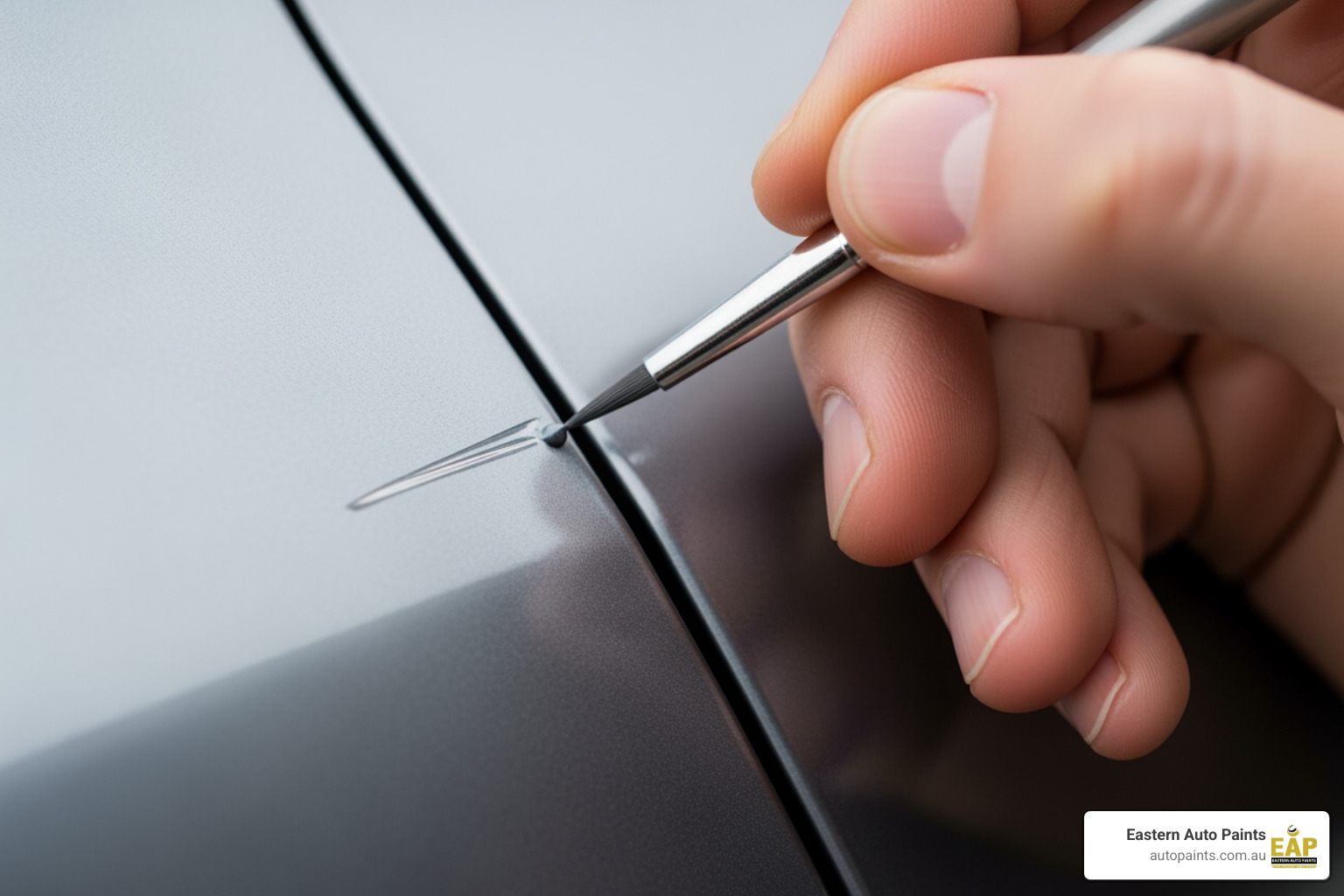
Automotive touch up is the process of repairing minor paint damage, like chips and scratches. While a small scratch might seem harmless, it breaks through your car's protective paint layers—the clearcoat, basecoat, and primer—exposing the bare metal to moisture. This is a direct gateway for rust, which can quickly turn a tiny chip into a large, expensive problem.
Addressing these imperfections promptly is crucial for several reasons. It prevents rust, maintains your vehicle's appearance, and protects its resale value. A well-maintained car will always command a higher price than one with untreated scratches. The good news is that you can perform most minor repairs yourself with the right products, like paint pens or aerosol cans, saving thousands on a professional respray.
At Eastern Auto Paints, we have over 34 years of experience helping customers achieve professional results. We provide the right products and guidance for every type of paint repair, ensuring you can tackle the job with confidence.
Automotive touch up terms to know:
Choosing Your Weapon: Types of Automotive Touch-Up Products
The right automotive touch up product depends on the size and type of damage. Assessing whether you have a small chip, a long scratch, or a larger scuff will help you choose the best tool for a seamless repair. For a detailed look at spray cans, see our Comprehensive Guide to Touch Up Paint Spray Cans.
Paint Pens vs. Brush-Cap Bottles: Precision for Small Blemishes
For minor imperfections, precision is key.
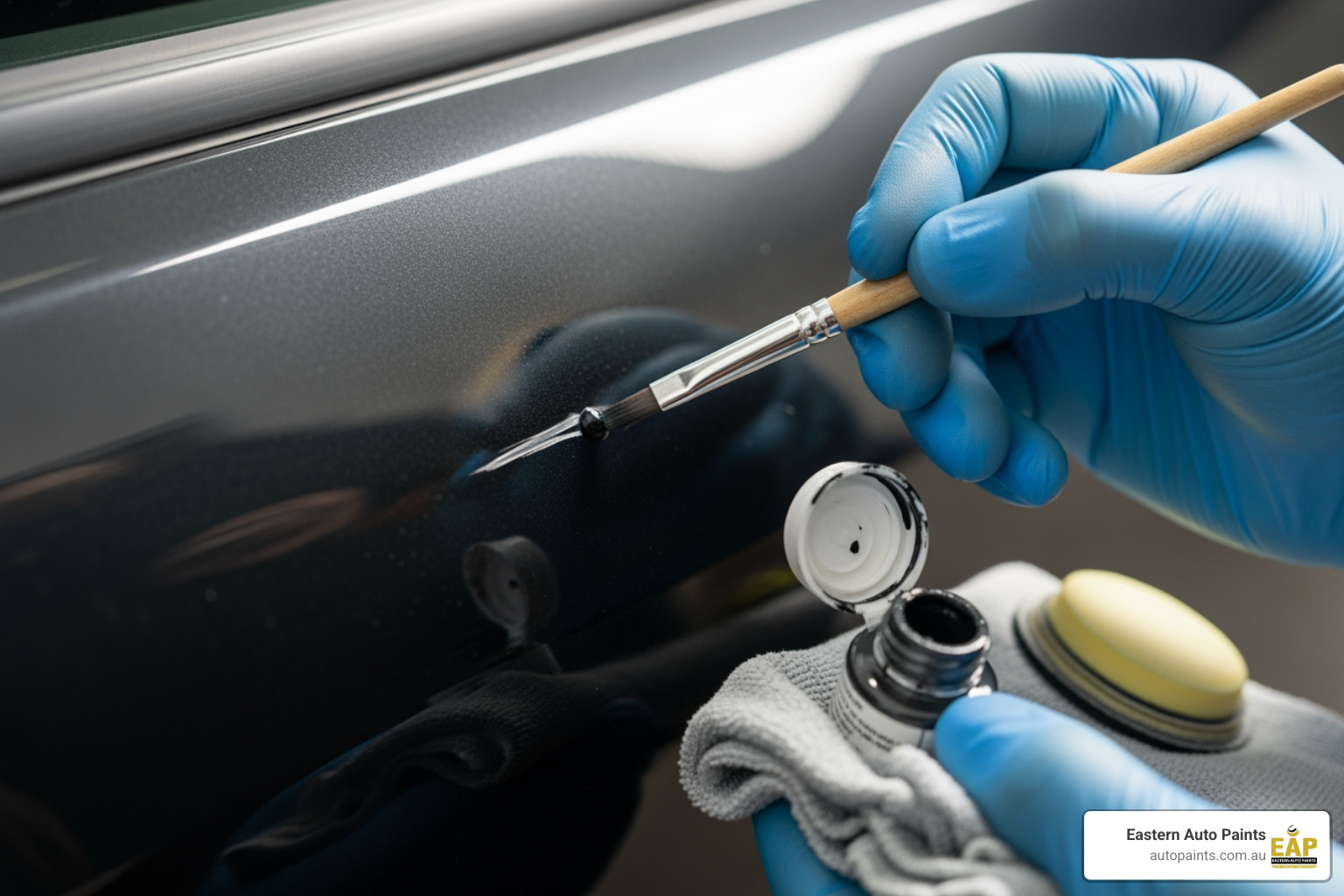
- Paint pens are perfect for fine scratches and rock chips. Their fine tips allow for pinpoint accuracy, filling blemishes without getting paint on the surrounding area. Some versatile tools even combine a fine tip for chips with a small brush for larger scratches.
- Brush-cap bottles include a small, integrated brush, ideal for filling chips up to the size of a 20-cent coin. They allow you to carefully build up colour in thin layers, which is essential for deeper chips to avoid an uneven finish.
Aerosol Spray Cans: For Larger Scuffs and Areas
For larger scuffs, key scratches, or repainting accessories, aerosol spray cans provide wider coverage and a more uniform finish. High-quality automotive paint aerosols are fast-drying and designed to match the original factory coating. Achieving an even blend requires practice, so we recommend testing your technique on a scrap piece first. For specific colour needs, our Custom Aerosol Solutions provide a perfectly matched spray paint.
Universal vs. Exact-Match Paint: A Critical Choice
Universal paints offer a convenient match for common colours like "gloss white" and can work for minor, inconspicuous repairs. However, they rarely provide a perfect match, especially for metallic or pearlescent finishes.
For the best results, we always recommend exact-match paint. These are OEM-approved colours formulated to match your vehicle's factory finish perfectly. This is crucial for visible areas where any colour difference would be noticeable. Explore our range of precisely matched Factory Aerosol Cans.
The Perfect Match: How to Find Your Vehicle's Exact Paint Colour
A seamless automotive touch up repair depends on a perfect colour match. Even a slight shade difference can stand out, especially since original paint fades over time. Find more tips in our guide on Professional Tips for a Perfect Car Colour Match on Vehicles.
Decoding Your Car: Finding the Paint Code
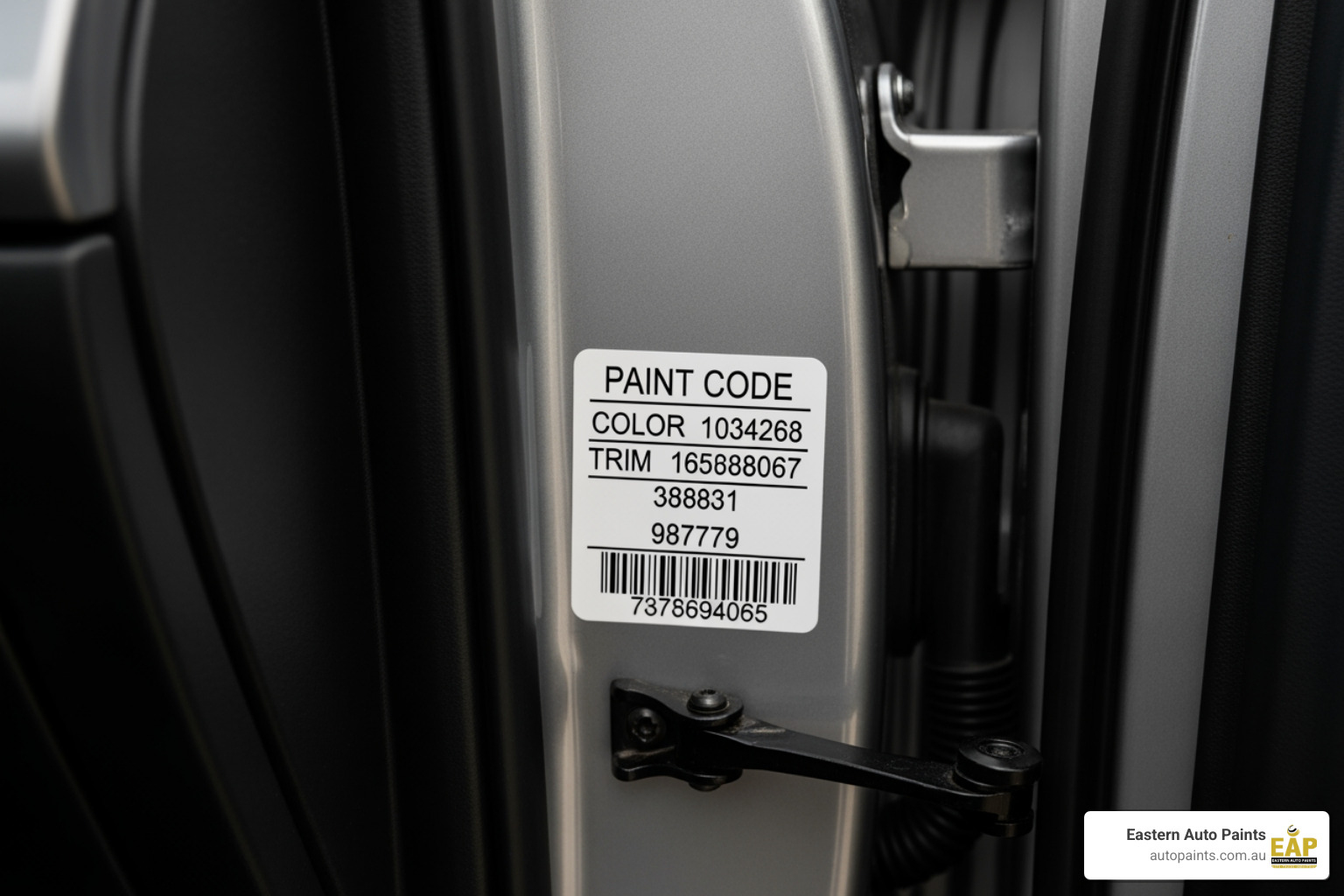
Your vehicle's unique paint code is the key to a perfect match. It's usually on a sticker or plate in one of these locations:
- Driver's side door jamb (most common)
- Under the bonnet in the engine bay
- Inside the glove box
- In the owner's manual
Why Professional Colour Matching is Worth It
Even with the paint code, factors like sun fade and manufacturing variations mean a standard colour might not be a perfect match. This is where advanced technology like spectrophotometers is invaluable. These devices analyse your car's actual paint surface to create a custom formula that accounts for these changes.
At Eastern Auto Paints, we use advanced colour-matching technology to ensure a professional finish. Learn more about Mixing Matching Car Paint Colours or contact our team for a guaranteed perfect match.
The Importance of Quality for Your Automotive Touch Up
Using high-quality, OEM-approved paint ensures your repair is durable, long-lasting, and won't react with the original paint layers. It provides a superior finish that blends seamlessly, maintaining your car's aesthetic and value. Learn more with our guide on How to Understand Paint Colour Matching in 3 Easy Steps.
The Art of the Repair: A Step-by-Step Guide to Automotive Touch Up
A successful automotive touch up relies on careful preparation and precise application. Most paint adhesion issues stem from a poorly prepared surface, so don't rush this stage. Work in a clean, dust-free area and wear appropriate safety gear like PPE masks, especially when using aerosols. For more on prep, see our Guide to Body Filler Sanding.
Step 1: Preparation is Everything
- Clean and Assess: Thoroughly clean the damaged area with a wax and grease remover. Run your fingernail over the scratch; if it catches, it's deep enough to require primer.
- Remove Debris: Gently scrape away any loose paint. If rust is present, it must be completely removed using fine-grit sandpaper (220-grit or higher).
- Feather and Clean Again: Lightly sand the edges of the scratch to create a smooth transition. Clean the area one last time to remove all dust and let it dry completely.
Step 2: Priming for Adhesion and Protection
Primer is essential if the scratch has exposed bare metal or plastic, as it ensures adhesion and prevents corrosion.
- Apply Primer: Apply a thin coat of a suitable primer, such as an Epoxy Primer or one of our 2K primers. Use thin, even coats to avoid drips.
- Dry and Smooth: Allow the primer to dry for 10-20 minutes. If the surface feels rough, you can lightly wet sand it with 600-grit sandpaper for a smooth base, then clean again. Our Primer Aerosol range offers easy-to-use options.
Step 3: Applying the Colour (Basecoat)
- Shake and Test: Shake your paint product for at least a minute. Always test the colour on a test card or an inconspicuous area first.
- Apply Thin Layers: Apply the basecoat in very thin layers. Whether using a pen, brush, or aerosol, multiple thin coats are better than one thick one. Allow each coat to dry for a few minutes before applying the next.
- Build and Blend: Continue applying coats until the damage is covered. If using an aerosol, feather the edges by slightly extending each pass. Find your colour in our Basecoat Mixed Colours collection.
Step 4: Sealing the Deal with Clearcoat
The clearcoat is the final layer that provides UV protection, durability, and a glossy finish.
- Apply Clearcoat: Once the basecoat is dry (usually after 30 minutes), apply a thin, even layer of clearcoat over the repair. Our Clear Aerosol products are perfect for this.
- Cure and Finish: Allow the paint to cure for a few days, avoiding washing or harsh weather. For best results, work in temperatures between 20-25°C. After it's fully cured, you can polish the area to further blend the repair. Learn more in The Ultimate Guide to Automotive Clearcoats.
Protecting Your Paint: Prevention and Quick Fixes
While automotive touch up is effective, prevention is always better. Acting quickly on new chips and scratches can save you time and money down the line. Our Beginners Guide to Rust Repair and Prevention is a great resource for this.
Quick Fixes to Prevent Rust
An untreated scratch exposes metal to moisture, leading to rust. If you can't perform a full repair immediately, use a clearcoat pen to seal the scratch. This temporary fix creates a protective barrier against the elements. While it stops rust from forming, a permanent repair will require colour-matched paint and clearcoat. For dedicated solutions, explore our Rust Repair & Prevent products.
Long-Term Paint Protection
A holistic approach is best for long-term care. Regular washing and waxing provide a protective layer against minor abrasions. For more advanced protection, consider ceramic coatings or Paint Protection Film (PPF), which offer superior defence against chips and scratches. In professional applications, using the correct Hardeners, Reducers, Additives and Solvents also improves paint durability.
Frequently Asked Questions about Automotive Touch Up
Here are answers to common questions we receive from customers performing an automotive touch up.
How deep of a scratch can I fix with automotive touch up paint?
Use the "fingernail test": if your nail catches, the scratch is deep.
- Clearcoat only: A polishing compound may be enough.
- Down to basecoat: You will need basecoat colour and clearcoat.
- Down to primer/metal: You will need primer, basecoat, and clearcoat.
For deep gouges or dents, you may need Body Fillers or professional help.
How long does touch-up paint take to dry and cure?
There's a difference between drying and curing.
- Touch-dry: The paint is dry enough for the next coat, often within 10 minutes.
- Full cure: The paint has fully hardened, which can take 2-3 days or more.
Ideal conditions are 20-25°C with low humidity. Professionals may use Heat Lamps & Panel Stands to speed up curing. Always follow the product's instructions.
Can I use touch-up paint on plastic bumpers?
Yes, but plastic requires special preparation for the paint to adhere and flex properly. For bare plastic, you will need an adhesion promoter before applying a flexible primer. Some paints are also specially formulated with flex agents for use on plastic parts. At Eastern Auto Paints, we can guide you to the right products for a durable repair on flexible surfaces. The same principle of using flexible coatings applies to products like Ute Liners & Underbody Sealers.
Restore Your Ride with Confidence
Automotive touch up is a vital and cost-effective way to maintain your vehicle. By promptly repairing minor chips and scratches, you prevent rust, preserve your car's appearance, and protect its resale value.
A successful repair comes down to choosing the right product, matching the colour accurately, and preparing the surface correctly. With over 34 years of experience, Eastern Auto Paints is trusted by professionals for high-quality products and expert advice. Our advanced colour-matching technology ensures a finish that's as close to the factory original as possible.
Ready to restore your ride? Browse our full range of automotive paints or get in touch with our team for expert advice on your project.