
An Essential Guide to HVLP Compressor Specs
Choosing the Best Compressor for HVLP Finishing
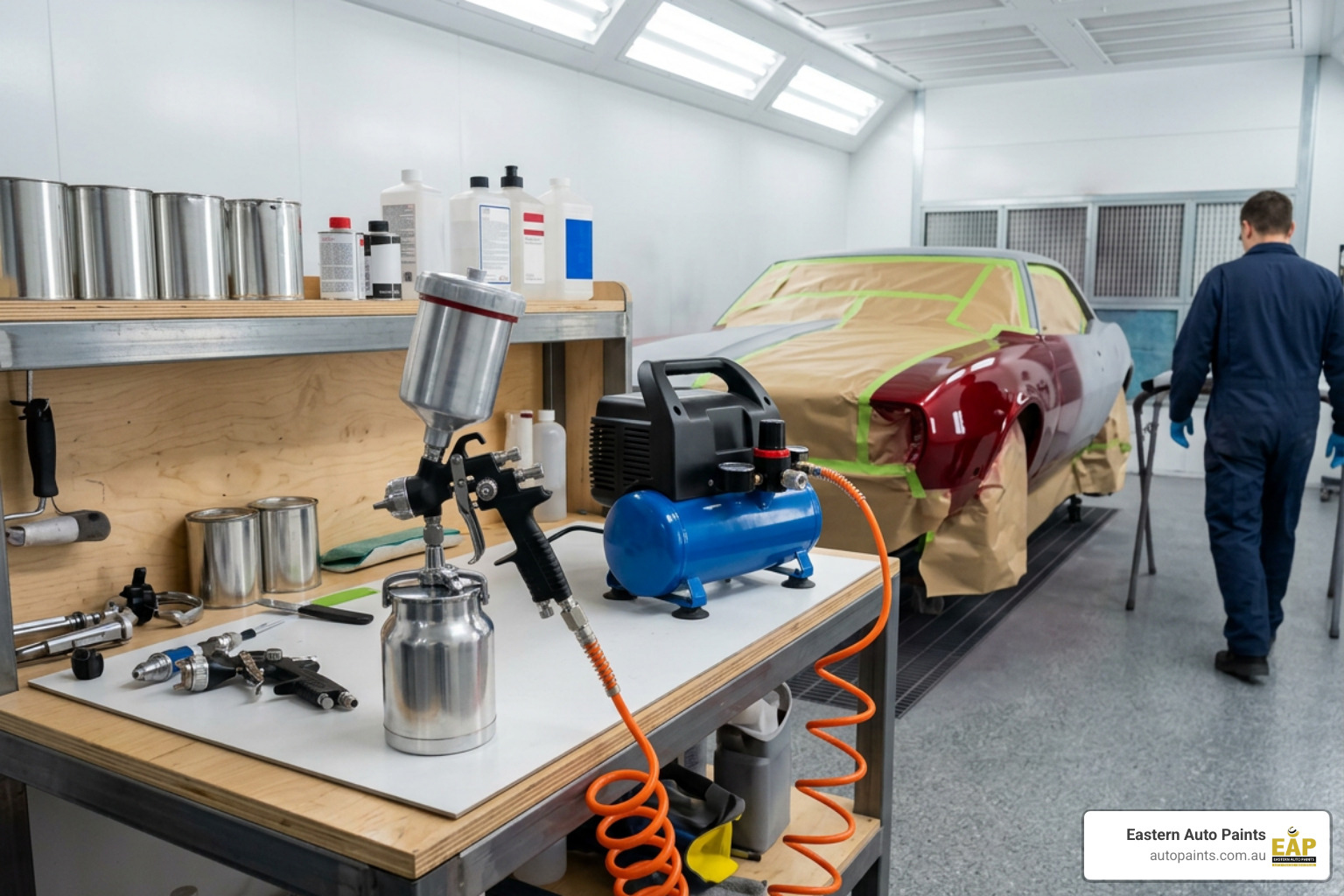
Eastern Auto Paints (EAP) knows the best compressor for HVLP is not simply the unit with the largest tank or highest pressure rating. It is the compressor that can continuously supply your specific spray gun with clean, dry, stable air at its required working pressure, while supporting the type of automotive refinishing work you perform.
Key Takeaways
- Match compressor delivered air volume to the spray gun's published air-consumption specification.
- Check performance at the gun's working pressure, not only the compressor's maximum pressure.
- Consider tank capacity, duty cycle, air-line restrictions, and moisture control as one complete system.
- Choose equipment around the demands of basecoat, clearcoat, primer, and the size of the panels being refinished.
- Read our Compressor Complete Guide for a broader overview of workshop air supply planning.
For trade applicators and serious vehicle restorers, we help turn compressor specifications into a practical setup that suits the gun, coating system, available power supply, and expected workload. A correctly matched compressed-air system supports consistent atomisation from the first pass through to the final clearcoat application.
At EAP, our focus is on supplying expert-led coating and workshop solutions for automotive, industrial, and professional refinishing. This guide explains the compressor factors that matter most, so you can make a more informed choice before investing in HVLP equipment.
Why This Issue Should Not Be Ignored
In automotive refinishing, under-specifying your air compressor creates systemic finishing failures that jeopardise shop profitability and work quality. Air starvation occurs when a High Volume Low Pressure (HVLP) gun demands more continuous volume than the compressor pump can generate, leading directly to atomisation drop mid-pass. This causes dynamic pressure fluctuation, uneven droplet sizing, metallic orientation collapse, heavy orange peel finishes, and severe paint finish defects that require labour-intensive wet sanding and re-spraying.
Furthermore, running an undersized air compressor forces the pump into a non-stop duty cycle overheating state, rapidly escalating moisture contamination through thermal condensation in the air line. Proper air compressor sizing ensures optimal workshop efficiency, satisfying continuous supply requirements and mitigating long-term spray quality risks across all clearcoat, basecoat, and primer applications. Explore our guide on auto body paint guns for additional gun-matching details.
Calculating Litres per Minute (L/min) and Kilopascals (kPa) Requirements for the Best Compressor for HVLP Setup
Accurate air volume calculation forms the foundation of selecting the best compressor for HVLP setups. HVLP spray guns typically require substantial continuous air volume measured in litres per minute (L/min) (cubic feet per minute [CFM]) at low operating cap pressures measured in kilopascals (kPa) (pounds per square inch [PSI]). To maintain precise atomisation, the air delivery system must account for compressor pump displacement versus actual free air delivery, applying an adequate air volume margin for continuous duty cycle demands.
Pressure drop compensation must factor in air line friction losses, quick-connect fitting restrictions, regulator tuning tolerances, and air treatment filter pressure drops. Consistent air delivery ensures steady atomisation throughout extended spray passes on complete vehicle resprays, preventing fan pattern collapse or pressure degradation mid-panel.
The Role of Tank Capacity, Duty Cycle, and Thermal Management
Air receiver tank volume serves as a vital dynamic buffer that cushions peak air demand during continuous spraying. A high-capacity air receiver allows the compressor pump to cycle cleanly within its recommended continuous duty cycle rating, mitigating excessive heat accumulation during long automotive clearcoat applications. Refer to our advice on choosing a compressor for home garage setups to match your space.
Effective thermal management prevents thermal overload, extends internal pump lifespan, and dramatically reduces moisture buildup within the receiver. Proper condensation management with automated drain valves and multi-stage cooling lines prevents water droplets from reaching the spray hose, ensuring sustained operation and protecting sensitive solvent-borne or waterborne paint formulations.
Common Symptoms, Challenges, or Questions
When an air supply system falls short during refinishing, operators experience distinct symptoms:
- Pressure drop during full spray passes resulting in fan pattern narrowing.
- Heavy orange peel on clearcoat panels due to incomplete material atomisation.
- Excessive pump cycling and thermal switch tripping during continuous spraying.
- Motor overheating caused by running small units beyond their rated duty cycle.
- Bottlenecking caused by undersized air lines or restrictive quick-couplers.
- Moisture traps and desiccant dryer saturation points reached prematurely due to excessive line heat.
Comparing Turbine vs Compressed Air: Finding the Best Compressor for HVLP Finishing
Evaluating HVLP turbine systems against traditional compressed air setups involves understanding their operational mechanics. Multi-stage turbine blowers deliver continuous warm air through specialised hoses, offering field portability for specific touch-up tasks.
However, traditional air compressors integrated with high-efficiency air drying filtration systems offer comprehensive shop air integration, precise paint atomisation control, cooler air delivery, and system versatility for running dual guns, pneumatic sanding tools, blow-off nozzles, and professional spray booth equipment concurrently. Explore our complete air compressors range to view industrial supply options.
Nozzle Selection, Spray Gun Efficiency, and Air Demand Interactions
The interaction between fluid tip diameter, atomisation pressure, and fluid viscosity dictates total air volume consumption. Modern high-efficiency and HVLP spray guns require balanced air cap pressure to achieve consistent fan width and even material atomisation without excessive overspray.
Heavier primers and high-build surfacers demand larger nozzle sizes and corresponding air adjustments, whereas clearcoats and basecoats demand fine control over material delivery rates and pattern overlap. Correctly pairing fluid tip sizes with adequate compressor output ensures predictable spray pattern consistency and prevents mottling on metallic basecoats. Browse our spray guns and accessories to find matched equipment.
| Compressor Spec / Feature | Small Portable Air Compressor | Professional Stationary Compressor |
|---|---|---|
| Typical Tank Capacity | Compact air receiver capacity | High-capacity air receiver storage |
| Air Flow Output | Moderate continuous output for spot repairs | High continuous free air delivery for full resprays |
| Duty Cycle Rating | Intermittent duty operation | Continuous duty operation |
| Thermal Management | Standard heat dissipation profile | Dedicated thermal dissipation and cooling design |
| Air Drying Integration | Inline moisture trap capability | Integrated refrigerated dryers and multi-stage filters |
| Operational Profile & Lifespan | Compact footprint for flexible site movement | Stationed output for long service life applications |
What a Personalised Experience Looks Like
Achieving flawless finish results requires a shop sizing approach tailored specifically to your workshop throughput and spray equipment profile. A comprehensive air consumption audit measures maximum simultaneous tool usage, calculating exact continuous airflow matching needed for present operations and future shop expansion. Read a comprehensive guide to choosing a car painting compressor for deeper insights.
Dedicated air dryers, multi-stage air filtration setups, and optimised pneumatic piping evaluations ensure air lines deliver clean, dry, pressure-stable air to every spray booth bay. Custom compressor matching provides professional consultation on rotary screw versus heavy-duty cast iron reciprocating pumps, fitting the exact physical space, electrical supply, and production output required by auto body repair professionals.
The Value of Consistency
A stable compressed air setup delivers consistent results across every panel:
- Stable air delivery pressure across full vehicle resprays without pressure drop.
- Uniform fan pattern distribution eliminating striping, mottling, or dry spray edges.
- Professional finish quality that satisfies demanding bodyshop standards.
- Reduced rework costs and improved paint material savings through efficient transfer.
- Predictable paint atomisation regardless of ambient temperature variations.
- Seamless clearcoat laydown with minimal orange peel texture.
What to Expect at EAP
Eastern Auto Paints provides expert technical advice tailored to automotive trade professionals and dedicated vehicle restorers. From professional air filtration systems and premium spray guns to continuous-duty high-capacity screw compressors, Eastern Auto Paints supplies complete workshop air supply solutions backed by industry knowledge.
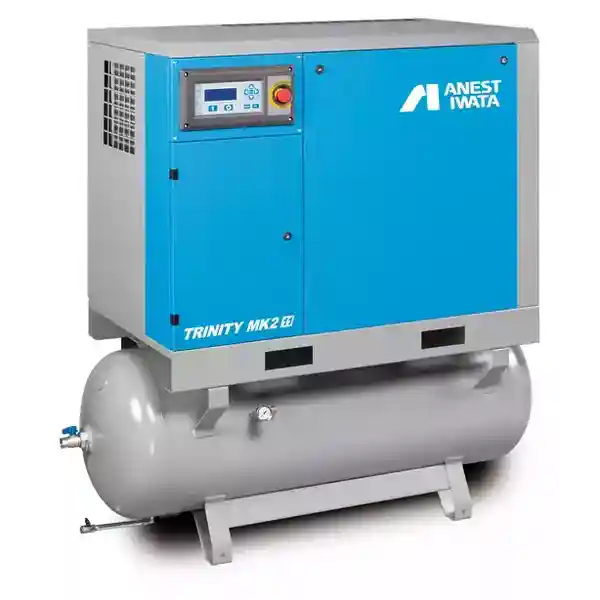
Combining advanced colour-matching technology with complete workshop layout support, our team ensures your compressed air system delivers clean, dry air perfectly calibrated to your spray equipment and paint chemistry. Count on Eastern Auto Paints for reliable advice, industry-leading equipment, and expert advice for superior results. For heavy-duty workshop requirements, explore Anest Iwata screw compressors (with industrial models ranging from standard workshops to high-capacity industrial installations) alongside our full range of air filters and regulators.
Practical Solutions and Reassurance
Upgrading your workshop air supply does not have to be overwhelming. By identifying your spray gun requirements and working with an expert team, you can establish an air delivery system that eliminates pressure drops and paint defects.
Our technical specialists at Eastern Auto Paints are here to walk you through air line design, moisture filtration, and compressor sizing to ensure your investment delivers smooth, repeatable finishes every time.
When to Get in Touch
If you are planning workshop upgrades, expanding spray booth capacity, or struggling with pressure drops during clearcoat application, our team is ready to help. Getting expert guidance early prevents costly equipment mismatching and ensures your system delivers dry, regulated air at all times.
Whether you need advice on continuous-duty rotary screw compressors, multi-stage filtration setups, or matching an air supply to a specific spray gun model, our technical team provides tailored support for trade and professional refinishing environments.
Helpful next steps:
Frequently Asked Questions About Best Compressor for HVLP
What air volume in litres per minute (L/min) (cubic feet per minute [CFM]) is needed for an HVLP spray gun?
Most standard automotive HVLP spray guns require significant continuous air volume at their recommended working pressure to maintain atomisation. Exact requirements depend on the gun model and air cap design, so operators should always verify requirements on the manufacturer technical data sheet. Choosing a compressor that delivers air volume above the gun's stated requirement ensures steady pressure without overtaxing the pump.
Why is a large air receiver tank recommended for continuous HVLP spraying?
A large air receiver tank acts as an air storage buffer that prevents rapid pressure drops when spraying large panels such as full vehicle resprays. It allows the compressor motor to cycle cleanly within its rated duty cycle rather than running constantly. This reduces heat generation within the pump, lowering moisture condensation in the air supply lines.
Can a small portable air compressor run an HVLP gun effectively?
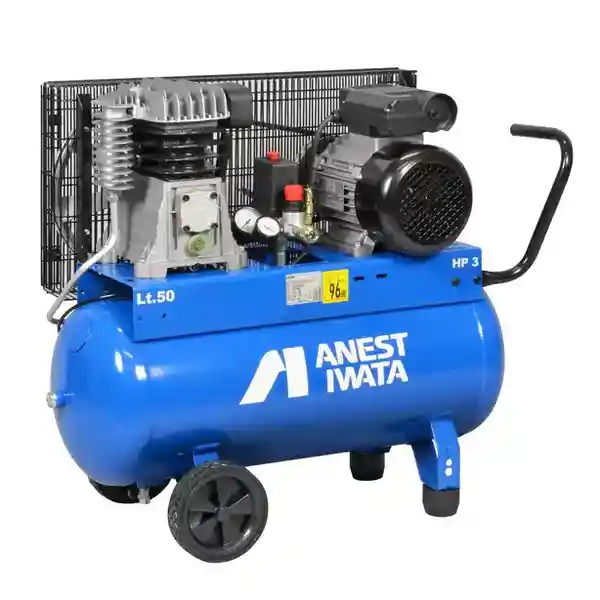
Small portable air compressors generally lack the continuous free air delivery required for continuous HVLP spraying. While a compact unit may briefly run a gun for small spot repairs or touch-ups, the pump will quickly fall behind during larger passes. This leads to pressure drops, poor atomisation, motor overheating, and excessive moisture in the spray line.
What is the difference between an HVLP turbine system and a traditional compressor setup?
An HVLP turbine system uses a dedicated multi-stage blower unit to generate high-volume air at low pressure directly through a specialised hose. A traditional compressor setup compresses air to high pressure in a storage tank, which is then filtered, dried, and regulated down at the gun. Traditional setups offer greater versatility for running pneumatic workshop tools alongside spray guns.
What common mistakes should be avoided when sizing a compressor for HVLP spraying?
The most common mistake is matching the compressor based solely on maximum pressure in kilopascals (kPa) (pounds per square inch (PSI) or tank volume rather than continuous delivered air volume in litres per minute (L/min) (cubic feet per minute (CFM) at operating pressure. Other frequent errors include ignoring the pump's duty cycle rating, neglecting air line filtration and drying, and using narrow air hoses or restrictive quick-connect fittings that restrict air flow.