
What is a Compressor? The Ultimate Beginner's Guide
Introduction to Air Compressors: The Heart of Your Workshop
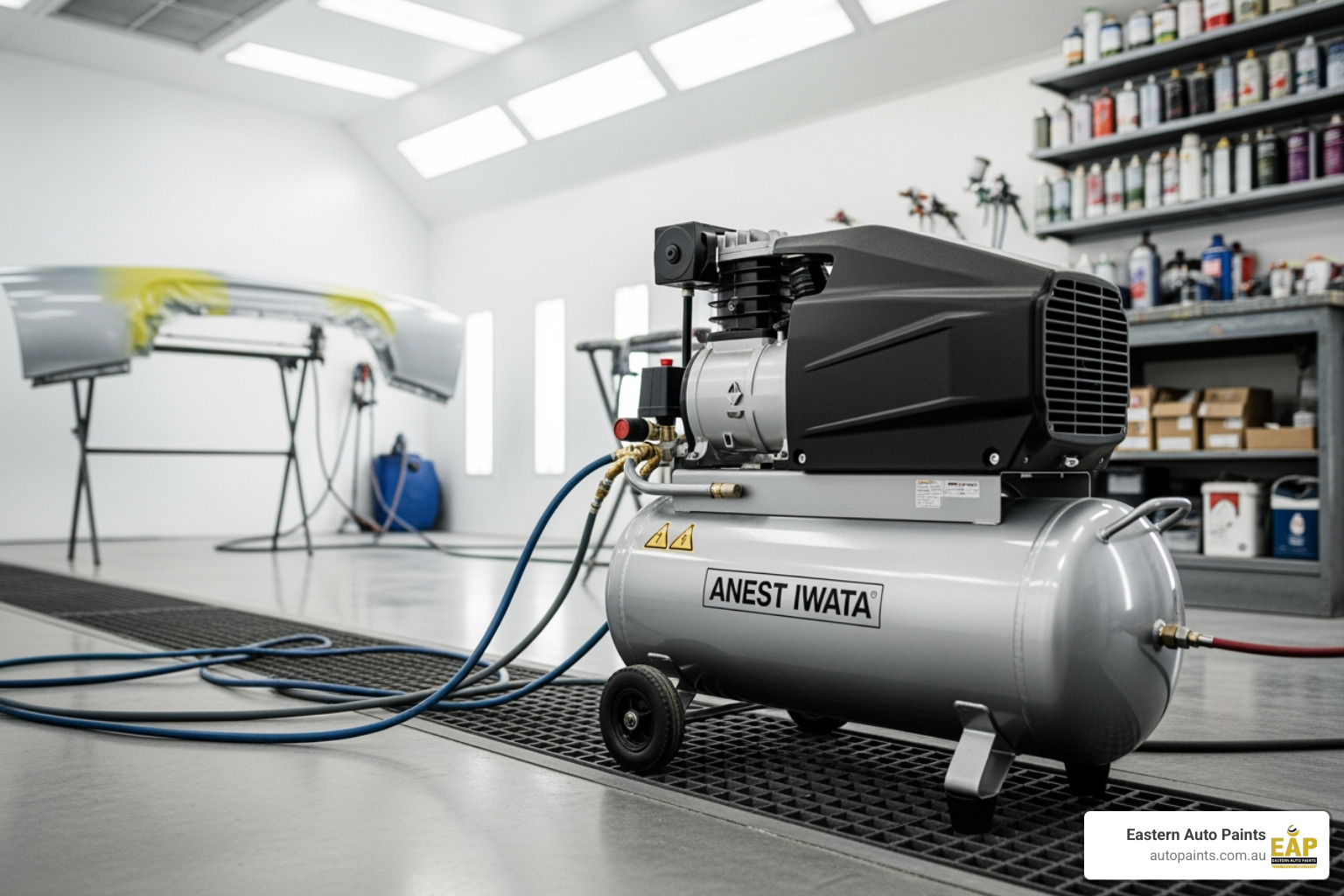
A compressor is a mechanical device that converts electrical or mechanical power into potential energy stored as compressed air. By reducing the volume of a gas, it increases its pressure, creating a powerful and versatile utility for automotive, industrial, and manufacturing environments.
What is a Compressor and Why Does It Matter?
| Key Function | Description |
|---|---|
| Converts Power | Transforms electrical or mechanical energy into compressed air |
| Stores Energy | Builds pressure in a tank for on-demand use |
| Powers Tools | Drives pneumatic equipment like spray guns, sanders, and impact wrenches |
| Delivers Utility | Provides a consistent, clean air supply for various applications |
An air compressor draws in atmospheric air, compresses it, and stores it in a pressurised tank. When you activate an air tool, this stored energy is released in a controlled flow, delivering the power needed to atomise paint, drive fasteners, or inflate tyres. This simple cycle transforms ordinary air into an essential workshop utility.
In automotive refinishing, the quality of your compressed air directly impacts the quality of your finish. Contaminants like moisture and oil, or inconsistent pressure, can ruin a paint job in seconds. Understanding your compressor is therefore critical for achieving professional results.
With over three decades in the coatings industry, we at Eastern Auto Paints have seen how the right compressor setup transforms both workshop efficiency and finish quality. We help customers select systems that match their specific painting and tooling needs, ensuring they have the consistent, clean air supply that professional work demands.
Understanding the Main Types of Air Compressors
The world of air compressors is diverse, with most falling into two categories: positive displacement and dynamic. For most automotive and industrial paint applications, you'll primarily encounter positive displacement types, which trap and forcibly reduce a volume of air to increase its pressure.
Let's dig into the most prevalent types you'll encounter.
Piston (Reciprocating) Compressors: The Workshop Workhorse
Piston compressors, also known as reciprocating compressors, are the most common type in workshops and garages. They use a piston system, similar to a car engine, to draw in and compress air into a storage tank. Valued for their robust design and ability to generate high pressures, they are ideal for intermittent use—tasks that require bursts of air followed by periods of inactivity while the compressor rebuilds pressure.

Piston compressors come in two main configurations:
- Single-stage compressors: Air is compressed to its final pressure in a single piston stroke. These are simpler, more affordable, and suitable for lighter tasks like running nail guns or inflating tyres.
- Two-stage compressors: Air is compressed in two stages, first to an intermediate pressure and then to a final, higher pressure. This process is more efficient, generates less heat, and allows for higher pressures (up to 175 PSI or 12 bar) and more continuous operation. Two-stage compressors are the preferred choice for demanding applications like spray painting and powering heavy-duty air tools in professional settings.
Eastern Auto Paints offers a range of high-quality piston compressors suitable for various applications, including the Anest Iwata NB20C-50 and Anest Iwata NB30-90, which provide reliable performance for demanding tasks.
Rotary Screw Compressors: Power for Continuous Industrial Use
For operations that demand a constant, uninterrupted supply of compressed air, rotary screw compressors are the go-to choice. They use two meshing helical rotors to continuously compress air, making them highly efficient for industrial applications like manufacturing plants and large automotive workshops where air tools are in constant use.
While they have a higher initial cost, their lower maintenance needs and superior energy efficiency for continuous operation often make them more cost-effective in the long run.
The benefits of rotary screw compressors include:
- Continuous Duty Cycle: They can run all day without needing to cool down.
- Quieter Operation: Generally much quieter than piston compressors.
- Consistent Airflow: Provides a steady stream of air without pulsations.
- Energy Efficiency: Modern models can adjust output to match demand, saving energy.
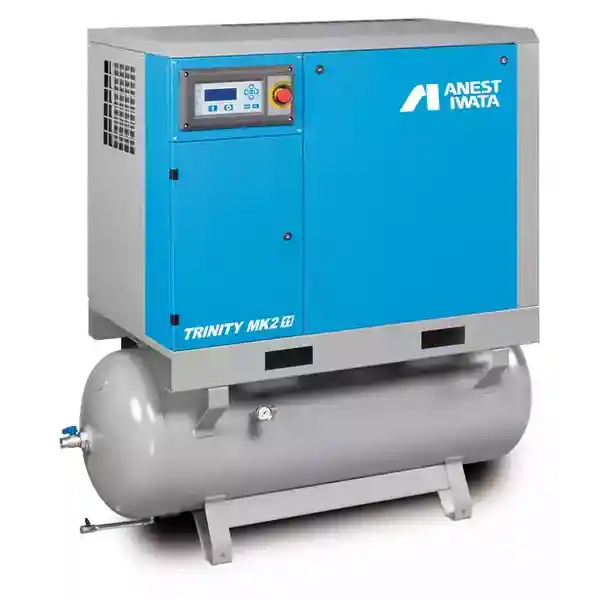
For demanding professional environments, a rotary screw compressor is a significant investment that pays dividends in productivity. Eastern Auto Paints proudly supplies advanced models like the Anest Iwata Eco Screw Compressor and the Anest Iwata Trinity11 MK2.
Oil-Free vs. Oil-Lubricated: What's Best for a Flawless Paint Finish?
One of the most crucial distinctions for paint applications is whether a compressor is oil-lubricated or oil-free. This choice directly impacts air quality and your final finish.
Oil-lubricated compressors use oil to lubricate the pump, improving durability. However, this introduces oil aerosols into the compressed air. For spray painting, this is a major concern, as oil contamination causes fisheyes, adhesion problems, and a poor finish. If using an oil-lubricated compressor for painting, a high-efficiency filtration system is absolutely essential.
Oil-free compressors use permanently lubricated components or synthetic materials, eliminating oil from the compression chamber. This produces cleaner air, which is a massive benefit for applications where air purity is paramount.
Benefits of oil-free compressors for painting include:
- Cleaner Air: Crucial for preventing oil-related paint defects.
- Less Maintenance: No oil changes or level checks for the pump.
- Reduced Risk of Contamination: Eliminates the primary source of oil contamination.
For a flawless paint finish, an oil-free compressor or an oil-lubricated model with a highly efficient multi-stage filtration system (including coalescing filters and dryers) is strongly recommended. The peace of mind from a clean, dry air supply is invaluable.
How to Choose the Right Air Compressor
Selecting the right air compressor is a critical decision that impacts your efficiency, work quality, and budget. The best choice depends entirely on your specific needs and the tools you plan to power.
Key Specifications Explained: CFM, PSI, HP, and Tank Size
Understanding these key metrics is essential for choosing the right unit:
- Horsepower (HP): Indicates the power of the motor. While important, HP alone doesn't determine performance; pump efficiency is also a major factor.
- Pounds per Square Inch (PSI): Measures the maximum pressure the compressor can generate. Most air tools operate around 90 PSI (6.2 bar), so ensure your compressor meets or exceeds this.
- Cubic Feet per Minute (CFM): This is the most critical specification for air tools, measuring the volume of air the compressor delivers at a specific pressure (e.g., "5 CFM at 90 PSI"). Always match your compressor's CFM output to the highest demand of your tools, adding a 20-30% buffer for reliability.
- Tank Size: Measured in litres (L) or gallons (gal), the tank stores compressed air. A larger tank means the motor cycles less frequently, which is ideal for continuous use like spray painting. While a 15-23 litre (4-6 gallon) tank may suffice for small tasks, professional auto work benefits from larger tanks (80 litres / 20 gallons and up).
- Duty Cycle: The percentage of time a compressor can run without overheating. Piston compressors typically have a lower duty cycle (e.g., 50-70%), while rotary screw compressors are designed for a 100% duty cycle (continuous operation).
| Air Tool | Typical CFM @ 90 PSI (approx.) | Typical PSI Requirement |
|---|---|---|
| Impact Wrench | 4-10 CFM | 90 PSI (6.2 bar) |
| Sander (Orbital) | 6-12 CFM | 90 PSI (6.2 bar) |
| HVLP Spray Gun | 8-20 CFM | 20-50 PSI (1.4-3.4 bar) |
When choosing a compressor, always check the CFM requirements of your most air-hungry tools and select a unit that comfortably exceeds that demand.
Portable vs. Stationary: Which Compressor is Right for You?
The physical design of a compressor is also a key factor.
Portable compressors are designed for mobility. They come in various styles (pancake, hotdog, twin stack) and are excellent for projects that require moving the unit around, such as on construction sites or for mobile repairs.
Stationary compressors are designed to remain in one location. These are typically larger, heavier units with substantial vertical air tanks to save floor space. They are the workhorses of professional workshops, providing a consistent and ample air supply for multiple users or high-demand tools. A stationary compressor is often the preferred choice for a professional automotive or industrial paint shop due to its superior capacity and reliability, such as the Anest Iwata NB30-90.
Noise Levels and Power Source Considerations
Finally, consider the practicalities of noise and power.
- Noise Level (dB): Compressor noise is measured in decibels (dB). Standard piston compressors can exceed 80 dB, requiring hearing protection. For a more comfortable and safer workshop, look for "quiet" models rated at 70 dB or lower.
-
Power Source: The power source dictates where you can operate your compressor.
- Electric: Most common for workshops. Smaller units run on standard single-phase (240V) power, while larger, more powerful compressors (typically 7.5 HP and above) require an industrial three-phase (415V) supply. Always check your workshop's power capabilities before purchasing a large compressor.
- Gas-powered: These compressors offer complete portability for remote job sites where electricity is unavailable. However, they are generally louder and produce exhaust fumes.
The Role of a Compressor in Automotive and Industrial Applications
The versatility of a compressor makes it an indispensable tool across countless industries, from the meticulous demands of automotive paint shops to the heavy-duty requirements of industrial manufacturing.
Powering Pneumatic Tools for Best Efficiency
One of the primary uses for air compressors is powering pneumatic (air-driven) tools. These tools offer significant advantages over electric versions, including lighter weight, a higher power-to-weight ratio, and greater durability in harsh environments.
Common pneumatic tools in automotive and industrial settings include:
- Impact wrenches
- Sanders and die grinders
- Grinders and cutting tools
- Nail guns and staplers
- Air hammers and drills
These tools dramatically increase productivity in auto repair, fabrication, and other industrial applications. We offer a comprehensive range of Workshop Equipment and air tools to complement your compressor setup.
Achieving a Flawless Finish: Compressors for Spray Painting
For us at Eastern Auto Paints, the role of a compressor in achieving a flawless paint finish is paramount. Spray painting, especially with HVLP (High Volume Low Pressure) spray guns, demands a consistent, clean, and dry air supply to ensure proper paint atomisation and a smooth, even application.
If your compressor cannot deliver the required CFM at the correct pressure, the paint will not atomise properly, leading to defects like an inconsistent finish or an orange peel effect.
Beyond volume and pressure, the quality of the air is non-negotiable. Contaminants are the archenemies of a perfect paint job:
- Moisture: Water in the air line can cause fisheyes, blistering, and poor adhesion.
- Oil: Oil contamination leads to surface defects and can severely compromise the paint's integrity.
This is why we emphasise oil-free compressors or robust air filtration systems for critical applications like car painting. An air dryer and coalescing filters are essential to remove moisture and oil before the air reaches your spray gun or Pressure Pots. For more guidance, refer to our Comprehensive Guide to Choosing a Car Painting Compressor and browse our range of Spray Guns and Accessories.
Essential Compressor Accessories and Maintenance
A compressor is only part of a functional air system. Crucial accessories are needed to ensure the air delivered to your tools is clean and regulated, while regular maintenance is vital for longevity and performance.
The Importance of Hoses, Filters, and Regulators
These components are the heroes of your compressed air system:
- Air Hoses: A hose that is too long or narrow will cause a pressure drop, starving your tool of air. We recommend high-quality, flexible hoses with an appropriate internal diameter (e.g., 3/8 inch or 10 mm for most spray guns) to minimise pressure loss. Use a dedicated hose for painting to avoid contamination.
- Air Filters: These are critical for removing dust, moisture, and oil. For painting, a multi-stage filtration system is required, including particulate filters, coalescing filters (to remove oil aerosols), and an air dryer to prevent condensation. Explore our range of Air Filter and Regulators for a clean, reliable air supply.
- Air Regulators: A regulator controls and maintains a constant output pressure. While your tank may store air at 175 PSI, your tools require much less. Regulators allow you to dial in the precise PSI for each tool, optimising performance and preventing damage.
Personal protective equipment (PPE) is just as vital. Our Air-Fed Face Masks and Half-Face Respirators ensure your safety while working.
Basic Maintenance for Your Air Compressor
Regular maintenance is key to the longevity of your air compressor. Neglecting it can lead to costly repairs and contaminated air.
Here are the essential tasks:
- Drain the Tank Daily: This is the most important task. Moisture condenses in the tank and can cause rust and contaminate air lines. Open the drain valve at the bottom of the tank after every use.
- Check Oil Levels: For oil-lubricated compressors, regularly inspect the oil level and change it according to the manufacturer's schedule.
- Clean Intake Vents/Filters: Keep the intake filter clean to ensure efficient operation and prevent debris from entering the pump.
- Inspect Hoses and Fittings: Periodically check for air leaks, which waste energy and reduce efficiency.
- Check Belts: On belt-driven models, ensure belts are properly tensioned and free of wear.
By following these simple practices, you can significantly extend the life of your compressor and ensure a consistent supply of clean, dry air.
Frequently Asked Questions About Air Compressors
We often hear similar questions from our customers about choosing and maintaining their air compressors. Here are some of the most common ones.
What size compressor do I need for spray painting a car?
For automotive spray painting, focus on CFM (Cubic Feet per Minute), not just tank size. Professional HVLP spray guns need a continuous flow of air to atomise paint correctly. A good starting point is a compressor that can deliver at least 10-15 CFM (283-425 litres per minute) at 90 PSI (6.2 bar).
While a larger tank (e.g., 60-80 gallons or 227-302 litres) helps maintain consistent pressure, it's the pump's ability to produce that CFM that truly matters. If the CFM is too low, the gun will be starved for air, leading to a rough, inconsistent finish. Always choose a compressor that exceeds your spray gun's CFM requirement by at least 20-30%.
How often should I drain my air compressor tank?
You should drain the moisture from your air compressor tank after every use. This is non-negotiable. As air is compressed, water vapour condenses inside the tank. If left undrained, this water will cause internal rust, which can weaken the tank and send contaminants into your air lines, ruining paint jobs.
Draining the tank daily is a simple step that significantly extends the life of your compressor and protects your work.
Can I use any air tool with any compressor?
No. Every air tool has specific requirements for both CFM (Cubic Feet per Minute) and PSI (Pounds per Square Inch). You must match your compressor's capabilities to the tool's specifications.
- CFM: If your compressor's CFM output is too low, the tool will underperform, stall, or run intermittently.
- PSI: Too little pressure results in poor performance, while too much can damage the tool or be dangerous.
Always select a compressor that can comfortably meet the CFM and PSI demands of your most air-hungry tool.
Powering Your Projects with the Right Choice
Choosing the right air compressor is a foundational decision for any automotive or industrial painting project. It directly impacts your efficiency, quality, and safety.
Remember these key takeaways:
- Type Matters: Piston compressors are great for intermittent use, while rotary screw models excel in continuous, high-demand settings.
- Air Quality is King: For painting, an oil-free compressor or a robust filtration system is non-negotiable to prevent defects.
- Match to Your Tools: Ensure your compressor's CFM and PSI output exceed the requirements of your most demanding tools.
- Maintain for Longevity: Daily tank draining and regular checks will protect your investment.
At Eastern Auto Paints, we understand that a compressor is an investment in quality. With our 34+ years of experience supplying automotive, truck, and industrial paints across Victoria, Sydney, and Queensland, we provide the expert advice and advanced colour-matching technology you need for superior results.
For expert advice on selecting the perfect compressor and air system for your needs, explore our full range online. Browse our Compressors