
Beyond the Rust: A Comprehensive Look at Metal Protection Sprays
Why Protecting Metal Surfaces Matters
Metal protection spray is a coating applied to metal surfaces to prevent rust and corrosion by creating a barrier between the metal and environmental elements like oxygen and moisture. Here's what you need to know:
Quick Answer: How Metal Protection Sprays Work
- Barrier Protection: Creates a non-porous layer that blocks oxygen and water from reaching the metal surface.
- Sacrificial Protection: Zinc-rich coatings corrode preferentially, protecting the underlying metal.
- Rust Conversion: Chemical formulas transform existing rust into a stable, paintable compound.
- Common Types: Primers (etch, epoxy), topcoats (1K, 2K), rust converters, and direct-to-metal (DTM) systems.
- Key Applications: Automotive underbodies, industrial equipment, structural steel, machinery.
Whether you're restoring a classic car or maintaining industrial equipment, the right metal protection spray adds years to your investment. With hundreds of products on the market, from simple aerosol primers to advanced two-component epoxy systems, choosing the right one can feel overwhelming.
The truth is, not all metal protection sprays are created equal. A product for a car's wheel arch won't work on machinery exposed to chemicals. Some sprays prevent rust, while others stop existing corrosion. Understanding how these products work is the difference between a repair that lasts and one that fails within months.
I'm James Maranis, and with over 30 years in the coatings industry, I've seen how the right metal protection spray system creates a durable, long-lasting finish. At Eastern Auto Paints, we help customers across Victoria, Sydney, and Queensland choose the most effective protection for their automotive, industrial, and commercial projects.
What is Metal Protection Spray and How Does It Work?
Metal protection spray is a specialised coating engineered to stop rust and corrosion. It creates a barrier that stops the chemical reactions that cause metal degradation. Rust attacks iron and steel, while corrosion can affect any metal. Both are caused by an electrochemical process that occurs when metal, oxygen, and moisture combine. A good metal protection spray keeps them apart.
Different sprays work in different ways. Some create a physical barrier, others chemically transform existing rust, and some even sacrifice themselves to keep your metal safe. Understanding these approaches will help you choose the right product. If you're just getting started, our Beginners Guide to Rust Repair and Prevention covers the fundamentals.
The Science of Stopping Rust
Rust is an electrochemical process that requires metal, oxygen, and water. Remove any one of these, and rust can't form. This is the core strategy behind every metal protection spray.
- Barrier coatings are the most direct approach. They create a non-porous layer that physically blocks oxygen and moisture from reaching the metal. Most primers and topcoats work this way and are highly effective when applied correctly.
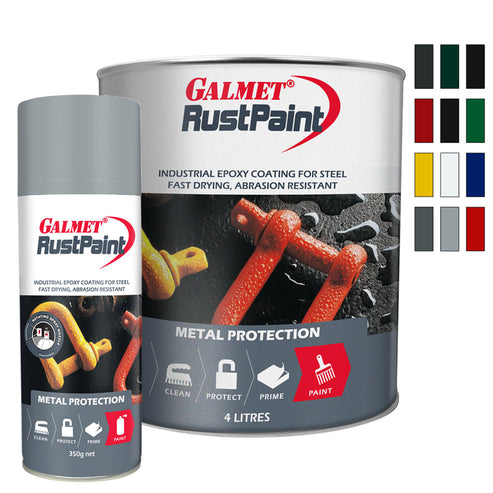
- Sacrificial coatings contain zinc, which is more chemically reactive than steel. When corrosion begins, the zinc corrodes first, sacrificing itself to protect the metal underneath. This process, called galvanic corrosion, means that even if the coating is scratched, the surrounding zinc continues to protect the exposed metal. Products like Galmet Rust Paint use this zinc-rich technology for long-lasting protection.
- Rust converters chemically react with existing rust, changing iron oxides into a stable, inert compound. The active ingredients, typically tannic or phosphoric acid, create a black, protective layer that can be painted over. This is invaluable when you can't completely remove all rust.
While temporary oil or grease sprays exist, they attract dirt and can cause more problems. A proper metal protection spray creates a clean, durable barrier for real-world conditions.
From Prevention to Cure: Different Protective Actions
- Inhibitive primers contain special pigments that interfere with corrosion at a microscopic level, a process called passivation. They actively prevent the electrochemical reaction from starting.
- Rust converting primers combine rust conversion with priming, offering a two-in-one solution for surfaces with light rust. Our Concept Rust Converter Primer Sealer Aerosol transforms rust and primes the surface in one step.
- Direct-to-metal (DTM) paints combine primer and topcoat properties, allowing application directly onto prepared metal. They offer good adhesion and protection, though a dedicated primer-topcoat system is usually better for extreme conditions.
Choosing the Right Metal Protection Spray for Your Project
Choosing the correct metal protection spray is about matching the product to your metal, its environment, and your desired outcome.
Key Features to Consider
When selecting a spray, focus on these key features:
- Durability and Corrosion Resistance: How long will it last, and what corrosive elements (salt, chemicals, moisture) will it face?
- Adhesion: The coating must stick firmly to the metal. Most adhesion issues stem from poor surface prep, but using the right primer, like an etch primer, creates a stronger bond.
- UV Stability: Essential for outdoor applications to prevent fading, chalking, or breaking down in the sun.
- Flexibility: A flexible coating moves with the metal as it expands, contracts, or flexes under impact, preventing cracks and chips.
- Chemical and Heat Resistance: Necessary for parts exposed to fuels, oils, or high temperatures, like engine components or industrial machinery.
- Drying and Curing Times: These impact your project timeline. A primer might be dry to the touch quickly but need 24 hours before top-coating.
- Finish Type: Choose from gloss, satin, or matte finishes, as well as specialty looks like textured or hammered.
For a deeper dive into selecting the right foundation, explore our A Practical Guide to Choosing Auto Paint Primers.
Understanding Different Types of Metal Protection Spray
- Primers: The foundation of any coating system. 1K primers are single-component products ideal for DIY projects. 2K primers are two-component systems that cure chemically, creating a much tougher, more durable coating for demanding applications.
- Epoxy Primers: A type of 2K primer known for exceptional adhesion and corrosion resistance. Epoxy primers are our top recommendation for automotive underbodies and industrial use.
- Etch Primers: Contain mild acids that chemically etch the metal, creating a microscopic profile for the coating to grip. They are highly effective on smooth metals like aluminium and galvanised steel. Our PPG EPS EtchPro is a professional-grade option.
- Topcoats and Clear Coats: Topcoats provide the final colour and finish, while clear coats add gloss, UV protection, and durability over a basecoat. Our 2K clear coats offer professional-level shine and protection.
- Heavy-Duty Coatings: For extreme applications like ute liners, products like Rangers 2K Coating are designed for maximum durability and impact resistance.
True 2K epoxy paints cannot be pre-filled in a standard aerosol. However, we can create custom powdercoat colour spray cans to match specific colours, including popular Jotun shades.
Matching the Spray to the Metal and Environment
- Ferrous Metals (Steel, Iron): Highly prone to rust. Benefit most from zinc-rich or epoxy primers like Galmet Rust Paint.
- Non-Ferrous Metals (Aluminium): Corrode rather than rust. Etch primers and epoxy primers are often the best choice to ensure strong paint adhesion.
- Galvanised Surfaces: Have a smooth zinc coating that is difficult to paint. Etch primers are essential for creating a reliable base.
Your environment is just as important:
- Coastal and High-Humidity Areas: Salt and moisture accelerate corrosion. Marine-grade coatings and robust epoxy systems are essential.
- Industrial Environments: Require high-performance coatings from brands like PPG and Jotun to resist chemicals, abrasion, and impacts. See our Industrial paint supplies for more.
- High-Temperature Applications: Require specialty heat-resistant coatings for parts like exhausts and engines.
If you're unsure which product is right for you, contact us for expert advice.
The Ultimate Guide to Applying Metal Protection Sprays
The best metal protection spray in the world won't perform if you don't apply it correctly. Proper application is a multi-step process that ensures a durable, professional finish.
Step 1: Surface Preparation is Everything
This is the most critical step. We've found that most adhesion issues come down to poor surface prep. A coating applied to an unprepared surface is guaranteed to fail prematurely.
- Clean and Degrease: The metal must be completely free of grease, oil, wax, and dirt. Use a quality solvent and clean cloths for the best results.
- Remove Rust and Old Paint: All rust must be removed or treated. Use a wire brush, sandpaper, or grinder. For stubborn coatings, use our paint stripping products. If complete rust removal isn't possible, use a rust converter like our Concept Rust Converter Primer Sealer Aerosol.
- Sand the Surface: Sanding with 80 to 180 grit abrasive creates a 'profile' or fine scratches for the primer to grip. Find the right abrasive in our sanding discs and sheets collection.
- Masking: Protect surrounding areas from overspray. It's much easier than cleaning it off later.
Step 2: Priming for Maximum Adhesion and Protection
Never prime or paint over untreated rust. Priming is your first layer of defence on a properly prepared surface.
- Primer Selection: Choose the right primer for your metal. Etch primers like Concept 103 Etch Primer are ideal for bare metal, especially aluminium. Epoxy primers offer the best corrosion resistance and are our top choice for automotive and industrial use. Our Guide to Epoxy Primer Paint for Cars explains why. We also stock a wide range of convenient primer aerosols.
- Application: Apply thin, even coats using a sweeping motion, holding the can 15-25 cm (6-10 inches) from the surface. Multiple light coats are better than one heavy coat.
- Drying Time: Always follow the product's Technical Data Sheet (TDS) for dry and recoat times. Rushing this step is a common mistake.
Step 3: Application Techniques for a Flawless Finish
With the primer cured, it's time for the topcoat.
- Shake the Can: Shake vigorously for at least two minutes before use and for 10 seconds every minute during application.
- Test Spray: Always test on a scrap piece to check the pattern and colour.
- Spray Distance and Technique: Hold the can parallel to the surface, about 25-30 cm (10-12 inches) away. Use smooth, even strokes that overlap, and keep the can moving at a steady pace.
- Apply Multiple Light Coats: This is the golden rule. Heavy coats cause runs, drips, and uneven drying. Apply two light coats followed by one medium wet coat, allowing 5-15 minutes of flash-off time between each.
- Curing: The coating needs time to fully cure. This can take hours or even days. Avoid exposing the item to harsh conditions during this period. Ideal working temperature is 20-25°C (68-77°F).
For professional-grade results, consider quality spray guns and accessories.
Applications and Benefits Across Industries
Metal protection spray is essential across multiple sectors, from keeping family cars rust-free to protecting massive industrial structures.
Automotive: Protecting Your Investment
Your vehicle faces a daily assault from rain, road salt, and gravel. The automotive sector relies heavily on metal protection coatings to prevent rust and maintain value.
- Vulnerable Areas: The underbody, chassis, suspension, and wheel arches are prime targets for corrosion. Our Ute-liners & Underbody Sealers create robust barriers against moisture and abrasion in these high-risk areas.
- Engine Bay: High-temperature paints are essential for exhausts and engine components to prevent corrosion under extreme heat.
- Restoration: For classic car restorations, a proper rust prevention system is vital for a lasting finish. We stock comprehensive Automotive paint supplies for everything from touch-ups to full restorations.
The payoff is clear: extended vehicle lifespan, maintained safety, and preserved resale value.
Industrial and Commercial Use
In the industrial world, metal failure can be catastrophic. Protective coatings are essential safety measures that extend the life of buildings, bridges, and factory equipment.
- Heavy Machinery and Structures: On factory floors and construction sites, equipment faces brutal conditions. Robust systems like PPG Industrial Paints and Jotun protective coatings are engineered for these demanding environments.
- Window and Door Manufacturing: Powder coating is the finish of choice for durability. While Jotun doesn't sell powdercoat in aerosols, we create custom powdercoat colour spray cans to match specific Jotun colours. We also offer textured powdercoat colours for specific finishes.
For extreme durability, our Rangers 2K Coating delivers professional-grade protection that stands up to the toughest conditions. The benefits are measurable: reduced maintenance costs, extended equipment lifespan, and improved safety.
Safety First: Handling Metal Protection Sprays Responsibly
While metal protection spray offers incredible benefits, it's crucial to handle these products responsibly, as many contain chemicals that can be harmful if misused.
Understanding Chemical Hazards and PPE
- Volatile Organic Compounds (VOCs): Many sprays contain VOCs. We recommend choosing low-VOC options where possible to minimise health and environmental impacts.
- Isocyanates in 2K Products: Two-component (2K) products require extreme caution. For spray applications involving isocyanates, standard respirators are often insufficient. An atmosphere-supplying system, like an Air Fed Mask system, is typically required. Always conduct a workplace risk assessment.
-
Personal Protective Equipment (PPE): Always use appropriate PPE. This includes:
- Respiratory Protection: From general-purpose PPE masks to full air-fed systems.
- Eye Protection: Safety glasses or goggles.
- Skin Protection: Chemical-resistant gloves and Overalls & Gloves.
Safety Precautions for using metal protection spray
- Proper Ventilation: Always work in a well-ventilated area, ideally a dedicated spray booth with good airflow supported by quality Compressors.
- Workshop Safety: Keep all ignition sources away from spray areas, as many aerosols are flammable.
- Safe Storage: Store sprays in a cool, dry place away from direct sunlight and heat.
- Disposal: Dispose of empty cans and waste according to local regulations. Never puncture or incinerate aerosol cans. For businesses, Solvent recycling machines can reduce waste and costs.
Frequently Asked Questions about Metal Protection Sprays
What is the difference between a rust converter and a rust inhibitor?
A rust converter is a repair tool. It chemically transforms existing rust into a stable, paintable surface. It's designed to treat rust that has already formed. Our Concept Rust Converter Primer Sealer Aerosol is a perfect example.
A rust inhibitor is for prevention. It creates a protective barrier to stop rust from forming in the first place by blocking oxygen and moisture. In simple terms, converters fix existing damage, while inhibitors prevent future damage.
Can I paint directly over a metal protection spray?
It depends on the product. Most primers (etch, epoxy, etc.) are designed to be painted over with a compatible topcoat, as this is their main purpose. However, some all-in-one products like DTM (direct-to-metal) paints provide a final finish and do not require a separate topcoat.
For maximum durability, especially in harsh environments, a dedicated primer followed by a compatible topcoat is the best practice. Always check the product's Technical Data Sheet (TDS) for recoating instructions. If you're unsure, contact our team for project-specific advice.
How long does the protection from these sprays last?
The durability of a metal protection spray depends on several key factors:
- Product Type: A simple 1K enamel may last a few years in mild conditions, while a high-performance 2K epoxy system can last for many years.
- Surface Preparation: This is the most critical factor. A poorly prepped surface will cause any coating to fail prematurely, regardless of its quality.
- Number of Coats: Applying the recommended film thickness is crucial for achieving the advertised durability.
- Environmental Exposure: The harsher the environment, the more robust your protection system needs to be. A coating on a boat trailer in a coastal area will not last as long as the same coating on indoor machinery.
For advice on a system that will give you the durability you need, our team can recommend the right products and application methods to maximise the lifespan of your finish.
Conclusion
Effective metal protection spray systems require understanding the science, choosing the right products, and using proper application techniques. Get these elements right, and you'll add years to the life of your metal assets.
The key takeaways are simple: surface preparation is everything, the right primer is the foundation of lasting protection, and correct application ensures the coating performs as designed. Investing in a quality system saves time, money, and frustration in the long run.
At Eastern Auto Paints, we've spent over 34 years helping customers across Victoria, Sydney, and Queensland choose the right protection systems. We don't just sell products; we provide the expertise to ensure you get it right the first time.
For professional guidance and a complete range of rust repair and prevention products, explore our collections online or contact our team for solutions custom to your project. We're here to help you achieve results that last.