
Heavy Metal: The Strongest Body Fillers for Metal Repairs
Why Choosing the Right Body Filler for Metal Repairs Matters

Body filler for metal is not a one-size-fits-all product. Choosing the wrong type can mean the difference between a repair that lasts years and one that cracks, lifts, or rusts from underneath within months. Standard lightweight polyester fillers work well for minor cosmetic imperfections, but metal panels demand products selected for strength, substrate compatibility, and moisture resistance.
Here is a quick overview to help you identify the right product for your repair:
| Filler Type | Best For | Key Benefit |
|---|---|---|
| Aluminium-reinforced filler | Steel, aluminium, galvanised panels | Dense, rustproof, drillable |
| Fiberglass filler | Rust holes, structural gaps | High tensile reinforcement |
| Standard polyester filler | Surface pinholes, final skim coats | Easy sanding, lightweight |
| Epoxy putty | Small spot repairs, cracks | Extremely high bond strength |
| Liquid metal filler | Minor hairline cracks, household metal | Quick application, small areas |
When working on bare metal panels, aluminium-reinforced fillers are generally the strongest choice. They contain real aluminium particles suspended in polyester resin, creating a dense, moisture-resistant repair that closely matches the density and thermal behaviour of sheet metal. Fibreglass fillers step in where structural bridging is needed, such as rust holes or shattered sections. Standard polyester putty is best reserved for final surface refinement over a structural filler base.
At Eastern Auto Paints, we work with trade workshops and serious DIY restorers every day, helping them match the right filler to the right substrate and repair type. Our team supports automotive, industrial, and heavy vehicle refinishing projects with practical product guidance, trade-grade supplies, and advice grounded in real application needs.
Body filler for metal terms simplified:
Why This Issue Should Not Be Ignored
Selecting the correct body filler for metal repairs is critical to ensuring the long-term structural integrity and aesthetic finish of any automotive restoration or repair project. When working with structural metal panels, standard lightweight polyester fillers often fail to provide the mechanical strength, density, and adhesion required to endure vehicle vibration, thermal expansion, and environmental exposure. Ignoring the specific material requirements of metal substrate repairs frequently leads to premature cracking, loss of adhesion, and breakdown of the paint system applied over the filler. Product-specific limits, preparation steps, and cure guidance should always be checked against the manufacturer's technical data sheet (TDS) or product label before application.
A major concern during metal repair is moisture resistance and long-term rust prevention. Standard body fillers can absorb atmospheric moisture over time if they are not sealed correctly. When moisture reaches the underlying bare steel or aluminium, rust begins to form beneath the repair, lifting the filler and damaging the panel from within. Metal-reinforced body fillers, particularly those enriched with aluminium particles, create a dense moisture barrier that helps reduce water ingress and hidden corrosion risk.
Historically, automotive panel beaters relied on traditional lead wiping or lead loading to achieve seamless, high-strength metal restoration on classic cars and heavy vehicle panels. Modern metal body fillers act as a safer, more efficient lead replacement, offering comparable density, workability, and mechanical durability without the health hazards associated with molten lead work. Understanding these material characteristics helps professional technicians choose the ideal product for heavy panel rebuilding and deep dent restoration.
For comprehensive background information on general filler formulations and baseline substrate compatibility, refer to what is body filler for cars.
Common Symptoms, Challenges, or Questions
Automotive repair technicians and serious DIY restorers frequently encounter complex challenges when repairing damaged metal panels. Understanding these symptoms allows panel beaters to select targeted filler formulations that withstand dynamic workshop conditions and vehicle operation.
Key challenges include:
- Panel flexing and dynamic stresses causing micro-fracturing or delamination in rigid filler materials.
- Pinhole defects caused by trapped air pockets during application, requiring finishing putties.
- Adhesion failure when applying fillers directly over smooth or improperly prepared bare metal surfaces.
- Corrosion treatment issues where microscopic rust spores beneath the filler continue to degrade the substrate.
- Deep dent filling where standard fillers shrink, sag, or fail to cure uniformly across thick layers.
Choosing the Right Body Filler for Metal Repairs
Selecting the right body filler for metal requires matching filler properties to the underlying metal alloy. Modern vehicles utilise high-strength steels, aluminium alloys, and galvanised panels, each requiring appropriate bonding properties to prevent substrate rejection. Aluminium filler formulations contain real aluminium flake suspended in resin, providing a non-sagging formula that makes vertical panel sculpting easier.
Furthermore, metal fillers establish a durable moisture-resistant seal that insulates raw metal from environmental humidity. When working with zinc-coated metals, strong zinc adhesion depends on suitable resin chemistry and correct surface preparation. Check the manufacturer's TDS or product label for specific surface compatibility instructions before applying filler to galvanised or aluminium substrates.
To evaluate how metal-reinforced compounds perform against other specialised repair resins across various restoration scenarios, consult our in-depth guide compare car body fillers.
Metal-Reinforced vs Fibreglass vs Standard Fillers
Distinguishing between different filler categories ensures structural longevity and prevents premature repair breakdown:
- Fibreglass filler: Utilises short or long strand glass fibres embedded in polyester resin. Ideal for structural gap filling, bridging rust holes, and repairing shattered composite panels where high tensile reinforcement is required. For heavy-duty bridging repairs, professional trade applicators trust U-Pol fibral glass fibre filler.
- Aluminium body filler: Formulated with atomised aluminium particles. Provides heavy metallic density, low thermal expansion matching sheet metal, superior drillability, and high moisture resistance.
- Standard polyester putty: Fine-textured, lightweight compound designed primarily for minor cosmetic surface imperfections, final smoothing, and pinhole skim coats over structural fillers.
What a Personalised Experience Looks Like
Achieving professional metal restoration requires an individualised approach tailored to the specific metal substrate, damage severity, and environmental conditions of the workshop. A tailored repair strategy prioritises thorough surface preparation, ensuring the bare metal substrate is cleaned with specialised degreasing solvents to remove invisible contaminants like silicone, oil, grease, and road grime. Exact cleaning, preparation, and recoat guidance should come from the product's own TDS or label.
Mechanical bonding is the foundation of any lasting filler repair. Metal fillers do not chemically fuse into steel or aluminium; instead, they rely on microscopic mechanical anchors created through abrasive surface profiling. Ensuring proper grit selection during metal preparation creates optimal surface anchor patterns that maximise bond strength.
In addition to physical repair, achieving an invisible finish requires seamlessly integrating the structural repair into the complete refinish process, extending from panel straightening and filling through to primer application and custom colour matching.
Precision Application of Body Filler for Metal
Executing a precision metal filler application requires strict adherence to professional surface preparation and chemical mixing protocols:
- Panel Preparation: Thoroughly strip paint, rust, and surface contaminants down to clean bare metal using coarse abrasive paper. Ensure the sanding pattern extends past the repair border to promote strong mechanical grip.
- Solvent Cleaning: Wipe down bare metal prep areas with wax and grease remover, allowing full flash-off before applying any compound.
- Precise Catalysis: Mix the filler with cream hardener according to the catalyst guidance provided by the manufacturer. Avoid over-catalysing, which leads to bleed-through staining, or under-catalysing, which leaves uncured resin spots.
- Application Technique: Firmly press the first skim coat of body filler for metal into the sanding scratches to displace air pockets, then build the repair in controlled layers to achieve the required contour without inducing air entrapment.
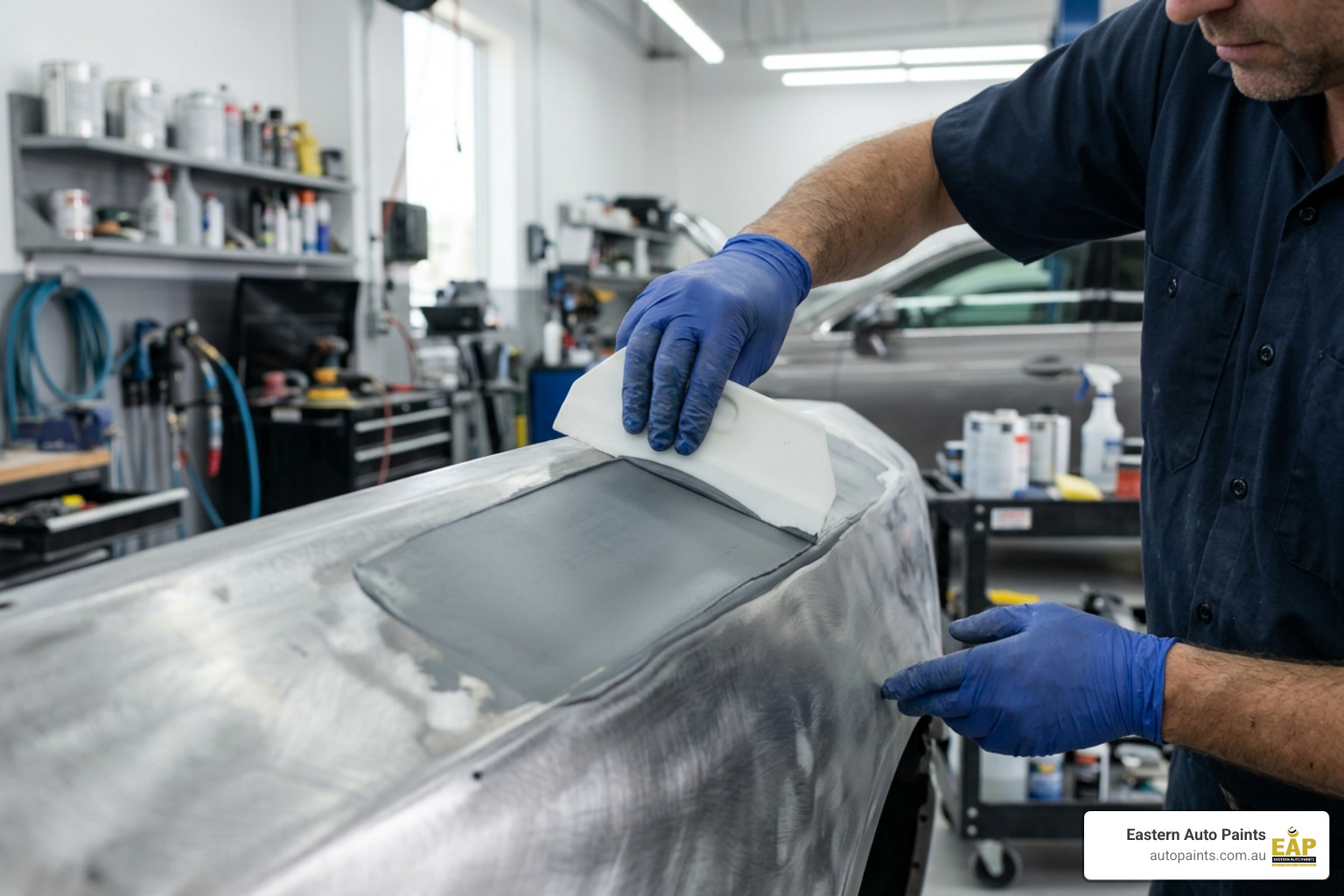
For layer thickness, working time, cure conditions, and sanding windows, rely on the selected manufacturer's TDS or product label rather than general workshop assumptions.
Essential Tools, Hardeners, and Sanding Accessories
Using professional trade tools ensures uniform application and efficient shaping of dense metal fillers:
- Metal applicators and stainless steel spreaders: Provide rigid leverage to force thick, metal-reinforced fillers smoothly across damaged contours. Equipping your workshop with high-quality spreaders such as Body Worx filler applicators metal 4pcs allows precise distribution over curved automotive bodylines.
- Sanding blocks and longboards: Prevent low spots by maintaining flat plane contact across wide repair areas during block sanding.
- Abrasive grit progression: Stepping down systematically through coarse, medium, and fine abrasives ensures all deep sanding scratches are eliminated prior to primer application.
- Steel ruler technique: Used by master panel beaters to check panel high and low spots across filler work prior to primer spraying.
Tool choice, sanding abrasive recommendations, and hardener compatibility should be verified against the relevant product documentation.
The Value of Consistency
Achieving flawless, invisible repairs across demanding trade projects relies on consistent application standards and methodical sanding protocols. Transitioning smoothly from hardened body filler to surrounding bare metal requires careful featheredging to eliminate distinct ridges that would otherwise show through final paint layers. Product labels and TDS documents remain the reference point for exact preparation and application requirements.
Failure to follow consistent sanding procedures can lead to edge mapping, where solvent absorption differences between bare metal, filler edges, and surrounding original factory coatings cause visible rings under the clearcoat. Implementing a strict dry sanding protocol prevents moisture introduction during intermediate shaping, protecting sensitive metal fillers and raw steel from hidden corrosion traps.
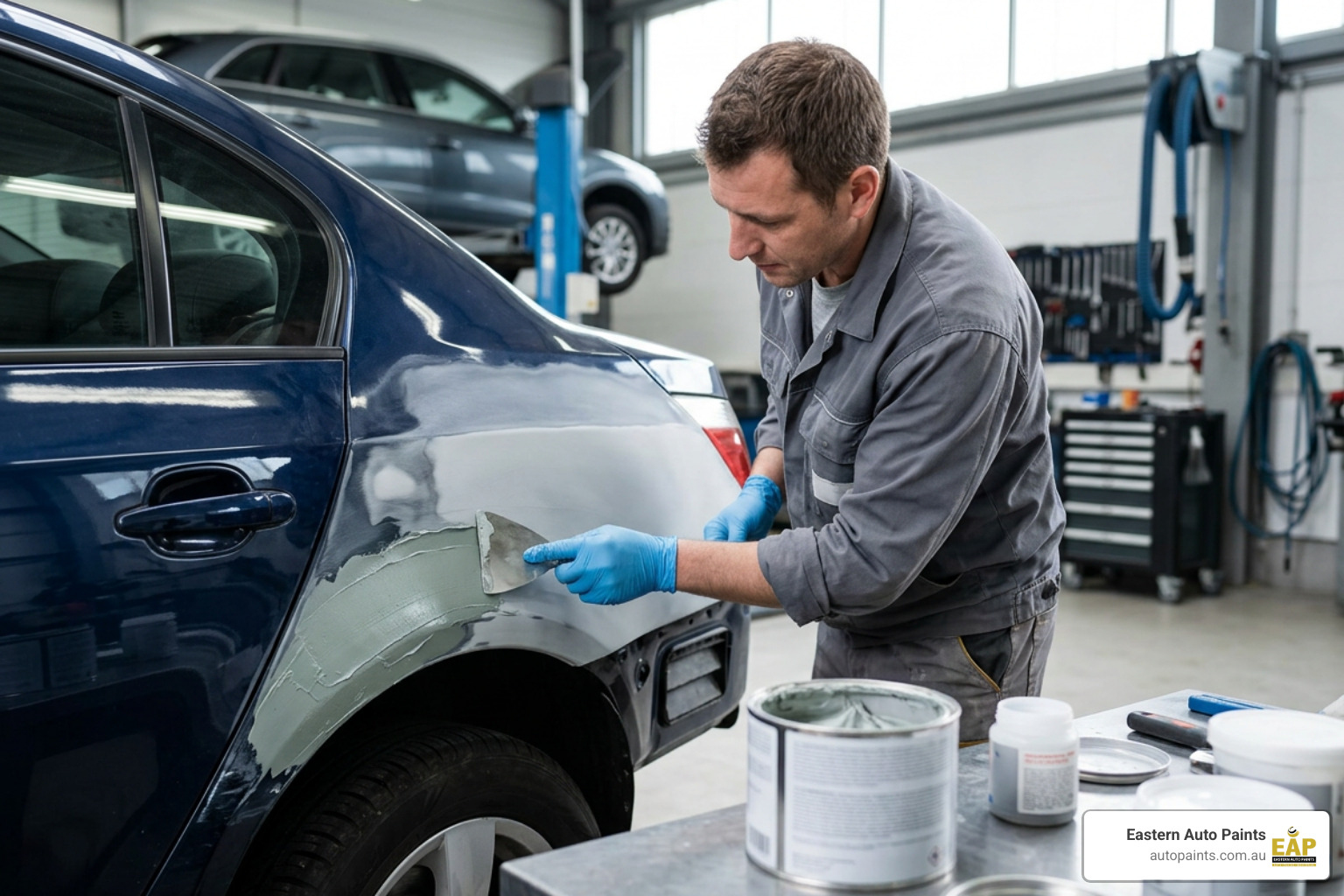
Inconsistent substrate preparation or improper hardener ratios frequently cause paint sinkage issues, where topcoats sink into uncured filler pores days after job completion. Confirm dry sanding protocols and hardener guidance in the manufacturer documentation before moving into primer or topcoat stages.
Practical Solutions and Reassurance
When dealing with deep metal indentations, panel flexure, or substrate corrosion, choosing the correct product combination brings certainty to complex automotive repairs. Modern body filler for metal compounds are engineered to support strong adhesion, ease of workability, and robust protection against demanding Australian workshop and road conditions.
Whether you are managing a panel shop in Bayswater or working on a restoration project in Dandenong South, having direct access to trade-grade products ensures every stage of your refinishing process runs smoothly. Exploring our full range of trade-quality compounds within our body fillers collection gives you access to dense aluminium formulations, flexible body putties, and glass fibre fillers tailored specifically for professional results.
What to Expect at EAP
At Eastern Auto Paints, we supply high-quality automotive paint products, including spray paint and touch-up kits tailored for professional trade workshops and dedicated DIY restorers. In the competitive automotive paint supplies industry, our unique selling proposition is advanced colour-matching technology combined with expert advice for superior refinishing results.
Whether you are performing structural panel restoration on a classic car, managing heavy smash repairs, or seeking high-density aluminium body fillers for high-stress applications, Eastern Auto Paints delivers premium professional automotive supplies backed by extensive industry expertise across Melbourne, Victoria. Explore our complete range of fillers, primers, and workshop consumables directly in our body fillers collection.
For technical guidance, our team can help you interpret product documentation, substrate requirements, and coating compatibility so you can choose the right repair system with confidence.
When to Get in Touch
Selecting the right body filler for metal repairs - from high-density aluminium formulations to lightweight putties - ensures structural durability, thermal stability, and long-term panel protection. If you are dealing with complex metal panel repair challenges, substrate corrosion, or require technical guidance on application techniques and coating compatibility, contact our team for expert trade support.
Explore our product range and contact options:
Frequently Asked Questions About Body Filler for Metal
What is all-metal body filler and how does it differ from standard polyester filler?
All-metal body filler is a specialised repair compound enriched with real aluminium particles suspended in high-grade polyester resin. All-metal filler cures to a dense, hard mass that closely matches the thermal expansion and structural density of sheet metal. It offers high mechanical strength, excellent drillability, and creates a dense rustproof seal due to its structure, making it ideal for high-stress areas and heavy repairs. Confirm exact specifications in the manufacturer's TDS or product label.
Can body filler for metal be drilled, tapped, or applied over rust?
Metal-reinforced body filler possesses high mechanical strength, allowing it to be drilled and light thread tapped after complete curing for non-structural trim attachments. However, no body filler should ever be applied directly over active rust. All corrosion must be physically removed down to bright metal or chemically neutralised using proper rust conversion treatments. Ensuring proper bare metal prep is essential to prevent moisture trapped beneath the filler from continuing to corrode the metal substrate. Check the product label or TDS for preparation guidance before application.
How does metal-reinforced filler compare to epoxy putty and liquid metal?
Metal-reinforced filler is designed specifically for auto body panel shaping, offering excellent vertical spreadability, predictable working time, and straightforward block sanding properties across medium to large repair zones. In contrast, epoxy putty and liquid metal fillers are dense chemical bonding agents designed primarily for small spot repairs, filling heavy cracks, or casting rigid mechanical components. While epoxy products offer high structural strength, they are more difficult to sand, featheredge, and shape smoothly across body panels compared to aluminium body fillers.
What are the most common mistakes to avoid during application?
The most common mistakes during application include over-hardening or under-hardening the mixture with cream hardener, which leads to surface staining or incomplete curing. Another frequent error is using wet sanding techniques directly on body filler, which introduces trapped moisture into the porous material and causes paint adhesion failure and rust later. Finally, failing to press the initial skim coat tightly into sanding scratches creates pinhole formation and micro-gaps that weaken mechanical bond strength. Product labels and TDS documents should guide mixing, sanding, and cure expectations.
What safety equipment and primers are required when using metal body filler?
For specific personal protective equipment (PPE) requirements when handling or dry sanding metal body filler, refer directly to the product label, manufacturer Safety Data Sheet (SDS), and relevant SafeWork or WorkSafe regulations for your state. Once metal body filler is fully shaped and feathered, it must be sealed with high-performance primers. Applying epoxy primer sealers or quality etch primers directly over bare metal and cured filler seals the repair, creates optimal corrosion barriers, and ensures paint adhesion. Verify primer compatibility on the manufacturer's TDS before selecting the final system.