

The Great Car Cover-Up: Everything You Need to Know About Body Filler
What is Body Filler and Why is it Used in Car Repairs?

"What is body filler for cars?" is one of the most common questions we hear from vehicle owners looking to tackle minor damage themselves. At its core, body filler is a two-part plastic putty made from polyester resin and a cream hardener that, when mixed together, creates a workable paste. This paste hardens into a sandable, paintable surface designed to fill dents, scratches, small holes, and other imperfections in your vehicle's body panels, restoring smooth body lines for a seamless finish.
Quick Answer: What is Body Filler?
- Composition: A two-part product consisting of polyester resin and a cream hardener
- Purpose: Fills and repairs minor imperfections like dents, scratches, and small holes in car body panels
- How it Works: When mixed, the resin and hardener create a putty that can be shaped, then hardens to a sandable surface
- Final Result: Creates a smooth, paintable surface that blends seamlessly with the surrounding bodywork
Body filler has become an essential tool in automotive repair because it offers a cost-effective alternative to replacing entire panels or undertaking expensive metalwork. Rather than spending significant time and money on panel replacement, a properly applied filler can restore your vehicle's appearance in a fraction of the time. The material works by filling the void left by damage, building up the surface to match the original contours, and providing a stable base for primer and paint. Once cured, sanded smooth, and properly finished, a well-executed filler repair should be virtually invisible.
The key to success with body filler lies in understanding which type to use for your specific repair, how to prepare the surface correctly, and mastering the application and finishing techniques. Different fillers offer varying characteristics, from lightweight standard fillers perfect for small dents to reinforced versions designed for bridging larger gaps or repairing structural components. The wrong choice or poor application can lead to visible repairs, cracking, or premature failure, which is why understanding the fundamentals is crucial before you start.
I'm James Maranis, and over my 30-plus years in the coatings industry, I've seen countless repairs succeed or fail based on proper what is body filler for cars knowledge and application technique. At Eastern Auto Paints, we've helped thousands of customers choose the right filler and supplies for their specific repair needs, from weekend DIY enthusiasts to professional body shops.
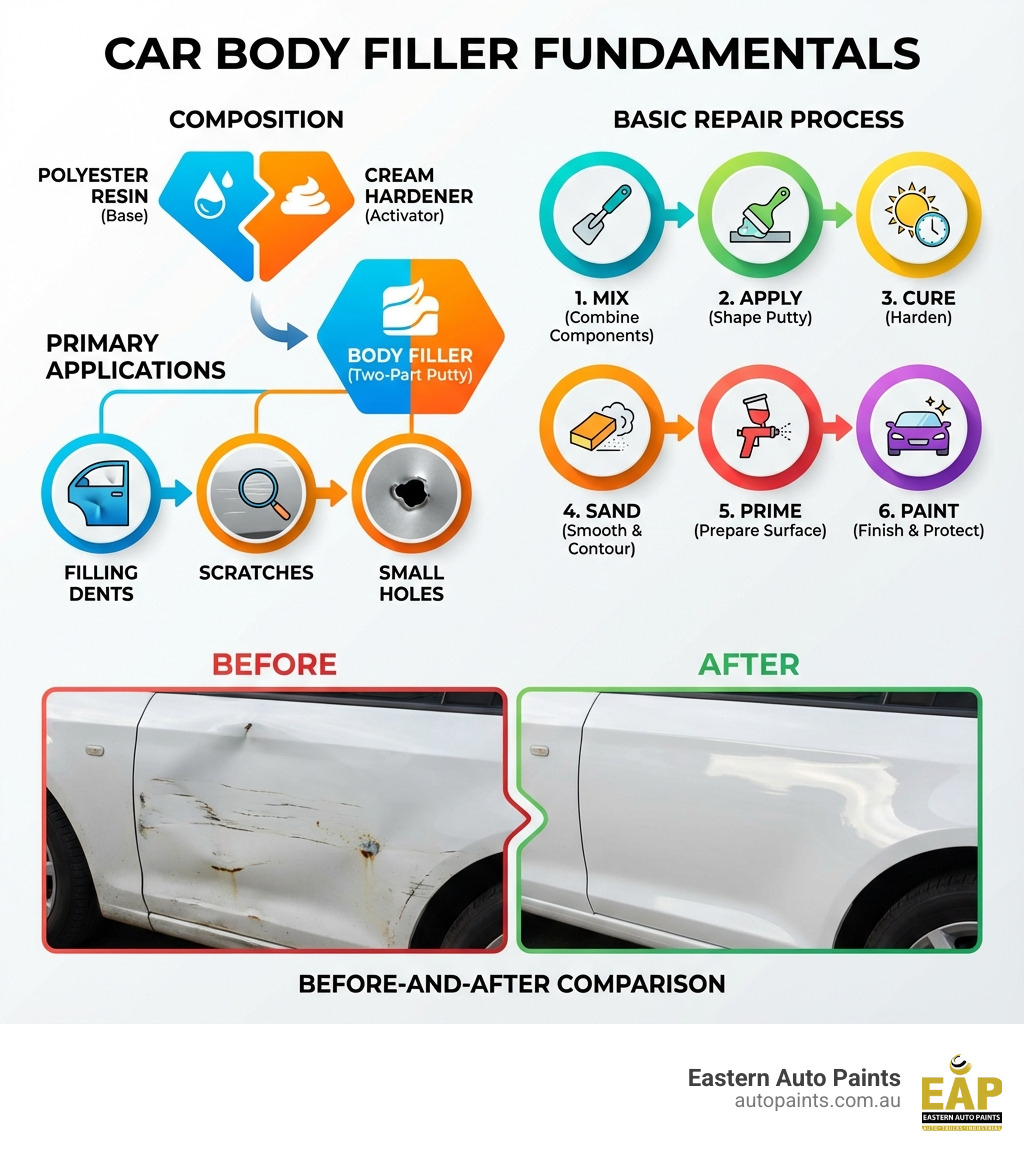
Whether you're addressing minor hail damage, fixing a small dent, or preparing for a full respray, understanding body filler fundamentals will help you achieve professional-looking results. In this guide, we'll walk you through everything from choosing the right body filler type to mastering surface preparation, application techniques, and finishing methods. By the end, you'll have the knowledge to tackle your repair with confidence, or at least understand what to expect if you're working with a professional.
For complex repairs or if you're unsure about any step in the process, our team at Eastern Auto Paints is here to help. We stock premium brands like Evercoat Rage Gold Filler, U-POL products, and Concept lightweight fillers, along with all the tools and supplies you'll need. If you need expert advice on product selection or technique, don't hesitate to contact our team for personalised guidance.
Choosing Your Weapon: A Guide to the Different Types of Body Filler
When it comes to automotive body repair, not all fillers are created equal. The type of what is body filler for cars you choose is crucial for achieving a durable and professional finish. Selecting the right product depends heavily on the nature and extent of the damage, as well as the material of the car panel you're working on.
Different fillers offer distinct characteristics in terms of strength, flexibility, ease of sanding, and adhesion to various substrates like steel, aluminium, or fibreglass. Our guide on comparing car body fillers offers an even deeper dive.
Here's a quick comparison of common body filler types:
| Filler Type | Use Case | Sanding Ease | Pinhole Resistance | Hardener Required | Max Sanded Thickness |
|---|---|---|---|---|---|
| Standard | Small to medium dents, general purpose | Hard | Poor | Yes | 6.35 mm (1/4 in.) |
| Lightweight | Small to medium dents, easier sanding | Easy | Good | Yes | 6.35 mm (1/4 in.) |
| Premium | Larger repairs, easier finishing, stain-free | Easy | Good | Yes | 6.35 mm (1/4 in.) |
| Reinforced | Bridging holes, heavy body work, welds | Very Hard | Very Poor | Yes | 6.35 mm (1/4 in.) |
| Polyester Glaze | Very light body work, scratches, pinholes | Very Easy | Very Good | Yes | 3.175 mm (1/8 in.) |
| Finishing Putty | Light scratches in filler or 2K coatings | Very Easy | Very Good | No | 1.5875 mm (1/16 in.) |
Standard and Lightweight Body Fillers
Standard and lightweight polyester fillers are among the most commonly used for cosmetic repairs on non-plastic surfaces. These are versatile and cost-effective, making them a popular choice for many DIY enthusiasts and professionals in Victoria. They are particularly effective for small to medium dents and scratches, offering a good balance of workability and durability.
The main advantage of lightweight fillers, such as our Concept Bodyfiller Lightweight, is their ease of sanding. This saves significant time and effort during the finishing stages, which is always a bonus! They sand down easily to blend seamlessly with the rest of a vehicle’s surface, making them perfect for minor dents and scratches.
Premium Fillers and Finishing Putties
For those seeking the best possible finish, premium body fillers are an excellent investment. These fillers offer superior adhesion, are typically stain-free, and are formulated to minimise pinholes, which are tiny air bubbles that can form during application. Our Evercoat Rage Gold Filler is a prime example, known for its exceptional spreadability and easy sanding. With premium options, you often get what you pay for – a smoother, more refined repair that requires less effort in subsequent steps.
Polyester glazing putty, often referred to as spot putty, is a thin-bodied polyester filler designed for minor filling, skim coating, and filling pinholes. Products like U-POL Dolphin Glaze Putty and Evercoat Ever-Glaze Spot Putty are perfect for those final, tiny imperfections that standard fillers might miss, ensuring a truly smooth surface before priming.
Reinforced Fillers for Strength
When you need extra strength or need to bridge a small hole or repair a crack, fibreglass-reinforced body fillers are your go-to. These fillers contain short or long fibreglass strands, providing significantly improved strength. They are ideal for repairing sheet-moulded compound (SMC) or fibreglass panels, and can be used as a first layer over welded seams to add rigidity.
For example, our U-POL FIBRAL Glass Fibre Filler is excellent for repairs where structural integrity is a concern. Additionally, metal-reinforced fillers, which have aluminium added, offer increased strength, durability, and superior resistance to water, making them suitable for more demanding applications.
Specialty Fillers for Specific Jobs
Beyond the general categories, there are specialty fillers designed for unique challenges. Plastic body fillers are specifically formulated to adhere to flexible surfaces like bumpers, mirrors, and trim, where traditional fillers would crack or fail. These are essential for modern vehicles with numerous plastic components.
For larger repair areas that require a high film-build and a uniform surface, sprayable polyester body filler is a game-changer. This thin polyester filler, like our Concept Spray Putty Aerosol, allows for application via a large-tipped spray gun, making quick work of broad, uneven surfaces. This can be particularly useful in professional body shops for large-scale restorations.
The Foundation of a Flawless Finish: Surface Preparation and Mixing
Before you even think about applying body filler for cars, proper surface preparation is paramount. We’ve found that most adhesion issues come down to poor surface prep. Skipping this crucial step can lead to your filler failing prematurely, cracking, or lifting, turning your repair into a frustrating redo. Safety is also key here, so always ensure you're working in a well-ventilated area and wearing appropriate PPE masks, gloves, and eye protection.
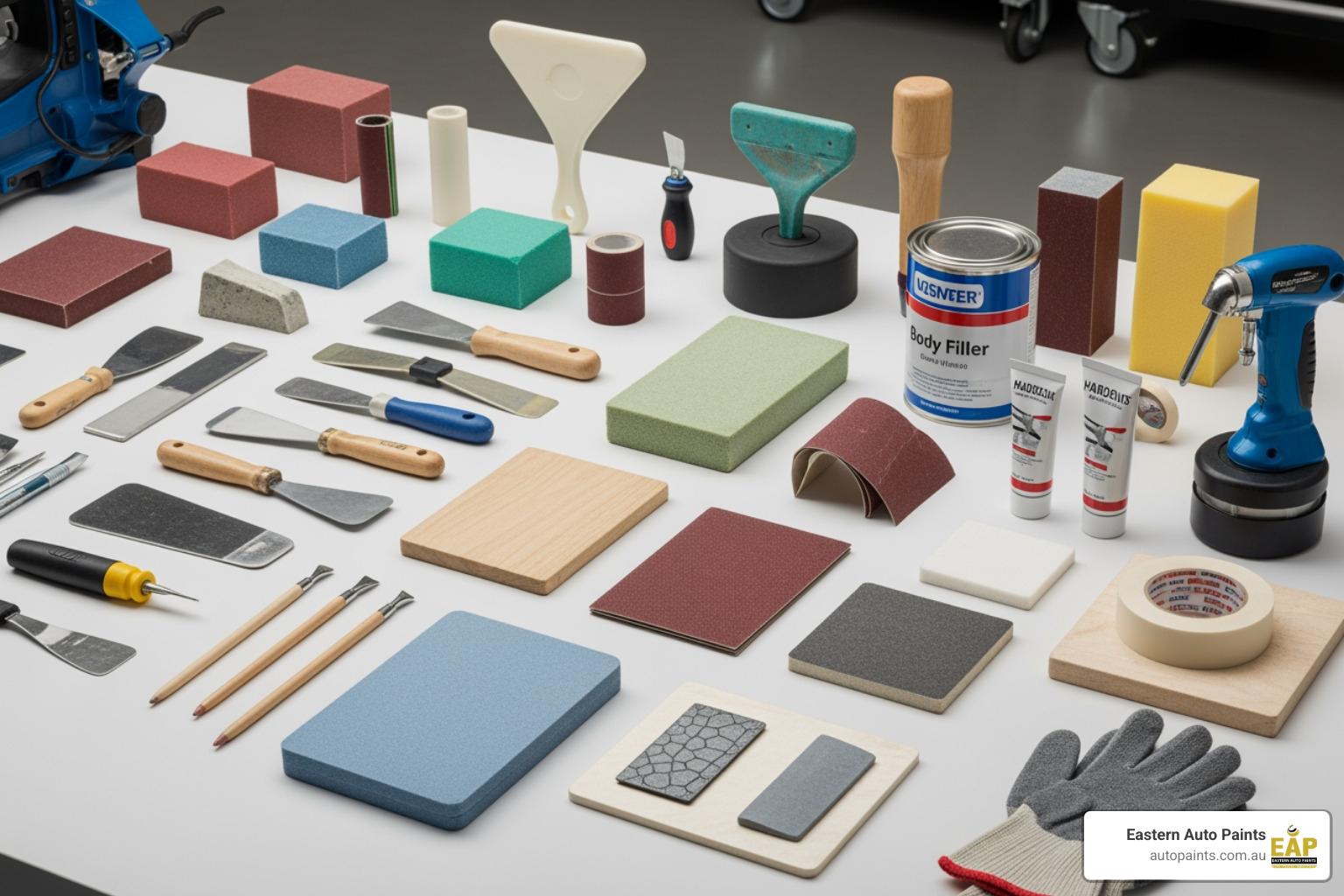
Step 1: Preparing the Damaged Area for what is body filler for cars
The goal of surface preparation is to create a clean, roughened surface that the body filler can bond to effectively.
- Clean Thoroughly: Start by thoroughly cleaning the repair area with warm water and a clean microfibre cloth. If necessary, use a bodywork shampoo. Then, use a high-quality degreaser to remove all traces of wax, grease, oil, and other contaminants. This ensures nothing interferes with adhesion.
- Remove Rust: Body filler should never be applied over active rust. If you find rust, it must be completely removed. Sand it off, or if it's severe, cut out the rusted section and patch it. We offer a range of rust repair products to help with this process. Sometimes, you might even need to use paint stripper to get to the bare metal.
- Sand to Bare Metal: For optimal adhesion, it's generally recommended to sand the damaged area down to bare metal. This provides the best mechanical bond for the filler. Around the damaged area, featheredge the existing paintwork using coarse-grit sandpaper (e.g., 80-grit). This creates a gradual transition and a rough surface for the filler to grip onto.
Step 2: How to Mix Body Filler Correctly
Mixing body filler isn't just about combining two components; it's a science. The correct ratio of filler to hardener is critical for proper curing and durability. Too little hardener, and the filler won't cure properly; too much, and it can become brittle and crack.
- Follow Instructions: Always refer to the manufacturer's instructions for the specific product you're using. These instructions will provide the precise mixing ratio.
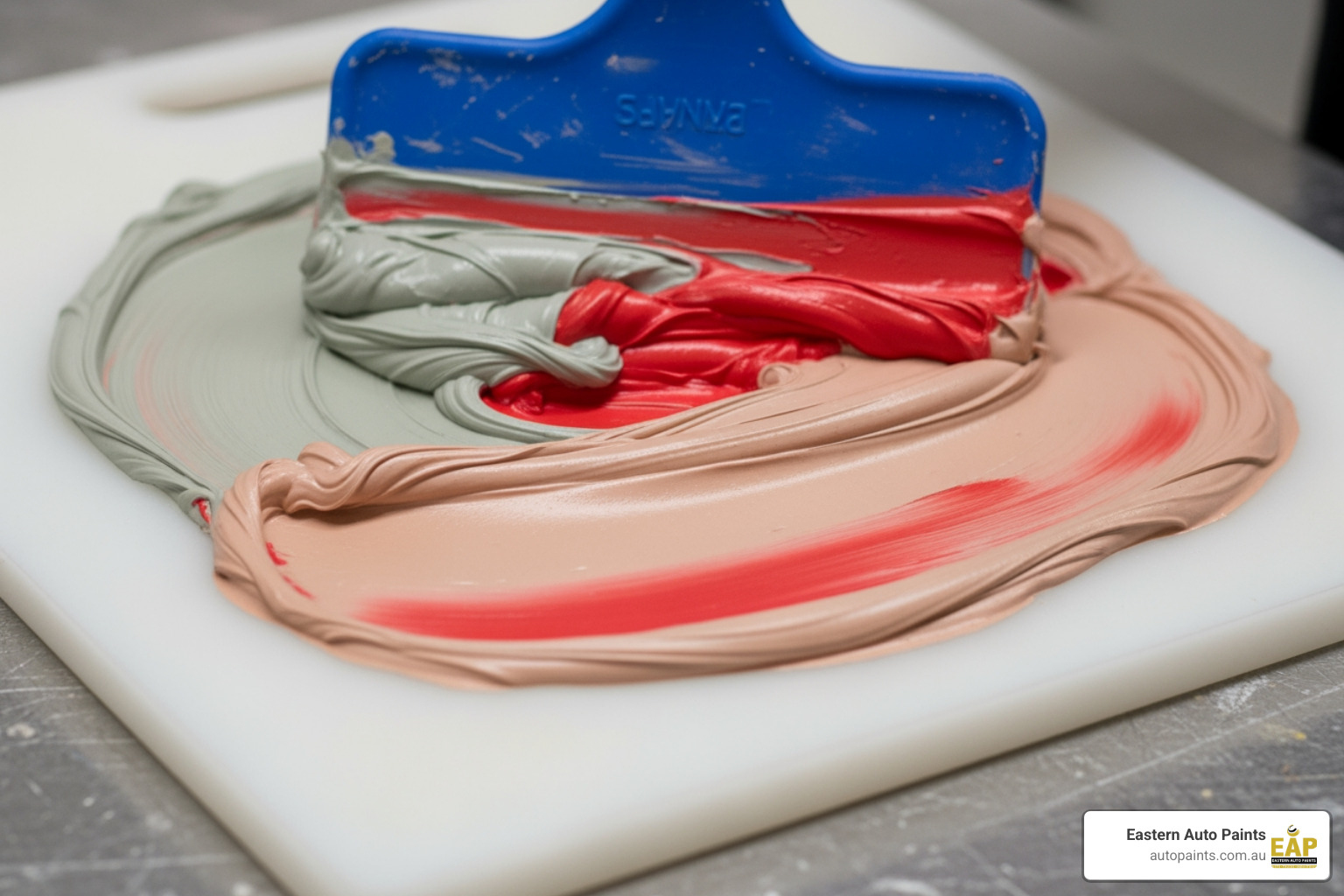
- Use a Clean Surface: Dispense the body filler onto a clean, non-porous mixing board. Avoid using cardboard, as it can absorb the resin and alter the chemical balance of your mix.
- Add Hardener: Squeeze a small ribbon of hardener across the filler, again, as per the manufacturer's guidelines.
- Mix Thoroughly (Folding Technique): Using a plastic spreader (we recommend our Plastic applicators), mix the filler and hardener thoroughly. Use a folding technique to incorporate the hardener evenly, avoiding stirring, which can introduce air bubbles. Mix until a uniform colour is achieved – often a slight pink hue indicates proper mixing.
- Work Quickly: Once mixed, the filler has a limited working time, typically just a few minutes, before it starts to cure. Mix only small batches that you can apply within this timeframe to avoid waste and rushed application.
The Art of Application: How to Apply and Sand Body Filler Like a Pro
Applying what is body filler for cars is where art meets science. The goal is to build up the damaged area smoothly and evenly, preparing it for sanding and painting. Precision and patience are key to achieving a truly professional finish. Our comprehensive guide on how to body filler like a pro offers even more detail.
Applying the Filler for a Smooth, Even Finish
- Use a Spreader: A clean, flexible plastic or metal spreader (like our Metal applicators) is essential for applying filler.
- Apply in Thin Layers: Don't try to fill the entire depth of the damage in one go. Apply the filler in thin, even layers, pressing firmly to ensure good adhesion and to minimise air pockets. Building up the repair gradually helps control the shape and reduces the chances of sagging or cracking.
- Feather the Edges: Extend the filler slightly beyond the damaged area, gradually thinning it out towards the edges. This feathering technique ensures a seamless blend with the surrounding panel, making the repair virtually invisible once painted.
- Curing Time: Allow each layer of filler to cure completely before applying the next or moving to sanding. This typically takes around 20-30 minutes, but can vary depending on temperature, humidity, and the specific product. In colder or wetter conditions, gentle use of heat lamps can assist with drying.
The Sanding Process: From Shaping to Finishing
Sanding is perhaps the most critical step in achieving a flawless body filler repair. It's where you sculpt the filler to match the original contours of the car. Our guide on sanding body filler provides in-depth techniques.
- Allow Full Cure: Ensure the filler is fully cured and hard to the touch before you begin sanding. Sanding too early can cause the filler to gum up, tear, or lose its shape.
- Start Coarse: Begin with a coarse-grit sandpaper, such as 80-grit, to rapidly shape the filler and remove any high spots. Use a sanding block (we have a variety of sanding blocks) to ensure an even, flat surface and to maintain the body lines.
- Progress to Finer Grits: Once the basic shape is achieved, switch to progressively finer grits (e.g., 180-grit, then 320-grit). This removes the deeper scratch marks left by the coarser paper and refines the surface.
- Check for Smoothness: Continuously run your hand over the repaired area to feel for any imperfections, high spots, or low spots. A guide coat (a light dusting of contrasting paint) can also help highlight imperfections. The final filler layer should sit slightly lower than the surrounding surface to account for primer and paint layers.
The Final Touches: Priming, Painting, and Avoiding Common Mistakes
After all your hard work with what is body filler for cars, the final steps of priming and painting are what truly bring your repair to life, creating a seamless, invisible finish. Proper preparation here ensures durability and a professional appearance. For more detailed advice on primers, consult our guide on choosing auto paint primers.
Priming and Painting Over Your Repair
- The Importance of Primer: Primer serves multiple critical functions. It seals the body filler, prevents moisture absorption, and provides a uniform, adhesion-promoting surface for your paint. We recommend using high-quality 2K primers for superior results.
- Apply Primer: Apply several light, even coats of primer over the repaired area, extending slightly beyond the filler. Allow each coat to flash off according to the product's instructions.
- Wet Sand Primer: Once cured, wet sand the primer with very fine-grit sandpaper (e.g., 400-grit or finer) to achieve a perfectly smooth surface. This is your last chance to eliminate any minor imperfections before painting.
- Colour Matching: Accurate colour matching spray paints is essential for an invisible repair. At Eastern Auto Paints, we use advanced colour-matching technology, and our two full-time professionals can even perform matching by eye when automated systems aren't quite right. We can create custom aerosol solutions to perfectly match your vehicle's paint code.
- Paint Application: Apply your basecoat in thin, even layers until full coverage is achieved. Finally, apply a clear coat to protect the paint and provide a glossy finish.
Common Mistakes and Conditions to Avoid When Using what is body filler for cars
Even with the best intentions, mistakes can happen. Being aware of common pitfalls can save you a lot of grief.
- Applying Filler Too Thick: This is a classic mistake. Thick applications are prone to sagging, cracking, and excessive shrinkage. Always apply in multiple thin layers.
- Improper Mixing Ratio: Incorrectly mixing the filler and hardener can lead to soft spots, premature curing, or brittle filler that cracks easily. Always follow the manufacturer's precise instructions.
- Poor Surface Preparation: As discussed, failing to clean, degrease, and properly sand the surface will result in poor adhesion and filler failure.
- Sanding Before Fully Cured: Sanding filler before it's completely dry can cause it to peel, gum up your sandpaper, or distort the shape.
- Ignoring Temperature and Humidity: Extreme temperatures or high humidity can significantly affect the filler's working time and curing process. Always work within the recommended environmental conditions.
- Using Filler on Flexible Plastic Without a Flex Agent: Standard body filler isn't designed for flexible plastic parts. Using it without a specific plastic filler or a flex agent will lead to cracking.
- Applying Over Rust: Never apply body filler over active rust. Rust will continue to spread underneath, eventually causing the filler to bubble and lift.
Frequently Asked Questions about Automotive Body Filler
We often get asked specific questions about what is body filler for cars and its application. Here are some of the most common ones:
How long does body filler take to dry?
The drying and curing time for body filler depends on several factors, including the type of filler, ambient temperature, humidity, the thickness of the application, and the hardener ratio. Generally, a layer of polyester body filler is sandable within 20 to 30 minutes at typical room temperatures (around 20-25°C). However, full chemical cure, where the filler reaches its maximum hardness and stability, can take several hours, or even up to 24 hours. Always refer to the product's Technical Data Sheet (TDS) for precise drying and cure times for your specific product.
Can auto filler be used on a painted surface?
While some modern fillers claim compatibility with properly prepared painted surfaces, our best practice recommendation is to always sand down to bare metal. Applying filler over paint can lead to several issues, including reduced adhesion, potential lifting of the filler over time, and visible repair lines where the filler meets the old paint. For the most durable and invisible repair, creating a strong mechanical bond with bare metal is ideal. If you must apply over paint, ensure the paint is thoroughly scuffed and in good condition, and always follow the filler manufacturer's specific instructions.
Where should I not use body filler?
Body filler is excellent for cosmetic repairs, but has limitations. You should avoid using body filler in the following situations:
- Structural Components: Body filler is not designed for structural repairs. It does not add strength to the compromised structural parts of your vehicle. For structural damage, proper welding or panel replacement is necessary.
- High-Stress Areas: Areas that experience significant flexing or stress, such as certain parts of the chassis or suspension components, are not suitable for body filler, as it will likely crack.
- High-Heat Areas: Avoid applying filler to parts that get extremely hot, like exhaust components. The heat can cause the filler to degrade, crack, or even emit fumes.
- Unprepared Surfaces: As stressed throughout this guide, never apply filler to dirty, greasy, rusty, or improperly sanded surfaces.
- Active Rust: Body filler traps moisture, which will accelerate rust formation if applied over it. Always remove all rust first.
- Flexible Plastics (without proper filler type): Standard body fillers are rigid. Using them on flexible plastic parts like bumpers without a specific plastic body filler (which contains a flex agent) will cause the filler to crack and fall off.
Get the Right Advice and Supplies for Your Project
Understanding what is body filler for cars and how to apply it correctly is a fundamental skill for anyone looking to restore their vehicle's appearance. From selecting the right type of filler for your specific damage to carefully preparing the surface, mixing accurately, applying in thin layers, and finishing with careful sanding, each step contributes to a flawless result. Avoiding common mistakes and understanding the limitations of body filler will ensure your repair is not only visually appealing but also durable.
At Eastern Auto Paints, we pride ourselves on being Melbourne's trusted supplier for high-quality automotive paint products and refinishing supplies for over 34 years. We offer an extensive range of body fillers, sanding sheets, and all the tools you'll need to tackle your next project with confidence. With our advanced colour matching technology and expert advice, we're here to support you every step of the way.
Browse our extensive range of auto paint supplies online or visit our stores in Bayswater or Dandenong South, Victoria. For personalised guidance or if you have any questions about your specific repair, don't hesitate to contact our expert team. We're always happy to help you achieve superior results.