
Epoxy vs Urethane Primer: The Battle for Your Bare Metal
Epoxy vs Urethane Primer: Which One Does Your Project Actually Need?
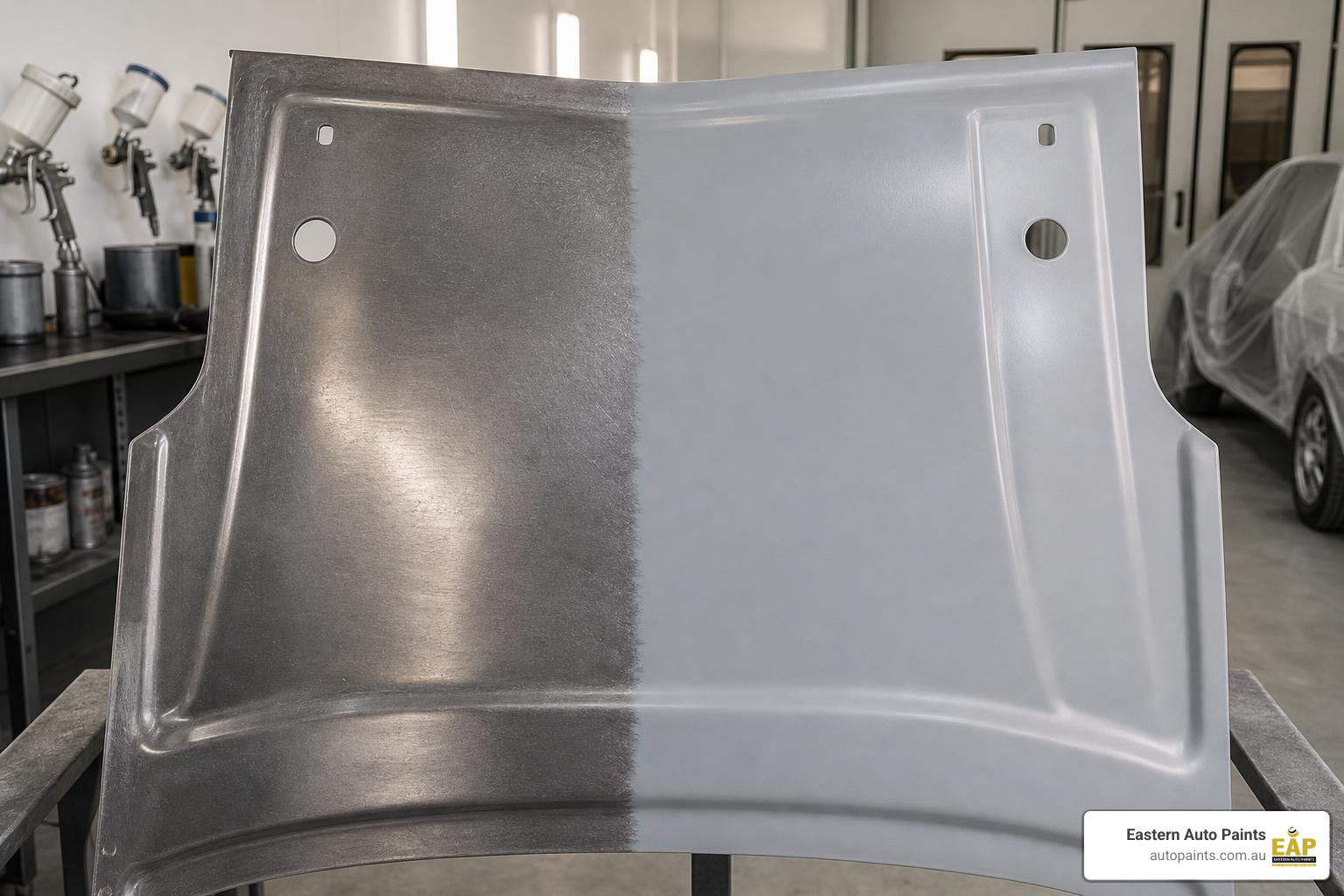
When it comes to epoxy vs urethane primer, the honest answer is that neither one wins outright. They solve different problems, and choosing the wrong one for your substrate or project stage can lead to adhesion failure, rust, or a finish that falls apart long before it should.
Here is a quick breakdown to answer the core question directly:
| Factor | Epoxy Primer | Urethane Primer |
|---|---|---|
| Best for | Bare metal, steel, concrete | Filling, levelling, sanding |
| Primary role | Adhesion and corrosion protection | High-build surface preparation |
| Moisture tolerance | High | Low (substrate must be dry) |
| UV resistance | Poor (chalks outdoors) | Better, but still needs a topcoat |
| Flexibility | Low (rigid cure) | Higher (better for flexible panels) |
| Curing system | Two-part resin and hardener (2K) | Often single-component moisture-cure |
| Use together? | Yes, epoxy first | Yes, urethane over cured epoxy |
The short version: if you are working on bare steel and need maximum corrosion protection, epoxy primer is the right starting point. If you need to fill imperfections, build film thickness, and create a sandable surface before your topcoat, urethane primer is what you reach for next. For many professional jobs, you use both in sequence.
This guide walks through the chemistry, the practical differences, and how to match each primer to your specific substrate and project goals. Whether you are restoring a classic car, finishing bare metal panels, or specifying a coating system for industrial steel, understanding these two primer types will help you get a finish that lasts.
For a deeper look at how primers fit into the broader paint system, our practical guide to choosing auto paint primers and guide to automotive paint primer types are good places to start. You can also browse our range of two-pack (2K) primers to see the professional-grade options available.
I'm James Maranis, owner of Eastern Auto Paints, and after more than 30 years working across automotive, industrial, and commercial coatings, I have seen how often the epoxy vs urethane primer decision gets made without a clear understanding of what each product is actually designed to do. Getting this choice right from the start is one of the most reliable ways to protect your work and your substrate for the long term.
Epoxy vs urethane primer word guide:
Why This Issue Should Not Be Ignored
Selecting the incorrect foundation coat for a refinishing job is one of those decisions that might look perfect on day one but shows its true colours months down the line. When working with automotive panels, industrial fabrications, or commercial transport equipment, the primer serves as the critical bridge between the raw substrate and your final decorative topcoat. Ignoring the distinct roles of these chemical systems is a recipe for long-term failure.

If you apply a high-build surfacer directly to bare steel without an adequate corrosion barrier, moisture can migrate through the microscopic pores of the coating. Once water molecules reach the steel surface, oxidation begins. Because the primer lacks active corrosion inhibitors, the rust will spread beneath the paint film, eventually lifting the entire coating system. This results in bubbling, blistering, and costly rework.
In the variable Australian climate, particularly across Melbourne and the surrounding industrial suburbs, coatings are subjected to significant temperature swings, high humidity, and coastal salt air. These environmental factors accelerate the breakdown of poorly designed paint systems. Proper metal preparation and the correct choice of a rust-preventative foundation are essential to prevent premature failure. For those dealing with existing corrosion issues, addressing the root cause with dedicated rust repair and prevention products is the only way to ensure a permanent fix before any new coatings are applied.
Common Symptoms, Challenges, or Questions
When planning a coating system, spray technicians and custom builders frequently encounter a range of challenges related to the preparation phase. One of the most common issues is paint shrinkage. This occurs when solvents escape from a thick layer of primer as it cures, causing the paint film to tighten and sink into the underlying sanding marks or bodywork imperfections.
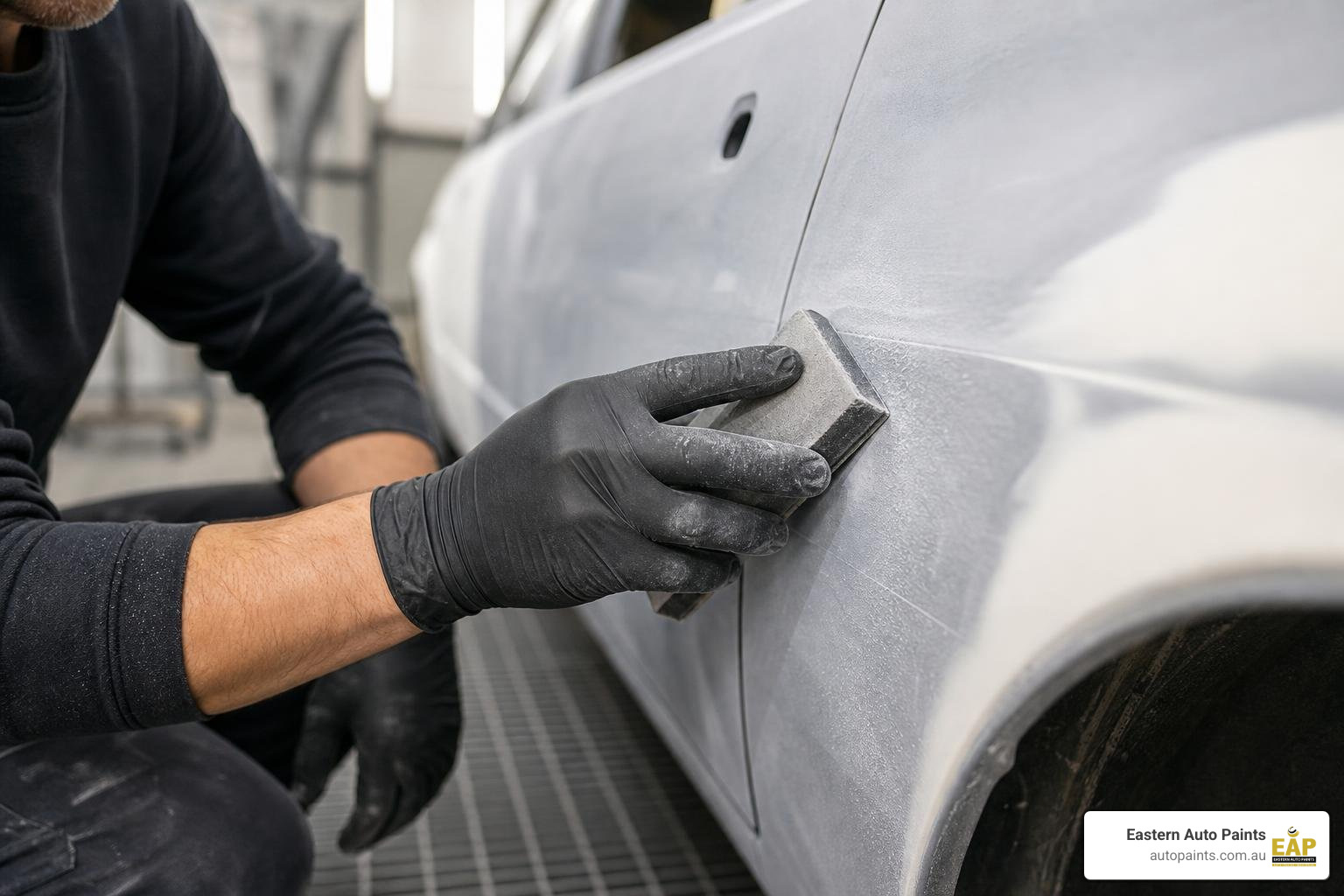
Another challenge is sand scratch swelling, where the active solvents in a topcoat or subsequent primer layer react with the cured undercoat, causing the edges of old sanding scratches to swell and show through the finished gloss coat. Managing these challenges requires a clear understanding of how different coatings cure and how they interact with one another. To achieve a flawless finish, the entire system must be applied and cured in a controlled manner, matching the correct product to the specific requirements of the job. For more on how to manage these application steps, our guide on auto paint application provides valuable insight into workshop best practices.
Understanding Epoxy vs Urethane Primer Chemistry
To understand why these products perform so differently, we have to look at their chemical structures. Both are highly engineered coatings, but they rely on entirely different curing mechanisms and resin designs to achieve their properties.
Epoxy Primer Chemistry
Epoxy primers are typically two-pack (2K) systems consisting of an epoxy resin and a dedicated hardener or activator. When these two parts are mixed together, a chemical cross-linking reaction begins. This reaction is exothermic, meaning it naturally releases a small amount of heat as the molecules bond.
The resulting cured film is incredibly dense, rigid, and highly impermeable. This tight molecular structure gives epoxy its outstanding moisture mitigation properties, acting as an airtight barrier that blocks water and oxygen from reaching the underlying metal. Additionally, many professional-grade epoxies are formulated with active zinc-phosphate compounds, which chemically inhibit the formation of rust. For a comprehensive look at how these coatings perform in automotive environments, you can read the guide to epoxy primer paint for cars.
Urethane Primer Chemistry
Urethane primers, particularly those classified as primer surfacers, rely on polyurethane chemistry. These coatings can be formulated as either single-component (1K) moisture-cure products or two-pack (2K) systems that use an isocyanate activator to cure. The polymer chains in a polyurethane coating are highly versatile, offering a balanced combination of toughness, chemical resistance, and physical flexibility.
Unlike the rigid barrier formed by an epoxy, a urethane primer is designed to build significant film thickness. This high-build capability allows the coating to fill minor surface imperfections, such as dry sanding scratches, minor pitting, and light bodywork marks. Once cured, the urethane film remains slightly more flexible than epoxy, allowing it to expand and contract with the substrate without cracking.
When to Choose Epoxy vs Urethane Primer for Your Substrate
Selecting the right product depends heavily on the material you are coating. Every substrate has unique physical properties, thermal expansion rates, and surface porosities that dictate which primer chemistry will form the strongest bond.
Bare Steel and Iron
For raw ferrous metals, epoxy primer is highly effective. It penetrates into the microscopic pores of the steel to form an exceptional mechanical bond. Because steel is highly susceptible to oxidation, the moisture-barrier properties and rust-inhibiting additives of an epoxy primer make it the logical choice for direct-to-metal applications. It provides the long-term corrosion shield that raw steel requires.
Aluminium and Light Alloys
Aluminium is a non-ferrous metal that does not rust in the traditional sense, but it does form a thin, tightly bound oxide layer almost immediately upon exposure to air. This oxide layer makes adhesion highly difficult for standard primers. Polyurethane primers are well-suited for difficult-to-adhere non-ferrous alloys, providing excellent adhesion and flexibility on light metal structures.
Plastics and Composite Materials
Modern automotive and industrial components frequently incorporate various plastics, fibreglass, and carbon fibre. These materials are highly flexible and have low surface energy, meaning coatings struggle to stick to them. A rigid epoxy primer is generally not suitable here, as any flexing of the plastic part can cause the hard epoxy film to crack and delaminate. Polyurethane primers, with their superior flexibility and versatile adhesion characteristics, are much better suited for these flexible substrates.
Over Body Fillers and Repair Areas
When working over polyester body fillers, the primary goal is to level the repair area and block out any sanding scratches. Urethane primer surfacers are designed specifically for this task. They can be applied in thicker coats to fill the transition zones between the metal and the filler. Once fully cured, they can be block-sanded using professional sanding sheets (typically starting with P320 and finishing with P600 or P800 grit) to achieve a perfectly flat, level surface that is ready for the topcoat.
What a Personalised Experience Actually Looks Like
At Eastern Auto Paints, we believe that choosing the right coating system should never be a guessing game. Walk into one of our showrooms, and you will not find a self-service aisle where you are left to interpret complex chemical labels on your own. Instead, you will experience a collaborative, trade-focused consultation designed to get your project finished correctly the first time.
A truly personalised experience begins with a conversation about your specific project parameters. Our team will ask about your substrate material, the environmental conditions of your workshop, your application equipment, and the expected exposure of the finished component. Whether you are spraying a classic car chassis in a home workshop or applying protective coatings to a fleet of commercial transport trailers, we tailor the entire system to match your workflow.
We also guide you through the official Technical Data Sheet (TDS) for your chosen products. The TDS is the ultimate authority for any coating, detailing the exact mixing ratios, curing parameters, and safety requirements. We help you select the correct spray guns and accessories to ensure your equipment is perfectly matched to the viscosity and flow characteristics of the primer you are applying.
The Value of Consistency and an Ongoing Relationship
For trade professionals, commercial fleet operators, and serious restorers, paint supply is not just a series of one-off transactions. It is a partnership built on trust, consistency, and reliability. When you operate a busy smash repair shop or an industrial fabrication yard, you need to know that the products you buy today will perform exactly the same way as the products you bought last month.
One of the greatest benefits of an ongoing relationship with us is our advanced colour management database. We save and catalogue your custom formulations, ensuring that if you need to perform a repair or coat a matching component months or years down the track, the colour match will be spot-on. Our precision colour-matching services are performed using advanced technology alongside experienced professionals, backed by thousands of saved formulations to give our trade customers a massive advantage in speed and consistency.
By working closely with us over the long term, we get to know your business, your preferred application techniques, and your typical turnaround times. This allows us to anticipate your supply needs, keep your preferred products in stock, and provide immediate technical support whenever you encounter a challenging substrate or an unusual environmental condition.
What to Expect at Eastern Auto Paints
When you visit Eastern Auto Paints, you are partnering with Melbourne's leading independent paint and equipment specialist. Operating from our head office in Bayswater and our trade showroom and warehouse in Dandenong South, we provide professional-grade products and expert support across Victoria and Australia-wide.
As an authorised PPG Select Distributor, a certified Jotun Australia distributor, and the master wholesale distributor for Concept Paints in South East Victoria, we stock only authentic, professional-grade coatings. We do not deal in cheap, unbranded alternatives or low-end retail paint. Our inventory is curated to meet the strict performance and compliance standards required by modern trade and industrial applicators.
When you walk into our Dandenong South or Bayswater locations, you can expect:
- A clean, professional, and well-organised trade environment.
- Direct access to highly experienced technical advisors who understand the practical realities of spray booth operations.
- Advanced colour-matching technology, including spectrophotometer analysis and physical spray-out cards.
- A comprehensive range of ancillary supplies, from premium abrasives to high-performance spray equipment.
To learn more about our history, our team, and our commitment to the Melbourne refinishing industry, please visit our about EAP page.
When to Get in Touch or Take Action
The best time to speak with a technical expert is before you mix a single drop of paint or pick up a sander. Too often, we see customers seek advice after a coating has already reacted, blistered, or failed to adhere. Resolving these issues after the event requires stripping the panel back to bare metal, wasting valuable time, labour, and materials.
If you are in the planning stages of a project, we encourage you to reach out early. Whether you are trying to determine the correct primer sequence for a multi-material build, need to match a complex fleet colour, or want to upgrade your workshop equipment, our team is here to help.
If you run a commercial workshop in Melbourne, or if you are a dedicated enthusiast tackling a major restoration in your garage, we invite you to contact our expert team today. We can help you select the exact primer, hardener, and reducer system to ensure a flawless, long-lasting finish.
Practical Solutions and Reassurance: Navigating Epoxy vs Urethane Primer
If you are feeling overwhelmed by the technical differences between epoxy vs urethane primer, take a step back. The industry-standard solution for high-end automotive restorations and heavy-duty industrial equipment is not to choose one over the other, but to use them together in a highly effective, dual-layer system.
Expert Recommendation: Always apply epoxy primer first as your direct-to-metal (DTM) base coat for maximum corrosion resistance, followed by a urethane primer surfacer for filling and sanding. Never reverse this order, as urethane primers do not offer the same level of moisture barrier protection on bare steel.
By applying a high-quality epoxy primer directly to your clean, bare metal substrate, you establish an outstanding corrosion barrier and an incredibly strong adhesive bond. Once this base coat has cured according to the manufacturer's specifications, you can apply a high-build urethane primer surfacer directly over it. This allows you to block-sand the panel to perfection, filling any minor imperfections without compromising the rust protection underneath.
Application parameters, drying times, and mixing ratios vary significantly from product to product. It is absolutely vital to consult the manufacturer's Technical Data Sheet (TDS) or product label for the exact specifications before you begin. Our team is always available to help you locate the correct documentation and guide you through the process. Whether your job calls for professional-grade two-pack (2K) primers or convenient, high-quality one-pack (1K) primers, we have the authentic products and the technical expertise to ensure your project is a complete success.
Final Coat: Choosing the Right Primer for a Finish That Lasts
Navigating the choice between epoxy and urethane primers comes down to understanding the specific stage and requirements of your coating project. Epoxy primer serves as the ultimate foundation, offering unmatched adhesion and active corrosion protection directly on bare metal substrates. Urethane primer, on the other hand, acts as the perfect preparation layer, providing the high-build film thickness and flexibility needed to fill minor imperfections and sand the surface to a flawless finish. By utilising both products in a strategic, dual-layer sequence, you ensure that your paint system is both chemically protected from rust and physically prepared for a high-gloss topcoat.
Frequently Asked Questions About Epoxy vs Urethane Primer
How do I choose between 1K and 2K products for a given job?
The choice between single-pack (1K) and two-pack (2K) products depends primarily on the required durability and the scale of your project. 1K products dry strictly through solvent evaporation, meaning they remain chemically soluble and are less resistant to harsh solvents, fuels, and mechanical wear. They are highly convenient for quick touch-ups, small parts, or budget-conscious projects. 2K products cure through a chemical reaction initiated by a hardener or activator, forming a highly durable, chemically cross-linked film that is completely insoluble once cured. For trade, industrial, and high-end automotive applications where long-term durability is non-negotiable, 2K systems are the industry standard.
Can I apply body filler directly over epoxy primer?
Applying polyester body filler over a cured and sanded epoxy primer is a widely accepted professional technique, particularly in high-end classic car restorations. The epoxy primer provides an excellent corrosion barrier on the bare steel, and applying filler over it prevents moisture from getting trapped beneath the bodywork. However, chemical compatibility and curing windows vary significantly between different paint brands. You must always consult the specific product's Technical Data Sheet (TDS) or manufacturer guidelines to confirm whether their epoxy formulation is compatible with direct polyester filler application, and to find the required sanding profile (typically prepared using P120 to P180 grit) for proper mechanical adhesion.
What is the correct PPE and safety practice for spraying urethane primers?
Spraying polyurethane coatings, especially 2K systems that contain isocyanates, carries significant health and safety responsibilities. Isocyanates are highly sensitising agents that can cause severe respiratory issues if inhaled. Because safety requirements vary based on the specific product formulation, you must always check the product label, Safety Data Sheet (SDS), and relevant WorkSafe Victoria guidelines for the correct personal protective equipment (PPE) requirements before opening any can. Generally, professional spraying of isocyanate-containing coatings requires a fully compliant, air-fed respirator mask, chemical-resistant overalls, safety goggles, and suitable gloves, all operated within a professionally ventilated spray booth.
Where can I find the exact technical specifications for mixing and drying?
The only authoritative source for mixing ratios, reduction percentages, pot life, flash-off times, and curing windows is the manufacturer's official Technical Data Sheet (TDS) for the specific product you are using. These parameters are highly precise and cannot be generalised across a product category, as they depend on the unique resin chemistry and solvent package of that specific paint. You can find these specifications printed on the product label, on the manufacturer's official website, or by speaking directly with our expert team at Eastern Auto Paints. We are always happy to help you find the correct TDS for your products.
Is epoxy primer or urethane primer better for outdoor steel structures?
For heavy-duty outdoor steel structures exposed to weathering, moisture, and sunlight, the ideal solution is a dual-layer coating system rather than a single product. Epoxy primer is highly effective for direct-to-metal application because of its outstanding corrosion resistance and chemical barrier properties. However, epoxy has poor UV resistance and will chalk, fade, and degrade if left exposed to direct sunlight. To protect the system, a highly durable, UV-resistant polyurethane topcoat must be applied over the epoxy primer. This combination leverages the superior adhesion of epoxy with the outstanding weather resistance of polyurethane. For industrial steel fabrications requiring maximum durability, we also supply high-performance Jotun powder coatings designed to withstand the harshest environments.