
Step-by-Step Guide to Choosing the right Industrial Epoxy Floor Paint
Why Epoxy is the Gold Standard for Industrial Floors
Choosing the right industrial epoxy floor paint requires matching the product to your environment, traffic, and performance needs. Key selection criteria include:
- Thickness: Coatings (4-30 mils) for light traffic, slurries (30-250 mils) for medium duty, and mortars (125-250+ mils) for heavy machinery.
- Surface Preparation: Inadequate prep is the number one cause of coating failure.
- Chemical Resistance: Match the epoxy to your specific chemical exposure (acids, caustics, solvents).
- Environmental Factors: Consider moisture, temperature, and UV exposure.
- Application: Two-part systems need precise mixing and controlled curing conditions.
Industrial epoxy floor paint is the gold standard for commercial flooring. It’s a two-component system (Part A resin, Part B hardener) that chemically reacts to form a durable, seamless surface. Unlike paint that sits on top of concrete, epoxy bonds with it, creating a protective layer that withstands heavy traffic, chemical spills, and years of abuse.
The benefits go beyond durability. A well-installed epoxy floor offers excellent chemical and abrasion resistance, protects concrete from moisture, and creates a seamless surface that is easy to clean. This improves operational efficiency and reduces long-term costs. Aesthetically, epoxy transforms dull concrete into a professional, light-reflective surface, with options for slip-resistant additives or high-visibility colours to improve safety.
Available systems can seem overwhelming. Water-based epoxies have low odour and are easy to clean, suiting occupied spaces. Solvent-based systems offer aggressive chemical resistance and can be applied in cooler temperatures. One hundred percent solids epoxies provide maximum thickness with zero volatile organic compounds (VOCs), ideal for heavy-duty and eco-sensitive projects.
Surface preparation is the most critical factor for success. Epoxy’s strong bond requires a clean, properly profiled concrete surface. Contaminants like oil, old sealers, or laitance will cause failure, regardless of the epoxy's quality. Products like EPO Epotec Primer Surfacer and PPG EPS EtchPro are essential for establishing proper adhesion as part of a complete prep strategy.
With over 30 years in the coatings industry, we've seen that success hinges on product selection and prep quality. At Eastern Auto Paints, we expanded from automotive refinishing to supply industrial paint supplies because our customers needed expert guidance for all their coating projects.
Key Factors for Selecting Your Industrial Epoxy Floor Paint
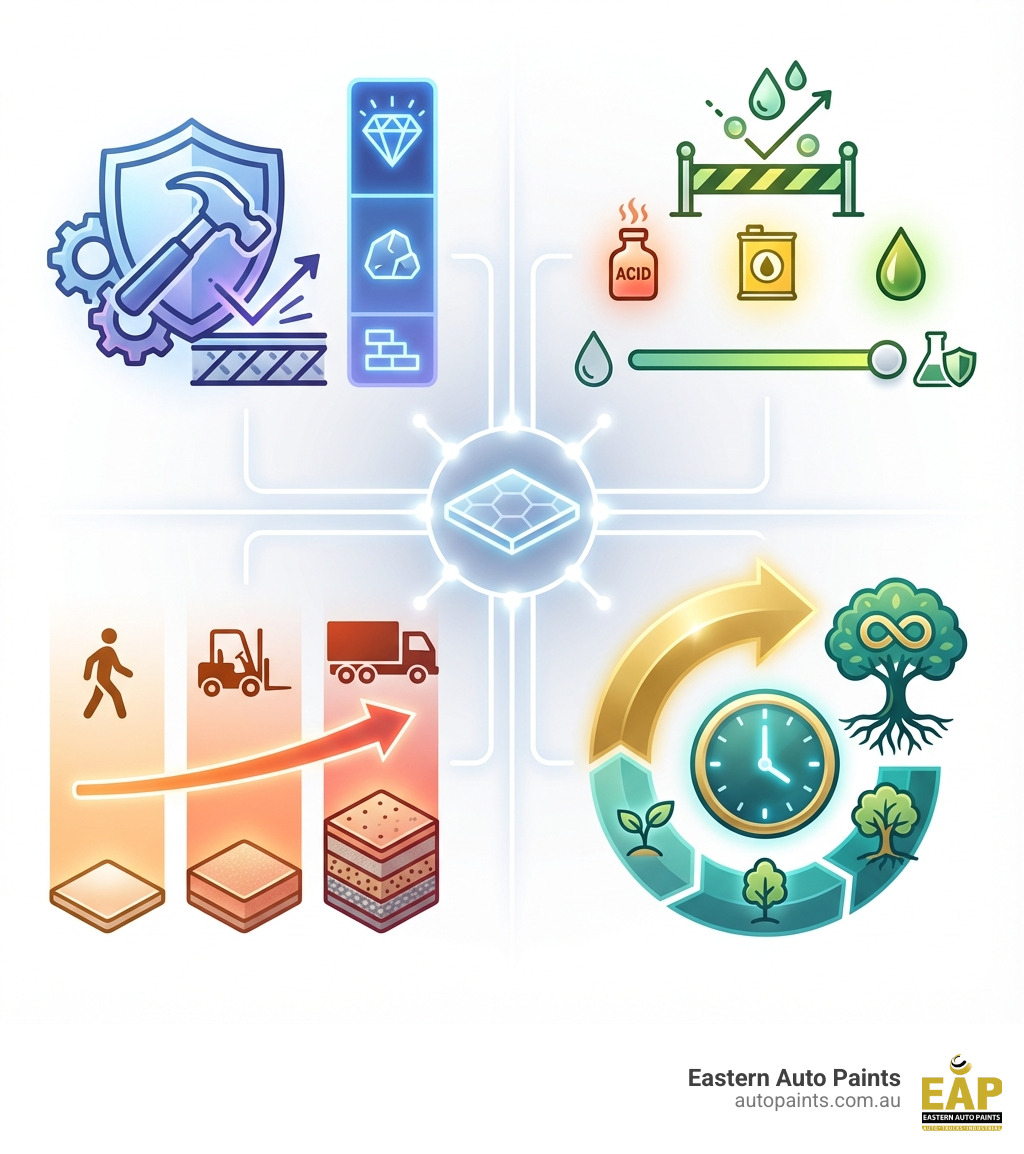
Choosing the right industrial epoxy floor paint system is a critical decision that impacts the longevity, safety, and functionality of your industrial space. The ideal choice depends heavily on the specific demands of your environment, including traffic, chemical exposure, and other conditions.
Understanding Different Epoxy Systems: Coatings, Slurries, and Mortars
Industrial epoxy floor paint refers to a range of resinous flooring systems, primarily differentiated by their thickness and aggregate content. Thickness directly correlates with durability, making it a key factor in your floor's lifespan.
Epoxy Coatings (4-30 mils): The thinnest option, applied like a high-performance paint in one or two coats. They offer good protection, hide minor imperfections, and are ideal for light to medium foot traffic and easy-to-clean surfaces.
Epoxy Slurries (30-250 mils): These self-leveling systems include fine aggregate, increasing their bulk and impact resistance. They are suitable for medium-duty traffic and provide a more robust surface than a simple coating.
Epoxy Mortars (125-250+ mils): The workhorses of industrial flooring, these trowel-applied systems have a high aggregate-to-resin ratio. This creates a dense mixture with exceptional strength and impact resistance, designed for heavy machinery, forklifts, and constant abuse.
Simply put, a thicker system like an epoxy mortar offers greater resistance to impact, abrasion, and chemicals. Matching the system thickness to your expected traffic is crucial for longevity.
A Practical Guide to Choosing Auto Paint Primers can provide additional insights into the role of primers, which is also crucial for industrial floor applications, even though the focus is automotive.
Essential Surface Preparation for Lasting Results
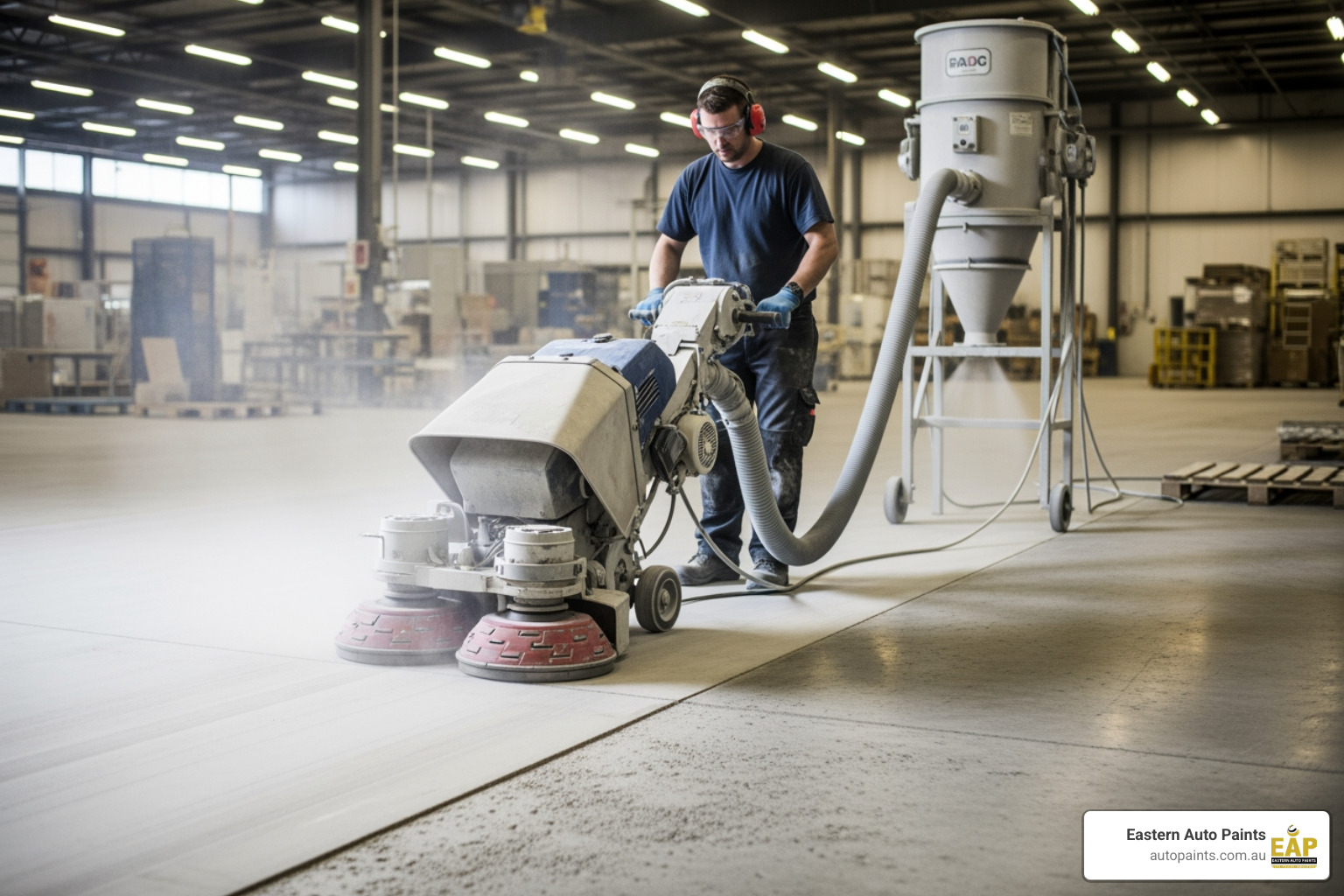
Surface preparation is the most critical phase for any industrial epoxy floor paint system and the number one reason for coating failure. Without proper prep, even the best epoxy will fail to adhere, leading to delamination and blistering.
Effective preparation starts with a clean, dry, and sound surface, free from contaminants like oil, grease, or old coatings. Next, mechanical preparation via diamond grinding or shot blasting is essential to create a rough texture, or Concrete Surface Profile (CSP), for the epoxy to bond to. The target CSP is typically 2-6, depending on the system.
Moisture testing is also vital, as moisture in the concrete can cause failures. Use industry-standard tests like ASTM F1869 (calcium chloride) or ASTM F2170 (in-situ relative humidity) to check moisture levels. If they are too high, a moisture-mitigating primer is required.
Finally, a primer coat is essential to promote adhesion, seal the concrete, and prevent outgassing (air bubbles). Products like EPO Epotec Primer Surfacer and PPG EPS EtchPro are designed for this purpose.
How to Choose the Right Industrial Epoxy Floor Paint
Choosing the right industrial epoxy floor paint means matching the system to your facility's specific operational needs for long-term success. For personalized guidance, contact our team of experts.
Chemical Resistance: For facilities handling corrosive chemicals, acids, or solvents, a standard epoxy is insufficient. Specialised Novalac epoxy systems offer superior chemical resistance and are crucial for areas like battery charging stations, chemical plants, or secondary containment zones.
Heavy Traffic: Areas with constant forklift or heavy vehicle traffic require thicker systems like epoxy slurries and mortars. These provide the compressive strength and abrasion resistance needed to withstand constant wear in loading docks, warehouses, and service areas.
Static Dissipation (ESD): In environments with sensitive electronics like data centres or labs, static electricity can cause damage. Electrostatic dissipative (ESD) coatings are essential. These multi-layer systems use a conductive primer and a dissipative topcoat to safely ground static charges.
UV Stability: Many epoxies can yellow when exposed to direct sunlight or certain artificial lighting. For floors near large windows, outdoors, or in showrooms, a UV-stable topcoat (often an aliphatic polyurethane) should be applied over the epoxy to maintain colour stability.
Low-VOC Options: For projects where indoor air quality is a concern, low-VOC (Volatile Organic Compound) options are available. Both water-based epoxies and 100% solids systems are excellent choices that minimize off-gassing during and after application.
For related metal protection needs within your facility, such as structural steel or equipment, products like Galmet Rust Paint can offer robust solutions. Furthermore, for a deeper dive into industrial coatings beyond flooring, our guide on Industrial Coatings Made Easy: A Deep Dive into PPG Selemix offers valuable information.
Application and Safety Considerations
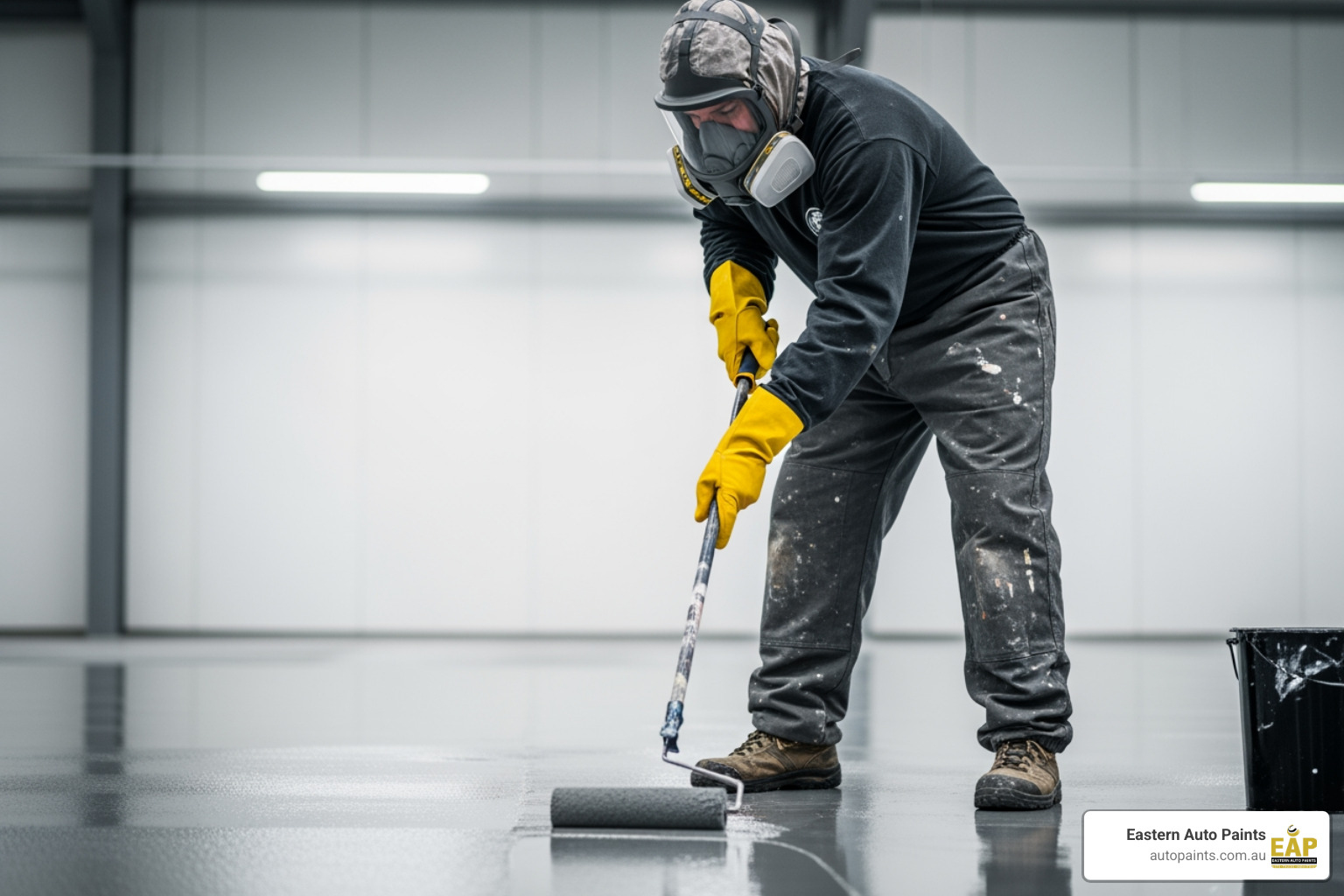
Applying industrial epoxy floor paint is a professional task requiring precision. The complexity of mixing and application often necessitates expertise for a high-performance finish.
The process involves mixing a resin (Part A) and a hardener (Part B), which starts a chemical reaction with a limited working time called "pot life." Accurate measuring and thorough mechanical mixing are crucial to prevent weak spots. Application tools range from rollers for coatings to trowels for mortars, and achieving a uniform thickness is vital for performance.
Curing times vary by product, but full chemical and mechanical resistance can take several days. Safety during application is paramount, and proper personal protective equipment (PPE) is non-negotiable. This includes:
- Respirators or Air-Fed Masks: For solvent-based or isocyanate-containing systems, atmosphere-supplying systems are often required. Learn more in The Complete Guide to Air-Fed Face Masks for Automotive and Industrial Work.
- Protective Eyewear: Safety glasses or goggles.
- Chemical-Resistant Gloves: To protect hands.
- Protective Clothing: Overalls or disposable suits.
Adequate ventilation is critical to disperse fumes. Avoid applying in high humidity or when the surface temperature is near the dew point to prevent defects. For specific adjustments, products like PPG Epoxy Reducer can be used, but always follow the manufacturer's guidelines.
Maintenance, Longevity, and Cost
A properly installed industrial epoxy floor paint system is a long-term investment with significant value derived from its longevity and low maintenance.
Maintenance Requirements: The seamless, non-porous surface is easy to clean. Routine maintenance involves sweeping or dust mopping, with deeper cleaning using pH-neutral cleaners. Promptly cleaning spills prevents staining and maintains the floor's integrity.
Lifespan and Durability: A correctly specified epoxy floor can last ten years or more. Longevity depends on the quality of surface preparation, system thickness, traffic levels, and consistent maintenance. Old epoxy floors can often be recoated to extend their life, avoiding costly removal and replacement.
Typical Costs: The total cost varies based on material, installation, and project size. Key factors include:
- Material Costs: Varies by system type (coating, slurry, mortar) and any specialized additives.
- Installation Costs: Often the largest expense, covering labour, equipment, and the extent of surface preparation required.
- Project Size: Larger projects may have a lower cost per square metre.
Given its durability and low maintenance, the long-term value of an epoxy floor system often outweighs the initial investment by protecting the concrete and creating a safer, more efficient workspace.
Conclusion: Partner with the Experts for a Flawless Finish
Choosing the right industrial epoxy floor paint is a complex decision, but a crucial one for the safety, efficiency, and longevity of your industrial facility. We've seen that understanding the differences between coatings, slurries, and mortars, ensuring meticulous surface preparation, matching the epoxy to your specific environmental demands, and adhering to strict application and safety protocols are all vital steps.
At Eastern Auto Paints, we pride ourselves on being more than just a supplier; we are your partners in achieving the best possible results. For over 34 years, we've been a trusted supplier of high-quality industrial paint supplies in Melbourne and across Australia, known for our expert staff and excellent service. Our team understands the intricacies of industrial coatings and can guide you through selecting the perfect system for your needs.
Whether you're looking for robust chemical resistance, extreme durability for heavy traffic, or specialized static control, we have the knowledge and products to help. Explore our range of 2K Primers and other high-performance industrial solutions today. For personalized advice and to discuss your specific project requirements, we encourage you to contact our team – we're ready to help you achieve a flawless and long-lasting finish.