
PPG Performance Polyerethane Topcoat Overview - What Is It Used For?
What Is PPG Performance Polyurethane Topcoat and Why Does It Matter?
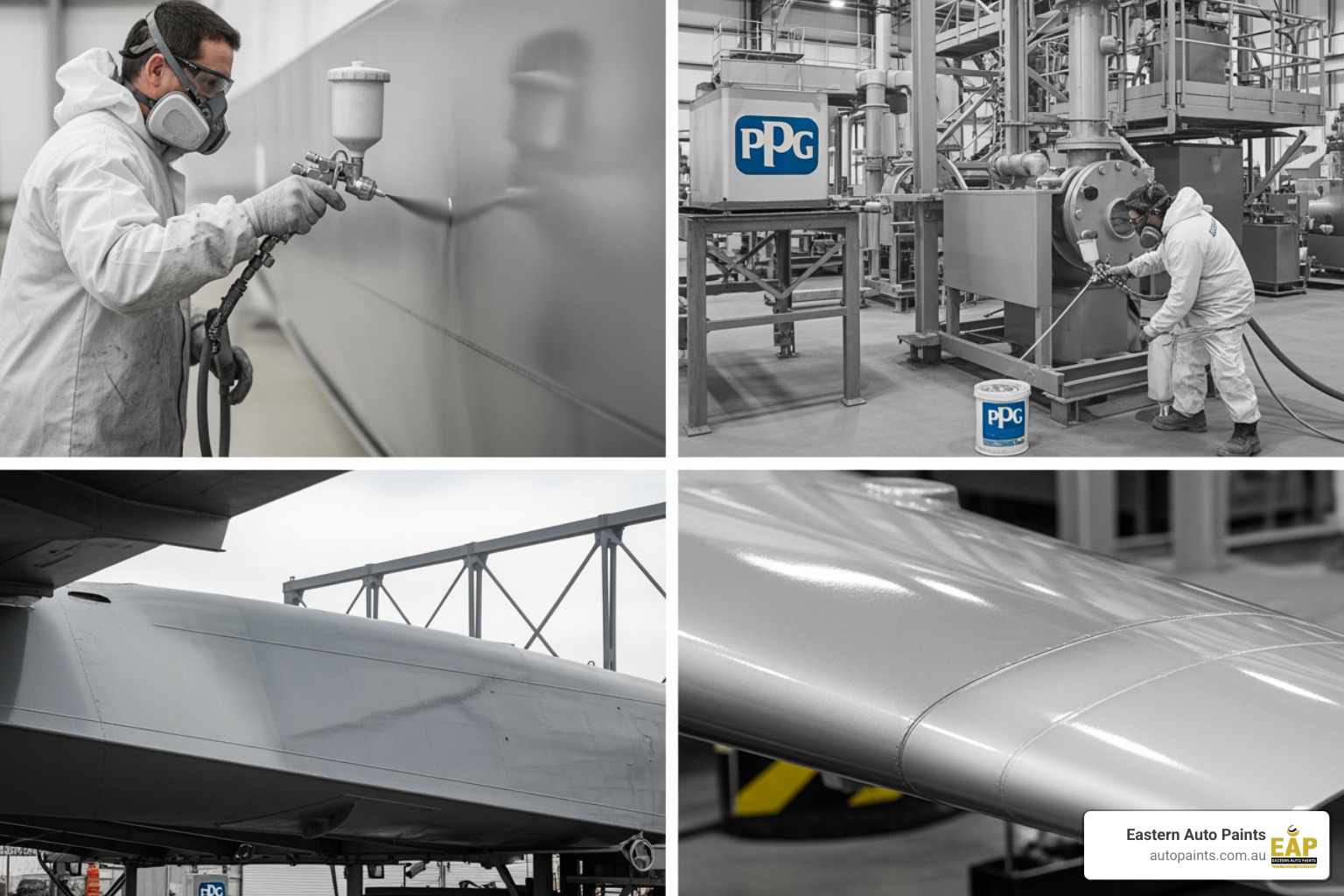
PPG Performance Polyurethane Topcoat is a two-component, non-yellowing, acrylic-modified polyurethane coating designed to protect steel and other surfaces exposed to harsh chemical environments and weathering. Here is a quick snapshot of what makes it stand out:
| Feature | Detail |
|---|---|
| Product Type | Two-component acrylic-modified polyurethane topcoat |
| Key Benefit | Durable, non-yellowing gloss finish with strong weathering resistance |
| Ideal Surfaces | Steel and other surfaces in chemical or weathering environments |
| Colour Range | Over 10,000 colours via the SELEMIX universal tinter system (AS2700 and RAL Classic ranges) |
| Hardener Required | Yes, a PUH (Polyurethane Hardener) is required |
| Gloss Options | Multiple gloss levels available |
| Drying | Touch dry in 30 minutes, hard dry in 24 hours, full cure in 7 days |
Whether you are protecting industrial machinery, agricultural equipment, or steel structures, this topcoat delivers lasting colour and gloss retention without the yellowing that plagues lesser finishes over time.
Overview of Performance Polyurethane Topcoat
At its core, the PPG Performance Polyurethane Topcoat (PPT) is a professionally formulated, two-component system. The acrylic modification is what sets it apart from standard polyurethane finishes, giving it better flexibility and UV resistance over time. The non-yellowing chemistry means the finish stays true to colour even after years of sun and weather exposure. For more on how this product fits into a broader industrial coating system, take a look at our deep dive into PPG Selemix technology.
I'm James Maranis, owner of Eastern Auto Paints, and with over 30 years of experience working across automotive, industrial, and marine coating applications, I have seen how the right topcoat, like PPG Performance Polyurethane Topcoat, can be the difference between a finish that lasts a decade and one that deteriorates within a season. Read on and I'll will walk you through everything you need to know to get the most out of this product.
Understanding the Composition of PPG Performance Polyurethane Topcoat
The chemistry behind PPG Performance Polyurethane Topcoat is what gives it such a high level of industrial "muscle." In simple terms, this is a chemical cure system, meaning it does not just air-dry like a standard household paint. Instead, a chemical reaction occurs between two separate parts to create a rock-hard, resilient film.
This topcoat is an acrylic-modified polyurethane. By blending acrylic resins with polyurethane, PPG has created a product that captures the best of both worlds: the extreme toughness and chemical resistance of polyurethane, combined with the colour stability and sunlight resistance of acrylics. This specific blend ensures that the coating remains non-yellowing, which is critical for whites, light greys, and vibrant colours that would otherwise turn amber under the Australian sun.
Because this is a high-performance industrial product, it contains isocyanates in the curing agent. This is a standard part of high-end 2K (two-pack) systems, but it means that safety is paramount. When we talk to our customers in Melbourne and across Victoria, we always stress that standard paper masks are not enough. For spray applications, you should use an Air Fed Mask or a high-quality PPE mask designed for chemical vapours. For a more detailed look at the technology that powers these industrial finishes, you can explore our deep dive into PPG Selemix.
The Role of Acrylic Modification
The "acrylic" part of the PPG Performance Polyurethane Topcoat name is your best friend when it comes to weathering performance. Standard polyurethanes are incredibly tough, but they can sometimes become brittle or "chalk" when left out in the sun for too long. Chalking is that white, powdery residue you see on old paint that has lost its shine.
By modifying the formula with acrylic, PPG has significantly boosted the UV resistance and gloss retention of the coating. In our experience at Eastern Auto Paints, this makes PPT an ideal choice for outdoor assets like trailers, service vehicles, and structural steel. It allows the surface to expand and contract slightly with temperature changes without cracking. If you want to learn more about how different resins affect the final look of a vehicle, check out our guide to automotive finishes.
Two-Component Chemistry Explained
To get the PPG Performance Polyurethane Topcoat to work, you must mix the base component with a specific PUH hardener. This is often referred to as a 2K system. When these two parts meet, they undergo a process called chemical cross-linking.
Think of it like building a microscopic web where every molecule is tightly locked to its neighbour. This web is what provides the durability benefits that single-part paints simply cannot match. Once cured, the paint is no longer soluble in the solvents that were used to apply it, making it highly resistant to fuel spills and chemical splashes. You can find the necessary hardeners and additives in our store to ensure your mix is perfect every time.
Key Performance Benefits and Industrial Durability

The primary reason professionals choose PPG Performance Polyurethane Topcoat is its sheer longevity. It is designed for the "heavy lifters" of the industrial world—machinery that gets bumped, scraped, and exposed to the elements every single day.
Resistance to Harsh Environments
In protective coatings, we look for a product's ability to withstand "the big three": corrosion, chemicals, and physical impact. PPG Performance Polyurethane Topcoat excels in all of them. It provides an excellent barrier against salt spray and high humidity, which is vital for equipment working in coastal regions or damp environments.
Beyond the weather, it offers impressive solvent resistance. If you accidentally spill hydraulic fluid, oil, or diesel on a surface coated with PPT, you can usually wipe it off without damaging the finish, provided the coating has reached a full cure. This makes it a popular alternative to other systems like the Protec topcoat range, especially when a specific industrial gloss level is required.
Long-Term Aesthetic Appeal
We often tell our customers that a good paint job should be "set and forget." You shouldn't have to worry about your equipment looking dull or faded six months after the job is done. Because of its superior gloss retention and colour stability, PPG Performance Polyurethane Topcoat keeps your business assets looking professional for much longer.
This longevity makes it a very cost-effective protection strategy. While the initial application requires professional equipment and careful mixing, the extended service life means fewer repaints and less downtime for your machinery. For those interested in the final protective layer of a paint system, our ultimate guide to clearcoats provides further context on maintaining that high-gloss shine.
Technical Application and Curing Requirements
Getting a professional result with PPG Performance Polyurethane Topcoat starts long before you pull the trigger on the spray gun. Like any high-performance system, the finish is only as good as the surface preparation.
Professional Application of PPG Performance Polyurethane Topcoat
Before applying PPT, the substrate must be clean, dry, and free of any grease or oils. If you are applying it over a primer, ensure the primer is within its "recoat window." We have found that most adhesion issues come down to poor surface prep; for instance, if a primer has been sitting for more than 48 hours, you will likely need to abrade (scuff) the surface to ensure the topcoat can "bite" into it.
When it comes to mixing, accuracy is everything. You should always use a mechanical stirrer to ensure the base and hardener are completely integrated. Once mixed, pay close attention to the pot life, which is typically around 4 hours at 20-25 degrees Celsius. If you try to spray after the pot life has expired, the paint may look fine in the cup, but it won't level out properly on the surface.
For the best flow and a "mirror" finish, we recommend using a high-quality Anest Iwata spray gun. To dial in the viscosity for your specific environment, using a dedicated Unicolour 2K Thinner will help the paint atomise perfectly. Choosing the right primer for your specific metal type is also a critical step; you can learn more in our guide to auto paint primers.
Curing Times and Environmental Conditions
One of the practical benefits of PPG Performance Polyurethane Topcoat is its relatively fast touch dry time of about 30 minutes. However, "touch dry" does not mean it is ready for use. It takes about 24 hours to reach a hard dry state and a full 7 days for the chemical cross-linking to complete a full cure.
Temperature plays a massive role here. If you are working in a cold Melbourne winter, the curing process will slow down significantly. Conversely, on a hot 35-degree day, your pot life will shrink. To speed up production in a professional setting, many shops use infrared drying solutions to force-dry the panels. If you are unsure about the drying times for your specific project, don't hesitate to contact our team for expert advice.
Colour Matching and Gloss Versatility
One of the most impressive features of the PPG industrial range is the sheer variety of colours available. By using the SELEMIX universal tinter system, we can produce PPG Performance Polyurethane Topcoat in over 10,000 different shades.
Aesthetic Excellence with PPG Performance Polyurethane Topcoat
Whether you need to match a specific corporate identity or a standard industrial colour, we have you covered. The system includes the full AS2700 (Australian Standard) and RAL Classic ranges. This means we can provide everything from "Safety Yellow" for a warehouse to a deep "Midnight Black" for a custom truck build.
Substrate Versatility and Priming
While PPG Performance Polyurethane Topcoat is most commonly seen on steel surfaces, it is remarkably versatile. With the right preparation and the correct primer, it can be applied to aluminium, galvanised steel, and even certain plastics or timbers.
For example, on bare steel, you might use a high-build epoxy primer like the EPO Epotec Primer Surfacer to provide the best corrosion resistance before applying your PPT topcoat. If you are working with non-ferrous metals like aluminium, an etch primer like the Protec PPG Grey/Black Etch Primer is essential for adhesion. Understanding which primer to use is half the battle; find out more in our guide to understanding primer types.
Frequently Asked Questions about PPG PPT
What surfaces can I coat with PPG Performance Polyurethane Topcoat?
While primarily designed for steel, you can coat almost any rigid substrate provided you use the correct primer. This includes aluminium, galvanised metal, and previously painted surfaces that are in sound condition. Always perform a test patch if you are unsure about the existing coating to check for lifting or "frying."
Do I always need a hardener for this polyurethane topcoat?
Yes. PPG Performance Polyurethane Topcoat is a 2K system, meaning it will not cure properly without the PUH hardener. If you attempt to spray it without the hardener, the paint will remain soft and tacky indefinitely and will never reach the level of durability required for industrial use.
How long does it take for the coating to reach a full cure?
At a standard temperature of 25 degrees Celsius, the coating is touch dry in 30 minutes and can be handled after 24 hours. However, the full chemical cure—where it reaches its maximum hardness and chemical resistance—takes 7 days. We recommend avoiding heavy chemical cleaning or high-pressure washing during this first week.
Final Coat, Final Takeaways
In the demanding world of industrial and automotive refinishing, PPG Performance Polyurethane Topcoat stands as a benchmark for durability and aesthetic versatility. Its ability to resist the harsh Australian sun while maintaining a high-gloss, non-yellowing finish makes it a top choice for professionals who refuse to compromise on quality.
From the 10,000+ available colours to the rugged chemical resistance provided by its two-component chemistry, PPT offers a comprehensive solution for almost any protective coating project. Whether you are a large-scale manufacturer or a dedicated enthusiast, getting the mix and application right is the key to a result that looks as good as it performs.
At Eastern Auto Paints, we’ve spent over three decades helping our customers in Melbourne and across Australia find the perfect coating solutions. We are a proud authorised distributor of PPG products and can help you navigate the complexities of colour matching and technical application.
Ready to start your next project? Get in touch with our expert team at our Bayswater or Dandenong South locations for personalised advice and the highest quality supplies.