
Rust Preventer for Cars: Keep Your Ride From Crumbling Into Dust
Rust Preventer for Cars Starts With the Right Protection

Eastern Auto Paints knows a rust preventer for cars can be the difference between a clean, sound underbody and corrosion that quietly spreads through seams, wheel arches and enclosed panels. The good outcome is a vehicle that remains easier to inspect, repair and preserve. The bad outcome is rust hidden beneath damaged coatings or inside cavities until the repair is far more involved.
Key Takeaways
The most effective approach depends on where the vehicle is exposed and whether the metal is clean, rusty, painted or enclosed.
- Oil and lanolin sprays creep into seams and cavities, making them useful for ongoing protection.
- Waxy cavity coatings form a thicker protective film in doors, rockers and chassis sections.
- Hard coatings and epoxy systems can protect prepared exposed metal but need careful surface preparation and inspection.
- VCI (vapour corrosion inhibitor) oils are designed mainly for enclosed spaces and stored components.
- Proper washing, preparation and access to vulnerable areas matter as much as the product chosen. See rust prevention and treatment for guidance on treating corrosion before it progresses.
At Eastern Auto Paints, we help trade applicators, restorers and serious DIY vehicle owners choose coating systems that suit the vehicle, the working environment and the intended finish. Our approach starts with understanding the condition of the metal and the areas most likely to retain moisture, salt and road grime.
Reliable rust prevention is not about covering everything with the thickest possible product. It is about using compatible protection, applying it correctly and making future inspection and maintenance practical. That is the expert-led guidance and dependable coating performance we aim to provide with every project.
Why This Issue Should Not Be Ignored
Corrosion is a natural chemical process where refined iron and steel react with oxygen and moisture to return to their stable oxide state. When road grime, salt water and ambient humidity settle in unventilated vehicle pockets, electrochemical reactions accelerate oxidation. Left unaddressed, surface corrosion deepens into structural pitting and metal loss.
Ignoring rust compromises vehicle structural safety and reduces long-term resale value. Key structural elements like chassis frame rails, suspension mounts and sill panels absorb significant driving loads. When rust thins these components, vehicle crashworthiness and handling performance deteriorate.
Vehicles operated near coastal environments in Victoria, such as around Port Phillip Bay or along the Great Ocean Road, face continuous salt air exposure. Salt acts as an electrolyte, speeding up corrosion rates even on dry days. Treating early oxidation with a targeted rust preventer for cars halts degradation before structural repairs become necessary.
Comparing Every Type of Rust Preventer for Cars
Choosing the correct protection requires matching the chemical formulation to the vehicle area and intended use. Different protective methods suit exposed chassis sections, internal boxed cavities or static engine components. Application and drying times vary by product; always consult the manufacturer's TDS or product label before starting any application.
| Protection Category | Primary Mechanism | Optimal Application Zone | Maintenance Requirement |
|---|---|---|---|
| Oil and Lanolin Sprays | Moisture displacing, self-healing film | Seams, leaf springs, underbody cavities | Periodic inspection and reapplication |
| Waxy Cavity Coatings | Flexible barrier film | Door interiors, rocker panels, frame voids | Periodic inspection and touch-up |
| Epoxy Primers and Hard Coatings | Direct-to-metal impermeable barrier | Prepared bare steel frame, floor pans | Inspect for stone chip impact damage |
| VCI Oils | Contact barrier and vapour phase migration | Enclosed gearboxes, fuel tanks, internal cavities | Long-term closed storage preservation |
Oil and Lanolin-Based Rust Preventer for Cars
Oil and lanolin-based barrier treatments are non-drying, penetrating liquid coatings. When sprayed onto steel surfaces, these low-viscosity formulations migrate into spot-welded lap seams, folded door hem flanges and structural joints.
A key physical advantage of lanolin and oil treatments is their self-healing behaviour. If road gravel scuffs the film, the surrounding active barrier creeps back over the exposed steel to maintain coverage. Because these active films remain supple, they resist thermal expansion stress and vibration without cracking or flaking. Refer to the manufacturer's technical data sheet (TDS) or product label before application, as reapplication frequency depends on driving conditions and wash cycles.
Hard Coatings and Epoxy Primers as a Rust Preventer for Cars
Hard barrier coatings and two-pack (2K) epoxy primers provide a durable, chemical-resistant shield over properly prepared bare steel. High-build epoxy primers form an impermeable cross-linked film that seals out air and moisture, making them an excellent choice during chassis restorations. Understanding the functional differences between coating types is key; exploring our guide on epoxy vs urethane primer explains how primers perform under varying finish requirements.
When using hard coatings, thorough surface preparation is essential. Application over loose scale, oil or trapped moisture creates a pocket where corrosion can spread unnoticed beneath the rigid film. Scuffing existing intact coatings with abrasive pads ensures proper mechanical adhesion. Application and drying times vary by product, so consult the manufacturer's TDS or product label before starting for specific surface profile guidelines, mixing ratios and curing times.
VCI Oils and Electronic Modules
Vapour Corrosion Inhibitor (VCI) oils offer dual-action protection by pairing a fluid contact barrier with active vapour phase corrosion inhibitors. In closed internal cavities, engine blocks or gearboxes, VCI molecules evaporate from the liquid phase and settle onto adjacent vertical and upper metal surfaces. This creates a protective molecular layer across void spaces where liquid oil drains off.
Electronic protection modules aim to suppress corrosion by passing micro-ampere sacrificial electric currents through steel panels. While effective on submerged marine hulls and continuously buried pipelines, their performance across dry or isolated automotive body panels remains variable. Active liquid barriers and physical primers remain the primary trade recommendation for automotive applications.
Common Symptoms, Challenges, and Vulnerable Vehicle Areas
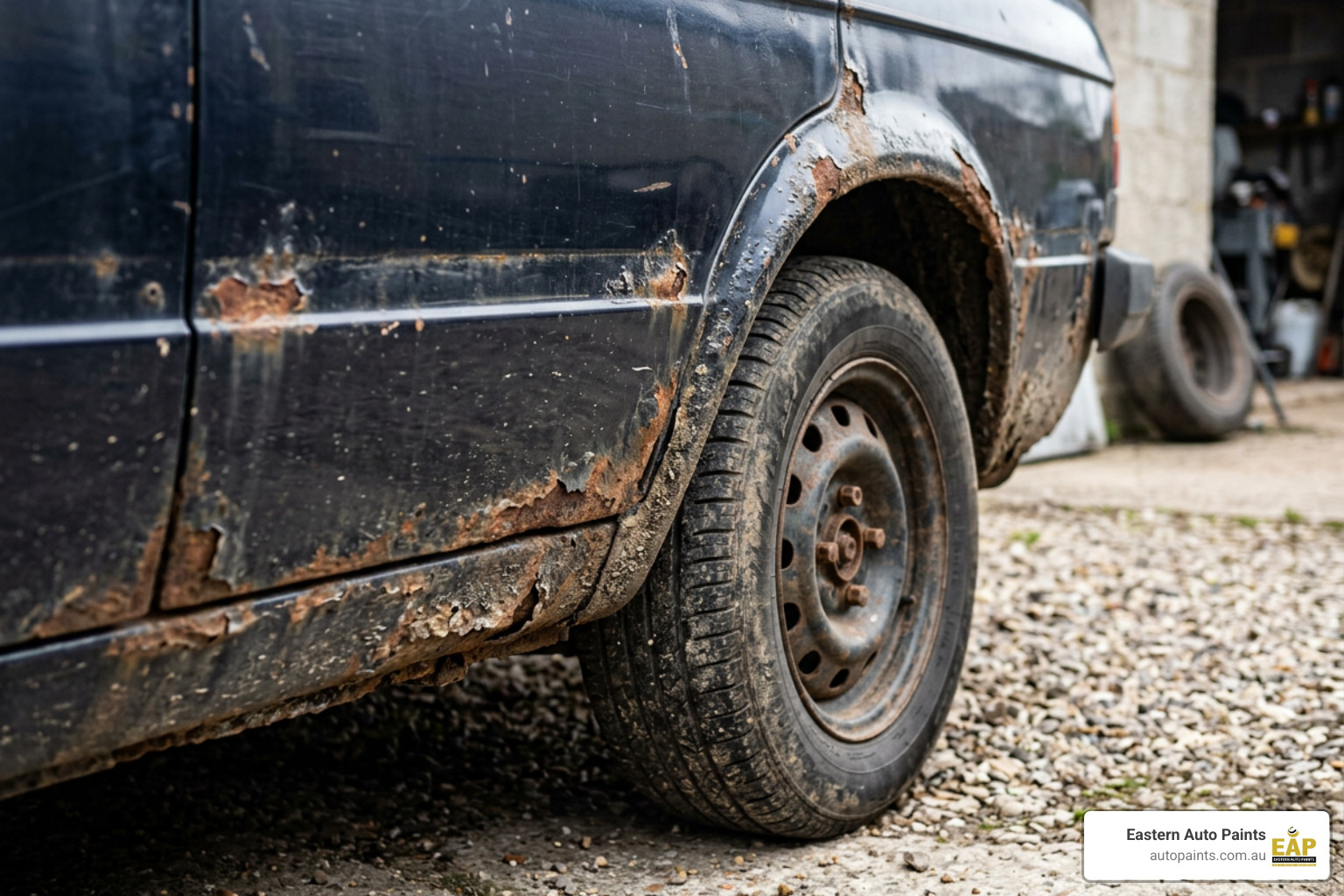
Automotive corrosion rarely develops uniformly. It starts in areas that accumulate dirt, retain moisture and experience gravel impacts.
- Rocker Panels and Box Sills: Lower hollow sills collect road dirt through body drain holes. Trapped sludge retains moisture and rusts the metal from the inside out.
- Door Bottom Seams: Water draining past window weatherstrips gathers along the bottom door fold seam, causing internal flange corrosion.
- Wheel Arches and Inner Fenders: High-speed tyre sling propels stones and road debris, chipping factory coatings and exposing bare steel to water spray.
- Frame Rails and Crossmembers: Box-section chassis rails accumulate dirt and salt slush that is difficult to wash out during routine cleaning.
- Floor Pans: Salty mud buildup beneath floor pans combined with damp interior carpets creates a double-sided corrosion risk.
Professional Services vs DIY Application Strategies
Applying automotive rust protection can be approached as a professional shop service or a structured DIY project using aerosol spray kits. Professional shops use high-pressure airless units, specialised extension lances and vehicle hoists to ensure comprehensive underbody coverage.
For restorers and home mechanics, DIY application using quality aerosol cans or gravity-feed spray guns offers flexibility. Specialised 360-degree flexible extension wands allow applicators to fog cavity waxes into internal frame rails and door shells without dismantling body panels. Explore our comprehensive collection of rust repair and prevention products to select suitable formulations for your setup.
Work environment safety is critical when applying protective coatings. Always consult the product safety data sheet (SDS), product label and relevant SafeWork or WorkSafe Victoria guidelines to determine the required personal protective equipment (PPE), such as respirators, protective overalls and eye protection.
What a Personalised Experience Actually Looks Like
Selecting rust protection products is not a one-size-fits-all process. At Eastern Auto Paints, our technical staff evaluate your specific project variables before recommending a product system.
When you speak with our team at our Bayswater or Dandenong South branches, we look at the metal's current condition, exposure environment and final aesthetic requirements. A coastal four-wheel drive requires a different barrier strategy than a vintage sedan undergoing a bare-metal restoration. We guide you through correct panel washing, rust conversion steps and compatible topcoats so your finish lasts.
The Value of Consistency and an Ongoing Relationship
Effective vehicle preservation relies on ongoing inspection and periodic maintenance. No single underbody barrier lasts indefinitely against constant gravel abrasion and road spray.
Establishing a routine inspection schedule allows you to spot scuffed areas, cleared drain holes and worn wheel arches before surface oxidation starts. By working with a consistent supplier for your touch-up materials, custom spray cans and panel primers, you maintain coating compatibility across every stage of vehicle ownership.
What to Expect at Eastern Auto Paints
Eastern Auto Paints supplies professional body shops, trade applicators, industrial contractors and vehicle restorers across Melbourne with high-grade automotive paint and refinishing supplies. We focus on expert advice, advanced colour-matching technology and reliable technical support.
Our inventory includes:
- High-build 2K epoxy primers and metal etch primers
- Cavity waxes, underbody sealers and protective coatings
- Custom-filled aerosol spray cans for localised touch-ups
- Spray equipment, compressors and panel preparation tools
Explore our wide range of automotive paint and protection supplies or discuss custom colour matching solutions via our dedicated spray cans service page.
When to Get in Touch or Take Action
Addressing surface corrosion early saves time, structural integrity and repair costs. Whether you are treating early chassis spots or planning a full restoration, having the right surface prep and coating advice makes all the difference.
Visit our Melbourne store locations in Bayswater and Dandenong South, or contact our technical advice team online through our Contact Us page to discuss your vehicle protection requirements.
Useful next steps:
- Speak with us through the Contact Us page.
- Browse suitable rust repair and prevention products.
- Explore broader automotive paint and protection supplies.
- Discuss localised colour touch-ups through our spray cans service page.
Frequently Asked Questions About Rust Prevention for Cars
How often should a rust preventer for cars be reapplied?
Reapplication schedules depend on the product type, driving conditions and wash cycles. Non-drying fluid and lanolin coatings in high-washout areas like wheel arches generally require periodic inspection and touch-up. Hard epoxy primers and waxy cavity coatings offer longer service intervals but should still be inspected annually for stone chip damage or cracking. Always check the manufacturer's TDS for specific maintenance guidance.
Can a hard undercoating trap moisture and cause hidden rust?
Yes. If a rigid hard coating is applied over unprepared steel, loose scale or existing moisture, or if the cured film cracks from impact damage, water can seep underneath. Moisture trapped behind an impermeable shell accelerates localised pitting while concealing the damage from visual inspection. Thorough surface cleaning and regular coating checks prevent this issue.
Is rust proofing necessary on modern vehicles with galvanised steel?
While modern vehicles utilise zinc-galvanised sheet steel on primary body panels, galvanisation provides a sacrificial layer that thinned or chipped paint can exhaust over time. Gravel abrasion along wheel arches, frame welds, suspension mounting points and boxed sill interiors remain vulnerable to rust, particularly in coastal or severe environments. Applying targeted cavity protection helps preserve these high-risk areas.
How do I prepare a vehicle underbody before applying a rust preventer?
Surface preparation starts with power washing the vehicle underside to remove grease, mud and salt accumulation. Allow the chassis to dry thoroughly. Flaking rust and loose paint scale must be wire brushed or sanded back to solid steel. Grease or oil residues should be cleaned with a dedicated wax and grease remover before applying primers or barrier films.
Can I paint over a surface treated with an oil or lanolin rust preventer?
No. Oil, lanolin and fluid barrier coatings leave an active non-drying film that prevents paint adhesion. If topcoating or priming is required, all oil-based rust preventers must be removed using solvent cleaners or degreasers, followed by sanding bare steel to the manufacturer's specified surface profile before painting.