
The Skinny on Thinning Your Automotive Touch Up Paint
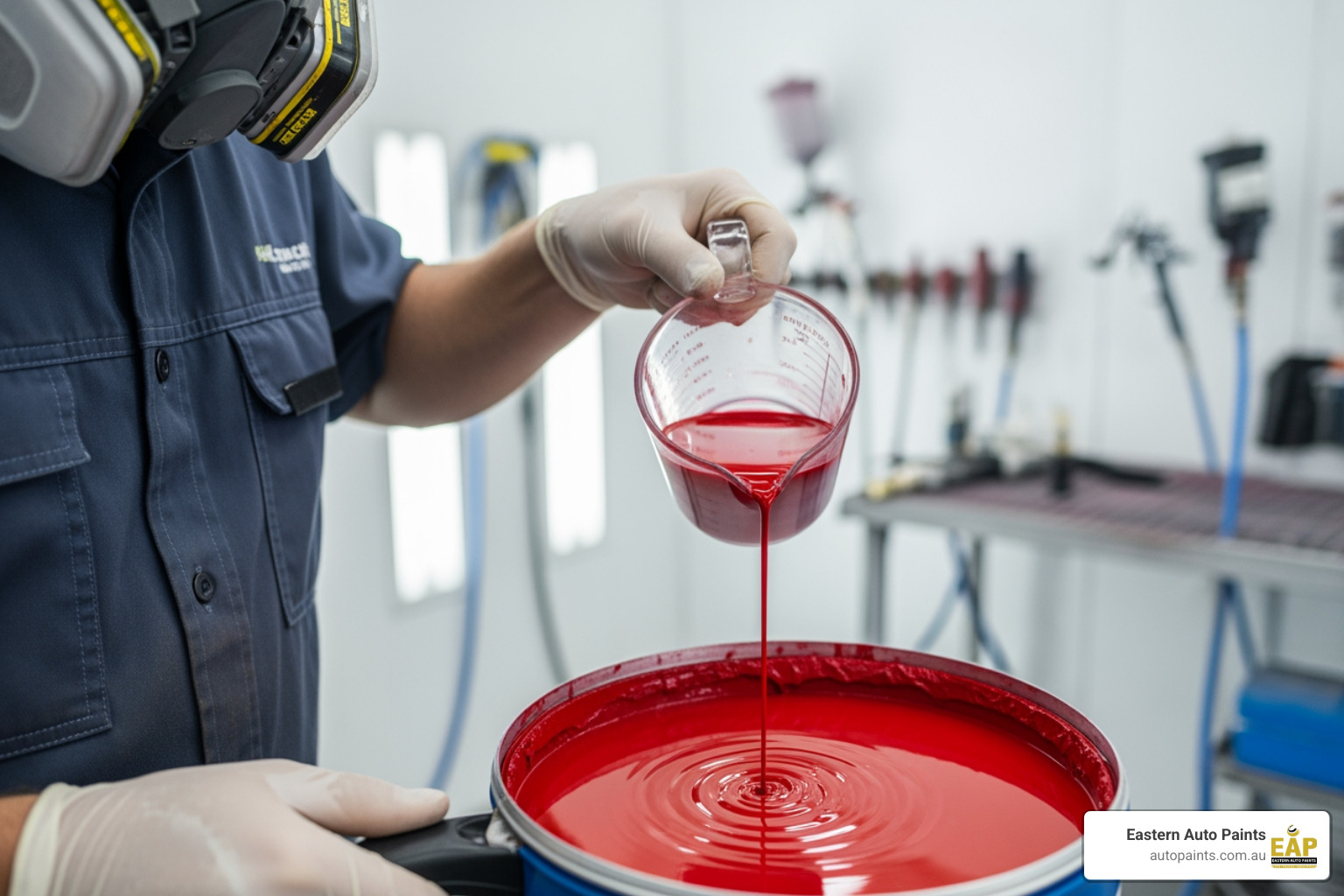
Thinning car paint is the essential process of adding a compatible solvent to automotive coatings to reduce their viscosity. This ensures the paint flows, atomises, and levels correctly during the application process. When done correctly, it results in a smooth, factory-quality finish that enhances the vehicle's appearance and protection.
At Eastern Auto Paints, we have spent over 34 years as a leading supplier of automotive, truck, and industrial paints across Victoria, Sydney, and Queensland. Based in Melbourne, our expert staff understands that the difference between a professional result and a failed project often comes down to the mixing room. We provide the same high-end products trusted by professional repairers and large-scale manufacturers to enthusiasts looking for the best results.
Key Fundamentals of Thinning
Before you begin mixing, it is vital to understand a few core principles that govern automotive refinishing. Every paint system is chemically unique and requires a specific approach to achieve the desired outcome.
- Match the thinner to your paint type. Acrylic, enamel, and 2K (two-component) paints each require a specific, compatible thinner to function correctly.
- Always consult the Technical Data Sheet (TDS). This document is the manufacturer's recipe for success, providing exact ratios that vary between different product lines.
- Measure viscosity accurately. Professionals use tools like a Calibrated mixing cup to ensure the paint is at the perfect thickness for the spray equipment being used.
- Add thinner gradually. It is much easier to add more solvent than it is to fix a mix that has become too watery and prone to running.
- Avoid household substitutes. Never use products like nail polish remover or generic hardware store solvents, as these can cause paint separation and poor adhesion.
I'm James Maranis, owner of Eastern Auto Paints. My goal is to ensure every customer has the knowledge and the right auto-paint products to succeed. This guide will walk you through the technical details of thinning car paint to help you achieve a professional-grade finish.
Understanding the Purpose of Thinning Car Paint
When we discuss thinning car paint, we are primarily managing its viscosity. In simple terms, viscosity is a measure of how thick a liquid is and how much it resists flowing. Think of the difference between water, which has low viscosity, and honey, which has high viscosity. For a successful auto paint application, the paint must be thin enough to move through the internal components of an auto body paint gun.
The Science of Atomisation
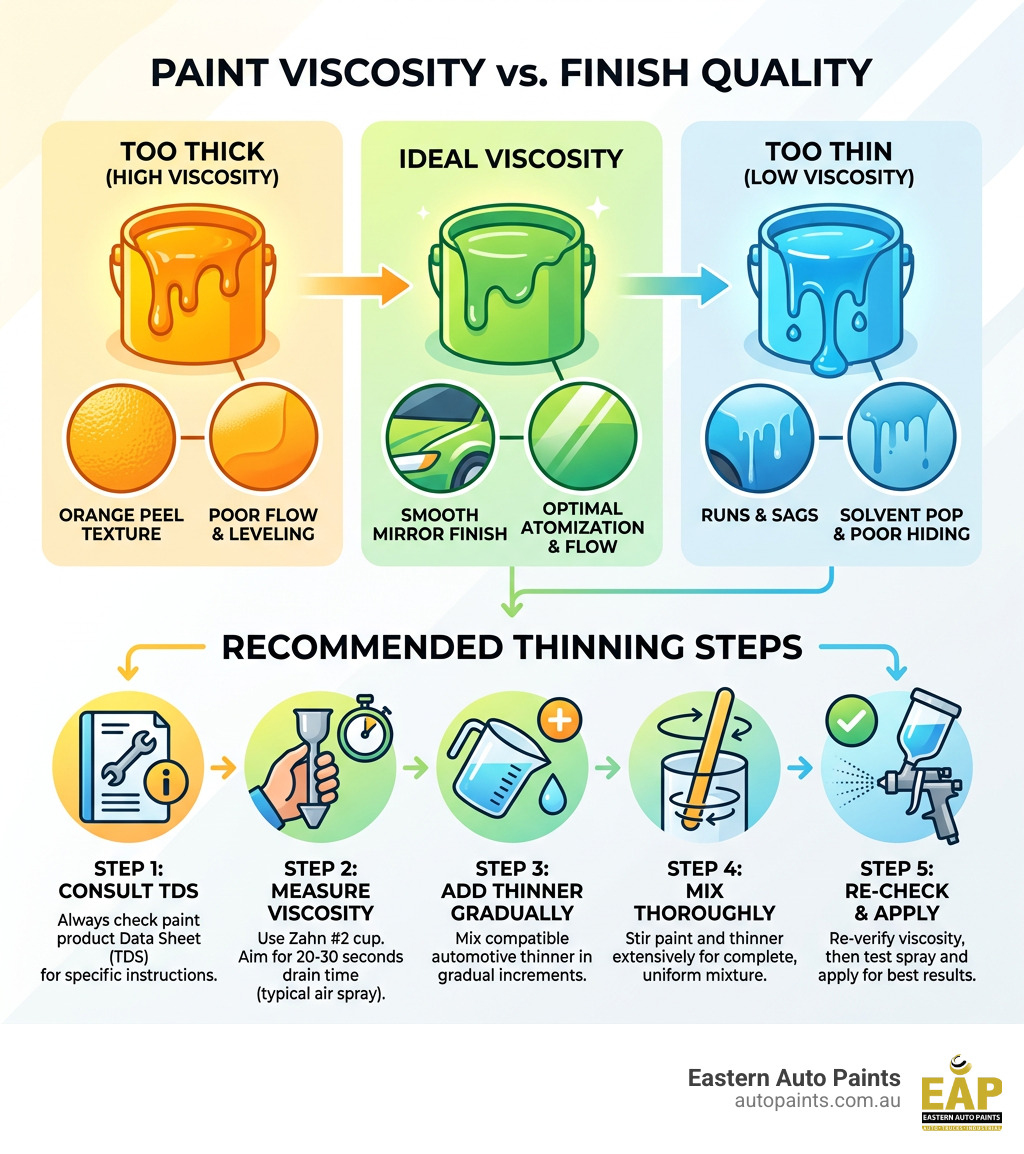
Atomisation is the process of breaking liquid paint into a fine mist of tiny droplets as it leaves the spray gun nozzle. If the paint is too thick, the gun cannot break it apart effectively, leading to a bumpy, uneven texture known as orange peel. Conversely, if the paint is too thin, it loses its structural integrity and will likely run or sag off the vertical panels of the vehicle. By adjusting the fluid flow through thinning, we ensure the paint levels out into a mirror-like finish before it begins to dry.
Why Specific Solvents are Required
The chemistry of paint for auto body is incredibly precise. Different paints rely on specific resin systems that only dissolve or "reduce" in certain solvents. We measure a solvent's strength using the Kauri-Butanol (KB) value, where a high value indicates a more aggressive or "hotter" solvent. Using the wrong solvent can lead to chemical rejection, where the paint clumps together rather than thinning out.
Evaporation Rates and Finish Quality
The evaporation rate of a thinner is equally critical to the final result. If a solvent evaporates too quickly, the surface of the paint "skins over" while solvent vapours are still trapped underneath. This leads to tiny bubbles known as solvent pop. If the solvent evaporates too slowly, the paint remains wet for too long, which increases the risk of dust contamination and runs. This balance is especially important when following a practical guide to choosing auto paint primers, as the primer must provide a stable, dry foundation for the topcoats.
Choosing the Right Solvent for Your Paint Type
Selecting the correct thinner is the most important decision you will make in the mixing room. Using an incompatible solvent can cause the paint to "clabber" or thicken into a jelly-like mass, ruining an expensive batch of paint. At Eastern Auto Paints, we supply a range of professional-grade solvents tailored to specific paint chemistries to ensure compatibility and performance.
Dedicated Thinners for Professional Results
- Acrylic Thinner: This is specifically formulated for acrylic lacquer systems. It provides the correct "bite" into the previous layer and the ideal evaporation rate for a smooth, high-gloss finish.
- Unicolour 2K Thinner: Designed for two-pack urethane systems, this thinner helps the resin and hardener flow together perfectly. It is essential for achieving the durability and depth of gloss expected from 2K coatings.
- Enamel Thinner 804: This is a dedicated reducer for enamel topcoats. It ensures the paint maintains its durability and gloss while providing the necessary flow for large surface areas.
- Multi Thinner 808: A versatile, high-quality solvent suitable for a variety of cleaning and thinning tasks in a professional workshop. It is an excellent all-rounder for general workshop use.
Technical Data Sheets and Manufacturer Ratios
We cannot stress this enough: always check the Technical Data Sheet (TDS) for the specific paint you are using. The TDS is the "recipe book" provided by the manufacturer that outlines the exact mixing ratios for paint, hardener, and thinner. For example, a clear coat might require a 2:1 ratio (two parts paint to one part hardener) with a 10% addition of reducer, while a cellulose primer might require a 50/50 mix.
Relying on guesswork is a major liability in automotive refinishing. Following the TDS ensures that the chemical bond between layers is secure, which is essential for mixing matching car paint colours. When you are aiming for professional tips for a perfect car colour match on vehicles, the correct thinning ratio ensures the metallic flakes or pearls sit at the right angle, preventing the colour from looking "off" once dry.
Measuring Viscosity and Mixing Ratios Safely
To achieve a professional result, you need to move beyond "eyeballing" the mix. Professionals use a viscosity cup, such as a Zahn number 2 cup, to measure exactly how thick the paint is. This process involves filling the cup and using a stopwatch to see how many seconds it takes for the paint to flow out in a steady stream.
Finding the Sweet Spot
For most air spray materials, a drain time of 20 to 30 seconds is the ideal range. If your paint takes 40 seconds to drain, it is too thick and needs more thinner to atomise correctly. This precision is what separates a backyard job from a showroom finish. Choosing whats a good automotive paint gun top picks for every budget and skill level is only half the battle; the gun can only perform as well as the paint you put into it.
Temperature and Viscosity
It is important to note that temperature significantly affects viscosity. In the heat of a Queensland summer, paint will naturally become thinner, while in a cold Melbourne winter, it will thicken. The ideal working temperature for most coatings is between 20 and 25 degrees Celsius. If you are working outside this range, you may need to adjust your thinner selection to a "slow" or "fast" version to compensate for the environmental conditions.
Step-by-Step Guide to Thinning Car Paint for Different Applications
The way you thin paint depends heavily on how you plan to apply it. A small touch-up bottle for stone chips needs to be thicker than the paint used in a high-volume spray gun. Understanding these nuances is key to a successful repair.
Specific Application Ratios
- Touch-Up Bottles: Over time, the solvents in small touch-up bottles evaporate, making the paint stringy. Add a few drops of the correct thinner and shake vigorously. The goal is a consistency similar to full-cream milk.
- Base Coats: Most base coats are thinned at a 1:1 ratio or as specified by the TDS. This allows for fast drying and easy orientation of metallic particles. For custom repairs, we offer colour matching spray paints where the thinning is already professionally handled.
- Clear Coats: For products like Concept 1K Unique Clear Acrylic, thinning is usually minimal—often around 10% to 20%—to ensure a high-build, protective layer that doesn't run. For low-VOC requirements, the HS 2K Eurolak Clear is an excellent low VOC clear coat option.
- Primers: High-build primers are often kept thicker to fill sanding marks, but they still need enough thinner to prevent the spray gun from spitting. Always check if your primer requires a specific hardener before adding thinner.
If you are using a comprehensive guide to touch up paint spray cans, the thinning has already been done for you by the manufacturer to suit the aerosol nozzle.
Best Practices for Small Batches
When working with small amounts of paint, it is easy to over-thin. We recommend the "incremental addition" method. Add your thinner in 5% increments, stirring thoroughly between each addition. Always perform a test spray on a spray-out card or a scrap test panel before touching the vehicle. This allows you to check for orange peel or runs. If the colour looks slightly different than expected, you may need our professional colour-matching services to ensure a seamless blend. We use advanced technology rather than matching by eye to ensure absolute precision.
Avoiding Common Pitfalls and Application Errors
Improper thinning car paint is the root cause of the most common finish defects. Understanding why these happen allows you to prevent them before they ruin your work.
Orange Peel and Solvent Pop
Orange Peel is caused by paint that is too thick or a solvent that evaporates too fast. The paint hits the surface and "freezes" before it can flow flat, leaving a texture like the skin of an orange. Solvent Pop looks like tiny pinholes. It happens when the top layer of paint dries too quickly, trapping solvent vapours underneath that eventually burst through the surface. This is common when using a "fast" thinner in hot weather.
Dieback and Gloss Loss
Dieback is a loss of gloss as the paint cures. It often occurs when too much thinner is used, causing the paint film to shrink excessively as the solvent evaporates. This shrinkage can also reveal sanding marks that were previously hidden. If you encounter these issues, you can often sand back the affected area once fully cured and try again with a corrected mix. For expert advice on correcting these issues, you can contact our team at any time.
Safety Precautions and Environmental Factors
Working with automotive thinners involves powerful chemicals like Methyl Ethyl Ketone (MEK) and Toluene. These are highly flammable and can be harmful if inhaled or absorbed through the skin. Always wear appropriate PPE, including chemical-resistant gloves and a high-quality respirator mask.
Advanced Respiratory Protection
For 2K paints containing isocyanates, a standard carbon filter mask is often insufficient. We strongly recommend using an Air Fed Mask or atmosphere-supplying system for maximum safety. These systems provide a constant stream of clean air, ensuring you are not exposed to harmful vapours during the spraying process. Always follow a workplace risk assessment when handling these professional-grade chemicals.
Managing Local Conditions
Environmental factors in Victoria, Sydney, and Queensland play a huge role in thinning. In high humidity, paint can "bloom," developing a milky white haze. Using an anti-bloom thinner can help mitigate this. In the heat of summer, you may need a "slow" thinner to give the paint enough time to level out before it dries. You can find more about these environmental adjustments and our full range of products on our auto-paints page.
Frequently Asked Questions about Thinning Car Paint
What types of automotive paints do you offer?
We offer a wide range of paints, including automotive spray paint, touch-up kits, primers, and clear coats to meet various project needs. Our selection includes top brands trusted by professionals across the industry.
How do I choose the right paint for my car?
Consider factors like your vehicle's original paint code, the type of repair (e.g., scratches or full-body), and the desired finish. Our team can help you make the best choice based on your specific requirements.
Can you match my car's factory colour?
We use advanced colour-matching technology to create precise matches for your car's factory paint. We do not match by eye, ensuring that every custom mix is as accurate as possible. You can learn more about this on our colour-matching page.
Do you offer products for DIY projects?
Absolutely! Our automotive car paint supplies include user-friendly options for DIY enthusiasts and guidance to help you achieve professional results. We provide the same high-quality products to home enthusiasts that we supply to professional workshops.
What makes your products stand out?
Our products are sourced from trusted brands, ensuring superior quality, durability, and finish. Additionally, we provide expert advice backed by over 34 years of experience to support every project, from small touch-ups to full resprays.
Final Coat Thoughts
Mastering the art of thinning car paint is a fundamental skill that determines the quality and longevity of your automotive finish. By understanding the relationship between viscosity and atomisation, choosing the right high-quality solvents like Unicolour 2K Thinner or Acrylic Thinner, and strictly following Technical Data Sheets, you can achieve a factory-quality result.
At Eastern Auto Paints, we are committed to providing the best products and expert advice to the automotive, truck, and manufacturing industries. Whether you are based in Victoria, Sydney, or Queensland, our team is ready to help you navigate the complexities of paint preparation and application. From advanced colour matching to providing the latest in low VOC clear coat technology, we have the solutions you need.
Ready to start your next project with the right gear? Explore our full range of auto-paints or contact our team today for expert guidance on your specific application.