

The Definitive Guide to Why Car Makers Use 2K Clear on Top of a 1K Base
Why Is the 1K Basecoat and 2K Clear Coat Combination Common in Modern Automotive Paint Systems?
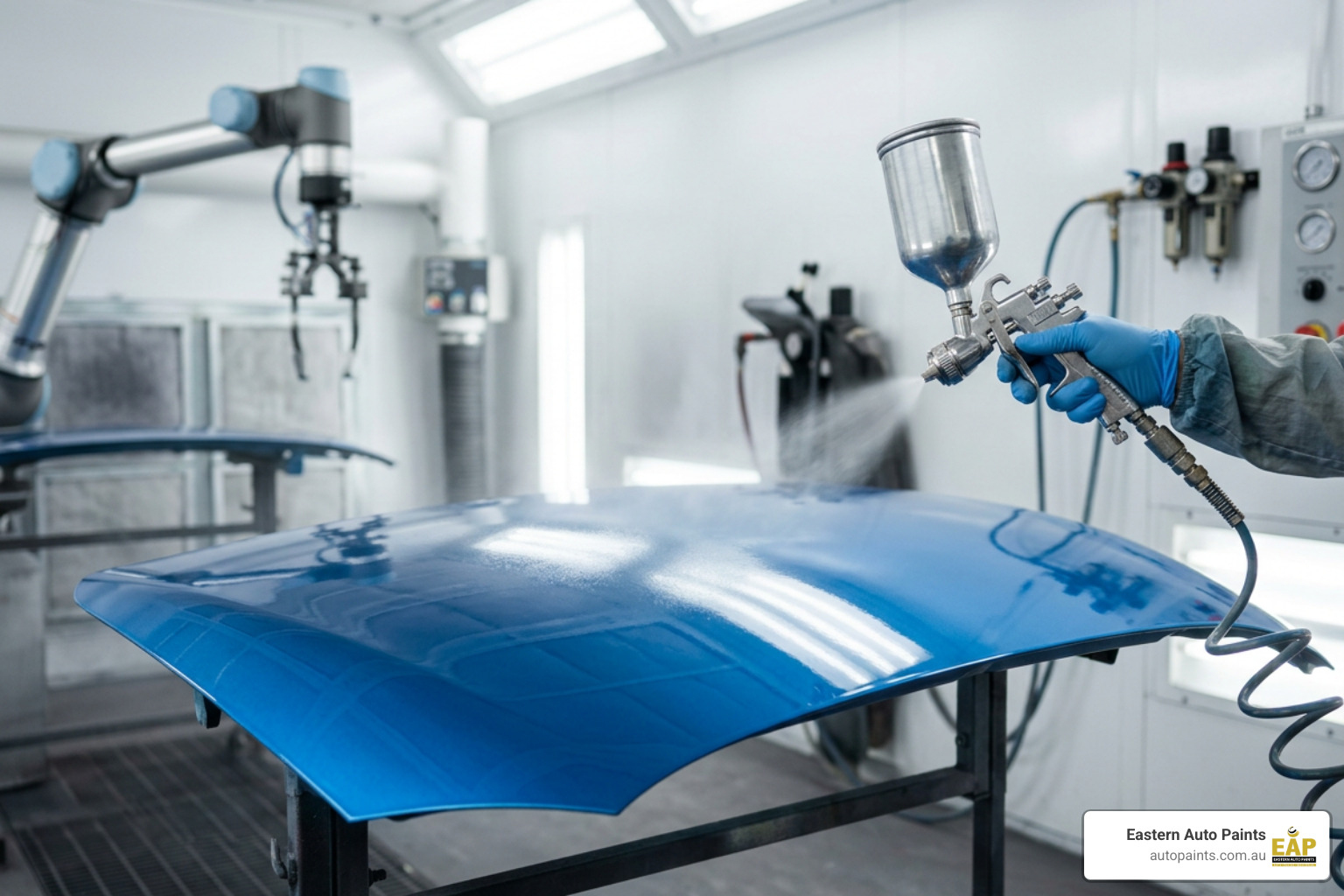
Most modern automotive paint systems separate colour from protection. The basecoat provides the colour, metallic effect, or pearl effect, while a chemically cured clear coat sits over the top to help provide gloss, UV resistance, chemical resistance, and physical durability.
This is why many OEM-style systems use a 1K basecoat with a 2K clear coat. The exact formulation can vary between manufacturers, production lines, and refinishing products, but the general logic is consistent: the colour layer is designed to apply smoothly and dry efficiently, while the clear coat is designed to form the tougher protective film.
A 1K basecoat is usually easier to apply in thin, even layers. It allows pigments and effect particles to settle with less disturbance, which helps create consistent colour and appearance. On its own, however, a basecoat is generally far less resistant to UV exposure, solvents, fuel, moisture, and abrasion than a properly cured clear coat.
The 2K clear coat completes the system. Once mixed with its hardener or activator, it cures through a chemical reaction that creates a more durable film over the colour layer. In practical terms, this helps the paint retain gloss, resist environmental exposure, and protect the visual finish for longer than an exposed basecoat would typically manage.
Why Does the Basecoat Need a Protective Clear Coat?
The basecoat is mainly responsible for appearance. It carries the colour, metallic flakes, pearl pigments, or other visual effects that define the vehicle's finish. Because it is designed to dry quickly and support controlled pigment alignment, it is not usually engineered to be the final exposed surface.
If a basecoat is left without a suitable clear coat, it may be more vulnerable to fading, staining, oxidation, and marking. UV radiation can degrade pigments and resins over time, while moisture, road grime, industrial fallout, and fuel spills can all affect a less protected colour layer.
Clear coat failure also shows why the protective layer matters. When a clear coat loses adhesion or breaks down, the finish can become cloudy, dull, cracked, or flaky. Once the colour layer is exposed, repair may require sanding and refinishing rather than simple polishing.
This is particularly relevant in harsh climates. Heat, intense ultraviolet (UV) radiation, and coastal air can all contribute to paint degradation. A well-matched, chemically cured clear coat helps slow that process by sealing the colour layer and providing the surface properties the basecoat is not designed to deliver on its own. For a deeper look at clear coat performance, see does it really matter the ultimate guide to automotive clearcoats.
What Are the Chemical Differences Between 1K and 2K Coatings?
The terms "1K" and "2K" refer to how the coating dries or cures.
| Feature | 1K (Single-Pack) Coatings | 2K (Two-Pack) Coatings |
|---|---|---|
| Components | Single component, with no separate hardener | Paint or clear plus hardener/activator |
| Drying or curing method | Mainly physical drying through solvent evaporation | Chemical curing through polymer cross-linking |
| Film properties | Generally more solvent-sensitive once dry | Typically stronger chemical and abrasion resistance once cured |
| Common role | Colour basecoat, touch-ups, small parts | Protective clear coat or high-wear topcoat |
A 1K basecoat dries mainly as solvent evaporates. As the film dries, the pigment and resin remain on the panel. This makes it useful for laying down colour in controlled coats, especially where metallic and pearl alignment matters. However, because it does not normally cure into a dense cross-linked film, it remains less resistant to solvents, UV exposure, moisture, and physical wear than a cured 2K film.
A 2K clear coat works differently. The clear resin is mixed with a hardener or activator, which starts a chemical reaction. As the coating cures, polymer chains link together to form a denser film. This cross-linked structure is a major reason 2K clears are commonly used where gloss retention, scratch resistance, chemical resistance, and weather durability are important.
This division of labour is the key point. The 1K basecoat is used because it is good at delivering colour and visual control. The 2K clear is used because it is better suited to long-term protection. To learn more about identifying coating types, see 5 practical ways to identify types of clearcoat.
Why Do Manufacturers Use This Layered System Instead of One Paint Layer?
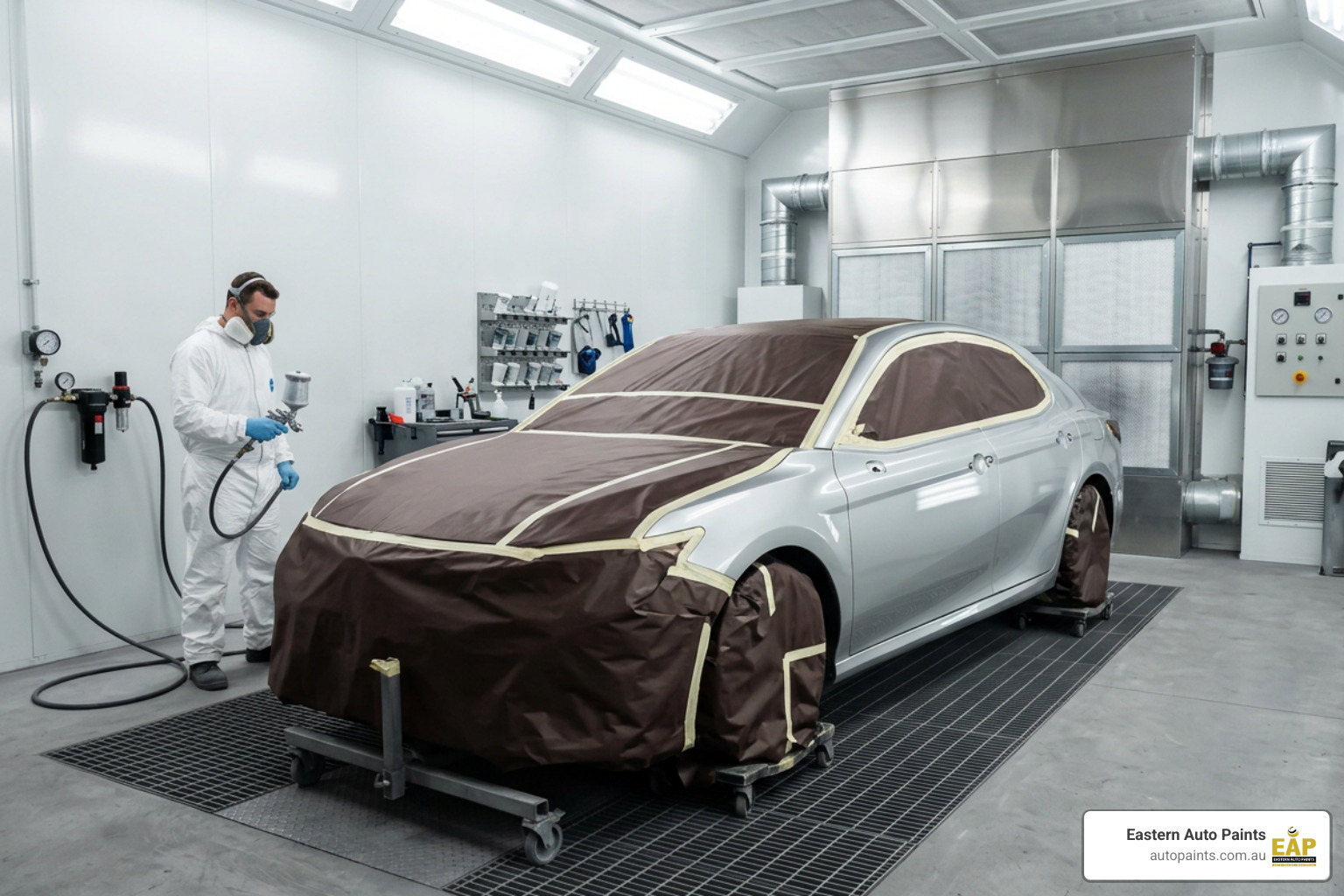
Using separate layers gives manufacturers and refinishers more control than trying to make one coating do every job equally well.
First, the basecoat can be optimised for colour accuracy, coverage, and effect-pigment control. Metallic and pearl finishes need particles to sit consistently across the panel. A basecoat that flashes off in a controlled way helps reduce issues such as mottling, striping, or uneven colour travel.
Second, the clear coat can be optimised for surface protection. It provides much of the final gloss, depth, and weather resistance. It also gives the finish a layer that can often be sanded and polished to correct minor defects, depending on the product and film build.
Third, the system supports production efficiency and repairability. OEM and refinish systems are designed around defined flash times, recoat windows, film builds, and curing conditions. While those details vary by product, the basecoat-clearcoat structure lets each layer perform a clear role within the overall paint system.
For most modern automotive finishes, this approach provides a practical balance of appearance, durability, and process control. It is not that a 1K basecoat is "weak" in every respect or that every 2K clear performs the same way. Rather, each layer is formulated for a different purpose, and the combination helps produce a finish that is both visually accurate and more durable in service.
How Does the Clear Coat Bond to the Basecoat?
For the system to work properly, the clear coat must bond reliably to the basecoat. This is usually achieved through a combination of timing, surface condition, and product compatibility.
After the basecoat is applied, it needs to flash off enough for the clear coat to be applied without disturbing the colour layer. The clear is then applied within the product's recommended recoat or clear coat window. During this period, the basecoat surface is typically in a suitable condition for overcoating, and the clear can form a strong bond as it cures.
If that window is missed, it does not necessarily mean the job has failed, or that clear coat cannot be applied. It usually means the painter may need to follow additional preparation steps, such as scuffing or recoating according to the manufacturer's instructions.
This is where the Technical Data Sheet (TDS) matters. Flash-off time, recoat windows, sanding requirements, mix ratios, and cure times can vary significantly between products. Following the relevant TDS is the safest way to avoid adhesion problems, solvent trapping, lifting, wrinkling, or delamination.
What Safety Considerations Apply to 2K Clear Coats?
Many 2K clear coats use hardeners that contain isocyanates, which require careful handling. Isocyanates can create serious respiratory and skin exposure risks, especially when sprayed.
Because products and workplace conditions vary, safety advice should come from the product's Safety Data Sheet (SDS), product label, and relevant workplace safety guidance. In professional spray environments, isocyanate-containing coatings are commonly sprayed in controlled booths with suitable extraction and appropriate PPE. Air-fed respiratory protection is commonly recommended for professional spraying, but the exact requirement should be confirmed against the specific product and working environment.
This safety requirement is one reason 2K clear coats are more demanding than 1K options. They require correct mixing, suitable ventilation or extraction, appropriate protective equipment, and attention to pot life. Once the clear and hardener are mixed, the product has a limited usable working time before it starts to cure.
For small touch-ups or situations where the correct 2K safety setup is not available, a 1K clear may be more practical. For complete panels, full resprays, or high-durability refinishing work, a suitable 2K clear is generally the preferred professional option when the correct controls are in place.
Can You Apply 2K Clear Coat Over a Fully Dried 1K Basecoat?
In many cases, a 2K clear coat can be applied over a 1K basecoat, but the correct process depends on the specific products and how long the basecoat has been left.
If the basecoat is still within the recommended clear coat window, the clear can usually be applied after the required flash-off period. If the basecoat has dried beyond that window, the surface may no longer be ideal for direct overcoating. Additional preparation may be needed to help the clear coat achieve reliable adhesion.
That preparation often involves gently scuffing the surface to create a mechanical key, taking care not to rub through the colour layer. The surface also needs to be clean, dry, and free from trapped solvent. Applying heavy clear over a basecoat that has not flashed or dried properly may increase the risk of defects such as lifting, wrinkling, solvent popping, or poor adhesion.
The most reliable answer is always product-specific: check the relevant TDS for drying times, recoat windows, surface preparation, and compatible products before applying clear coat.
How Do You Choose Between 1K and 2K Clear Coat for a Repair?
Although OEM-style basecoat-clearcoat systems commonly use chemically cured clear coats for durability, not every repair has the same requirements.
A 1K clear coat is often convenient for small parts, minor cosmetic touch-ups, and situations where the user does not have the equipment or safety controls needed for 2K spraying. It is simpler because it does not require a hardener and does not have the same pot-life limitations.
A 2K clear coat is generally better suited to complete panels, full resprays, and high-wear areas where gloss retention, UV resistance, chemical resistance, and long-term durability are priorities. It is also more demanding because it requires correct mixing, spray setup, PPE, and curing conditions.
The best choice depends on the job size, exposure conditions, available equipment, safety setup, and the product manufacturer's recommendations.
How Can Eastern Auto Paints Help?
Eastern Auto Paints helps trade professionals, restorers, and serious DIY painters choose compatible paint systems for their projects. Rather than treating clear coat selection as a generic choice, our team can help match the basecoat, clear coat, hardener, reducer, and preparation materials to the vehicle, finish type, and working conditions.
We also provide colour matching support using paint codes, physical samples, and colour-matching technology. For customers working with metallic or pearl finishes, this guidance can be especially useful because colour accuracy depends on both the formula and the way the system is applied.
If you are unsure whether a 1K or 2K product is suitable for your repair, or you need help interpreting a TDS or SDS, our team can point you toward the right product information and safety considerations. You can explore our basecoat mixed colours, clearcoat 1K, clearcoat 2K, and masks and airlines ranges, or contact us for advice.
Practical Solutions for Achieving a Flawless 2K Clear Coat Finish
Achieving a flawless, glass-like 2K clear coat finish requires a methodical approach, a clean environment, and the right equipment. While the exact application steps, drying times, and mixing ratios vary from product to product, several key conceptual practices apply to almost any professional clear coat job:
- Ensure a Clean Environment: Dust is the enemy of a clear coat. Ensure your spraying area is as clean and dust-free as possible. Wetting down the floor of your workspace can help prevent dust from rising into the air while you spray.
- Use High-Quality Equipment: A professional-grade spray gun with a clean, well-regulated air supply is vital. Moisture or oil in your compressed air line will cause severe defects like fisheyes in your clear coat. Ensure you are using high-quality filtration and regulation systems.
- Manage Your Flash Times: Never rush your coats. Allowing each layer of basecoat and clear coat to flash off properly is critical to prevent solvent entrapment, which leads to a dull, hazy finish or solvent popping.
Application and drying times vary from product to product, so always check the manufacturer's technical data sheet or product label for the exact specifications before you start.
Our team at Eastern Auto Paints is always available to help you find the correct manufacturer guidance and select the right tools for your specific setup. To browse our range of professional spray guns and mixing accessories, explore our spray guns and accessories and hardeners and reducers collections.
How Can We Help You Achieve a Durable Automotive Paint Finish?
The combination of a basecoat and a chemically cured clear coat remains common in modern automotive paint systems because it divides the work of a high-quality finish. The basecoat provides rapid drying and precise pigment alignment for metallic and pearl effects, while the chemically cross-linked clear coat helps deliver a hard, UV-resistant, and chemically resistant shield. Following the recommended application window supports reliable bonding between these layers, helping reduce the risk of delamination and preserve the vehicle's gloss over time.
At Eastern Auto Paints, we combine authentic branded products with deep technical expertise to help you work toward a professional result. Whether you need a precision colour matching service, advice on selecting a high-performance clearcoat 2K, or professional-grade application equipment, our team is here to support you.
Contact us today to discuss your project requirements and experience our expert-led service firsthand.
Frequently Asked Questions About 1K and 2K Automotive Coatings
Is a 1K basecoat the same as a 1K clear coat?
No. A 1K basecoat is primarily a colour layer, while a 1K clear coat is a single-pack protective topcoat. Both may dry mainly through solvent evaporation, but they are formulated for different roles.
Why not use 2K paint for the colour layer as well?
Some coating systems use different chemistries, and formulations vary by manufacturer. In many automotive basecoat-clearcoat systems, however, the basecoat is formulated for colour control and fast flash-off, while the clear coat is formulated for protection.
Can you polish a 2K clear coat?
In many cases, cured 2K clear can be sanded and polished to correct minor defects, provided there is enough film build and the product has cured according to the manufacturer's guidance. Always check the product TDS before cutting or polishing.
Can you spray 1K clear over a 1K basecoat instead?
For some small cosmetic repairs, a 1K clear may be practical. For full panels, high-wear areas, or longer-term durability, a suitable 2K clear is generally preferred when the correct safety equipment and spray conditions are available.
Do all modern cars use the same basecoat and clear coat system?
No. Many modern automotive finishes use a basecoat-clearcoat structure, but formulations, curing methods, film builds, and production processes vary between manufacturers and paint systems.