
The Complete Guide to Choosing an Air Compressor for Car Painting
Essential Specifications for an Air Compressor for Car Painting
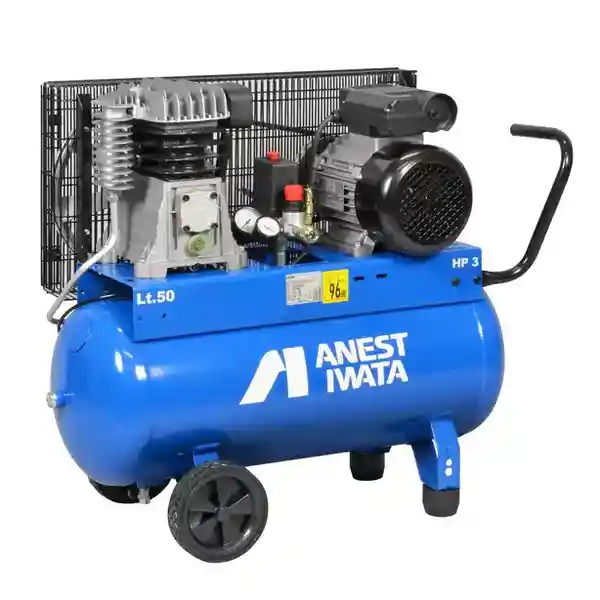
A properly matched air compressor for car painting delivers steady atomisation, controlled metallic layout, and smooth clearcoat application without unexpected pressure dips. Conversely, an inadequate air supply unit causes frustrating dynamic pressure drops, heavy orange peel, mottling, and spray pattern instability that can compromise carefully prepared automotive bodywork.
Key Takeaways:
- Volumetric airflow delivery matters far more than maximum pump pressure for automotive spray guns.
- Tank capacity provides a working buffer, but pump replenishment rate determines continuous performance.
- Clean, dry air delivery helps prevent contamination such as fish-eyes, blistering, and solvent popping.
- Piston units suit intermittent restoration work, while rotary screw systems suit continuous production environments. Explore detailed equipment matching in our guide on the Best Compressor for HVLP.
At Eastern Auto Paints (EAP), we help professional refinishers and dedicated vehicle restorers configure reliable pneumatic setups tailored to their workshop requirements. Our team brings practical trade experience across paint chemistry and workshop air systems, helping your spray equipment receive consistent, clean airflow.
We combine expert advice, product knowledge, and trade-focused support to guide refinishing projects from primer application through to clearcoat polishing. Sizing your workshop pneumatics correctly protects your investment in coatings and supports dependable, professional results on every panel.
Sizing an Air Compressor for Car Painting: CFM vs PSI
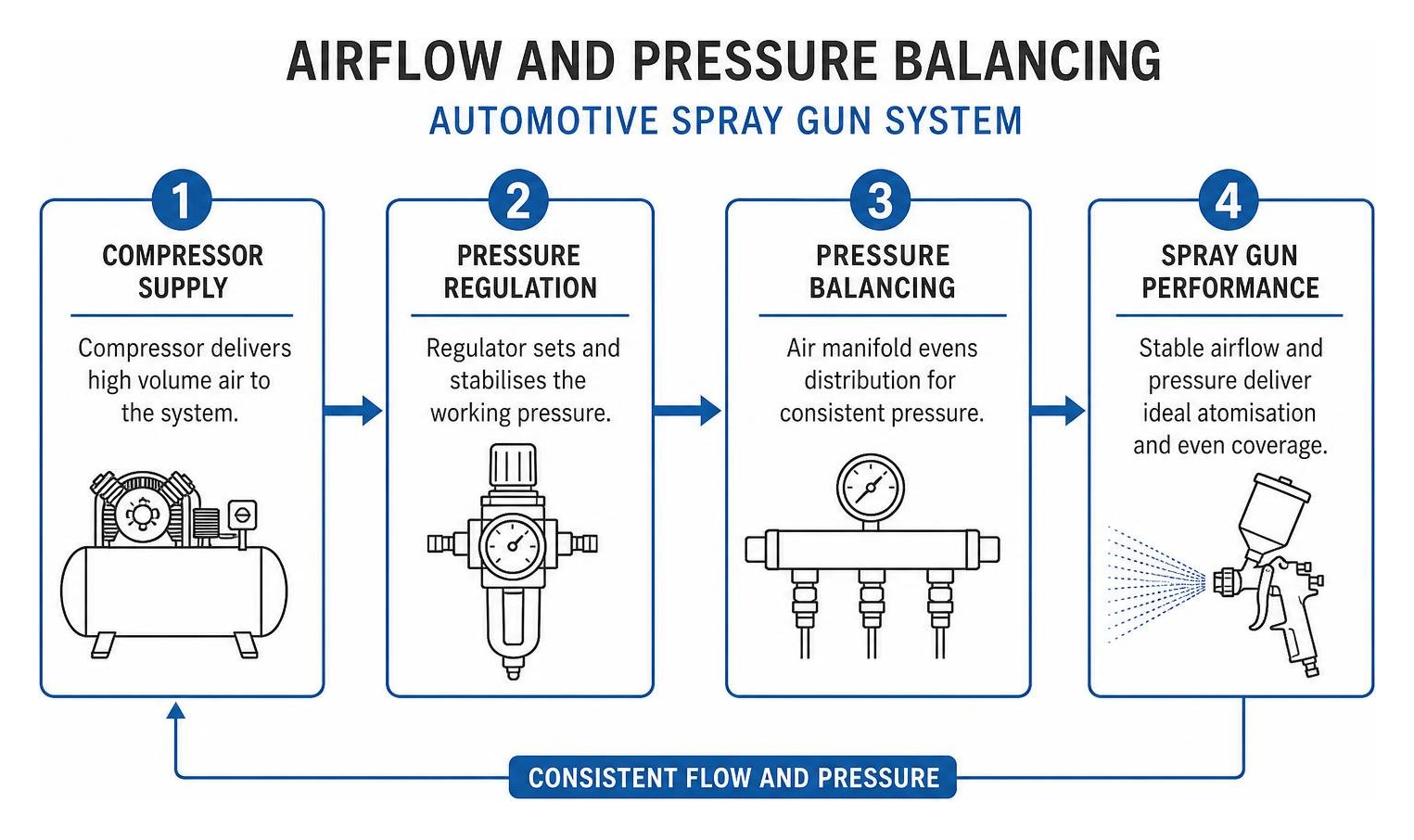
The two most critical metrics in compressor sizing are airflow delivery and operating pressure. Airflow is measured in litres per minute (L/min) or cubic feet per minute (CFM), representing the volume of air the pump can supply. Operating pressure is measured in bar or pounds per square inch (PSI), representing the force of that air.
When selecting equipment, focus on volume delivery at working pressure rather than maximum pump pressure. Modern high-volume low-pressure (HVLP) spray guns rely on high air volume at lower cap pressure to break paint into a fine mist. If a compressor produces high PSI but lacks adequate volume delivery, the gun can drain the air line quickly, causing spray pattern instability mid-panel.
Tank Capacity and Duty Cycle of an Air Compressor for Car Painting
The air receiver tank acts as a dynamic pressure buffer, smoothing pulses from reciprocating piston pumps and storing volume for continuous spray passes. However, a large receiver cannot compensate for an undersized motor and pump. If air consumption exceeds replenishment capacity, even large air tanks will eventually deplete.
Duty cycle refers to the safe run-and-rest balance a compressor needs to manage heat. Piston compressors require motor rest periods to dissipate mechanical heat. Running an intermittent-duty unit continuously during a full respray can send excess heat into the airline and increase condensation. For more on receiver sizing and workload management, consult our Compressor Complete Guide.
Voltage and Electrical Requirements: Dedicated Circuits and Motor Load
Compressor motor load affects workshop electrical planning. Dedicated single-phase circuits are common for smaller workshop units, while high-output pumps may need stronger infrastructure to manage startup load and sustained operation.
Commercial workshops often utilise three-phase electrical supplies to run high-output motors efficiently. Evaluating your building's electrical infrastructure before installing equipment helps prevent operational disruption and protects the compressor motor. Applicators setting up a residential workshop can review power and space planning in our guide on choosing a Compressor for Home Garage.
Compressor Types: Piston Reciprocating vs Rotary Screw Systems
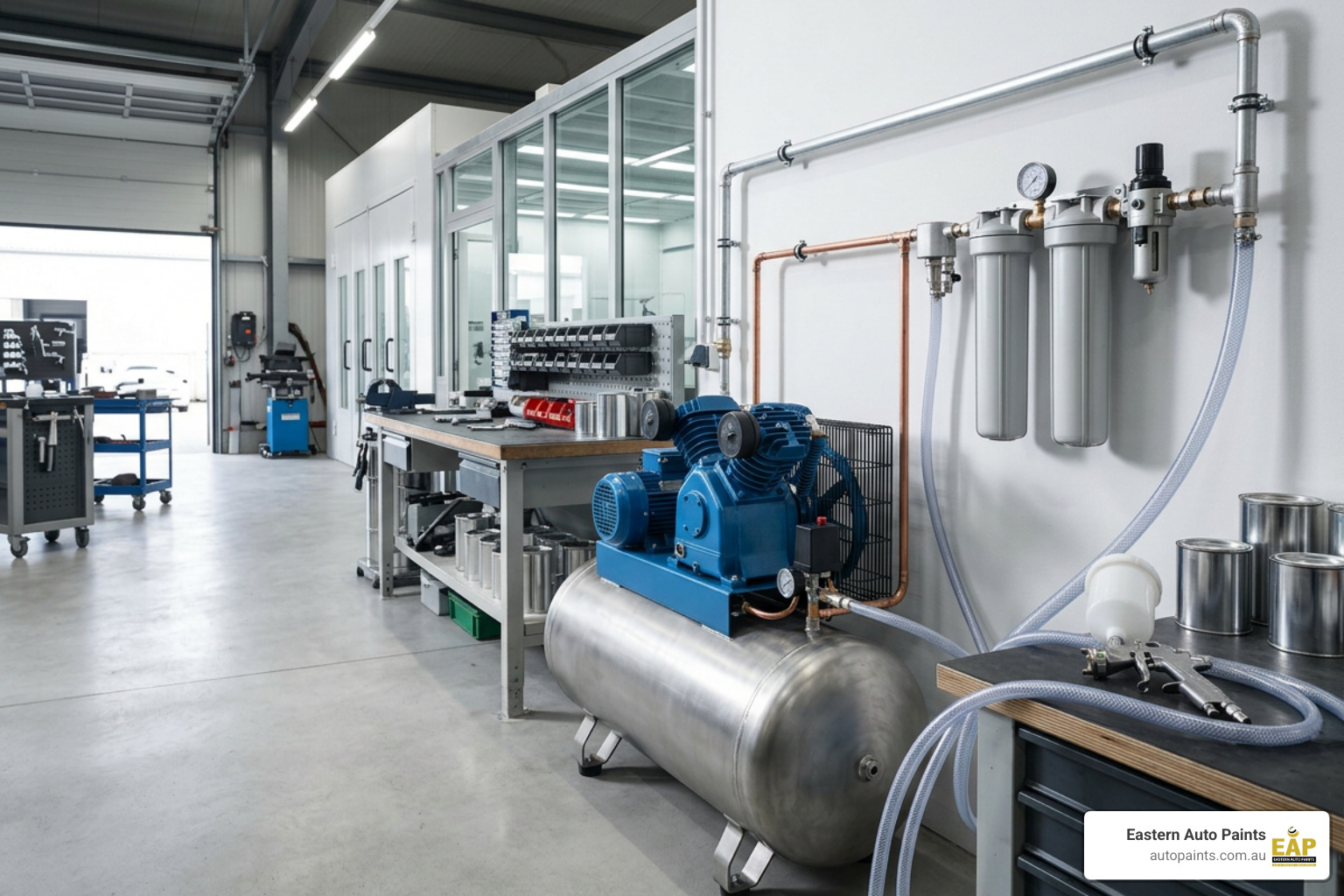
Choosing between a reciprocating piston pump and a rotary screw compressor depends on spraying volume, duty cycle needs, noise expectations, and the air treatment layout in your workshop. Both formats can deliver suitable compressed air when matched to the right refinishing environment.
| Feature / Specification | Piston Reciprocating Compressors | Rotary Screw Compressors |
|---|---|---|
| Duty cycle style | Intermittent workshop operation with rest periods | Continuous production operation |
| Power supply fit | Commonly suited to smaller trade or restoration setups | Commonly suited to larger commercial infrastructure |
| Receiver / capacity role | Receiver tank is important for smoothing demand | Plant capacity is built around continuous output |
| Acoustic output | More mechanical pump noise | Quieter enclosed cabinet operation |
| Best workshop setting | Restoration shops, trade panel repairs, custom builds | High-volume commercial spray booths and production shops |
| Air quality planning | Requires downstream moisture and oil control | Often paired with integrated drying and filtration modules |
Piston Compressors for Trade and Restoration Workshops
Piston compressors use reciprocating pump stages to compress air into a receiver tank. They suit intermittent spray duty, panel repairs, custom vehicle builds, and restoration workshops where spraying occurs in planned sessions between preparation and masking.
When you'd use this:
- Custom vehicle restorations where panels are painted individually.
- Trade workshops needing pneumatic power for intermittent panel spraying and air tool operation.
- Environments where straightforward maintenance and flexible installation are preferred.
For workshops comparing Anest Iwata piston and screw compressor options, receiver size, replenishment rate, filtration needs, and electrical supply should be assessed together rather than in isolation.
Rotary Screw Compressors for Continuous Production Spraying
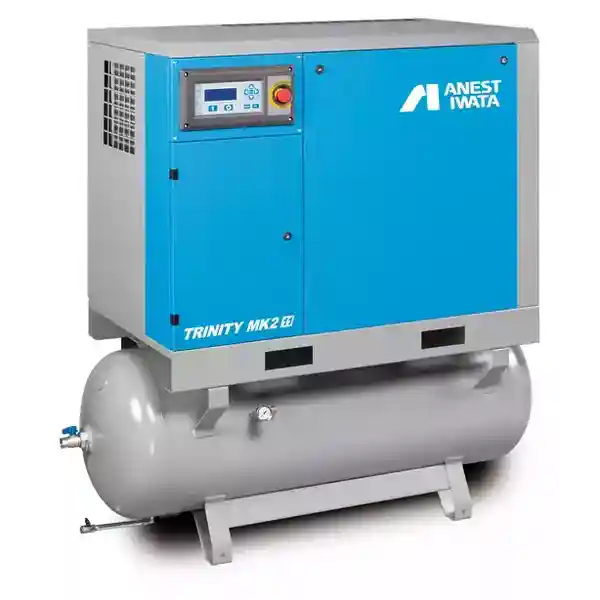
Rotary screw compressors use intermeshing helical screws to compress air smoothly without reciprocating vibration. These systems suit continuous output where spray booths, preparation areas, and pneumatic tools place ongoing demand on the air supply.
When you'd use this:
- Commercial body shops running sustained booth workflows.
- Production facilities requiring quiet operation near work areas.
- Operations requiring integrated air management with drying and filtration support.
Industrial packages such as Anest Iwata Eco Screw and Trinity systems are designed for production-style compressed air delivery. Learn more about matching these configurations in our Anest Iwata Compressors Complete Guide.
Oil-Lubricated vs Oil-Free Compressor Configurations
The choice between oil-lubricated and oil-free configurations affects maintenance planning and air purity management.
Oil-lubricated compressors provide strong mechanical durability because internal components operate with continuous lubrication. They still require suitable downstream coalescing filtration to capture trace oil aerosols before air reaches the spray gun.
Oil-free compressors remove the risk of lubricating oil entering the compressed air stream. They still require moisture and particulate filtration because ambient humidity, dust, and tank scale can enter the air supply.
Air Quality, Moisture Control, and Clean Delivery Systems
Compressed air naturally carries ambient moisture, atmospheric particulates, and heat. When air is compressed, its temperature rises. As that air moves through downstream lines and cools, water vapour can condense into liquid droplets. If moisture reaches the spray gun, it can contribute to blushing, micro-blistering, pinholing, and fish-eyes in topcoats and clearcoats.
Application properties, reduction, and drying behaviour vary by product. Always refer to the manufacturer's technical data sheet (TDS) or product label before starting any painting project.
Filtration, Desiccants, and Water Separators
Protecting paint application requires a structured air filtration system positioned between the compressor receiver and spray hose:
- Centrifugal water separators: Installed early in the line to remove bulk liquid water and coarse particulate matter through mechanical separation.
- Coalescing filters: Positioned downstream to capture fine oil mist and liquid aerosols that bypass mechanical traps.
- Desiccant dryers or refrigerated units: Used to reduce water vapour so dry air reaches the spray equipment.
- Point-of-use gun regulators: Dedicated regulators help maintain stable dynamic pressure at the gun handle.
Explore comprehensive air preparation hardware in our dedicated Air Filter and Regulators collection to protect your finishes.
Air Hose Diameter and Pressure Drop Management
Restricting air delivery through undersized hoses is a common cause of poor atomisation. Air passing through a narrow hose encounters internal wall friction, causing dynamic pressure drop between the wall regulator and spray gun.
Using wide-bore paint air hoses reduces line drag. Pair hoses with high-flow air couplers and adaptors to prevent restrictive choke points in your supply lines.
Breathing Air and Respiratory Safety Integration
When spraying modern two-pack (2K) isocyanate-bearing coatings, respiratory protection planning must be product-specific. Standard workshop compressor air is not automatically suitable for breathing air use.
Dedicated air-fed respiratory setups require suitable purification and monitoring to meet breathable air requirements. For complete safety specifications, review our technical guide on Supplied Air System Requirements. Direct all personal protective equipment (PPE) planning to the relevant product label, safety data sheet (SDS), and SafeWork Australia or WorkSafe guidance.
Why This Issue Should Not Be Ignored
Ignoring compressor capacity and air quality compromises every stage of the automotive refinish process. When an undersized compressor struggles to keep up with an HVLP spray gun, atomisation pressure fluctuates continuously. This instability causes uneven paint application, leading to blotchy metallic layouts, edge runs, or dry spray textures that require labour-intensive wet sanding and compounding to correct.
Worse still, unmanaged moisture and oil carryover can ruin an entire paint job. Contaminants that reach the spray fan become embedded directly in the wet film, causing fish-eyes, adhesion failure, and delamination. Correcting contaminated clearcoat requires stripping the panel back to primer, costing valuable time and materials. Investing in the right compressor and air-treatment system protects your workflow from start to finish.
Common Symptoms, Challenges, or Questions
Applicators encountering air supply issues often experience recognisable finish defects and operational hurdles:
- Sudden Pressure Drop Mid-Pass: The spray gun starts with a wide, even fan pattern, but the spray pattern narrows and atomisation coarsens halfway down the side of the vehicle as tank pressure drops below the working threshold.
- Micro-Bubbles and Solvent Pop: Hot, moisture-laden air entering the paint film traps water vapour beneath curing clearcoats, creating pinholes.
- Fish-Eyes and Cratering: Minute oil droplets passing through failing compressor seals land on freshly sprayed panels, creating round surface craters where the paint pulls away.
- Thermal Compressor Shutdown: The compressor pump runs non-stop, overheating the motor and tripping thermal overload switches before the clearcoat coat is finished.
Understanding whether your setup suffers from an undersized pump, inadequate line diameter, or insufficient water separation allows you to fix the underlying mechanical issue instead of mistakenly altering paint reduction ratios.
What a Personalised Experience Actually Looks Like
Selecting an air system at Eastern Auto Paints is never a one-size-fits-all transaction. When you consult with our team or contact our team for advice, we evaluate your full refinishing process:
- Spray gun matching: We review the air volume requirements of your primer, basecoat, and clearcoat guns to establish working air demand.
- Workload analysis: We assess whether you are completing spot repairs, spraying individual panels, or tackling full vehicle resprays inside a booth.
- Infrastructure planning: We review electrical supply, line distances, and workshop space to match compressor style to your facility.
- Air-treatment layout: We design filtration and moisture-control planning around local humidity, hose length, and breathing-air requirements.
This tailored approach helps your air supply operate reliably, delivering clean, dry air to the gun cap.
The Value of Consistency and an Ongoing Relationship
Automotive refinishing demands consistency from panel to panel and respray to respray. Having an established relationship with an expert supplier ensures your workshop equipment remains supported throughout its service life. As your finishing needs expand from spot repairs to full custom builds, direct access to knowledgeable technical support simplifies maintenance, regulator calibration, and filter element replacement.
At Eastern Auto Paints, we support trade professionals and dedicated vehicle restorers across Melbourne and throughout Victoria with dependable advice, refinish support, and industrial-grade equipment. We help you maintain consistent air delivery across changing seasons and heavy workloads, protecting your finishes from preventable contamination.
What to Expect at Eastern Auto Paints
When you source spray equipment and pneumatic systems through Eastern Auto Paints, you receive industry-backed guidance and access to professional workshop hardware:
- Advanced Colour-Matching Technology: Accurate colour support using advanced technology alongside experienced professionals.
- Comprehensive equipment range: Workshop compressors, precision spray guns, filtration modules, and breathable air setups.
- Local Victorian support: Specialist advice and product pickup across Bayswater, Dandenong South, and Melbourne.
- Trade-credible advice: Practical assistance from specialists who understand automotive coatings chemistry and pneumatic flow dynamics.
Our focus is helping you achieve clean, professional paint results through correctly configured tools, high-grade consumables, and reliable system design.
When to Get in Touch or Take Action
Upgrading your air supply system is recommended if you notice pressure drops, compressor overheating, or moisture defects in your finishes. Addressing pneumatic bottlenecks before a major restoration or commercial spray project can reduce rework and improve process control.
Whether you need to install a trade-grade piston compressor, upgrade workshop filtration for modern coatings, or integrate a high-flow rotary screw system, our technical specialists can help assess the setup.
Helpful next steps:
- Get in touch with our team to discuss your compressor, filtration, and air delivery requirements.
- Browse relevant Workshop Equipment for professional-grade air infrastructure.
Frequently Asked Questions About Air Compressors for Car Painting
What size air compressor tank is needed to paint a whole car?
A receiver tank must provide enough stored air to act as a steady pressure buffer during long spray passes across roofs, bonnets, and side panels. For a full car respray, the pump must also replenish air quickly enough to match the spray gun's demand. A large tank helps, but it cannot overcome a compressor that lacks suitable airflow output.
Can a small portable compressor be used for automotive painting?
Small portable compressors can suit minor spot repairs, touch-ups, and small removable components. They are usually not ideal for full vehicle panels because the pump may run continuously, creating heat and moisture while struggling to maintain the airflow required by many automotive spray guns.
What is the minimum CFM requirement for an HVLP spray gun?
High-volume low-pressure spray guns require substantial air volume at suitable working pressure. The exact airflow requirement varies by gun model, air cap, and fluid setup, so always consult the spray gun manufacturer's specifications before selecting a compressor. Allowing practical headroom above the gun's stated demand helps maintain stable atomisation.
How does compressor duty cycle affect automotive paint quality?
Duty cycle describes how a compressor manages run time and cooling time. If a piston compressor is forced to run continuously beyond its intended workload, excess heat can increase condensation in the air system. That moisture can then affect atomisation and coating appearance if filtration is inadequate.
Why is downstream filtration necessary if an oil-free compressor is used?
Oil-free compressors remove the risk of lubricating oil entering the airline, but they do not remove ambient moisture, dust, or tank contamination. Water separators, particulate filters, and suitable drying equipment remain important for delivering clean, dry air to the spray gun.