
Everything You Need to Know About Supplied Air Systems
Operating a professional spray booth in Victoria means handling a variety of high-performance coatings. While these finishes provide exceptional durability and depth, many of them contain hazardous chemical compounds. In particular, two-pack (2K) polyurethane systems contain isocyanates, which are highly reactive chemical agents used as hardeners.
When these coatings are sprayed, isocyanates are atomised into a fine mist that can easily bypass standard particle filters. Exposure to isocyanates is a primary cause of occupational asthma and can lead to severe, irreversible respiratory sensitisation. Once sensitised, even minuscule exposures in the future can trigger violent asthma attacks and long-term respiratory decline.
Under Australian Work Health and Safety (WHS) regulations and the guidelines enforced by WorkSafe Victoria, employers have a strict legal duty of care to eliminate or minimise exposure to airborne contaminants. When working with isocyanate-containing 2K paints in an enclosed booth, standard air-purifying respirators are generally insufficient because these chemicals lack adequate warning properties, such as a noticeable odour or taste, at safe exposure levels.
This is where the Australian Standard AS/NZS 1715 (Selection, use and maintenance of respiratory protective equipment) and AS/NZS 1716 (Respiratory protective devices) come into play. These standards outline the legal framework for choosing and maintaining appropriate respiratory protection in Australian workplaces.
Meeting the supplied air system requirements under these standards ensures that spray painters are supplied with a continuous stream of clean, respirable air from an external source completely isolated from the contaminated spray booth atmosphere. Ignoring these standards not only invites severe compliance penalties and potential closure from WorkSafe Victoria, but also risks the long-term health of your team. For a detailed breakdown of how airfed systems operate in the workshop, you can read The Complete Guide to Air Fed Face Masks for Automotive and Industrial Work.
Common Symptoms, Challenges, or Questions
Setting up a compliant breathing air system comes with several technical hurdles. Many operators wonder how to transform standard workshop air into air that is safe to breathe. Standard industrial air compressors are designed to power pneumatic tools, not human lungs. They can introduce a range of dangerous contaminants, including moisture, oil aerosols, rust particles, and carbon monoxide (CO).
Carbon monoxide is a particularly insidious threat. In oil-lubricated compressors, if the unit runs hot or malfunctions, the lubricating oil can begin to burn, producing carbon monoxide that is pumped directly into the breathing line. Because carbon monoxide is odourless, tasteless, and colourless, a painter inside a booth will have no warning that they are inhaling a lethal gas.
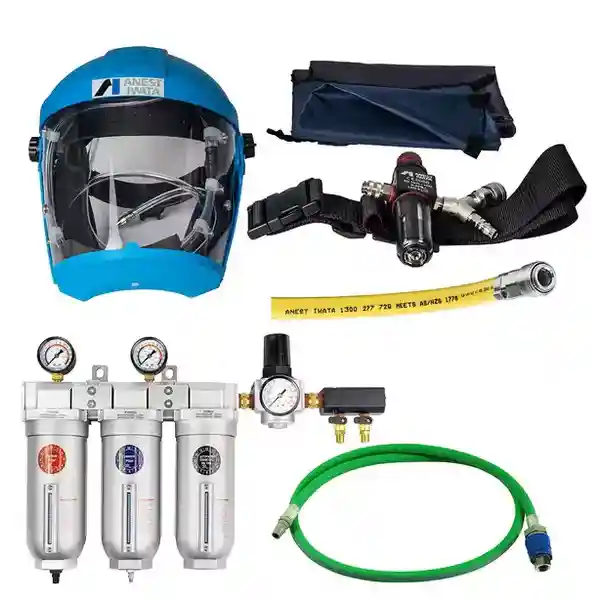
To prevent this, the air must pass through a specialised multi-stage filtration panel and be continuously monitored for carbon monoxide levels.
Understanding Supplied Air System Requirements for Air Quality
To achieve the air purity levels required by AS/NZS 1715, the compressed air must undergo thorough purification. The standard specifies strict limits on contaminants to ensure the air is hygienically clean.
A standard industrial setup requires a multi-stage filtration panel that typically includes:
- A water separator to remove bulk water and large condensate droplets.
- A coalescing filter to trap oil mists, liquid aerosols, and sub-micron particles.
- An activated carbon filter to eliminate organic vapours, odours, and tastes.
Additionally, because standard filtration panels cannot remove gaseous carbon monoxide, any system running off an oil-lubricated compressor must be equipped with an active carbon monoxide monitor and an audible alarm. This monitor will immediately alert the painter and shut down the system if CO levels exceed safe thresholds.
Moisture control is also critical; excessive moisture in the lines can cause internal corrosion in the system components and can lead to water condensing inside the painter's mask, which is both uncomfortable and unsafe. For more details on comparing different airfed mask options, see our Cheat Sheet to Comparing Airfed Masks.
Choosing Between Continuous-Flow and Pressure-Demand Systems
When selecting a supplied-air respirator (SAR), you must choose between continuous-flow and pressure-demand configurations.
- Continuous-flow systems deliver a constant, uninterrupted stream of clean air to the facepiece or hood. This constant flow maintains positive pressure inside the headtop, ensuring that any small leaks blow outward rather than drawing contaminated air in. These systems are highly popular in spray booths because they are comfortable, supply a cooling effect, and do not require a tight face seal if a loose-fitting hood is used.
- Pressure-demand systems only deliver air when the user inhales. They maintain positive pressure inside a tight-fitting mask at all times, but they conserve a significant amount of air compared to continuous-flow designs. However, they require a tight-fitting face seal, meaning the user must be clean-shaven and undergo annual fit testing.
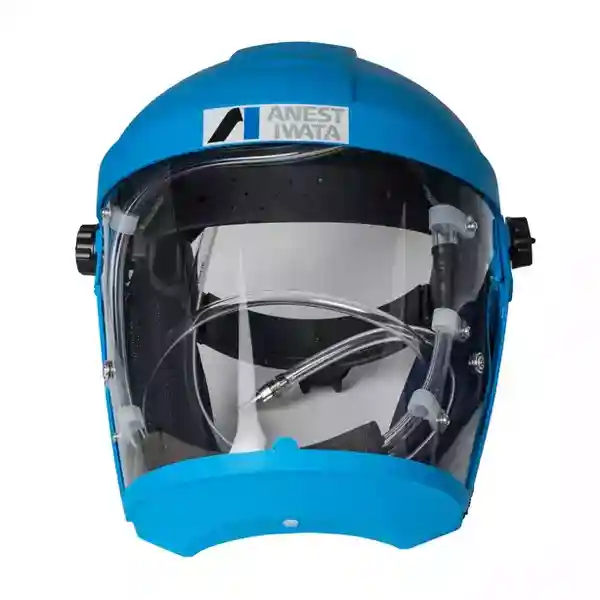
Your choice of headgear also dictates the air consumption of the system. Loose-fitting hoods and helmets require a higher volume of air to maintain positive pressure, whereas tight-fitting full-face masks operate on lower volumes. To understand how these different configurations stack up against each other, check out our PPE Masks Comparison 101.
Hose Length and Coupling Supplied Air System Requirements
The physical distribution of breathing air is subject to strict engineering limitations. High-pressure configurations, which run off standard workshop compressors through filtration panels, are limited to a maximum hose length of 300 feet (91 m) per user. Low-pressure configurations, which utilise ambient air pumps, are limited to a maximum hose length of 100 feet (30 m). These limits are in place to prevent excessive pressure drops that could starve the respirator of required airflow.
Furthermore, the couplings used for breathing air lines must be physically incompatible with standard workshop air tools. This unique quick-connect coupling requirement prevents a worker from accidentally plugging their breathing mask into a non-filtered shop line used for air tools or, worse, a line carrying non-respirable gases.
To explore more about finding the right mask and hose accessories for your workshop, read our Ultimate Checklist for Finding Your Best Half Face Respirator.
Comparing SARs, SCBAs, and Combination Units
Different hazardous environments require different classes of atmosphere-supplying respirators. It is vital to understand when to deploy a Supplied-Air Respirator (SAR) versus a Self-Contained Breathing Apparatus (SCBA).
A SAR is connected to an external air source via a hose, allowing for long working hours but limiting mobility to the length of the line. Because a hose failure would cut off the air supply instantly, standard SARs are strictly prohibited from being used in Immediately Dangerous to Life or Health (IDLH) or oxygen-deficient atmospheres unless they are paired with an auxiliary self-contained escape cylinder. This combination unit provides a small bottle of backup air (typically 5 to 15 minutes of supply) to allow the worker to safely escape the hazardous zone if the main airline fails.
An SCBA carries its own air supply in a high-pressure cylinder worn on the user's back, offering complete mobility but limiting working time to the capacity of the cylinder.
| Respirator Type | Mobility | Air Supply Duration | IDLH / Oxygen-Deficient Suitability |
|---|---|---|---|
| Supplied-Air Respirator (SAR) | Restricted by hose length (max 91 m) | Unlimited (continuous compressor supply) | No (unless equipped with escape cylinder) |
| Self-Contained Breathing Apparatus (SCBA) | Unrestricted | Limited by cylinder capacity (typically 30–75 mins) | Yes |
| Combination SAR with Escape Cylinder | Restricted by hose length during work | Unlimited on line; 5–15 mins on backup bottle | Yes (for entry and escape) |
What a Personalised Experience Actually Looks Like
At Eastern Auto Paints, we believe that setting up a supplied air system should never be a guessing game. A personalised experience means looking at your specific workshop layout, the number of active spray painters you have, and your existing compressor capacity.
To select the right airfed mask, you must match it to a compressor that can deliver both the correct air pressure (measured in psi) and the correct air flow (measured in cubic feet per minute, or CFM). If your compressor is already running paint spray guns, pneumatic sanders, and other pneumatic workshop equipment, adding a breathing air system can easily overload your air supply if the compressor is undersized.
We work closely with you to calculate your total workshop air consumption. We look at the requirements of your pneumatic tools alongside your breathing air needs to ensure you have a compressor that can handle the load without dropping line pressure. To understand compressor sizing, motor types, and how to calculate CFM for your workshop, you can read our Compressor Complete Guide and explore A Comprehensive Guide to Choosing a Car Painting Compressor.
The Value of Consistency and an Ongoing Relationship
Investing in a supplied air system is not a one-off purchase; it is an ongoing commitment to workshop safety. Maintaining air purity requires regular system maintenance, including routine filter cartridge replacements, moisture trap draining, and annual breathing air testing. Over time, filtration elements become saturated with oil and moisture, reducing their efficiency and risking air contamination.
By establishing an ongoing relationship with us, we help you keep track of your maintenance schedules. We stock replacement filter kits, high-quality breathing hoses, and compliant couplings so your safety gear is never out of action. Additionally, we keep your unique shop details on file.
Whether we are saving your custom automotive colour-match formulations or keeping track of the specific replacement filters your air panel requires, this level of consistency ensures your business runs smoothly and safely week after week. If you are looking to invest in premium, reliable air supply machinery, we stock a range of top-tier compressors.
For example, we supply Anest Iwata compressors, known for their exceptional durability and clean air delivery. Models like the Anest Iwata 2HP NB20C (typically ranging from $1,200 to $1,800) feature high-efficiency cast-iron pumps suitable for smaller workshops, while their larger 3HP and screw-compressor models (ranging up to $8,000+) offer heavy-duty, continuous-run capabilities with integrated air dryers for larger commercial operations. To see which model fits your setup, check out the Anest Iwata Compressors Complete Guide.
What to Expect at Eastern Auto Paints
When you step into an Eastern Auto Paints location, you are dealing with industry professionals who understand the practical realities of running a spray shop. We operate two trade-focused locations in Victoria: our head office in Bayswater and our trade showroom and warehouse in Dandenong South. We service the trade, commercial, and industrial refinishing sectors across Melbourne and ship our professional-grade products Australia-wide.
At our showrooms, you will find a comprehensive range of professional-grade safety gear, multi-stage filtration panels, compliant air hoses, and airfed masks. We do not just sell boxes; we offer expert technical advice to ensure that every piece of equipment you purchase fits seamlessly into your existing workshop setup and complies with Australian standards.
When to Get in Touch or Take Action
If you are currently spraying 2K polyurethane coatings or isocyanate-based primers with standard half-face or full-face cartridge masks, it is time to upgrade your safety setup. Upgrading to a compliant supplied air system is the single most effective step you can take to protect your lungs and ensure your workshop complies with WorkSafe Victoria regulations.
Whether you are setting up a brand-new spray booth in Dandenong, upgrading an older workshop in Bayswater, or simply need to verify that your current compressor and filtration setup meets Australian standards, we are here to help. You can contact our team of experts for personalised, knowledgeable guidance on selecting the right equipment. To get started, please visit our Contact Us page or drop into one of our showrooms.
Practical Solutions and Reassurance Section
Implementing a supplied air system can feel overwhelming, but breaking it down into structured steps makes the transition straightforward. To ensure full compliance and maximum safety, every workshop should establish a written respiratory protection program. This program should outline:
- Regular medical evaluations to ensure workers are physically fit to wear positive-pressure respirators.
- Annual fit testing for any workers utilising tight-fitting facepieces.
- A documented inspection and maintenance log for all compressors, filtration panels, and masks.
- A strict filter replacement schedule based on hours of use and manufacturer recommendations.
For smaller workshops or serious automotive restorers working from home, choosing the right compressor is the foundation of a safe setup. While home garage installations must still meet strict safety standards, smaller, highly efficient compressors can be paired with dedicated filtration panels to provide safe, clean breathing air. To learn more about setting up an efficient air supply in a smaller space, read our guide on Compressors for Home Garages.
Please note that application specifications, safety setups, and drying times vary significantly from product to product. Always consult the manufacturer's technical data sheet (TDS) or product label for exact operational figures before starting any paint job. Our team is always available to help you find the correct manufacturer documentation for your chosen coatings.
Breathe Easy: Your Next Step Toward Safer Spraying
Ensuring your workshop meets all supplied air system requirements is the ultimate way to protect your health while achieving a flawless, professional finish. By combining high-quality air filtration, a reliable compressor, and the correct airfed mask, you create a safe, efficient, and compliant work environment that lets you focus on what you do best: delivering outstanding paintwork.
If you are ready to upgrade your workshop safety, here are your recommended next steps:
- Visit our Contact Us page to speak with our technical experts about your workshop's air requirements.
- Explore our professional-grade safety gear in the Masks and Airlines Collection.
- Browse our complete range of respiratory protection in the PPE Masks Collection.
- Upgrade your workshop air supply by viewing our high-performance Compressors Collection.
Frequently Asked Questions About Supplied Air Systems
How do I choose between 1K and 2K products for my spray painting job?
Choosing between single-pack (1K) and two-pack (2K) paints depends entirely on the requirements of the job, the application environment, and your safety equipment. 1K paints dry through solvent evaporation, making them straightforward to apply and well-suited for quick repairs or environments without specialised extraction. 2K paints require a chemical hardener or activator to cure, creating an incredibly durable, chemical-resistant, and high-gloss finish. However, because 2K hardeners often contain isocyanates, they require a higher level of personal protective equipment (PPE), such as a supplied air system, and must be sprayed in a compliant booth. Always check the manufacturer's technical data sheet for the exact mixing and safety specifications of each product.
What is the colour-matching process and how accurate is it?
At Eastern Auto Paints, our colour-matching process combines advanced spectrophotometer technology with our extensive database of thousands of saved formulations. When you bring in a paint code or a physical panel (such as a fuel filler flap), we scan the surface to analyse the exact paint characteristics, accounting for age, fading, and metallic flake distribution. Our experienced colour technicians then custom-mix the paint using high-quality tinting systems to ensure an incredibly accurate match. Because paint formulations vary by brand and application method, we always recommend spraying a test card to verify the match under workshop lighting before applying the paint to your project.
What are the correct PPE and safety practices for spraying 2K paints?
Spraying 2K paints requires a comprehensive approach to personal safety due to the presence of isocyanates in the hardeners. The gold standard for respiratory protection is a positive-pressure, continuous-flow supplied air respirator (airfed mask) compliant with AS/NZS 1715 and 1716. In addition to a supplied air system, operators must wear chemical-resistant paint overalls, nitrile gloves, and eye protection to prevent skin absorption and eye irritation. All spraying must take place in a well-ventilated spray booth with active extraction. Since safety requirements can vary based on the specific paint formulation, you must always consult the product's safety data sheet (SDS) and manufacturer instructions before spraying.
Where can I find the exact technical specifications for my supplied air system?
The definitive source for the exact technical specifications of your supplied air system—including required inlet pressures, minimum and maximum CFM flow rates, hose length limitations, and filter replacement intervals—is the manufacturer's technical data sheet (TDS) and user manual. Different brands and models of airfed masks have unique air consumption profiles, so it is vital to follow their specific guidelines rather than relying on general rules of thumb. If you are unsure or cannot find your system's manual, the team at Eastern Auto Paints can help you locate the correct manufacturer documentation for your equipment.
Is a supplied air system suitable for DIY home garage use or is it trade-only?
A supplied air system is highly suitable and strongly recommended for any serious DIY restorer spraying 2K polyurethane coatings or isocyanate-based primers in a home garage. While these systems are standard in commercial trade workshops, the health risks of isocyanates are exactly the same at home. Setting up a supplied air system in a home garage requires a compatible compressor that can deliver both the air tools' CFM and the mask's breathing air requirements, alongside a multi-stage filtration panel. Our team at Eastern Auto Paints is happy to assist both trade professionals and home restorers in selecting a safe, compliant, and reliable setup.