
Clear Coat Chronicles: How to Find the Best Auto Paint Protection Nearby
Why This Issue Should Not Be Ignored
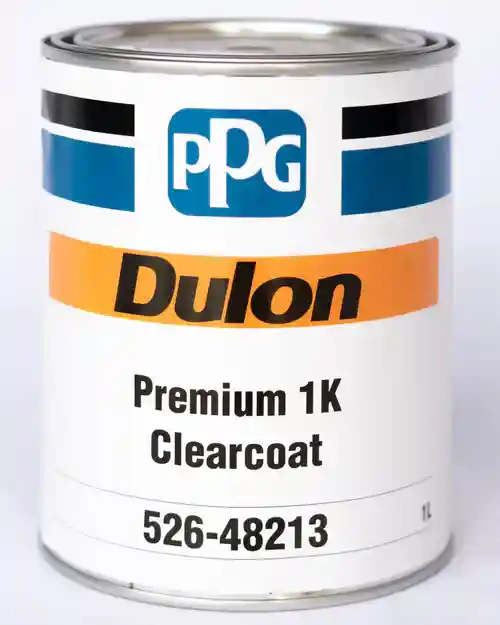
A professional, high-gloss clear coat finish elevates a vehicle's aesthetic appeal while providing an essential barrier against environmental damage, whereas neglecting damaged or thin clear coat invariably leads to severe paint degradation, chalking, and costly rust repairs. The clear coat acts as the primary shield against UV radiation, bird droppings, tree sap, and road grime. Once this transparent layer breaks down, the underlying basecoat oxidises and rapidly deteriorates.
Key Takeaways
- Clear coat forms a vital protective layer that shields basecoat pigments from UV fading and environmental wear.
- Choosing between 1K and 2K clear coats depends on required chemical resistance and project scope.
- Proper surface preparation, scuffing, and flash times are critical to achieving an OEM-level finish.
- Learn more about clear coat performance in Does It Really Matter? The Ultimate Guide to Automotive Clearcoats.

At Eastern Auto Paints, we supply trade-grade automotive coatings and refinishing products to help vehicle owners and body shops restore compromised finishes across Melbourne.
Our commitment to advanced colour-matching technology and expert technical advice ensures every applicator receives the ideal coating system and support for long-lasting surface protection.
How to Source High-Quality Automotive Clear Coat Near Me
Sourcing a professional automotive clear coat near me requires more than visiting a general retail store. High-performance clear coats require strict quality control, verified batch consistency, and proper storage temperatures. Local specialised trade paint suppliers carry professional-grade products and can recommend suitable hardener speeds based on ambient shop conditions.
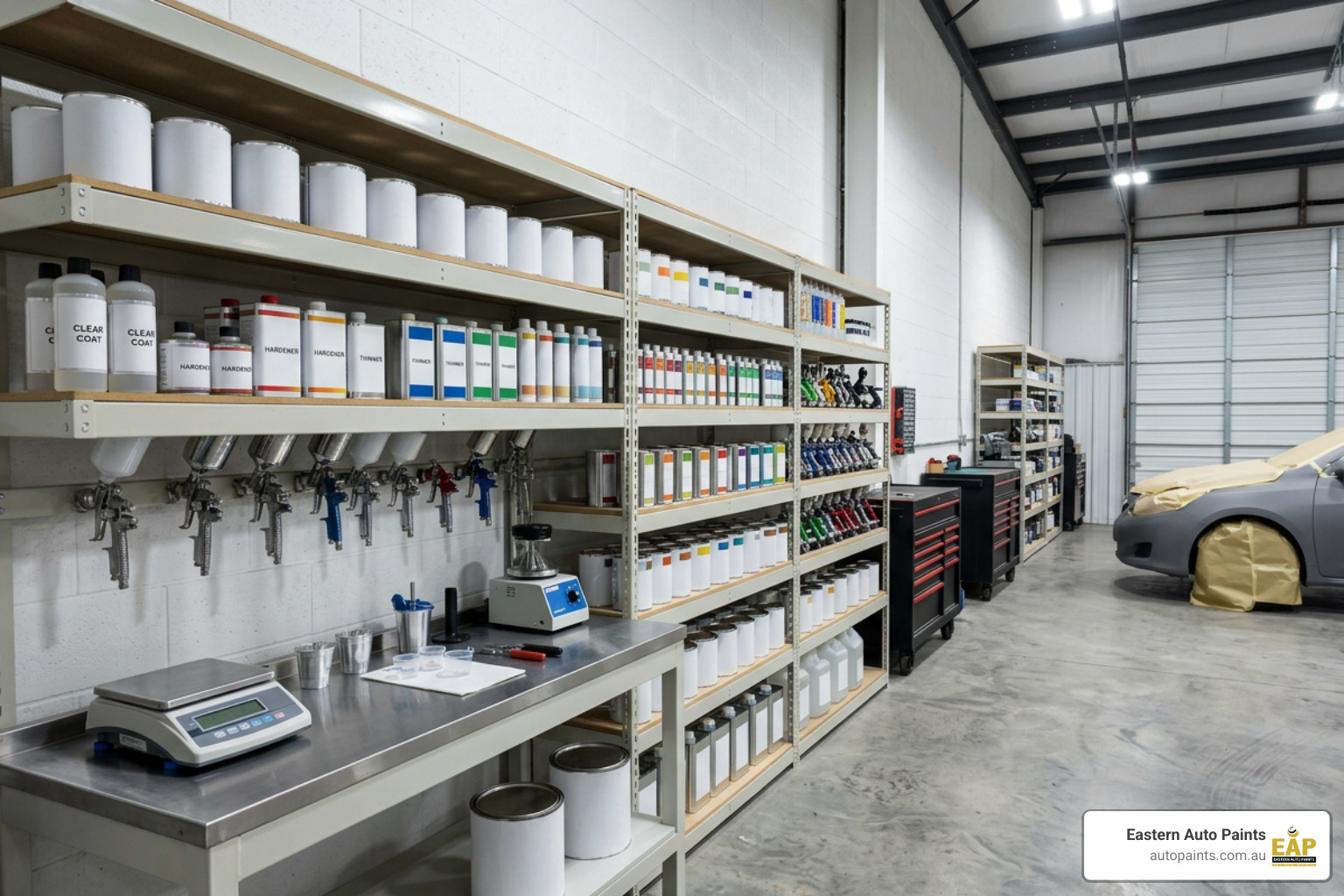
Professional auto body shops and specialised refinish stores ensure that the products you purchase comply with regional environmental and Australian volatile organic compound (VOC) standards, including low-VOC clear coats. When sourcing products locally in Bayswater, Dandenong South, or across Melbourne, choosing a local trade-dedicated outlet guarantees access to fresh stock, professional mixing guidance, and expert advice. Explore your options in our guide, From Aerosol to Industrial: Finding the Perfect Clear Coat for Your Needs.
Evaluating DIY vs Professional Automotive Clear Coat Near Me
Choosing between a DIY application and taking your vehicle to a professional body shop comes down to job scope, available equipment, and skill level.
- DIY Aerosol Applications: Ideal for minor spot repairs, mirror covers, or small accessories. Convenience is high, while spray pattern and film build depend on the aerosol system and applicator technique.
- Professional Spray Gun Applications: Utilising a dedicated spray booth and pneumatic equipment supports consistent atomisation, controlled wet-film thickness, and strong flow out.
For small, high-quality touch-up work where chemical resistance is important, pre-filled 2K clear aerosols offer internal hardener activation chambers. For standard quick fixes, traditional 1K clearcoats provide a simple, single-pack solution without hardeners.
Choosing 1K or 2K Automotive Clear Coat Near Me
Understanding the fundamental differences between 1K (one-pack) and 2K (two-pack) clear coats ensures you select the correct durability level for your project.
When selecting products from our 2K clearcoat collection, consider how each product type behaves during and after application:
- 1K Clear Coat - When you'd use this: Air-dries through solvent evaporation. It offers straightforward application and requires no hardeners, making it convenient for light-duty parts, small accessories, and quick cosmetic refinishing where the exposure demands are modest.
- 2K Clear Coat - When you'd use this: Relies on a chemical cross-linking reaction triggered by adding an isocyanate hardener. This creates a durable film suited to exterior panels, restoration work, and refinishing tasks where gloss retention, weather resistance, petrol resistance, and future wet sanding or compounding are important.
For an extensive comparison of topcoat performance, refer to The Definitive Guide to Comparing Automotive Clearcoats.
Step-by-Step Application Process and Required Equipment
Achieving an OEM-level (Original Equipment Manufacturer) mirror finish relies on meticulous preparation, correct environment control, and proper technique.
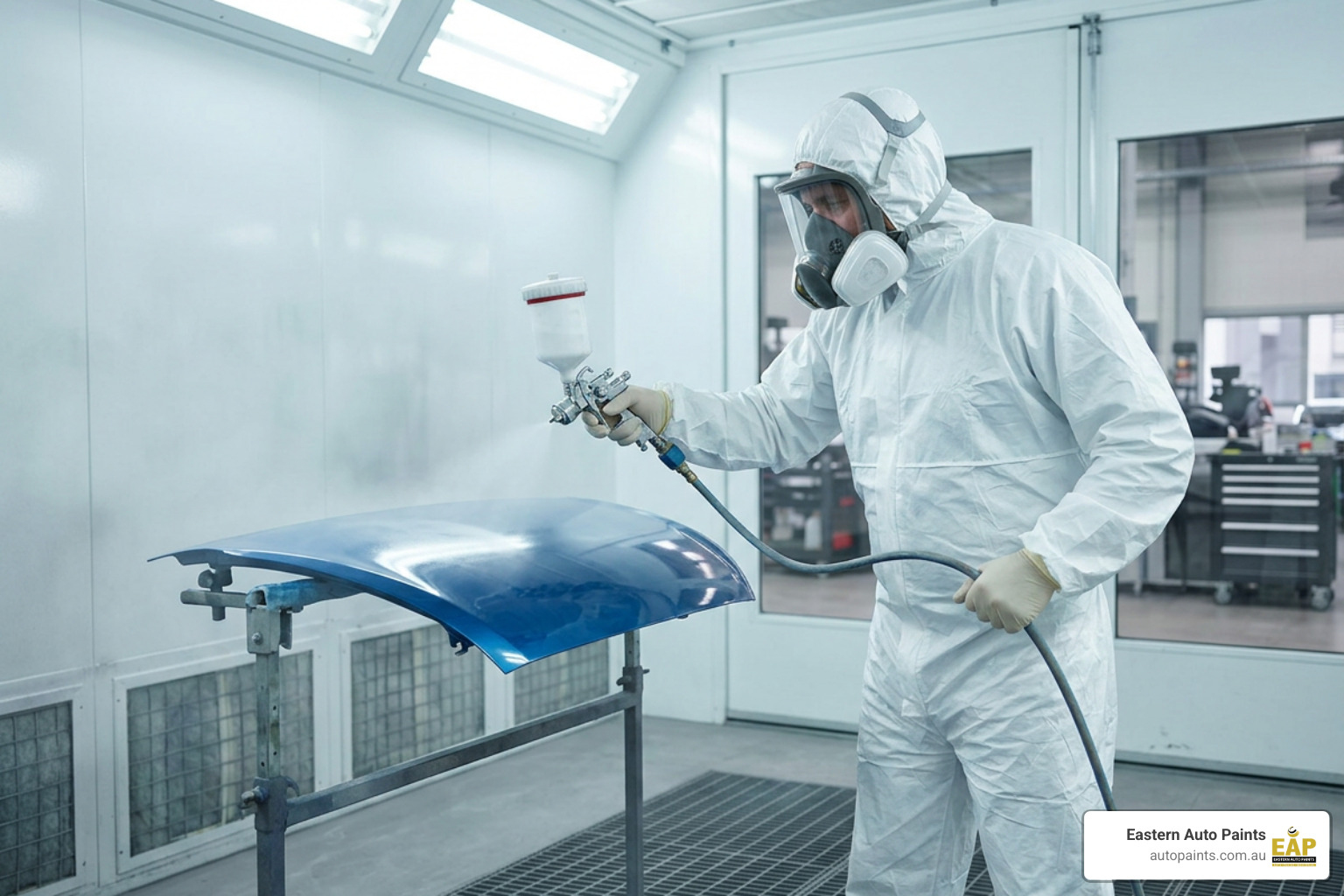
Follow this general refinishing sequence:
- Surface Preparation: Thoroughly clean the panel with a dedicated wax and grease remover to prevent silicone contamination and fish-eyes.
- Scuffing: Abrade the cured basecoat or existing clear coat according to panel needs using appropriate fine abrasive pads or dry sanding discs from our sanding discs collection.
- Wipe Down: Tack off the surface using a lint-free tack cloth to remove microscopic dust particles immediately before spraying.
- Application: Apply the product using the coat sequence, flash-off periods, spray setup, and drying schedule specified for the selected clear coat. Application and drying times vary by product, temperature, humidity, substrate, and drying method, so read the manufacturer's Technical Data Sheet (TDS) or product label before starting and follow those instructions.
- Curing: Allow the clear coat to cure in line with the product guidance. Where suitable for the product and workshop setup, curing may be supported with controlled infrared heat lamps.
For deeper insights into achieving flawless spraying results without common defects, review our article on How to Never Worry About Applying Automotive Clear Coat Again. To select the right equipment for your setup, read What's a Good Automotive Paint Gun? Top Picks for Every Budget and Skill Level.
| Clear Coat Feature | 1K Aerosol Clear Coat | 2K Professional Clear Coat |
|---|---|---|
| Curing Mechanism | Air-dry via solvent evaporation | Chemical cross-linking, hardener activated |
| Chemical Resistance | Suitable for light-duty exposure | Designed for demanding exterior and chemical-exposure environments |
| UV Defence & Longevity | Suitable for small repairs and light exposure | Designed for long-term exterior UV protection |
| Application Method | Pre-packaged spray can | HVLP spray gun or specialised 2K aerosol |
| Ideal Project Scope | Small repairs, interior trims, mirror caps | Full resprays, complete panels, restorations |
Equipment and Safety Gear for Spraying Clear Coat
Spraying two-pack coatings requires specialised pneumatic equipment and careful safety planning. Products that use isocyanate hardeners have product-specific personal protective equipment (PPE) requirements, so applicators should consult the product label, Safety Data Sheet, and SafeWork/WorkSafe guidance before spraying.
- Spray Guns: High-Volume Low-Pressure (HVLP) or Trans-Tech spray guns provide controlled atomisation and fluid delivery. Browse options in our spray guns and accessories range.
- Air Supply: Reliable, clean, moisture-free compressed air is critical. Compressed air systems from our range of Anest Iwata compressors, such as the Anest Iwata screw compressor range, deliver consistent volume for professional spray booths. These units vary from compact workshop models up to large industrial, fully integrated air-station systems.
- Air Filtration: Dedicated inline oil and water separators prevent pneumatic line moisture from contaminating the wet paint film.
- Respiratory Protection: Respiratory safety is vital when handling reactive chemicals. Use the PPE identified for the exact product and task, which may include a fitted organic vapour respirator or a positive-pressure air-fed mask system. Find suitable respiratory gear in our PPE masks collection.
| Equipment Type | Atomisation / Operation | Key Specification | Ideal Application |
|---|---|---|---|
| HVLP Spray Gun | Low-pressure atomisation | Refer to product TDS | Clear coat & topcoat finishing |
| Screw Compressor | Continuous rotary delivery | Continuous duty performance | Spray booth & shop air supply |
Maintaining Your Clear Coat Finish Long Term
Once your clear coat application is complete and thoroughly cured according to its TDS guidelines, establishing a proper maintenance routine preserves its depth of gloss and protection.
- Initial Curing Window: Avoid aggressive washing, detergent application, or applying protective waxes until the paint has completely cured and outgassed as specified by the product manufacturer.
- Washing Technique: Use pH-neutral automotive shampoos with two-bucket washing methods and soft microfibre wash mitts to minimise wash marring and swirl marks.
- Paint Correction: If orange peel or minor dust nibs occur during application, perform delicate wet sanding using fine-grade abrasives followed by a multi-stage dual-action machine polish.
- Protection Layer: Once fully outgassed, apply a high-quality synthetic sealant or ceramic coating to bolster UV defence and hydrophobic self-cleaning properties.
Common Symptoms, Challenges, or Questions
When evaluating clear coat integrity or preparing for a respray, applicators frequently face predictable challenges:
- Peeling Clear Coat (Delamination): Typically caused by poor surface preparation, exceeding maximum basecoat flash-off windows, or moisture contamination during application. Delaminated clear coat cannot be polished back; it must be sanded down and refinished.
- Orange Peel Texture: Occurs when the paint does not flow out smoothly. Contributing factors include incorrect spray gun setup, improper fluid tip size, improper reducer selection for ambient temperatures, or incorrect spraying distance.
- Die-Back or Loss of Gloss: Happens when solvents get trapped in underlying paint layers due to rushing flash times between coats. As solvents escape later, the surface gloss dulls.
- Fish-Eyes: Small crater-like defects caused by silicone, oil, or grease contamination on the panel surface prior to spraying. Thorough cleaning with specialised wax and grease removers is mandatory.
What a Personalised Experience Actually Looks Like
Finding the ideal automotive clear coat near me means receiving advice tailored to your exact application setup, panel material, and local climate conditions. A truly personalised experience involves:
- Climate-Adjusted Hardener Selection: Matching hardener and thinner speeds (slow, medium, fast) to ambient workshop temperatures to guarantee proper wet-film flow without sagging.
- Substrate Compatibility: Evaluating whether your basecoat is solvent-borne or water-borne, ensuring seamless inter-coat adhesion with the chosen clear coat.
- Equipment Matching: Tuning your spray gun tip size and air inlet pressure recommendations based on the viscosity of the clear coat selected.
The Value of Consistency and an Ongoing Relationship
Establishing a long-term relationship with a dedicated local paint supplier ensures complete consistency across every vehicle project. Professional repair workshops and serious vehicle builders benefit from consistent batch quality, predictable film performance, and reliable technical guidance.
When you work with a trusted team, your shop setup, compressor capacity, and preferred spraying style are understood. This streamlines product selection, eliminates guesswork during difficult environmental conditions, and ensures every job leaves the booth with an uncompromising, durable finish.
What to Expect at Eastern Auto Paints
At Eastern Auto Paints, we supply high-quality automotive paint products, including custom spray paint, specialised clear coats, and complete touch-up systems. Serving trade, professional, and industrial clients across Bayswater, Dandenong South, and greater Melbourne, our core strength lies in our advanced colour-matching technology and expert technical advice.
Whether you need a high-solid 2K polyurethane clear for a full respray, specialised air equipment, or precise colour-matched basecoats, our trade-qualified staff provide honest recommendations backed by decades of industry experience. Explore our complete product range for clear coats, paint systems, equipment, and refinishing supplies.
When to Get in Touch or Take Action
If your vehicle's topcoat is showing initial signs of UV chalking, or if you are planning a complete panel refinish, securing expert guidance before mixing paint saves time and money.
Taking action at the first sign of clear coat breakdown prevents severe basecoat damage and rust formation. Getting in touch with experienced specialists allows you to select compatible primers, basecoats, clear coats, and hardeners tailored specifically to your working environment.
Explore our range of 2K clearcoats, colour-matching services, and rust repair solutions, or connect with our technical team today via our Contact Us page for professional support on your next project.
Frequently Asked Questions About Automotive Clear Coat Near Me
How long does 2K automotive clear coat take to cure fully?
Full curing schedules depend entirely on the specific product formulation, ambient air temperature, humidity levels, and whether forced drying (such as infrared baking) is used. Always consult the manufacturer's Technical Data Sheet for exact dust-free, bake, and air-cure timeframes before sanding or polishing.
Can I spray a new clear coat over old clear coat without sanding?
No, spraying new clear coat directly over old, glossy clear coat without mechanical sanding will cause severe adhesion failure and peeling. The existing finish must be thoroughly cleaned, abraded with appropriate fine sandpapers or scuff pads to create a mechanical key, and cleaned before applying fresh paint.
What is the main difference between 1K and 2K clear coats?
A 1K clear coat dries strictly through solvent evaporation and requires no hardener, making it easy to use but less chemically resistant. A 2K clear coat uses an added isocyanate hardener that initiates a chemical cross-linking reaction, creating a far harder, UV-resistant, and solvent-proof protective barrier.
What spray gun tip size is recommended for clear coat application?
Fluid tip sizes vary depending on the viscosity of the specific clear coat, spray gun model, and air supply setup. Always refer to the product label or Technical Data Sheet provided by the paint manufacturer for precise fluid tip size and air inlet pressure recommendations.
Why is my newly applied clear coat showing an orange peel texture?
Orange peel texture usually occurs when the clear coat is atomized improperly or fails to flow out smoothly on the panel. Common causes include incorrect spray gun adjustments, improper reducer speed for room temperature, holding the spray gun at an improper distance, or spraying at incorrect air pressures.