
Prime Time Our Picks for the Best Spray Can Primers for Cars
Why Spray Can Primers Are a Smart Choice for DIY Car Repairs
The best spray can primer for cars depends on your surface and repair type. Here is a quick guide:
| Surface Type | Best Primer | Why |
|---|---|---|
| Bare Metal | Etch Primer | Etches the surface for strong adhesion and helps prevent rust |
| Minor Scratches/Dents | High-Build Filler Primer | Fills light imperfections and sands smooth for a better base |
| Maximum Durability | 2K Epoxy Primer Aerosol | Chemical-curing formula gives spray gun-style toughness from a can |
| Plastic Bumpers | Adhesion Promoter + Primer | Helps primer stick to flexible plastic parts and resist cracking |
A quality primer is the foundation of any successful paint job, whether you are fixing a small scratch or tackling a full panel respray. It improves adhesion, smooths out imperfections, and protects against corrosion. Without proper priming, even the best topcoat can fail early, leading to peeling, bubbling, or rust coming back through.
Spray can primers are a practical option for car owners and enthusiasts working on smaller repairs or touch-ups. They remove the need for spray guns, compressors, and lengthy cleanup. You can repair a door ding, a scraped bumper, or prepare a small bonnet section for repainting with minimal equipment and setup time.
However, spray can primers usually have lower solids content than professional spray gun primers. In simple terms, there is less material left on the panel after the solvents flash off. That is why they are best for spot repairs rather than complete vehicle resprays.
The key to getting professional-looking results with spray cans is choosing the right primer for your surface and repair style. Etch primers work best on bare metal, high-build primers help fill minor imperfections, and 2K aerosol primers give you excellent durability. Each type has a specific role, and using the wrong one can reduce the life of your paint job.
At Eastern Auto Paints, we stock a wide range of automotive primers, including 1K primers for quick jobs and professional-grade 2K aerosol primers. We also offer colour matching spray paints so your primer and topcoat system works together properly.
Our team in Melbourne has helped trade customers and DIY painters for decades, and we can guide you toward the best spray can primer for cars for your specific project and skill level. If you are unsure where to start, contact our expert team for practical, project-based advice.
Know your best spray can primer for cars terms:
Understanding the Basics: Why Primer is Essential
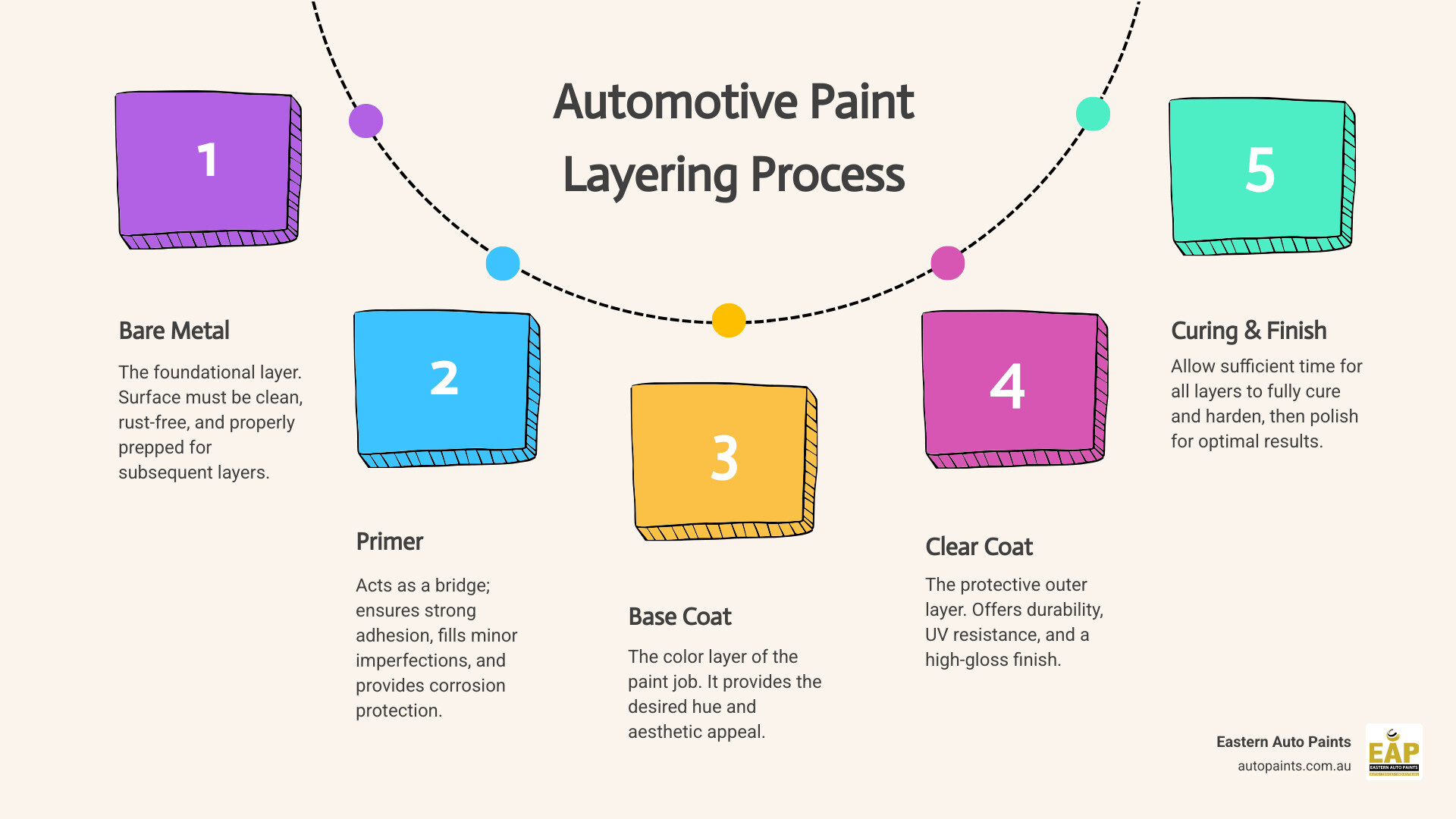
Primer acts as a bridge between your car’s surface and the paint. It improves adhesion, creates a smooth base, and helps prevent rust. Without this crucial layer, your topcoat might not stick properly, which can lead to flaking or bubbling and early failure.
Spray can primers are ideal for small repairs and touch-ups because they offer convenience. You do not need a full spray gun setup or an air compressor, and cleanup is minimal. This makes them a cost-effective and time-saving option for DIY enthusiasts or small spot repairs on bonnets, guards, and bumpers.
Spray can primers generally have lower solids content and a less consistent spray pattern than primers applied with a professional spray gun. That means they are best for smaller jobs where heavy filling and ultra-even film build are not the main focus. If you are planning a full respray, a spray gun and quality 2K primers are usually the better path.
For a deeper dive into how different undercoats work together, see our guide: A Practical Guide to Choosing Auto Paint Primers.
1K vs. 2K Primers: What’s the Difference?
When choosing a spray can primer, one of the most important distinctions you will see is between 1K and 2K formulations.
1K primers, or one-component primers, are ready to use straight from the can. They dry through solvent evaporation, so they are easy to apply and ideal for quick jobs where speed and simplicity matter. They are well suited to minor repairs, especially when combined with compatible rapid drying enamel or touch-up systems.
2K primers, or two-component primers, need a hardener mixed in before application. In an aerosol can, this usually means activating a plunger in the base to release the hardener into the main component. A chemical reaction then cures the film, creating a tougher, more durable finish with stronger chemical and abrasion resistance than 1K.
In simple terms, 2K behaves more like a professional spray gun system in a can. It is usually the better choice under 2K clear or other high-performance topcoats.
Safety Note: Many 2K products, particularly those containing isocyanates, require strict safety precautions. For spray applications, standard respirators are often not enough, and an atmosphere-supplying system such as an Air Fed Mask is commonly required. Always work in a well-ventilated area, wear suitable PPE masks, and follow the manufacturer’s safety data sheets and your workplace risk assessment.
You can explore our full 1K Primer collection and 2K Primers collection to match the product to your repair.
High-Build vs. Regular Primers
The terms “high-build” and “regular” describe how well a primer can fill imperfections.
High-build primers in spray cans contain more solids, so the wet film dries down to a thicker layer. This extra build lets them fill minor scratches, sanding marks, and small surface imperfections. They are designed to be sanded smooth, giving you a level surface before you apply your basecoat and clear. In practice, they can save time on light body fillers or extra filling stages.
Regular primers, such as etch primers or epoxy primers, have a thinner consistency. Their main job is to promote adhesion and provide corrosion protection, not to fill defects. You would normally use a regular primer when the surface is already straight and smooth. For metal protection or when working with Protec Automotive Paint Systems, these primers are an essential first step.
If you want a fuller explanation of each type and when to use it, see: Choosing Your Canvas: Understanding Automotive Paint Primer Types.
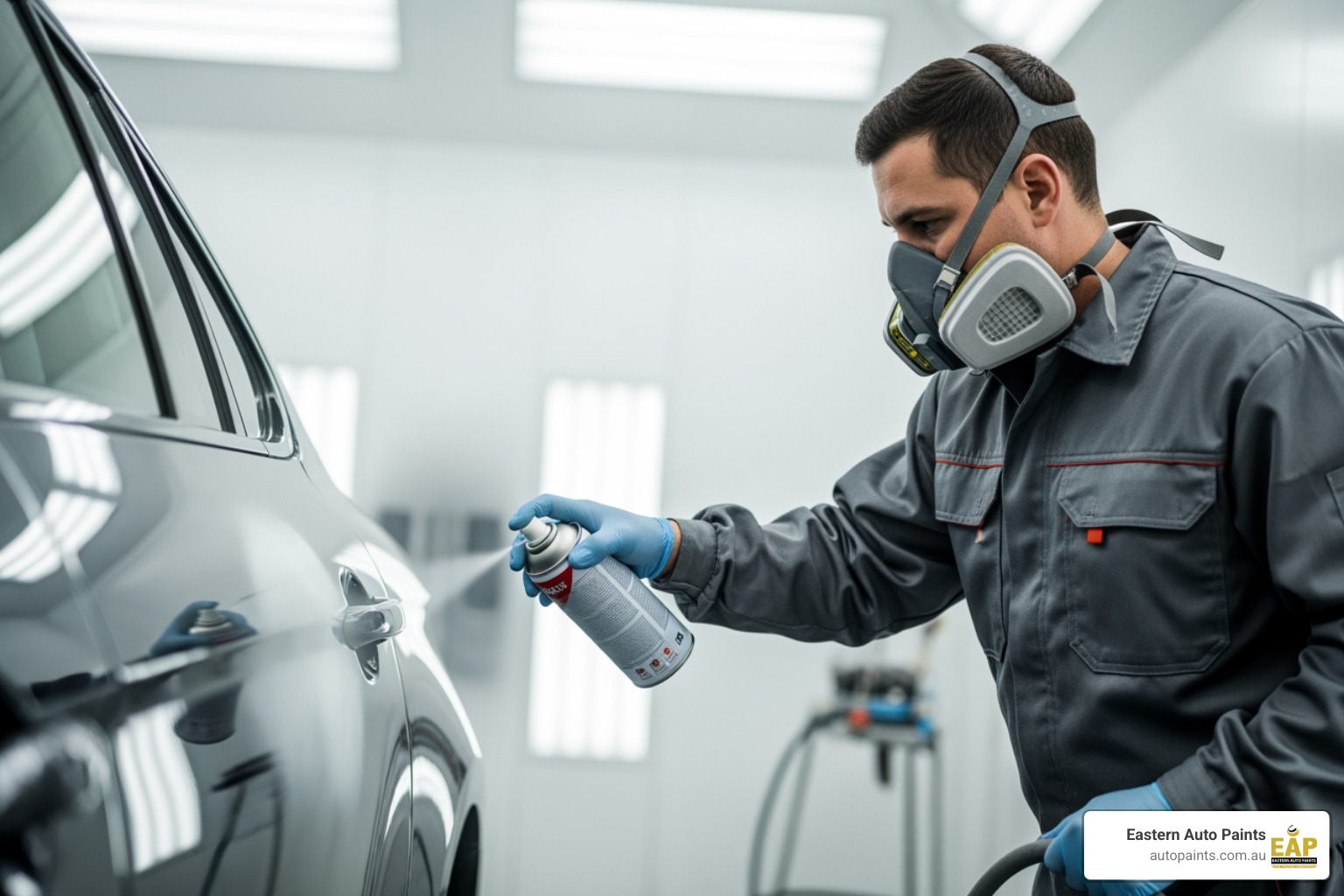
Choosing the right primer is crucial to the success and life of your automotive paint job. The ideal product depends on the surface you are working on, how big the repair is, and how tough you need the finished system to be.
Best for Bare Metal: Etch Primer
When you are working with bare metal, whether it is steel, aluminium, or galvanised surfaces, an etch primer is usually the first coat. These primers contain special acids, often phosphoric acid, that microscopically etch the metal. This creates a strong bond that standard primers cannot match and adds extra corrosion resistance.
In simple terms, etch primer helps your paint stick tightly to bare metal and slows down rust.
Eastern Auto Paints is an authorised distributor for PPG products, so we can supply trusted options for trade and DIY work. We highly recommend these top-performing etch primers from our range:
PPG EPS EtchPro sits in the PPG Industrial Paints family, so it is particularly well suited when you are priming automotive parts that also need industrial-level performance or will be finished with a performance enamel topcoat.
These products ensure your bare metal surfaces are properly prepared before you move on to basecoat, whether you are using Protec basecoat or another system. See our full Etch Primer range for more options.
Best for Minor Scratches and Dents: High-Build Filler Primer
For panels with minor scratches, small dents, or sanding marks, a high-build filler primer is usually the best choice. These primers have a thicker consistency, so each coat builds more film. That extra thickness allows them to fill light imperfections effectively.
High-build primers dry quickly and are designed to sand easily, so you can block the panel to a flat, smooth finish before applying your colour. This is especially useful after repairs with body fillers, when you need to refine the surface.
Some of our top choices for achieving a clean, even base include:
- Primers & Fillers collection
- EPO Epotec Primer Surfacer (for professional application)
- Concept High Build Primer (for professional application)
For convenient spray can options, explore our Primer Aerosol collection. These aerosols pair well with touch-up systems and colour matching spray paints when you want a smooth repair that blends into the existing finish.
Best for Maximum Durability: 2K Aerosol Primers
When you need maximum durability and protection and still want to work from a can, 2K aerosol primers are the way to go. These advanced aerosols deliver performance that is close to a spray gun-applied 2K primer.
The can is activated just before use so that the hardener and primer components mix internally. That starts a chemical curing process, which gives excellent hardness, strong adhesion, and superior resistance to fuels, solvents, and everyday wear.
Once activated, these cans have a limited “pot life”. That is the time you have to use the product before it hardens inside the can. Always check the label and plan your job so you can use the full can within the recommended window.
This type of primer is ideal under Rangers 2K Coating, under high-end clear coats, or on areas that see more abuse, such as sills, lower doors, and ute tubs.
Explore our range of high-performance options:
- Our 2K Aerosol Primers
- Our broader 2K Primers collection
If you are unsure whether a 1K or 2K system is right for your project, or how it will interact with existing coatings, you can contact our team for custom advice.
How to Get a Flawless Finish with Spray Can Primer
Achieving a flawless finish with spray can primer is not only about the product. Technique, preparation, and patience all play a major role in how your repair turns out.
Step 1: Surface Preparation is Everything
We often say at Eastern Auto Paints that around 80% of a good paint job is in the prep. This is just as true when you are using aerosols.
Start by thoroughly cleaning and degreasing the area. Use a dedicated wax and grease remover to remove silicone, polish, and road film that can cause fisheyes or poor adhesion.
Next, sand the surface to remove any loose old paint, rust, or other defects. Feather the edges of the sanded area into the surrounding paint so there are no sharp steps. This helps avoid visible lines under your final topcoat.
Mask off any surrounding areas you do not want to prime or paint. Good masking saves time later and makes blending easier when you use colour matching spray paints or touch-up systems.
For more serious damage, such as significant dents or holes, use body fillers before priming. Once the filler has fully cured and you have sanded it smooth, you can move on to primer. Choosing the right Sanding Sheets & Discs helps you get the correct surface profile for each stage.
If heavy rust is present, you may also need a car colour remover or paint stripper to take the area back to bare metal, followed by rust treatment and an appropriate etch or epoxy primer.
Step 2: Perfecting Your Spraying Technique
A smooth, even coat of primer comes from consistent technique rather than heavy application.
Shake the can vigorously for at least one to two minutes after you hear the mixing ball rattle. This makes sure the solids are fully dispersed for an even film.
Before you spray your car, test the fan pattern on a piece of cardboard. This helps you judge how fast to move and how far from the panel to hold the can.
Hold the can approximately 15–25 cm (6–10 inches) from the surface and apply light, even coats. Move your arm in a steady, sweeping motion and overlap each pass by about 50%. Do not flick your wrist at the ends of each pass, as this can cause uneven build.
Allow the correct flash-off time between coats (check the product instructions). This lets solvents escape and reduces the risk of bubbling or solvent trap under subsequent coats and under your 2K clear or colour.
Step 3: Common Mistakes to Avoid
Even experienced DIYers can run into problems. These are some common issues to watch for:
- Spraying too close or too heavily: This can cause runs, sags, and patchy coverage. Keep the recommended distance and build the film with several light coats.
- Rushing between coats: Not allowing enough flash-off time can trap solvents, which may lead to bubbles, soft film, or later adhesion issues.
- Poor surface preparation: Skipping cleaning or sanding steps will usually cause problems such as poor adhesion, fisheyes, or early rust breakthrough.
- Spraying in high humidity or cold temperatures: Extreme conditions affect drying, adhesion, and gloss. Aim for moderate temperatures around 20–25°C in a low humidity environment.
- Not shaking the can enough: Inadequate mixing can result in poor coverage, uneven texture, and inconsistent build.
For more detailed tips on aerosol work, including how to blend into existing paint and finish with compatible topcoats, see: A Comprehensive Guide to Touch Up Paint Spray Cans.
Frequently Asked Questions about Car Primers
What’s the best spray can primer for plastic bumpers?
Plastic surfaces, especially flexible ones like modern bumpers and trims, need a specific approach. Standard primers may not adhere well or can crack as the plastic flexes.
The best method is to first apply a specialised adhesion promoter. This creates a bonding layer that allows the primer to grip the plastic securely. After the adhesion promoter has flashed off, you can then apply a flexible primer that is designed for automotive plastics and topcoat it with a compatible paint.
We recommend our Adhesion Promoter products for plastic and other difficult surfaces. Our team can also help you match a suitable topcoat, including vinyl paints for interior plastics or Protec topcoat for exterior parts.
Can I prime over existing paint?
Yes, you can prime over existing paint as long as the old coating is sound. It must be free from peeling, flaking, or heavy cracking.
Start by thoroughly cleaning and degreasing the surface. Then, scuff sand the entire area with fine-grit sandpaper (for example, P400–P600) to create a mechanical key for your new primer. After sanding, clean away all dust before you spray.
Using a primer-sealer is often a smart choice in this situation. It helps block any minor reactions between old and new layers and gives you a uniform surface for your basecoat and clear. See our Primer Sealer options to find a system that matches your chosen topcoat.
If you are unsure whether your existing coating is compatible with a new system, contact our expert team for guidance before you start sanding and priming.
How do I deal with rust before priming?
You should not prime directly over active rust. Trapping corrosion under fresh primer and paint only hides the problem for a short time.
First, remove all loose rust by wire brushing, sanding, or, for heavier corrosion, grinding. If needed, you can use a dedicated paint stripper to remove stubborn coatings down to bare metal.
Once loose rust is gone, apply a rust converter. This chemical treatment stabilises any remaining microscopic rust and converts it into an inert, paintable surface.
After the rust converter has fully cured, apply a quality rust-inhibiting primer. Options include etch primer followed by a surfacer, or an epoxy primer from our 2K primers range. For long-term protection on structural or exposed parts, you can also look at companion products such as Galmet Rust Paint for extra protection in tough conditions.
If you are working on parts that sit close to the road or in harsh environments, our team can recommend a full system using suitable primers, protective coatings, and topcoats to slow rust return as much as possible.
Conclusion
Choosing the best spray can primer for cars is a key step in getting a long-lasting, professional-looking finish on your automotive projects. The right primer depends on your job: etch primers for bare metal, high-build primers for small imperfections, and 2K aerosols when you need the highest durability from a can.
Preparation matters just as much as product choice. Cleaning, sanding, and masking carefully, then applying thin, even coats, will help your primer support your basecoat and clear rather than hold them back.
Eastern Auto Paints is a Melbourne-based supplier trusted by trade shops and DIY users for high-quality automotive, truck, and industrial coatings. We stock a full range of automotive primers, from quick 1K primers to professional-grade 2K aerosols and matching 2K primers for spray gun use.
If you need more than primer, we can also help you choose compatible Protec basecoat, 2K clear, and specialty products such as Rangers 2K Coating for tougher areas. Our advanced colour-matching systems and in-house specialists can match complex factory colours, powdercoat finishes, and Colourbond colour spray cans so your repair blends in cleanly.
Whether you are in Victoria, Sydney, or Queensland, we can supply everything you need, from primers and topcoats through to gear like Anest Iwata spray guns, compressors, and solvent recycling machines for busy workshops.
If you are unsure which is the best spray can primer for your car or how to build a full system from bare metal to clear coat, contact our expert team. We will walk you through the options and help you choose a safe, cost-effective setup that suits your job and experience level.