
Cheat Sheet to Effective Paint Stripping Methods
Effective Paint Stripping Starts With the Right Method
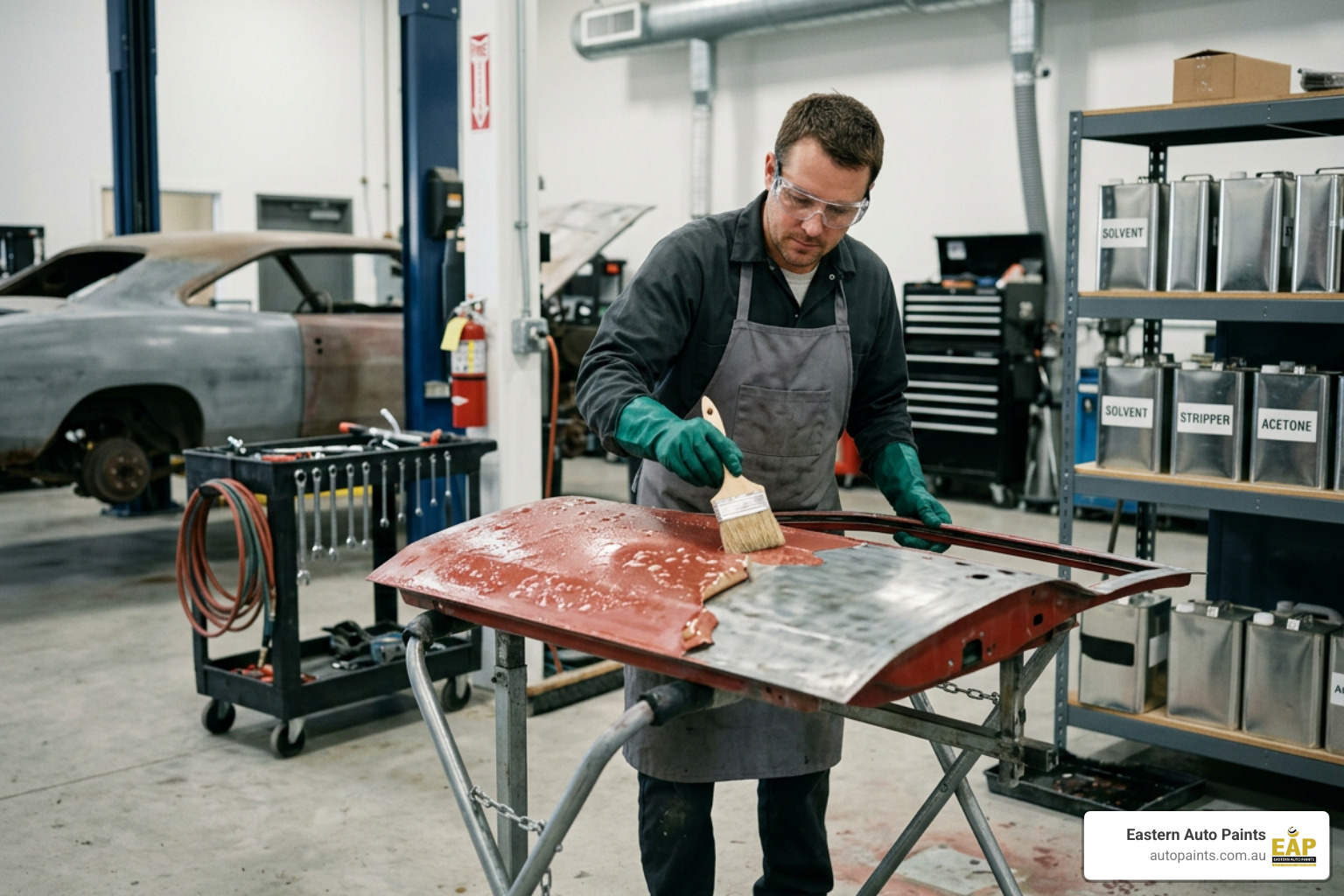
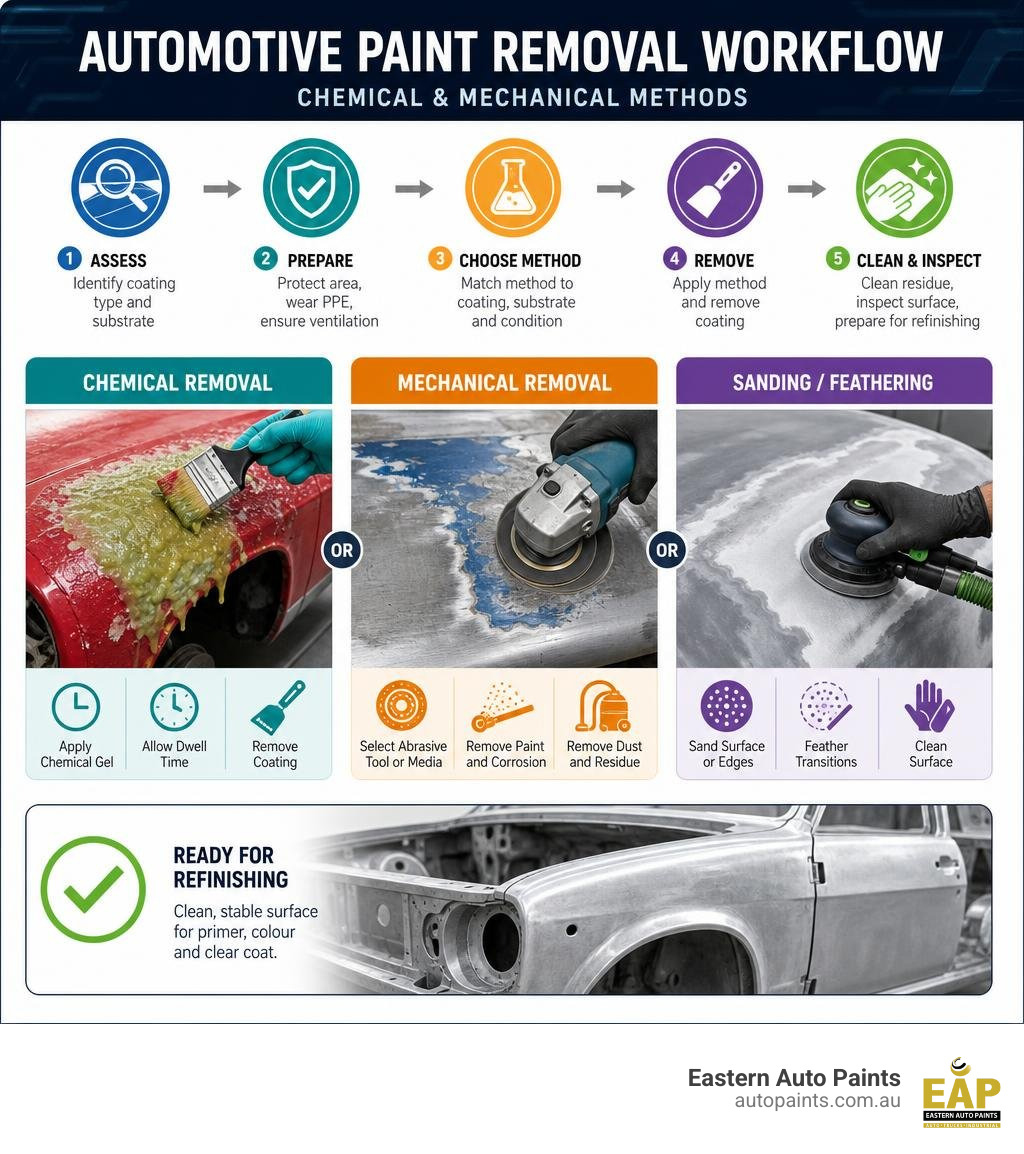
Eastern Auto Paints (EAP) knows paint stripping can either leave a clean, stable surface ready for refinishing or create avoidable problems such as warped panels, damaged substrates and contamination. The practical approach is to identify the existing coating and panel material first, then choose chemical stripping for controlled coating removal, abrasive methods for corrosion and heavier build-up, or sanding for local repairs and feathered edges.
Key Takeaways
- Test every stripping method on a small, inconspicuous area first.
- Match the remover or abrasive to steel, aluminium, fibreglass or plastic substrates.
- Use chemical gels where controlled dwell time and vertical cling matter.
- Avoid excessive heat and aggressive abrasion on thin vehicle panels.
- Review our Paint Stripping range before selecting a product for your coating system.
At EAP, we help trade applicators, restoration workshops and serious DIY vehicle owners make informed coating decisions. Our focus isn't simply removing old paint, but protecting the panel underneath and creating a sound surface for primer, colour and clear coat.
Good stripping work is a foundation for durable refinishing. We bring hands-on coatings knowledge to the process so our customers can select appropriate materials, use suitable personal protective equipment (PPE), manage residues correctly and avoid issues that can compromise adhesion later.
Core Methods for Industrial and Automotive Paint Stripping
Stripping automotive and commercial panels back to bare substrate requires selecting a method that balances efficiency with surface preservation. Chemical solvents, mechanical abrasives, and thermal methods each interact differently with modern cross-linked finishes and underlying metals.
Chemical Stripping Gel and Solvent Formulations
Heavy-duty chemical formulations such as Auschem Panastrip Gold Paint Stripper are engineered to soften and break the bonds of resilient finishes without introducing mechanical stress. Modern professional strippers often incorporate specialised thickening agents to provide vertical cling, ensuring the solvent remains in direct contact with upright quarter panels, doors, and fenders rather than running off.
Dwell times vary based on the specific chemistry, ambient workshop temperature, and the total film build being tackled. Applying a thin plastic film barrier over the wet chemical layer restricts solvent evaporation, prolonging the active window and allowing deeper penetration into resilient coatings. Always consult the product label or manufacturer technical data sheet (TDS) for exact dwell parameters before application.
Mechanical and Abrasive Blasting Techniques
Dry media blasting relies on pneumatic velocity to impact and fracture old finishes. When handling heavy rust, scale, or thick underbody coatings, using dedicated Sand Blasting equipment allows applicators to strip paint and profile the substrate simultaneously.
The primary trade risk during abrasive blasting is frictional heat. Excessive heat on large, unsupported sheet metal panels can lead to warping and oil-canning. Professional refinishers often reserve aggressive grit for chassis components or cast parts, turning to orbital Sanding Repair techniques and dry sanding sheets for precise feather-edging on exterior vehicle skins.
Thermal Heat Applications and Trade Limitations
Controlled thermal softening involves applying directed heat to blistered paint films before manual scraping. While occasionally used in specialist industrial restoration, open heat sources present severe risks in an automotive environment.
Excessive heat distorts metal temper and causes panel warping across thin vehicle skins. Heating unknown historic layers can release harmful airborne vapours, making thermal approaches generally unsuitable for production panel shops where substrate stability and air quality are paramount.
Substrate Selection and Coating Breakdown Dynamics
Different vehicle substrates react uniquely to chemical exposure and mechanical force. Selecting the right paint stripping approach requires assessing the substrate underneath the coating build.
Substrate Compatibility for Paint Stripping Projects
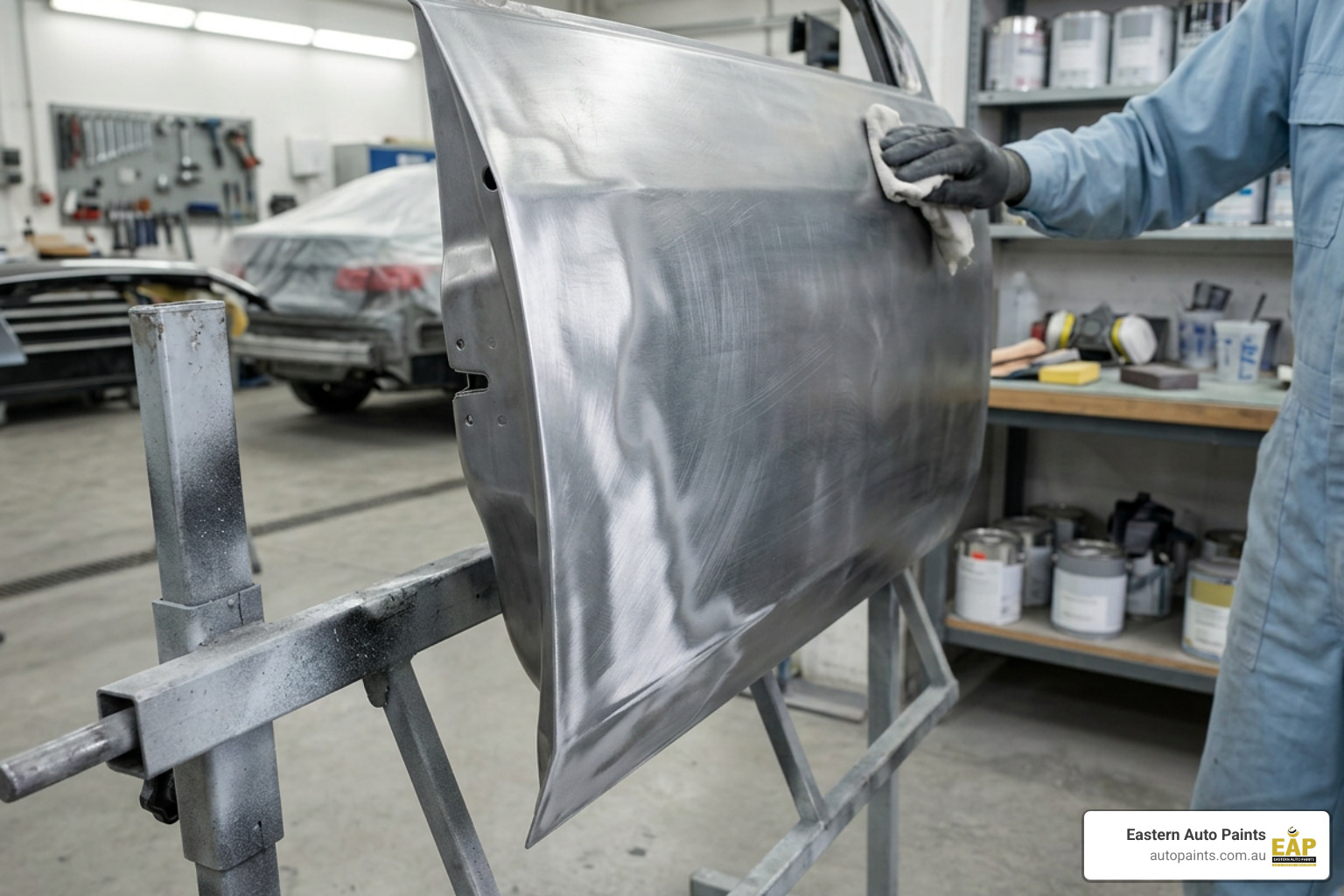
Automotive steel handles most solvent-based strippers without metallurgical degradation, provided post-strip washdown prevents immediate flash corrosion. Aluminium panels require careful consideration; aggressive caustic strippers can chemically attack and pit light alloys.
Composite panels, such as fibreglass (SMC) or carbon fibre, are sensitive to solvent penetration, which can dissolve resin binders. For a deeper look at balancing materials, see our guide on A Practical Guide to Choosing Paint Stripper. Always perform a spot test on an inconspicuous corner before coating an entire component.
Multi-Layer Paint and Primer Removal Dynamics
Vintage vehicles and repeatedly repaired panels often carry complex coating stacks, including factory-baked enamels, high-build polyester body filler, two-pack (2K) polyurethane topcoats, and direct-to-metal primers.
Chemical removers work layer by layer. Cross-linked 2K clearcoats must often be scuffed mechanically to allow chemical strippers to penetrate deeper primers. Use non-marring scrapers when lifting loosened sludge from panels to prevent gouging the underlying metal.
Workshop Execution and Panel Decontamination
Maintaining workshop cleanliness and following strict process discipline ensures a safe workspace and prevents contamination from migrating into clean spray booths.
Workshop Safety and PPE Protocols
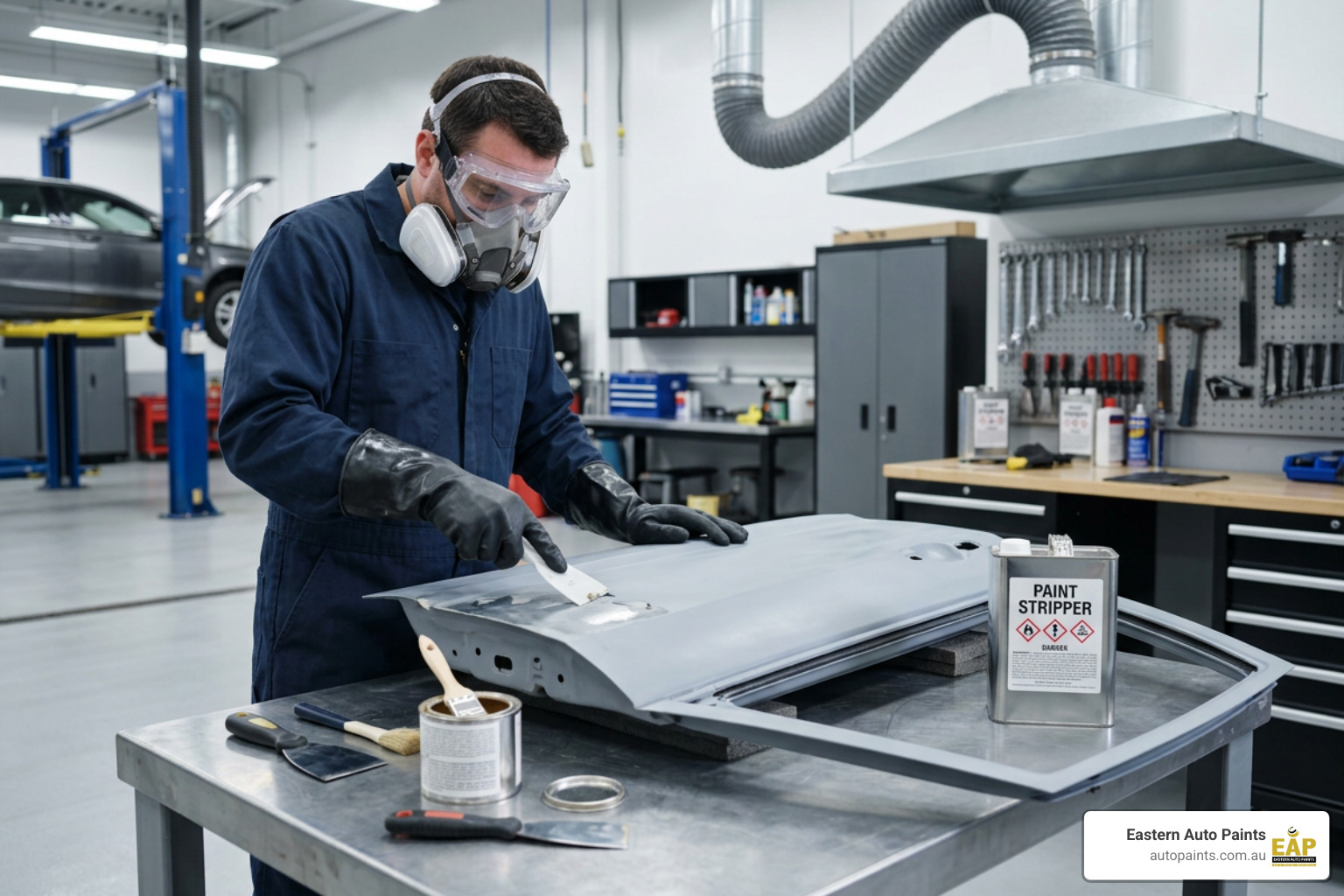
Chemical stripping releases solvent vapours and generates hazardous waste. Ensure the workshop features active ventilation or dedicated exhaust systems.
Refer to the product label, manufacturer TDS, and relevant SafeWork or WorkSafe Victoria guidance for product-specific PPE needs. General trade practice incorporates chemical-resistant gloves, splash-proof safety goggles, and suitable respiratory protection from our PPE Masks Comparison 101 resources, or dedicated airline systems from our Masks and Airlines range.
Step-by-Step Trade Process for Paint Stripping
- Surface Degreasing: Clean the panel with wax and grease remover to prevent surface contaminants from being pushed into the bare metal during scraping.
- Masking Adjacent Trims: Mask all rubber seals, plastic trims, and glass using solvent-resistant barrier tapes.
- Application: Apply an even coat of chemical stripper using a dedicated solvent-resistant brush or applicator.
- Moisture Containment: Apply plastic drop sheet film over the wet stripper to prevent premature drying on warm workshop days.
- Dwell Monitoring: Allow the chemical to swell the paint film according to the product TDS.
- Scraping: Remove the softened residue using rounded plastic or aluminium scrapers.
- Collection & Containment: Deposit chemical sludge into sealed steel drums in accordance with standard Solvent Waste Management practices.
Post-Stripping Neutralisation and Refinish Preparation
Removing the paint layer is only half the job. Preparing the bare substrate for direct-to-metal coatings requires thorough decontamination and mechanical profiling.
Solvent Neutralisation and Residue Removal
Chemical residues left behind in door hem flanges, spot welds, or panel seams can cause subsequent primer blistering and adhesion failure. Neutralise and wash the stripped metal thoroughly using appropriate solvent washes, water rinses, or neutralising thinners as specified on the product container.
Work through seams using stiff nylon detailing brushes, followed by compressed air blowouts to purge trapped liquids. Use proper wash stations and equipment found in our Clean Up Recycling range to manage runoff responsibly.
Surface Profiling and Bare Metal Priming
Once stripped and neutralised, bare steel is vulnerable to atmospheric moisture. Follow our guide on Rust Prevention and Treatment to protect clean panels.
Mechanically key the metal using dual-action orbital sanding sheets to create an anchor profile for paint adhesion. Review our Bare Metal Primer Guide 2026 and surface preparation procedures to select an appropriate epoxy or etch primer system for your refinish build.
Why This Issue Should Not Be Ignored
Inadequate paint stripping choices often surface weeks or months after topcoat delivery. Trapped solvent residue within panel seams leaches out under the heat of baking ovens or summer sun, causing paint blistering, edge peeling, and micro-cracking across finished surfaces.
Similarly, choosing overly aggressive abrasive blasting on automotive panels can stretch the metal gauge beyond repair. Addressing coating removal with correct trade techniques protects panel integrity and avoids costly refinish failures.
Common Symptoms, Challenges, or Questions
- Stripper drying out prematurely: Occurs in warm, high-airflow workshops when applied without an evaporation barrier.
- Swelling without release: Common on modern 2K clearcoats; lightly abrading the surface with coarse sandpaper prior to application helps the chemical penetrate.
- Micro-pitting on light alloys: Caused by using aggressive alkaline or unapproved strippers on aluminium body components.
- Flash rusting post-wash: Happens when bare steel is rinsed with water without rapid drying or an immediate conversion wipe down.
What a Personalised Experience Actually Looks Like
Every refinishing project presents unique challenges depending on vehicle age, original factory primers, and substrate gauge. When you speak with our team at Eastern Auto Paints, we do not simply hand over a can of solvent.
We assess the base metal, the number of historic paint layers, and your workshop facilities to recommend the ideal balance of chemical strippers, abrasive media, and post-strip neutralisers.
The Value of Consistency and an Ongoing Relationship
Building a relationship with a dedicated coatings specialist ensures access to dependable product formulations and technical data. Trade refinishers benefit from reliable advice on chemical safety, panel prep, and primer compatibility, keeping repair cycles consistent across every vehicle that passes through the workshop.
What to Expect at Eastern Auto Paints
Customers visiting our Melbourne locations in Bayswater and Dandenong South find extensive warehouse stock and trade-qualified staff. We carry industry-standard stripping gels, professional blast media, dual-action abrasives, and specialist primers.
Our focus is on supporting panel shops and automotive builders with reliable technical guidance and colour matching services.
When to Get in Touch or Take Action
If you are stripping an original classic body shell, managing multi-layer coatings, or upgrading your workshop panel preparation workflow, reach out to our team. Contact Us directly or visit us in-store to discuss your project requirements.
Explore our full inventory across the Paint Stripping, Sanding Repair, Rust Repair Prevent, and Clean Up Recycling collections to prepare your workshop for your next refinish build.
Frequently Asked Questions About Surface Stripping
How do you strip paint from intricate body seams and crevices without damaging metal?
Work chemical stripping gel into the seams using a stiff, natural-bristle or nylon detailing brush to avoid scratching the underlying metal. Allow the chemical to soften the paint film fully before agitating with brass wire brushes or non-marring scrapers. Once the coating has loosened, blow out the seam using dry compressed air and rinse thoroughly with appropriate solvent cleaner to remove all trapped chemical residues.
Why is chemical neutralisation necessary before applying automotive primer?
Chemical strippers leave microscopic active residues on bare metal. If not neutralised according to the manufacturer technical data sheet, these chemicals react under subsequent primer and filler coats, breaking down resin adhesion and causing severe blistering or peeling over time. Neutralising washes remove all chemical carriers, leaving a stable surface ready for mechanical profiling.
Can chemical strippers remove modern 2K urethane coatings and factory finishes?
Modern two-pack urethane coatings and factory-baked finishes feature tightly cross-linked polymer chains designed to resist chemical attack. To strip these coatings, lightly abrade the clearcoat with coarse dry sandpaper to break the surface tension, then apply a heavy layer of chemical stripper and seal the surface with plastic wrap to maximise penetration. Multiple progressive applications are often required for thick multi-layer finishes.
What is the best method to strip paint from aluminium vehicle panels?
Aluminium requires strippers specifically designated as safe for non-ferrous metals to avoid chemical pitting and surface degradation. Apply the compatible chemical gel evenly, avoiding caustic formulations. Once stripped, avoid aggressive wire wheels that can gouge the softer alloy, opting instead for non-woven abrasive pads followed by immediate application of an etch or epoxy primer designed for light alloys.
How should spent paint sludge and stripper waste be disposed of in the workshop?
Paint sludge containing chemical strippers and dissolved pigments is classified as hazardous solvent waste. Scrape waste directly into heavy-duty metal containment drums fitted with secure lids. Store these containers in a well-ventilated, bunded chemical storage area and arrange for collection through a licensed industrial waste management contractor in accordance with local environmental regulations.