
Selecting the Right Protective Coating to Prevent Corrosion in Harsh Environments
Choose a Corrosion Prevention Coating That Matches the Job
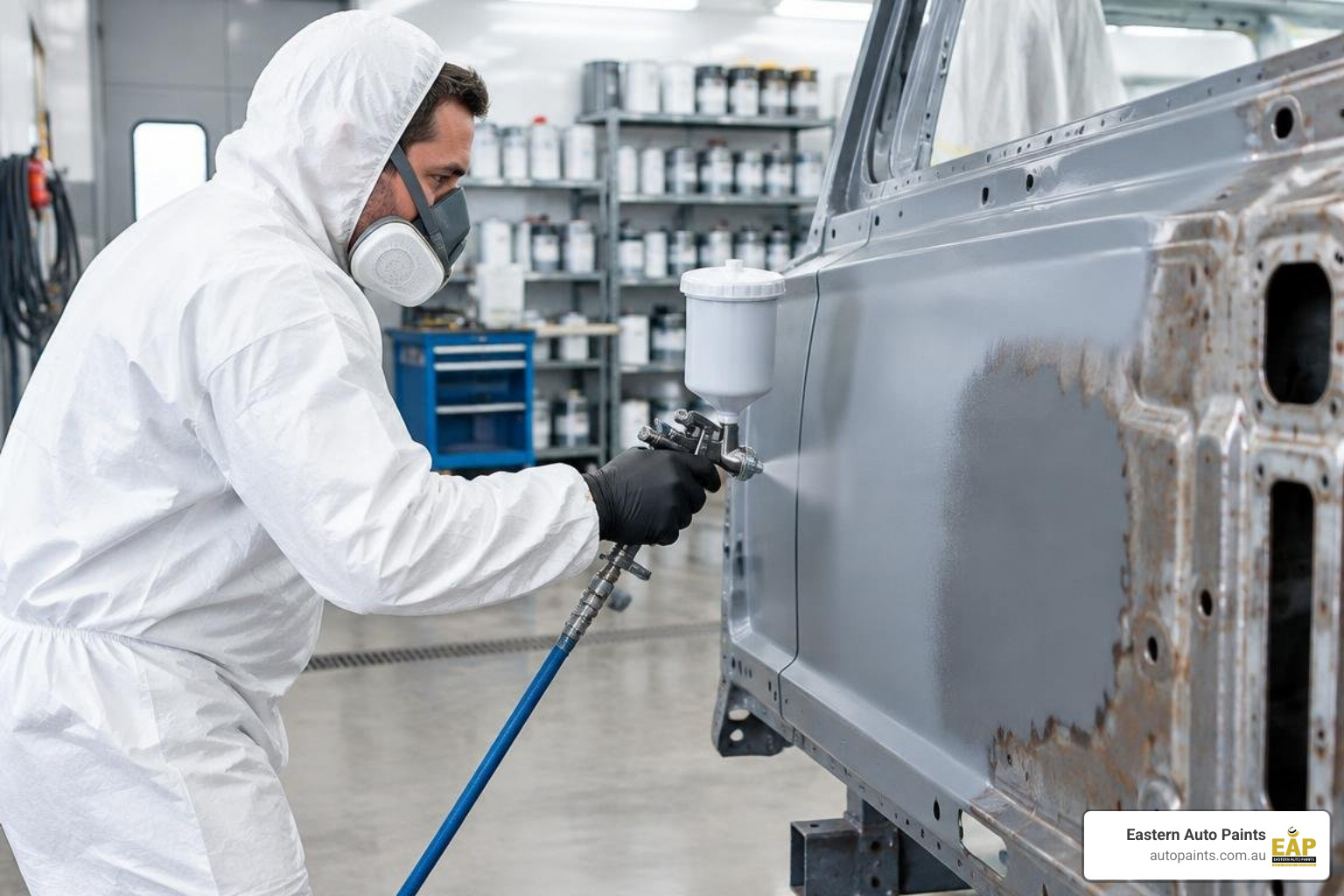
A rushed coating job or choosing the wrong paint can lead to poor adhesion, premature film failure, and costly rework on metal assets. At Eastern Auto Paints, we help trade professionals and serious restorers select the right corrosion prevention coating by matching proven paint systems to specific metal substrates, environmental exposure conditions, and required surface finishes. With the right foundation and compatible protective layers, metal surfaces stay shielded against moisture, salt, chemicals, ultraviolet light, and abrasion.
Key Takeaways
- Match the coating system to the substrate, environment, and expected service conditions.
- Remove rust, salts, grease, and loose coatings before application to support adhesion.
- Select barrier, inhibitive, or sacrificial protection based on the corrosion risk.
- Review protective coating solutions suited to automotive, commercial, and industrial projects.
- Follow the product technical data sheet and safety data sheet for preparation, film build, recoat timing, ventilation, and personal protective equipment (PPE).
At Eastern Auto Paints, we supply authentic branded coatings, refinishing equipment, and practical product guidance for panel beaters, spray painters, commercial applicators, and vehicle restorers. As a PPG Select Distributor, certified Jotun Australia distributor, and master wholesale distributor for Concept Paints in South East Victoria, our Bayswater and Dandenong South teams support projects across Australia with dependable supply and technical expertise.
Effective corrosion prevention depends on the complete coating system, from substrate preparation and primer selection through to topcoat application and ongoing maintenance. Our team provides the reliable products, custom colour matching, and technical support needed to help you achieve a consistent, durable finish across demanding automotive and industrial applications.
Why Corrosion Prevention Coatings Matter in Harsh Environments
Metal oxidation represents an ongoing natural process that gradually degrades bare or inadequately shielded substrates. When raw steel, iron, or reactive alloys encounter atmospheric moisture, industrial fallout, or airborne salts, electrochemical cells form across the metal surface. Left unchecked, this oxidation compromises the structural integrity of trade vehicle chassis, transport trailers, earthmoving machinery, and structural framework. The outcome involves extensive metal thinning, component fatigue, costly unplanned downtime, and labour-intensive repairs.
Understanding proper rust prevention and treatment is essential for any proactive asset management strategy. Road transport equipment operates in environments with regular exposure to road de-icing salts, gravel abrasion, and chemical cleaning agents. Industrial plant machinery often endures chemical splashing and constant moisture condensation. By installing a robust protective coating early in the life cycle of a metal asset, trade operators protect capital investments, maintain roadworthiness, preserve equipment resale value, and prevent unexpected structural failures.
Common Corrosion Risks and Coating Selection Challenges
Corrosion does not always show up immediately as widespread red rust. In many industrial and automotive scenarios, the early stages of failure occur quietly beneath an apparently sound paint film or along structural joints.
Common challenges and physical symptoms encountered in trade workshops include:
- Pitting Corrosion: Localised cavities that penetrate deep into the metal profile, creating stress points without extensive surface spread.
- Blister Formation and Osmotic Bubbling: Moisture or soluble salts trapped beneath the coating draw water through the film, lifting the paint layer away from the substrate.
- Underfilm Creep: Corrosion travelling laterally along the steel surface from an unsealed edge, stone chip, or fastener hole, breaking the adhesive bond.
- Galvanic Corrosion: Accelerated oxidation occurring where dissimilar metals meet in the presence of an electrolyte.
- Adhesion Failure: Intercoat peeling or complete delamination caused by residual surface oils, grease, mill scale, or incorrect profile depth.
- Severe Microclimates: Rapid coating breakdown driven by high humidity, coastal sea spray, and wide thermal cycles that cause substrates to expand and contract.
Trade applicators frequently ask how to verify coating compatibility, how to achieve adequate film build over sharp structural edges, and how to manage critical recoat windows when layering intermediate and topcoat systems. Addressing these questions early prevents costly strip-backs and rework.
Selecting a Corrosion Prevention Coating for the Job
Selecting an effective coating system requires evaluating the specific operating environment rather than relying on generic, one-size-fits-all paint options. At Eastern Auto Paints, a personalised technical recommendation begins with a thorough assessment of your project variables. We evaluate the core substrate material, whether it is mild steel, hot-rolled structural steel with mill scale, galvanised metal, or aluminium alloys.
Our team evaluates the mechanical and chemical exposures your equipment will face, including direct impact, chemical washdowns, immersion, or extreme sun exposure. For commercial fleet operators requiring brand consistency alongside heavy-duty durability, we utilise advanced colour matching technology alongside experienced professionals. We supply specialised formulations in bulk quantities or pre-filled custom spray cans for seamless on-site touch-ups and fast field repairs. Through our comprehensive industrial paint supplies, we help commercial workshops assemble tailor-made coating schedules that balance necessary film build, rapid curing requirements, and high-performance corrosion defence.
Building Reliable Long-Term Corrosion Protection
Achieving predictable, repeatable corrosion resistance across dozens of vehicle bodies or structural steel assemblies requires process discipline and supply reliability. When a commercial workshop establishes standardised surface preparation and application protocols, the risk of early coating failure drops significantly.
Working closely with an established supplier ensures access to consistent batch formulations, proven product pairings, and up-to-date technical support. As highlighted in our Industrial Coating Supplier Guide 2026, trade applicators benefit from continuous access to our extensive inventory of automotive paint supplies. This long-term support helps workshops streamline their material management, reduce unexpected product changeovers, and maintain dependable turnarounds for their clients.
What to Expect at Eastern Auto Paints
Eastern Auto Paints operates as an expert supplier and guidance provider, connecting trade professionals, panel shops, and serious restorers with proven coating technologies. Backed by our distribution credentials with leading brands like PPG, Jotun, and Concept Paints, we maintain extensive stock across our Bayswater and Dandenong South facilities.
When consulting our technical counter teams, you can expect:
- Objective product recommendations aligned strictly with your operational requirements and substrate type.
- Direct access to high-solids epoxy primers, high-build surfacers, and direct gloss polyurethane topcoats.
- Guidance on spray equipment setup, including pressure calibration, tip selection, and fluid delivery methods.
- Support spanning trade smash repair, commercial transport refinishing, structural fabrication, and detailed restoration projects.
For further company details or to locate your nearest branch, visit our About EAP page or contact our team directly for technical advice.
When to Get in Touch or Take Action
Prompt intervention remains the most cost-effective method to manage corrosion. Addressing fine rust spotting, minor stone chips, or edge degradation immediately stops moisture from tracking beneath adjacent paint layers.
We recommend getting in touch with our team when you are:
- Identifying early rust formation or paint blistering across chassis, subframes, or machinery bodies.
- Setting up preventative fleet maintenance schedules for commercial transport vehicles.
- Preparing to blast, prime, and coat newly fabricated structural steel or agricultural plant equipment.
- Sourcing premium rust repair and prevention products or high-grade spray cans for workshop maintenance benches.
- Seeking assistance with paint system specifications, surface profile requirements, or multi-coat compatibility.
Practical Solutions and Reassurance
Corrosion prevention relies on selecting the proper protective mechanism, preparing the metal correctly, and applying a matched multi-layer system. While the chemistry of modern paints is sophisticated, achieving a long-lasting finish is entirely straightforward when you follow proven processes.
Electrochemical Mechanisms in a Corrosion Prevention Coating
Corrosion is an electrochemical process involving an anode, a cathode, an electrical path through the metal, and an electrolyte such as water containing dissolved salts. Protective coatings disrupt this cell using three primary mechanisms:
- Barrier Protection: The coating forms a continuous, low-permeability physical shield that prevents moisture, oxygen, and ionic species from contacting the bare metal. High-build epoxies, heavy-duty mastics, and polyurethane finishes are widely recognised for their strong barrier performance.
- Sacrificial (Cathodic) Protection: The coating incorporates high loadings of metallic dust, primarily zinc. Because zinc possesses a lower electrochemical potential than iron or steel, it corrodes preferentially when moisture bridges the surface. This sacrificial action delivers active cathodic protection to adjacent exposed steel, making products such as Galmet Coldgal and Concept Cold Gal Zinc Coat dependable choices for steel structures and weld seams.
- Inhibitive Passivation: Pigments within the primer, such as zinc phosphate, react with penetrating moisture to form a passivating, insoluble protective layer directly on the metal surface, stifling the anodic corrosion reaction.
Selecting Organic, Inorganic, and Metallic Systems
Different coating chemistries serve specific protective roles depending on the environmental exposure and the mechanical demands placed on the component.
- Epoxy Primers and Mastics: Widely used as heavy-duty base coats, epoxies deliver high chemical resistance and substrate adhesion. High-build formulations like Jotamastic 90 provide moisture-tolerant barrier protection suitable for structural steel and chassis components. Learn more in our guide to choosing an epoxy primer for metal.
- Polyurethane Topcoats: Two-pack (2K) acrylic polyurethanes deliver gloss retention, chemical washdown tolerance, and resistance to ultraviolet (UV) degradation, protecting the underlying epoxy primers from sun-induced chalking.
- Zinc-Rich Systems: Both organic (epoxy-based) and inorganic (silicate-based) zinc primers provide cathodic protection for raw, blasted carbon steel assets operating in severe environments.
- Powder Coatings: Thermosetting powders, including epoxy and polyester chemistries, are electrostatically applied and cured under heat to form a uniform, impact-resistant protective layer across production components.
- Moisture-Cured Urethanes (MCU): Single-pack resins that cure via atmospheric humidity, offering strong barrier defence and flexibility on complex assemblies.
Practical Corrosion Prevention Coating Systems
No single paint coat performs every protective duty equally well. Durable long-term protection is achieved through an integrated multi-coat system where each layer serves a designated purpose.
A comprehensive coating build typically combines:
- Primer: Formulated for adhesion to the prepared metal, passivation, or sacrificial galvanic action.
- Intermediate Coat: Builds dry film thickness (DFT), closes micro-porosity, and lengthens the path moisture must travel to reach the substrate.
- Topcoat: Shields the system from weathering, UV radiation, environmental chemicals, and physical abrasion while delivering the required colour and gloss.
| Coating Technology | Primary Protection Mechanism | Typical Workshop & Trade Uses | Surface Preparation Considerations | Key Application Requirements |
|---|---|---|---|---|
| Barrier (e.g. Epoxy Mastics) | Physical isolation from moisture and electrolytes | Chassis rails, industrial machinery, structural steel | Requires thorough degreasing and mechanical profiling | Ensure complete film continuity without pinholes |
| Sacrificial (e.g. Zinc-Rich Primers) | Galvanic cathodic protection of steel substrates | Blasted steel framing, trailers, commercial transport | Demands direct metal contact free of mill scale or old paint | Maintain uniform zinc particle suspension during spraying |
| Inhibitive (e.g. Etch / Zinc Phosphate) | Chemical passivation of the metal surface | Automotive panels, aluminium extrusions, general repair | Clean, abraded bare metal free of grease and chemical residues | Apply thin, uniform coats to avoid film brittleness |
Multi-Stage Corrosion Prevention Coating Application Process
Proper application demands strict adherence to sequential preparation and finishing steps.
- Degreasing and Decontamination: Clean the entire surface using dedicated wax and grease removers to eliminate road grime, processing oils, and silicones before abrading.
- Mechanical Profiling: Remove loose rust, scale, and degraded paint. Create an anchor profile using abrasive blasting or mechanical sanding to promote mechanical interlock. Explore our detailed panel preparation methods for step-by-step guidance.
- Primer Application: Apply a compatible base coat, such as Concept 103 Etch Primer on mixed metals or a dedicated 2K epoxy on heavy steel assemblies.
- Intermediate and Build Coats: Apply high-build intermediate primers where leveling, filling, or extra barrier thickness is required.
- Topcoat Sealing: Apply a durable topcoat to shield the primer from UV exposure and seal the complete system.
- Curing and Inspection: Allow adequate flash-off and curing time before handling or placing assets into service. Check dry film thickness to ensure the system meets specified design parameters.
Application and drying times vary from product to product, so always check the manufacturer's technical data sheet or product label for the exact specifications before you start. Trade professionals must consult the product's safety data sheet (SDS) and adhere to relevant SafeWork Australia and state WorkSafe requirements regarding ventilation, safe solvent handling, flammable liquid storage, and appropriate personal protective equipment (PPE), including suitable respiratory protection. Eastern Auto Paints provides product guidance but is not a regulatory compliance authority.
Emerging Coating Technologies and Advanced Resins
Coating technology continues to evolve, delivering higher durability alongside lower environmental impact. Advanced formulations increasingly feature nanostructured barrier additives, including graphene-modified resins and engineered ceramic composites that reduce film porosity and enhance abrasion resistance.
Smart micro-encapsulated inhibitors represent another active area of development, designed to release passivating agents only when triggered by local changes in pH caused by mechanical damage. In commercial refinishing, modern high-solids technologies and low-VOC automotive paint options enable workshops to reduce solvent emissions while maintaining protective film builds. Durable formulations such as Protec Paraglaze direct gloss combine strong chemical resistance with outstanding outdoor weathering performance.
Closing Statement
Supporting Reliable Long-Term Protection for Metal Assets
Preventing corrosion in harsh operating environments requires selecting the correct chemistry, executing thorough surface preparation, and applying a fully compatible multi-coat system. Whether you are managing fleet maintenance, running an automotive refinishing shop, or restoring heavy commercial machinery, investing in the right materials protects assets against premature degradation.
Our team across Bayswater and Dandenong South is ready to assist you with technical specifications, colour matching, and product selection tailored to your projects.
- Browse all automotive paint lines
- Explore commercial industrial coatings
- Connect with our technical team
Frequently Asked Questions About Corrosion Prevention Coating Options
How do barrier coatings differ from sacrificial zinc coatings?
Barrier coatings function by creating an impermeable physical shield that keeps water, oxygen, and environmental contaminants away from the metal surface. These formulations rely on resilient resin systems such as epoxies and polyurethanes to seal the substrate completely. Sacrificial zinc coatings work through an active electrochemical process known as cathodic protection. Because zinc has a lower electrochemical potential than iron or steel, the zinc particles in the coating corrode preferentially when exposed to moisture, protecting the underlying steel even if minor scratches or pinholes appear in the film.
Why is proper surface preparation critical before applying protective coatings?
Surface preparation directly determines how effectively a coating bonds to the substrate. Applying paint over existing oils, road grime, soluble salts, loose rust, or mill scale prevents proper mechanical adhesion and traps moisture beneath the film. This trapped contamination leads to blistering, flaking, and rapid underfilm corrosion creep. A clean, properly degreased, and mechanically abraded or blasted surface provides an anchor profile that enables primers to bond securely and perform as intended.
What role does dry film thickness play in corrosion resistance?
Dry film thickness directly influences the continuity and barrier performance of a protective coating system. If a coating is applied too thin, micro-porosity and low spots over rough metal peaks can allow moisture and air to reach the underlying steel. Conversely, applying paint excessively thick in a single pass can trap solvent, leading to solvent popping, bubbling, running, or cracking as the film cures. Maintaining an even, specified film build across all coats ensures the system provides reliable, long-term barrier protection.
How do environmental conditions dictate the choice of primer and topcoat?
The operating environment determines the specific chemical, physical, and atmospheric stresses a coating must withstand. Components exposed to marine environments or coastal sea spray require moisture-tolerant epoxy primers or zinc-rich systems that resist high chloride levels. Equipment operating outdoors in strong sunlight requires high-grade polyurethane or acrylic topcoats that resist ultraviolet breakdown and chalking. Similarly, assets subjected to chemical splashing, road salt, or heavy abrasion demand specialised high-build resins designed to handle those specific exposures.
Can protective coatings be applied over existing tightly bonded rust?
Certain specialised rust-converting primers, penetrating sealers, and surface-tolerant epoxy mastic products are formulated to be applied over tightly adhered, stable surface rust. However, all loose, flaky rust, scale, and contaminants must always be thoroughly removed using mechanical wire brushing, grinding, or sanding beforehand. For maximum service life and heavy commercial applications, removing all corrosion back to clean bare metal remains the gold standard. Always check the specific product technical data sheet to confirm substrate preparation limits before applying any coating.