
Stick It to Rust with the Best Epoxy Primer for Metal
Choosing Epoxy Primer for Metal Projects
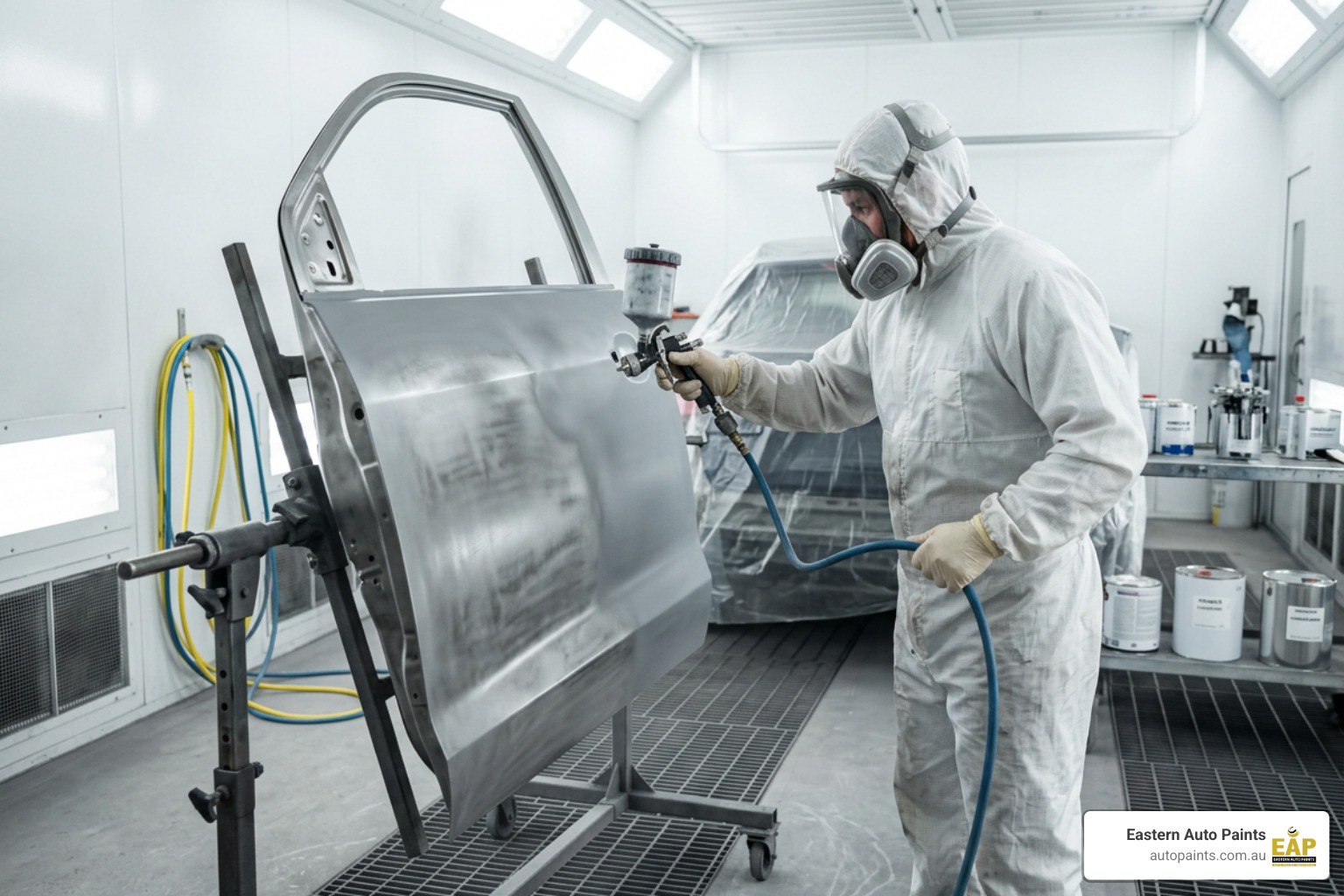
A good epoxy primer for metal creates a durable barrier between clean, bare steel and the paint system above it. The positive result is reliable adhesion and improved moisture resistance; the negative result comes from priming over contamination, active rust, or poorly sanded metal, which can undermine the finish before colour is even applied.
Key Takeaways
- Choose a two-pack epoxy primer when corrosion protection and direct-to-metal adhesion are the priority.
- Prepare metal by removing rust, degreasing thoroughly, and creating an even mechanical sanding profile.
- Use etch primer only where the selected product system specifies it, rather than automatically layering it under epoxy.
- Check the product technical data sheet for mixing, flash-off, recoat, sanding, and topcoat requirements.
- Explore our The Guide to Epoxy Primer Paint for Cars for a closer look at epoxy primer selection and application.
Eastern Auto Paints (EAP) helps trade refinishers, industrial operators, and serious vehicle restorers compare primer systems based on the substrate, repair stage, application method, and final coating requirements. We stock proven coating solutions and provide practical guidance so you can build a compatible system rather than relying on assumptions.
Our core value is simple: smarter coating choices produce more dependable results. We focus on helping customers understand what each primer is designed to do, from sealing bare metal to supporting later filler, colour, and clearcoat stages.
Why This Issue Should Not Be Ignored
Applying topcoats directly over bare metal or using an incompatible primer is one of the most common causes of coating failure in automotive refinishing and metal fabrication. Bare steel, aluminium, and cast iron are naturally vulnerable to atmospheric humidity, oxygen, and environmental contaminants. When bare metal is not properly sealed, microscopic moisture penetrates through porous finish layers, resulting in blistering, micro-cracking, loss of adhesion, and rust formation beneath your paintwork.
Choosing the right primer ensures that the entire coating stack bonds securely to the substrate. Taking shortcuts at the foundation level jeopardises every subsequent layer of primer surfacer, basecoat, and clearcoat. Selecting a dedicated primer formulation designed for direct-to-metal application establishes the mechanical and chemical barrier necessary to protect vehicle panels and structural fabrications over the long term.
Common Symptoms, Challenges, or Questions
Trade painters and vehicle restorers frequently encounter several recurring hurdles when preparing bare metal assemblies:
- Early paint blistering caused by trapped atmospheric moisture beneath the primer layer.
- Edge peeling and flaking due to insufficient mechanical sanding scratches on bare steel or aluminium.
- Chemical reaction wrinkling when aggressive solvents in topcoats penetrate porous underlying primers.
- Confusion over whether to apply polyester body filler over bare steel or over a sealed epoxy foundation.
- Uncertainty about whether etch primers and epoxy coatings can be applied on top of each other.
Addressing these challenges starts with understanding how modern metal primers function chemically and mechanically.
Understanding Metal Primers: Chemistry, Adhesion, and Corrosion Resistance
Automotive metal primers serve two critical roles: establishing high-strength adhesion to bare metal and creating an impenetrable barrier against environmental moisture. Different primer chemistries achieve these goals in unique ways. For a complete overview of primer classifications across refinish projects, check A Practical Guide to Choosing Auto Paint Primers.
Traditional coatings rely purely on surface wetting, but specialised metal primers create a balanced mechanical and chemical bond. An epoxy coating cures through a cross-linking chemical reaction between an epoxy resin and an amine-based hardener or converter. This dense molecular network forms a non-porous barrier that locks out ambient humidity and airborne salts.
Etch Primer vs Epoxy Primer
Etch primers and epoxy primers are both formulated for bare metal substrates, but they utilise fundamentally different mechanisms to provide protection.
When you would use an etch primer:
- Ideal for fast spot repairs on bare metal rub-through areas.
- Formulated with mild acid components that chemically etch into non-ferrous metals like aluminium and galvanised steel to establish adhesion.
- Contains anti-corrosive pigments such as zinc phosphate to help passivate the bare metal surface.
- Formulations like Self Etching Primer and Concept 103 Etch Primer provide rapid drying times for quick turnaround work.
When you would use an epoxy primer:
- Serves as a heavy-duty, impermeable moisture barrier across entire vehicle restorations or large bare metal panels.
- Relies on mechanical adhesion created by sanding scratches on the metal surface.
- Provides superior chemical and water resistance without relying on acidic etching agents.
- Functions as an insulating sealer coat between differing substrates, cured body fillers, and subsequent refinish layers.
Decision Guide: Select an etch primer when performing rapid rub-through repairs or priming galvanised components that benefit from chemical surface passivating. Select an epoxy primer when sealing bare body shells, frame assemblies, or multi-panel restorations where maximum water barrier properties and high chemical insulation are required.
High-Build Urethane vs Epoxy Primer for Metal Formulations
Understanding the distinct functions of high-build surfacers and epoxy sealers prevents common coating defects during panel preparation. For an in-depth breakdown of these two chemistries, refer to our comparison on Epoxy vs Urethane Primer.
When you would use a high-build urethane primer:
- Designed primarily for surface levelling, feather-edging repairs, and block sanding to achieve flat panel profiles.
- Provides substantial dry film build to fill sanding scratches and minor surface imperfections.
- Easy to sand using standard dry or wet sanding abrasives.
- Options like Concept HS 2K High Build Primer 5L Kit offer rapid film build over sealed bodywork.
When you would use an epoxy primer:
- Acts as a dedicated foundation sealer that bonds directly to bare metal and fully cures into a non-porous layer.
- Seals polyester body filler repairs to prevent moisture absorption and solvent strike-through from topcoats.
- Provides exceptional flexibility and long-term corrosion prevention across metal joints and welds.
Decision Guide: Apply an epoxy primer first over properly abraded bare metal to establish corrosion resistance. Once the epoxy has flashed or cured according to its specification, apply a high-build urethane primer over the top if extensive block sanding and panel levelling are necessary.
Bare Metal and Epoxy Primer for Metal Options in 2026
Modern refinish workshops and restoration garages can choose between several commercial primer options designed for bare metal applications:
| Primer Type | Primary Substrate Compatibility | Anti-Corrosion Mechanism | Primary Application Goal | Application Method |
|---|---|---|---|---|
| Two-Pack (2K) Epoxy | Bare Steel, Aluminium, Cast Iron, Body Filler | Non-porous cross-linked moisture barrier | Long-term corrosion protection & panel sealing | Pneumatic spray gun / Airless |
| 1K / 2K Epoxy Aerosol | Spot repairs, bare rub-throughs, brackets | Cross-linked or modified resin barrier | Fast localised spot priming & corrosion sealing | Convenient aerosol spray can |
| Etch Primer | Bare Steel, Aluminium, Galvanised Steel | Acidic chemical etching & zinc phosphate | Rapid adhesion promotion on bare rub-throughs | Spray gun / Aerosol |
| High-Build 2K Urethane | Sealed epoxy, body filler, sound OEM paint | High-solid mechanical barrier | Surface levelling, filling, and block sanding | Pneumatic spray gun |
You can explore our complete primers and fillers collection to match specific product formulations to your workshop equipment and repair stages.
Professional Two-Pack (2K) Epoxy Primers
Two-pack (2K) epoxy primers represent the benchmark standard for complete vehicle bare-metal restorations and industrial steel fabrications. Formulated with robust epoxy resins and polyamine hardeners, these coatings form an exceptionally tough, chemically inert barrier.
When you would use these professional coatings:
- Sealing full bare steel vehicle bodies, chassis assemblies, suspension components, and trailer fabrications.
- Formulations such as Epotec Primer Surfacer offer high chemical resistance and excellent barrier protection over properly prepared steel.
- Versatile systems like Protec 2K Paraglaze Multiprime provide strong direct adhesion to multiple metal types while functioning as a surfacer or non-sanding sealer.
- Explore our dedicated 2K automotive primer range for workshop applications.
Convenient Aerosol Epoxy Primer for Metal Repairs
For localised spot repairs, panel edge rub-throughs, or small metal fabrications, setting up a full spray gun setup is not always practical. Modern aerosol technology provides trade-quality protection in convenient single-can formats.
When you would use aerosol epoxy solutions:
- Repairing small bare metal rub-throughs created during primer block sanding.
- Sealing fabricated brackets, door jambs, and inner cavity sections.
- Products like Car Rep 2K Epoxy Primer Aerosol Black utilise internal hardener activation technology to deliver authentic two-pack cross-linking without spray gun clean-up.
- Formulations such as Mipa 2K Epoxy Primer Filler Aerosol 400ml provide high-solid filling performance alongside corrosion protection.
- Fast-drying options including 1K Epoxy Primer Spray provide rapid rust-inhibiting protection for smaller parts.
- Browse our broader aerosol primer collection to find convenient delivery options for minor panel work.
Direct-to-Metal Etch and Specialty Formulations
Certain metal substrates require specialised chemical treatment or tailored anti-corrosive pigments to ensure long-term coating adhesion.
When you would use specialty etch formulations:
- Treating galvanised sheet metal, polished aluminium panels, and non-ferrous alloys.
- Products like Concept Paints 110 Metal Etch Primer chemically bite into smooth metal surfaces to promote adhesion for subsequent paint stages.
- Anti-corrosive aerosols like Car Rep Anti Rust Primer Aerosol offer rapid priming over lightly abraded components.
- For additional application insights, read our overview on Rust Inhibiting Primer Spray.
What a Personalised Experience Actually Looks Like
Every refinishing project involves a unique combination of metal substrates, workshop temperatures, and equipment capabilities. When you work with Eastern Auto Paints, we take the time to evaluate your project workflow before recommending a primer system.
For example, a restorer working on a vintage steel bodyshell across several months requires an epoxy system with an extended open recoat window so they can apply body filler or high-build surfacers in stages. In contrast, a commercial body shop turning around daily collision repairs requires rapid-cure formulations to keep spray booths moving. We help tailor your coating system, thinner selection, and surface prep grits to your specific timeline.
Bare Metal Surface Preparation and Application Standards
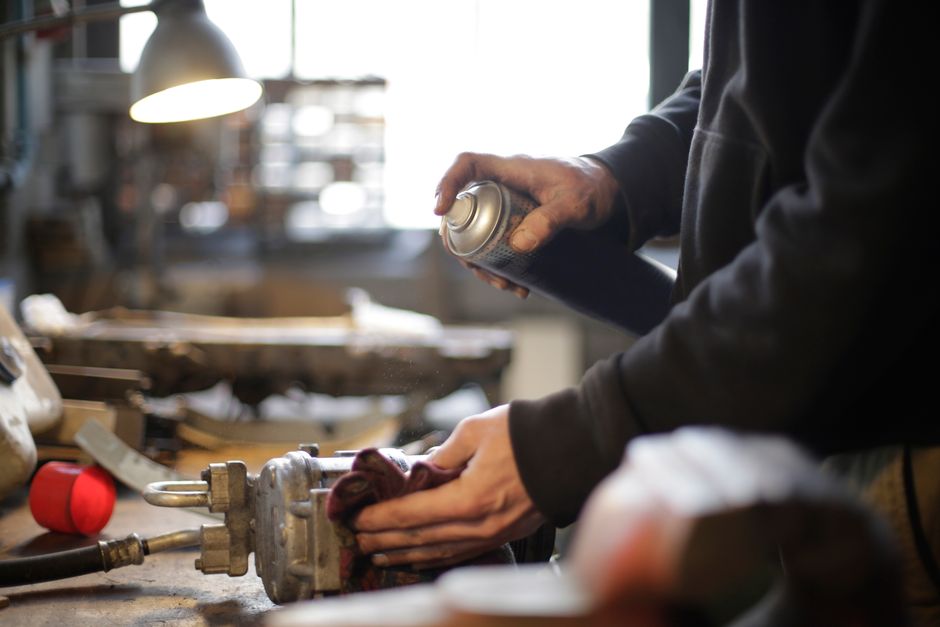
No metal primer can overcome poor surface preparation. Epoxy coatings require a clean, contaminant-free substrate with an even mechanical profile to bond effectively.
Step-by-step surface preparation standards:
- Degreasing: Thoroughly clean the bare metal using dedicated wax and grease removers. Apply the solvent with a clean cloth and wipe it off with a separate, dry lint-free cloth before it evaporates to lift oil, grease, and road film.
- Mechanical Abrasion: Sand the bare metal using quality abrasive sanding discs. Bare steel is typically sanded to create an even mechanical anchor pattern, while aluminium requires finer abrasives suited to softer non-ferrous surfaces. Always verify the manufacturer's technical data sheet (TDS) or product label for recommended sandpaper grits.
- Dust Removal: Blow down the prepared panel with clean, dry compressed air and wipe down with a tack rag.
- Flash Rust Prevention: Prime bare steel promptly after abrading. Humidity in unconditioned workshops can cause microscopic flash rust within hours.
- Rust Converter Caution: Avoid spraying 2K epoxy primer directly over unwashed phosphoric acid-based rust converters. Acid residues and trapped oxidation can compromise the epoxy bond, leading to delamination. Sand all active rust back to bright, clean metal.
Spray Equipment Setup and Environmental Conditions
Achieving a uniform, defect-free primer coat depends on proper spray gun setup and ambient workshop conditions.
Key equipment and environmental considerations:
- Equipment Selection: Apply heavy-bodied 2K epoxy primers using professional gravity-feed professional spray guns. Tip sizes and operating air pressures vary based on whether you are spraying a high-build surfacer coat or a thinned wet-on-wet sealer coat; always consult the product label or TDS for exact nozzle recommendations.
- Temperature & Humidity: Epoxy curing depends on temperature. Applying epoxy below recommended workshop temperatures can significantly slow down or stall the cross-linking reaction. Avoid spraying in excessive humidity, and ensure the metal surface temperature stays safely above the dew point to prevent condensation.
- Mixing & Pot Life: Two-pack epoxy formulations require precise ratios of resin, hardener, and reducer. Thoroughly mix components and respect the product's pot life, which shortens in warmer workshop environments.
- Application & Drying Variations: Application methods, flash-off intervals between coats, and drying times vary significantly by product, ambient temperature, and film thickness. Always refer to the manufacturer's technical data sheet (TDS) or product label before commencing application.
Recoat Windows, Sanding, and Topcoat Compatibility
Epoxy primers provide a chemical recoat window during which subsequent coatings (such as polyester body fillers, urethane surfacers, or topcoats) can be applied directly over the epoxy without prior mechanical sanding.
- Chemical Recoat Window: During this manufacturer-specified timeframe, the epoxy surface remains chemically active, allowing the next layer to cross-link directly with the primer.
- Mechanical Scuffing: If the epoxy cures beyond its open recoat window, the surface becomes hard and chemically inert. You must thoroughly abrade the cured epoxy with fine sandpaper to create a mechanical key before applying additional primers or topcoats.
- Polyester Filler Sequencing: Many professional restorers prefer applying 2K epoxy primer directly over bare metal first, allowing it to flash according to its TDS, and then applying body filler over the epoxy. This seals the bare metal beneath the filler and protects against moisture penetration.
The Value of Consistency and an Ongoing Relationship
Achieving high-end paint finishes requires consistency across every stage of the repair process. Using products from a matched paint system prevents chemical incompatibilities such as solvent trap, micro-blistering, or delamination between primer and basecoat layers.
Establishing an ongoing relationship with an expert automotive paint supplier gives you direct access to technical support whenever unexpected workshop challenges arise. Whether you are troubleshooting spray gun atomisation, managing cure times during seasonal temperature shifts, or selecting compatible clearcoats, having reliable technical advice ensures repeatable, professional refinishing results.
Workshop Safety, Ventilation, and PPE Protocols
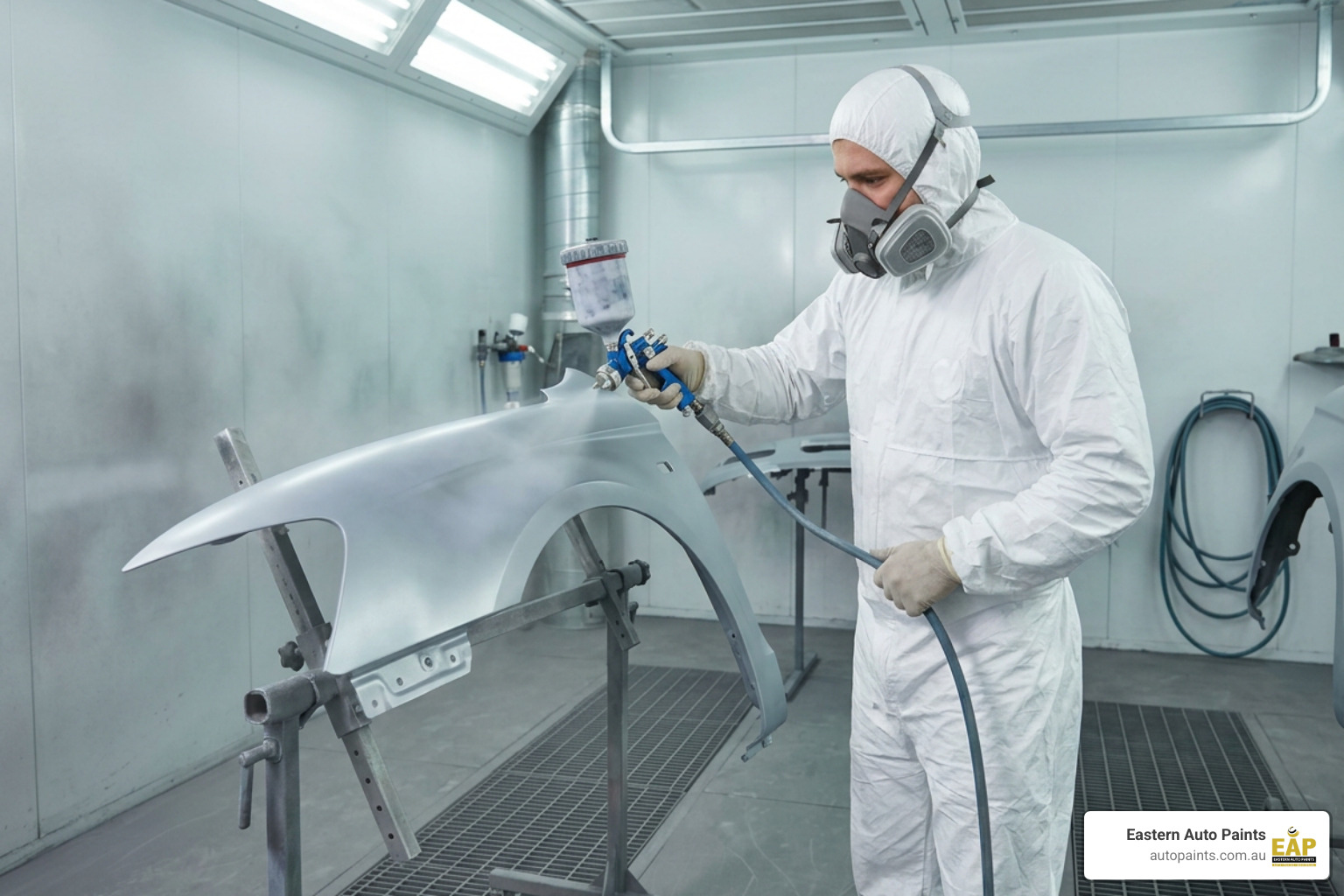
Working with 2K epoxy primers, chemical hardeners, and paint thinners involves airborne solvent vapours and paint mists that require strict workshop safety measures.
Key safety protocols for your workshop:
- Respiratory Protection: Two-pack coatings contain active hardeners and organic solvents. Do not rely on basic dust masks. Refer to the product label/TDS and relevant SafeWork or WorkSafe guidance for product-specific personal protective equipment (PPE) needs, including fitted organic vapour respirators or supplied-air systems.
- Eye & Skin Protection: Wear chemical-resistant nitrile gloves, safety eyewear, and protective paint overalls to prevent direct skin contact with wet resin and hardeners.
- Ventilation: Always mix and spray coatings in a well-ventilated spray booth or designated prep area equipped with active extraction to control airborne particulates.
- Safe Solvent Handling & Disposal: Store flammable thinners and hardeners in compliant flame-proof storage cabinets. Dispose of solvent-soaked wiping rags and paint waste according to local environmental regulations.
What to Expect at Eastern Auto Paints
When you source your automotive refinish supplies through Eastern Auto Paints, you receive trade-focused support tailored to real-world workshop needs:
- Advanced Colour-Matching Technology: Our advanced digital spectrophotometer systems provide precision colour matching for all factory automotive colours and custom mixed coatings.
- Comprehensive Product Range: We stock premium 2K epoxy primers, etch formulations, high-build surfacers, clearcoats, abrasives, and workshop consumables from leading paint manufacturers.
- Expert Technical Advice: Our experienced team understands the practical application challenges of metal restoration, helping you choose the exact primer system for your substrate.
- Professional Workshop Equipment: We supply premium spray guns, air filtration units, and compressed air equipment, including Anest Iwata compressor options for workshop and industrial applications featuring low noise levels and efficient air delivery.
When to Get in Touch or Take Action
If you are planning an automotive restoration, upgrading your workshop equipment, or seeking guidance on the best primer system for an upcoming bare metal project, taking action early ensures optimal paint performance.
You can contact our team directly for product selection assistance or visit our Victorian store locations:
- Bayswater: 8/183-187 Dorset Rd, Bayswater VIC 3153
- Dandenong South: 4/31 Micro Cct, Dandenong South VIC 3175
You can also browse our full range and connect with our technical specialists online through our Contact Us page.
Explore our core product ranges to support your project:
- Aerosol Primer Spray Cans
- Two-Pack (2K) Primers
- Abrasives and Sanding Discs
- Professional Spray Guns and Accessories
Our team at Eastern Auto Paints is committed to supporting your refinishing work with proven coating systems, reliable trade supplies, and practical technical guidance for long-lasting results.
Frequently Asked Questions About Bare Metal Primers
Can Epoxy Primer Be Applied Directly Over Bare Metal and Body Filler?
Yes, two-pack epoxy primer is formulated specifically for direct-to-metal application on clean, abraded bare steel, aluminium, and cast iron. It also provides excellent adhesion over properly cured and sanded polyester body fillers, creating an impermeable moisture barrier that seals repair areas before topcoating.
Do You Need to Apply Etch Primer Before Epoxy Primer?
No, you should not apply an etch primer underneath a two-pack epoxy primer unless the specific paint system manufacturer explicitly directs you to do so. The acid content in etch primers can interfere with the chemical curing mechanism of the epoxy, leading to adhesion failure and solvent entrapment. Epoxy primer bonds directly to bare metal that has been mechanically abraded.
How Long Can Bare Metal Primer Sit Before Topcoating?
The time bare metal primer can sit before topcoating depends entirely on the specific formulation and its open chemical recoat window. During this manufacturer-defined window, topcoats or surfacers can be applied directly without sanding. If that timeframe is exceeded, the epoxy surface fully cures and must be thoroughly scuffed with abrasive paper to create a mechanical key before applying subsequent coats. Always check the manufacturer's technical data sheet for exact recoat windows.
What Is the Difference Between 1K and 2K Primers for Metal?
A 1K primer is a single-pack coating that dries purely through solvent evaporation without a chemical hardener, making it convenient for quick spot repairs and rub-throughs. A 2K primer is a two-pack system that requires mixing a base resin with a dedicated chemical activator or hardener, producing a cross-linked film that delivers superior water resistance, chemical barrier protection, and long-term durability.
Can You Spray Epoxy Primer Over Rust Converter?
Most coating manufacturers advise against applying 2K epoxy primers over chemical rust converters. Phosphoric acid residues left on the metal surface and unconverted oxidation beneath the surface can compromise primer adhesion and cause blistering. All active rust should be mechanically abraded back to clean, bright bare metal before applying epoxy primer.