

In-Depth Guide: Compare Car Body Fillers
Your Essential Guide to Automotive Body Fillers
Body filler for cars usually consists of a two-part polyester compound used to repair dents, dings, scratches, and holes in vehicle bodywork. When mixed with a cream hardener, it cures into a sandable, paintable surface that restores smooth contours to damaged panels.
Choosing the right body filler for cars and applying it correctly is the foundation of a lasting, professional-looking repair. With over 30 years in the coatings industry, our team at Eastern Auto Paints has seen it all. We supply professional-grade fillers and expert guidance to help Melbourne's repair shops and enthusiasts achieve showroom results. This guide will walk you through selecting the right product and the techniques for a flawless finish.
Quick Comparison of Body Filler Types:
| Filler Type | Best For | Key Benefit |
|---|---|---|
| Lightweight/Standard | Minor dents, scratches | Easy to sand, smooth spreading |
| Fiberglass-Reinforced | Holes, rust damage, structural repairs | High strength, waterproof |
| Plastic/Specialty | Bumpers, flexible panels, aluminum | Flexible, vibration-resistant |
| Glazing Putty | Pinholes, fine imperfections | Ultra-smooth finish |
Choosing the Right Filler: A Comparison of Types
Not all body filler for cars is created equal. Different types are engineered for specific repairs, and understanding the options is key to a durable, professional finish. The right product depends on the type of damage and the material you're repairing.
Quick Comparison of Filler Types:
| Filler Type | Primary Use | Best For | Key Properties |
|---|---|---|---|
| Lightweight/Standard | General repairs | Minor dents, scratches | Easy sanding, smooth spreading, non-shrinking |
| Fiberglass-Reinforced | Structural repairs | Holes, rust damage, bridging gaps | High strength, waterproof, reinforced |
| Plastic/Specialty | Flexible substrates | Bumpers, plastic panels, aluminum | Flexible, vibration-resistant, excellent adhesion |
| Glazing Putty | Final finishing | Pinholes, fine imperfections, sand scratches | Ultra-fine, feather-edges easily |
Understanding Standard & Lightweight Fillers
Standard and lightweight fillers are the workhorses for most common repairs. Use these polyester-based fillers for minor dents, shallow imperfections, and small scratches. Their key benefit is excellent workability and ease of sanding.
Products like Evercoat Rage Gold Filler spread smoothly and are typically sandable in under 30 minutes, reducing repair time. Quality fillers are formulated to be non-shrinking and pinhole-free, creating a seamless surface ready for primer. For help choosing the right primer, see our Practical Guide to Choosing Auto Paint Primers.
When to Use Fiberglass-Reinforced Fillers
For repairs needing extra strength, choose fiberglass-reinforced fillers. These products contain fiberglass strands that provide structural integrity standard fillers lack, making them ideal for repairing holes, bridging gaps, and fixing properly treated rust damage. Short-strand fillers are great for small holes (up to 12.7 mm or 1/2 inch), while long-strand fillers are for larger holes (up to 25.4 mm or 1 inch) and areas needing maximum reinforcement. A major advantage is that they are waterproof, perfect for wheel wells or lower panels.
We often use a product like U-POL FIBRAL Glass Fibre Filler as a base layer, followed by a standard filler for a smooth finish.

The Benefits of Specialised Body Filler for Cars
Modern vehicles use various materials, including flexible bumpers, plastic trim, and aluminum panels. These require specialised body filler for cars that can adhere properly and flex with the substrate to prevent cracking. For plastic parts like bumpers, a flexible polyester putty is essential to withstand vibrations. These fillers offer excellent adhesion to a wide range of plastics (PP, ABS, PVC, etc.). For aluminum panels, specialty fillers are formulated for superior adhesion and often contain aluminum particles for strength and easier sanding. For detailed specifications on plastic fillers, you can review the Body Filler Plastic TDS.
Finishing with Glazing and Spot Putty
Glazing and spot putties are for the final perfecting stage. Use them to eliminate tiny pinholes, minor imperfections, and fine sand scratches left after initial sanding. These putties have a much thinner consistency than regular fillers, allowing them to spread easily, cure quickly, and feather-edge for a seamless blend. While a quality body filler should be mostly pinhole-free, using a glazing putty ensures a glass-like foundation, which is essential for a flawless paint finish. Learn more pro techniques in our article on How to Bodyfiller Like a Pro.
The Step-by-Step Process for a Flawless Repair
Achieving a professional repair with body filler for cars comes down to methodical work and proper preparation. Follow these steps for results that last.
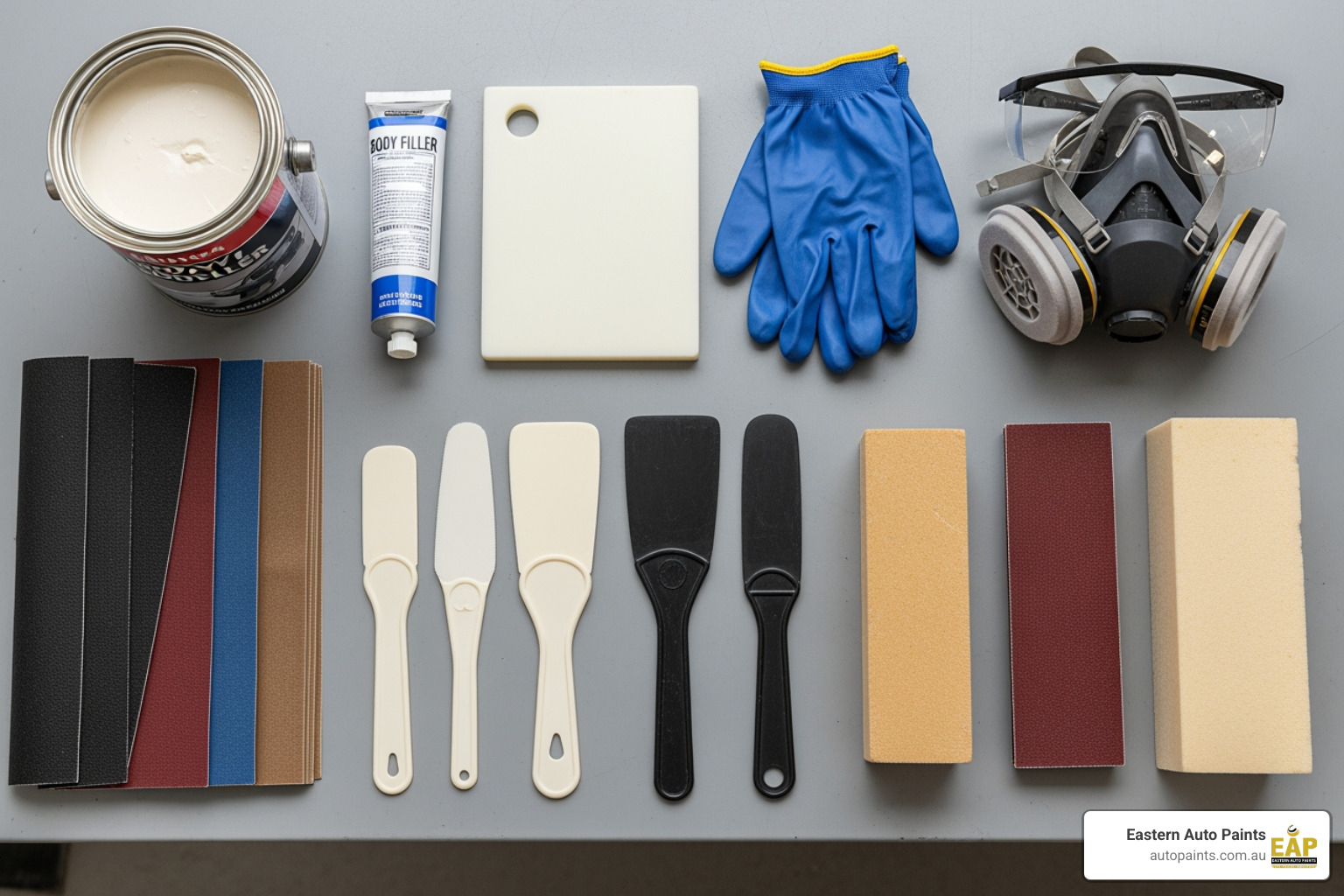
Essential Tools and Materials You'll Need:
- Body Filler and Hardener: Select the right type from our Body Fillers Collection
- Mixing Board & Spreaders: A non-porous surface and flexible plastic spreaders
- Sandpaper: Various grits (80, 180, 320) from our Sanding Sheets & Discs range
- Sanding Blocks: Crucial for maintaining flat surfaces
- Cleaners/Degreasers: Quality wax and grease remover
- Rust Treatment Products: If any corrosion is present
- Primer: High-quality automotive primer
- Personal Protective Equipment (PPE): Respirator, nitrile gloves, and safety glasses
Step 1: Surface Preparation
This is the most critical step. Clean the area with soap and water, then a wax and grease remover. Use 80-grit sandpaper to grind the damaged area to bare metal, extending 25-50 mm (1-2 inches) beyond the damage. Any rust must be completely removed and treated; filler will not stop rust from spreading. Our Beginners Guide to Rust Repair and Prevention offers comprehensive advice, and we stock products like Protec PPG Grey/Black Etch Primer in our Rust Repair & Prevention Products collection. Feather the paint edge around the bare metal for a smooth transition and degrease the area one last time.
Step 2: Mixing Body Filler and Hardener
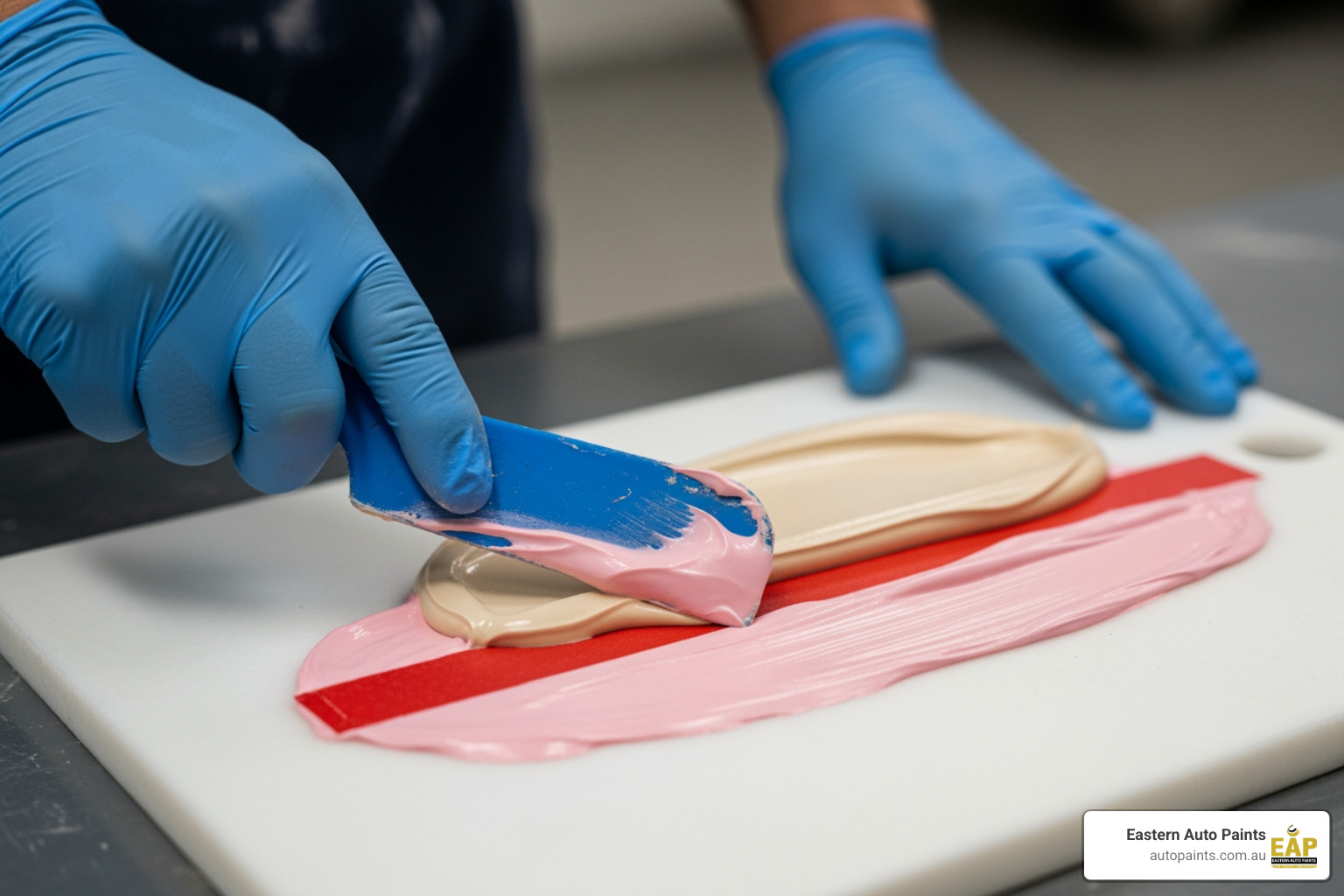
Correct mixing is crucial. The standard ratio is about 2% hardener to filler (a 75 mm strip of hardener for a 75 mm puddle of filler), but always check the product's data sheet. On a clean, non-porous board, mix until the colour is uniform with no streaks. This gives you 3-7 minutes of working time. Never put mixed filler back in the can.
Step 3: Application Techniques for Body Filler for Cars
Apply a thin, firm layer across the damaged area, pressing it into the metal to ensure adhesion and force out air. Immediately follow with additional layers, building the filler slightly higher than the surrounding surface. The maximum thickness per application is 6 mm (1/4 inch). For deeper damage, apply multiple thin layers, letting each cure. Use your spreader to roughly shape the filler as you go to minimise sanding later.
Step 4: Curing and Sanding for a Perfect Finish
Most body filler for cars cures in 20-30 minutes. If your fingernail doesn't leave a mark, it's ready to sand. Start with 80-grit sandpaper on a sanding block to shape the repair. Using a block is essential to avoid creating waves. We stock a range of quality Sanding Blocks. Once shaped, switch to 180-grit sandpaper to remove scratches and refine the surface. Feather the edges for a seamless transition. For pinholes, apply a thin coat of glazing putty and sand with 320-grit.
Step 5: Priming for a Professional Paint Job
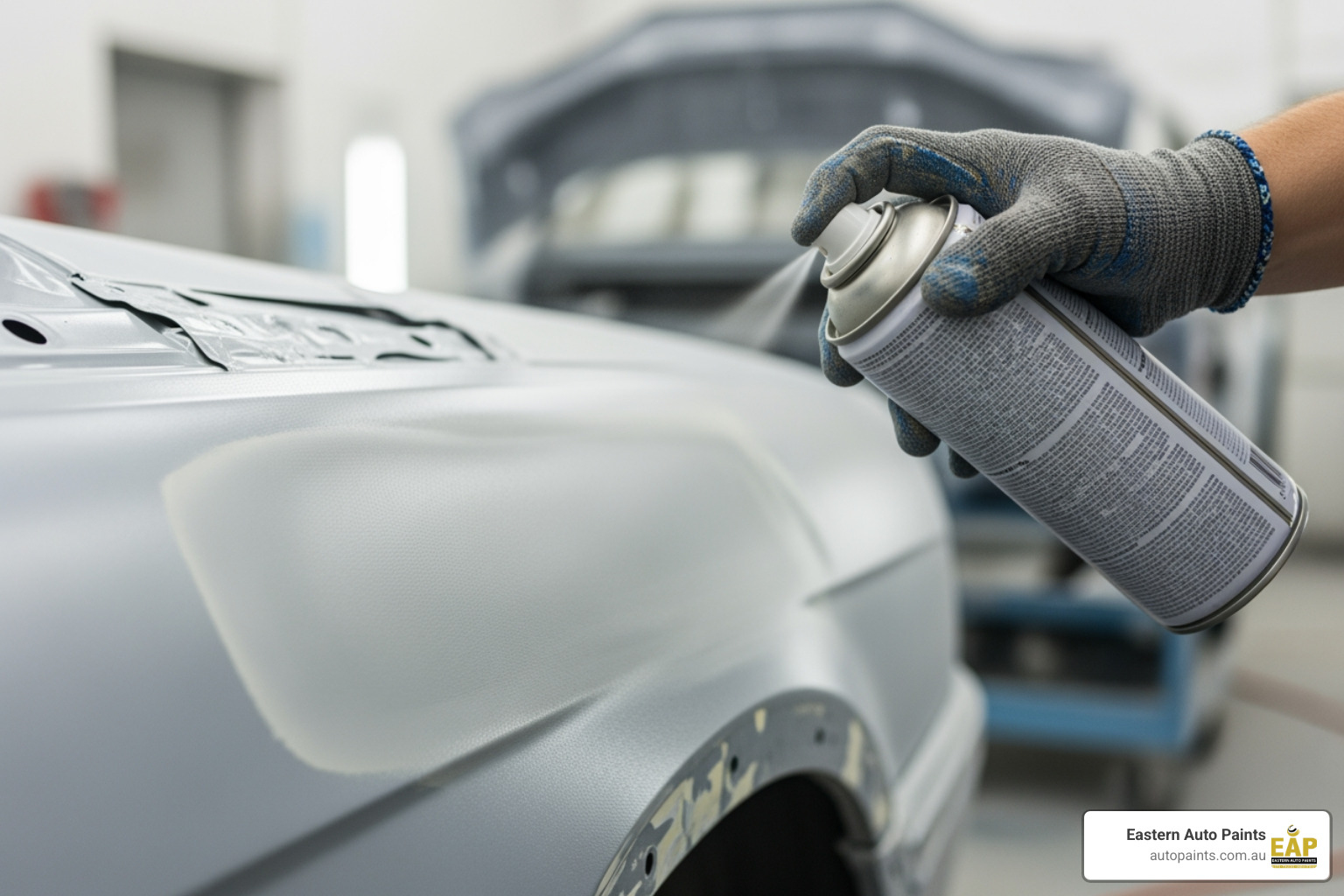
Priming seals the porous body filler for cars and creates a uniform surface for your topcoat. After final sanding, clean the area to remove all dust. Use a high-build primer, applying 2-3 even coats. Once cured, sand the primer smooth with fine-grit sandpaper (320-400 for solid colours, 500-600 for metallics). Your surface is now ready for paint. For more on primers, including 2K primers, see The Guide to Epoxy Primer Paint for Cars or browse our Primer Aerosols collection.
Common Mistakes and Pro Tips
Avoid common pitfalls to ensure your repair is successful. Over our 30+ years in the industry, we've seen that technique is just as important as the body filler for cars itself.
Common Mistakes to Avoid:
- Applying too thick: Building up filler in layers thicker than 6 mm (1/4 inch) traps heat and air, leading to bubbles and improper curing. Always apply multiple thin coats.
- Improper mixing: An incorrect filler-to-hardener ratio will ruin the repair. Too much hardener makes it brittle; too little means it never fully cures. Follow the 2% rule and the product's data sheet.
- Poor surface preparation: This is the number one cause of filler failure. Any grease, rust, or dirt left on the panel will prevent proper adhesion, causing the repair to lift or bubble later.
- Sanding too early: Sanding before the filler is fully cured will clog your sandpaper and create an uneven surface. Use the fingernail test: if you can make an indent, it's not ready.
- Ignoring safety: Filler dust and chemical fumes are hazardous. Always wear a respirator, nitrile gloves, and safety glasses.
Pro Tips for a Better Finish:
- Use a guide coat: After initial sanding, a light mist of contrasting spray paint will reveal high and low spots as you continue to sand, helping you achieve a perfectly flat surface.
- Extend working time: Spread your mixed filler thinly across your mixing board. This helps dissipate heat from the chemical reaction, giving you an extra minute or two to work.
- Always use a sanding block: Sanding by hand creates waves. A rigid Sanding Blocks ensures even pressure and a flat, professional finish.
- Feather your edges: Use progressively finer grits of sandpaper to create a gradual, invisible transition between the repair and the original paint.
For more advanced techniques, check out our comprehensive guide on How to Bodyfiller Like a Pro.
Safety Precautions When Working with Body Fillers
Working with body filler for cars involves chemicals and fine dust, so safety precautions are essential.
- Ventilation: Always work in a well-ventilated area to avoid inhaling volatile organic compounds (VOCs). Open doors and windows or use an exhaust fan.
- Personal Protective Equipment (PPE): PPE is non-negotiable. Wear a respirator to protect your lungs from sanding dust and fumes. Our PPE Masks collection has suitable options. For spray applications of products with isocyanates (like 2K primers), an atmosphere-supplying system like a PAPR may be required based on a workplace risk assessment. Protect your skin with chemical-resistant nitrile gloves and your eyes with safety glasses.
- Flammability: Filler components are often flammable. Keep them away from sparks, open flames, and other ignition sources. Store products in a cool, dry place with lids tightly sealed.
- Read the Safety Data Sheet (SDS): Every product comes with an SDS detailing specific hazards, handling instructions, and first aid measures. For example, you can review the Body Filler Plastic SDS for product-specific information. A few minutes of reading can prevent a serious accident.
Frequently Asked Questions about Body Filler for Cars
Our team in Melbourne, Dandenong South, and Bayswater often answers questions about using body filler for cars. Here are the most common ones.
What is the shelf life of body filler and how should it be stored?
An unopened can of body filler for cars typically has a shelf life of 6 to 12 months. Once opened, its life shortens. Store it in a cool, dry place at a consistent room temperature (18-25°C or 65-77°F), away from extreme heat or cold. Always keep the lid sealed tightly. The cream hardener can degrade even faster; if it has yellowed or separated, replace it to ensure the filler cures properly.
Can body filler be applied directly over paint?
While you technically can, you shouldn't. For a durable, long-lasting repair, body filler for cars must be applied to bare metal or a cured epoxy primer. Applying filler over paint creates a weak bond that can lead to cracking, bubbling, or delamination. The paint layer itself can fail, taking your repair with it. For best results, always take the time to sand the damaged area down to clean, bare metal. Our Practical Guide to Choosing Auto Paint Primers has more information on proper surface preparation.
How long does body filler take to cure before sanding?
Under ideal conditions (around 20-25°C or 68-77°F), most body filler for cars is sandable within 20-30 minutes. However, cure time is affected by several factors:
- Temperature: Colder temperatures will significantly slow down curing.
- Mix Ratio: Too much hardener makes filler brittle; too little means it may never fully cure.
- Thickness: Thicker applications take longer to cure all the way through.
Use the "fingernail test" to check if it's ready: if you press your nail into the filler and it doesn't leave a mark, you can begin sanding. Sanding too early will clog your paper and ruin the surface.
If you have more questions, contact us online or visit us in Melbourne for expert advice.
Achieve a Showroom Finish on Your Next Project
Every great paint job begins with a flawless surface, and mastering body filler for cars is the key to achieving that. The foundation of a durable, invisible repair lies in careful preparation, choosing the right materials, and using the proper techniques.
At Eastern Auto Paints, we've spent over 34 years helping professionals and enthusiasts across Victoria, Sydney, and Queensland achieve results they can be proud of. We provide more than just products; we offer the expert guidance and confidence that comes from using professional-grade materials.
From our professional-grade body fillers to a complete range of refinishing supplies, we are here to support your project from start to finish. Follow the fundamentals, and you'll create repairs that last.
Ready to start your next project? Explore our range online or contact our team for personalised advice on your specific repair needs.