
Powder Coated Brake Callipers: Upgrade Your Stopping Power's Look
Why Powder Coating Brake Calipers Requires Trade-Level Preparation

At Eastern Auto Paints, we know a well-prepared calliper coating can give a restoration or performance build a clean, durable finish, while poor preparation can lead to contamination, coating failure, or brake components that no longer fit correctly. Powder coating brake callipers should be done off the vehicle, with the callipers fully stripped, critical surfaces masked, and new seals fitted before safe reassembly and brake bleeding.
Key Takeaways
- Powder coating creates a tough finish that resists road grime, corrosion and general wear.
- Callipers require complete disassembly before blasting, coating and oven curing.
- Piston bores, seal grooves, fluid ports, bleeder threads and pad-contact areas must remain coating-free.
- Choose a suitable high-temperature coating system and follow its technical instructions.
- Explore our Powder Coatings range for compatible coating products and technical guidance.
We support professional applicators and serious vehicle restorers with practical advice on surface preparation, powder selection, masking materials and refinishing workflows. Our approach recognises that brake callipers are safety-critical parts, so appearance must never come at the expense of correct tolerances, clean hydraulic passages or reliable brake operation.
Our core value is simple: smarter coating solutions begin with understanding the substrate, the operating environment and the process. When preparation, masking, curing and reassembly are handled carefully, a calliper finish can complement the vehicle's look while respecting the demands placed on its braking system.
Common powder coating brake callipers vocab:
Powder Coating Brake Callipers vs Painting: Performance and Durability
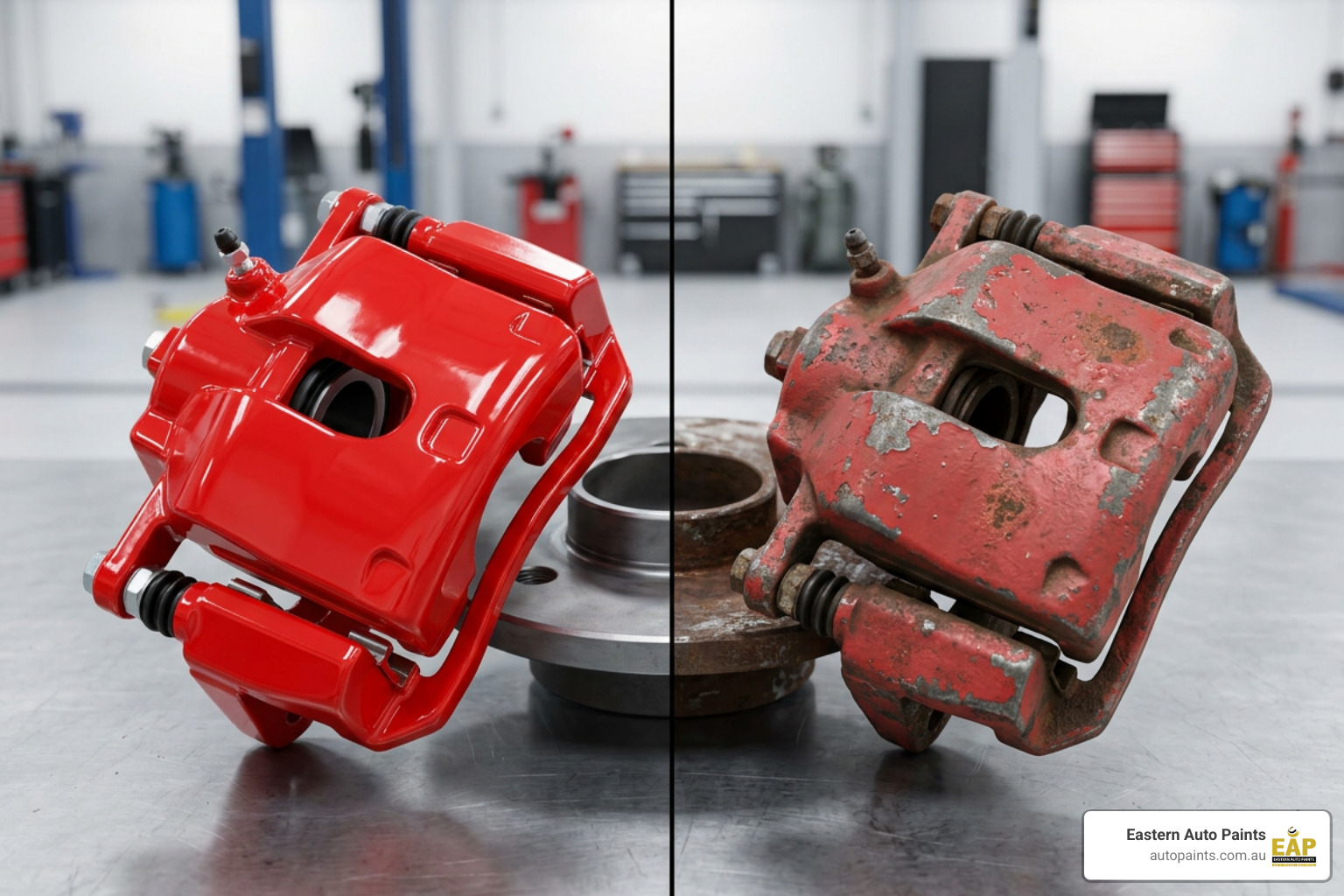
When selecting a finish for braking components, applicators evaluate dry film build, mechanical resilience, and long-term chemical resistance. Brake callipers endure an aggressive operating environment consisting of high friction heat, corrosive road grime, flying debris, and exposure to aggressive hydraulic fluids.
To determine the right coating path for your workshop or restoration project, it helps to understand how each system performs on its own merits.
Powder Coating Strengths
When you would use powder coating:
- Projects requiring high impact resistance against stone chips, loose gravel, and road debris behind open alloy wheels.
- Applications where superior protection against harsh hydraulic fluids, degreasers, and wheel cleaning chemicals is paramount.
- Professional workshop setups equipped with abrasive blasting cabinets, electrostatic spray guns, and dedicated curing ovens.
- Restorations demanding a thick, uniform film build across cast iron or cast aluminium surfaces that fills minor substrate porosity cleanly.
High-Temperature Liquid Paint Strengths
When you would use high-temperature liquid paint:
- Projects where components cannot be fully stripped of internal rubber seals, fluid passages, or sensitive sub-assemblies.
- Restorations requiring on-vehicle application or field touch-ups without access to industrial curing ovens.
- Custom builds matching specific automotive paint colour codes where specialised liquid automotive finishes are desired.
- Quick-turnaround jobs using dedicated brushing or aerosol formulations that cure at ambient room temperatures.
Decision Guide: Mapping Environment to Coating Selection
Choosing between these coating types depends primarily on your equipment access, teardown capacity, and operating environment:
- Full Bench Teardown with Industrial Equipment: Choose dry powder applications from our Powder Coatings selection for ultimate mechanical toughness and chemical resistance.
- Assembled or On-Vehicle Refurbishment: Choose specialised liquid systems such as our Automotive Heat Resistant Paint for ease of application without risking oven-induced seal degradation.
Thermal Demands and Heat Dissipation
Braking systems convert kinetic energy into extreme thermal energy. Brake calliper castings absorb significant heat from friction between the brake pads and rotors. Under continuous heavy braking or spirited driving conditions, surface temperatures rise considerably.
Coating systems must tolerate these cyclic thermal expansions without blistering, discolouring, or cracking. At the same time, the thermal conductivity of the calliper casting must be respected. While thick coatings can act as an insulating barrier, applying the powder within the manufacturer's recommended film thickness ensures proper thermal transfer and prevents excessive heat retention within the hydraulic fluid passages.
Durability and Chemical Resistance
Glycol-based brake fluids act as aggressive paint strippers against standard decorative coatings. Standard enamel and acrylic paints can soften or blister almost immediately upon contact with spilled hydraulic fluid. Powder-coated surfaces, once cross-linked under controlled oven heat, exhibit outstanding resistance to chemical attack, salt spray, and abrasive brake dust. Integrating proactive rust prevention strategies during the initial bare-metal preparation stage ensures the underlying casting resists moisture ingress and corrosion under extreme driving conditions.
Essential Safety, Teardown, and Masking Protocols
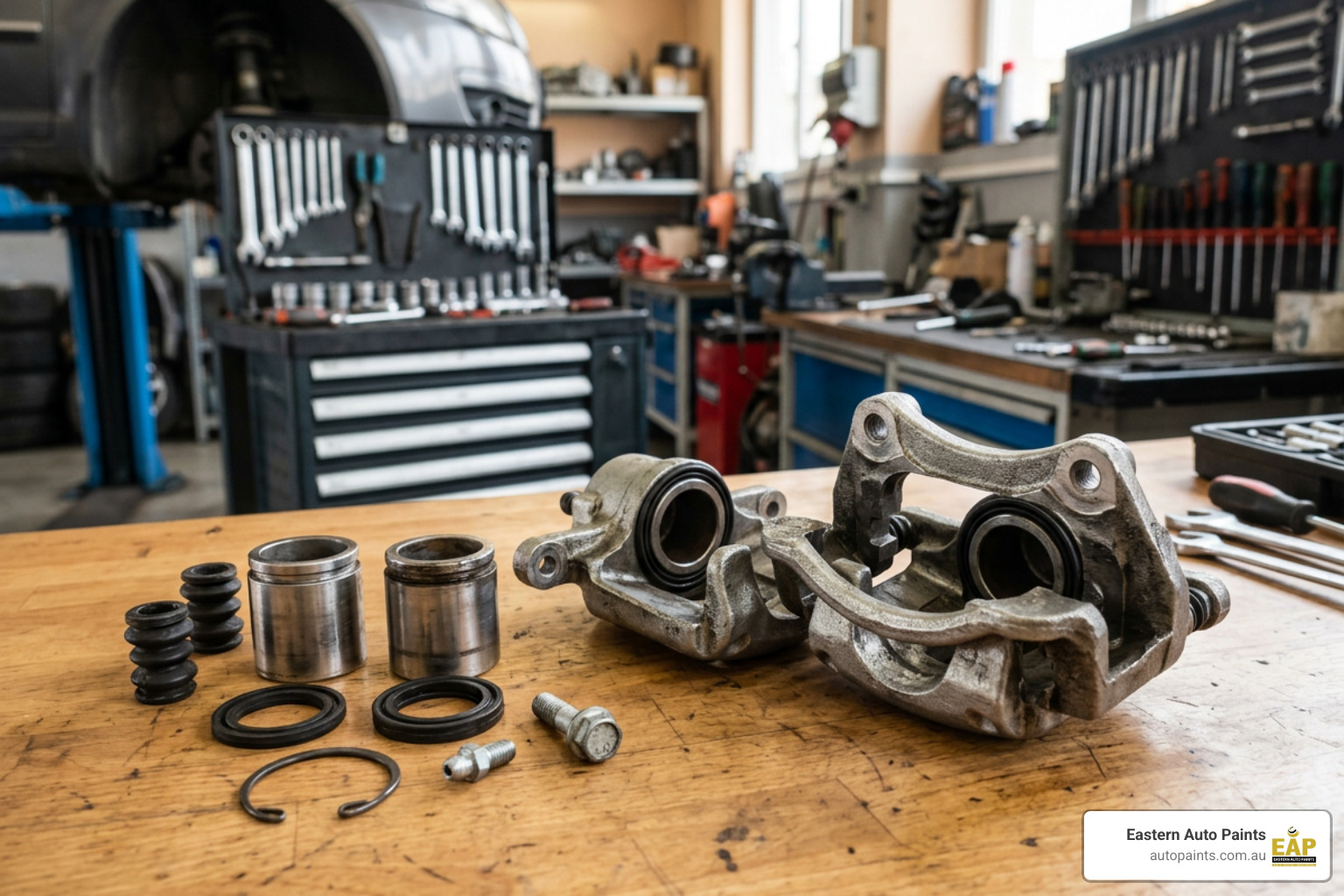
Treating brake callipers as purely aesthetic components introduces serious functional risks. Hydraulic callipers contain delicate components machined to microscopic tolerances. Attempting to apply powder coating to a partially assembled unit will destroy internal seals and cause catastrophic brake failure.
Calliper Removal and Full Component Disassembly
Powder coating requires high-heat baking cycles that standard nitrile and EPDM rubber seals cannot survive. Before any cleaning or coating begins, callipers must undergo a complete bench teardown:
- Disconnect brake lines and drain all residual hydraulic fluid into an approved waste container.
- Extract the pistons using regulated, low-pressure compressed air while keeping hands clear of the bore.
- Remove all internal square-cut pressure seals, external dust boots, and slide pin bushings.
- Remove bleeder screws, pad retaining clips, anti-rattle springs, and mounting brackets.
- Discard all used rubber components; always plan to install a complete calliper rebuild kit with fresh seals during final assembly.
Surface Preparation Before Powder Coating Brake Callipers
Bare metal adhesion dictates the lifespan of any high-temperature coating. Calliper castings accumulate baked-on carbon dust, grease, and road tar that must be eliminated before coating.
- Degreasing: Soak the stripped metal castings in a heavy-duty solvent degreaser to draw out surface oil and contaminants.
- Thermal Outgassing: Pre-heat cast iron or porous cast aluminium in a curing oven. This step drives out entrapped oils and moisture from the metal pores, preventing outgassing bubbles during the final powder cure.
- Abrasive Blasting: Prepare the bare metal profile using professional Sand Blasting equipment. Blasting removes oxidation, old paint, and surface corrosion while imparting an anchor profile for the powder. Always select the appropriate grade of Sandblasting Grit suited to the hardness of the casting alloy.
Critical Masking Zones and Mating Surfaces
Precision masking is the single most critical step in powder coating brake callipers. Powder applied to functional surfaces will prevent pistons from sliding, block hydraulic flow, or cause uneven pad wear. Applicators must use high-temperature silicone plugs and specialised polyimide tape to shield:
- Piston Bores and Seal Grooves: Any overspray inside the bore will bind the piston or destroy the hydraulic seal.
- Hydraulic Line Ports and Bleeder Screw Threads: Threads must remain bare metal to ensure clean fluid sealing and prevent cross-threading.
- Pad Slide Channels and Abutment Shims: Excessive coating thickness in slide channels prevents brake pads from moving freely, leading to brake drag.
- Calliper Mounting Bolt Bosses: Mounting faces must remain bare and flat to maintain proper calliper-to-rotor alignment and torque retention.
The Professional Application and Curing Process
Applying powder coating to brake callipers requires balanced electrostatic application followed by precise thermal cross-linking in a dedicated curing oven.
High-Temperature Powder Formulations
Not all powder formulations withstand the operating temperatures of automotive braking components. Standard decorative polyester powders can discolour or soften under severe thermal loads. Applicators should select specialised high-temperature resin systems, such as modified epoxy, silicone-based, or polyurethane powders formulated for continuous heat exposure.
To explore industrial powders, review our high-temperature formulations in our Hightemp collection. For custom colour selection and finish effects, consult The Ultimate Guide to Powder Coat Colour Options to match your vehicle's aesthetic.
Electrostatic Spraying and Oven Curing
During application, the stripped and masked calliper is suspended using clean conductive hanging hooks. Ensure the part is properly grounded to receive an even electrostatic charge.
- Application: Maintain a consistent spray distance of 20–30 cm (8–12 in) with the electrostatic spray gun, applying a smooth, uniform cloud of powder across all exposed external faces. When working in the spray booth, ensure applicators use dedicated Masks and Airlines connected to clean breathing air systems.
- Application Specifics: Coating application parameters, film build thicknesses, and curing schedules vary by powder chemistry; always consult the manufacturer's Technical Data Sheet (TDS) or product label for exact specifications.
- Oven Curing: Transfer the coated callipers to a calibrated curing oven. Monitor substrate temperatures directly using an infrared thermometer or thermocouple to ensure the metal reaches its required target cure temperature for the full duration specified on the TDS.
- Cooling and De-Masking: Allow the callipers to cool naturally to ambient room temperature before removing silicone plugs and masking tapes to prevent edge tearing.
Project Investment, Timelines, and Quality Assurance
Executing a calliper powder coating project involves distinct stages of labour, workshop equipment, and precision assembly. Understanding the project scope helps applicators and restorers manage turnaround times and quality outcomes effectively.
How Much Does Powder Coating Brake Callipers Cost?
The overall investment required to coat brake callipers depends on whether the job is handled as a loose-component coating service or a complete, drive-in mechanical rebuild:
- Component Complexity: Multi-piston monobloc callipers require more masking and disassembly labour than basic single-piston floating callipers.
- Surface Condition: Heavily corroded cast iron units require extensive chemical cleaning, thermal outgassing, and abrasive media blasting compared to clean aluminium castings.
- Finish Selection: Multi-stage finishes, such as applying a base colour followed by a high-gloss protective clear coat or custom branding decals, require multiple spray and bake cycles. For touch-ups or small auxiliary bracket matching, applicators often utilise powdercoat colour spray cans to coordinate surrounding hardware.
- Rebuild Hardware: Factor in the cost of OEM or aftermarket rebuild kits, including fresh hydraulic pressure seals, dust boots, bleed screws, and copper crush washers.
Turnaround Expectations and Quality Protocols
A complete strip, coat, and rebuild cycle generally spans several workshop days to allow for thorough degreasing, outgassing, media blasting, coating, cooling, and mechanical reassembly.
Quality assurance protocols before vehicle installation must include:
- Visual inspection of all internal bores to confirm zero powder overspray or particulate contamination.
- Chasing all threaded hydraulic ports with a tap to clear any debris.
- Lubricating new internal seals with clean, compatible brake fluid or assembly paste during piston insertion.
- Hydraulic pressure bench testing where possible to verify seal integrity before road use.
Why This Issue Should Not Be Ignored
Brake callipers operate as the core mechanical clamp in your vehicle's stopping system. Neglecting coating failures, peeling paint, or corrosion does more than compromise your vehicle's appearance behind open alloy wheels.
Unprotected calliper castings suffer from road salt pitting, iron oxidation, and severe brake dust etching. When lower-tier coatings degrade, flaking paint can enter pad slide channels, causing brake pads to bind. This leads to uneven pad wear, rotor overheating, and decreased braking efficiency. Addressing calliper refinishing through proper surface decontamination, profile etching, and high-temperature coating ensures long-term mechanical reliability and corrosion resistance.
Common Symptoms, Challenges, or Questions
Trade applicators and vehicle restorers frequently face specific obstacles when coating brake components:
- Piston Seizure After Coating: Caused by failing to mask the inner bore, allowing microscopic powder layers to close critical mechanical clearances.
- Coating Blistering or Outgassing: Occurs when porous cast metals are not thermally outgassed before powder application, trapping moisture and oils that expand in the curing oven.
- Brake Fluid Softening the Finish: Happens when non-heat-resistant or non-cross-linked coatings are used, resulting in immediate wrinkling upon contact with hydraulic fluid.
- Seal Degradation: The direct result of attempting to cure assembled callipers in an oven, melting the internal rubber seals.
What a Personalised Experience Actually Looks Like
At Eastern Auto Paints, we work directly with trade refinishers, mechanical workshops, and custom builders to tailor coating systems to their specific workflow.
When you consult our team, we do not simply hand over a tin of paint or a box of powder. We examine the substrate material (cast iron versus cast aluminium), review your baking and application setup, and recommend matching high-temperature powders, specialised masking accessories, and correct abrasive media. If your project requires an exact match to a custom vehicle livery or factory hue, our advanced colour matching technology used alongside experienced professionals ensures seamless visual integration across all painted and coated components.
The Value of Consistency and an Ongoing Relationship
Achieving repeatable, showroom-grade finishes requires consistency in abrasive profiles, cleaning solvents, masking consumables, and coating chemistry. Establishing an ongoing partnership with a dedicated automotive paint and coating distributor ensures that your workshop receives dependable technical support, reliable batch-to-batch colour consistency, and immediate access to trade-grade supplies across Melbourne and Victoria.
What to Expect at Eastern Auto Paints
When partnering with Eastern Auto Paints across our Victorian locations in Bayswater and Dandenong South, you gain direct access to industry-tested refinishing systems:
- Comprehensive inventory of high-temperature liquid coatings, industrial powders, and electrostatic consumables.
- Advanced digital colour-matching systems capable of formulating exact custom automotive shades.
- Professional abrasive media, surface prep degreasers, and high-heat masking supplies.
- Trade-qualified counter staff ready to assist with technical data sheets, substrate compatibility, and troubleshooting.
When to Get in Touch or Take Action
If you are planning a complete calliper restoration, upgrading a track build, or looking to add professional powder coating capabilities to your workshop, contact our specialist team today.
Visit our trade counters in Bayswater or Dandenong South, or get in touch online via our Contact page to discuss your project requirements, request technical data sheets, and source professional refinishing supplies.
Explore our extensive range of specialist products and workshop equipment online:
- Automotive Refinishing Supplies
- Industrial Paint Supplies
- Custom Spray Cans
- Colour Matching Services
- All Paint Lines and Systems
Frequently Asked Questions About Powder Coating Brake Callipers
Can brake callipers be powder coated while still mounted on the vehicle?
No, brake callipers cannot be powder coated while attached to the vehicle. Powder coating relies on electrostatic attraction followed by baking in a curing oven. The callipers must be completely removed from the vehicle and fully disassembled, as oven temperatures will destroy brake lines, fluid, and internal hydraulic seals.
What happens if powder coat gets inside the piston bore or hydraulic ports?
Powder coating inside a piston bore alters microscopic engineering tolerances and creates an uneven surface. This prevents the piston from moving smoothly, damages the rubber pressure seal, and leads to fluid leaks or complete piston seizure. Powder in hydraulic ports or bleeder threads will prevent fluid flow and stop fittings from sealing correctly.
How do DIY high-temperature paint kits compare to professional powder coating?
DIY high-temperature liquid paint kits allow users to coat calipers without complete bench disassembly or oven curing, making them accessible for home projects. However, professionally applied powder coating provides a thicker, more uniform finish with superior resistance to mechanical stone chips and harsh chemical attack when applied over a properly blasted bare-metal substrate.
Can high-temperature aerosols be used for brake callipers?
Yes, high-temperature aerosol coatings formulated specifically for brake calipers can be used effectively for light refurbishments and touch-ups. Products like our High Temp Aerosol Kit offer convenient application for components that cannot be stripped for powder curing, provided all surface degreasing and preparation instructions on the product label are followed.
What personal protective equipment is required when coating brake callipers?
Applicators must protect themselves from airborne particulates during media blasting and powder spraying, as well as chemical vapours during solvent degreasing. Always consult the product technical data sheet and refer to official SafeWork or WorkSafe guidance to select the appropriate respiratory protection, eye protection, gloves, and protective overalls for your specific workshop environment.