
Protect Your Paint Fast with Top-Rated Spray Ceramic Coatings
Choosing a Spray Ceramic Coating That Delivers Practical Protection
At Eastern Auto Paints (EAP), we know a good spray ceramic coating can make a properly prepared vehicle easier to wash, glossier, and more resistant to everyday grime. A poor choice or rushed application can leave streaks, poor water behaviour, and short-lived protection. The best spray ceramic coating for cars is the one that suits the vehicle's finish, your preparation process, and the level of maintenance you can realistically provide.
Key Takeaways
- Choose a product designed for automotive clear coat and compatible exterior surfaces.
- Treat spray ceramic coatings as a protective maintenance layer, not a substitute for paint correction or impact protection.
- Clean, decontaminate, and dry the panel before application for the most consistent finish.
- Compare curing requirements, application method, and intended durability before buying.
- See our clean-up and surface prep supplies before applying any coating.
We help trade applicators, restorers, and serious DIY vehicle owners evaluate coatings with the full finishing process in mind. Our approach is to look beyond the label and consider paint condition, surface preparation, application control, and how the vehicle will be washed and stored afterwards.
At Eastern Auto Paints, our core value is practical, expert-led guidance that helps customers select coatings and refinishing products that work together. A spray ceramic coating should support a well-maintained finish, not hide defects or create unrealistic expectations about what a thin protective layer can do, so we encourage customers to understand their automotive paint finish and the condition of any automotive clear coat before choosing protection.
Why This Issue Should Not Be Ignored
Leaving bare automotive paint unprotected exposes the substrate to severe ultraviolet (UV) radiation, industrial fallout, bird dropping etching, and harsh road film. Over time, clear coats oxidise, lose their refractive clarity, and develop micro-pitting that traps dirt.
Using an unverified coating or applying modern sealants over contaminated clear coat creates high spots, streaking, and uneven bonding. Rather than locking in a deep shine, poor preparation locks in embedded brake dust and road grime. Selecting the right product and following proper application steps protects your investment and ensures water beads and rolls off cleanly.
Common Symptoms, Challenges, or Questions
Many restorers and vehicle owners face common hurdles when working with spray coatings:
- High Spots and Smearing: Applying product in high humidity or direct sunlight can cause quick carrier flashing, leaving dark, oily streaks that require machine polishing to remove.
- Rapid Loss of Hydrophobic Action: When applied over existing silicone waxes or traffic film, ceramic polymers cannot chemically anchor to the clear coat, causing the coating to rinse away during early washes.
- Masking Rather than Correcting: Expecting a spray sealant to hide deep swirl marks or clear coat scratch clusters. Coatings add gloss but do not fill substantial paint defects.
- Incompatible Substrates: Applying certain sealants over single-stage enamels or uncured fresh paint without verifying compatibility.
Evaluating the Best Spray Ceramic Coating for Cars: Formulations and Technologies
Modern spray ceramic products rely on advanced polymer matrices. Spray ceramic sealants use nano-silica polymers to form a resilient, sacrificial barrier across modern automotive paint finish systems.
When selecting a formula, consider how different chemical compositions behave on automotive clear coat:
Comparing SiO2 vs Graphene in the Best Spray Ceramic Coating for Cars
- When you'd use SiO2 (Silicon Dioxide) Formulations: Silicon dioxide sprays anchor into the microscopic pores of the clear coat to produce a dense, glass-like quartz matrix. They deliver extreme optical clarity, sharp light reflection, and strong chemical resistance against acidic fallout. SiO2 sprays suit owners seeking high visual gloss, deep reflections, and reliable water-beading contact angles.
- When you'd use Graphene-Oxide Formulations: Graphene-infused ceramic sprays incorporate reduced graphene oxide lattices into the siloxane backbone. This dispersion reduces surface friction, creating a slick finish with low water-sliding angles that help evacuate standing water from flat horizontal panels. Graphene coatings suit vehicles exposed to high heat and outdoor elements where water spotting can occur.

Decision Guide for SiO2 vs Graphene:
- For show vehicles, garaged classics, and darker finishes where deep optical gloss and sharp reflection are the priority: SiO2-based formulations provide excellent visual depth.
- For daily drivers parked outdoors, work utilities, and vehicles in hot conditions where lower surface friction helps shed standing water: Graphene-enhanced sprays provide practical, low-drag protection.
Single-Layer Sprays vs Multi-Coat Sealant Systems
- When you'd use Single-Layer Wipe-On Sprays: Designed for rapid maintenance, these formulas allow quick spray-and-wipe application without complex flashing intervals. They suit enthusiasts who want fast turnaround times and simple maintenance during regular wash routines.
- When you'd use Multi-Coat Guided Systems: Multi-stage spray systems use dedicated base layers paired with separate top coats. These systems suit dedicated restorers who want deeper film build, extended chemical durability, and enhanced resistance against regular environmental contamination.
Surface Preparation and Decontamination Process
A ceramic coating binds effectively only to bare, pristine clear coat. Any barrier, such as traffic film, tree sap, or old wax, compromises durability.
- Decontamination Wash: Wash the entire exterior using a dedicated automotive shampoo to remove loose road film and grease.
- Iron Fallout Removal: Apply a dedicated fallout remover to dissolve sintered brake dust particles embedded in the clear coat.
- Mechanical Clay Bar Treatment: Glide a detailing clay bar or clay mitt across the lubricated paint surface to extract remaining bonded particulates.
- Solvent Degrease: Wipe every panel using specialised clean-up and surface prep supplies to dissolve residual polishing oils and leave an open surface for polymer bonding.
Application Steps for the Best Spray Ceramic Coating for Cars
Prior to applying any coating, review our guide on how to prepare your panel for painting to ensure panels are properly aligned, clean, and free of defects. Application techniques, flashing behaviour, and cure intervals vary significantly across chemical brands. Always consult the manufacturer's technical data sheet (TDS) or product container label before starting.
- Work out of direct sunlight in a dry, ventilated workshop space.
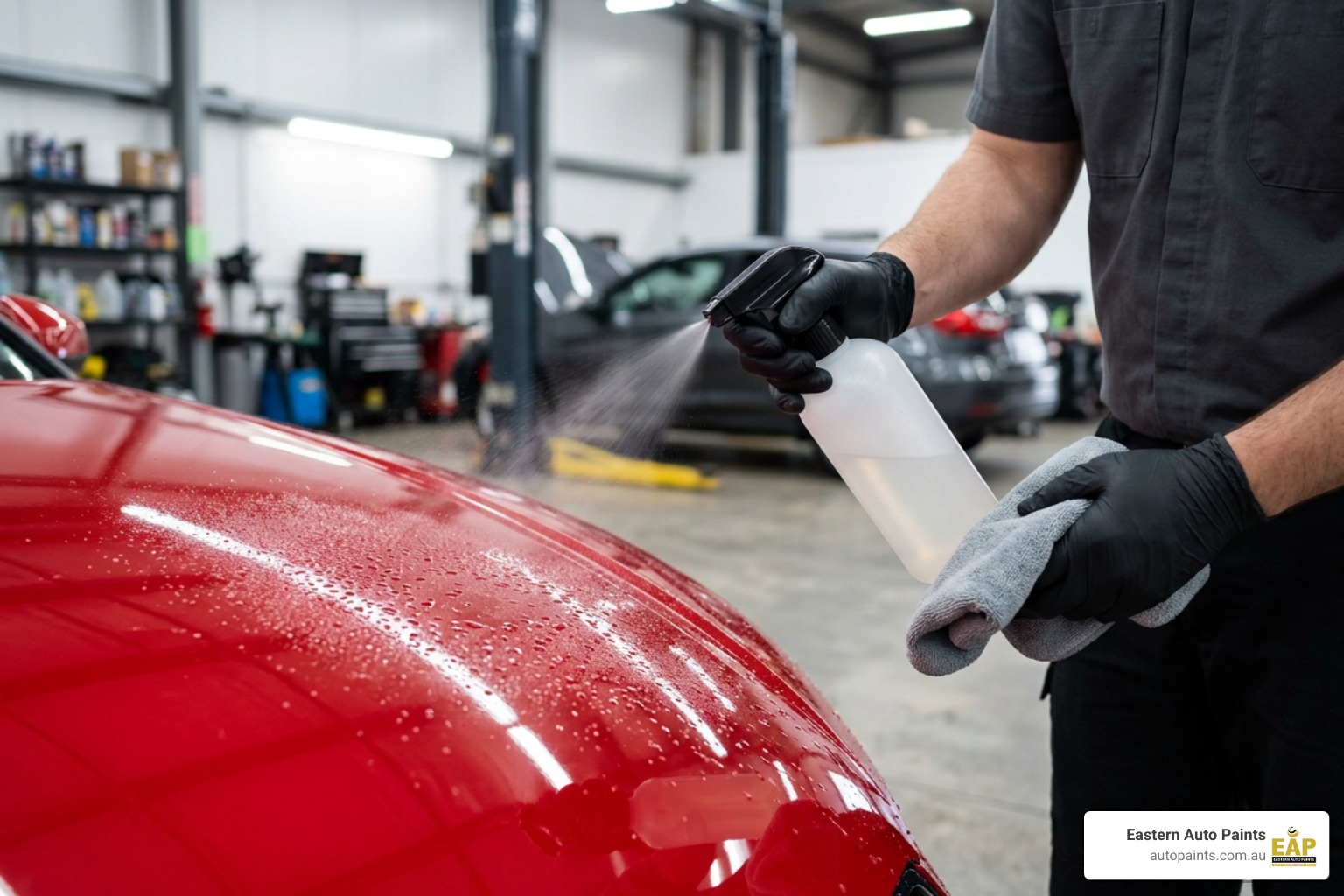
- Lightly mist the coating onto a plush microfiber applicator or folded microfiber cloth rather than spraying excessively onto dry paint.
- Spread the product across a single panel using an overlapping cross-hatch pattern (horizontal passes followed by vertical passes) to ensure complete coverage.
- Monitor the panel as the carrier solvents flash off.
- Using a clean, dry, low-pile microfiber towel, gently level the surface, then flip to a deep-pile towel for the final buff.
- Keep the vehicle in a dry environment to allow initial bonding before exposing it to rain or washing.

Correcting Paint Defects Before Coating Application
Because ceramic coatings cure into optically clear, reflective layers, they highlight underlying swirl marks, buffer trails, and sanding marks. Correct the paint before applying any protective spray.
To remove isolated surface scratches, orange peel, or clear coat imperfections, use quality abrasives such as Sunmight wet and dry sanding sheets with light hand blocks. Follow sanding with machine compounding and finishing with a fine polish to restore complete clarity across the panel.
Spray Ceramic Sealants vs Permanent Clear Coats: Performance Breakdown
Spray ceramic sealants provide sacrificial protection, but they do not replace the structural film build, UV protection, and mechanical barrier provided by a dedicated two-pack (2K) automotive clear coat.
| Feature | Spray Ceramic Sealant | 2K Automotive Clear Coat |
|---|---|---|
| Primary Purpose | Sacrificial protective layer & gloss enhancer | Permanent protective structural top coat |
| Film Build Thickness | Sub-micron sacrificial film | Substantial protective dry film build |
| Mechanical Scratch Resistance | Light swirl resistance | Durable resistance against abrasion and chips |
| Application Method | Wipe-on / wipe-off trigger spray or applicator | Professional pneumatic spray gun application |
| Lifespan | Temporary sacrificial maintenance layer | Permanent automotive refinish finish |
| Removability | Machine polish or alkaline wash | Mechanical abrasion or paint stripper |
When completing full refinish work, panel replacements, or complete vehicle restorations, always establish a solid foundation using a professional top coat. Consult our 2k clear coat ultimate guide 2026 to understand correct spray gun setup, flash times, and curing methods for permanent finishes.
When spraying 2K clear coats, primers, or volatile solvent degreasers, personal safety is essential. Refer to the product label, technical data sheet, and relevant SafeWork or WorkSafe Victoria guidance for appropriate personal protective equipment (PPE) requirements, including the use of an approved 2Spray painters respirator kit.
What a Personalised Experience Actually Looks Like
Every vehicle project has unique demands. A daily-driven utility vehicle exposed to industrial job sites requires a different maintenance approach than a classic show car undergoing complete bare-metal restoration.
When you contact our team, we discuss:
- The age, condition, and chemistry of your current paint system.
- Whether the panel requires defect removal, fine sanding, or a fresh clear coat prior to protection.
- The right combination of surface prep degreasers, application pads, and detailing towels.
- Realistic maintenance schedules based on how and where the vehicle is stored.
The Value of Consistency and an Ongoing Relationship
Refinishing and paint preservation work best with compatible products. Using mismatched primers, thinners, polishes, and sealants can lead to adhesion issues, hazing, or premature coating failure. Working with a dedicated automotive paint specialist gives you access to matched product lines, consistent batch quality, and experienced trade advice throughout your project.
What to Expect at Eastern Auto Paints
At Eastern Auto Paints, we support trade refinishers, panel shops, and DIY enthusiasts with professional-grade paint systems and refinishing supplies. Our Victorian trade counters provide:
- Custom colour matching using advanced computerised spectral analysis.
- Premium 2K clear coats, primers, basecoats, and industrial top coats.
- Complete surface prep supplies, abrasives, masking materials, and spray equipment.
- Workshop compressed air solutions, including Anest Iwata compressors (with entry-level cast iron workshop piston units starting from affordable trade price brackets through to premium variable-speed screw compressors designed for full-time spray booths).
- Expert advice from staff who understand professional refinishing processes.
When to Get in Touch or Take Action
If your paint is showing signs of UV oxidation, micro-scratching, or poor water shedding, address the clear coat condition early. Whether you need abrasives for minor paint correction, professional spray equipment, or advice on selecting compatible coatings, we can help guide your refinishing process.
For expert technical support and quality refinishing supplies, reach out to our team:
- Visit our branch counters in Bayswater or Dandenong South, Melbourne, Victoria.
- Contact our technical team directly through our Contact Us page for product recommendations.
- Browse our complete range of automotive paint solutions and professional equipment.
Frequently Asked Questions About Ceramic Spray Coatings
How long does a spray ceramic coating typically last on daily drivers?
Durability depends on surface preparation, outdoor exposure, driving conditions, and washing techniques. Environmental factors such as road grime, automated brush washes, and harsh degreasers can wear down the sacrificial coating faster. For best results, wash regularly with a pH-neutral automotive shampoo and avoid harsh automatic car washes.
Can spray ceramic coatings be applied over fresh clear coat?
No. Freshly applied clear coat requires time for solvents to fully evaporate and for the cross-linking process to complete. Sealing a freshly painted panel too early can trap outgassing solvents, which may cause die-back, solvent popping, or hazing. Always check the clear coat manufacturer's technical data sheet for recommended curing windows before applying any sealant or protective coating.
What is the main difference between ceramic spray coatings and traditional carnauba wax?
Traditional carnauba waxes sit on top of the clear coat and melt away at relatively low surface temperatures, such as under direct summer sunlight. Ceramic spray coatings use synthetic polymers that chemically anchor to the clear coat, offering higher heat tolerance, stronger detergent resistance, and more durable hydrophobic properties.
Can a spray ceramic coating eliminate the need for paint correction?
No. Spray ceramic coatings form a thin, optically clear layer that conforms to the existing surface texture. While they enhance gloss and reflectivity, they do not fill deep scratches or eliminate swirl marks. Any underlying defects will remain visible beneath the coating, making thorough decontamination and machine polishing important before application.
What should I do if high spots or streaks appear after application?
High spots occur when excess coating is not fully levelled before the carrier solvents flash off. If caught within a few minutes of application, apply a light mist of the spray coating directly over the streak and buff immediately with a clean microfiber towel. If the product has fully cured, you will generally need a fine polishing compound to level the high spot before reapplying.