
Mastering Solvent Based Primer for Automotive and Specialty Refinishing
Solvent Based Primer Guide for Flawless Automotive Adhesion and Protection
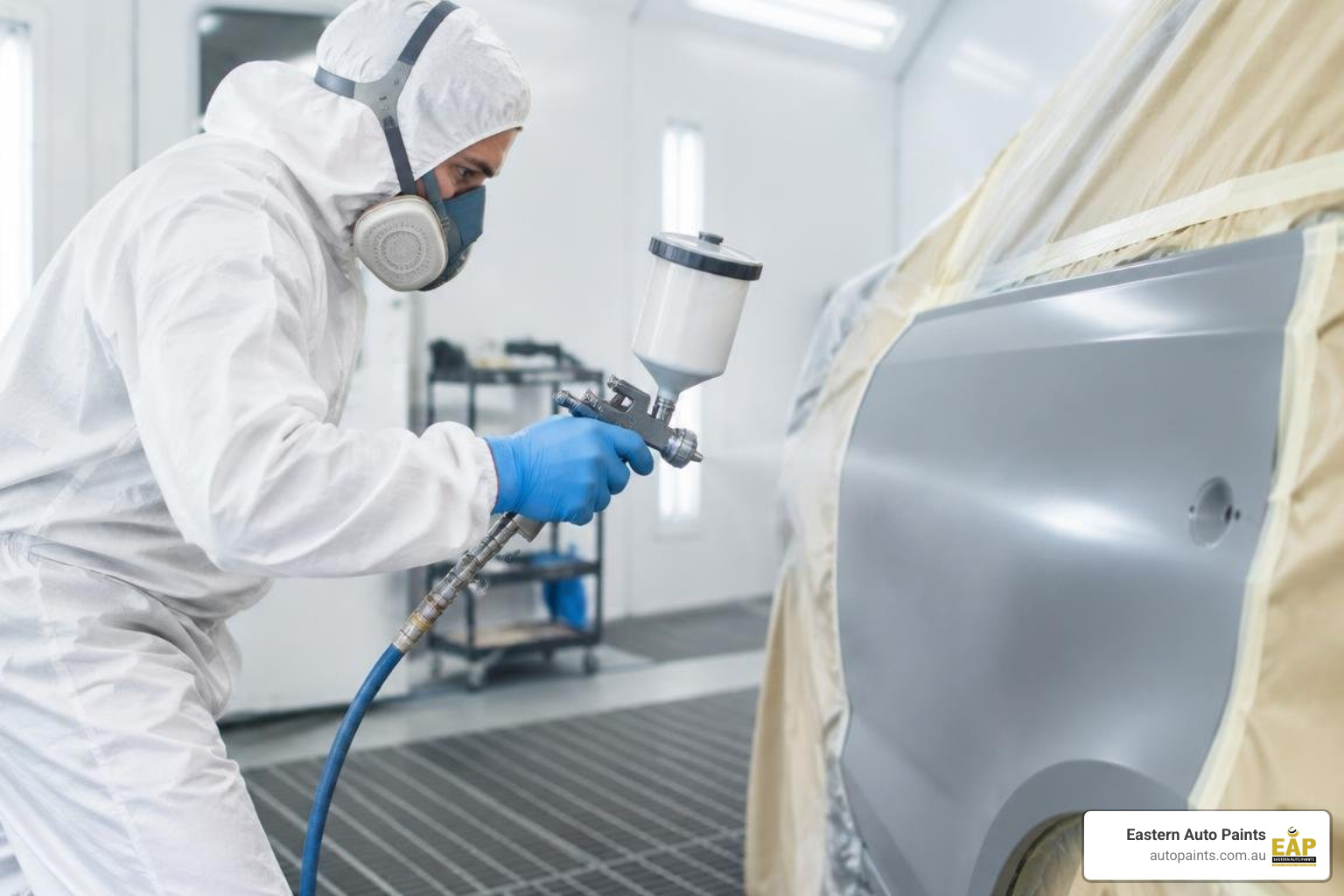
A solvent based primer provides essential substrate adhesion, corrosion protection, and film build by dissolving synthetic resins in organic carriers that evaporate to form a durable foundational barrier for topcoats. While rushing through surface preparation or grabbing an unverified undercoat can quickly lead to costly rework, poor adhesion, and premature coating failure, selecting the right chemistry ensures long-term paint stability. At Eastern Auto Paints, we believe every refinishing project deserves a tailored, systematic approach backed by proven materials and knowledgeable support to ensure your colour coats and clearcoats perform exactly as engineered.
Key Takeaways
- Always match your undercoat system to the specific substrate, whether working with bare steel, treated aluminium, or flexible composites.
- Careful control of mechanical preparation, film build, and flash-off times prevents common defects like solvent entrapment and mapping.
- Compare specialised formulations across our primer collection to establish the right foundation for your project.
- Seek expert technical guidance whenever tackling complex fleet overhauls, substrate transitions, or custom vehicle restorations.
At Eastern Auto Paints, we take pride in supporting trade professionals, commercial refinishers, and dedicated vehicle restorers across Australia. Operating from our branches in Bayswater and Dandenong South, our team combines industry experience with advanced colour-matching technology to provide end-to-end coating solutions tailored to your operational requirements.
Establishing a durable, showroom-quality finish demands strict compatibility between every layer of the paint system. By selecting products formulated to work in harmony and adhering closely to manufacturer guidelines, you protect your workmanship and deliver long-lasting corrosion resistance and gloss retention.
Substrate Protection Risks and Environmental Factors in Australian Refinishing
Automotive and commercial refinishing across Australia presents unique environmental challenges. The local climate is characterised by intense ultraviolet radiation, severe ambient temperature swings between morning and afternoon shifts, and regional spikes in relative humidity. These swings in temperature and moisture directly influence how volatile carriers leave the wet paint film during application.
In high-humidity environments, moisture entrapment represents a severe operational risk for bare steel and aluminium. When spraying under suboptimal conditions without appropriate climate control or proper flash-off intervals, microscopic water vapour can become trapped beneath fast-drying films. This trapped moisture accelerates substrate oxidation and promotes corrosion creep beneath the primer layer. Over time, this degradation manifests on the finished panel as premature micro-blistering, loss of direct-to-metal adhesion, and localised rust bubbling.
Managing film build is critical to mitigating these climatic risks. Applying an excessive wet film thickness in an effort to fill surface imperfections traps solvents within lower strata, preventing deep curing while the outer surface skins over. This issue is particularly troublesome on fabricated components, ute trays, and vehicle chassis exposed to coastal salt air and industrial fallout.
To safeguard vulnerable substrates, refinishers must implement comprehensive preparation regimens. Establishing an uncontaminated surface profile, deoxidising bare alloys, and selecting specialised anti-corrosive undercoats detailed in our bare metal primer guide ensures the substrate is isolated from atmospheric moisture. Integrating solutions from our dedicated rust repair and prevention range allows technicians to stabilise underlying metalwork before building their primer foundations.
Chemical Composition and Technology of Solvent Based Primer Formulations
A solvent-based primer relies on a carefully balanced formulation consisting of synthetic resin matrices, volatile organic carriers, functional pigments, and active chemical inhibitors. The liquid carrier, typically a blend of aromatic hydrocarbons, esters, ketones, or glycol ethers, serves as a temporary transport medium. It dissolves the resin, lowers viscosity for pneumatic atomisation, and wets the micro-grooves of the prepared substrate before evaporating entirely from the curing film.
The resin matrix forms the continuous structural backbone of the cured primer film. Common binder chemistries include alkyds, thermoplastic acrylics, epoxies, and hydroxy-functional acrylic urethanes. Dispersed within this matrix is the pigment package, engineered to a specific pigment volume concentration (PVC). Higher PVC formulations incorporate functional extenders such as talc, barytes, and calcium carbonate to provide high-build filling capabilities and effortless dry-sanding characteristics. Simultaneously, anti-corrosive inhibitors like zinc phosphate passivate the metal surface, forming an insoluble barrier against ionic moisture transfer.
Achieving strong direct-to-metal bonding requires both chemical wetting and mechanical bite. As the volatile organic carriers evaporate, the resin particles consolidate, drawing the coating into intimate contact with the substrate's microscopic anchor pattern. In chemically curing systems, reactive functional groups undergo polymerisation to form a dense, three-dimensional thermoset network. To ensure proper atomisation and curing balance across varying workshop temperatures, painters utilise matched hardeners, reducers, and solvents. Always consult the specific product's technical data sheet (TDS) for manufacturer-approved reduction guidelines.
Selecting a Solvent Based Primer for Metal, Plastic, and Custom Substrates
Substrate selection dictates primer chemistry. Applying an incompatible formulation can lead to catastrophic delamination, cracking, or active corrosion beneath the topcoat.
- Ferrous and Non-Ferrous Metals: Bare steel, galvanised sheet, and aluminium require specialised adhesion mechanisms. Self-etching formulations incorporate active phosphoric acid and zinc chromate or zinc phosphate. The acid micro-etches the metallic lattice while depositing a conversion layer that promotes exceptional direct-to-metal grip.
- Automotive Plastics: Polyolefin-based plastics, including polypropylene (PP) and thermoplastic olefins (TPO), exhibit low surface energy, making it difficult for standard primers to achieve mechanical grip. To overcome this, technicians use specialised adhesion promoters. These formulations rely on chlorinated polyolefins dissolved in aggressive aromatic solvents to momentarily swell the plastic surface, establishing a durable molecular bond. For a complete overview of composite preparation, explore our dedicated guide to plastic primers for cars.
- Existing Finishes and Gelcoats: Sound, fully cured OEM coatings and composite gelcoats require intermediate surfacers that bridge different resin chemistries without solvent attack or edge lifting.
Adhesion, Durability, and Curing of 1K vs 2K Solvent Based Primer Systems
Understanding the distinction between single-pack (1K) and two-pack (2K) formulations is essential for designing an efficient refinishing workflow.
Single-pack (1K) systems, such as thermoplastic acrylic surfacers, cure entirely through physical drying: the volatile solvents evaporate into the surrounding atmosphere, leaving the resin polymers interlocked without altering their chemical identity. These products provide convenient handling and rapid sanding times, making them well-suited for spot repairs, rub-throughs, and non-structural components.
Two-pack (2K) systems, including epoxy and polyurethane primers, rely on chemical cross-linking. When base resins are blended with a polyisocyanate activator or polyamine hardener, an exothermic chemical reaction bonds the molecules into an impervious thermoset structure. These formulations provide exceptional film build, non-shrink stability, and outstanding chemical resistance.
For spot repairs where mixing equipment is impractical, aerosol innovations utilise internal chamber activation to deliver genuine chemical cross-linking in a portable format. To evaluate which system suits your project parameters, refer to our comprehensive analysis comparing epoxy versus urethane primers.
| System Chemistry | Primary Curing Mechanism | Key Performance Merits | Ideal Workshop Application |
|---|---|---|---|
| 1K Acrylic | Physical solvent evaporation | Rapid flash-off, fast featheredge sanding, single-component convenience | Minor spot priming, rub-through sealing, rapid repair cycles |
| 2K Epoxy | Chemical cross-linking (Amine/Polyamide) | Exceptional corrosion barrier, moisture resistance, direct-to-metal grip | Bare metal restoration, heavy transport frames, substrate isolation |
| 2K Urethane | Chemical cross-linking (Polyisocyanate) | High dry film build, stable holdout, effortless block sanding | Major panel profiling, high-build surfacing, commercial body repairs |
Note: Application parameters, drying times, and recoat windows vary significantly between specific formulations. Always consult the manufacturer's technical data sheet or product label for exact operational specifications.
Professional Workshop Integration: Precision Equipment and Custom Colour Matching
Achieving an invisible repair and maximum topcoat brilliance requires seamless coordination between paint chemistry, colour formulation, and application hardware. At Eastern Auto Paints, our advanced automotive colour-matching services utilise state-of-the-art spectral analysis to formulate primer undercoats that optimise topcoat hiding power. By tinting high-solids primers to precise grayscale shades or matched chromatic undertones, painters can achieve full colour coverage with fewer topcoat passes, reducing paint consumption and cycle times.

Pneumatic atomisation plays a vital role in the laydown and performance of high-solids primers. Modern high-volume, low-pressure (HVLP) and compliant spray guns, paired with dedicated spray equipment and accessories, provide fine droplet shearing without inducing solvent boil. Consistent gun performance relies on clean, dry, high-volume air delivery supplied by reliable workshop compressors. Maintaining adequate dynamic pressure at the spray cap ensures uniform film distribution and minimises dry spray on large panel repairs.
Preventing Common Primer Defects and Supporting Long-Term Coating Durability
Primer defects compromise the completed paintwork, frequently requiring complete stripping and refinishing. Implementing rigorous workshop practices prevents these common failures:
- Solvent Boil and Pinholing: Solvent boil occurs when the surface of a wet primer coat skins over before underlying heavy solvents have evaporated. As the trapped volatiles escape through the semi-hardened film, they leave micro-craters or pinholes. To prevent this, adhere strictly to manufacturer flash-off guidelines and avoid applying excessive wet film thickness in single coats.
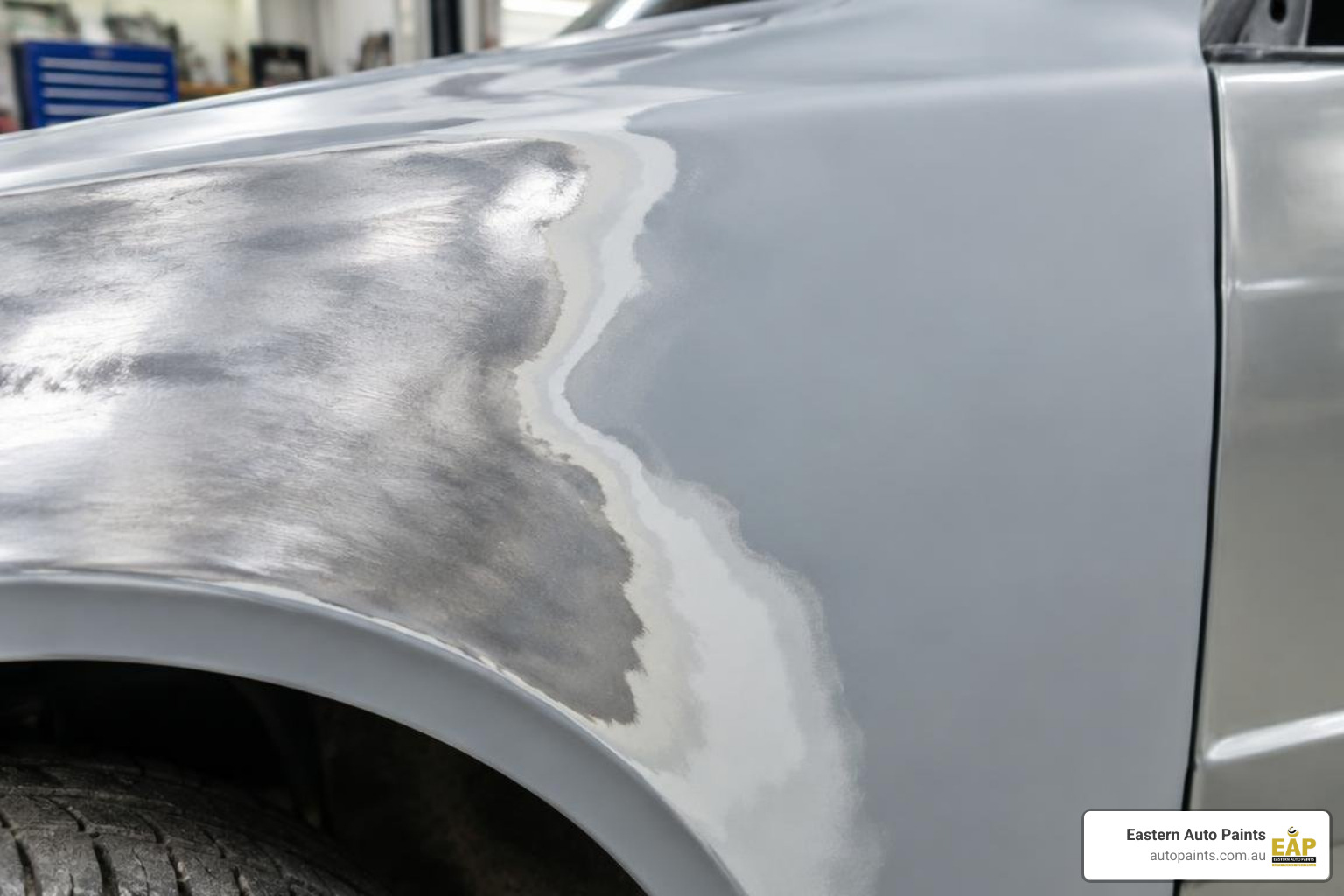
- Contour Mapping and Edge Ringing: This defect appears when aggressive solvents in a fresh primer attack feathered edges of underlying, solvent-sensitive coatings or incompletely cured body filler. Prevent mapping by applying thorough curing cycles to underlying polyester body fillers and using a staged dry-sanding progression with premium abrasive sanding discs to create smooth, gradual feather edges.
- Shrinkage and Sand Scratch Swelling: Applying topcoats over insufficiently cured primer surfacers causes the undercoat to settle into coarse sanding scratches as it continues to cure. Always allow adequate cure times before finish sanding, and apply a dry guide coat to identify and eliminate scratch profiles before colour application.
- Poor Direct Adhesion and Rust Creep: Contamination from body oils, silicone, or sanding dust prevents primer resins from wetting the metal lattice. Ensure panels undergo multi-stage solvent and water-borne degreasing directly before coating. Applying anti-corrosive barriers, as highlighted in our guide on epoxy primer for metal, prevents long-term moisture creep.
What to Expect at Eastern Auto Paints
When partnering with Eastern Auto Paints, trade professionals and vehicle enthusiasts gain direct access to comprehensive technical support and reliable supply channels. Our branches in Bayswater and Dandenong South maintain extensive inventories of specialised automotive refinish paints and coatings, catering to everything from smash repair facilities to classic vehicle restoration workshops.
As certified distributors for world-leading coatings manufacturers, we supply robust heavy-duty industrial coatings engineered for fleet maintenance, structural steel, and plant machinery. Our technical specialists assist trade clients in tailoring complete paint systems to their unique shop conditions, drying equipment, and substrate specifications.
When to Get in Touch or Take Action
Navigating complex refinishing challenges requires early intervention from knowledgeable coatings specialists. You should consult our technical team when:
- Commencing full-chassis restorations or custom vehicle rebuilds involving mixed substrates such as alloy panels, carbon composites, and bare steel.
- Upgrading commercial fleet refinishing specifications to meet heightened anti-corrosive and durability benchmarks.
- Diagnosing recurring shop defects, such as intercoat delamination, mapping over aged finishes, or micro-blistering under humid conditions.
- Scheduling regular trade deliveries of workshop consumables, abrasives, spray guns, or compressed air filtration systems.
For tailored technical support and product selection, contact our experienced team for professional assistance.
Practical Solutions and Reassurance
Achieving dependable, repeatable finishes is straightforward when you follow proven refinishing principles. Using compatible primers, activators, and thinners from a single manufacturer ensures predictable curing rates and rock-solid intercoat adhesion.
Taking the time to deoxidise bare metal, observing recommended flash-off intervals between coats, and thoroughly curing every undercoat layer before dry block sanding guarantees excellent gloss holdout in the subsequent clearcoat. By taking a methodical approach to substrate preparation and primer application, you can tackle complex paintwork with total confidence in its long-term durability.
Establishing a reliable foundation is the single most important step in achieving professional, long-lasting automotive paint finishes. Matching your primer formulation to the substrate, respecting flash-off intervals, and maintaining proper surface preparation protocols ensures your topcoats achieve exceptional gloss, colour fidelity, and chip resistance. Eastern Auto Paints remains dedicated to supporting Australian refinishers with trade-qualified advice, reliable delivery, and premium coating technologies.
- Explore our comprehensive automotive paint supplies
- Contact Us to speak with our experienced trade specialists
- Discover high-performance formulations across our primer collection
Frequently Asked Questions About Solvent Based Primers
What is the fundamental difference between solvent-based and water-based automotive primers?
Solvent-based primers utilise volatile organic compounds as carriers to dissolve resins and disperse pigment packages, relying on atmospheric solvent evaporation and, in 2K systems, chemical cross-linking. Water-based primers use water alongside small amounts of co-solvents to disperse polymer particles, coalescing into a continuous film as water evaporates. Choice of system depends on specific workshop environmental controls, regional emissions compliance, available bake equipment, and the precise substrate requirements outlined in the manufacturer's technical documentation.
Why is flash-off time between coats critical when spraying solvent primers?
Flash-off intervals allow the lighter solvent fractions in a wet film to evaporate before the next coat is applied. If a subsequent coat is sprayed prematurely, the fresh surface layer can skin over, trapping the underlying volatiles. This leads to severe film defects such as solvent popping, boiling craters, and delayed cure. Technicians must always refer to the specific product label or technical data sheet to determine the appropriate flash-off window for prevailing shop temperatures.
Can 2K epoxy solvent-based primer be applied directly over bare aluminium and treated steel?
Many 2K epoxy primer formulations are engineered for direct-to-metal application over prepared steel, galvanised metal, and bare aluminium alloys. However, this capability depends entirely on the specific resin design, active anti-corrosive pigments, and the surface profile created during preparation. Technicians must check the product's technical data sheet to confirm approved substrates and follow recommended mechanical abrading and chemical degreasing protocols.
What causes primer mapping or ringing and how can painters eliminate it?
Primer mapping occurs when solvents from freshly sprayed undercoats penetrate the sensitive edges of underlying feathered paint, body filler, or thermoplastic coatings, causing them to swell and leave a visible outline on the cured surface. Eliminating mapping requires creating smooth, gradual feather edges using progressive dry sanding, ensuring complete curing of all underlying polyester fillers, and applying thin, properly flashed primer coats or a dedicated isolation sealer.
How should professional workshops handle and dispose of waste primer solvents safely?
Workshops must manage waste solvents, gun-wash solutions, and primer residues in accordance with local environmental regulations and state WorkSafe mandates. Waste solvents should be captured in dedicated, flame-proof, closed-circuit washing units or grounded containment drums to prevent static ignition. Spent chemicals should be recycled through on-site distillation equipment or collected by licensed hazardous waste disposal contractors, never disposed of via municipal drains or general refuse.