

The Practical Guide to Effective Vehicle Frame Rust Proofing
Vehicle Frame Rust Proofing for Long-Term Structural Protection
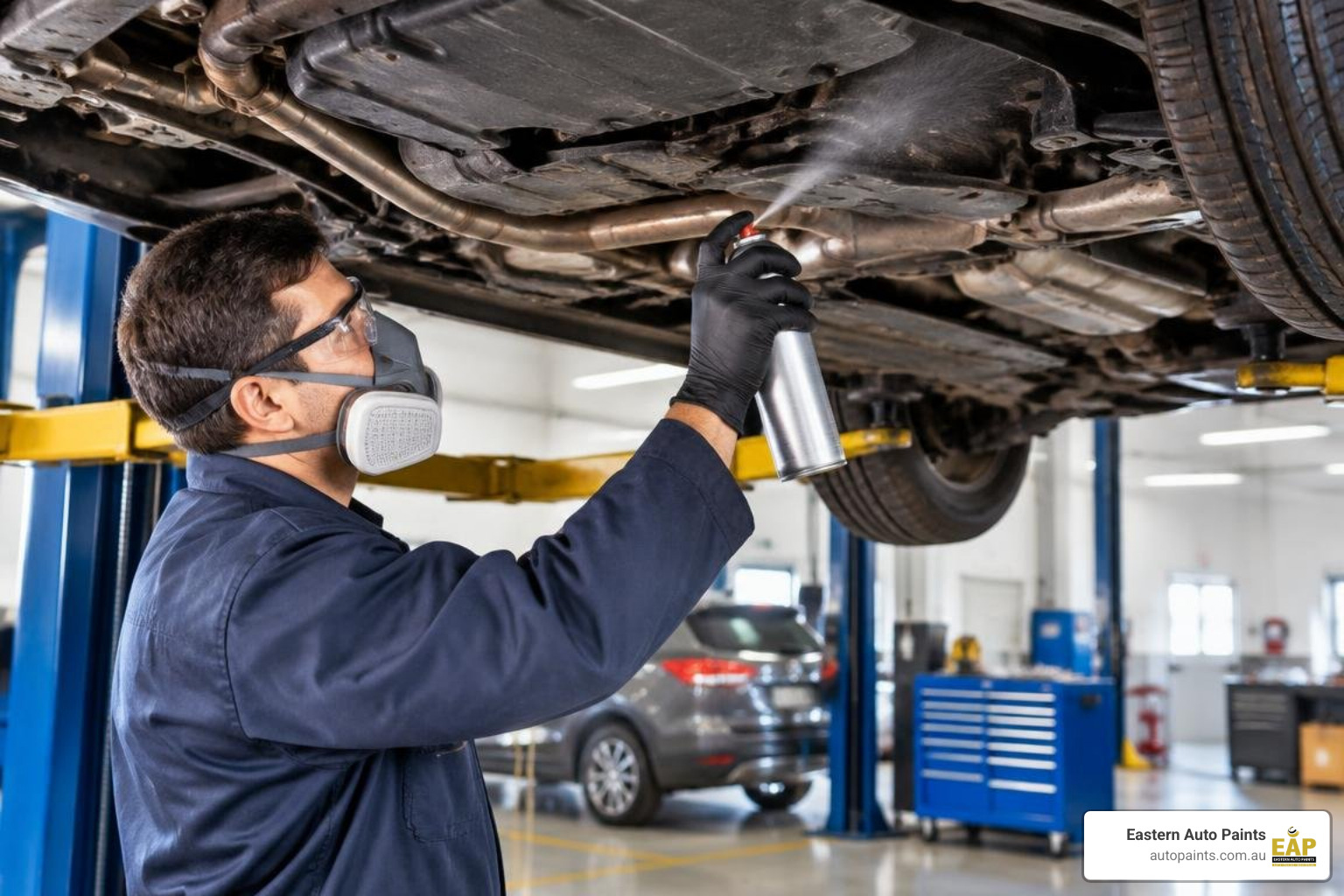
Effective vehicle frame rust proofing follows a clear sequence: remove trapped mud and salt, mechanically clean loose scale, treat any remaining surface rust, then seal exterior rails with a durable hard-shell barrier while fogging internal box sections with a penetrating cavity wax. Rushing this process, or spraying generic black aerosol paint directly over hidden road grime, inevitably leads to recurring corrosion and wasted labour. At Eastern Auto Paints, we take a tailored, technical approach, ensuring tradespeople and dedicated restorers have the right surface preparation supplies, conversion treatments, and protective coatings suited to harsh operating conditions.
Key Takeaways
- Mechanical descaling and thorough degreasing are vital before applying any protective barrier.
- Cavity wands with 360-degree spray nozzles are essential for fogging internal boxed sections.
- Permanent hard-shell barriers protect exterior rails, while flexible waxes protect enclosed seams.
- Quality industrial paint supplies and dedicated primers prevent moisture creep and premature coating failure.
At Eastern Auto Paints, we understand that vehicle frame rust proofing requires more than just masking surface blemishes. We provide professional advice, proven coating chemistries, and high-performance equipment to help you protect structural steel against relentless environmental exposure.
Our focus on trade-grade reliability and expert technical support ensures every chassis project achieves long-lasting structural integrity and dependable corrosion resistance.
Hidden Chassis Decay: Australian Environmental Hazards and Warning Signs
Australian driving conditions place unique stresses on vehicle underbodies. Harsh coastal salt spray, fine outback red dirt, and river crossings combine to create an environment where unsealed steel deteriorates quickly. While topcoat paintwork receives regular washing and detailing, chassis rails and subframes often gather layers of mud, silt, and moisture. This trapped debris holds moisture against the steel, initiating chemical oxidation that remains hidden beneath superficial grime.
Enclosed boxed sections, crossmembers, and structural seams are particularly prone to corrosion. Over time, surface oxidisation progresses into heavy, flaking scale rust that compromises the structural integrity of the metal. Understanding whether an anti-rust spray for underbody protection is necessary begins with recognising how moisture and salt enter these untreated structural cavities.
Inspecting High-Risk Frame Zones and Boxed Sections
A thorough inspection requires checking specific areas where moisture and road grit naturally settle:
- Rear Spring Hangers and Suspension Mounts: High mechanical movement and direct tyre spray constantly bombard these sections with gravel, road salt, and water.
- Cab Corners and Body Mounts: Road debris lodges between rubber isolators and frame brackets, retaining moisture against bare metal.
- Crossmember Joints and Weld Seams: Factory weld points introduce heat-affected zones that corrode earlier than smooth flat plate if left unprotected.
- Internal Frame Rails: Moisture enters through factory drainage holes and tooling access ports, creating severe interior rust while the outer frame appears pristine.
Selecting the Right Approach to Vehicle Frame Rust Proofing
Selecting an appropriate corrosion barrier depends on whether you are working with an assembled daily driver, a heavy commercial work vehicle, or a stripped bare-metal chassis restoration. Modern anti-corrosion chemistry generally falls into three distinct methodologies: permanent hard-shell barrier paints, penetrating fluid or wax-based cavity treatments, and rubberised undercoatings.
| Coating Category | Protective Mechanism | Ideal Application Zone | Maintenance Requirements |
|---|---|---|---|
| Permanent Hard-Shell Coating | Non-porous, chemical-resistant cured polymer barrier | Exposed exterior chassis rails, outriggers, suspension arms | Periodic visual inspection for mechanical rock gouges |
| Penetrating Cavity Wax / Fluid | Self-healing, moisture-displacing flexible film | Internal boxed sections, rocker panels, crossmembers | Periodic re-fogging depending on environmental exposure |
| Rubberised Underseal | High-build impact and sound-dampening barrier | Inner wheel arches and secondary underbody floorpans | Regular monitoring to identify cracking or delamination |
Permanent Hard-Shell Coatings vs Penetrating Cavity Sprays
Permanent hard-shell coatings form a non-porous, tightly cross-linked barrier that adheres directly to properly prepared steel. These coatings are formulated to resist stone chips, fuel, chemical spills, and severe road abrasion on exposed exterior surfaces. Because they cure to a firm, resilient finish, they provide long-term protection on accessible structural members.
Penetrating cavity sprays, such as lanolin or wax-based formulations, behave differently. They remain pliable over time, allowing them to flow into weld laps and displace trapped humidity. This flexible, self-healing property makes them well-suited for internal box sections where road grit cannot erode them. For a detailed breakdown of chemical barriers, consult our best rust prevention products guide.
Internal Box Section Treatments for Frame Rust Proofing
Treating the inside of enclosed chassis channels requires specialised application tools because these areas cannot be reached with standard brushes or spray guns. Technicians utilise flexible extension wands fitted with 360-degree brass or nylon fogging nozzles.
The wand is fed fully into factory tooling ports and drain holes. As the trigger is engaged, the technician slowly withdraws the line, atomising the penetrating fluid into an all-encompassing mist that coats the upper, lower, and vertical inner walls.
Professional Step-by-Step Chassis Preparation and Coating Process
Long-term coating performance depends entirely on meticulous substrate preparation. Applying any rust barrier over road grease, dirt, or loose mill scale prevents proper adhesion and traps moisture beneath the film.
- Decontamination and Heavy Degreasing: Wash the entire frame thoroughly to remove all oil, grease, road grime, and salt residue. Use a dedicated water-based or solvent degreaser, agitating heavy deposits before rinsing clean.
- Mechanical Descaling: Remove all loose, flaking rust, peeling old coatings, and mill scale using wire wheels, abrasive sanding discs, or media blasting. The remaining metal must be structurally sound.
- Chemical Etching or Conversion: Treat tightly adhering surface rust with a specialised rust converter or apply a phosphoric-based metal etch to provide mechanical tooth on clean steel.
- Final Solvent Wipe: Clean the dry metal using a residue-free wax and grease remover to eliminate remaining fingerprints, dust, and airborne contaminants before applying paint. For preparation guidelines on surrounding panels, review how to prepare your panel for painting.
Surface Preparation: Bare Metal vs Treating Existing Rust
When undertaking a complete restoration, taking the chassis back to clean bare metal via media blasting provides an ideal profile. For bare steel substrates, laying down a dedicated 2K barrier such as an epoxy ensures excellent mechanical adhesion and corrosion isolation. Learn more in our guide on how to stick it to rust with the best epoxy primer for metal.
When working on existing vehicles where media blasting is impractical, all loose rust must still be removed mechanically. Tightly adhering, non-flaking rust can then be treated with chemical converters that transform iron oxide into a stable, inert black complex suitable for overcoating.
Frame-On vs Frame-Off Application Techniques
Applying rust-proofing while the vehicle body remains bolted to the chassis requires systematic masking. Brake lines, wiring harnesses, exhaust systems, tailshafts, and rubber suspension bushes must be carefully masked with paper and foil tape. When spraying underbody coatings, ensure the workshop has adequate cross-flow air movement and clear clearance beneath the vehicle.
A frame-off project allows full access to the top of the chassis rails, engine mounts, and inner frame curves. Mounting the bare frame on a rotisserie allows you to rotate the steelwork, ensuring uniform wet-film application across every bracket and recess.
Environmental Factors: Temperature and Humidity Control
Ambient conditions play a critical role in how coatings atomise, flow, flash off, and cure. Moisture-curing polyurethanes require atmospheric humidity to cross-link, but extreme cold can retard curing, while excessive heat can cause solvent pop.
Application characteristics, reduction ratios, pot life, and drying windows vary significantly between different chemical systems. Always check the manufacturer technical data sheet (TDS) or product label for the exact specifications, flash-off windows, and safety parameters before spraying. For appropriate personal protective equipment (PPE) and chemical safety controls, refer directly to the product label/TDS and relevant SafeWork Australia or state WorkSafe guidance.
Avoiding Common Pitfalls to Ensure Long-Term Structural Integrity
A frequent mistake in DIY underbody rust-proofing is applying thick coats of heavy rubberised underseal over untreated surface rust. If the substrate is not fully degreased, dry, and stabilised, moisture remains trapped against the steel. Over time, vibration and temperature swings cause rigid rubberised films to develop hairline micro-fissures. Water and road salt penetrate these fissures through capillary action, causing rapid corrosion behind an apparently intact layer of black underbody coating.
Another common pitfall is blocking chassis drain holes with heavy paint or wax build-up. Always inspect and clear these drain outlets using a small pick or compressed air before and after applying coatings. To understand basic steel priming principles, visit our bare metal primer guide 2026.
Diagnostic Signs of Coating Failure and Maintenance Intervals
Regular undercarriage inspections help catch potential coating failures before rust damages structural steel:
- Blistering or Bubbling: Indicates that moisture or contamination was present on the metal before paint application, forcing the film to lift.
- Delamination / Flaking: Points to inadequate surface profiling, poor degreasing, or missing the recoat adhesion window.
- Rust Creep at Edges: Occurs when coatings are applied too thinly over sharp steel edges, allowing moisture to undercut the paint film.
Maintaining Long-Term Barrier Protection in Frame Rust Proofing
Maintaining an undercarriage requires routine washing after driving on beaches or muddy tracks. Use high-pressure water to flush accumulated mud out of the frame rails through internal access holes.
Inspect exterior chassis paintwork periodically for stone damage, and touch up exposed steel promptly. For enclosed box sections, re-fogging the interior cavities with penetrating wax or lanolin fluids maintains an active moisture barrier against seasonal weather changes.
What to Expect at Eastern Auto Paints
At Eastern Auto Paints, we provide trade professionals, body repairers, and automotive enthusiasts with technical guidance and dependable coating systems. Operating from our trade counters in Bayswater and Dandenong South, we support clients across Victoria and supply workshops Australia-wide with rapid dispatch.
Whether you need heavy-duty chassis paints, specialised primers, or dedicated application equipment, our team ensures you receive the correct system for your specific project. Explore our comprehensive collection of ute liners and underbody sealers or select specialised rust converters from our rust repair and prevention range.
When to Get in Touch or Take Action
Take action on chassis maintenance whenever you notice:
- Flaking scale rust forming along chassis seams or suspension outriggers.
- Preparation for an extended off-road expedition or post-trip salt exposure.
- Starting a complete ground-up vehicle build or tray restoration.
For larger commercial projects or workshop supply, our technical team provides advice on spray equipment, compressors, and consumable matching. Explore our trade range of auto paints or contact the specialist team for tailored recommendations.
Practical Solutions and Reassurance
Restoring and protecting a vehicle chassis does not have to be an overwhelming process. By following a clear sequence of thorough cleaning, mechanical preparation, correct chemical conversion, and dedicated barrier sealing, you can secure structural peace of mind for decades to come.
Using the right combination of exterior barrier coatings and interior cavity sprays preserves the safety and resale value of your vehicle while providing lasting protection across all structural components.
Whether you are preparing a commercial fleet, rust-proofing a 4WD, or restoring a classic car rebuild, systematic preparation delivers dependable, long-term corrosion resistance. We are always here to assist with expert advice, colour matching services, and trade-grade supplies to help you get the job done right.
- Explore all protective coatings and supplies
- Browse primer aerosol solutions
- Contact our specialist support team
Frequently Asked Questions About Underbody Corrosion Control
Can rust-proofing coatings be applied directly over existing rust?
Coatings should never be applied over loose, flaky, or structural scale rust. All loose debris and scale must be removed mechanically using abrasive discs, wire brushes, or media blasting. If a thin layer of tightly adhering, sound rust remains on steel where mechanical removal is difficult, it must be chemically treated with a dedicated rust converter or primed with a moisture-curing coating explicitly formulated for treated rust substrates. Always consult the product technical data sheet before application.
How do you effectively treat the inside of boxed or enclosed frame rails?
Treating internal boxed rails requires flexible cavity extension wands equipped with multi-directional, 360-degree spray nozzles. These wands are inserted through factory drainage holes, body mount cavities, or tooling access slots along the chassis. As the operator engages the spray and pulls the wand back through the channel, it atomises a self-healing cavity wax or lanolin-based fluid that coats the top, bottom, and internal vertical walls to displace trapped moisture.
Why do rubberised undercoatings often fail and accelerate rust?
Rubberised undercoatings fail primarily when applied over improperly prepped, damp, or pre-corroded surfaces. Over time, road vibration, temperature fluctuations, and stone impacts cause thick, non-breathable rubber films to develop micro-fractures. Capillary action draws water and road salts through these tiny cracks, trapping moisture directly against the steel substrate. Corrosion continues unnoticed beneath the unbonded outer rubber skin until severe structural damage has occurred.
What is the ideal temperature and humidity for curing chassis coatings?
Coating systems generally cure best in moderate ambient conditions without extreme humidity or near-freezing temperatures. However, specific requirements vary significantly depending on the chemical family. For example, moisture-curing polyurethanes require ambient humidity to cross-link effectively, whereas two-pack epoxy and urethane systems depend strictly on thermal chemical reactions. Always consult the specific manufacturer's technical data sheet or product label for exact temperature, humidity, and flash-off requirements.
How often should underbody and frame coatings be inspected or reapplied?
Underbodies should undergo visual inspection at least once a year, and immediately following extended exposure to beach sand, coastal salt water, or heavy off-road mud. Exterior hard-shell coatings generally require minor periodic touch-ups only when mechanically gouged by rock strikes. Internal cavity waxes and penetrating fluid barriers benefit from routine inspection and re-fogging as recommended by the coating manufacturer to maintain an active barrier against moisture ingress.