
Beginner's Guide to Paint Primers for Cars
Choose the Right Paint Primer for a Finish That Lasts

A good refinish begins with the right primer. Paint Primers for Cars help the coating system grip the panel, isolate repairs and create a consistent surface for colour and clearcoat. Choose an epoxy primer for properly prepared bare metal, a suitable plastic adhesion primer for flexible parts, and a high-build primer surfacer where sanding scratches or minor imperfections need levelling. Skipping this step can leave a finish uneven, poorly bonded or vulnerable around exposed repairs.
Key Takeaways
- Match the primer to the substrate, not just the topcoat colour.
- Remove rust, contamination and loose coatings before priming.
- Follow the product technical data sheet for mixing, flash-off and curing times.
- Use a compatible sealer when a uniform foundation is needed before colour.
- See A Practical Guide to Choosing Auto Paint Primers for substrate-specific guidance.
Eastern Auto Paints (EAP) supports trade applicators, restoration workshops and serious DIY painters with primer systems selected for practical automotive refinishing. We help customers identify the right coating sequence for bare steel, aluminium, fibreglass, plastic and sound existing paintwork.
Our focus is on reliable, compatible coating solutions and clear technical advice, because a durable finish depends on preparation as much as the final colour. The product roundup ahead explains which primer types suit common vehicle repairs and what to consider before you spray.
Why Primer Application Is Vital for Automotive Refinishing
Achieving a durable paint finish relies on what sits beneath the visible topcoat. Automotive primers serve as an intermediate foundation between raw substrates and decorative topcoats. They provide both chemical adhesion to non-porous materials and mechanical bonding to abraded surfaces, ensuring that subsequent layers remain firmly anchored throughout temperature cycles and environmental exposure.
Beyond adhesion, quality primers act as an impermeable corrosion barrier, sealing bare steel and aluminium from ambient moisture and atmospheric contaminants. They level minor surface irregularities, block solvent strike-through from aggressive topcoats, and prevent intermediate repairs from mapping through to the clearcoat. Maintaining strong topcoat holdout ensures that gloss levels and colour depth remain uniform across the entire vehicle body.
Understanding the Core Types of Paint Primers for Cars
Selecting the correct primer formulation depends on the substrate material, the existing surface profile, and the desired film build. Automotive primers are broadly classified by their chemical resin formulation, curing mechanism, and functional role within the refinish stack. You can browse our dedicated Primer Collection to find suitable options for specific project requirements.
| Primer Category | Primary Chemical Base | Curing Mechanism | Main Function | Recommended Substrates |
|---|---|---|---|---|
| Epoxy Primer | Two-pack (2K) epoxy polyamide | Chemical cross-linking | Corrosion barrier, chemical adhesion, substrate sealing | Bare steel, aluminium, galvanised steel, fibreglass |
| Etch Primer | Polyvinyl butyral with phosphoric acid | Acid etching & evaporation / 2K cure | Chemical micro-etching, rapid corrosion protection | Clean bare metals, rub-throughs |
| High-Build Surfacer | Two-pack (2K) urethane / acrylic | Isocyanate cross-linking | Filling sanding scratches, surface levelling, block sanding | Cured epoxy, body filler, sound existing coatings |
| Primer Sealer | 2K urethane or 1K acrylic | Solvent evaporation / chemical cure | Uniform colour groundcoat, solvent barrier, holdout | Sanded primer surfacers, stable OEM finishes |
| Plastic Primer | Chlorinated polyolefins | Solvent evaporation | Adhesion promotion on flexible low-energy surfaces | Raw automotive plastics (PP, EPDM, ABS, PUR) |
Epoxy and Self-Etching Primers for Bare Metal
When metal is stripped to bare steel or aluminium, prompt corrosion protection is critical. Epoxy primers and self-etching primers represent two distinct chemistries engineered for raw substrates, each suited to specific repair situations.
Epoxy Primers
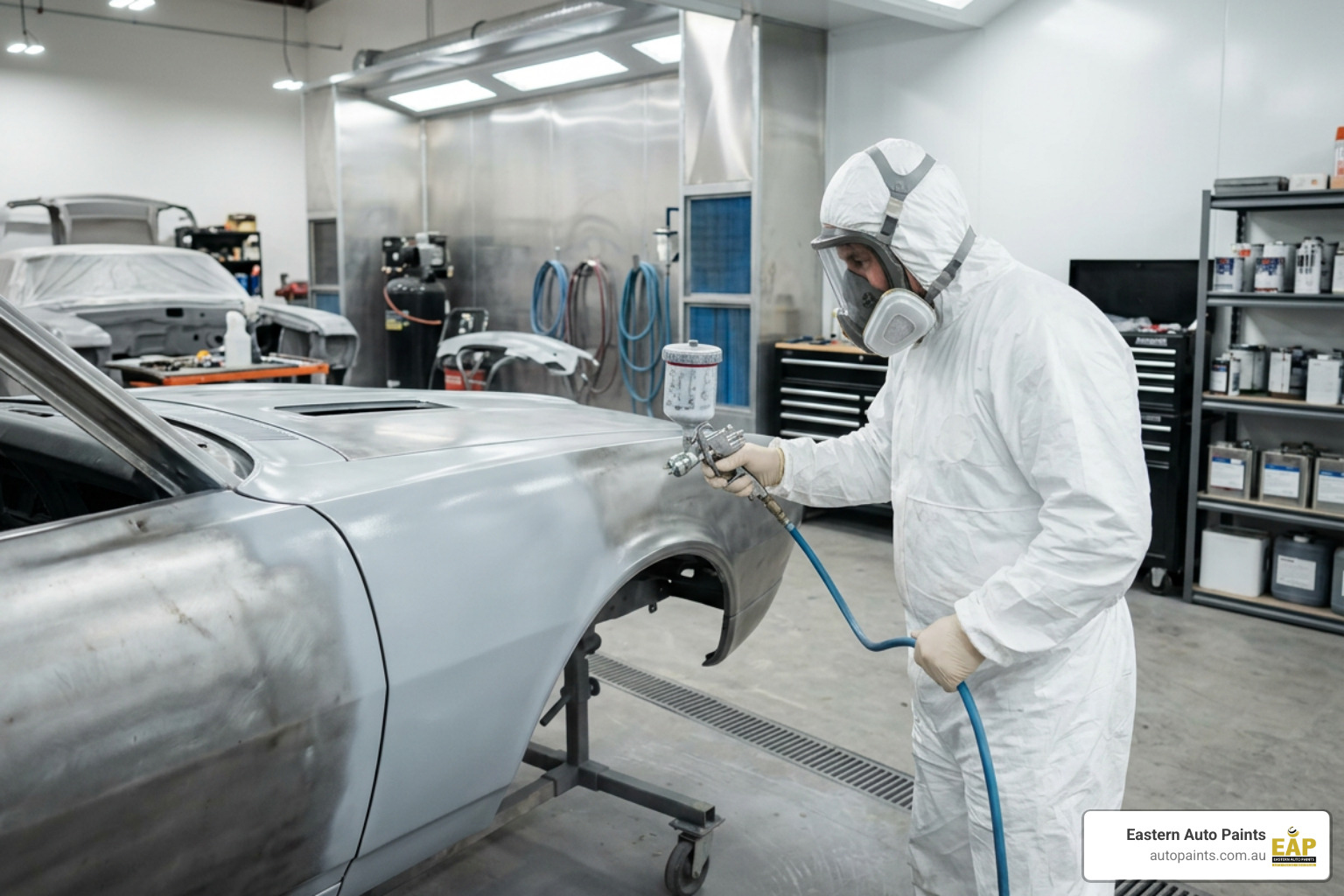
Two-pack epoxy primers cure through chemical cross-linking between an epoxy resin and a polyamide or polyamine converter. This creates a dense, non-porous barrier that locks out moisture and air.
- When you'd use this: Ideal for complete bare-metal restorations, large repair sections, aluminium fabrications, and sealed intermediate layers. Epoxy offers exceptional chemical resistance, water impermeability, and strong adhesion across multiple substrates including steel, galvanised panels, and fibreglass. Products like Car Rep 2K Epoxy Primer Aerosol Black deliver convenient two-component barrier protection, while dedicated guides such as The Guide to Epoxy Primer Paint for Cars outline specific workflow techniques.
Self-Etching Primers
Etch primers rely on active phosphoric acid and zinc-based rust inhibitors to chemically etch into the microscopic profile of the metal.
- When you'd use this: Suited for spot repairs, small bare-metal rub-throughs created during block sanding, and fast turnaround panel priming where heavy film build is not required. Formulations such as Concept Paints 110 Metal Etch Primer provide swift adhesion over zinc, steel, and light alloys. For a deeper breakdown of acid-etching chemistry, see our Bare Metal Primer Guide 2026.
Decision Guide
- Choose Epoxy Primer when undertaking bare-metal panel builds, rust restorations, or where panels will sit for extended periods before topcoating.
- Choose Self-Etching Primer when treating small metal rub-through edges or carrying out fast spot priming prior to surfacer application.
High-Build Primer Surfacers and Sealers
Once corrosion protection is established, minor surface variations, body filler transitions, and coarse sanding scratches must be levelled before topcoat application.
Primer surfacers utilise high-solids urethane chemistry to deposit a thick layer of sandable material. Exploring the structural differences in our guide on Epoxy vs Urethane Primer illustrates why urethane surfacers are preferred for dry and wet guide-coat block sanding.
High-performance options include:
- Concept HS 2K High Build Primer 5L Kit: Delivers high build characteristics and straightforward featheredge sanding.
- Protec 2K Paraglaze Prime Fill: Designed for rapid curing and minimal shrinkage across trade refinish workflows.
- Unicolour HS Pro 2K 5L Primer Kit: Provides high-solids coverage suited for complete vehicle block sanding.
Primer sealers provide a non-sanding intermediate layer applied directly before basecoat spraying. They prevent topcoat solvents from penetrating into underlying body fillers or porous surfacers, eliminating mapping lines and establishing a uniform groundcoat colour.
Specialised Plastic and Direct-to-Substrate Primers
Modern vehicle bumpers, trim components, and mirror housings are manufactured from non-polar plastics such as polypropylene (PP) blends and thermoplastic polyolefins (TPO). Standard automotive paints cannot adhere directly to these low surface energy plastics without specialised adhesion promoters.
Plastic adhesion primers, including Concept Plastic Primer 400grams and Protec Plas-Stik Primer 1, use specialised chlorinated polyolefins that chemically bond with raw plastic resins. These coatings deposit a thin, flexible film that flexes with the component during thermal expansion and road vibration without cracking or delaminating.
Surface Preparation and Substrate Matching
Choosing Paint Primers for Cars by Substrate Type
Properly identifying the substrate ensures the primer forms a permanent bond. Automotive bodywork commonly incorporates mixed materials that require tailored primer selections.
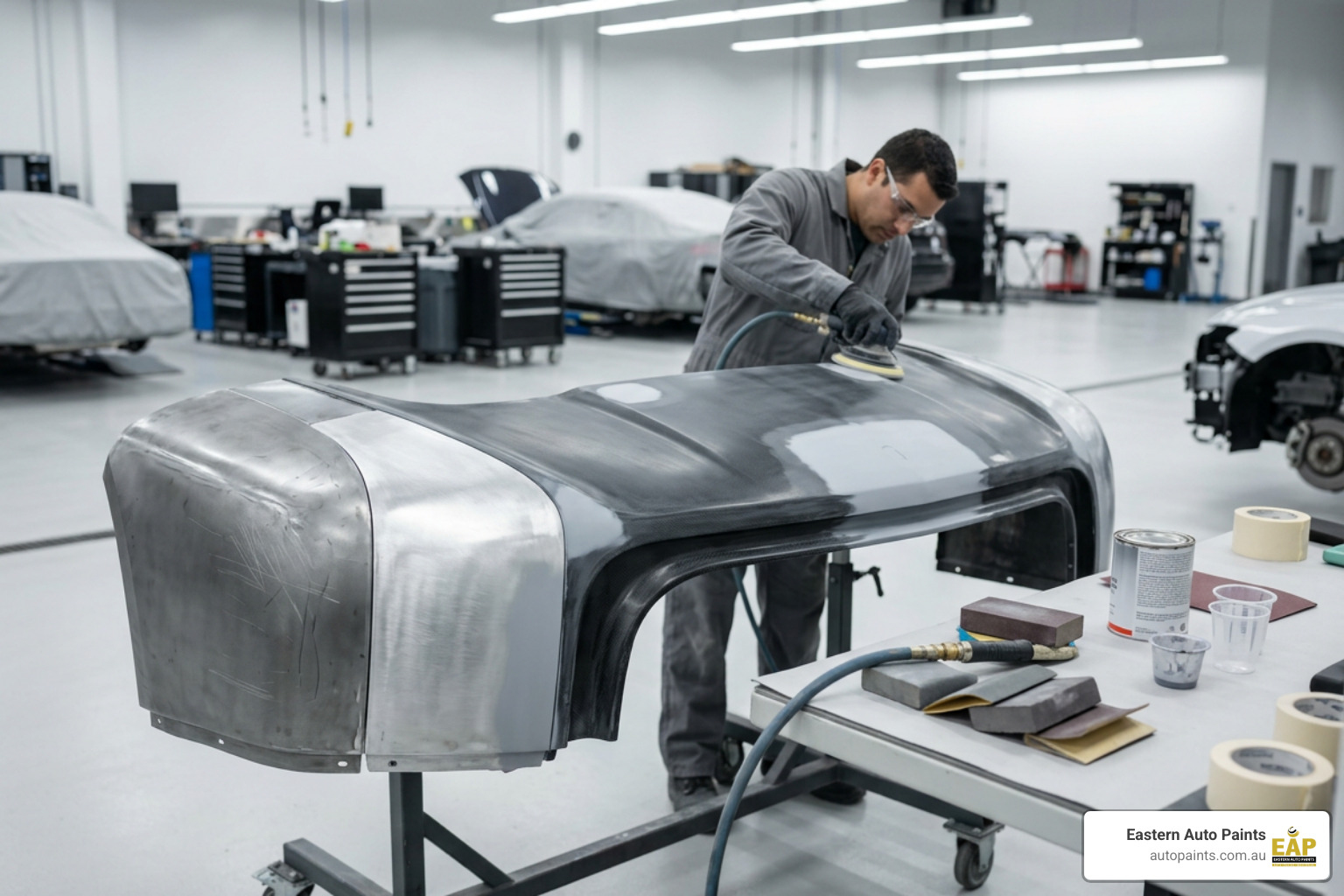
- Mild Steel: Strip free of oxidation and coat with a 2K epoxy primer or self-etching primer.
- Automotive Aluminium: Degrease, abrade to break the natural oxide layer, and apply an epoxy or dedicated etch primer immediately to prevent re-oxidation.
- Galvanised Panels: Treat with etch primers or direct-to-metal epoxy formulations engineered to passivate zinc coatings.
- Fibreglass and Composites: Sand to remove gelcoat gloss and seal with Epotec Primer Surfacer to bridge porosity and prevent pinholing.
- Flexible Plastics: Clean thoroughly with warm soapy water and an anti-static degreaser before applying an adhesion promoter.
Mechanical Abrasion and Chemical Decontamination
Every stage of surface preparation dictates how well the primer system performs. Skipping mechanical abrasion or chemical cleaning often results in edge mapping, fisheyes, or peeling coatings.
- Chemical Cleaning: Wash panels with detergent and water to remove water-soluble dirt, followed by a dedicated automotive wax and grease remover.
- Mechanical Profiling: Abrade bare substrates using quality sanding sheets and discs on a dual-action orbital sander or hand block. Use appropriate abrasive grits suited to the primer being applied.
- Rust Neutralisation: In areas where microscopic surface corrosion cannot be completely ground away, explore our rust prevention products or apply a specialised converter such as Concept Rust Converter Primer Sealer Aerosol.
- Final Decontamination: Blow the panel clear with clean, dry compressed air, wipe down with wax and grease remover using a two-cloth method, and wipe lightly with a tack rag just before spraying. Detailed preparation steps are outlined in our article on How to Prepare Your Panel for Painting.
Best Practices for Application and Curing
Essential Application Techniques for Paint Primers for Cars
Applying primer evenly requires proper equipment configuration, controlled technique, and adherence to environmental working parameters. Application methods range from pressurised spray guns to single-panel aerosols.
Aerosol Cans vs HVLP Spray Guns
- Aerosol Application: The Primer Aerosol Collection provides convenience for small spot repairs, minor rub-throughs, and tight component work where setting up spray equipment is impractical.
- HVLP Spray Guns: Gravity feed spray guns from our spray equipment range provide adjustable fan patterns, high fluid delivery, and atomisation control necessary for large panels, complete rebuilds, and high-build surfacer applications.
- Compressed Air Delivery: Trade workshops rely on dedicated compressors to deliver clean, dry, pulse-free air volume across high-build primer spraying cycles.
When applying coatings, maintain an even spray pass overlap, keep a consistent gun distance from the panel, and allow each coat to flash off properly according to the product guidelines.
Note: Application methods, coat counts, nozzle configurations, spray pressures, and flash-off times vary significantly by product and ambient temperature. Always consult the manufacturer's technical data sheet (TDS) and product label for exact application guidelines.
Colour Groundcoats and Tinted Primer Formulations
Modern automotive basecoats often exhibit varying levels of transparency, particularly vibrant reds, yellows, and modern pearl finishes. Spraying a transparent basecoat over an unevenly coloured undercoat requires excessive topcoat material to achieve full opacity.
Using tinted primers or standard value-shaded groundcoats (typically white, light grey, medium grey, dark grey, or black) optimises basecoat colour coverage:
- Light Greys: Standard Concept HS Pro Primer Grey works reliably under silver, light blue, and bright solid tones.
- Dark Greys and Blacks: Formulations such as Car Rep Dark Grey Primer Filler Aerosol 500ml provide an ideal groundcoat for deep blues, greens, dark metallics, and solid blacks.
Matching the undercoat value shade to your basecoat formula ensures accurate colour reproduction, reduces material usage, and creates consistent finish depth across the vehicle.
Why This Issue Should Not Be Ignored
Applying topcoats over raw metal, unsealed repairs, or improperly primed surfaces creates serious refinishing failures. Automotive paint finishes are exposed to severe temperature fluctuations, road debris, stone impacts, and atmospheric moisture.
Without a suitable primer foundation, paint systems suffer from premature loss of adhesion, flaking, micro-blistering, and severe corrosion creep beneath the clearcoat. Rectifying an adhesion failure requires stripping the entire panel back to the substrate, significantly increasing labour time and material expenses. Investing time and care into the priming phase ensures long-term coating durability and panel protection.
Common Symptoms, Challenges, or Questions
Refinishers commonly encounter several practical challenges when applying automotive primers:
- Featheredge Mapping: Edge lines of old paint or body filler showing through the primer surfacer.
- Solvent Popping and Pinholing: Tiny blisters or voids caused by applying subsequent coats before underlying solvents have evaporated.
- Sanding Clogs: Primer balling up or clogging sandpaper when dry sanding, often indicating insufficient curing time.
- Poor Film Build: Inability to fill light surface defects, typically caused by improper spray gun setup or over-thinning.
Understanding primer chemistry and adhering to technical guidelines helps eliminate these common application defects.
What a Personalised Experience Actually Looks Like
Selecting automotive refinish products should not be an exercise in guesswork. When you reach out to our team, we evaluate your specific project parameters: the substrate materials involved, whether you are spot repairing or completing a full respray, your workshop ventilation and equipment setup, and the topcoat chemistry you intend to spray.
We identify the exact primer, reducer, and hardener combinations required for chemical compatibility, providing you with practical guidance tailored directly to your refinish project.
The Value of Consistency and an Ongoing Relationship
Vehicle restoration and smash repair work demand repeatable, predictable outcomes. Working with consistent, trade-grade primer formulations eliminates unexpected chemical reactions, drying anomalies, and compatibility conflicts across different paint layers.
Establishing a dependable supply relationship ensures you have access to matching systems, consistent batch quality, and ongoing technical guidance for every stage of your refinishing process.
What to Expect at Eastern Auto Paints
At Eastern Auto Paints, we stock a comprehensive range of trade-proven primers, surfacers, sealers, and specialty coatings from leading Australian and international manufacturers. Located in Bayswater and Dandenong South, Victoria, our team combines extensive automotive refinishing knowledge with advanced colour matching technology.
Whether you need a dedicated two-pack epoxy system for a classic vehicle rebuild or convenient aerosols for quick touch-ups, we supply premium automotive paint products backed by practical industry support.
When to Get in Touch or Take Action
Before you begin abrading panels or spraying coatings on your project vehicle, ensure you have the correct primer system on hand. If you have questions about substrate compatibility, groundcoat value shading, or intermediate sealer selection, our technical team is ready to assist.
You can speak directly with our team by visiting our Contact Us page or dropping by our Victoria branch locations.
We invite you to explore our extensive range of refinishing products across our dedicated collections:
- Browse our complete selection of Paint Primers for Cars and Specialist Primers
- Explore professional 1K Primer Formulations and 2K Primer Systems
- Discover convenient Primer Aerosol Options
- View our All Automotive and Industrial Products range
- Read further practical refinishing guides on our Automotive Paint Articles portal
Frequently Asked Questions About Paint Primers for Cars
How long can automotive primer sit before painting?
The open window for topcoating varies depending on whether you are using a 1K acrylic primer, an epoxy primer, or a 2K urethane surfacer. While epoxy primers provide an initial chemical recoat window, most primer surfacers are hygroscopic and can absorb airborne moisture if left exposed outdoors. If a primed panel sits beyond the manufacturer's specified recoat window, it must be scuffed or block-sanded to restore mechanical adhesion and cleaned thoroughly before applying subsequent coats or topcoats. Always refer to the specific product technical data sheet for exact open time limits and storage requirements.
Can urethane primer surfacer be applied directly over bare metal?
Standard 2K urethane primer surfacers are formulated primarily for film build, surface levelling, and easy sanding rather than raw metal passivisation. While some direct-to-metal (DTM) surfacers exist, applying standard urethane surfacers directly over bare steel or aluminium increases the risk of micro-corrosion and adhesion failure over time. For maximum long-term durability, bare metal should first receive an anti-corrosive epoxy primer or self-etching primer barrier before applying high-build urethane surfacers.
What causes primer solvent entrapment and blistering?
Solvent entrapment occurs when the outer surface of a primer film skins over and dries before the deeper solvents have had sufficient time to evaporate. This typically happens when primer coats are applied too heavily, when flash-off times between coats are rushed, or when an excessively fast reducer is used in warm weather. Trapped solvents eventually force their way upward as the coating cures, resulting in pinholing, micro-blistering, or loss of gloss in the final topcoat.
How do I choose between 1K and 2K primer systems?
One-pack (1K) primers dry solely through solvent evaporation, making them convenient for minor spot repairs, quick rub-through protection, and hobbyist work where mixing hardeners is impractical. Two-pack (2K) primers require a chemical activator or hardener to cure, forming a dense cross-linked molecular structure. 2K systems offer superior moisture barrier properties, significantly higher film build, better solvent resistance, and minimal shrinkage, making them the standard choice for professional repairs and complete restorations.
What safety precautions should I take when spraying automotive primers?
Automotive primers contain volatile organic compounds (solvents) and, in the case of 2K urethane systems, isocyanate hardeners that pose respiratory and skin health hazards. Always spray in a well-ventilated spray booth or designated extraction area away from ignition sources. Refer to the manufacturer's safety data sheet (SDS), product label, and relevant SafeWork or WorkSafe guidance to select appropriate personal protective equipment (PPE), including suitable respiratory protection, eye protection, nitrile gloves, and protective overalls.