
Mastering Surface Prep with Automotive Panel Wipe Solvent
Mastering Surface Prep with Automotive Panel Wipe Solvent for Flawless Finishes
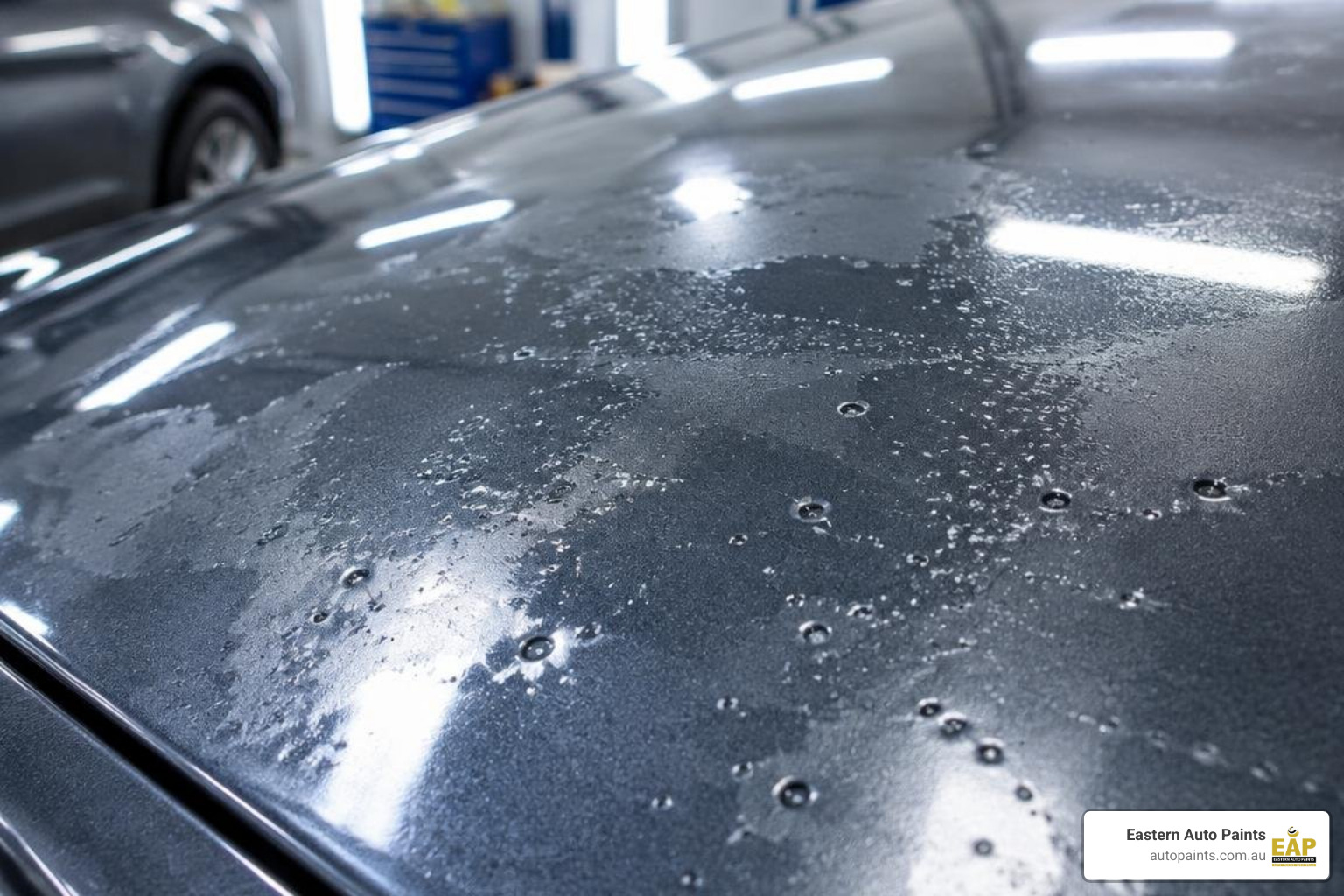
Using a dedicated panel wipe solvent ensures automotive and marine substrates are chemically clean and free from oils, silicones, and sanding residue before painting. By applying the solvent across the panel with a clean cloth and immediately removing the dissolved residue with a second dry cloth, refinishers prevent common defects such as fish eyes and delamination. A rushed wipe-down with generic cleaners can leave behind stubborn contaminants that compromise finish quality. Still, Eastern Auto Paints provides personalised guidance and trade-grade supplies to help you achieve a flawless foundation every time.
Key Takeaways
- Understand common surface contamination risks before refinishing automotive and marine panels.
- Apply panel wipe solvents using the systematic two-cloth technique to remove oils cleanly.
- Check substrate compatibility before degreasing sensitive plastics, fresh repairs, or vintage finishes.
- Maintain safe workshop ventilation, appropriate protective equipment, and proper solvent-waste practices.
- Explore our dedicated wax and grease remover range for dependable prep.
At Eastern Auto Paints, we combine hands-on trade knowledge with advanced colour matching technology and expert support to help panel beaters, spray painters, and serious restorers select the right preparation chemicals for their workshop.
We focus on ensuring your primers, basecoats, and clearcoats achieve maximum adhesion through reliable, trade-proven degreasing and surface-preparation methods.
Hidden Surface Contamination Risks in Australian Workshops
Achieving a clean, defect-free refinish requires understanding the contamination hazards present in commercial bodyshop environments. Throughout Victoria and across Australia, workshops contend with airborne overspray, micro-fine sanding dust, atmospheric humidity shifts, and volatile silicone residues from tyre dressings or interior detailers. When microscopic contaminants remain trapped on a substrate, the chemical bonding of subsequent primers and topcoats becomes compromised.
Microscopic oil deposits and silicone particles create surface tension mismatches that lead to severe coating defects, such as fish eyes, pinholing, micro-blistering, and premature delamination. Learning how to prepare your panel for painting begins with identifying these microscopic hazards before laying down any wet coats. Relying on compressed air alone merely redistributes loose particles and can atomise compressor oil lines onto the substrate. Using a dedicated solvent degreaser ensures that waxes, road grime, skin oils, and airborne shop contaminants are chemically dissolved and physically lifted from the vehicle surface.
Identifying Sensitive Substrates, Resprays, and Solvent Swelling
Different automotive panels react differently when exposed to organic solvents. Cured original equipment manufacturer (OEM) clearcoats, two-pack (2K) urethane finishes, and bare prepared metals handle standard solvent wipe-downs without adverse reactions. However, sensitive surfaces such as thermoplastic acrylics (TPA), fresh smart repairs, paint protection film (PPF), raw unprimed bumper plastics, and unmasked rubber mouldings can swell, soften, or turn cloudy when subjected to aggressive degreasers.
When working on unbaked resprays or vintage acrylic finishes, aggressive solvent penetration can cause lifting, wrinkling, or entrapment that promotes clouding. Following proven refinishing practices involves verifying that the substrate is thoroughly cured and stable before applying wet cleaners.
For raw polymer components such as polypropylene (PP) or ABS bumpers, standard heavy-bodied thinners can extract plasticisers and warp the material. In these instances, applying a dedicated plastic primer for cars after a gentle, manufacturer-approved pre-clean provides the safest route to adhesion. Always perform a discreet spot test with your chosen solvent on unfamiliar resprays or repair sections prior to treating the entire vehicle panel.
Selecting and Applying the Right Panel Wipe Solvent for Degreasing
Choosing the right cleaning agent involves understanding the distinct cleaning properties of different solvent formulations.
Automotive Panel Wipe Solvents
Automotive panel wipe degreasers blend refined aliphatic hydrocarbons with pure alcohols. This specialised chemical formulation targets both polar and non-polar residues, dissolving heavy petroleum carriers, silicone particles, carnauba waxes, synthetic polymer sealants, and buffing lubricants. They provide a controlled, rapid flash-off that lifts embedded oils from bare metals, marine gel coats, and cured two-pack (2K) paints without lingering residue.
Isopropyl Alcohol (IPA) Cleaners
Standard isopropyl alcohol blends excel at removing light surface dust, water-soluble residues, finger marks, and fresh compounding residue on delicate surfaces. Because alcohol solutions are gentle on a wide variety of substrates, they are widely used for general detailing inspections, glass cleaning, and light wipe-downs on cured clearcoats.
| Feature / Property | Automotive Panel Wipe Solvent | Standard Isopropyl Alcohol (IPA) |
|---|---|---|
| Primary Chemical Makeup | Aliphatic hydrocarbons & pure alcohols | Isopropanol diluted with deionised water |
| Residue Removal Profile | Dissolves silicones, heavy road grime, and synthetic waxes | Cleans water-soluble dust, light oils, and inspection haze |
| Evaporation & Flash-Off | Rapid, controlled flash designed for paint prep | Variable evaporation depending on water dilution |
| Common Substrates | Bare metal, cured 2K paints, marine gel coat, fibreglass | Cured paint, glass, general maintenance surfaces |
| Application Method | Two-cloth wipe-on, wipe-off technique | Wipe-on, wipe-off with clean microfibre |
Decision Guide: Which Cleaner Do You Need?
- Pre-Paint Degreasing & Heavy Contaminant Removal: For bare steel, aluminium, composite marine repairs, or panels coming out of the sanding booth, an automotive panel wipe degreaser provides the solvency needed to strip stubborn oils and waxes.
- Spot Jobs & Touch-Ups: A convenient Concept Wax and Grease Remover Aerosol offers fast, targeted delivery without decanting.
- Full Resprays & Workshop Operations: A bulk container such as Protec Wax and Grease Remover 4L delivers reliable efficiency across everyday trade workflows.
- Final Inspection & Light Dusting: When checking clearcoats between polishing stages or preparing glass, an isopropyl alcohol wipe provides a mild cleaning action.
How Chemical Formulations in Panel Wipe Solvent Eliminate Residues
The effectiveness of a panel wipe solvent lies in its balanced molecular structure. The aliphatic hydrocarbon fractions act as non-polar solvents, breaking down complex hydrocarbon chains found in waxes, synthetic sealants, and buffing lubricants. Simultaneously, alcohol fractions emulsify water-borne contaminants, salt residues, and perspiration.
Unlike aggressive paint thinners formulated with strong ketones and aromatics designed to bite into resins, a true panel wipe degreaser cleans the surface without dissolving or swelling cured underlying coatings. Application and flash-off times vary from product to product, so always check the manufacturer's technical data sheet or product label for the exact specifications before you start.
Conceptual Procedure for Panel Wipe Solvent Degreasing
Degreasing relies on the established two-cloth technique to ensure contaminants are lifted off the substrate rather than redistributed across the panel.
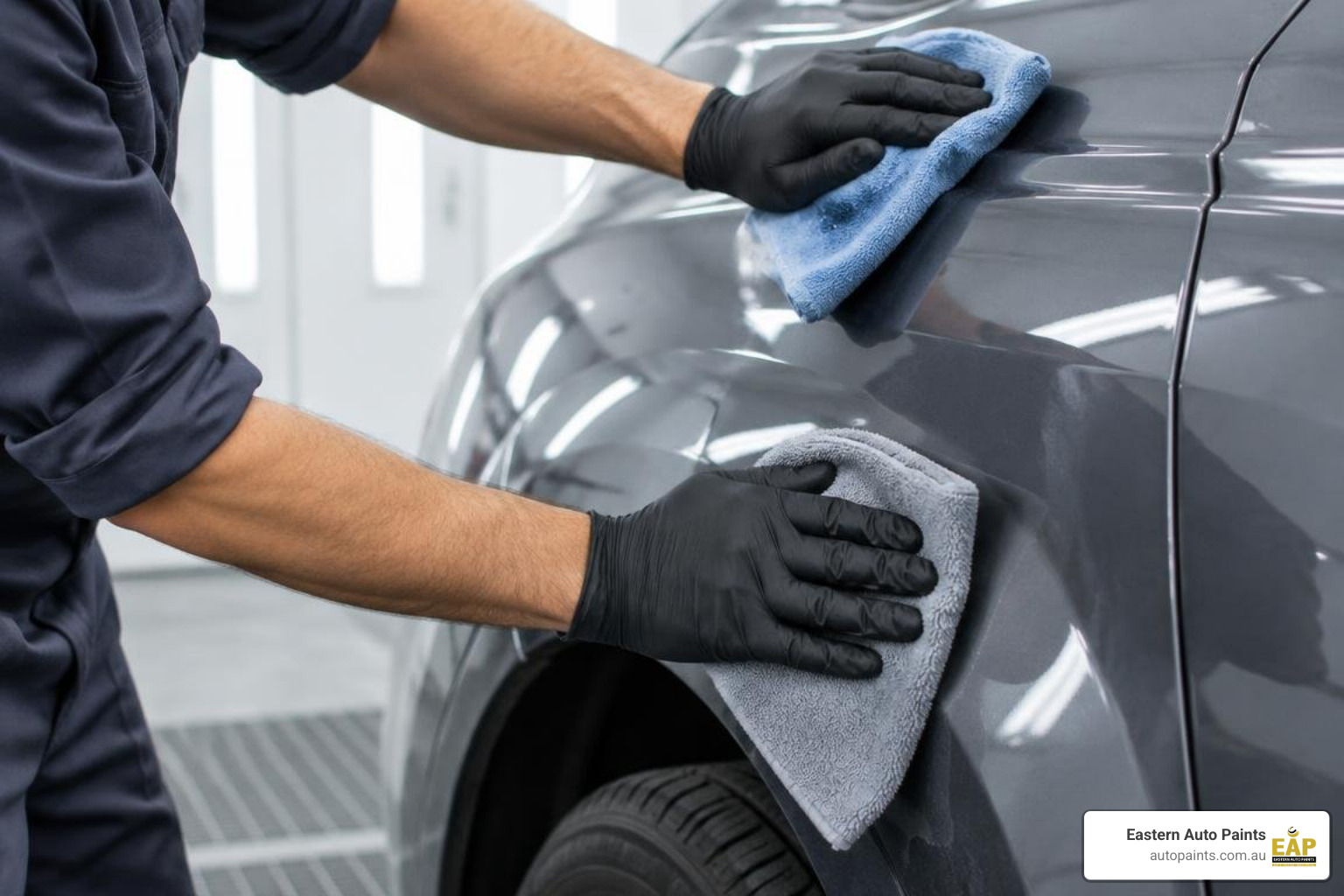
Refinishers moisten the first lint-free cloth with panel wipe solvent and apply it in overlapping horizontal passes across a manageable section to dissolve surface oils. Before the solvent evaporates, a second clean, dry cloth is used in vertical passes to lift the suspended contaminants cleanly away. Frequent rotation of the dry cloth prevents recontaminating cleaned areas. Conducting a visual check under dedicated detailing lights confirms that no residue or haze remains prior to laying down wet coatings, such as applying clearcoats described in the 2K Clear Coat Ultimate Guide 2026.
Workshop Safety, Ventilation, and Environmental Waste Management
Solvents formulated with petroleum distillates and alcohols are volatile organic liquids that require strict safety practices in workshop environments. Vapours are denser than ambient air and can travel along shop floors toward ignition sources.
Maintain adequate spray booth extraction or mechanical ventilation during cleaning. Always refer to the specific product technical data sheet (TDS), Safety Data Sheet (SDS), and relevant SafeWork Australia or state WorkSafe guidance for appropriate personal protective equipment (PPE) and chemical safety measures. Used solvent cloths should be stored in self-closing, fire-safe disposal bins to prevent heat build-up, and spent liquids must be handled through licensed chemical waste services.
Why Choose Eastern Auto Paints for Panel Prep Support
At Eastern Auto Paints, our team brings practical refinishing expertise directly to the trade counter. Operating out of Bayswater and Dandenong South, we supply automotive bodyshops, commercial vehicle builders, industrial powder coaters, and dedicated DIY restorers across Australia with trade-grade preparation products, coatings, and workshop equipment.
We do not just supply products off the shelf; we help you understand the chemical compatibility between bare substrates, prep solvents, primers, and clearcoats. Whether you are setting up a commercial spray booth with fresh air lines or sourcing specialised thinners from our solvents and additives range, our team provides verified technical advice to eliminate rework. Explore our full equipment and consumables inventory at the Eastern Auto Paints online store.
Achieving Durable Adhesion Across Automotive and Marine Substrates
Achieving strong intercoat adhesion requires chemical cleanliness across diverse substrates, from automotive sheet metal to marine composites.
On bare metal surfaces, wiping with a dedicated degreaser removes rolling oils, skin oils, and corrosion inhibitors prior to mechanical abrasion and priming. When laying down foundational anti-corrosive barriers, refer to the guide to epoxy primer paint for cars to ensure the cleaned metal receives the correct mechanical profile and chemical bonding foundation.
Marine gel coats and fibreglass composite hulls present unique challenges. Porous, weathered gel coat can trap mould release agents, marine growth residues, and compounding lubricants deep within microscopic surface voids. A systematic wipe-down with a professional degreaser dissolves these embedded lubricants without softening the resin matrix. This step is critical before applying protective coatings, ensuring direct bonding to the cross-linked gel coat rather than sitting on a micro-layer of buffing oil. Explore broader refinishing workflows in our guide on auto paint application.
What to Expect at Eastern Auto Paints
When partnering with Eastern Auto Paints for your prep and refinishing requirements, you receive expert-led trade service tailored to your operational demands:
- Manufacturer-Backed Technical Support: As an authorised distributor for leading coatings systems, we supply verified technical data and practical advice on product compatibility.
- Precision Colour Matching: Advanced digital spectrophotometer scanning and custom formulations mixed in-house for direct gloss, basecoats, and custom aerosols.
- Extensive Consumable Inventory: From lint-free panel wipes and tack cloths to professional spray guns, filtration regulators, and abrasives.
- Rapid Victoria & Australia-Wide Supply: Direct trade delivery throughout metropolitan Melbourne and reliable shipping across Australia.
When to Get in Touch or Take Action
If you notice recurring refinishing defects in your workshop, such as fisheyes in clearcoats, edge-mapping on featheredged repairs, or poor coating adhesion on marine hulls, your surface preparation procedure likely needs adjustment.
Our technical specialists can evaluate your preparation sequence, help identify underlying contamination sources, and recommend suitable solvent systems for your workshop setup. If you are preparing for a major restoration, outfitting a fleet painting bay, or need custom-matched topcoats, contact our specialist team or browse automotive paint catalogue products online.
Practical Solutions and Reassurance
Refinishing perfection is built upon disciplined, repeatable surface preparation. Keeping a dedicated supply of fresh microfibre cloths, working panel by panel systematically, and maintaining proper booth ventilation eliminates the variables that cause prep-related failures.
Equipping your shop with quality spray equipment and premium abrasives ensures that once your substrate is cleaned and degreased, your mechanical profile and paint atomisation work in harmony for a factory-grade finish.
Where Flawless Finishes Begin
Establishing a clean foundation through careful degreasing protects your investment in primers, basecoats, and clearcoats. Whether you are running a high-volume commercial bodyshop or restoring a vehicle in your home garage, taking the time to wipe down each panel with compatible solvents ensures reliable coating adhesion and lasting gloss.
- Reach out for personalised prep and coating support.
- Explore 2K primers and surfacers.
- View the complete range of solvents and cleaners.
Frequently Asked Questions About Surface Preparation Degreasers
Why is panel degreaser more effective than isopropyl alcohol for removing polishing residue?
Modern compounding and finishing polishes contain heavy lubricating oils, emulsifiers, and synthetic waxes engineered to resist friction. While isopropyl alcohol can lift light dusting and water-soluble contaminants, it often lacks the chemical solvency required to break down dense mineral oils, resulting in smeared residues across the panel. Dedicated panel degreasers combine aliphatic hydrocarbon solvents with alcohol fractions to dissolve heavy non-polar oils and lift them from the clearcoat, preventing surface contamination from interfering with ceramic coatings or paint layers.
What vehicle and vessel surfaces are safe for solvent wipe-downs?
Panel wipe degreasers are formulated for safe use on fully cured automotive two-pack clearcoats, original equipment factory finishes, marine gel coats, composite fibreglass, and bare metals including steel and aluminium. They should not be used on unmasked rubber seals, interior soft-touch plastics, polycarbonate headlamp lenses, vinyl wraps, or paint protection films without prior testing, as the solvent blend may soften, swell, or haze these sensitive materials.
At what point in the refinishing and detailing workflow should degreasers be used?
Degreasing solvents should be applied at distinct transition points during preparation and refinishing. In paint shops, panels should be wiped down before initial sanding to prevent grinding surface road grime into the substrate, immediately after body filler and primer sanding to remove residual dust, and as the final cleaning step right before applying basecoat or topcoat. In detailing workflows, the solvent wipe is performed after machine compounding and polishing to strip away lubricating oils before applying ceramic coatings, paint sealants, or protective waxes.
How do hydrocarbon and alcohol blends facilitate rapid flash-off without leaving streaks?
Formulated panel degreasers utilise a carefully balanced ratio of fast-evaporating light aliphatic hydrocarbons and pure alcohols. This combination lowers the overall surface tension of the liquid, allowing it to wet out evenly across the panel, dissolve contaminants rapidly, and flash off cleanly into the atmosphere. When paired with the two-cloth application method, the solvent evaporates without leaving behind heavy mineral streaks, residue bands, or secondary moisture haze.
What specific safety precautions are required when handling highly volatile cleaning solvents?
Because cleaning degreasers contain volatile hydrocarbons with low flash points, they must always be handled in well-ventilated areas or spray booths equipped with active vapour extraction, away from open flames, pilot lights, and sparking electrical equipment. Always refer to the specific product label, Technical Data Sheet (TDS), Safety Data Sheet (SDS), and relevant SafeWork Australia or state WorkSafe guidance for appropriate personal protective equipment (PPE) and chemical safety measures. All saturated cleaning cloths should be placed in designated self-closing fire-safe containers and disposed of through licensed chemical waste services.